
• Skip to primary navigation
  • Skip to main content
  • Skip to primary sidebar
Book Your Health Coaching Call
Good Medicine

Good Medicine

Holistic Health Coaching

  • Home
  • Liz James
    • About Liz
    • Coaching
    • Book a 20 Minute Complimentary Coaching Call
  • Favorite Resources
    • BlessedByHisBlood
    • Young Living
    • Fast Like A Girl Certified Coach
    • Order supplements through my Fullscript store
    • Green Pasture (Coupon: Health10)
    • RogersHood Apothecary (Coupon: BEABLESSING for 10% off)
    • DolphinMPS
    • Company
    • Abundance
  • My Books
    • Becoming Your Own Health Detective Volume 1
    • Becoming Your Own Health Detective Volume 2
  • Blog
  • Cart

Blog

Mitochondrial Health: The Hidden Driver of Energy, Aging, and Disease

Liz James · April 20, 2026 ·

Mitochondrial Health: Part I

For as far back as I can remember in science classes, I remember hearing about the mitochondria being the “powerhouse” of the cells. For my fellow science nerds out there, you probably recall something similar. Powerhouse. Energy packets. ATP. Glycolysis. Krebs Cycle. Electron Transport Chain…….. those words might shake the dust off the memories.

Everything we learned seemed so “automatic”. Like, these processes we memorized for tests would go on whether we actively participated or not. Our bodies would just do their thing

….unless there was a genetic disorder someone was born with. Mitochondrial genetic disorders are grouped into a category called Primary MitochondrialDiseases, most of which are obscure / uncommon.

By nature, I usually have at least a handful of “but, why?” questions rolling around in my head at any given moment. My two books (Becoming Your Own Health Detective, Vol I and Vol II) are focused entirely on helping people put their own health puzzle together by zeroing in on root causes. (Usually, it’s multiple root causes creating a perfect storm.)

Humbly, I have to say, we’ve not dug deep enough most of the time, and over the last couple of years, I’ve learned that digging microcosmically deeper yields greater health rewards.

The health, quantity, and function of the mitochondria is critically important for our overall health. If the mitochondria isn’t able to be “a powerhouse” of “energy packets (ATP)”, there will be a problem or two, or twelve. ATP is used to produce, repair, distribute, organize, and maintain EVERYTHING in the body. This includes protection against disease, adaptability and resilience (both physically and emotionally), as well as physical, mental and cognitive performance. The mitochondria are also a critical factor to how well a person ages. (Imagine if any one or more of these duties above were knocked out of kilter )

The “knocked out of kilter” is important here, because that signifies Secondary Mitochondrial Dysfunction, which occurs in disorders such as autism, ADHD, diabetes, depression, neurodegenerative disorders, fatigue, cancers, metabolic disorders, cardiovascular disease, etc.

That is a BROAD array of health concerns. All brought together with a singular bond: mitochondria that have lost their ability to provide what the body needs to thrive.

  • What can we do to prevent mitochondrial dysfunction?
  • What causes mitochondrial dysfunction?
  • What are early symptoms of mitochondrial dysfunction? (Before there is an actual diagnosis
  • of some disorder)
  • Can you improve poor mitochondrial function once they are dysfunctional?
  • What questions do you have?

We have MUCH to talk about….. most of which likely was never talked about in your biology class.

PS: Meet Bruce! He is about 3 weeks old, and our newest addition to our farm-ily. Did you know that the mitochondria are inherited from the mom’s genetics? Given how adorably cute and especially energetic Bruce is, I’d say his mom (Eleanor) gave him some pretty robust mitochondria !

Mitochondrial Health: Part 2 – What causes Dysfunction?

Mitochondrial dysfunction is at the root of nearly all body and brain health concerns, and even “feeling old” is also due to declining mitochondrial function. To put it simply, mitochondrial function (or dysfunction) DRIVES the aging pattern.

We’ve all seen people who age beautifully, and we’ve also seen people who look, act, and feel far older than their biological age. In both instances, mitochondria performance is responsible.

We can start “doing all the things” to help enhance mitochondrial function, but first it’s a good idea to understand what causes function to decline.

Babies are born with highly active, high functioning mitochondria, and as I mentioned last week, their mitochondria come exclusively from their mama. (If their mom’s mitochondria are not robust, this will also be passed along to the baby. Thankfully, there are many things that can be done to correct this!)

Around the age of 18 (in the average person), mitochondrial function starts to decline by about 1% per year. That might not sound like much when you’re 18, but it’s a pretty significant shift by the time you enter into your latter years of life.

Additionally, there are BIG drivers to mitochondrial dysfunction. When you stack these upon 1% per year decline, things can head south pretty quickly, even as a young person under the age of 18.

This list is not exhaustive, but it is fairly comprehensive…. so here we go:

  • Chronic nutrient depletion (no fuel for the powerhouse!… mito’s especially have very specific nutritional needs… we will talk about this in another post too). For now, just understand that a diet heavy in processed foods will age out your mitochondria quickly…. kids and adults alike.
  • A heavy environmental toxin load. This will include herbicides like glyphosate, heavy metals, heavy plastic exposure.
  • A sedentary lifestyle. MOVEMENT is a primary stimulus for mitochondrial health. A body in motion stays in motion functionality”). Likewise, a body at rest for too long is losing “powerhouse
  • Circadian disruption. Mitochondria are tightly regulated by light and circadian rhythm. Blue light (especially well into the night), poor sleep, and irregular schedules are no friend to energy production at a cellular level
  • Certain medications. (I can’t possibly list them all. If you have specific questions about any not listed here, please schedule a call with me).
  • Antibiotics (esp those in the Quinolone, tetracycline, and aminoglycoside families)….. Ya’ll…. there are MANY alternatives to synthetically derived antibiotics that work as well or BETTER in most cases (leave them for emergency use only).
  • Statins
  • Mood stabilizing meds in the SSRI or SNRI family
  • Antipsychotics (ex: aripiprazole)
  • Stimulants (ex: Adderall) So interesting, right? Stimulants create short term energy in exchange of long term loss of energy.
  • Metformin (typically used for type II diabetes or PCOS )
  • Chronic use of Acetaminophen
  • Beta blockers (most commonly used for high blood pressure)
  • Chemo agents
  • HIV medications
  • Proton pump inhibitors (these are your GERD/ acid reflux meds)
  • Birth control pills
  • Chronic Gut dysfunction
  • Chronic stress (chronic cortisol overload ultimately leads to mitochondrial suppression over time).

As you might be imagining, stacking multiple medications, poor nutrition, little exercise, and toxic environmental stressors is mitochondrial mayhem in the making.

The good news? Age only drives about 25% of mitochondrial function. 75% of mitochondrial health is largely under our own personal control, and ….. get this, it is very possible/ doable to restore mitochondrial function and quantity.

Also good news…. …. you are here . Which means you are already working on
ways to improve your mitochondria function even though you didn’t know it!

Look at the list above. The mayhem makers. Have you been able to avoid some of those mitochondrial mayhem makers I listed above by using an herb, essential oil, lifestyle change, or other holistic practice? Drop a if you have. I’d love to hear your story!

PS: This is Agnes. I met her on Sunday in our yard. She was one of the largest turtles I’ve seen on our property. Based upon her size, she’s probably over 10 years old. While human mitochondria tend to be high output (by necessity), reptiles have mitochondria that are more focused on efficiency over energy. Also interesting… they tend to have a lower mitochondrial mutation rate than mammals do…. which I find VERY interesting!

xoxo~ Liz

Mitochondrial Health – Part 3

Osteoporosis, the mitochondria…. and donating blood.
 
I know. Superficially, it might appear that there is very little in common between these three things.
 
(Kinda reminds of the old joke, “a health concern, a cell organelle, and a blood donor walk into a bar…. ” 😂)
 
So, let me explain:
Mitochondria depend on many “ingredients” to function properly. One of those ingredients is iron.
Iron is critical to a body’s health, and mitochondrial function. Too much iron or too little iron both have negative impact on mitochondria.
Many people tend to accumulate excess iron (waaaaaay more common than you might think!)
 
Who are these potential iron accumulators?
👩‍🦳 postmenopausal women (or women who are no longer having monthly cycles)
🧔‍♂️ men…. especially as they age
💥 people who lean towards a heavy red meat diet
🧬 people with genetic tendencies towards storing more iron than is typical.
 
Iron overload can be tricky. In fact, it can often feel like anemia (low energy, exercise intolerance, brain fog, inflammation), so the best way to establish iron load is proper bloodwork.
 
👉Iron overload is a common driver of mitochondrial-triggered cell death. The mitochondria are deeply involved in both bone building and bone resorption through regulation of the osteoblasts and osteoclasts. When mitochondrial function is poor, there will be fewer bone building (the “blasts”) cells, and at the same time, the bone breakdown cells (the “clasts”) can become overactive. Guess what happens over time to your bones?…. yep, they start to get brittle. 👈
 
Excess iron in the body also increases oxidative stress. Increased / chronic oxidative stress shows up physically in the form of brain fog, poor concentration, anxiety, muscle fatigue or weakness, loss of elasticity in the skin, hair thinning or graying, poor circulation, sugar cravings, increased plaque buildup on teeth, gum inflammation and more! The more oxidative stress you have, the more mitochondrial dysfunction you’ll experience. It’s a vicious cycle.
 
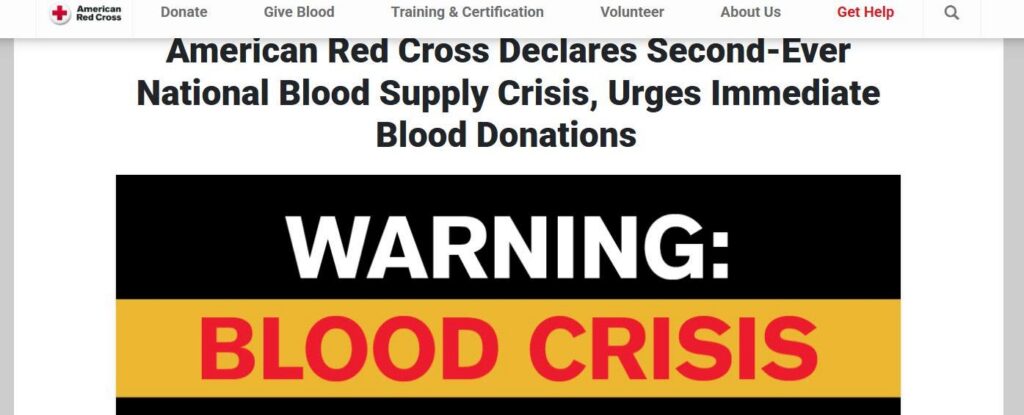
There are supplements you can take to help build your mitochondria (we will talk about those at some point), but if you are able to donate blood, one of the best ways to boost your mitochondrial health is to donate!
 
When you donate blood, you are, in a very natural way:
🩸allowing for safe, inexpensive (free!) removal of excess iron in the body
🩸Improving your mitochondrial efficiency
🩸Ramping up production of new red blood cells which ultimately improves better mitochondrial respiration (this equates to better mito function)
 
While this post is more about the mitochondria than about osteoporosis, I really want to make sure you understand that osteoporosis is often (ie: usually) more driven by things outside of “too little calcium”.
 
Get your bloodwork done, and go donate! (Donating is also a great way to find out your bloodtype for free if you don’t know your 🩸type! )
xoxo~ Liz
 
PS: I am donating every 3-4 months like a champ! Pro Tip: Work out before you donate and drink lots of water. Drink 2 packets of NingXia Red before you donate. Immediately after you donate, Drink 2 more packets of NingXia Red and eat a beef stick, and drink another large glass of water. I am not a huge person and these steps keep me coming back to donate without feeling weak afterwards. 💪

Pay the Farmer or Pay the Pharmacist: Why America Spends the Most on Healthcare but Isn’t the Healthiest 

Liz James · March 9, 2026 ·

 If spending more money on healthcare actually made us healthier, the United States should be leading the world in life expectancy. 

See the United States out there in front? That’s not a good thing at all. 

 Note that the data has been adjusted for inflation and differences in costs between countries. 

No other country is even close. 

Now, take a look at life expectancy….. you’d think, that with all that spending we do on “health care” there would be the added benefit of a longer life. ….. you’d think. 

Reality: The United States spends outrageously on health care for a very mediocre lifespan. 

Health expenditures here do not include 

  • gym memberships 
  • eating quality whole foods 
  • using herbs, essential oils, tinctures, and homeopathy to support optimal health 

and yet, so many people say they can’t because these items are out of their budget. 

The reality is that you can pay for prevention or you can pay for outcome “repairs”. Either way, there is a cost. 

I choose to pay the farmer, not the pharmacist. 

PS: It’s interesting that Costa Rica’s lifespan is slightly longer than the United States, and yet their medical costs are a fraction of ours (even adjusted for cost of goods ($1,565 vs $12,023) 

https://ourworldindata.org/…/life-expectancy-vs-health…

If you are interested in spending less time and money at the doctor’s office….. let’s talk! 

xoxo~ Liz 

Turmeric For Non-Alcoholic Fatty Liver Disease (NAFLD)? What I Learned In Pharmacist CE — And How To Spot Bias 

Liz James · February 17, 2026 ·

Working my way through Pharmacist CE’s this month for licensing renewal. It tests me…. not because of difficulty, but because of industry bias and study references that have pharma ties, and quiz questions must be answered as they want them answered, not because of the full truth. 

Not all CE’s are like this, but the vast majority are. It’s pharma after all. 

Thankfully, I subscribe to a CE and pharmacist education program (NatMed Pro) which focuses on “natural med”…. their words, not mine. Tho I do agree wholeheartedly. I don’t always agree with some of what is said even in these CE’s because there is still some pharma industry bias that shines thru. You’ll never see them cite “Adaptogens in Medical Herbalism” by Yance, “Herbal Medicine, Healing and Cancer” by Yance and Valentine, “Botanical Medicine for Women’s Health” by Romm…. because if they did, there would be more truth in the CE’s than what is portrayed in the watered down version we get in NatMed Pro. Doing this type of CE in between the hardcore pharma CE’s at least lowers my pulse rate and blood pressure and lessens my desire to yell at the screen . 

All this to say…. It’s good to stay abreast of all things. To learn what is being said about a product, to parse out the pieces of truth as well as the pieces of fluff or even outright gaslighting (which I see in CE’s quite often. Heavy sigh . ) 

I’m reading back through this post now, and you can probably see how my brain ping pongs between the two worlds of pharma and herbalism/ natural healing. 

I took a couple of screenshots (shared here) of one of these CE’s that I DID actually learn something in. It was quite good…. covering turmeric, elderberry, cranberry, ashwagandha, and a few other herbals. For the most part, I’d give it 4 out of 5 stars (high rating in the pharma CE world when you’re a pharmacist with strong leanings towards the natural! ) 

Thought you might appreciate this info on turmeric. We tend to think about turmeric as fantastic for supporting proper inflammatory response. I did not know it held some pretty amazing properties benefitting those with NAFLD (non alcoholic fatty liver disease), so bonus points for this particular CE . 

Not all turmeric is equal. Do your research…. deeply. Know your sources and understand how THEY (the people you follow) learn what they know. Know your product too….. the supplement world is a tricky one…. just as tricky as pharma in many cases. 

I’m here for you if you’ve got questions. xoxo~ Liz 

 Interesting Journal Article 

Liz James · January 19, 2026 ·

Such an interesting journal article….. Did you know that this particular journal (Oncotarget) was the target of massive cyberattacks last week after it released a really interesting (and revealing) article/study? 

This is what happens when you are over the target and “they” don’t want the general public to know the truth. 

Glad to see it’s back up. This isn’t the article that caused the attack, but if you are a fan of lemongrass as I am, you might find it interesting too! 

xoxo~ Liz 

The Truth in Our Blood – Episode 459 The Highwire with Del Bigtree 

Liz James · January 16, 2026 ·

The Highwire always brings truth to the table! 

If you don’t have time to listen to the entire episode, The Blessed By His Blood segment with me starts at the 50:30 mark. 

This week, Del opens on the media backlash to the CDC’s shift toward shared vaccine decision-making. Is the panic really about safety, or about empowering Americans with choice? Jefferey Jaxen delivers a wide-ranging investigation into COVID vaccine injury data, exposing massive underreporting through VAERS and V-safe, new polling that shows widespread harm, and even admissions from legacy vaccine leaders that current safety science is insufficient. Then, he reports on Florida’s discovery of mercury and other heavy metals in baby food, the presence of PFAS “forever chemicals” in popular bottled water brands, and the accelerating impact of artificial intelligence as it displaces white-collar jobs and pushes universal basic income into the political mainstream. Finally, a deeply personal and powerful conversation about medical freedom at its most fundamental level — blood — as Del recounts his own near-fatal medical emergency and the extraordinary effort required to secure a transfusion aligned with informed consent, while families share how the right to directed blood donations saved their children’s lives and how that right is now under threat. 

Guests: Liz James, Tanya Lair, PA-C 

AIRDATE: January 15, 2026 

  • Page 1
  • Page 2
  • Page 3
  • Interim pages omitted …
  • Page 175
  • Go to Next Page »

Primary Sidebar

Author

Hey there....thanks for stopping by! This is me (Liz James)... an eclectic mixture of holistic (and organic) farmgirl meets pharmacist. It's a synergy that works well as I speak truths and dissect fact from fiction. If you're looking for healthier living options, you've come to the right place!  ​

Recent Posts

  • Mitochondrial Health: The Hidden Driver of Energy, Aging, and Disease
  • Pay the Farmer or Pay the Pharmacist: Why America Spends the Most on Healthcare but Isn’t the Healthiest 
  • Turmeric For Non-Alcoholic Fatty Liver Disease (NAFLD)? What I Learned In Pharmacist CE — And How To Spot Bias 
  •  Interesting Journal Article 
  • The Truth in Our Blood – Episode 459 The Highwire with Del Bigtree 

Categories

  • Anatomy & Physiology
  • Antioxidant
  • Archive
  • Attitude
  • Autoimmune
  • Balance & Flexibility
  • Big Pharma
  • Big Tech
  • Bladder
  • Blood
  • Blood Pressure
  • Bone & Muscle
  • Brain Health
  • Breathing
  • Cancer
  • Cellular Health
  • Censorship
  • Children
  • Children's Health & Immune Support
  • Cholesterol
  • Circulation
  • Cleaning
  • Community
  • Connective Tissue
  • Dehydration
  • Depression
  • Diabetes
  • Diet
  • Digestive System
  • Dolphin MPS
  • Emotions
  • Endometriosis
  • Energy
  • Entertainment
  • Enzymes
  • Epigenetics
  • Essential Oils
  • Exercise
  • Eyes
  • Faith & Health Stewardship
  • Farm Animals
  • Farmgirl
  • Fatigue
  • Feet
  • Fertility
  • Fever
  • Focus & Cognition
  • Food and Water Quality
  • Freedom
  • Frequency
  • Fungus
  • Gallbladder
  • Gardening
  • Gastrointestinal
  • Giving
  • God
  • Good Reads
  • Government
  • Gut health
  • Headaches
  • Health
  • Health Clues
  • Health Policy & Medical Ethics
  • Heart
  • Henri the Squirrel
  • History
  • HIV/AIDS
  • Hormones
  • Host Theory
  • Hypertension
  • Immune
  • Inflammation
  • Kidney
  • Lab Work
  • Life 9
  • Liver
  • Lymphatic System
  • Massage
  • Master Formula
  • Media
  • Medications
  • Mental health
  • Metabolism
  • Minerals
  • Multigreens
  • Music
  • My Story
  • Nature
  • Nervous System
  • News
  • NingxiaRed
  • Oxygen
  • Pain
  • Parasites
  • Personal Reflections
  • PH
  • Plants as Medicine
  • Posture
  • Prayer & Meditation
  • Prepper
  • Preventive Health & Root-Cause Medicine
  • Probiotics
  • Raindrop
  • Raw Milk
  • Recipes
  • Reflexology & Vitaflex
  • Respiratory
  • Self-Care
  • Skin
  • Sleep
  • Smoking
  • Stress
  • Sun
  • Super C
  • Supplements
  • Teeth
  • Thyroid
  • Thyromin
  • Toxins
  • Trauma
  • Uncategorized
  • Vaccine Information & Informed Consent
  • Vaccines
  • Vagal nerve
  • Vascular
  • Virus & Bacteria
  • Vitamins
  • Weight
  • Wellness
  • Wound care
  • Yoga
  • Young Living
  • Young Living Gifts

Archives

  • April 2026
  • March 2026
  • February 2026
  • January 2026
  • October 2025
  • September 2025
  • August 2025
  • July 2025
  • June 2025
  • May 2025
  • April 2025
  • March 2025
  • February 2025
  • January 2025
  • December 2024
  • November 2024
  • October 2024
  • September 2024
  • August 2024
  • July 2024
  • June 2024
  • May 2024
  • April 2024
  • March 2024
  • February 2024
  • January 2024
  • December 2023
  • November 2023
  • October 2023
  • September 2023
  • August 2023
  • July 2023
  • June 2023
  • May 2023
  • April 2023
  • March 2023
  • February 2023
  • January 2023
  • December 2022
  • November 2022
  • October 2022
  • September 2022
  • August 2022
  • July 2022
  • June 2022
  • May 2022
  • April 2022
  • March 2022
  • February 2022
  • January 2022
  • December 2021
  • November 2021
  • October 2021
  • September 2021
  • August 2021
  • July 2021
  • June 2021
  • May 2021
  • April 2021
  • March 2021
  • February 2021
  • January 2021
  • December 2020
  • November 2020
  • October 2020
  • September 2020
  • August 2020
  • July 2020
  • May 2020
  • April 2020
  • March 2020
  • February 2020
  • January 2020
  • December 2019
  • September 2019
  • April 2019
  • March 2019
  • February 2019
  • January 2019
  • October 2018
  • August 2018
  • July 2018
  • June 2018
  • May 2018
  • April 2018
  • March 2018
  • February 2018
  • January 2018
  • December 2017
  • November 2017
  • October 2017
  • September 2017
  • August 2017
  • July 2017
  • June 2017
  • May 2017
  • April 2017
  • March 2017
  • February 2017
  • January 2017

Book Your Health Coaching CallBook Now

Elizabeth James

469.425.9091

ebj0203@gmail.com