

August Young Living Freebies

Liz James · ·

Liz James · ·
I could spend almost forever talking about the colon because it’s one of my favorite clue laden organs. But if I did, I’d step out of the lane we’re driving in….. And so I’ll do my best to keep focused!
Hang on…. You may learn a little more than you wanted to about chronic diarrhea!😳 It’s not as common as constipation (est 20-30% of the adult population), but if you are one of the estimated 5% who do suffer from chronic diarrhea, you know how important this clue trail is. Interestingly, though chronic constipation is an equally important colon clue, chronic diarrhea will usually send people to their favorite health care professional much faster!
Diarrhea is a symptom (a clue!), not a dis-ease. Approximately 2 gallons of water should be absorbed from the colon every day, and if that doesn’t happen…… well, diarrhea results. We’ve all had short term diarrhea, and even that gets old fast. Chronic and/or chronic intermittent diarrhea can really throw a kink in daily life.
Rarely, is this clue ignored (because, well….. diarrhea won’t generally allow itself to be forgotten!). Paradoxically, chronic diarrhea is not generally a “quick fix” problem. It takes work to get the gut back to a healthy place!
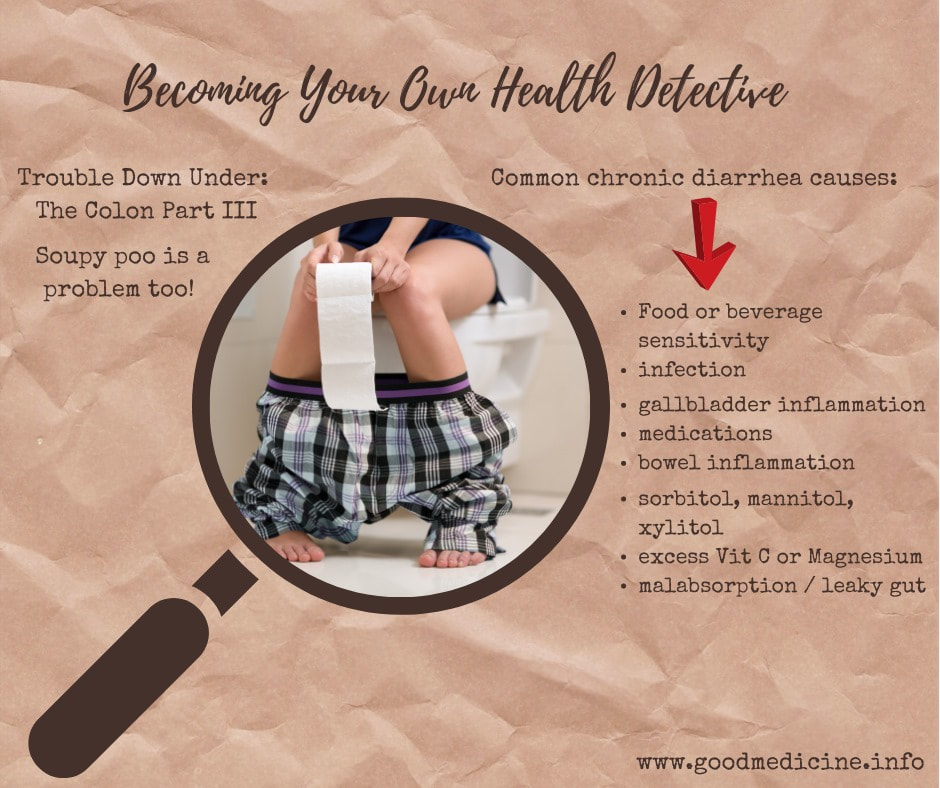
What possible clues lie behind a case of chronic diarrhea?
🔎Food or beverage sensitivity: Lactose, gluten, and processed sugar intolerance are the big three, and are more common than you might think. It could be just one ingredient that triggers a run to the bathroom, or it could be a combination of them (think processed foods!).
🔎Tainted water: Yes, even municipal water and bottled water has been implicated on occasion.
🔎Medications : Antibiotics, antacids, Alzheimer’s medications, metformin (for type II diabetes), colchicine (for gout), NSAIDs (for inflammation, sertraline (for mood), lithium (for mood), digoxin (for heart), chemotherapy medications, synthroid/levothyroxine (for thyroid: NOTE there is a gluten based filler in these….. Disturbingly…. So if gluten is your nemesis, this may be a big clue).
Infections (bacterial, fungal, viral, and/or parasitic). Infections often go hand in hand with inflammation.
🔎Chronic Inflammation in the bowels: Inflammation in the colon morphs into an actual dis-ease state if left unaddressed. Inflammatory Bowel Disease includes ulcerative colitis and Crohn’s disease. Irritable Bowel Syndrome is another colon dis-ease that affects 10-15% of the population and may cause a mixture of constipation and diarrhea. Diverticulosis / Diverticulitis affects roughly half of all people over the age of 60, and approximately 10% will have it before the age of 40. Yet, in ¾ of these people, it will never cause problems.
🔎Gallbladder inflammation, malfunction, or missing! (up to 20% of people who have their gallbladder removed have chronic diarrhea) It’s so important to take digestive enzymes if you are missing your gallbladder!
🔎Uncommonly (but needs to be mentioned), some cancers can cause chronic diarrhea.
🔎Excess vitamin C or Magnesium in the diet.
🔎For some people, sorbitol, mannitol, or xylitol (even in the smallest amounts) can cause gassy diarrhea.
🔎A surgical procedure which may have affected the mechanics of the large intestine.
Overcoming chronic diarrhea is usually not a quick fix, and it may require many supportive measures in your “at home” tool box. Just as Rome wasn’t built in a day, neither will a solid bowel movement be formed after a day’s worth of good self care, so be patient and be consistent with your plan!
*Get stress under control. The gut brain axis is a real thing, and if emotions are creeping into your gut, it may show up in the toilet too. Use your emotional oils….. They do work! Find a mentor like Jen Weir who is an ace at teaching people how to do just this! (https://www.weirtx.com/ )
*Get serious with an elimination or FODMAP diet and find out what your body doesn’t like! Note: food sensitivities are found in ½ to ⅔ of people with chronic diarrhea. #itstimetojustdoit
*Probiotics. YL’s Life 9 helps support a healthy microbiome in the colon. When there are enough healthy bacteria to compete with the bad microbes, the bad guys get the boot.
*Digestive enzymes. I cannot emphasize enough how important probiotics and digestive enzymes are to overall health! (YL…. Essentialzyme, Essentialzymes-4, Detoxzyme, Allerzyme, and Mightyzyme for the littles)
*Omega 3’s ( YL Omegagize3) promotes healing and repair and supports a healthy inflammatory response.
*Increase Fiber intake. Start with cooked soft fiber and graduate to “hard fiber” (fruits, veggies, and whole healthy grains (gluten free for some or low gluten for others). Note that meat and dairy have zero fiber! YL’s ICP is a fantastic source of non-irritating soluble and insoluble fiber. Friends, do your research on ICP. It is a vital supplement for colon support!
*Avoid alcohol sugars (sorbitol, mannitol, maltitol, isomalt, xylitol)
*Avoid caffeine. It acts as a laxative.
Diarrhea is the clue. Now it’s up to you to put some of the pieces together! Use this clue and others to kickstart your own research.
As Mary Young says, “It is our God given right to search, read, study and decide how you will feed and care for your own body.”
xoxo~ liz
#knowbetterdobetter
#healthcluesyoucanuse
#fixyourplumbing
#goodmedicine
#ThanksYL
#colonclues

Liz James · ·
How much attention or thought do you put into your small intestine? Rarely do we hear much about this “small” organ. “Little things” can often be overlooked and in doing so, clues can easily be missed. Truly, the small intestine isn’t so very small….. It’s a 15-20 foot long digestion and absorption machine….. Usually overshadowed by its fore and aft kinsmen, the stomach and large intestine..
I relate to the small intestine as a middle child myself!😜 The stomach and large intestine have their individual strengths and frailties. While the small intestine has its own set of “responsibilities”, its wellbeing is greatly affected by sister stomach and brother colon.
If you’ll recall from last week’s chat about the stomach, having low stomach acid is not a good thing and may lead to some significant issues that literally drain into the small intestine. Have you ever heard of the term SIBO? It’s an acronym for Small Intestinal Bacterial Overgrowth, occurring when bacteria in the colon (large intestine) travels upwards into the small intestine where a relatively small amount of bacteria should be present on any given day thanks to stomach’s healthy acid content and cousin pancreas’s contribution of digestive enzymes! If either the stomach or colon (or both) don’t perform as they should, the small intestine will suffer.
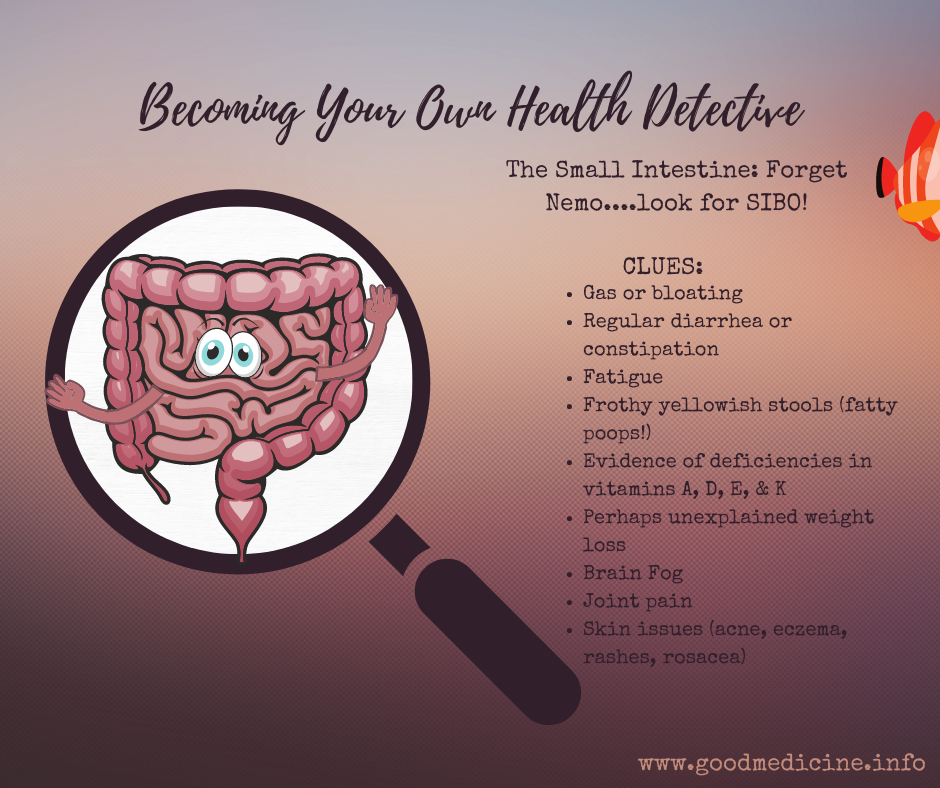
I’ve listed common clues of SIBO on the graphic. None of them are drop dead urgent clues, right? Annoying, irritating, and perhaps even aggravating ….. but nothing that would cause an urgent SOS trip to your favorite health professional.
In a perfect digestive family environment, a healthy small intestine is a strong contributor to overall health. It facilitates absorption of some minerals (including sulfur, calcium, copper, iron, & zinc), fat soluble vitamins A,D,E &K, B vitamins, and Vitamin C. Small intestine also facilitates absorption of sugars, proteins, cholesterol, and bile salts. It allows these nutrients to be absorbed all the while blocking foreign substances (ie: toxic “bullies”) from also being absorbed. If the small intestine walls become inflamed and damaged, it is unable to effectively discern between friend and foe, and bad influencers make it into the family body.
SIBO, if left unattended, contributes to:
🔥IBS, Diverticulosis, Crohn’s, Celiac, poor gut motility (greater than 75% have confirmed SIBO)
🔥Fibromyalgia (78% have confirmed SIBO)
🔥Restless Leg Syndrome
🔥Interstitial Cystitis
🔥Diabetes
🔥RA, Scleroderma, and other autoimmune disorders
🔥Skin conditions
🔥Nutritional deficiencies
🔥Neuropathies due to deficiencies
In addition to poor stomach acid production, common contributors (aka lifestyle clues!!) to SIBO include:
🔎Stress
🔎Poor diet (review what is typically known as the “Standard American Diet” / aka “SAD” indeed!)
🔎Mechanical issues (low stomach acid included here!)
🔎Antibiotic use (especially recurrent use)
🔎Regular use of acid reducers or proton pump inhibitors (ex: Nexium, Protonix, Prilosec)
🔎Opioid use (results in gut motility issues)
🔎NSAID use (ex: Ibuprofen, Naprosyn… damage the lining of the intestine)
🔎Gastric bypass surgery
🔎Moderate (or greater) alcohol use (est 90% have confirmed SIBO)
🔎Aging (due to decreased stomach acid and enzyme production)
🔎Long term colon dysfunction ( 78% of those with IBS have confirmed SIBO)
👉👉Note that while SIBO can be age related, it’s not uncommon to find it in children👦👧👶 who have chronic constipation/ diarrhea, have received antibiotics, are formula fed, or have received medication for reflux, or whose eating habits mirror the standard American diet.
It is estimated that 20-22% of the US population has some form of SIBO, and while there are ways to identify it through functional medicine testing, perhaps it may be more economical to simply identify existing physical and lifestyle clues, and then proceed towards alleviating the problematic areas.
❤️Showing the small intestine some love thru a healthy diet, adequate exercise, proper amounts of sleep are an excellent start! ❤️
Additional ways to support and love on the small intestine include:
❤️Consume 30-45 grams of soluble fiber daily (Hello Young Living ❤️Balance Complete Meal Replacement Shakes!)
❤️Digestive Enzyme supplements that contain Betaine HCl (Hello YL Essentialzyme caplets!)
❤️Probiotics (Hello YL Life 9 and for kiddos….. MightyPro!)
❤️Organic bone broth
❤️Olive leaf extract (Hello YL Olive Essentials capsules!)
❤️Young Living’s Peppermint, Caraway, Oregano, and Cinnamon Vitality essential oils. If you are a science hound, do some digging in pubmed.gov for a gold mine of information. If you are not a science hound, just know that these oils are your small intestine’s friends!
Remember that our bodies are constantly giving us clues which buys time before “big things” generally happen. I’m so thankful that the body has the resilience and capability to restore itself to good health when clues are recognized and supportive measures are implemented. SIBO is a clue itself, indicating a potential downward spiral of the entire body at some point in the future if not addressed.
Indeed…. Seemingly small things can often be important big ones!
xoxo~ liz
#sharingiscaring
#digestivehealthclues
#healthcluesyoucanuse
#goodmedicine
#findingSIBO
#ThanksYL

Liz James · ·
I find teeth mysteriously fascinating, but it used to not be that way. Teeth (and toes) used to activate my gag reflex before I began learning about their wealth of clues. Now I find them to be wonderful guides and tools! 😍
This particular clue is so very important that it’s the only one we are going to discuss today. Any time you have something that changes in or on your body, it should become an instant signal that something has shifted metabolically or physiologically, and the best course of action is to “root out” the cause before bigger symptoms take place.
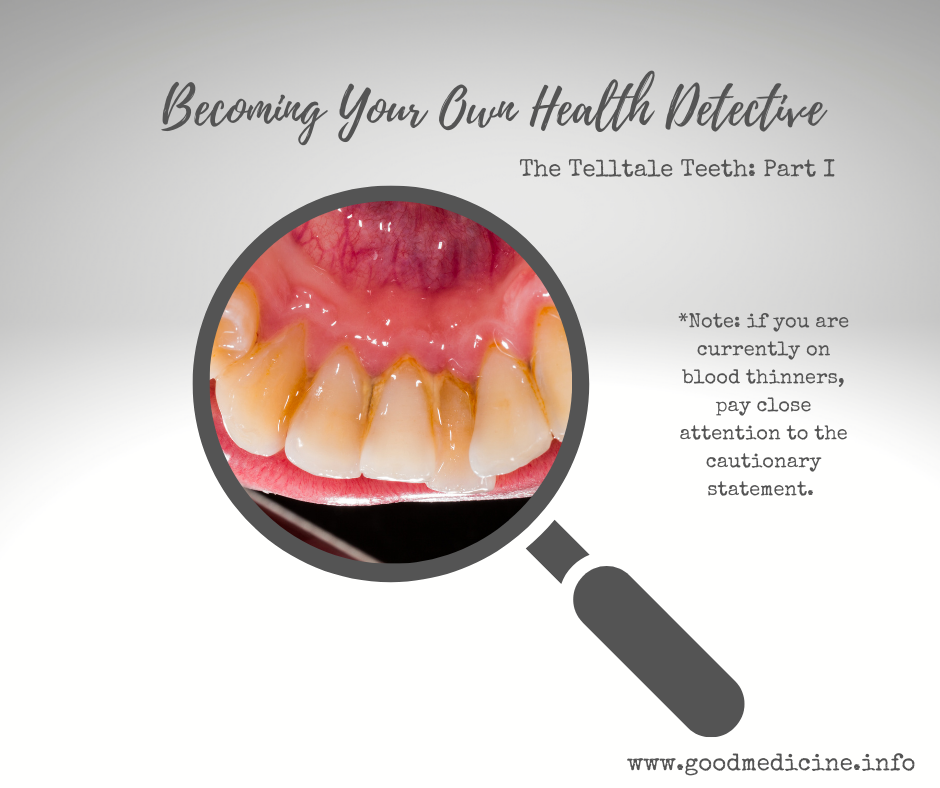
Perhaps you’ve been to the dentist and the hygienist has remarked that you have more plaque than normal on your teeth, or you’ve looked in the mirror and noticed this yourself. Hopefully this is not the case because you have loved on your oral cavity with Thieves toothpaste, mouthwash, and floss! Sometimes tho, even the best of oral care products doesn’t stop plaque build up. If that has happened, it’s time to start digging for the root cause!
*But first, A little history about teeth and nutrition! Before there was refrigeration or even toothpaste, there were remote people groups worldwide who had solidly amazing teeth and mouths. This is well documented in the works of a dentist from the early 1900’s named Dr. Weston A Price. Dr. Price worked tirelessly to prove that oral decay and degeneration was due more to nutritional deficiencies than to lack of oral hygiene. His work revealed that fat soluble vitamins A and D and a probiotic rich diet were key contributors to healthy mouths, more so than daily brushing. An interesting unifying factor amongst all the people groups he studied was that all had some form of probiotic rich daily food source…. Something that the standard American diet falls woefully short in today.
*What does diet have to do with plaque on the teeth and why is it a clue? Here is where the clue becomes quite important! A diet rich in properly fermented foods (think traditional kefir, sauerkraut, miso, yogurt, cod liver oil, kimchi, kombucha etc) is a valuable tool for supporting a healthy gut. If the gut is loaded with healthy bacteria, the body is able to create other vitamins which are necessary for healthy living. For the course of THIS discussion, that would be Vitamin K2. #life9probioticforthewin
Vitamin K2 (aka menaquinone-7 , or activator X) is an underappreciated nutrient, in that it is vital for building strong bones and teeth. It does this by carrying calcium out of soft tissue (think brain and vascular system) and carrying it IN TO bones and teeth.
Stick with me ya’ll😍….. We are getting to the super important part!
K2 activates something called osteocalcin and matrix-Gla protein. Matrix-Gla is present in saliva and its activity arrests the dental plaque calcification process….. It is also present in the blood, and when activated by vitamin K2, helps to remove plaque in arteries! Isn’t it interesting how matrix-Gla prevents both plaque on teeth AND plaque in arteries??
*If plaque continues to build up on teeth despite your best efforts in oral care, it may indicate a deficiency of vitamin K2, which may be putting your vascular system at risk.
*A 2016 study found that matrix-Gla protein inactivation ( as the result of inadequate K2) led to a higher risk of death due to cardiovascular disease.
*Now to be clear, plaque on teeth may happen as a result of poor oral care or a few other reasons too, but if you’ve never had plaque issues before, and now you do….. It may be time to dig a little deeper to protect your overall well being!
Other signs or symptoms of a Vitamin K2 deficiency may include:
*Bruising easily
*Bleeding excessively (including a heavy menstrual flow)
*Osteopenia, osteoporosis or frequent fractures
*A mouth full of cavities
*Heart disease
*Diabetes or pre-diabetes
*Autoimmune disease flare ups (there is evidence that a Vitamin K2 deficiency aggravates autoimmune diseases….. especially Rheumatoid Arthritis)
*Forgetfulness ( a Vitamin K2 deficiency is linked to Alzheimer’s Disease due to the calcium plaque build up within the brain)
*O blood type – lacks some clotting factors in blood, so K2 supplementation is helpful
If you have noticed regular buildup of calcified dental plaque…..
👉Talk to your favorite healthcare professional and consider asking for a cardiac calcium score
👉Get your vitamin D levels checked
👉There currently isn’t a K2 specific lab test to check for deficiency.
👉Consider supplementation of Vitamin K2 (recommended dietary allowance is 60-120mcg/day)
NOTE: If someone is on blood thinners, talk to a health care professional before starting Vitamin K2 as a supplement. It does affect blood coagulation, and therefore may interact with blood thinners.
And YAY you!!!….If you are currently taking Young Living’s CardioGize, Master Formula or Super Cal Plus, you’ll find that these three already contain K2 within each formulation (100mcg, 50mcg, and 30mcg respectively).
As always, I am not a doctor and cannot diagnose, treat, or offer to cure you. I can only help you be a top notch detective for your personal health and wellness.
xoxo~ liz
#sharingiscaring
#healthcluesyoucansinkyourteethinto
#healthcluesyoucanuse
#goodmedicine
#ThanksYL

Liz James · ·
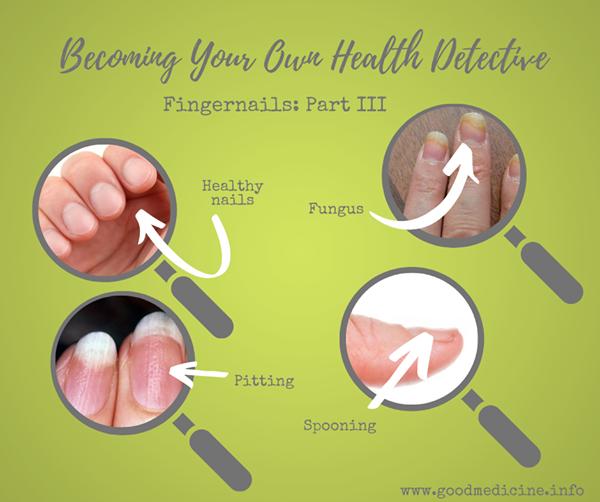
There’s Fungus Amongst Us! Nail fungus is one of the most common “n’ail-ments” among us in terms of overall population…. So check your fingers AND your toes for this bad boy. It is an important feature to note because it is indicative of a systemic fungal infection that needs to be addressed on the nutritional level (ie: root cause). As you will recall, it takes a solid 6 months to out grow a funky nail situation…… so anything you do to “fix the problem” will need to become a habit. Some simple suggestions might include increasing healthy fermented food to a diet ( sugared up grocery store yogurt is not what we’re talking here), restricting intake of refined carbs and sugars, and adding in a great probiotic (Life 9 immediately comes to mind!). Please note that as you are making your inner world “inhospitable to fungus” dieoff occurs, and you may feel that happen in the way of gas, bloating, belching, or even acne and/or other skin breakouts. Stick with it!
In terms of creating a local “inhospitable environment”, I might suggest FAITHFULLY applying Young Living’s Tea Tree and/or Eucalyptus essential oil twice a day to the nail and cuticle. Falling off the wagon will not hold in your favor if you treat this as a “come and go” action. Fungus is relentless and I find that only the faithful are successful. (PS: even prescription drugs require months to years of use when fighting fungus, and the liver often pays a high price for this type of chemical assault).
Koilonychia is commonly known as “spoon” nails for their scoop-like appearance. Spoon shaped nails are associated with blood iron disorders on both end of the spectrum (anemia or hemochromatosis… too much iron). Pair this up with another health clue…… consume beets or beet juice and then check your urine and see if it is tinted red. This clue, called “beeturia” is another sign of possible iron deficiency or hemochromatosis.
NOW…. this part is very important. One of the reasons we LOVE Young Living Super C Chewables is this: it is a “whole food” powder Vitamin C complex, not simply Ascorbic Acid (what is passed off cheaply as Vitamin C). Ascorbic Acid (I’m gonna call it “fake C” because truly, that’s what it is) increases the body’s ability to absorb iron in the intestines and can contribute to iron overload…. Not a good thing! We tend to believe that iron deficiency is the bigger problem, but the reality is that TOO MUCH iron is an epidemic in our country because of iron fortified processed foods. The body only needs 1mg of iron a day (in most cases) to replace what it loses daily in stools, urine, and sweating. For point of reference, one cup of glyphosate laden Cheerios has 17mg of iron per cup…. But I digress!
Back to Super C! Whole Vitamin C complex (like we get with Super C chewables) DOESN’T do what Ascorbic Acid does. God’s design is perfect and whole Vitamin C complex …… like what you get with Super C chewables …. ASSISTS in hemoglobin’s function of carrying iron in the blood. So, my suggestion as a pharmacist would be this: if someone is concerned that they may be anemic, focus on the vitamin C source first (instead of dumping iron into the body) AND in the meantime, get quality blood work to confirm that you are indeed anemic.
(PS: the body also needs the trace mineral copper to help the body utilize iron. No surprise, our super hero drink NingXia Red contains this trace mineral as do the YL dried wolfberries that are delicious to snack upon!)
Pitting of nails is interesting to me as I have seen it (as a farmgirl and amateur farrier) on some horse’s hooves. Horse people have a valid saying…. No hoof, no horse…. an astute horse owner looks at hooves just the way you are now learning to look at your nails!
This nail anomaly manifests itself as small dents or pits on the surface of the nail plate (not to be confused with the ridges we talked about in part II). Pitting may be associated with alopecia, psoriasis, and other connective tissue disorders. Essentially all of these are related to inflammation within the body. Key components to decreasing inflammation within the body are to eliminate foods and toxic chemicals which promote inflammation (gluten, processed foods, processed carbs and refined sugars immediately come to mind), and then to give the body the tools it needs so it can begin the supportive repair process. Omega 3’s ( OmegaGize3 comes to mind if your diet is not high in these), Vitamin D (Super D) and adequate sulfur (SulfurZyme) for supporting the health of connective tissue are quick and easy starter steps.
I probably have one more week on fingernails and then we’ll move on to another part of the body!
Hugs and love friends~ liz
(give me a shout if OmegGize, SulfurZyme, Super C and others are foreign words to you and I can walk you thru how to access them)
#caringissharing
#applicationofknowledgeispower
#keepaneyeonyourfingernails
#goodmedicine
#goodmedicineisknowingthyselfwell
#ThanksYL

Book Your Health Coaching CallBook Now