
• Skip to primary navigation
  • Skip to main content
  • Skip to primary sidebar
Book Your Health Coaching Call
Good Medicine

Good Medicine

Holistic Health Coaching

  • Home
  • Liz James
    • About Liz
    • Coaching
    • Book a 20 Minute Complimentary Coaching Call
  • Favorite Resources
    • BlessedByHisBlood
    • Young Living
    • Fast Like A Girl Certified Coach
    • Order supplements through my Fullscript store
    • Green Pasture (Coupon: Health10)
    • RogersHood Apothecary (Coupon: BEABLESSING for 10% off)
    • DolphinMPS
  • My Books
    • Becoming Your Own Health Detective Volume 1
    • Becoming Your Own Health Detective Volume 2
  • Blog
  • Cart

Blog

Cuteness Overload

Liz James · May 27, 2017 ·

On Wednesday (the 17th) our newest family member arrived, finally! This was Mercy’s first calf, and since she never had any outward signs of being in heat, we weren’t exactly sure when she was bred… and consequently, didn’t exactly have a good idea of when her due date was going to be. That’s all fine and dandy, but if you are like me, once the signs of impending calving start occurring, I’m on full alert. Again, all fine and dandy until the signs drop in one by one instead of all at once. Three weeks after the first “I think she’s calving soon”… we get our baby…. and I’m exhausted just from the wait! (Thank you Jesus for Ningxia Nitro! Holler at me if you’d like to know more about this particular YL product. It’s not an energy drink, but it does give you staying power without the crash afterwards…. and I’ve definitely needed that recently.)

I know, I know…. calves have been born for thousands of years without man’s intervention. True. But calves and cows have also died (and still do) without an attentive eye on the process. Usually, the event is uncomplicated, and we just give a thumbs up to the mama and a quick lovin’ on the baby. However, this time would have been one of those occasions where the calf would have likely died without human intervention. I’ve done this whole birthing thing enough times now that I hold my breath for about a week once the baby is born before I slowly start to exhale. I don’t consider a birthing process successful until I actually breathe :).

This little calf is a heifer (a female). Yay!! !She is a Jersey…. 1/4 mini, and 3/4 regular sized Jersey. Our bull is a registered mini Jersey, but he forgot to quit growing (he is 1/2 mini), so he is a standard full sized bull with mini genes. That said, he is very good about passing along his mini genes. This little girl weighed in at about 23 lbs at birth…. tiny for a calf. She was also born with contracted tendons in her legs, so the poor little thing couldn’t walk without major assistance for the first 36 hours. If a calf can’t walk, they normally can’t nurse….. and not nursing usually doesn’t end well for the calf.

We realized fairly quickly that something was wrong when she just couldn’t stand even 2 hours after her birth (Calves usually stand within the hour that they are born). We immediately went to work trying to hold her up so that she could nurse. Mama (Mercy) was confused and frustrated. The baby was confused and frustrated, and I was frustrated and worried. It was not the best of times. Finally, Mercy knew best, and bless her heart, she lay down not far from her baby…. milk streaming from her teats. I picked up the calf, and put her right next to her mama, close enough to nurse. It didn’t take a minute before they got the problem under control, and the calf got her important first meal in her belly. Then I scooted her a safe distance away from Mercy so that she wouldn’t get stepped on when her mama got up. For the next 36 hours, I picked up the baby and held her in a standing position every 4 hours so that she could nurse adequately. It took just that long for her tendons to relax so she could get her land legs under her.

Because she is so tiny, we’ve kept she and her mama in a paddock for the last 10 days, just until she got a little more weight on her.

Sheep…Er, Sleep 101

Liz James · May 23, 2017 ·

As much as this oily farmgirl loves her animals, counting sheep as I lay in bed is NOT my favorite thing to do. In fact, it’s downright annoying and, over time, it can actually become destructive to the body. Usually, I have no trouble falling asleep, but there are times when I wake up with some thought that is front and center in my brain and refuses to leave. That’s a problem. Thankfully, it isn’t a chronic issue for me, but when it does happen, it sure makes the following day a little more challenging. 

If you do suffer from chronic sleep dysfunction, ultimately your health will be affected. Heart disease, cancer, mood disorders, immune system function, the healing process, memory loss, diabetes, and increased speed of aging….. all of these (and more!) become more likely to occur with chronic insufficient sleep.

Sleep issues are incredibly diverse, and this post will certainly not do the topic justice. Some of the most common reasons for not falling asleep, not achieving deep sleep, or nocturnal awakenings (my occasional complaint) can be blamed on everything from health conditions to bad sleep habits.

  • vitamin (D) or mineral (magnesium or potassium) deficiency
  • decreased melatonin production
  • hormone imbalances (especially common in menopause and ‘man’opause)
  • thyroid or adrenal imbalances
  • pain
  • diabetes
  • cardiovascular disease
  • heartburn and reflux (GERD)
  • kidney disease and/or bladder dysfunction
  • respiratory disorders (including sleep apnea)
  • poor gut health (our gut bacteria is largely responsible for neurotransmitter production that facilitate sleep)
  • a bad mattress or pillow (or one that doesn’t suit your body’s needs)
  • stress, depression, and/or anxiety
  • the result (a side effect) of many many medication’s side effects
  • caffeine (especially in the afternoon/evenings)
  • not enough exercise during the day (preferably early in the day)
  • money! (this is actually THE #1 reason people lose sleep)
  • poor sleep hygiene habits:
    • not dark enough in the bedroom
    • temperature of the bedroom is not cool enough
    • light emitting technology (TV’s, ipads, phones) in the bedroom
    • heavy meal at dinner time
    • not enough ‘downtime’ (including technology) before bed

Recognizing that one or more of these factors may be affecting your sleep quality is the first step to achieving a better night’s sleep. Many of these factors are physiological dysfunctions and the ’cause and effect’ can become cyclical very quickly. For example, pain can prevent sound sleep. Conversely, lack of sleep can magnify pain and lower the pain threshold. It is situations like these that can easily develop into chronic sleep pattern disruptions.

Lest you think “My doctor can give me a pill for that, right?”, let me lay out some facts. I see far too many people at the pharmacy assume that taking a pill is an easy fix for a sleep disorder, and this group of medications is a classic example of cause and effect.

  •  Prescription sleeping pills are designed for short term use only. None of the narcotic sleeping aids are approved by the FDA for daily longterm use (Ambien, Lunesta, etc).
  • Narcotic sleeping pills increase the risk of:
    • developing a rapid tolerance to the prescribed strength and bear the risk of addiction (if you have been using them regularly, tapered discontinuation is generally recommended because of this)
    • falls
    • drowsy driving
    • erratic behavior/ memory issues
    • DEPRESSION (can cause and actually make existing depression worse)
    • increasing the risk of infection

I am all about sustainable living in all aspects of life. Long term nightly use of prescription sleep aids is not sustainable, safe, or approved by the FDA….. and yet nearly 9 million Americans take prescription sleep aids on any given night.

By far, the majority of sleep dysfunction can be corrected by simply improving sleep hygiene habits, improving diet ( and adding a probiotic like Young Living’s  Life 9), adding activity and exercise to a life schedule, and most importantly managing stress in a holistic manner. The limbic system within our brain is a powerful tool we can utilize to help us fall and stay asleep. If you have been around oils for any length of time, you understand the important role that the limbic system also plays in memory and in our body’s physiologic response to odors…… odors including those of our beloved Young Living oils. There has been a tremendous amount of research on this topic, especially regarding fragrances with very specific constituents that have therapeutic properties. Fascinating stuff. So, in addition to modifying your sleep habits, it may behoove you to experiment with a few of the Young Living oils or oil blends known for their sleep support:

  • Lavender
  • Cedarwood
  • Orange
  • Tranquil
  • Rutavala
  • Stress Away
  • Valor

Any or all of the above may support your sleep in ways you never imagined possible. Tranquil and Rutavala are designed to be used topically, and come in a roller bottle ready for use. I use Tranquil nightly at the bottom base of my big toes (vitaflex points) to help me sleep at night. All of the other oils can either be applied topically (same location) or on the wrist or neck, diluted and spritzed on a pillow, or diffused.

Two other products,  Sleep Essence and Immupro are Young Living sleep support supplements that may also keep you from having to count sheep. Both are oil infused and contain melatonin, a key hormone needed for healthy sleep patterns. Additionally, 1-3 drops of Lavender Vitality oil under the tongue may also prove to be your best nighttime friend.

As mentioned previously, there is a tremendous amount of information on sleep, and I always feel like understanding a body process (or dysfunction) is key to finding a solution that affects the root of the problem…. not a band-aid to simply address the superficial symptoms. Moving forward, I will be offering an online class on Sleep at least every 6 weeks if you’d like to learn more. You can watch for class dates (as well as other classes) here on my blog, where upcoming classes are posted regularly.

I hope that this post has encouraged and inspired you to give your sleep a little support. So put that flock of sheep away, and work towards getting at least 7 hours of quality ZZZZZZ a night!

DISCLAIMER: ALL POSTS, ARTICLES, LINKS OR TESTIMONIALS ON THIS SITE ARE FROM OUR “INDEPENDENT YOUNG LIVING WHOLESALE MEMBERS” WHO RECEIVE COMMISSION ON THE SALE OF COMPANY PRODUCTS. THEY ARE INDIVIDUAL EXPERIENCES, REFLECTING THE REAL LIFE EXPERIENCES OF THOSE WHO USED OUR PRODUCTS. HOWEVER INDIVIDUAL RESULTS MAY VARY. WE DO NOT CLAIM, NOR SHOULD THE READER ASSUME, THAT ANY INDIVIDUAL EXPERIENCES RECOUNTED ARE TYPICAL OR REPRESENTATIVE OF WHAT ANY OTHER CONSUMER MIGHT EXPERIENCE. TESTIMONIALS ARE NOT NECESSARILY REPRESENTATIVE OF WHAT ANYONE ELSE USING OUR PRODUCTS MAY EXPERIENCE. YOUNG LIVING IS NOT RESPONSIBLE FOR THE OPINIONS OR COMMENTS POSTED ON THIS WEBSITE, AND DO NOT SHARE THE OPINIONS, VIEWS OR COMMENTARY OF POSTINGS ON THIS WEBSITE. ALL OPINIONS EXPRESSED ARE STRICTLY THE VIEWS OF THE POSTER OR REVIEWER. THESE STATEMENTS HAVE NOT BEEN EVALUATED BY THE FOOD AND DRUG ADMINISTRATION. THIS PRODUCT IS NOT INTENDED TO DIAGNOSE TREAT, CURE OR PREVENT ANY DISEASE.
​

Brushstrokes

Liz James · May 12, 2017 ·

I’m never ceased to be amazed by God’s hand in creating natural beauty. Coming home from work last night I snapped these two pictures. The interesting thing is that the first pic is a sunset, BUT it is a reflection of the sun… and it is on the east horizon. I drove further up the driveway, and then took a pic of the west…. the actual sunset itself. I don’t think you see this kind of thing very often…. at least I don’t.

East Side Sunset
West Side Sunset

Yesterday, it was everywhere! ….. just beautiful. These pictures don’t even do the brushstrokes justice.

Y’all have a grand and glorious weekend,
Liz

Garden Warfare

Liz James · May 7, 2017 ·

I’m not gonna lie. Gardening can be an exercise in exasperation. I think that’s probably why God put certain strains of bacteria in the soil that actually boost our serotonin levels and decrease our anxiety (ie: mycobacterium vaccae)….. otherwise, we’d probably have thrown in the trowel and starved to death long ago! 

In years past, my gardening nemesis (aside from too little or too much rain) has nearly always been squash bugs .  They are pervasive and will ultimately kill or severely cripple anything that resembles a squash plant. They also stink to high heaven when you squish them (the only way I know to kill them organically). My proboscis so sensitive that I can smell them (dead or alive) before I see them.

I’ve been gardening for about 10 years…. honing my skills every year. Successful gardening is definitely an acquired skill….and you can’t quit learning or something will eat your lunch. Literally! Prior to this year, I didn’t think I could hate a garden pest more than squash bugs, but clearly I’d never met the cucumber beetle. I’m glad I know Jesus, because if I didn’t, I’m fairly certain that my personal h*ll would include these garden pests.

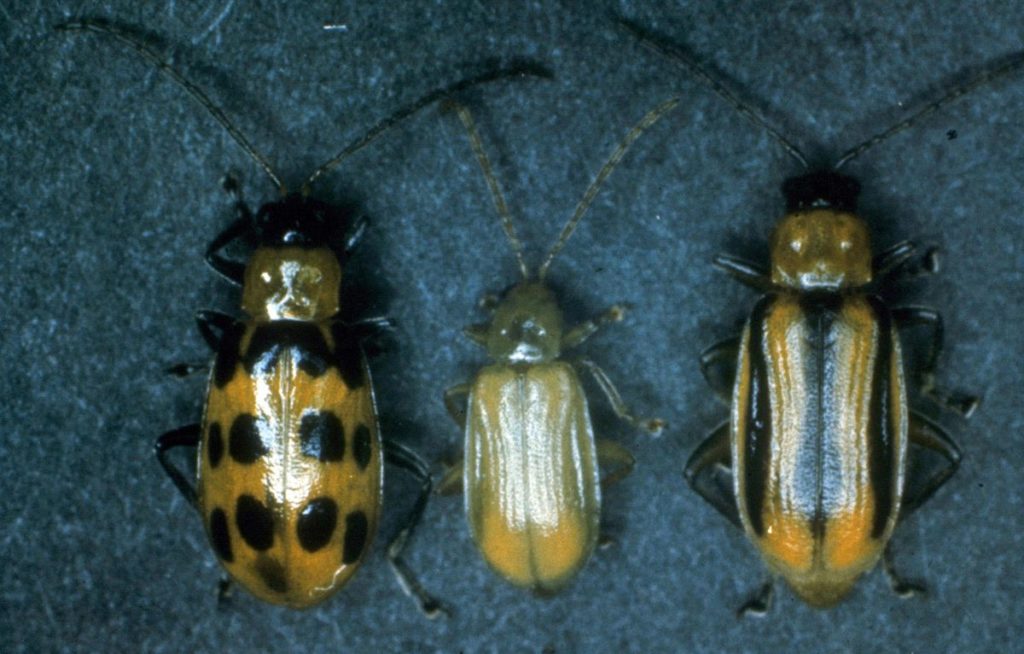
I planted in early April. This last North Texas winter was a mild one, and all the signs indicated that the last frost was behind us. I watched my rows carefully, waiting for the little seedlings to pop up out of the soil. I always get a little extra heart pitter patter when I see them emerge.  This year, each morning when I went out to do a quick check and spot weed, my seedlings started completely disappearing nearly as fast as they came out of the ground. What the what??? It took me several days to identify the culprit. While we do have a few of the spotted variety (see above left), the majority of these evil suckers look like the ones on the right. Striped destruction. Right there. They have eaten every single plant in the cucumber, melon & watermelon family, and THEN they started on my squash. Are you kidding me?? Even the squash bugs have their gustatory boundaries.

If you’ve stuck around here for any length of time, you know that we go as organic as possible on the farm. In the garden, we are 100% organic all the way down to our heirloom seeds and homegrown cow manure compost. Unfortunately, all of the resources I found on organically managing cucumber beetles required some serious forethought and planning….. the kind of planning that you do in the fall and winter.  Helpful information, but too late in the game.

Organic gardening isn’t so much about destroying the enemy as it is repelling and reducing the numbers of ‘feet on the ground’. In my search, I found a few different general gardening ‘bug be gone’ recipes, but I didn’t have all of the ingredients on hand for any single recipe. Time was short. The cucumber beetles had systematically moved on to my young squash plants, and there were beetles everywhere. Complete and utter destruction of all things cucurbit was eminent.

I decided to take the ingredients listed in a few recipes, and combine them for my recipe:

“Bug Be Gone” Brew

1 big deep bucket or ‘under the sink’ style trash can
1 old fashioned flour sifter
about 3 gallons of food grade Diatomaceous Earth (DE)
about 1 cup of premade  minced garlic (I will make my own in the future, but urgency required the premade stuff)
about 2-3 mls each of the following oils. I use Young Living Oils because I know they are potent, pure, and full of health benefits! …. and once again, we are striving to be 100% toxin free, especially in the garden.

  • Thyme
  • Rosemary
  • Clove
  • Peppermint

I added the oils to the garlic and then added that mixture to the bucketful of DE. Make sure you have enough room in the bucket to mix thoroughly without spillage. It is some pretty potent smelling stuff!

I then began sifting the mixture over the plants, making sure to get the ground around the plant well covered too.  Honestly, that part went way faster than I anticipated. I did notice that the beetles seemed to scurry when I started applying the dust, but I decided to withhold my assessment for a few days.

I also went back and replanted seeds on the same day that I spread the initial application. I put some of the DE mixture in each little hole I made for the seeds, and then put some on the top of the rows for good measure.

It’s now 6 days later, and I’m happy to report that the cuke beetle population has definitely made a dramatic turn. While I still find an occasional straggler, for the most part, it appears there has been a retreat by the enemy. My new seeds are coming up, and I am being vigilant about dusting them once they pop thru the upper crust of the soil, and re-dusting them after watering. So far so good….. but for now, I’d call this battle a victory.

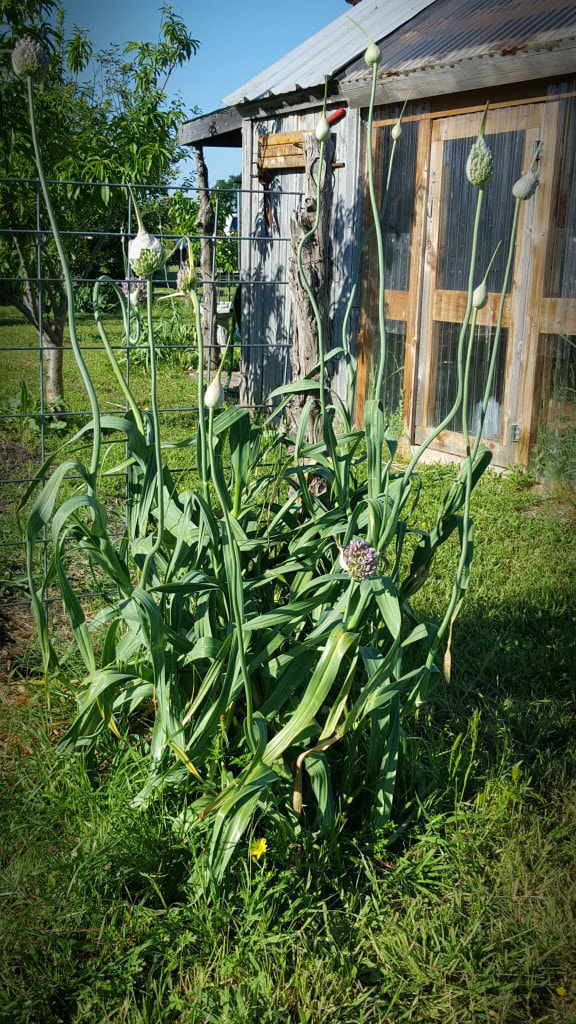
My garlic is nearly ready to harvest and I will be making more of my Bug Be Gone with my own cloves in the future. The sifter is a key piece of equipment for this endeavor. Mine came from my kitchen, but you can find ones like it in junk stores, or just buy a new one on line for about 10$.

​Enjoy your day!…. and I hope you win whatever battle you’re currently fighting.

Sunday Squirrel

Liz James · April 23, 2017 ·

Good Sunday morning!

If you have been hanging around my blog for awhile, you might recall that we share our lives with a squirrel named Henri. This little girl came to us last fall as an orphan, and was hand raised. It’s not my first rodeo in squirrel rearing, but it is my first with a female squirrel. Because she is a wild animal, our intention was always to raise her and then return her to a somewhat protected environment where she can ‘be a squirrel’ as God meant her to be. 

Her release was gradual when the time came…. first letting her spend time outdoors and getting her acquainted with the area (in her case, our wraparound porch). We went from supervised playtime outdoors to semi-unsupervised playtime outdoors, and from nights spent indoors to nights spent outdoors. We bought her an enormous parrot cage that has a top that can be left open, and she began sleeping outdoors in that protected environment. I left the top open, and she would play all day out of her cage, and then return to the cage on her own free will to sleep there at night. One night several months ago, she didn’t come ‘home’ for the night, and I tried my best to hold down the panic of her absence. She was a teenager after all…. and we all know what kind of trouble teens can get themselves into after dark, especially given the predators that come out once the sun goes down. Thankfully, she was ok, and showed up the next morning for breakfast. She did however find a new home…. kind of.  She had started her own apartment in the sub-ceiling of part of our barn/stall area that is attached to our home (yes, I know it sounds weird, but we are very animal friendly around here!).

The months have gone by, and Henri has turned into an independent adult squirrel. She still lives 100% with us, but is free to do whatever it is that squirrels do during the day.

I’ve been biting my nails as spring has approached. We live on the tree lined edge of pastured land, so Henri would actually have to make a bit of a run to the trees to find a community of her own kind. Surprisingly, as communicatively extroverted as they are, squirrels do not tend to be ‘pack animals’ (a group of squirrels is actually called a ‘scurry’)…. preferring to live life on their own terms. They will come together a few times a year (usually spring and fall) to mate and have babies. THIS is what I’ve been biting my nails over! While we love Henri, and she’s found a good safe place in the auspices of our care to live out her life (under our roof), I’m more than a little concerned about what might happen if she finds a cute little male squirrel to make babies with. Doing the math, it appears that in just a few short years, we’d have 262,144 squirrels living with us (provided that they all survived of course). I hope you are now biting your nails too… because that prospect is a little daunting. So far, Henri, has shown zero destructive tendencies in her living arrangements, but squirrels can be fairly destructive to a home if left to their own devices, and we’d be a little outnumbered rather quickly.

Henri is an Eastern Fox Squirrel, and I just did a little more digging on their mating habits. I’ve been watching her like a hawk this spring… looking for evidence that she’s had a tryst with some little guy who caught her eye, but other than getting a little chunky, she’s shown no signs of impending motherhood. Technically, and according to literature, spring litters should have already sprung. I worried then, that something had happened to the babies (I know, I’m bipolar on my stance on this… but what’s a mama to do?). This morning I found the following: “Females become sexually mature at 10 to 11 months of age and usually produce their first litter when they are a year old.”

Gahhhhh! Given this information, I can relax for just a wee bit longer…. Henri’s only 7 months old. I can breathe a little more freely until late summer and early fall, and we can worry about this all over again :).

So this morning, I bring you a little sunshine from my little girl, Henri. Enjoy your day!
​

  • « Go to Previous Page
  • Page 1
  • Interim pages omitted …
  • Page 153
  • Page 154
  • Page 155
  • Page 156
  • Page 157
  • Interim pages omitted …
  • Page 162
  • Go to Next Page »

Primary Sidebar

Author

Hey there....thanks for stopping by! This is me (Liz James)... an eclectic mixture of holistic (and organic) farmgirl meets pharmacist. It's a synergy that works well as I speak truths and dissect fact from fiction. If you're looking for healthier living options, you've come to the right place!  ​

Recent Posts

  • Flu Shot Risks and Research
  • Young Living November 2026 Free Gifts & Holiday Collection
  • Young Living October 2026 Promotions: Cozy Favorites & Sulfurzyme
  • Kingdom Keys Christian Podcast Interview with Blessed By His Blood Founder, Liz James
  • Farm Life Reflects Harmony

Categories

  • Archive
  • Children's Health & Immune Support
  • Faith & Health Stewardship
  • Health Policy & Medical Ethics
  • Personal Reflections
  • Preventive Health & Root-Cause Medicine
  • Vaccine Information & Informed Consent

Archives

  • November 2026
  • October 2026
  • September 2026
  • August 2026
  • July 2026
  • June 2026
  • May 2026
  • April 2026
  • March 2026
  • February 2026
  • January 2026
  • October 2025
  • September 2025
  • August 2025
  • July 2025
  • June 2025
  • May 2025
  • April 2025
  • March 2025
  • February 2025
  • January 2025
  • December 2024
  • November 2024
  • October 2024
  • September 2024
  • August 2024
  • July 2024
  • June 2024
  • May 2024
  • April 2024
  • March 2024
  • February 2024
  • January 2024
  • December 2023
  • November 2023
  • October 2023
  • September 2023
  • August 2023
  • July 2023
  • June 2023
  • May 2023
  • April 2023
  • March 2023
  • February 2023
  • January 2023
  • December 2022
  • November 2022
  • October 2022
  • September 2022
  • August 2022
  • July 2022
  • June 2022
  • May 2022
  • April 2022
  • March 2022
  • February 2022
  • January 2022
  • December 2021
  • November 2021
  • October 2021
  • September 2021
  • August 2021
  • July 2021
  • June 2021
  • May 2021
  • April 2021
  • March 2021
  • February 2021
  • January 2021
  • December 2020
  • November 2020
  • October 2020
  • September 2020
  • August 2020
  • July 2020
  • May 2020
  • April 2020
  • March 2020
  • February 2020
  • January 2020
  • December 2019
  • September 2019
  • April 2019
  • March 2019
  • February 2019
  • January 2019
  • October 2018
  • August 2018
  • July 2018
  • June 2018
  • May 2018
  • April 2018
  • March 2018
  • February 2018
  • January 2018
  • December 2017
  • November 2017
  • October 2017
  • September 2017
  • August 2017
  • July 2017
  • June 2017
  • May 2017
  • April 2017
  • March 2017
  • February 2017
  • January 2017

Book Your Health Coaching CallBook Now

Elizabeth James

469.425.9091

ebj0203@gmail.com