
One man’s weed is another’s tool 💡😍. Interesting reading. Note all the other names Canadian Horseweed is called. Good stuff!
xoxo~ liz
Vascular
Health Clues in Your Teeth – Part 1
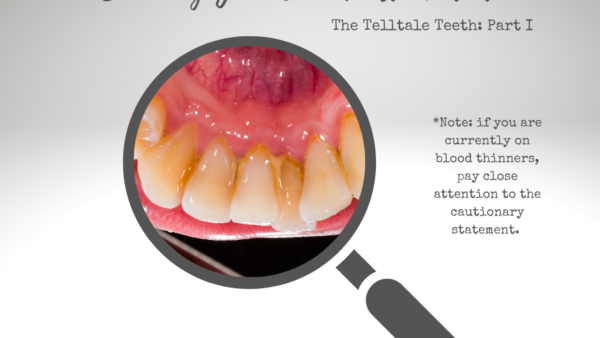
I find teeth mysteriously fascinating, but it used to not be that way. Teeth (and toes) used to activate my gag reflex before I began learning about their wealth of clues. Now I find them to be wonderful guides and tools! 😍
This particular clue is so very important that it’s the only one we are going to discuss today. Any time you have something that changes in or on your body, it should become an instant signal that something has shifted metabolically or physiologically, and the best course of action is to “root out” the cause before bigger symptoms take place.
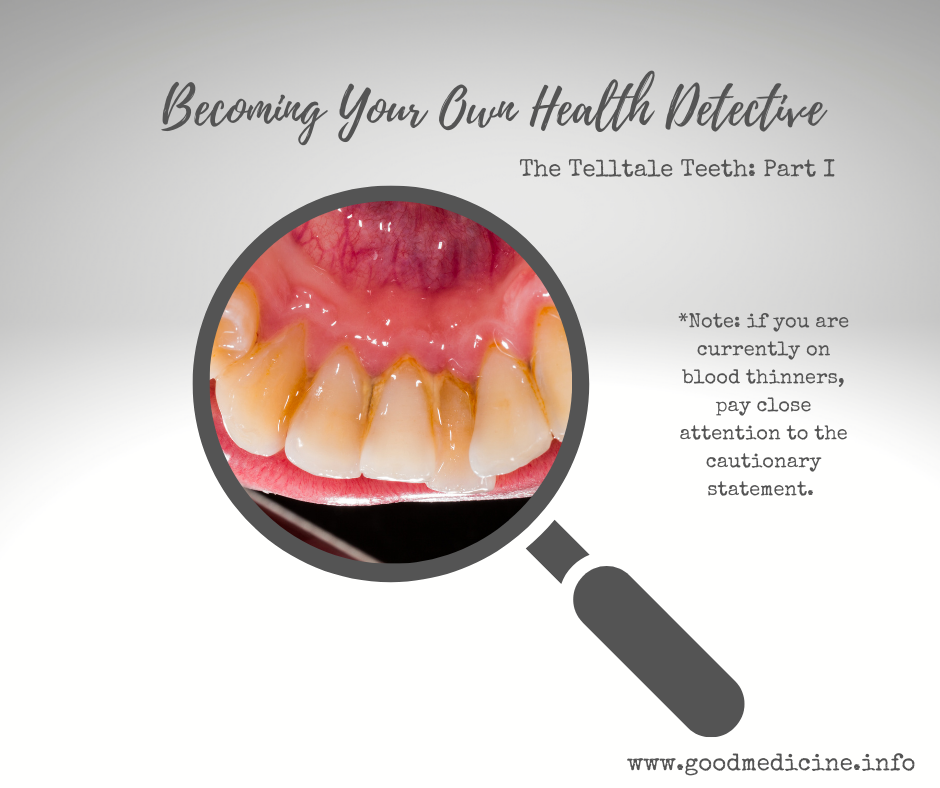
Perhaps you’ve been to the dentist and the hygienist has remarked that you have more plaque than normal on your teeth, or you’ve looked in the mirror and noticed this yourself. Hopefully this is not the case because you have loved on your oral cavity with Thieves toothpaste, mouthwash, and floss! Sometimes tho, even the best of oral care products doesn’t stop plaque build up. If that has happened, it’s time to start digging for the root cause!
*But first, A little history about teeth and nutrition! Before there was refrigeration or even toothpaste, there were remote people groups worldwide who had solidly amazing teeth and mouths. This is well documented in the works of a dentist from the early 1900’s named Dr. Weston A Price. Dr. Price worked tirelessly to prove that oral decay and degeneration was due more to nutritional deficiencies than to lack of oral hygiene. His work revealed that fat soluble vitamins A and D and a probiotic rich diet were key contributors to healthy mouths, more so than daily brushing. An interesting unifying factor amongst all the people groups he studied was that all had some form of probiotic rich daily food source…. Something that the standard American diet falls woefully short in today.
*What does diet have to do with plaque on the teeth and why is it a clue? Here is where the clue becomes quite important! A diet rich in properly fermented foods (think traditional kefir, sauerkraut, miso, yogurt, cod liver oil, kimchi, kombucha etc) is a valuable tool for supporting a healthy gut. If the gut is loaded with healthy bacteria, the body is able to create other vitamins which are necessary for healthy living. For the course of THIS discussion, that would be Vitamin K2. #life9probioticforthewin
Vitamin K2 (aka menaquinone-7 , or activator X) is an underappreciated nutrient, in that it is vital for building strong bones and teeth. It does this by carrying calcium out of soft tissue (think brain and vascular system) and carrying it IN TO bones and teeth.
Stick with me ya’ll😍….. We are getting to the super important part!
K2 activates something called osteocalcin and matrix-Gla protein. Matrix-Gla is present in saliva and its activity arrests the dental plaque calcification process….. It is also present in the blood, and when activated by vitamin K2, helps to remove plaque in arteries! Isn’t it interesting how matrix-Gla prevents both plaque on teeth AND plaque in arteries??
*If plaque continues to build up on teeth despite your best efforts in oral care, it may indicate a deficiency of vitamin K2, which may be putting your vascular system at risk.
*A 2016 study found that matrix-Gla protein inactivation ( as the result of inadequate K2) led to a higher risk of death due to cardiovascular disease.
*Now to be clear, plaque on teeth may happen as a result of poor oral care or a few other reasons too, but if you’ve never had plaque issues before, and now you do….. It may be time to dig a little deeper to protect your overall well being!
Other signs or symptoms of a Vitamin K2 deficiency may include:
*Bruising easily
*Bleeding excessively (including a heavy menstrual flow)
*Osteopenia, osteoporosis or frequent fractures
*A mouth full of cavities
*Heart disease
*Diabetes or pre-diabetes
*Autoimmune disease flare ups (there is evidence that a Vitamin K2 deficiency aggravates autoimmune diseases….. especially Rheumatoid Arthritis)
*Forgetfulness ( a Vitamin K2 deficiency is linked to Alzheimer’s Disease due to the calcium plaque build up within the brain)
*O blood type – lacks some clotting factors in blood, so K2 supplementation is helpful
If you have noticed regular buildup of calcified dental plaque…..
👉Talk to your favorite healthcare professional and consider asking for a cardiac calcium score
👉Get your vitamin D levels checked
👉There currently isn’t a K2 specific lab test to check for deficiency.
👉Consider supplementation of Vitamin K2 (recommended dietary allowance is 60-120mcg/day)
NOTE: If someone is on blood thinners, talk to a health care professional before starting Vitamin K2 as a supplement. It does affect blood coagulation, and therefore may interact with blood thinners.
And YAY you!!!….If you are currently taking Young Living’s CardioGize, Master Formula or Super Cal Plus, you’ll find that these three already contain K2 within each formulation (100mcg, 50mcg, and 30mcg respectively).
As always, I am not a doctor and cannot diagnose, treat, or offer to cure you. I can only help you be a top notch detective for your personal health and wellness.
xoxo~ liz
#sharingiscaring
#healthcluesyoucansinkyourteethinto
#healthcluesyoucanuse
#goodmedicine
#ThanksYL
Health Clues from Your Tongue Part 1
Tongue Clues: Part I
Nobody ever said clue hunting would be glamorous….. Just ask any dental hygienist about health clues found in the mouth! My hat’s off to these health professionals because they see many warning signs and health clues and (hopefully) help save lives in the process! The tongue alone will keep us busy! So grab a mirror and excellent lighting, and let’s proceed!
👅The human tongue is arguably one of the stronger muscle sets of the body. It operates independently of the skeleton and, much like the heart, the tongue is always working. It helps in the mixing process when eating, is crucial to forming letters when we speak and assists in filtering out germs. Even when we sleep, the tongue is constantly working to push saliva down the throat.
👅The tongue is also highly vascular. Even the slightest changes in the constituents of an individual’s blood will be reflected in the appearance of the tongue thru color, shape, coating, and markings.
Tongue mapping is an Eastern medicine tool, and Western medicine also uses the tongue’s appearance to provide valuable health information. According to Eastern tongue mapping practices (and I’d encourage you to do a little research on this), the tongue can be roughly divided into 3 sections:
Tip = heart & lungs
Middle = liver, gallbladder, stomach, and spleen
Back = intestines, bladder, kidneys
As you look at your tongue, take note of where the clues lie on the tongue according to mapping.
In order to identify clues, we first need to establish what a healthy tongue should look like! The best time to look for clues is first thing in the morning (just like the Candida spit test!), before brushing your teeth and tongue.
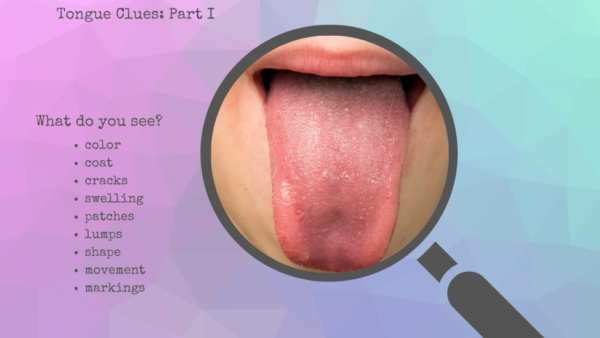
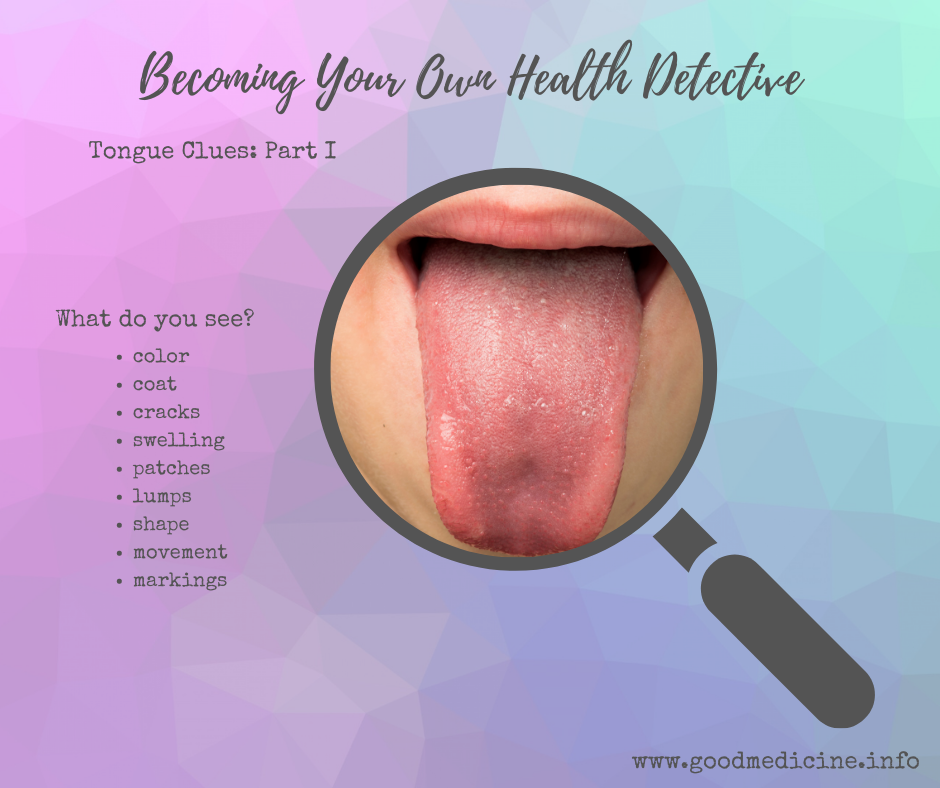
👅Color should be consistent across the entire tongue, and should be a light pinkish red, with a very thin white coating over it.
👅It should be moist but not too wet or too dry.
👅Small cylindrical taste buds on the entire top surface of the tongue.
👅No cracks, ulcers, teeth marks, lumps, or discolored patches should be present.
As you look at your tongue, first note the color of the tongue itself (not the film on the tongue just yet).
🔎A very pale or light colored tongue may be indicative of iron deficiency, and is sometimes paired with taste bud atrophy, tongue pain, and occasionally cracks on the side of the mouth. A pale tongue may also indicate poor circulation in the body.
🔎A red inflamed tongue (sometimes known as beefy tongue) may indicate a folate or Vitamin B12 deficiency. Roughly 40% of the adult US population have a B12 deficiency. Frankly, that is not surprising considering the Standard American Diet and extreme overuse of antacids and acid blocking medications which inhibit Vitamin B12 absorption and assimilation.
Now take a look at the “coat” color your tongue is wearing (Remember, a thin white coat is healthy!):
🔎A thicker white or yellowish coating on the tongue may indicate sluggish digestion and even possibly chronic constipation. Digestive enzymes (Essentialzyme, Essentialzymes-4, Allerzyme, or Detoxzyme) and Life 9 probiotic would be an optimal choice to add to your next Young Living order!
🔎A “sticky looking” coating is suggestive of excess phlegm or mucus production in the body.
🔎A black or brownish tinted tongue is most often diet and habit related. This is often related to trapped bacteria and yeast. A permanent brown coating may be an indication of lung dysfunction and is often seen in smokers. There are a few medications that can cause a darker coating on the tongue, but this is normally a transient effect that stops once the medication is discontinued.
🔎Painful white or red patches on the tongue is usually a sign of thrush….evidence of candida overgrowth. It is commonly seen in poorly managed diabetes, after a round of antibiotic therapy, or steroid use (inhaled steroids are notorious for causing this!). All dis-ease begins in the gut, and candida overgrowth anywhere on the body is a sure sign that diet and digestion support desperately need addressing. #lovethegutyourwith
Everything looking good so far? Next week we’ll cover more tongue clues!
xoxo~ liz 😘
www.goodmedicine.info (just holler if you are in need of a little personalized help!)
#sharingiscaring
#healthcluesyoucanuse
#thetonguespeaks
#goodmedicine
#ThanksYL
Breath Clues part 2
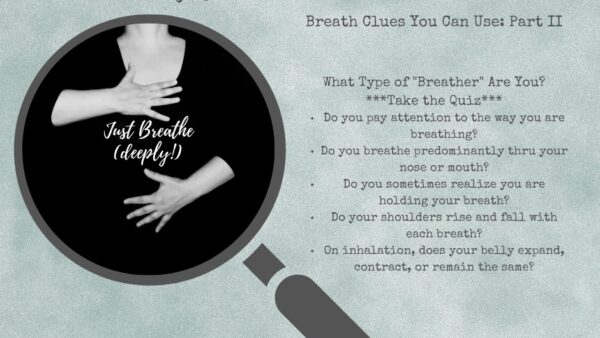
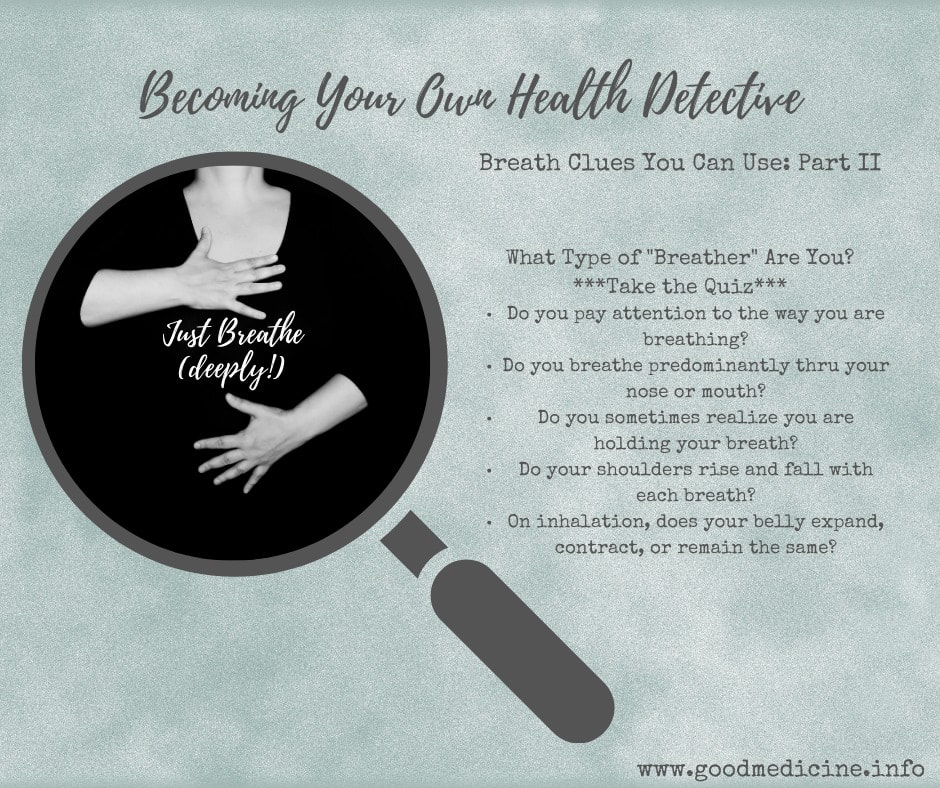
Becoming aware of HOW you breathe is important both as a health clue and an (inexpensive and valuable!) wellness tool.
Did you take the quick quiz on the graphic? If not, take a moment to do so!
Statistically, chronic shallow (mouth, neck, and upper chest) breathing is the most common type of breathing in Westernized cultures. This type of breathing perpetuates stress and anxiety, activates the “fight or flight” (sympathetic response), and suppresses the immune system.
Conversely, diaphragmatic (deep belly) breathing balances the nervous system, supports heart health, improves circulation, promotes lymphatic drainage, reduces stress, calms the mind, and brings the body back into a more homeostatic state.
Do you notice how some people remain calm, cool, and collected while others become a tightly wound spring with every stressor? The ability to pivot from “fight or flight” to “rest and digest” is incredibly important to health outcomes! ( Pharmacist tip: Learning to do this is helpful in keeping you away from the pharmacy!)
The longest nerve in the body is called the 👉vagus nerve 👈. It runs from the brain thru the lungs and on to the gut, and affects every organ and body system it comes in contact with along the way ….. stomach, intestines, liver, gallbladder, heart, lungs, and the immune, endocrine, respiratory, and cardiovascular systems. In other words, the vagal nerve pathway is kind of a big deal! 😍
High vagal tone is incredibly important to overall health and wellbeing….. really, it’s a use it or lose it situation. Low vagal tone is associated with increased risk for cardiovascular disease, stroke, diabetes, GI disorders, and depression. Diaphragmatic breathing increases vagal tone!
If deep belly breathing is not something you do on the regular (ie: it’s become second nature to you), Here are a few tips and tricks:
👉 Start with just 2 minutes several times a day.
1. Place one hand on your upper chest and the other just below your rib cage, so you can feel your diaphragm move as you breathe.
2. Inhale deeply thru your nose for the count of 6-8 seconds (or 4-5 seconds if that’s too much)…. allowing your belly to expand. Try to fill your lungs with air. NOTE! The hand on your chest should remain as still as possible.
3. Slowly exhale through your nose for the count of 6-8 (or 4-5) drawing your belly button in and down as your abdomen moves inward.
4. As you breathe inward deeply, envision oxygen flowing inward and recharging your body. As you exhale, envision all the stress and tension leaving your body.
5. Practice this for 2-3 minutes at a time (20-30 breath cycles). Graduate to 5 minutes as you are able!
Scientifically noted benefits of diaphragmatic breathing can be further enhanced when you pair your breathing practice with Young Living essential oils known for their supportive roles in health and wellness goals:
🌿Want to improve mood? Pair your practice with Citrus Fresh eo blend!
🌿 Looking for better concentration? Try Brain Power or Frankincense!
🌿 Looking to better manage pain? (Yes, deep breathing helps with this too!) Add in PanAway or Deep Relief
🌿 Wanting to lower your blood pressure (Yep, deep breathing exercises does this too!)….. support happy vascular system breathing practices with Joy, Aroma Life, Ylang Ylang, or Lavender.
🌿Lowering blood sugar (amazing what regular deep breathing may do! Consider deep inhalations of Coriander, Melissa, or Christmas Spirit!
🌿 Improve your sleep. Pair pre bedtime deep breathing with a diffuser loaded with Cedarwood, Orange, and Lavender!
🌿 Use as a tool in your weight loss journey. Have you tried Grapefruit essential oil or Thieves on the bottom of the feet?
🌿 Strengthen the pelvic floor muscle (which will also improve bladder and bowel elimination function!). Consider pairing with Clary Sage, Cypress, or (Digize 👈 for colon support).
🌿Better lymphatic flow?…. You’ll love Lemon essential oil (both regular and vitality!)!
Noticing how you are breathing, and then making corrections as needed is a simple, but VIP wellness tool and health clue! Just as diaphragmatic breathing is helpful, chronic shallow breathing will exacerbate many health problems, and over time, may also contribute to lung infections and lung diseases.
Just breathe…… deeply!
xoxo~ liz
👈 if you’d like to know more about additional breathing practices or the oils mentioned above, let’s chat!
#sharingiscaring
#Godgaveusthetools
#goodmedicineisgreatbreathinghabits
#goodmedicine Breath Clues: Part II
Becoming aware of HOW you breathe is important both as a health clue and an (inexpensive and valuable!) wellness tool.
Did you take the quick quiz on the graphic? If not, take a moment to do so!
Statistically, chronic shallow (mouth, neck, and upper chest) breathing is the most common type of breathing in Westernized cultures. This type of breathing perpetuates stress and anxiety, activates the “fight or flight” (sympathetic response), and suppresses the immune system.
Conversely, diaphragmatic (deep belly) breathing balances the nervous system, supports heart health, improves circulation, promotes lymphatic drainage, reduces stress, calms the mind, and brings the body back into a more homeostatic state.
Do you notice how some people remain calm, cool, and collected while others become a tightly wound spring with every stressor? The ability to pivot from “fight or flight” to “rest and digest” is incredibly important to health outcomes! ( Pharmacist tip: Learning to do this is helpful in keeping you away from the pharmacy!)
The longest nerve in the body is called the 👉vagus nerve 👈. It runs from the brain thru the lungs and on to the gut, and affects every organ and body system it comes in contact with along the way ….. stomach, intestines, liver, gallbladder, heart, lungs, and the immune, endocrine, respiratory, and cardiovascular systems. In other words, the vagal nerve pathway is kind of a big deal! 😍
High vagal tone is incredibly important to overall health and wellbeing….. really, it’s a use it or lose it situation. Low vagal tone is associated with increased risk for cardiovascular disease, stroke, diabetes, GI disorders, and depression. Diaphragmatic breathing increases vagal tone!
If deep belly breathing is not something you do on the regular (ie: it’s become second nature to you), Here are a few tips and tricks:
👉 Start with just 2 minutes several times a day.
1. Place one hand on your upper chest and the other just below your rib cage, so you can feel your diaphragm move as you breathe.
2. Inhale deeply thru your nose for the count of 6-8 seconds (or 4-5 seconds if that’s too much)…. allowing your belly to expand. Try to fill your lungs with air. NOTE! The hand on your chest should remain as still as possible.
3. Slowly exhale through your nose for the count of 6-8 (or 4-5) drawing your belly button in and down as your abdomen moves inward.
4. As you breathe inward deeply, envision oxygen flowing inward and recharging your body. As you exhale, envision all the stress and tension leaving your body.
5. Practice this for 2-3 minutes at a time (20-30 breath cycles). Graduate to 5 minutes as you are able!
Scientifically noted benefits of diaphragmatic breathing can be further enhanced when you pair your breathing practice with Young Living essential oils known for their supportive roles in health and wellness goals:
🌿Want to improve mood? Pair your practice with Citrus Fresh eo blend!
🌿 Looking for better concentration? Try Brain Power or Frankincense!
🌿 Looking to better manage pain? (Yes, deep breathing helps with this too!) Add in PanAway or Deep Relief
🌿 Wanting to lower your blood pressure (Yep, deep breathing exercises does this too!)….. support happy vascular system breathing practices with Joy, Aroma Life, Ylang Ylang, or Lavender.
🌿Lowering blood sugar (amazing what regular deep breathing may do! Consider deep inhalations of Coriander, Melissa, or Christmas Spirit!
🌿 Improve your sleep. Pair pre bedtime deep breathing with a diffuser loaded with Cedarwood, Orange, and Lavender!
🌿 Use as a tool in your weight loss journey. Have you tried Grapefruit essential oil or Thieves on the bottom of the feet?
🌿 Strengthen the pelvic floor muscle (which will also improve bladder and bowel elimination function!). Consider pairing with Clary Sage, Cypress, or (Digize 👈 for colon support).
🌿Better lymphatic flow?…. You’ll love Lemon essential oil (both regular and vitality!)!
Noticing how you are breathing, and then making corrections as needed is a simple, but VIP wellness tool and health clue! Just as diaphragmatic breathing is helpful, chronic shallow breathing will exacerbate many health problems, and over time, may also contribute to lung infections and lung diseases.
Just breathe…… deeply!
xoxo~ liz
#sharingiscaring
#Godgaveusthetools
#goodmedicineisgreatbreathinghabits
#goodmedicine
Duct Tape, Baling Wire & Cholesterol

What do cholesterol, baling wire and duct tape have in common? 👩🌾 #thelifeofafarmgirlpharmacist I know, weird question right? Here’s the thing…. I don’t know what we’d do around here on the farm without duct tape and baling wire when we need to patch something up in a pinch. (I can make one heck of a hoof bandage out of duct tape too!)
Cholesterol gets a bad rap 99% of the time because the real culprit is inflammation, yet cholesterol gets thrown under the tractor as the instigator. Cholesterol is just doing its job of patching up the super inflamed areas within the vascular system. Like a piece of duct tape, it will patch that spot right up. When you apply more and more and more cholesterol (aka duct tape) onto a chronically inflamed area in the vascular system, you will eventually end up with blockage. The cholesterol was just doing its job, while the inflammation was ignored. An inflamed vascular system is painless until you have that heart attack or stroke, which is why it’s important to have labwork done to find out what your inflammation markers look like. When you evaluate cholesterol at the same time, both can be addressed if needed.
And, just like duct tape, there is good cholesterol and bad cholesterol (have you ever used a really cheap “off brand” of duct tape 😬 #yougetwhatyoupayfor ). We typically think of good cholesterol as being HDL and “bad” cholesterol as being LDL, when in fact, there are different types and patterns of LDL that are actually really healthy. The insurance companies rarely allow your doctor to run those tests tho, so you are left thinking that all your LDL is bad.
There are other factors in play of course, but the jist of it all is this….. every single cell in our body requires cholesterol to function properly, especially when it comes to our nerves and hormones, and it behooves us (if we want to function well) to know the full truth of our cholesterol, our inflammation, and an important, but little recognized genetic marker called lipoprotein a.
The lab I work with is having a quick sale right now on all of these tests. If you are interested in finding out what the “inner workings of you” look like, I would be honored to help you walk thru and understand your results!
Here’s the link for the lab work, and you can also book a complementary 30 min consult on my website for a comprehensive walkthru of the results: https://yourlabwork.com/adv-cholesterol-panel-0221-afl/…
(note: testing available in all states except New Jersey, New York, Maryland, Rhode Island and Arizona)
xoxo~ liz
#sharingiscaring
#holistichealthcoaching
#pharmgirlwisdomfarmgirlwit
#Ilovecholesterolandyoushouldtoo
#ThanksYL
#labworkfortheknowledge
#theapplicationofknowledgeispowerandwisdom