• Skip to primary navigation
  • Skip to main content
Book Your Health Coaching Call
Good Medicine

Good Medicine

Holistic Health Coaching

  • Home
  • Liz James
    • About Liz
    • Coaching
    • Book a 20 Minute Complimentary Coaching Call
  • Favorite Resources
    • BlessedByHisBlood
    • Young Living
    • Fast Like A Girl Certified Coach
    • Order supplements through my Fullscript store
    • Green Pasture (Coupon: Health10)
    • RogersHood Apothecary (Coupon: BEABLESSING for 10% off)
    • DolphinMPS
    • Company
    • Abundance
  • My Books
    • Becoming Your Own Health Detective Volume 1
    • Becoming Your Own Health Detective Volume 2
  • Blog
  • Cart

Skin

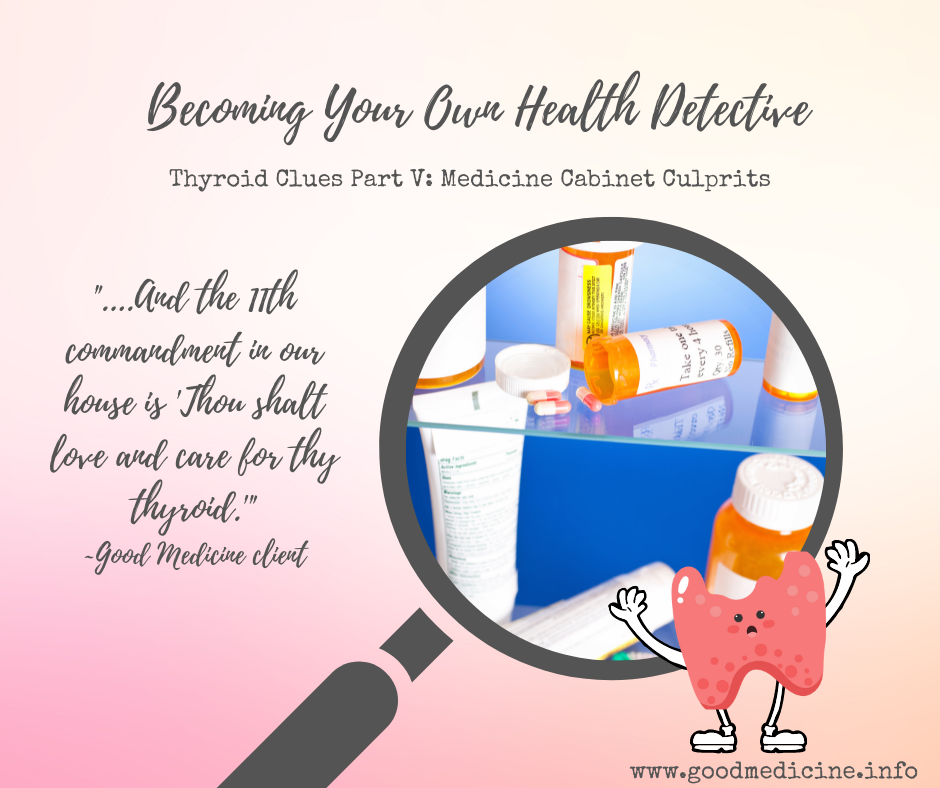
Thyroid Clues Part 5-Medicine Cabinet Culprits

Liz James · April 20, 2022 ·

Remember the fable about the Princess💃 and the pea🟢? You may recall that the true princess felt the effects of a pea beneath twenty mattresses and had a terrible night’s sleep because of it. After all we’ve discussed, you well understand that the thyroid🦋 is the discerning princess in the body……it feels everything!
 
It’s hard to pin down exactly how many people use medication chronically in the USA, but a rough estimate in 2017 was 66%. (I believe that number has risen significantly since 2020, but to date, official data has not yet been released).
 
I will forever and always say that there is a time and a place for medication, but that it should be used as a last resort whenever possible. Pharmaceuticals by very definition are a toxin to the body. While they may be performing their “FDA approved task” within the body, behind the scenes they are likely setting up trip wires, snares, and grenades elsewhere. Many commonly prescribed medications are quietly sabotaging thyroid hormone function as they outwardly “play nice” in their appointed tasks of lowering cholesterol, quelling aches and pains, placating gastric reflux symptoms, smoothing out moody days, etc.
 
Certain medications have the ability to affect thyroid hormones in at least four ways:
1. Some may alter the actual production of thyroid hormones.
2. Some may affect the release of of thyroid hormones from the thyroid gland.
3. Some may affect how well thyroid hormone attaches to (or utilized) at receptor sites.
4. Some may interfere with the conversion of inactive T4 into active T3 in the liver
Who are the thyroid accosting culprits?🕵️ As I hinted above, the gang is quite diverse. Nearly ⅓ of this gang of thieves bears a similar “tattoo”…….. They contain fluoride within their chemical structure. You’ll recall (hopefully!) that fluoride (and chlorine, another “tattoo” found in many medications) blocks iodine from its job helping the thyroid produce thyroid hormones. These small doses add up over time with chronic use medications.
 
Medications known to inhibit healthy thyroid function (in one of these four ways) with chronic use include:
💊Lipitor, Crestor, Vytorin, Zetia (cholesterol meds)
💊 Prevacid (stomach acid / GERD)
💊 Betamethasone, Clobetasol, Dexamethasone, Fluocinolone, Fluticasone (topical, oral or inhaled steroids)
💊Celebrex, Ibuprofen, Naproxen (NSAID pain)
💊 Lexapro, Prozac, Celexa, Paxil, Zoloft (mood stabilizers)
💊 Haldol, Risperdal, Lithium (mood stabilizers)
💊 Levaquin, Cipro (antibiotics)
💊 Synthetic hormone replacement therapies, birth control pills
💊 Amiodarone (treats ventricular heart arrhythmia)
💊Fluconazole (antifungal)
💊 Interferon Alfa, Sutent, Sorafenib (chemotherapy agents)
💊 Pramipexole, Ropinirole (for Parkinson’s)
💊 Metformin (Type II Diabetes)
💊 Furosemide (diuretic)
💊 Phenytoin and Carbamazepine (for seizures)
💊 Excessive Niacin (Vit B3) intake
 
(Note that this is a short representation of a very long list of medications!)
I am in no way inferring that you should stop taking medication that you may be currently on because it may be affecting your thyroid function. That is a conversation between you and your trusted health professional. According to an article by the Natural Health Research Institute, almost 75% of chronic illness can be improved or cured with improved lifestyle choices. Has your health professional talked to you about this as part of your treatment protocol?
 
Statistics like this are meant to empower you. Chronic disorders are generally where chronic medication use comes into play, and changing lifestyle habits can have a huge impact on health outcomes and on pharmaceutical needs.
 
Five significant ways your choices can impact your health include:
1. Reduce exposure to toxins (thank goodness for our YL Thieves Household Cleaner, essential oils that do “all the things” in a natural gentle way, Savvy Minerals cosmetics and the ART, Bloom, and Orange Blossom skin care lines!)
 
2. Making better food choices (and ditching the toxic processed foods)
 
3. Exercise. There is an exercise program / type out there that will work no matter what health situation you may be living with! (NingXia Nitro or Zyng 15-20 minutes prior to workouts elevates my gym workout routine!)
 
4. Sleep….Make sleep a priority. Improve your sleep hygiene habits! Some of my favorite sleep aids are YL’s Tranquil or RutaVala Roll-on…. Give ‘em a try and load your bedtime diffuser with oils like Cedarwood, Lavender, Peace & Calming, Frankincense, Orange )
 
5. Manage stress. Recall that chronic stress is as dangerous as a regular cigarette habit to the body. Even simply working on the four previous suggestions will have a profound impact on better management of stress.
 
In addition to making healthier lifestyle choices that lead to a healthier version of you (and protecting your thyroid🦋 in the process), here’s an added bonus: Annually, direct health care costs average $6032 out of pocket💰 for an individual with one chronic disease (that number goes up with each additional disorder). Indirectly, chronic disorders also have a profound impact on education, occupation opportunities, income, and social interaction. If your health professional has not offered up these five recommendations as part of protocols for any chronic disorder you may have, they are working as a dis-ease maintenance advocate instead of that as a healer. Ultimately though, it’s our personal responsibility to be our own advocates and in doing so, choosing whether to live in a space of dis-ease maintenance or healing. Care for that thyroid “princess” within your personal kingdom friends! It’s often the first organ in the body to recognize that something is amiss.
 
xoxo~ liz
 
 
#caringissharing
#becomingyourownhealthdetective
#BYOHD
#goodmedicine
#applicationofknowledgeispower
#supersleuthhealthclues

Clues From Our Thyroid – part 1

Liz James · March 22, 2022 ·

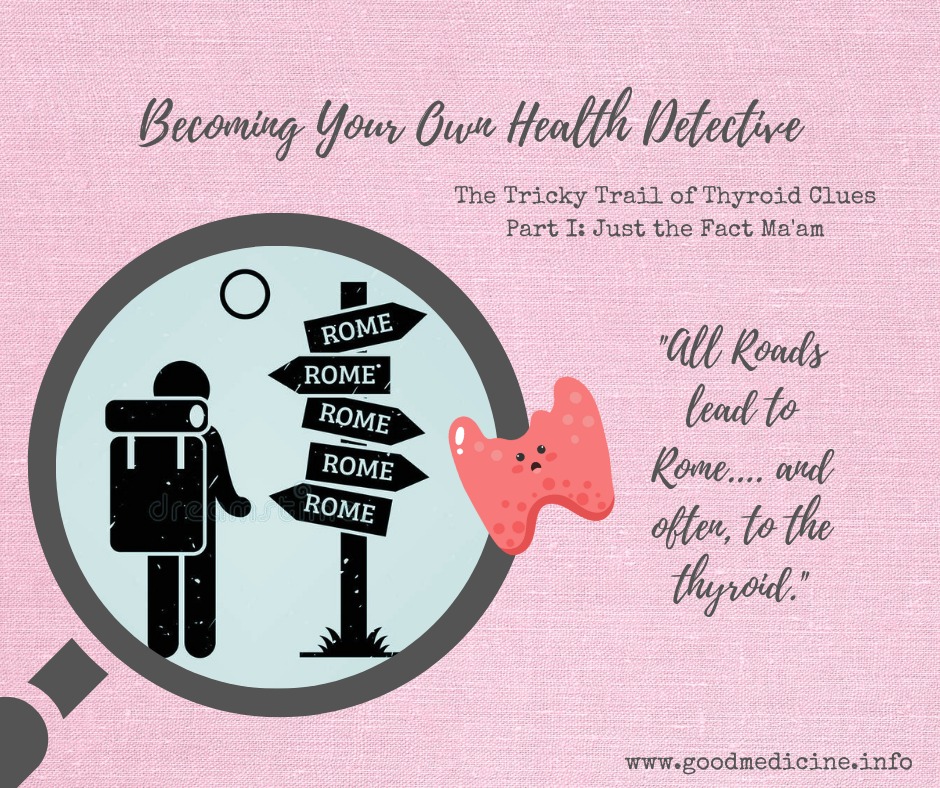
Thyroid disorders are like🦎 chameleonic villians. They look different in every person, and their characteristics may change according to their environment. Thyroid disease is a master of disguise! This is important to understand
 

 Two key reasons:

  1. Innocent until proven guilty. It’s estimated that perhaps 18-25% of women have an underlying thyroid disorder (It’s somewhat less common in men). This still means that 75-82% of us (women, for statistical ease) do not. Become well acquainted with your body so that you may better decipher the clues you are being given, and remember that there are many possible causes for almost every clue the body gives. Cluster clues for the win!
  2. Thyroid disease is overwhelmingly mistaken and/or overlooked in favor of other disorders (often mental health related) by the corporate owned medical community. Thyroid diagnosis often requires intuition (Holy Spirit discernment), patience, persistence, and attention to details. If you feel “off”, and yet your doctor tell you “everything looks good”…. Who do you believe? I hope you pointed a finger back at yourself just now. You believe what you know about your body and your refined detective skills!

Function of the Thyroid

While every little organ and gland of the endocrine system is important for stellar body function, very often the trail of tears leads back to the thyroid, the butterfly 🦋shaped gland located just below the Adam’s apple along the front of the windpipe. The thyroid’s function is to regulate all the processes of energy release on microscopic (cellular) and macroscopic (full body) levels. Because hypothyroidism (especially Hashimoto’s) is the predominant thyroid disorder, most of what I write about will be centered upon thyroid deficiency. Grab a mirror (you’ll need it for a few of them!) and your journal and take stock of your own possible crime scene.
 

Symptoms of thyroid deficiency might include:

  • Chronic fatigue or tiredness.
  • Muscular fatigue
  • Puffiness or evidence of fluid retention
  • Difficulty regulating body temperature (chronic feelings of being hot or cold. Recall the posts on body temperature)
  • Development of Reynaud’s Syndrome
  • Reduced pulse pressure and blood pressure
  • Heart rate fluctuations
  • Angina and/or feelings of breathlessness
  • Higher cholesterol. People with subclinical hypothyroidism often have higher levels of LDL cholesterol. Thyroid disease is a major contributor to cholesterol problems.
  • Arteriosclerosis (decreased elasticity of arteries)
  • Changes in bruising or clotting (generally, bruising will become more common)
  • Depression and/or anxiousness
  • Difficulty gathering thoughts, memory, focus and concentration
  • Headaches with unknown origin
  • Moodiness or lack of enthusiasm in life
  • Peripheral neuropathy
  • Carpal tunnel (there is a strong link!)
  • Random shooting pains in the hands and feet
  • Osteoporosis (chronic hypothyroidism can be a contributor)
  • Visual problems: dry eyes, age related macular degeneration, primary open angle glaucoma
  • Loss of the outer eyebrows
  • Chronic constipation
  • Increased incidence of gallstones (thyroid hormones affects the composition of bile and how well it flows)
  • Poor digestion of fats and proteins
  • Decreased stomach acid resulting in poorly digested foods (If this clue is on your radar, grab your YL Essentialzyme and give your body digestive support!)
  • Bloating, gassy
  • Small Intestinal Bacterial Overgrowth (SIBO)
  • Insulin resistance (and therefore) increased risk of developing Type II Diabetes
  • Thicker tongue, perhaps even with scalloped teeth marks on the sides of the tongue.
  • Changes in how food tastes.
  • Periodontal disease
  • Development of a husky or hoarse voice
  • Infertility or difficulty maintaining a pregnancy
  • Heavy periods (There is often a link between hypothyroidism and PCOS)
  • Sex hormone imbalances (progesterone, estrogen and testosterone in women)
  • Loss of libido
  • Postpartum depression (very common)
  • Premature menopause
  • Dry skin
  • Deep cracks and scales on the bottoms of the feet
  • Deep lines on the palms of hands or soles of feet
  • Yellowish orange or reddish color on palms of hands or soles of feet
  • Reddish spots, bumps, or rashes that come and go
  • Acne (often seen in conjunction with testosterone level disturbances)
  • Brittle, flaking nails or nails that fail to grow well
  • Hair loss (on the head) or gaining hair in all the wrong places elsewhere
  • Getting sick more often, especially upper respiratory tract infections and in women, persistent urinary tract infections.
  • Bedwetting in kiddos
  • Delayed wound healing
  • Gaining or losing weight without trying
  • Poor sleep
  • Iron deficiency anemia (roughly 50% of people with thyroid disease struggle with this)
That’s the bulk of this particular crime scene checklist. Thyroid disease is very interesting in that the severity of symptoms often are not reflected in thyroid specific lab work. Lab Work is based on a standardized bell curve and not everyone fits exactly into that bell curve mold. Additionally, many western medicine health professionals only test TSH when first evaluating the competency of the thyroid gland. That alone is insufficient information to determine thyroid function. This list of possible symptoms, while not completely comprehensive, is more valuable in determining the probable health of your thyroid than a single TSH test.
More to come friends.
 
xoxo~ liz
#sharingiscaring
#lovingyourthyroidisgoodmedicine
#itsthelittlethings
#becomingyourownhealthdetective
#goodmedicine

Zinc Deficiency

Liz James · October 5, 2021 ·

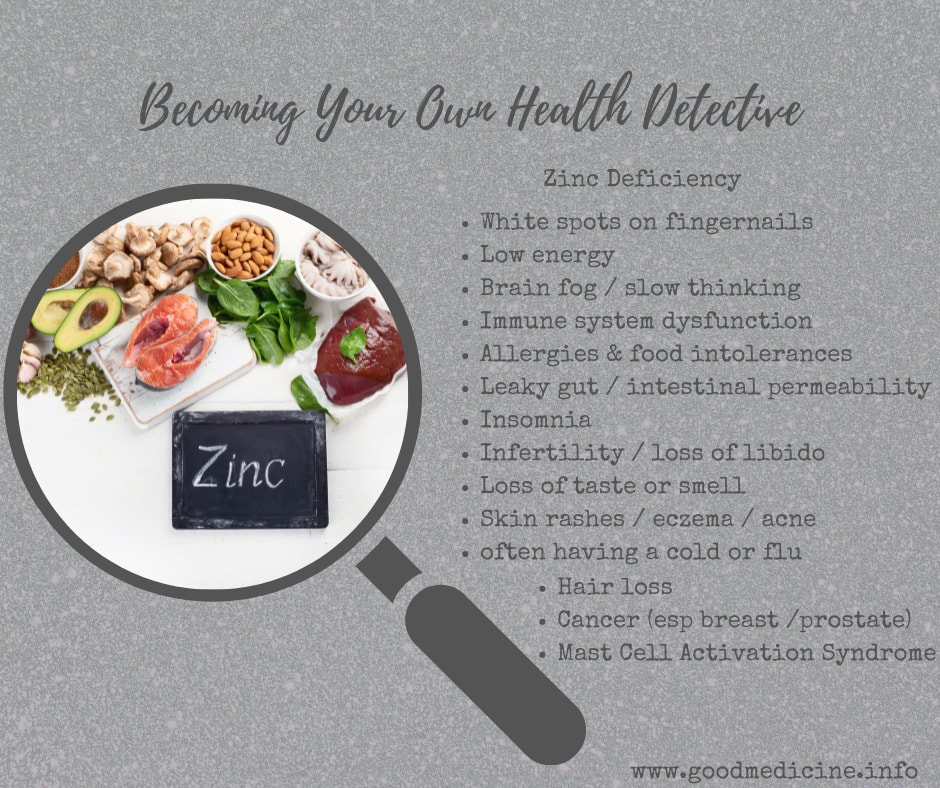
‘Tis the season to chat about zinc (or lack thereof!). Frankly, we should have had this discussion two years ago…..better late than never, right? First, take a close look at the clues I dropped in the graphic, and then hop back here to tackle this very important topic!


Approximately 25-33% of the population is deficient in zinc. The World Health Organization says zinc deficiency is the 5th leading life-threatening factor in the world, especially in 57% of the elderly population.  Kind of a big deal for a micronutrient! At least 16% of all deep respiratory infections are related to a zinc deficiency (impaired taste and smell, fever, cough, sore throat, generalized weakness, pain and achy limbs, runny nose, and even occasionally…. diarrhea😬 are all symptoms of deficiency btw).


Why? Zinc is one of the white hat good guys . It has over 200 known roles in body function (just take a look again at some of the clues related to low zinc), and is a key player in our immune system:
✅Adequate zinc is essential for preventing viral entry and also supports appropriate viral response in host cells.
✅Adequate zinc supports ciliary strength and action in the lungs. These are tiny hairlike structures in the lungs that help prevent mucus buildup.
✅Adequate zinc levels directly inhibit viral replication.
✅Adequate zinc levels have a supportive role in balancing immune response during a dis-ease process. 


Additionally, 🔥zinc deficiency🔥 has been shown to play a role in:
🔥Type I Diabetes
🔥Rheumatoid Arthritis
🔥Cancer
🔥Neurodegenerative diseases
🔥Depression
🔥Malaria
🔥HIV
🔥Tuberculosis
🔥Measles
🔥Pneumonia
🔥Hormone imbalance


Zinc Factoids: 
👉Excess is not stored in the body. Intake must occur daily. 
👉Both deficiency and excess can negatively impact immune system function. This is but one reason to have thorough blood work run by a healthcare professional who will take the time to do a complete analysis. 
👉Zinc “overload” is rare, but can certainly happen. When it does, it is usually  due to a copper deficiency or zinc:copper ratio imbalance. (again, labwork!)


How did we become a world of zinc deficient people? Toxins and poor farming practices. Overworked soil and fertilizers containing too much phosphorus (which binds zinc) are to blame. Zinc cannot enter into the plants and then fails to make it into the food chain.


High toxin☠️exposure is also to blame. Just one more excellent reason to kick your known household toxins to the curb (toxins typically found in mainstream cleaning products, personal care items, processed foods and beverages, makeup etc).

Thankfully, we have solutions in place🙌 with Young Living Thieves Household Cleaner, a wonderful skincare line, and even our amazing YL Savvy Makeup collection. Kicking toxins to the curb is so easy knowing that pure unadulterated excellence is waiting to replace them!


Other causes of zinc deficiency:
🔥Chronic stress (depletes zinc rapidly)
🔥A high copper to zinc ratio
🔥Leaky gut and digestive disorders (zinc deficiency is both cause and effect!)
🔥Medication usage: ACE inhibitors (blood pressure), antacids and proton pump inhibitors, glucophage, beta blockers (blood pressure), birth control pills, corticosteroids, diuretics, NSAIDS, and statins are among those known to deplete zinc.


The USDA recommended daily allowance for zinc is 10-12 mg/day, but this does not account for the amount of toxins a person may be regularly exposed to. Many functional medicine doctors suggest that optimal daily zinc should be 20-40mg/day. 


Foods high in zinc include pumpkin seeds, grass fed dairy (ex: Kerrygold Butter) , cashews, almonds, spinach, asparagus, dark chocolate, grass fed meat, salmon, mushrooms, and turkey.


Thankfully, we also have several Young Living Supplements containing zinc to supplement what we may get from food:
*Organic dried Wolfberries (1.8mg per 100gms)
* Immupro chewable tablets (5mg/tablet)
*Super B (3mg/2 tablets)
*Powergize (5mg / capsule)
*Balance Complete (4mg/ serving)
*AminoWise (2.1mg/ serving)
*Master Formula (15mg/packet) 
*MegaCal (1mg/serving)
*MightyVites (for the littles….. 1.1mg/tablet) 
*Mineral Essence (contains Zinc and 61 other important trace minerals)
*NingXia Red (contains zinc by virtue of its ingredients. I was unable to determine how much zinc it has per serving)


It’s a good idea to achieve the RDA minimum requirements on a daily basis (especially since zinc is not stored in the body!). My personal preference is to try to achieve the optimal recommendations by way of the foods I eat, and then supplementing with a variety of what is available to us with a Young Living membership. Immupro and Master Formula are two of my faves!   In the event of illness, a larger mg/day may be needed.


Finally, there is a test you can do at home. It’s called a zinc tally/challenge (you can find more info on this online). It is an oral “taste test”. What you taste (no or weak taste versus a strong metallic taste) is an additional clue for the “health” of your zinc levels. 


As always, do your research, and consult your favorite healthcare professional who should be well versed in analyzing blood work if you suspect you may have a zinc deficiency.
xoxo~ liz

#sharingiscaring
#ThanksYL
#watchyourzinc
#Goodmedicine
(PS: if you do not have a health care professional, I do offer blood work analysis)

Health Clues from Your Liver -part 4

Liz James · July 13, 2021 ·

Oh I hope you’ve come to appreciate your liver and its clues as I do mine! The three most important health decisive organs in the human body are the heart, brain, and liver. The liver really acts as a body guard and protector for the entire body, and it “takes one for the team” 24/7/365, no matter if it feels sluggish, dehydrated, or filled to overflowing with toxins.


🙌Ideally, we would eat the perfect liver friendly diet, balance stress, avoid petrochemicals (including plastics, gasoline and engine oil, exhaust fumes, chemical solvents and standard household cleaners, paint, and even carpet!), chemical fertilizers, insecticides, fungicides, and herbicides. We would ferociously protect ourselves from chlorine and fluoride (something that is highly toxic to the liver), and run from artificial sweeteners, MSG, and preservatives of all kinds. We’d wean off caffeine, alcohol, and gluten and throw anything cooked with canola oil in the trash. In a perfect world, viruses and other harmful pathogens (The liver has to work so hard to clean up after those litter mongering microbes.  ) wouldn’t exist, and medications wouldn’t wreak havoc on the liver (and other organs).


🙌We’d improve our air quality by ditching “fragranced” candles, toxic air fresheners, (oh please tell me you’ve already done this, or I feel I may have failed you!), commercial hair sprays, hair dyes, and conventional cosmetics. Dry cleaning would be a bad word, and conventional laundry detergent would be an unwelcome house guest.


I’m exhausted writing all of this and frankly a little depressed☹️ just imagining how many people unknowingly cause their liver such serious harm. The reality is that we can’t possibly avoid all the things that cause liver distress, but we can avoid complacency. Ignoring the toxin truths☠️ (and solutions) will get us nowhere fast, and will ultimately lead to a slew of liver related symptoms that you now know as “clues”.


We just have to do the best we can and fix what we are able to control. Plug in your diffuser, swipe a drop or two of Stress Away across each wrist, and take a look at all the ways you can support your liver.


*Ditch known toxins and switch to healthy alternatives within your sphere of influence wherever possible. Young Living makes this incredibly easy to do without worrying about reading labels or being duped by companies who “greenwash” their product line…. a form of trickery that is just pure evil.


*Eat liver healing foods such as organic apples, apricots, artichokes, asparagus, kelp, bananas, beets, berries, carrots, celery, cherries, cilantro (binds to toxic heavy metals!), coconut, cruciferous veggies, cucumbers (very hydrating to the liver), dandelion greens, dates, figs, eggplant, garlic, grapes, hot peppers (eat them red, not green!), kiwis, leafy greens, mangoes, REAL maple syrup, melons, mushrooms, onions, oranges, tangerines, papaya, parsley (helps dislodge poisons, and has a healthy effect on gallbladder sludge), peaches and nectarines, pears, pineapple (helps dissolve gallstones), sweet potatoes (feeds the liver and helps the liver regulate hormones), radishes (disinfects the liver), raw honey/ pollen (provides fuel, minerals and other nutrients to the liver), tomatoes (lycopene helps the liver detox red blood cells), turmeric (helps with purging toxins deep within the liver), winter squash, and zucchini.


*When taking a supplement that is deeply impactful to the liver, consider taking it with a piece of fresh fruit🍏🍊🍐🍉🍇🍒🍓 to enhance the delivery to the liver.


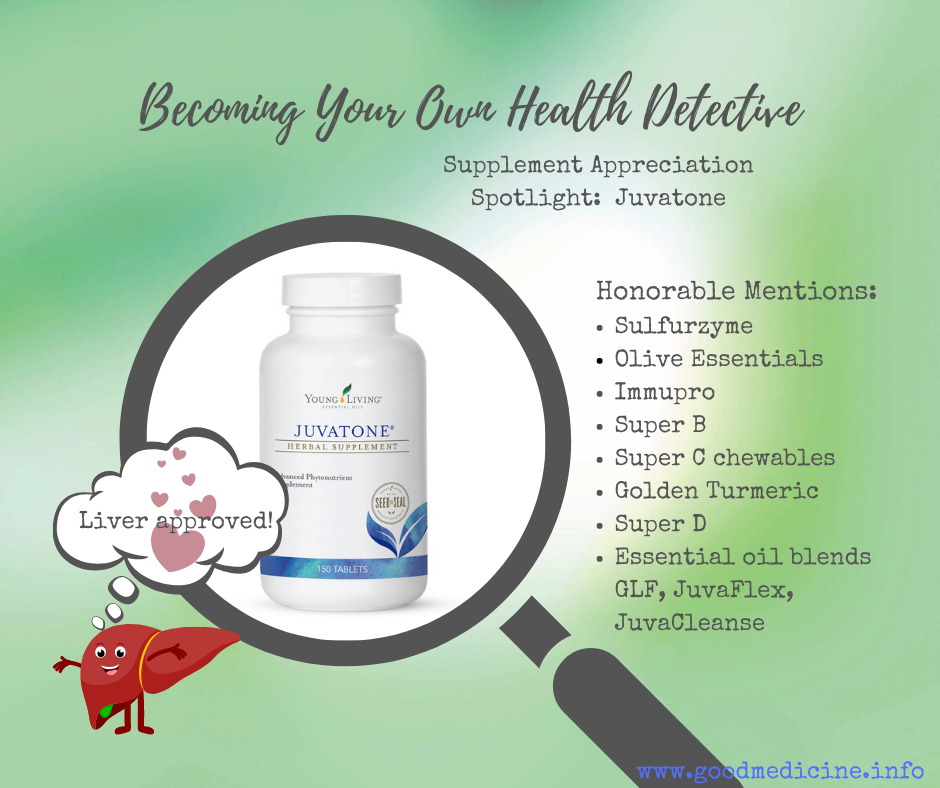
*Young Living’s Juvatone is an amazing supplement designed for liver support. I opt to do a cleanse of some sort a few times throughout the year, and several years ago, one of those cleanses resulted in a skin rash that I could not shake off…..and I had tried nearly everything! My liver just could not handle the toxin load that was being rattled loose from this particular cleanse. It wasn’t until I gave it the support of Juvatone, that I (and my liver!) came to appreciate💃 the liver love in these tablets, and my six week long rash disappeared in just a few days.


*Remember, as toxins build, common side effects often appear throughout the body. Skin conditions, rashes, fatigue, mood swings, digestive disturbances, brain fog, muscle / joint pain, and dizziness are only some of the most common clues. Every one of us is built differently and are exposed to a different array of toxins that must be disposed of. Sometimes clues may pop up during a cleanse, while in other situations, liver overload clues are a daily occurrence.


*The combined ingredients in Juvatone promotes and supports healthy liver function. The Essential Oil Desk Reference suggests using Juvatone in tandem with Comfortone or ICP. Indeed, this makes for a great partnership, and creates a highly efficient “exit strategy” for those unwanted toxins!


What ways have you best found to love on your liver?
xoxo~ liz

#knowbetterdobetter
#healthcluesyoucanuse
#goodmedicine
#ThanksYL
#loveyourliver

Health Clues from Your Liver – part 2

Liz James · June 29, 2021 ·


I’ve always thought it rather humorous that the liver is called the “liver”. A body can be kept alive for days (or even years) with an artificial heart or a “dead” brain, but if the liver were to shut down, a body would likely die within a day. We keep going because our liver helps us live! 😁


Tho it’s the largest internal organ (our skin is the biggest!) and an integral component of the digestive system, we tend to take its existence for granted…… until something goes very wrong. Just ask anyone who has advanced liver disease.
I’ve got some sad stats to share with you.  An estimated 10-30% of Americans have some form of liver disease, and most are unaware of their problem. Roughly 90% of us (myself included!) have overburdened livers. #thestruggleisreal
It didn’t used to be this way for the poor liver, but decades of polluted foods and beverages, pesticide, herbicide, and fungicide exposure, medication use, the air we breathe, the water we bathe in, and all the toxin laden skincare and standard issue household products have definitely taken their toll. Babies👶 are born with a chemical burden their livers negotiate from Day One. One study found over 280 toxins☠️ in the blood of umbilical cords of an average infant at birth.


To understand clues a burdened liver leaves us, it’s important to first recognize the profound multitasking machine that it is. 


In addition to being the primary detoxifier of the body, the liver also stores the worst☠️ of the worst ☠️toxic substances deep within itself. Animal livers do this too, and heaven knows, they are exposed to a myriad of toxins in commercial farming situations. Liver was a healthy organ meat for our ancestors, but not for us in the 21st century unless you are able to find a certified “clean” source (uncommon, but they are out there).


Other tasks the liver performs include:
*Vitamin and mineral storage system
*Storage and filtration of blood
*Secretion of bile (go back and review the gallbladder for more info on that task!)
*Conversion of sugars into glycogen (energy storage packets)
*Synthesis of serum proteins, albumin (which regulates blood volume), coagulation factors in the blood
*Filters and destroys bacteria 
*Helps maintain a balance of sex hormones in the body
*Helps maintain a balance of many neurotransmitters


Ultimately, there are well over 500 (some researchers have said as many as 2000! ) functions the liver performs. As the inner Sherlock Holmes within you may suspect, the clue possibilities are vast!


We’ll cover some very specific clues next week, but in the meantime, imagine what might happen within the body (and mind) if an impaired or sluggish liver shows up for work. Since 90% of us have overburdened livers, shouldn’t we be showing our liver some serious love and living like we care about it daily instead of remaining indifferent or flat out abusing it?


Use your “clean” alternatives! Thieves Household Cleaner is liver friendly, as are the Savvy Minerals cosmetics, shampoo, deodorant, body wash, toothpaste, hand soap, and  laundry detergent that Young Living has designed for us. #nolabelreadingnecessary 
Love your liver and it will reciprocate!
xoxo~ liz

#knowbetterdobetter
#healthcluesyoucanuse
#goodmedicine
#ThanksYL
#loveyourliver
#goodmedicineislovingyourliver

  • « Go to Previous Page
  • Page 1
  • Page 2
  • Page 3
  • Page 4
  • Page 5
  • Interim pages omitted …
  • Page 7
  • Go to Next Page »

Book Your Health Coaching CallBook Now

Elizabeth James

469.425.9091

ebj0203@gmail.com