• Skip to primary navigation
  • Skip to main content
Book Your Health Coaching Call
Good Medicine

Good Medicine

Holistic Health Coaching

  • Home
  • Liz James
    • About Liz
    • Coaching
    • Book a 20 Minute Complimentary Coaching Call
  • Favorite Resources
    • BlessedByHisBlood
    • Young Living
    • Fast Like A Girl Certified Coach
    • Order supplements through my Fullscript store
    • Green Pasture (Coupon: Health10)
    • RogersHood Apothecary (Coupon: BEABLESSING for 10% off)
    • DolphinMPS
    • Company
    • Abundance
  • My Books
    • Becoming Your Own Health Detective Volume 1
    • Becoming Your Own Health Detective Volume 2
  • Blog
  • Cart

Mental health

Vagal Nerve – part 1

Liz James · December 8, 2021 ·

A policeman is on the trail of a very successful serial robber. Using the clues🔎 left behind at each crime scene, he finally identifies the robber and apprehends him. The only problem is that the robberies don’t stop, and they look strikingly similar to the original set of robberies. Now the policeman believes one of two things…… a copycat thief has emerged, or the original robber was actually working under the direction of a kingpin, and he was only one of the minions leaving the clues 🔎behind at each crime scene. The original robber isn’t talking, so the policeman must continue his investigation.
👆Sometimes that’s exactly what being a health detective can feel like! 
Every body system affects the others, and clues that are viewed as “the problem” may be just one identifiable member affecting the health “crime scene”. Or perhaps, like the copycat robber, the clue (ex: anxiety) has more than one root cause to identify and correct.    
Chronic stress may have seemed rather innocent until the truth of its ability to damage the body was unpacked in the last topic discussion. It is a kingpin. Another kingpin in the body is the state of health of the vagus nerve and there are a myriad of clues associated with this VIP portion of the nervous system. 
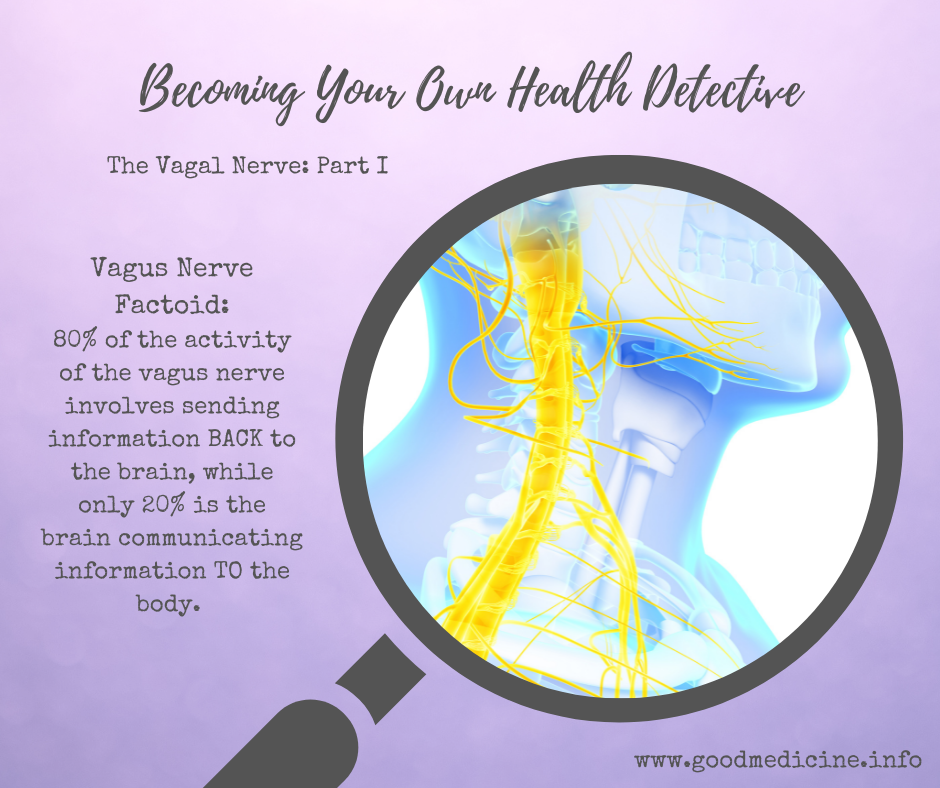
The vagus nerve is the longest cranial nerve, extending from the brainstem to the colon. It is responsible for the “rest and digest” activity of the heart, lungs, and digestive tract, with quite a few additional responsibilities added in for good measure. Some of its major contributing functions include:
⭐️Regulation of appetite
⭐️Control of bowel movements
⭐️Regulating heart rhythm
⭐️Stimulating gastric juice production
⭐️Regulating sweating
⭐️Regulating breathing
⭐️Controlling inflammation response
⭐️Encouraging testosterone production
⭐️Stimulating growth hormone (In adults, this is important for retaining muscle mass, strength, prevention of osteoporosis, concentration, preventing memory loss, and even slowing balding)
⭐️Regulating mood and emotions
⭐️Promoting healthy kidney and bladder function
⭐️Lowering and controlling blood sugar concentrations 
⭐️Triggering the release of melatonin
⭐️Stimulating the body’s relaxation response allowing a more rapid recovery from stress, injury, or illness
⭐️Encouraging the storage of strong memories in the amygdala (which is essential for bonding and connecting with others relationally)
The vagus nerve also sends sensory information (on what we see, feel, taste, and hear) to the brain, and is intimately involved as a courier of information allowing the microbiome (the gut bacteria) to directly communicate with the brain. You might have heard of this referred to as the gut brain axis. This is extremely important because many of our neurotransmitters (especially serotonin and oxytocin…. two that contribute to the state of happiness) are directly affected by this feedback.
Having a low or poor vagal tone has a profound effect on the body. Clues pointing to possible vagus nerve dysfunction include:
🔎IBS, Ulcerative colitis, and Crohn’s Disease
🔎Obesity, weight gain or weight loss
🔎Chronic fatigue
🔎Depression
🔎Irregular heartbeat (both too fast or too slow)
🔎Stomach ulcers
🔎Chronic inflammation
🔎Gastroparesis  (slowed movement of food from the stomach to the small intestine)
🔎Difficulty speaking, hoarse, or wheezy voice
🔎Pain in the ear
🔎Unusual heart rate 
🔎Loss of gag reflex
🔎Chronic abdominal bloating or pain, nausea or vomiting
🔎Anxiety
🔎Brain fog
🔎Dizziness
🔎Frequent headaches / migraines
🔎Insomnia
🔎Frequent urination
🔎Poor glucose control
🔎Food sensitivities
🔎Chronic feelings of disconnectedness or loneliness (Interesting, right? ) 
Common Causes of vagus nerve damage include:
🔥Chronic alcohol abuse
🔥Chronic stress / anxiety (Please revisit the information on ways to combat stress effectively!)
🔥Braces or extensive dental work (Revisit the post on the effect teeth have on the entire body)
🔥Posture (Revisit the clues related to posture.)
🔥Complications resulting from surgeries (especially those affecting the small intestine or stomach)
🔥Viral infections which are upper respiratory system focused
🔥Aging
🔥Botox injections
🔥Heavy metal toxicity (Heavy metals can be found in tooth fillings, vaccines, environmental contaminants, and even makeup. Young Living’s Savvy Minerals is a safe, beautiful and clean alternative! )
🔥Certain medications that affect the nervous system, including opioids, stimulants (ex: ADHD medications), immunosuppressants, sedatives, and many other prescription and OTC drugs. This is one more reason to identify and incorporate lifestyle changes whenever possible to avoid chronic drug use. Every single medication exerts a negative effect outside its intended target. 
The vagus nerve is a key player in living a life of resiliency.🙌 It will come as no surprise that people with high vagal tone have lower incidence of diabetes, strokes, and cardiovascular diseases. They also tend to find it easier to relax😴 after stressful situations, are physiologically 💪stronger, happier, more empathetic, better able to concentrate and remember, and are more likely to have close relationships with others👫. Vagal tone is kind of a big deal! Luckily for all of us, there are some really fun and practical ways to show the vagus nerve a little extra TLC on the regular. 
Test your gag reflex sometime soon. (Use a spoon handle and gently tickle the back of the throat on both sides. If you don’t have a gag response to the spoon handle, you’ve got some work to do😉!). 
Next week I’ll cover simple ways to incorporate vagal TLC techniques into daily life. It’s important to keep the vagal nerve happy and healthy!
xoxo~ liz
www.goodmedicine.info
#sharingiscaring
#caringforyourvagusnerveisgoodmedicine
#healthdetective
#goodmedicine
#thanksYL

Veteren’s Day Recipes

Liz James · November 11, 2021 ·

Thank you for serving our country!

Worstpills.org summary

Liz James · November 5, 2021 ·

Worstpills.org is one of my favorite subscription sites when farming for well vetted information. Founded in 1971 (yes, they’ve been fighting corruption and promoting truth longer than most!) to help consumers stay informed about harmful or ineffective medications 💊,  and to bring awareness to Big Pharma’s unhealthy influence over the FDA’s decision making. 


The following list is theirs…. the commentary is mine. 


💊10 Rules for Safer Drug Use💊


1. Have a “brown bag” session with your doctor…. ie: bring a list of all the meds and supplements you currently take to your doctor, along with the strength, how taken, and which doctor prescribed them. 
(Me)Now, while this is an excellent idea in theory, 99% of doctors won’t have time to do this thanks to insurance and industry quotas. You may try going to a pharmacy. Pharmacists are certainly more knowledgeable about medications than doctors and can often spot problematic areas quickly, but they too nowadays operate with quotas. It’s definitely a conundrum that warrants solving.


2. Make sure the drug therapy is really needed.
(Me) This is perhaps one of the biggest problems of all. A pill won’t solve loneliness,  isolation, lack of mentorship, bad lifestyle choices, etc. And yet…. here we are, the most medicated country in the world. Yes, a pill may “take the edge off” but at what cost? Medication by its very definition is a toxin that must be dealt with and eliminated by the body. There are many non pharmacological approaches to healing in mind, body, and spirit. Exhaust those options before reaching for a pill bottle whenever possible.


3. When starting a new medication💊 , begin with as low a dose as possible. 
(Me) Just as we say when beginning to use essential oils, go low and slow. Ask your prescribing doctor if the medication you are being prescribed is the lowest dose to start with. This also gives your body a chance to adjust and you a chance to watch for side effects.


4. If you are starting a new drug, see if it’s possible to discontinue another that was prescribed for the same issue.
(Me). Yep.


5. Regularly talk to your doctor about stopping medications.
(Me) Here’s the tough part…. freedom isn’t free, and you’ve now gotten on the merry go round if you are on chronic medications. What is it worth to you to get off of them? Would you be willing to change your lifestyle choices? Your doctor likely won’t oblige to remove medications unless he/she sees changes in your appearance, demeanor, or labs are reflecting that you are fully engaged as the CEO of Y.O.U.


6. Find out if you are having any adverse drug reactions. 
(Me) Lordy…. this seems so obvious, and yet it’s often not. I’ve spoken to hundreds of pharmacy customers over the years who never attributed their symptom to a side effect of their medication, and probably their doctor didn’t either. I mean…. would you take a drug that often causes dementia over time? …. I wouldn’t either, and yet millions of people do every day. #statinsarenobueno This is one of the many reasons I offer medication remediation and “brown bag” coaching sessions.


7. Assume that any new symptom you develop after starting a new medication was caused by the medication.
(Me). Agreed!! Guilty until proven innocent on this one. Bear in mind too….. some symptoms may take weeks or months to develop as the medication works in it’s toxin form to alter enzymatic pathways, deplete vitamins or minerals, or affect hormone production.  Take antacids and acid reducers…. people taking them for years will likely never pair their osteoporosis as a side effect of the medication they’ve been taking for their reflux.


8. Before leaving your doctor’s office or pharmacy,  make sure you understand how you are to take the medication.
(Me) 🙌🙌🙌🙌🙌 Yes indeed. 


9. Discard old drugs carefully. 
(Me) Saving leftover medications “for a rainy day” is an interesting concept. If you know what you are doing, then maybe it’s not such a bad idea for meds for pain and inflammation. Mixing and matching meds on your own once you have a stash of leftovers…. ummm no. You may think you are saving money, but this is just not good practice. 😉


10. Ask your primary doctor to coordinate your care and drug use. 
(Me). While this is a great concept on paper, unless your doctor has an independent concierge practice, the odds of this happening are virtually slim because of their quotas and subsequent time constraints that must be met in their daily practice.
My final thoughts are these….. medications should be thought of as a bridge not a lifestyle in most cases. If a medication is needed, use it with the forward thinking attitude. … “how soon can I safely get off of it?” In fact, asking your doctor this question is a great idea at the onset. If they suggest you will be on it forever, I suggest finding a doctor who will work with a healthy mindset. They are out there, tho may require a little looking and asking around.


xoxo~ liz

#knowbetterdobetterbebetter 
#medfreeideally
#goodmedicineisrelative
#ThanksYL

Health Clues from Our Eyes – part 4

Liz James · November 2, 2021 ·

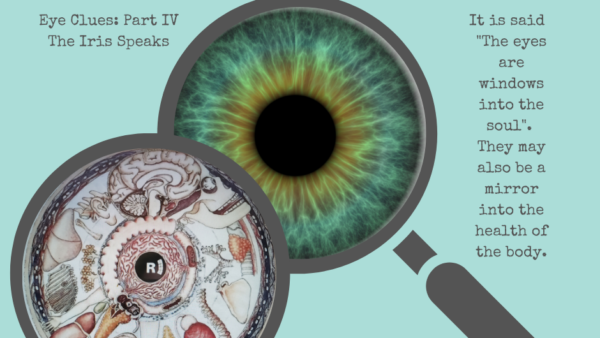
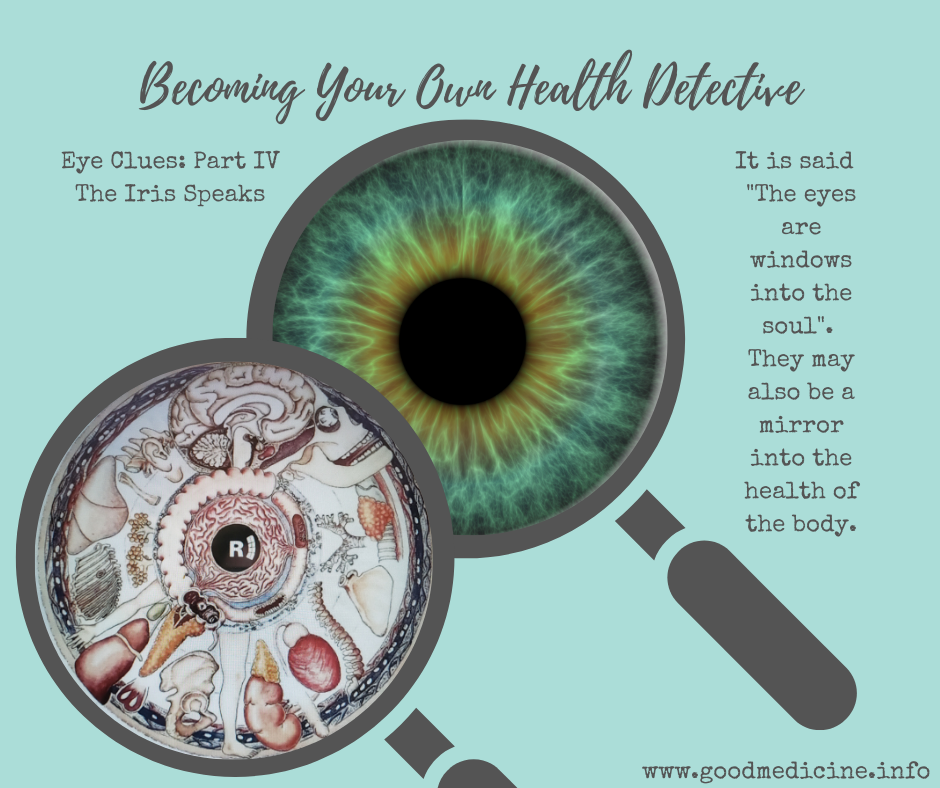
Eye Clues Part IV: What do your irises say about your overall health?
Perhaps you’ve heard the phrase, “The more you learn, the more you realize you don’t know.” It’s one of the reasons I identify as a lifetime student. I pray that I am able to learn something new every day. This next foray into clue finding required diving a little deeper into a topic I’m fascinated by, but certainly no expert!
The iris is the part of the eye that carries color. Iridology is a form of “clue finding” in which patterns, colors, and other characteristics of the fibers of the iris are examined. Just as with feet,✋ hands, 👂ears, 😛tongue, 👩face, and skin… the iris is loaded with body health clues🔎! The eye itself is a visible extension of the brain with hundreds of thousands of nerve endings, a vast microvascular network, muscles, and other tissue types. Interestingly, the iris is connected to every organ and tissue of the body by way of its role in the central nervous system. The iris is also controlled by sympathetic (“fight or flight” response) and parasympathetic (basic body “housekeeping” and autopilot “at rest” activities), so if you imagine that trauma, drama, or a toxin load might affect affect the iris, you’d be right! Nerve fibers in the iris respond to changes in body tissue. As the changes in the body tissue occur, those changes also physically manifest in the portion of the iris which “identifies” with that portion of the body tissue. The result is this: the color part of our peepers drop clues relating to past, present, and possibly future health. Even having a basic understanding of clues🔎 within the iris may help you identify how best to support and care for your body by suggesting where inflammation may be, and at what stage it may be manifesting.
*There are 90 known body specific areas that are mapped on each iris. Each eye is different. These areas are mapped out much like spokes on a wagon wheel, with the pupil being at the center axis. There are also 7 concentric zones of the iris beginning at the pupil. The stomach and intestines are closest to the pupil, followed by:
Zone 3: representing heart, bronchi, pancreas, adrenal, pituitary, pineal, gallbladder
Zone 4: representing prostate or uterus , skeleton
Zone 5: representing brain, lung, liver, spleen, kidneys, thyroid
Zone 6: representing muscles, motor nerves, lymphatic, circulatory
Zone 7: representing skin, sensory nerves
Today, we’re only going to talk about the overall appearance of the iris. Compare the “texture” of the iris to a piece of cloth. Does it appear tightly woven like silk or more loosely woven together like burlap or cheesecloth? There is a correlation between the “tightness” of the fibers of the iris with the body’s ability to hold and utilize nutrients, dispose of metabolic waste and toxins, and have general robust cellular activity. More “loosely woven” iris fibers trend towards a correlation with difficulty maintaining nutrient levels and efficiently disposing of metabolic waste and toxins.
This may be a valuable clue to note in your health🔎 detective journal. Remember, clues are not diagnoses….. they are a gift from our Creator so that we may notice changes and work towards achieving better health…. a constant & evolving process. Sometimes it may feel like two steps forward and three steps back. #metoo. We all have our own health journey with seasons of success and seasons of lack, with lots of moving parts that we can choose to control or leave to chance. Scientists👩‍🔬 and doctors👨‍🔬 who have studied the iris closely have found that irises which suggest a weaker constitution can belong to healthy people who take care of themselves well. Likewise, irises suggesting a strong constitution of the body can also be made weak over time through toxin exposure and lack of care. Epigenetics (the environmental component of gene expression that we CAN control) plays a tremendous role in our health!
If you are so inclined, grab a magnifying glass, light and mirror (partnering up may be easier) and happy clue hunting! . Make note of what you see compared to how you feel overall, and how you might be feeling if you weren’t taking care of yourself in “all the ways”.
I know I would feel much different if I weren’t faithful with my eating and exercise habits, self care routine, and of course….my daily supplement routine: Sulfurzyme, BLM, Thyromin, Femigen/Progessence Plus, OmegaGize, NingXia Red, Multigreens, and others on board!
We’ll dive just a little deeper next week!
xoxo~ liz

#sharingiscaring

#supportyourlocalpeepers
#goodmedicine
#goodmedicineisproactiveinsteadofreactive
#ThanksYL
#youareworthit

Postpartum Anxiety

Liz James · October 13, 2021 ·

Postpartum depression. It affects 10-15% of women post pregnancy, and often begins a merrygoround of medication use that is hard get off. Take a few minutes to read this gal’s story. She is not alone. 
Several years ago at the pharmacy, I began asking women who were getting new prescriptions for antidepressants or antianxiety medications if they had received labwork prior to being handed a first time antidepressant or antianxiety  prescription by their doctor. Remarkably, 95% or more had not. 
This issue isn’t always about low progesterone (read the story) . It could be an unresolved thyroid issue, a low Vitamin D level, or many other possibilities fairly easily spotted by doing proper labwork analysis.  Sadly, insurance often won’t pay for this, and many doctors who work for a medical conglomerate healthcare system won’t order the needed labs because it falls outside of the approved diagnostic protocols set by upper management or insurance companies. 
Save yourself some time and grief and get the labs necessary by paying out of pocket. It can be done easily in most states. This is one of the services I offer in my health coaching calls. It just might change your life. 😘
https://www.madinamerica.com/…/postpartum-anxiety…/…
xoxo~ liz
www.goodmedicine.info
#sharingiscaring 
#ThanksYL 
#thoroughlabworkisgoodmedicine  
#listentoyourbody

postpartum anxiety
  • « Go to Previous Page
  • Page 1
  • Interim pages omitted …
  • Page 3
  • Page 4
  • Page 5
  • Page 6
  • Page 7
  • Interim pages omitted …
  • Page 12
  • Go to Next Page »

Book Your Health Coaching CallBook Now

Elizabeth James

469.425.9091

ebj0203@gmail.com