• Skip to primary navigation
  • Skip to main content
Book Your Health Coaching Call
Good Medicine

Good Medicine

Holistic Health Coaching

  • Home
  • Liz James
    • About Liz
    • Coaching
    • Book a 20 Minute Complimentary Coaching Call
  • Favorite Resources
    • BlessedByHisBlood
    • Young Living
    • Fast Like A Girl Certified Coach
    • Order supplements through my Fullscript store
    • Green Pasture (Coupon: Health10)
    • RogersHood Apothecary (Coupon: BEABLESSING for 10% off)
    • DolphinMPS
    • Company
    • Abundance
  • My Books
    • Becoming Your Own Health Detective Volume 1
    • Becoming Your Own Health Detective Volume 2
  • Blog
  • Cart

Farm Animals

Meet Spanky

Liz James · March 16, 2020 ·

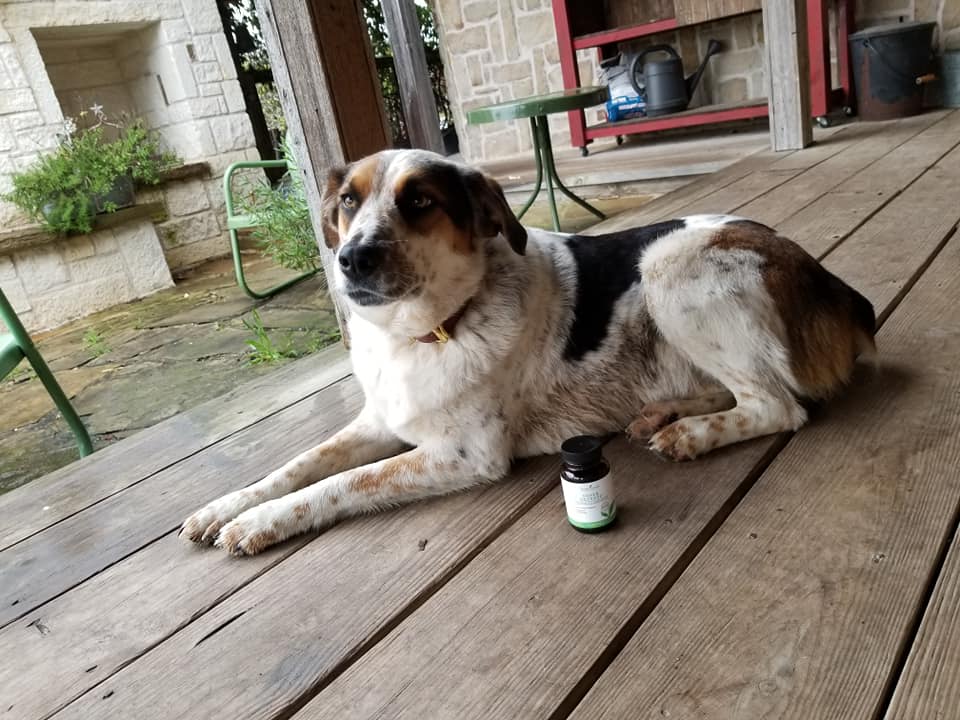
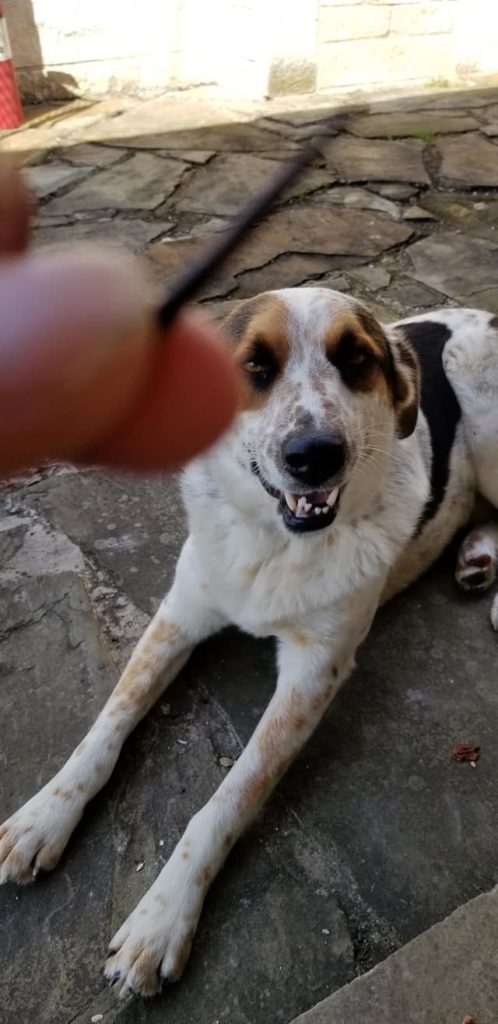
Meet Spanky…. when he was younger, I’m pretty sure he thought his name might be “No, Spanky” 😉.

Spanky isn’t a teenager anymore, but his antics (and his genetics) still land him in trouble on occasion. He is a fence jumper, and a digger…. and he loves to utilize his herding genes to keep the cows and horses all in line when he thinks we aren’t watching even tho he knows we prefer he not unless asked. #cattledogsskills

His failure to heed our attempts to keep him from getting into trouble has given him a snaggle tooth and a few hard earned life lessons.

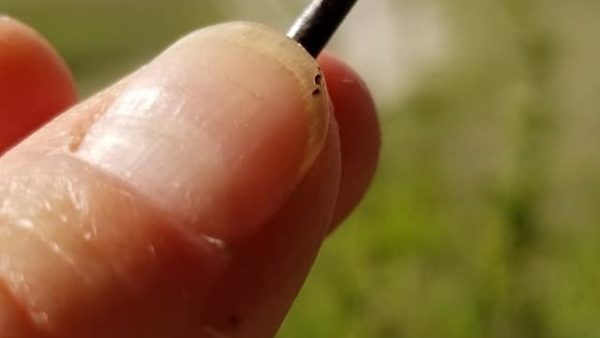
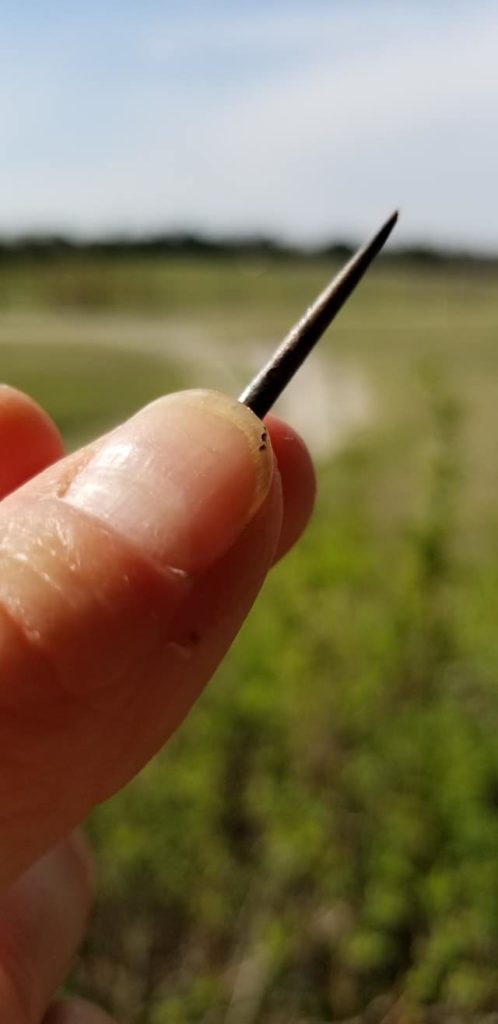
So I wasn’t entirely surprised when Spanky went from running like the wind, to favoring his back paw last week. I was pretty confident he had gotten stepped on when he was in the midst of shenanigans. Nothing appeared to be broken…. just a sensitive paw. A couple of days passed, and instead of getting better, it seemed like it was getting worse… swollen in fact. So, before making a vet appt, I did a thorough assessment again, and this time, found what appeared to be a scab on one of the pads of his paw…. but a suspicious scab🤔. I grabbed a pair of tweezers and gently worked at the scab…. only it wasn’t a scab….. It was the mother of all thorns 😱. Poor baby! I felt terrible that I hadn’t found it sooner😥….. the good news is that, his relief was almost instantaneous, and after washing his wound thoroughly with colloidal silver and a couple of other natural healing agents, and starting him on Inner Defense to boost his immune system…. swelling is now negligible and he is back to bossing cows around when he thinks I’m not looking.

Being prepared isn’t a season…. it’s a life skill and it’s on the daily around here… ie: business as usual on the farm. We know how to care for our own, but we also know when we are in over our heads. I’ve got to make a vet appt this afternoon for something that’s beyond my skillset, and that’s ok…. that’s why we love our vets!….. But it surely is nice (and economical) to be able manage many health concerns from home!

Have a beautiful day friends!

xoxo~ liz
#hesmylittlebuddyandmyrighthanddogranchhand
#knowbetterdobetter
#everydayprepper
#ThanksYL
#wellstockedyearroundforhealthandwellness
#everyoneshouldkeepInnerDefenseonhandd
Growing with Elsa

Liz James · October 8, 2018 ·

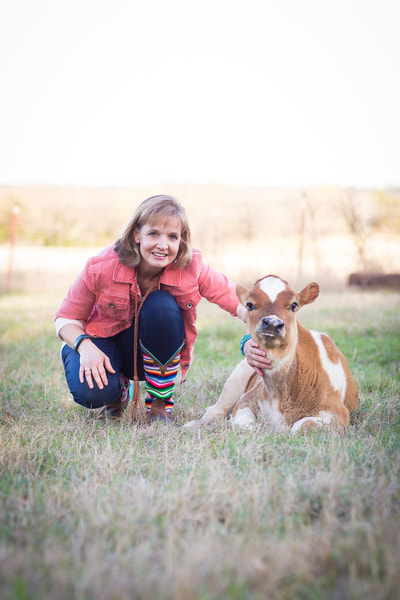
Elsa at 10 months. She is starting to get her mama’s darker face.

Welcome! You’ve found my first official blog post on the updated website! This has  been a work in progress for the past several months, and…. not being exactly technically savvy (give me science or farming any other day!), I’ve had to call in some excellent tech help to assist in the upgrade. You can finally find ALL you need right here in one place!

The move to the new website put blogging on a little hiatus until we could get everything matched up properly. I think you’ll find this venue MUCH easier to navigate. Growing means learning, expanding, and exploring new options, right? 

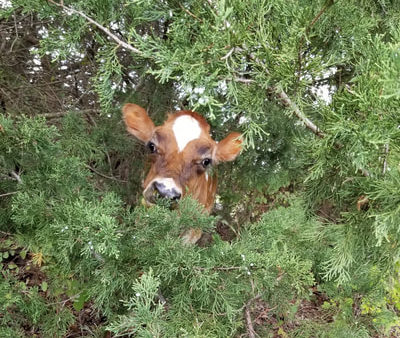
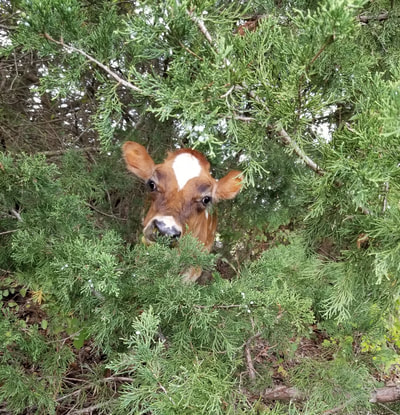
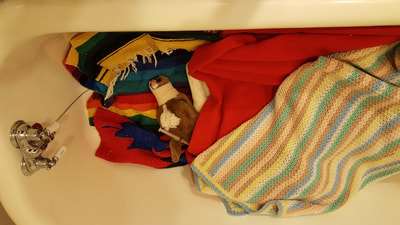
Speaking of growing…. She’s now 10 months old, and it’s well past time for an Elsa update! Sweet girl shows up on Facebook with some regularity, but I need to update here…. this is kind of her ‘baby book’ after all. For all my love of animals, I never thought I’d love a cow as much as I love this heifer. I guess that’s what might happen when one lives in your bathtub for a few weeks, and syringe feeding around the clock takes control of your life! The cards were certainly stacked against her. Birth during 20 degree weather (which cost her parts of both ears), failure to thrive (because she couldn’t suck properly), trips to the vet (because we didn’t know any better.. couldn’t see the internal cleft palate… and subsequently also missed by the vet)…. it did not look good for Elsa. If you scroll back thru my early 2018 posts, you’ll find her history scattered throughout.

Nonetheless, she prevailed.

Her story hasn’t been without a little work and some modifications in her/our life. Elsa is a permanent mascot on our farm. She is a greeter, social maven, photo bomber, and so much more. As she’s grown, we’ve adapted and risen to the challenge.

Her cleft palate is not easily repairable. According to a couple of vets I’ve consulted at Texas A&M Veterinary College, the surgery would not be easy on her. Cow mouths do not open very wide, and any repair of this nature would only be manageable by entering thru the side of her face…effectively eliminating the possibility of surgery unless absolutely necessary.

Elsa eats well (albeit messily!), and does not seem to be hindered much by her birth defect. Fairly early on, we discovered that she is also moderately tongue tied, and is only able to stick her tongue out of the right side of her mouth. This really doesn’t seem to affect her much, so I’m torn between getting it fixed surgically (rather, putting her thru that surgery), and just letting her carry on as she has been. She doesn’t know any differently, and so it seems more like the surgery would be for us moreso than for her.

Cleft palates in calves are not as rare as you’d think. Unfortunately, most calves are birthed fairly unattended, and if they go without nursing for long, they die. As in the case of Elsa, if the cleft palate is undetectable externally, the rancher usually assumes the calf simply died of natural causes. Cleft palate in calves is not a genetic anomaly…it’s caused by eating the wrong plant during the first trimester of pregnancy (a similar thing can happen in people if certain medications or products are consumed during the first trimester too). In Honey’s case (Elsa’s mama)….. she apparently got ahold of a select few plants in the lupine family….. the most common culprit for bovine cleft palates. Honestly, we’re blessed. Her deformity could have been much much worse, and her personality more than makes up for the bit of added work that is required for her health and safety.

Milestones
Just like all babies, Elsa has had her milestones.

  • She survived the first month! It took a team of dedicated friends and ‘nannies’, as well as Charlie and I to get her thru the first month.
  • Around the six weeks mark, she finally figured out how to eat properly from one teat…. the left front. Each teat is different on a cow, and Elsa had to figure out how. We never gave up, and every day, I would encourage her to try. After the mastered one teat, she gradually learned how to nurse (in her own way) on 2 other teats. Because of the angle and size (And probably because of her limited use of her tongue on the left side of her mouth) she never mastered the 4th teat on the back left quarter. As she grew, her nursing got pretty rough on Honey. She used her teeth more than most calves, and consequently, was really tearing her mama up. We made the difficult decision to wean her at 4 1/2 months (early!) because the damage she was doing prevented us from milking Honey too.
  • Eating creep feed and grass is not a problem for Elsa. Occasionally, she will have grass coming out her nose and she will stamp her feet and blow until it comes out. For awhile, we had to wet her creep feed so that it wouldn’t end up in her nose. She has outgrown that need now, and eats food just like the big girls! 
  • Cud chewing…. all cows regurgitate their food and then thoughtfully re-chew it for better digest-ability. Elsa does this too, but the liquified food comes out her nose if her head is in a downward position. It doesn’t seem to bother her overly much, but it can get messy. Because of this, she gets a spongebath about once a week.
  • Schooling. She is going to make an amazing hand milked dairy cow. She is calm, cool, and collected, AND she’s about as social as you could possibly imagine. Because the facial deformities are not genetic, we are not worried that the cleft palate will carry forward to her offspring.

Lessons from raising a Cleft Palate Calf

  • Life is what you make of it.
  • When you are able, make the most of running, bucking, and living like there’s no tomorrow…. but above all else, never ever give up! 
  • Resiliency is a good thing. Bounce forward not backwards!
  • Vitamin D is a necessary part of healing. Lay in the sunshine even when you think you don’t have time to.
  • Be friends with those who are different from you. (Elsa doesn’t know a stranger… 2 or 4 legged!)
  • Work with what you’ve got! Not everyone is born with the same tools.
  • Family doesn’t always mean blood relatives.
  • Being ‘schooled’ is not a bad thing. We all need to be haltered and given parameters on occasion.
  • Patience is still a virtue.
  • Love IS worth it.

Stay tuned…. Elsa will always be making an appearance here. She’s one of us….. part of the ‘farmily’. 

Thanks for visiting and celebrating our imperfectly perfect life on the farm.

Hugs and Love – Liz  

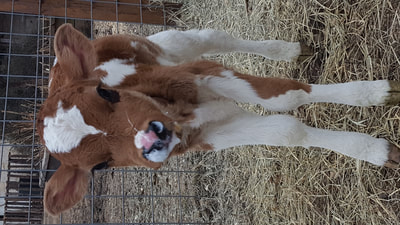
3 days old, and struggling for her life. We didn’t yet realize that she had an internal cleft palate.
Cutest calf ever! Two weeks old, and finally figuring out how to live!
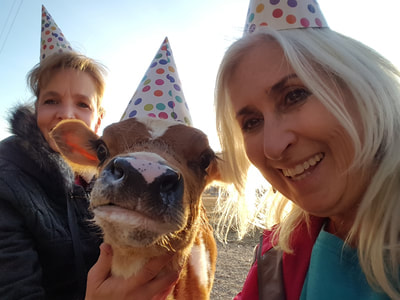
Celebrating Elsa’s one month birthday with her Auntie (and my dear friend). Can you say spoiled calf! She’s turned into a photo ham!
Photo bombing and selfies are one of Elsa’s favorite hobbies!
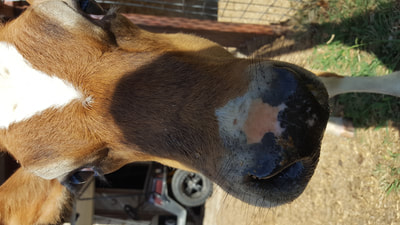
Giving slobbery kisses is another favorite of Elsa’s!
She’s the best calf ever!
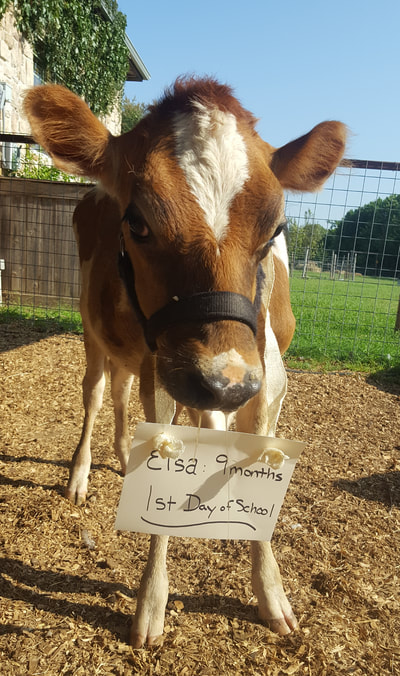
9 months. Sept 2018. School’s in session, and basic training begins!
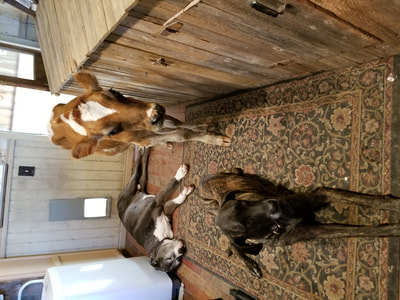
Feed room takeover. Elsa is one of the dogs (as far as she and the dogs are concerned!)….waiting for dinner. 9 months.

Failure to Launch

Liz James · October 1, 2018 ·

I probably should have titled this post “The Case of the Peculiar Egg Placement“, but then, that would sound like a Nancy Drew mystery, and that would have dated myself for sure! This has been a season of busy, and I’ve got so many topics I want to write about and little time to do the big topics justice. So, in the form of constructive procrastination, I’ve got to share a little farm hilarity. 

A bit of backstory: After a summer of drought, Mother Nature has seen fit to gift us with the wettest October on record. At last count, our area has gone from drought to 8 inches over the yearly average in a short 31 days. This has created all sorts of excess water issues on the farm. (Wherever there’s water and animals, there will be copious amounts of mud). Case and point:  Last week, our internet guy came to fix our unstable internet situation. Turns out, even a colony of fire ants had moved to higher ground (our roof), and had moved their entire nest (dirt and all) to the radio receiver box.
​
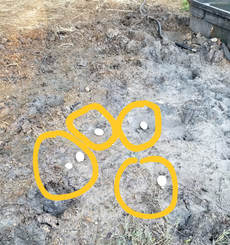
Because of all the rain, we have mucked our little hearts out daily. Last week, I noticed an interesting thing in all my mucking of stalls and turnouts. Eggs kept appearing in a very peculiar location….right out in the middle of the turnout… in front of God and everybody. Now, chickens tend to like a little privacy when they lay, so the location is odd indeed. When something out of the ordinary occurs, curiosity drives me to figure it out… and this little mystery was bugging the heck out of me!  These eggs…. I gave them 3 options:

  • A dog moved them out there (maybe… but why didn’t they also eat them?)
  • A young hen, not knowing any better just laid them in a very weird spot (Possible, but not likely.).
  • They are super old and eroded out into view from under the dirt. (I’m not touching them if that’s the case! Old eggs can be like legit grenades. One wrong jiggle, and they explode. Been there. Done that. It’s not pretty. )

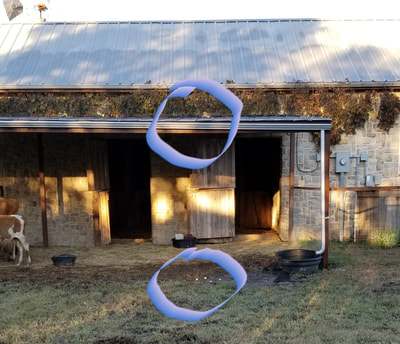
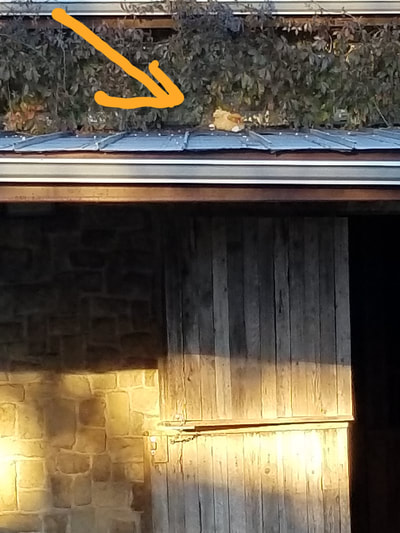
To add to the mystery, each day, there was an additional new egg…. so bizarre! Yesterday, while we were outside doing chores, I happened to be in just the right location at just the right angle to look up and solve the mystery.  Drishti! (That’s this particular hen’s name). She has found, perhaps, one of the most dangerous places to nest. Even worse…. it appears she is broody, and intent on sitting on her eggs til they hatch… well, the eggs that haven’t yet rolled off the roof! We’re gonna have to figure out how to move her and the remaining eggs to a safer location. I have never had a chicken who wanted to lay eggs in such an elevated place. Typically, they are ground layers.

Ants on the roof….. eggs in the gutters. You know it’s been a rainy season when everyone, and everything is moving to higher ground!   ​​

With Her Weight In Gold

Liz James · May 30, 2018 ·

Well. This morning started off with a bang. Literally. I was not sure whether to name this post “Family First”, “Farm Life Reality Part II” or the above title. 

About 6:30am I heard a very specific series of barks. For those of you who are well tuned in to your dog(s), you know exactly what each bark means. Our dogs have some very specific ones:

  • Herding yip-barks
  • Hot air balloon notifications (we appear to be on the regular flight path of a few )
  • Sirens (the dogs will start yip-howling before we can even hear the sirens on the highway a few miles away)
  • Skunk/Possum barks. These are more excitable bark patterns, but not a “Danger Will Robinson” kind of bark.
  • Happy barks.
  • Warning barks (stranger danger!)
  • And then there was the one this morning….. ‘the enemy is here‘ bark.

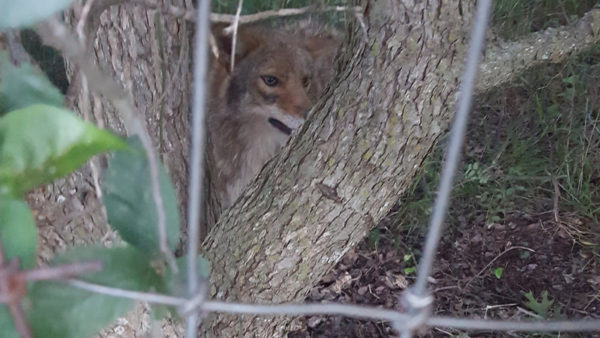
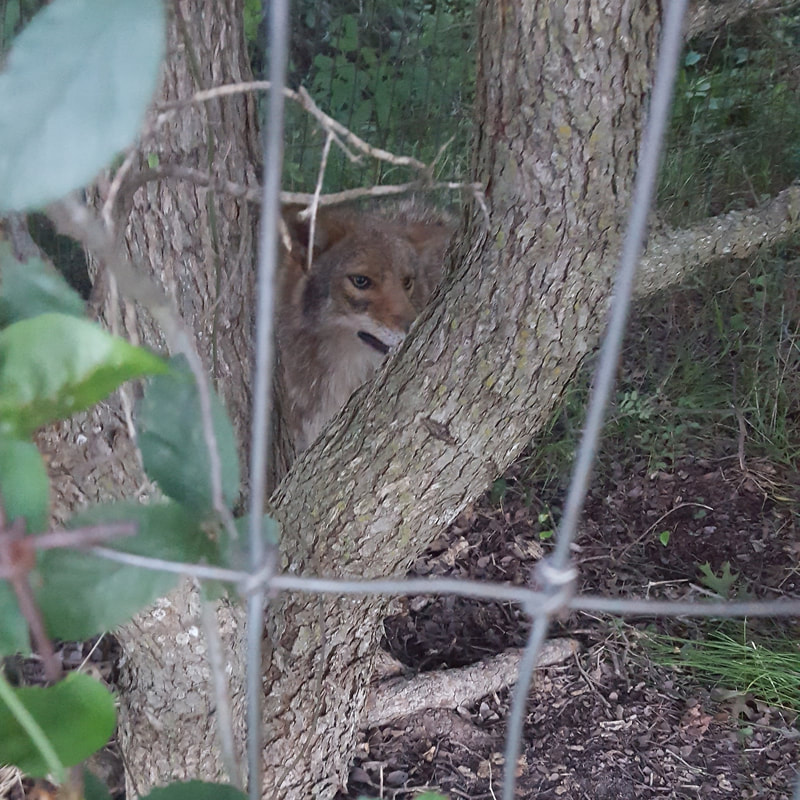
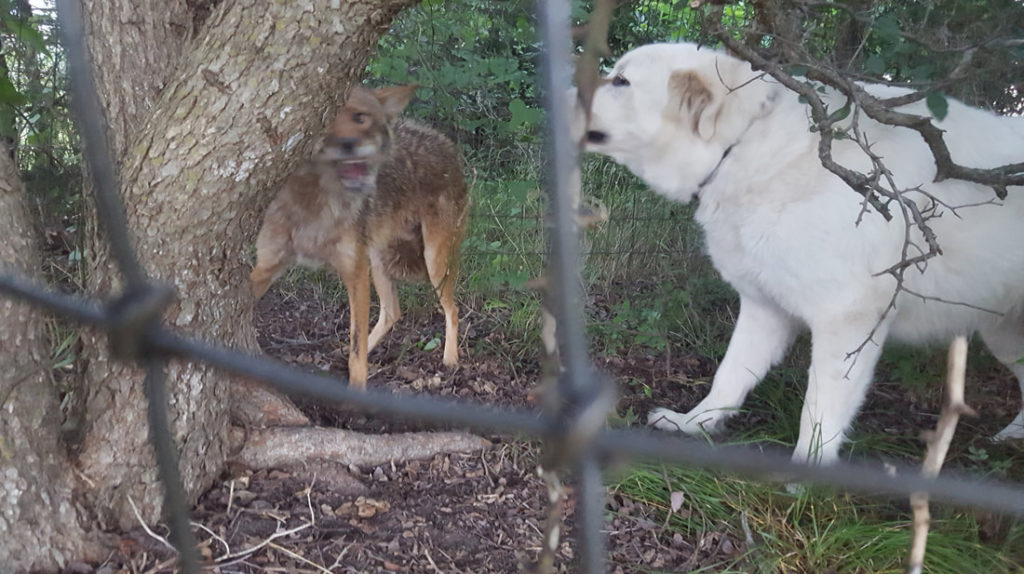
As soon as I heard it, I flew out of the house wondering which enemy it was. When I rounded the corner on the back side of the property I knew we had a situation that wasn’t going to end well. Lily, our livestock guard dog, had backed a coyote into a corner (between fences), and no way was she going to stand down. Lily is an Akbash, a dog very similar to a Great Pyrenees, but in my mind, a far superior LGD for many reasons (another post for another day). These dogs are not fighters, although pressed to do so, they will defend themselves and will kill if necessary. No, their instinctive drive is to protect their family at all costs using intimidation first, and force as a backup if necessary.

We do not kill predators for the sport of it, but if we have one threatening our farm family, we will not hesitate. It is a rare day that we pull out a gun and use it for this purpose, but this morning, it was necessary. We have shot sick skunks and poisonous snakes. Coyotes, although they live all around us, generally stay off our property thanks to the dogs. This one had gotten brave, and that’s not good. A brave coyote will find a food source and then our farm becomes Luby’s cafeteria for she and her friends. This means that our chickens, our cats and kittens, and even our calves and smaller dogs become potential meals…… not to mention vet bills that start rolling in as our LGD’s have to sometimes engage the enemy in battle.

Today did not end well for this coyote, and it was stressful for Lily too. She would not back down even tho she is terrified of guns. She held the coyote at bay, and Charlie shot it. Lily scrambled back to the porch, shaking…… not because of the coyote, but because of the gunshot.

​Lily prefers to spend her time outdoors guarding her farm-ily……unless there is thunder, fireworks, or gunfire in our area. Any of those, and she’s at the door begging to be let in (which we do).  This said, I was concerned about her response to gunfire literally that close to her.

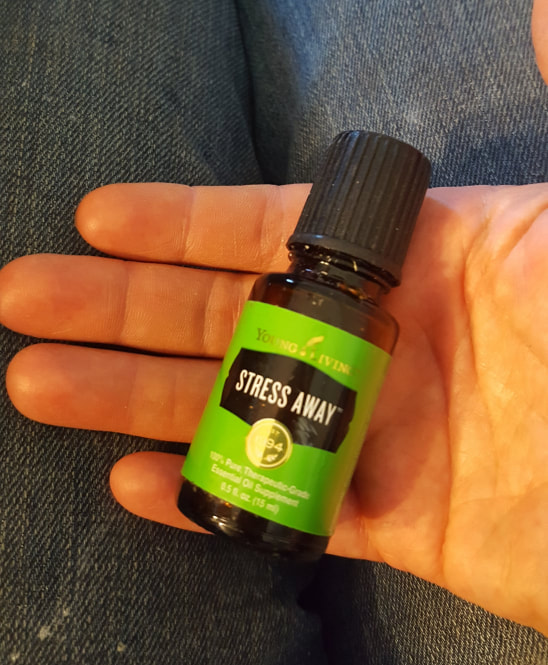
Young Living has an oil that is well used and loved by those who know it: Stress Away. I would venture to say that several million bottles of this relaxing blend have been used and relied upon over the years. It is one of my favorite oils, and for a very good reason too…. it is my ‘go to’ in times of stress. Consequently, I keep a bottle in my purse, and one in my lab coat at work, as well as one on my desk at home. It is literally like letting out a gentle sigh of relief simply by applying it to the neck and wrists.

Now, this morning, while the situation was an elevated one, it was not as stressful for me as say….. driving in Dallas traffic during rush hour…… or working in an intensely busy pharmacy with not enough help (Frankly, that’s waaay more stressful than the previous scenario!). Poor Lily, however, WAS stressed… not from the coyote, but from the gunfire.

So, after all was said and done, I slathered our hard working girl up with Stress Away and gave her some extra special loving for the good job she had done. Young Living oils are amazing for many reasons, not the least of which is that they work just as well (if not even better) on animals as they do on humans. I believe this is because animals have no preconceived notions about what therapeutic oils can and cannot do. They either work, or they don’t for our four legged friends…. but in my experience, they nearly always do.

​I am happy to report, that after about 30 minutes, Lily had a very spoiled breakfast (with treats), AND she had no interest in coming inside to recover from the gunfire. In fact, she spent the rest of the morning laying in the midst of the chickens, guarding her peeps. I’d say both she and Stress Away did their jobs well this morning!

Hugs and love from the farm y’all…. Life goes on.  ~ liz

Reality Farm Style

Liz James · May 22, 2018 ·

A couple of weeks ago, I left a post on my Wellness Prepper’s Facebook page that is really the ‘middle’ of this story of mine. If you know me, you know that I am a lover of animals… I connect with them in ways that most people do not. That said, the evolution of my life (and my thought processes) will likely not make much sense without an explanation. Explanations can answer questions, open a can of worms, or do both. I don’t dread talking about this topic one on one, but writing to the masses who have no idea how much heart I put into caring for my animals is a scary thing indeed. So, that said, I ask you to read onward with a thoughtful mind.

I believe in doing the right thing and living my life transparently. I am what you see and strive to be the same person in all situations. There is no ‘work personality’, ‘farm personality’, ‘church personality’ etc. One of my strongest traits is that of a protector. If I see a wrong, I work towards making it right….. ESPECIALLY if I realize I may have inadvertantly been part of the problem thru lifestyle, ignorance, or social design. (This post is not about my ‘pharm’ life, but this trait has been the driving force behind my personal growth in holistic well care as kind of kismetic gift to those in my world who have struggled with health solutions because they were led to belive that only western medicine philosophy held the right answers).

Nope. This post is about my farm life, and all that it represents. We do a large amount of animal rescue, and have spent thousands upon thousands of dollars caring for those animals who otherwise would not be given a chance. We have foregone so much ‘free time’ that I can’t even imagine what it would be like NOT to have the beautiful responsibility of caring for all the unique lives God entrusted us. I cry (believe me, I CRY) every time we lose a life around here… my heart breaks. God patches it with His presence, and I move on. In farming, when an animal is involved, there is going to be death. Sometimes it is a natural death (common within our poultry flock…. we lose one every so often to natural causes), and sometimes it is a pre-ordained destiny. This is the case with the male offspring of our dairy cows.

​Before you throw me under the bus (or tractor), please hear me out. I refuse to be an intentional hypocrit in my life, and strive to be part of the solution instead of part of the problem. As a world, we cannot avoid meat products and byproducts. Unless you are the most concientious vegan on the planet, your daily life likely incorporates multiple beef byproducts in it:

  • of course there is the obvious: meat, milk, and butter
  • oleo (from fats) for margarine and shortening (NOT the same thing as butter)
  • gelatin used in marshmellows, ice cream, chewing gum, and certain candies & food items
  • leather….. but also the base product for felt and many other textiles
  • the base ingredient for many ointments, lipsticks, face and hand creams
  • the binder for asphalt, plaster, and certain types of insulation
  • footballs
  • industrial lubricants and oils.  Renderings are used in the production of chemicals, biodegradable detergents, pesticides, and flotation agents.
  • buttons, piano keys, glues, fertilizer, and gelatin for photographic film, paper, wallpaper, sandpaper, and violin string.
  • more than 100 medicines currently on the market, including bovine based insulin for diabetics.
  • sutures

So you see, some of these are daily use items we simply cannot avoid. Yes, I agree… there should be a vegan solution for all of them, and in some cases there are… but in many cases, there is not. I certainly respect those who live a vegan lifestyle, but the reality is….. nobody on this planet is fully vegan.

The second part of the equation is this…. if you are a carnivore, are you an educated one? Unless you are eating humanely raised meat, do you have any idea of the quality of life an animal leads from birth to death? For the vast majority, life is uncomfortable, unnatural, stressful, and without kindness. It is easier to block this from your mind, and so most people do. They prefer to pick up their packaged meat and blind themselves as to how it arrived at the store. Feedlot raised animals and Factory Farming are abhorrent practices that should be outlawed…. but they’re not.

I once was blind, but now I see.

I challenge you to click on the link above to learn the facts, and I believe you will understand the message I am trying to convey here. The vast majority of farm animals are treated as objects. Their lives have no value in the eyes of the beholder (unless you are talking about $/lb hanging weight). There is no appreciation for the life that is sacrificed so that the consumer can eat a hamburger or steak, and certainly not for the lesser things…. the glue, binder, ointments, etc.

This is NOT the case on our farm.

We can be part of the problem, and turn a blind eye, or we can be part of the solution, no matter how uncomfortable it makes us. For in our discomfort, we are compassionate.

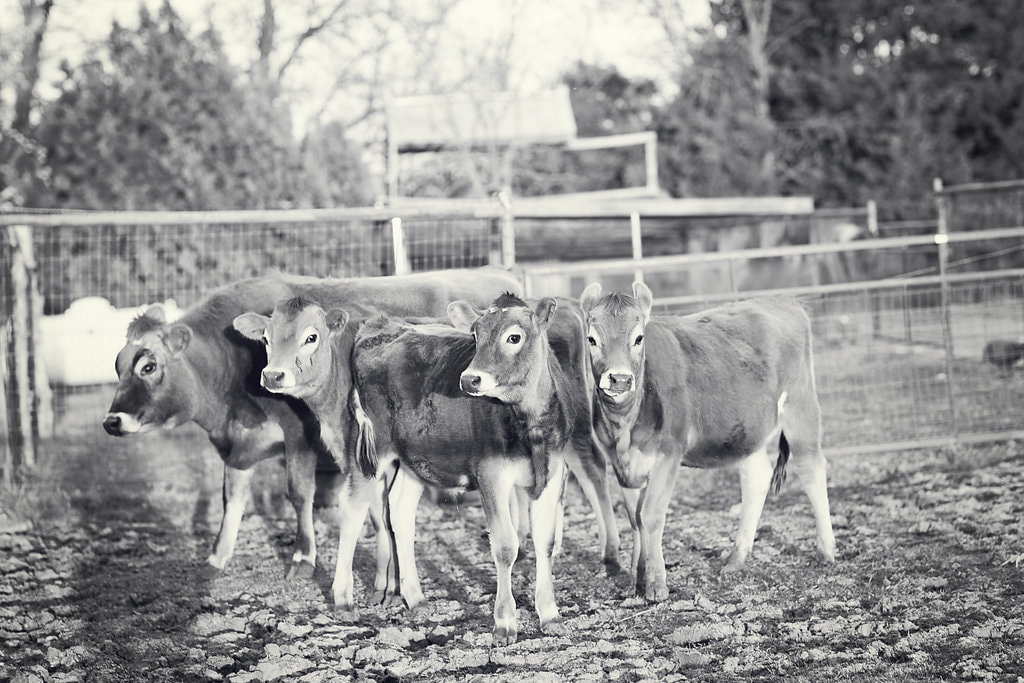
When a bull calf is born, we celebrate his healthy birth, but with a bit of sadness. One of the byproducts of our liquid gold (raw milk) sometimes is a bull calf. That bull calf will eventually be old enough, after living a well loved life, grazing without fear in our pasture, with no stress, plenty of space, and with a small herd. He will have plenty of natural forage to eat, fresh water to drink, and shelter from the elements. He will be able to enjoy the sunshine, and will play with his peers. Life will be good. Believe it or not, I begin praying for him and thanking God for his healthy birth, and for the sacrifice he will be made so that some of our friends can have healthy and safe meat (grass fed, nonGMO, hormone free, antibiotic free, chemical free). We have hand chosen  the processor we use. He is one of the few animal welfare approved processsors in this area of Texas. The end comes without stress for him. As for me, I drive them myself. It is a rough trip, and I cannot say it is stress free for me, because still…. my heart breaks. I say prayers of thanksgiving the entire 140 miles round trip. Do I enjoy this aspect of farming? Heck no. But this is reality… not just for us, but for everyone. We don’t condone what Factory Farming does, so we provide a better way for a small handful of cattle over our lifetime. Like the starfish principle…. we are making a difference to the ones we raise this way.

People have asked me how we can do this, and I respond…. how could we not? We could put our heads in the sand and sell the calves and pretend we don’t know what happens to them. For the record, most dairy calves end up at the sale barn unless they are replacement heifers. They also end up in veal cages (the worst case scenario for a calf). Our calves stay with their mama’s and are dam raised (as opposed to removed from their mama and given powdered milk replacer instead of the good stuff….. another common practice). They stay with them for several months before they are weaned.

The average dairy cow lives a life of about  5 years before being culled (that’s a nice way of saying killed). Our granny cow (retired) Clementine is somewhere around the age of 15. We have two more that are 7+ years old, with a long life in front of them. They have time to recover from each birth and milking season before repeating the process.

Walking the talk is not easy, but it is the right thing to do. It has given me the true meaning of praying over our meals, and the sacrifices it took to get it there.  Mealtime prayers frequently get overlooked or understated. Rote. Not in our home.

I doubt this process will ever get easy for me, and I honestly, I hope it never does. Discomfort ensures compassion and gratitude, something we all need more of.

Hugs and Love, liz

  • « Go to Previous Page
  • Page 1
  • Interim pages omitted …
  • Page 7
  • Page 8
  • Page 9
  • Page 10
  • Page 11
  • Interim pages omitted …
  • Page 13
  • Go to Next Page »

Book Your Health Coaching CallBook Now

Elizabeth James

469.425.9091

ebj0203@gmail.com