Dotting your i’s and crossing your t’s: Iodine and Thyroid Part II
Looking for clues is like using a roadmap . The clues you find along the way will help you get to your destination. Sometimes you’ll need to stop and ask for directions from a local, someone who knows the territory well. Part II of dotting i’s and crossing t’s may very well require the assistance of an iodine savvy endocrinologist or astute thyroid knowledgeable health professional who can help you find your perfect balance. You’ll need someone who listens to your clues, is willing to dig with you, understands the Great Iodine Debate, and doesn’t put you in a box with everyone else.
 . The clues
 you find along the way will help you get to your destination. Sometimes you’ll need to stop and ask for directions from a local, someone who knows the territory well. Part II of dotting i’s and crossing t’s may very well require the assistance of an iodine savvy endocrinologist
  or astute thyroid knowledgeable health professional who can help you find your perfect balance. You’ll need someone who listens to your clues, is willing to dig with you, understands the Great Iodine Debate, and doesn’t put you in a box with everyone else.
The Great Iodine Debate Summary
The “Great Iodine Debate” has been going on for many years and it’s well worth it to dive as deep as you need to. There is no possible way to cover everything on each topic I discuss. That’s not the point of this series anyway. My hope is that something you read sparks an “ah ha” moment and inspires you to dig more, putting pieces together for your individually unique puzzle. These “ah ha” moments are usually Holy Spirit led. If you feel a niggling in your soul, pay attention to it, and do your digging (due diligence) and use your tools to bring your body back into balance.
Dr. Guy E Abraham MD’s work surrounding iodine (formerly of the UCLA Department of Endocrinology) would be considered the modern catalyst for reviving the “Great Iodine Debate”. Interestingly, most of his personal information and work appears to have been scrubbed from the internet. As a seasoned sleuther, it’s clues like this (the scrubbing) that make me look even closer at what this “outside the box thinking” doctor had to say. (This is another reason I rely on my personal library more than the internet when digging for clues.)
seasoned sleuther, it’s clues like this (the scrubbing) that make me look even closer at what this “outside the box thinking” doctor had to say. (This is another reason I rely on my personal library more than the internet when digging for clues.)Take for instance, this quote from Dr. Abraham:
“During the first half of the 20th century, almost every U.S. physician used Lugol solution for iodine supplementation in his/her practice for both hypo- and hyperthyroidism, and for many other medical conditions. In the old pharmacopeias, Lugol solution was called Liquor Iodi Compositus. The minimum dose called minim, was one drop containing 6.25 mg of elemental iodine, with 40% iodine and 60% iodide as the potassium salt. The recommended daily intake for iodine supplementation was 2 to 6 minims (drops) containing 12.5 to 37.5 mg elemental iodine. During the second half of the 20th century, iodophobic misinformation disseminated progressively and deceitfully among the medical profession resulted in a decreased use of Lugol, with iodized salt becoming the standard for iodine supplementation. The bioavailable iodide from iodized salt is only 10% and the daily amount of iodide absorbed from iodized salt is 200 to 500 times less than the amount of iodine/iodide previously recommended by U.S. physicians. After World War II, U.S. physicians were educated early in their medical career to believe that inorganic non-radioactive forms of iodine were toxic. Adverse reactions to radiographic contrast media and other iodine-containing drugs were blamed on iodine. If a patient told his/her physician that he/she could not tolerate seafood, the physician told him/her that he/she was allergic to iodine.”
Things that make me go hmmmmmmm. Onward…. Shall we?
Here is How to Test for Iodine:
Let’s start with a simple DIY: The Iodine Patch Test. You’ll need 2% colorized tincture of Iodine. The clear stuff won’t work!Paint a 2-3 inch sized area with the iodine on clean dry skin. Apply to the stomach, inner thigh, or inner forearm….. Somewhere that won’t get rubbed constantly by clothing.Let the solution dry completely before allowing it to touch anything. (it will stain!)Monitor changes in color to the patch over a 24hour period.Proponents of this DIY test say that if the patch is still visible after 24hours, then levels are likely ok.If the patch has lightened considerably or vanished in fewer than 24 hours, it may indicate an iodine deficiency. If the patch lightens significantly or disappears in less than 18 hours, it may indicate a more significant deficiency. Make note of how fast the iodine vanishes.Evaporation, ambient temperatures, and rubbing clothing may play a part in the outcome, so take that into consideration.If results have piqued your curiosity, you may want to engage the assistance of one of the health professionals I mentioned earlier.There is a second test called an Iodine Loading Challenge. This is considered a more reliable “official” test, and is based on the amount of iodine found in the urine after loading the body with a large iodine/iodide load. (generally 50mg iodine/iodide, a tablet version of Lugol’s for adults)1st morning urine is discarded, but all urine after that is collected for 24 hours including the first morning sample at the END of the 24hrs. This urine will be sent off to a lab and evaluated.Results are based on the following premise: A body deficient in iodine will hold on to iodine. Example: a 90% excretion would indicate an iodine sufficient state, while below 90% would indicate varying degrees of deficiency depending on how low the % is.This test should run about $50-60 (plus the cost of the iodine/iodide combo tablets which are pretty inexpensive)
Common Questions
If your roadmap is leading to a possible iodine deficiency, you probably have a few questions. I’ll try to address some of them here.
 Q: Can you get too much Iodine?
A: Yes. Though it is considered one of the safest of our micronutrients when it is in inorganic, nonradioactive form ( iodides, tincture of iodine, Lugol solution). Iodine induced hypothyroidism is incredibly rare. TSH may rise when initially supplementing but T3 and T4 do not fall (those are the “boots on the ground” thyroid hormones you want to watch closely).
Q: Does everyone benefit from “more” iodine?Short answer…. No. Remember, we are all uniquely made. How do you feel? What symptoms are you living with? What is your risk category (see previous post) based on the factors involved?
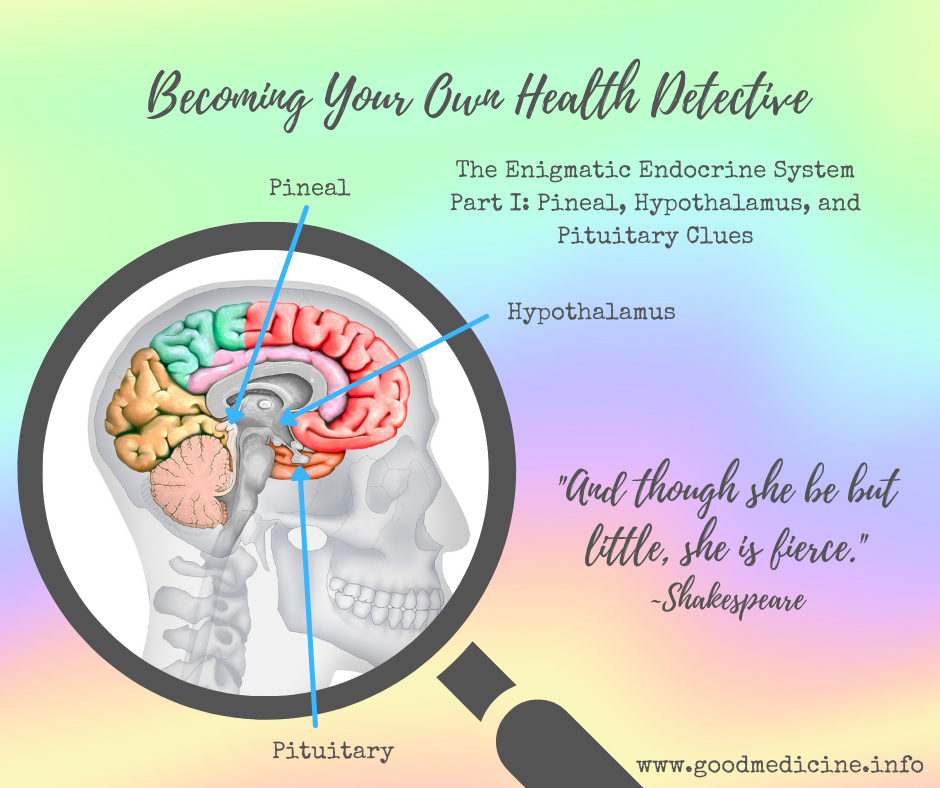
Also, there is an uncommon situation called iodine induced hyperthyroidism. This occurs when there is an autonomously functioning thyroid nodule. This means that the nodule is not taking directions from the feedback mechanism involving the pituitary and the hypothalamus (go back and re-read the post on the “upstream” players in thyroid function if needed). An independent functioning nodule is like a wayward teenager….. It does its own thing in the presence of iodine regardless of the guidance mechanisms in place to prevent that from happening and hyperthyroidism can result. This is diagnosed with a thyroid scan, and iodine will need to be avoided until the nodule can be removed.
You might also recall iodine’s close association with fluorine, bromine, and chlorine. When iodine levels increase in the body, this can cause a mobilization of toxins that bind to the same receptor sites. Mobilized toxins are like a gang of thugs on the move causing various degrees of mayhem until they have been excreted.
 on the move causing various degrees of mayhem until they have been excreted.
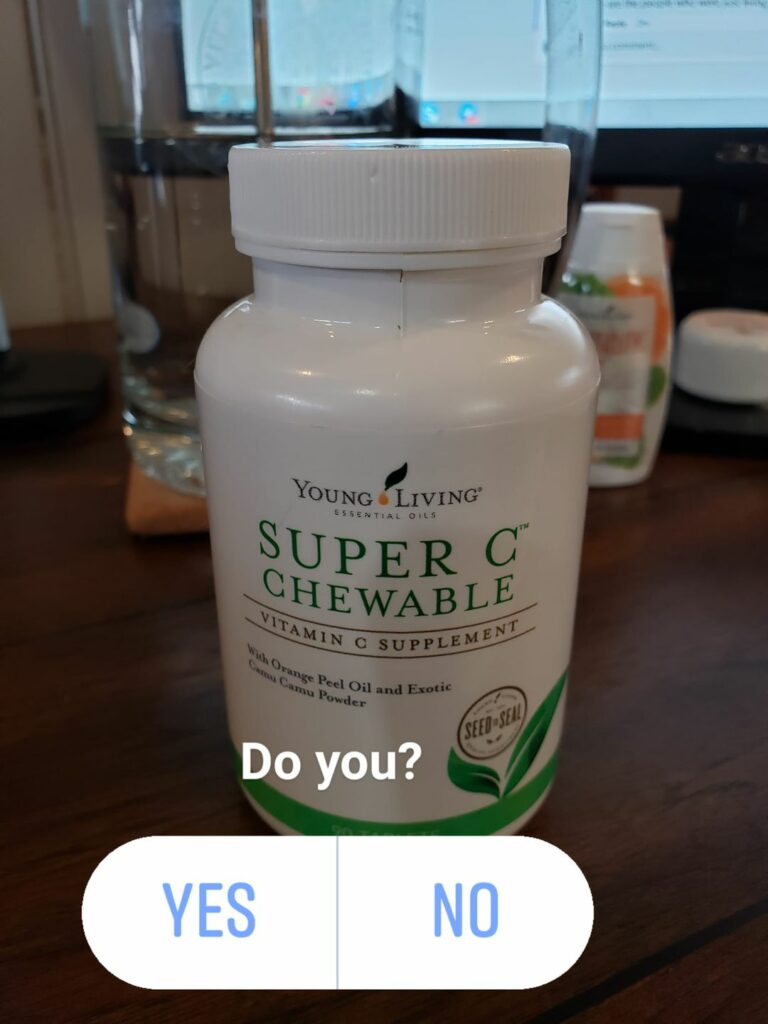
For this reason….. Easy does it friend! Lower levels of iodine/iodide supplementation are your friend ( Master Formula, Multigreeens and Thyromin), as is making sure you are flushing out toxins by staying well hydrated, and taking adequate amounts of Vitamin C ( YL’s Super C Chewables is a stellar choice), and a regular source of antioxidants ( NingXia Red!). Should you find out you need more iodine/iodide in your life, there are products available as stand alone entities. Talk to your iodine savvy health professional if you think you need more.
Q: Is it possible to have an allergy to iodine?An actual true allergy to inorganic iodine/iodide is very very rare. More commonly “iodine allergies” can be traced back to the body’s response to the other chemicals or allergens found within the same product or food item. Oftentimes the link is seafood or shellfish , contrast dyes, iodine antiseptics. Iodine’s molecule is small and too simple (structure wise) to cause an antibody response, but when it’s combined with another substance, it could play a role in the allergic response. Example: some people may have a topical reaction to the antiseptic povidone-iodine but have no reaction to potassium iodide.
 or shellfish
  , contrast dyes, iodine antiseptics. Iodine’s molecule is small and too simple (structure wise) to cause an antibody response, but when it’s combined with another substance, it could play a role in the allergic response. Example: some people may have a topical reaction to the antiseptic povidone-iodine but have no reaction to potassium iodide.Q: What happens when you take thyroid hormone replacement therapy AND you have an underlying iodine deficiency?
Frankly, this is a problem and why it’s a good idea to evaluate your iodine load. If you are on thyroid medication and still don’t feel “right”…. It could be that your medication needs tweaking or changing….. Or it could be related to an iodine deficiency that may account for some (or all) of the symptoms you are feeling.
Additionally, one of the jobs of thyroid hormone is to stimulate metabolism. Every cell in the body is dependent upon iodine for proper metabolic function. If supplemental thyroid hormone raises the metabolism of cells throughout the body, this also increases the need for iodine (that may or may not be there). Recall last week’s discussion on iodine’s role in cellular function which includes programmed cell death (a good thing!). Frankly, knowing this information, I believe that people on thyroid medication should be tested for iodine deficiency regularly.
Q: Is there a link between iodine deficiency when combined with years of thyroid hormone medication and breast, ovarian, uterine, and prostate cancers? There are some pretty compelling studies 
 out there indicating it is likely so. It has been theorized that the continual unrecognized iodine deficiency combined with an increased metabolic rate (from the thyroid medication) may account for the increased incidence (Remember, iodine is needed for programmed cell death which includes keeping aberrant cellular reproduction in check.)
The mainland Japanese ingest over 100x the RDA of iodine in their diet. Coincidentally, they have among the lowest incidence of breast, endometrial, ovarian, and prostate cancers (and a very low incidence of fibrocystic breast disease too).
Q: Can kids be iodine deficient and can they be tested?Interestingly, there is a strong correlation between higher levels (and severity) of ADHD and autism in iodine deficient populations. Kids can be tested for iodine deficiency too….. Their loading challenge will be different based on weight. You’ll want to work with an iodine knowledgeable pediatric health professional who will work with you.
If you’d like to dive more into the “Great Iodine Debate”, I’d encourage you to pick up a copy of any of these books:
 Iodine: Why you need it (5th edition) by Dr. David Brownstein MDWhat Doctors fail to tell you about Iodine and your Thyroid by Dr. Robert Thompson MDThe Iodine Crisis by Lynne Farrow
As always…. I’m here simply to be your super sleuth guide. You are your own best health detective!
xoxo~ liz






 Dopamine Deficiency Part IV: More Solutions
 ,
,  Mowing the yard! It may be hard work, but the aroma of fresh cut grass contains a chemical called hexanal (the “green” smell of grass) that stimulates dopamine release.
 Organic coffee (No more than one cup a day or it may contribute to adrenal fatigue…. A dopamine high followed by a crash!) or a cuppa organic green tea (Have you tried the YL
  Acupuncture stimulates the vagus nerve, which in turn support healthy dopamine levels. (Go back and reread the section on low vagal tone!)
 Creating and performing music boosts dopamine levels even more than listening to your favorite tunes, but all three are effective. Listening to music has even been shown to improve fine motor skills in Parkinson’s patients.
 Chronic inflammation reduces dopamine synthesis and release in the brain. We’ve got tools on hand to support a healthy inflammatory response (as opposed to the runaway variety!).
  Lack of sleep down regulates dopamine receptors and reduces dopamine receptor availability. You know what to do! Sleep is so very important in ALL aspects of health. Review your sleep hygiene practices and look for “holes in the armor” that may result in interrupted sleep. I LOVE and incorporate
 Vitamin C assists with the formation and conversion of dopamine in the brain. Deficient levels of vitamin C may show up as a low mood.
  Vitamins B6 and B9 are critical for dopamine synthesis. Low folate levels contribute massively to low dopamine levels which may ultimately lead to depression.
  Alternate between standing and sitting. “Chronic sitting” lowers dopamine levels. Our body was designed to move!
 Finish a project. Who knew? This in itself causes the brain to flood with dopamine.