

• Skip to primary navigation
  • Skip to main content
Book Your Health Coaching Call
Good Medicine

Good Medicine

Holistic Health Coaching

  • Home
  • Liz James
    • About Liz
    • Coaching
    • Book a 20 Minute Complimentary Coaching Call
  • Favorite Resources
    • BlessedByHisBlood
    • Young Living
    • Fast Like A Girl Certified Coach
    • Order supplements through my Fullscript store
    • Green Pasture (Coupon: Health10)
    • RogersHood Apothecary (Coupon: BEABLESSING for 10% off)
    • DolphinMPS
    • Company
    • Abundance
  • My Books
    • Becoming Your Own Health Detective Volume 1
    • Becoming Your Own Health Detective Volume 2
  • Blog
  • Cart

Wellness

Goin’ Down the Gopher Hole

Liz James · February 26, 2019 ·

Have you ever begun researching or looking for information on something, and it leads to more research ad infinitum? Well, that has happened to me over the course of the last six weeks. It’s all good stuff and I’m super excited to begin sharing it with you all, but first I have to get it unpacked properly from my brain.  I love learning and uncovering new information…. it makes my heart go pitter patter, even if it does at some point begin to give me blurry vision and in need of a map as I return from the warren of learning I’m being steeped in. 

The gopher hole (yes, I know the cuties above are actually prairie dogs!) I went down began with a simple question that had been ping ponging about in my brain for several months. I am a holistically minded pharmacist as you may well know, and I LOVE to help people realize feasible ways prevent dis-ease, restore function, and become optimally healthy. In a word: Not just surviving, but thriving! 

There ARE times when medication is necessary and Western medicine needs to work its magic thru intervention, but really….. this needs to be reserved for emergent care, when holistic measures have failed, or when genetics simply deal us a challenging hand.

Unfortunately, we have become an immediate gratification society, and the ‘grab and go’ healthcare system has capitalized on that. It’s much easier to take a pill for a symptom than it is to identify the root cause and work towards fixing what’s actually ‘broken’…..but taking a pill (or having an elective surgery) will ALWAYS have a consequence, and frequently, it may have more than one consequence. Often, the consequence will simply replace the original symptom (dysfunction), but occasionally, it can open a can of worms that was bigger than the first problem. I’ve seen this scenario happen too many times to count in my career.

“We” (ie: our current worldview) tend to discount risk versus immediate benefit in lieu of the desire for an immediate ‘fix’. When the immediate need is resolved, the focus of our attention is removed from the problem (or dysfunction)…. we’ve moved on to the next thing. Meanwhile, the risk may have slowly and quietly slipped thru the cracked door, and we fail to notice the correlation….. benign neglect, innocent ignorance of our own bodies, willingly handing over the ‘care and feeding of us’ to a Third Party who has little or no vested interest in our optimal health….. regardless of the reason(s)….. secondary dysfunction has crept in on padded feet. 

Here is but one example:
Statins are one of the most commonly prescribed medications in the United States for high cholesterol. Nearly 30% of adults over 40 are on them. Impressive stat for Big Pharma, right? 

But let’s go over another set of stats on the statins. Statins work by blocking a VIP enzyme called HMG-CoA. When this enzyme is blocked…. it blocks the production of cholesterol, but it also blocks the production of a nutrient called CoQ10. (Blocking the production of cholesterol is a post unto itself, that I will tackle next week and unpack for you…. cholesterol has been demonized when in actuality, it is an absolutely vital component to our well being)CoQ10 is critically important, and it can be supplemented to offset potential problems. Unfortunately, in my experience, most doctors never tell their patients this when they hand them a statin prescription. The doctor ‘might’ tell them to let them know if they have unusual soreness or cramping in their legs (a warning sign of something called rhabdomyolysis). This is a common ‘side effect’ of statin use…. but the reality is that it’s a sign of a secondary deficiency that crept thru the door that statin use opened. Other signs of CoQ10 deficiency include:

  • cardiac arrhythmia or palpitations, which could land you on medication. (Low CoQ10 is found in nearly all patients with heart failure. Read into that what you will…..) 
  • depression or memory loss (meds for this too)
  • fatigue (you may live with this, or begin self medicating with caffeine or other stimulants)
  • Impotence or decreased libido (ugh!)
  • High blood sugar (setting you up for diabetes OR making your current diabetic state harder to manage or regulate….. don’t even get me started!)​In 2014, the American Diabetes Association actually made the recommendation that all adults over the age of 40 take statins. (I’ll speak more to this when I write that cholesterol post)

Does this worry you? It should. And this is but one class of medications that causes a deficiency of CoQ10. 

Now, I’m not a doctor, and please….. do not take my words (or anyone’s words) as gospel.  I am all about self study and whole truth… which is not always easy to come by in the healthcare industry. (Remember, there are billions of dollars at stake here.) I encourage all of you to become the best advocate of you that you can be. Nobody knows you better than you, right? Self study can be a little confusing if you aren’t used to it. Talk to your healthcare provider. Don’t be afraid to ask the hard questions….. and above all, be armed with knowledge that you yourself have found. Do not be afraid to shake the dust off your shoes and move on if your doctor doesn’t take full consideration of your concerns.

If this post has rattled your cage a little, so be it. That is my job as a pharmacist…. to point out some things that are important for a body to stay healthy, and it’s your choice whether to keep your head in the sand or be on the lookout for danger. We (pharmacists) are trained to counsel on side effects, but we need to be taking it a step further …..counseling on the causes of those side effects as well as potential ways to mitigate them, and to teach our tribe how to not just avoid deficiency, but to have optimal health in the process. ​

This is but one of the reasons I believe proper supplementation is so absolutely critical to living well, but especially if you are one of the millions who are on (and may need to remain on) a medication. Because statin use is also now being linked to probable Vitamin D deficiency, I recommend both MindWise and OmegaGize3 as being stellar products in the supplement industry… for everyone. Don’t wait for a deficiency to actually happen. It’s much harder to fix than it is to prevent, right? 

If these products are new to you, I encourage you to learn more about Young Living and why I’ve chosen them as my supplement company of choice. You can learn more about the company and how to receive discounted pricing by returning to my home page, or if you’d like to chat, please reach out to me. That’s why I’m here.

Be well, and have a glorious day! 
Hugs and Love, Liz
​

Oasis in the Desert: Choosing a Reputable Supplement Company

Liz James · January 8, 2019 ·

The uniqueness of the world I’ve chosen to live in is not lost on me. On one foot, I’ve got my mud encrusted muck boot as I wade thru one of the wettest fall/winter cow pastures in North Texas history. On the other foot…. my trusty Dansko’s: the only footwear I’ve found that are comfortable for a 10-11 hour shift at the pharmacy. I spend most of my days using my pharmacy knowledge to teach people how to avoid a long term relationship with a pharmacy.  Other days, I put my white coat on and fill prescriptions…. some for those who have no choice, and others….because they continue to make life choices that come with a prescription price tag….. and still others, who simply don’t know any better. #knowbetterdobetter …… that’s why I feel so called to be here.

With the New Year comes a slew of questions regarding supplements at the pharmacy. Resolution toting customers looking for an easy way to lose weight, minimize fresh workout pain, or simply just trying to get healthy in baby steps.

The supplement industry is a tricky business, and deciphering the options can be overwhelming to anyone that hasn’t done a great deal of research…. doctors included. I can’t tell you how many times I’ve had a patient tell me incorrect information given to them by their doctor regarding supplements. The rare doctor has done his/her research it seems (Not much is taught in medical, nursing, or even pharmacy school regarding supplements. It’s up to the practitioner to crack the code and educate themselves), and the patient is pretty much left to their own devices to find the best product for themselves. My team is spending the next few months educating our ‘family’ on types of supplements, and this topic is so very important that I thought I’d include some of that education here.

​​Why do we need supplements anyway? There are several reasons:

  • Farming practices since the 1970’s have stripped our soils of valuable nutrients. The only way we can receive minerals in our diet is thru nutrient dense soil. Plants soak up that nutrition and then pass it along to the herbivore (or omnivore) that eats it. Somewhere up the line, a carnivore may get involved and the nutrients are passed (or not passed) along to them.
  • Genetic modification of our veggies, fruits, and grains have continued the depletion process. Nutrition has been sold out to prettier “eye candy” produce that ships well, stores well, and looks like something out of a glossy magazine. Fresh produce today is an estimated 50-70% less nutritious than its counterparts 50 years ago.
  • Pesticides, herbicides, fungicides, fluoride, and chlorine contamination all have played their part in binding nutrients and making them unavailable for our body’s use.
  • Existing health challenges, a regular diet of fast/processed foods, use of acid blockers/reducers regularly, and/or reoccurring GI issues? If you answered “yes” to any of these, odds are high that you have a crippled system preventing efficient production or use of nutrients. (This means you likely need more supplementation than the average bear.) 
  • And finally…. medications. Who’d have thought this was even a problem? Next to nutrient deplete food itself, it’s one of the biggest problems of all. More than half of Americans take medication regularly, and those that do (on average) take four or more on a daily basis. FACT: Hundreds of medications suppress or rob your body’s ability to produce or utilize vitamins, minerals, enzymes, and co-factors necessary for a healthy life.​​

How DO you find a good supplement company? The answer >>>> very carefully! 

While the FDA does quite a bit of governing in the supplement world when it comes to wording (no diagnosing,treating,curing etc… or you might have some ‘splaining to do to the FDA), the reality is that the supplement industry lacks rigid standards that ensure  product integrity and quality. If you sift thru articles, you’ll find dismal stories of adulterated products (especially in the weight loss, antioxidant, sexual performance and workout booster categories). The problem doesn’t just lie in possible contaminants tho… it also encompasses cheap and/or ineffective ingredients.

What this means is that company integrity should mean absolutely everything to you. Do you really know the company you’ve chosen to buy product from? In most cases, you can tell a lot about a company’s product line based on company standards, policy, history, and mission statement:

  • Are the employees well treated and paid fairly?
  • What was the motivation of the company to build a particular supplement? Usually, the best companies are the ones founded by people who had health problems themselves, and found a solution thru proper nutrition. (A great example of this is Kate Farms for their quality nutrition drink for those with strict dietary and medical needs.)
  • Does the company put the purpose of the product above the profit? ie: This doesn’t mean the product will be inexpensive. On the contrary…. a well made product will usually come with a higher price tag (more on that later).
  • Do you know their value system? Are the ingredients fairly and sustainably sourced?Are the ingredients without compromise? 
  • Does the company leave a positive impact on the communities they work with?
  • Does the company have transparency? Are you able to visit them? Do they have 2nd and 3rd party testing?

​If you cannot easily find answers to these questions, odds are high that you may be duped by your current company. Back away from your supplements, and listen up…….  ​


The Care and Feeding of your Body: Supplements 101
Vitamins, minerals, and other micro-nutrients are absolutely essential for all body processes to function in a healthy manner. Energy must be produced, the immune system supported…..vision, brain function, attention span, digestion, skin, repair and recovery processes, structural integrity and thousands of other little nuanced jobs must happen for optimal health.

Our body is no dummy. It does it’s best to prep for us… stashing extra vitamins and minerals as it is able, in anticipation of a sabotage event. There’s a little bit of ‘prepper’ in all of us! If we’ve not allowed our body the resources to stash those excess nutrients, when the moments of stress, lack, or ‘robbery’ happens….. suddenly, there is no backup plan, and one or more systems begin to give warning signs of impending failure. Long term lack allows for dis-ease and dysfunction to set up housekeeping. This is one of the reasons our country is overflowing with auto-immune disease.

If it’s THIS important to keep adequate supplies of these nutritional building blocks on hand, it makes no sense to rely on less than ideal sources. Supplement companies can be tricky little suckers and it pays to be savvy and knowledgeable so you don’t get duped into thinking you got ‘something’ for next to nothing.

Price: There is no such thing as a high quality inexpensive supplement. Common sense should tell you that between bottling, labeling, shipping, marketing, distribution, and profit, a $10-$15 bottle of vitamins leaves precious little $$ left over to invest in quality ingredients. How much is your life worth after all? If you are willing to spend $5 per day on a cup of designer coffee (which is likely loaded with some of the very things depleting your body), you should have no qualms with spending the same amount (per day) on quality supplements your body desperately needs.

Throw out the ‘all in one pill’ mindset: It just can’t happen. There’s no way to cram everything into one pill and end up with a reasonably sized product that only an elephant could swallow. Size does matter, but it’s even more complicated than that. Not every nutrient is compatible with each other, and some nutrients need to be be brought in to the body multiple times a day because storage is just not possible (ex: digestive enzymes). If you’re really serious about protecting, fortifying, and prepping your body for health, expect to take 3-6+ capsules/supplements per day depending on the health challenges you may have been toting around for awhile.

The Junk: Quality and sourcing….. if you are trying to get healthy, the last think you want is unclean ingredients, and yet that happens all too frequently. If your body is having to filter unclean ingredients from your supplement regimen, you’ve lost sight of one of the main reasons you want to take supplements in the first place!

  • Fish oil coming in from waters contaminated with PCB’s, heavy metals, toxins, and radioactive waste. Rancid fish oil that actually causes what it should be preventing. Other ingredients that are sourced from questionable, impure, or unclean environments……A recent study found over 800 supplements containing prescription medications (unlabeled).
  • Fillers that are also allergens: byproducts of wheat, yeast, soy dairy, gluten, corn, or that are low grade and possibly irritating to GI tissue. Additives that are used to stretch the bottom dollar, but at best, do nothing for your health. SLS (sodium lauryl sulfate)… a chemical sometimes used as a disintegrator in tablets. This is a topical no-no in skincare but imagine the implications when consumed. Studies show it has a “degenerative effect on cell membranes…”. Ummm, no thank you. I’ll keep my cell membranes intact for as long as possible thank you very much. 
  • Cheaper forms of ingredients that are less biologically active (ex: using cyanocobalamin instead of the more bioavailable [and pricier] methylcobalamin.)
  • Artificial colors, flavors , and sweeteners (Ahem, God provides awesome natural flavors and sweeteners! Why not use them?)
  • Coatings- how well does your vitamin or supplement dissolve? Ideally, most need to be in capsule form for ease of dissolution. If you’ve ever seen your vitamins in your poop (a common thing), this should be your aha moment.

Ultimately, the question comes down to this: Do you trust the brand you buy, or are you relying on blind faith? If you are relying on the latter, it might be time for a do over.  Just because the product(s) may be found in well known stores doesn’t mean it’s a reputable brand. The bottom line matters to a store, and buyers aren’t generally schooled in supplements (frequently it’s a 19 year old kid who is doing the ordering!)…. they are schooled to find the largest profit margin for their employer. Just as they are looking out for their employer’s best interest, YOU are the CEO of you, and you need to look out for the best interests of your ‘corporation’ too. 

Be kind to yourself. Research before you buy…. and for goodness sake, find a company worthy of your trust. Your health depends on it! 

Hugs and Love, Liz
#knowbetterdobetter
#thisiswhyIdowhatIdo

​

Growing with Elsa

Liz James · October 8, 2018 ·

Elsa at 10 months. She is starting to get her mama’s darker face.

Welcome! You’ve found my first official blog post on the updated website! This has  been a work in progress for the past several months, and…. not being exactly technically savvy (give me science or farming any other day!), I’ve had to call in some excellent tech help to assist in the upgrade. You can finally find ALL you need right here in one place!

The move to the new website put blogging on a little hiatus until we could get everything matched up properly. I think you’ll find this venue MUCH easier to navigate. Growing means learning, expanding, and exploring new options, right? 

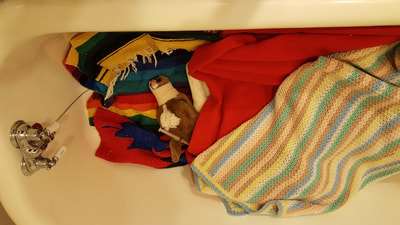
Speaking of growing…. She’s now 10 months old, and it’s well past time for an Elsa update! Sweet girl shows up on Facebook with some regularity, but I need to update here…. this is kind of her ‘baby book’ after all. For all my love of animals, I never thought I’d love a cow as much as I love this heifer. I guess that’s what might happen when one lives in your bathtub for a few weeks, and syringe feeding around the clock takes control of your life! The cards were certainly stacked against her. Birth during 20 degree weather (which cost her parts of both ears), failure to thrive (because she couldn’t suck properly), trips to the vet (because we didn’t know any better.. couldn’t see the internal cleft palate… and subsequently also missed by the vet)…. it did not look good for Elsa. If you scroll back thru my early 2018 posts, you’ll find her history scattered throughout.

Nonetheless, she prevailed.

Her story hasn’t been without a little work and some modifications in her/our life. Elsa is a permanent mascot on our farm. She is a greeter, social maven, photo bomber, and so much more. As she’s grown, we’ve adapted and risen to the challenge.

Her cleft palate is not easily repairable. According to a couple of vets I’ve consulted at Texas A&M Veterinary College, the surgery would not be easy on her. Cow mouths do not open very wide, and any repair of this nature would only be manageable by entering thru the side of her face…effectively eliminating the possibility of surgery unless absolutely necessary.

Elsa eats well (albeit messily!), and does not seem to be hindered much by her birth defect. Fairly early on, we discovered that she is also moderately tongue tied, and is only able to stick her tongue out of the right side of her mouth. This really doesn’t seem to affect her much, so I’m torn between getting it fixed surgically (rather, putting her thru that surgery), and just letting her carry on as she has been. She doesn’t know any differently, and so it seems more like the surgery would be for us moreso than for her.

Cleft palates in calves are not as rare as you’d think. Unfortunately, most calves are birthed fairly unattended, and if they go without nursing for long, they die. As in the case of Elsa, if the cleft palate is undetectable externally, the rancher usually assumes the calf simply died of natural causes. Cleft palate in calves is not a genetic anomaly…it’s caused by eating the wrong plant during the first trimester of pregnancy (a similar thing can happen in people if certain medications or products are consumed during the first trimester too). In Honey’s case (Elsa’s mama)….. she apparently got ahold of a select few plants in the lupine family….. the most common culprit for bovine cleft palates. Honestly, we’re blessed. Her deformity could have been much much worse, and her personality more than makes up for the bit of added work that is required for her health and safety.

Milestones
Just like all babies, Elsa has had her milestones.

  • She survived the first month! It took a team of dedicated friends and ‘nannies’, as well as Charlie and I to get her thru the first month.
  • Around the six weeks mark, she finally figured out how to eat properly from one teat…. the left front. Each teat is different on a cow, and Elsa had to figure out how. We never gave up, and every day, I would encourage her to try. After the mastered one teat, she gradually learned how to nurse (in her own way) on 2 other teats. Because of the angle and size (And probably because of her limited use of her tongue on the left side of her mouth) she never mastered the 4th teat on the back left quarter. As she grew, her nursing got pretty rough on Honey. She used her teeth more than most calves, and consequently, was really tearing her mama up. We made the difficult decision to wean her at 4 1/2 months (early!) because the damage she was doing prevented us from milking Honey too.
  • Eating creep feed and grass is not a problem for Elsa. Occasionally, she will have grass coming out her nose and she will stamp her feet and blow until it comes out. For awhile, we had to wet her creep feed so that it wouldn’t end up in her nose. She has outgrown that need now, and eats food just like the big girls! 
  • Cud chewing…. all cows regurgitate their food and then thoughtfully re-chew it for better digest-ability. Elsa does this too, but the liquified food comes out her nose if her head is in a downward position. It doesn’t seem to bother her overly much, but it can get messy. Because of this, she gets a spongebath about once a week.
  • Schooling. She is going to make an amazing hand milked dairy cow. She is calm, cool, and collected, AND she’s about as social as you could possibly imagine. Because the facial deformities are not genetic, we are not worried that the cleft palate will carry forward to her offspring.

Lessons from raising a Cleft Palate Calf

  • Life is what you make of it.
  • When you are able, make the most of running, bucking, and living like there’s no tomorrow…. but above all else, never ever give up! 
  • Resiliency is a good thing. Bounce forward not backwards!
  • Vitamin D is a necessary part of healing. Lay in the sunshine even when you think you don’t have time to.
  • Be friends with those who are different from you. (Elsa doesn’t know a stranger… 2 or 4 legged!)
  • Work with what you’ve got! Not everyone is born with the same tools.
  • Family doesn’t always mean blood relatives.
  • Being ‘schooled’ is not a bad thing. We all need to be haltered and given parameters on occasion.
  • Patience is still a virtue.
  • Love IS worth it.

Stay tuned…. Elsa will always be making an appearance here. She’s one of us….. part of the ‘farmily’. 

Thanks for visiting and celebrating our imperfectly perfect life on the farm.

Hugs and Love – Liz  

3 days old, and struggling for her life. We didn’t yet realize that she had an internal cleft palate.
Cutest calf ever! Two weeks old, and finally figuring out how to live!
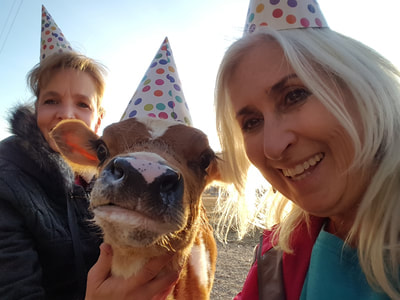
Celebrating Elsa’s one month birthday with her Auntie (and my dear friend). Can you say spoiled calf! She’s turned into a photo ham!
Photo bombing and selfies are one of Elsa’s favorite hobbies!
Giving slobbery kisses is another favorite of Elsa’s!
She’s the best calf ever!
9 months. Sept 2018. School’s in session, and basic training begins!
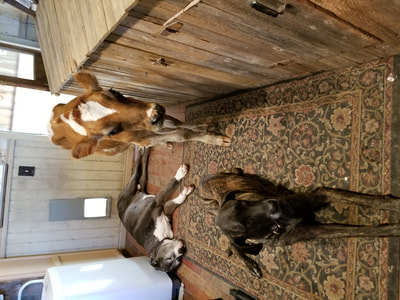
Feed room takeover. Elsa is one of the dogs (as far as she and the dogs are concerned!)….waiting for dinner. 9 months.

Darlin’ Clementine

Liz James · August 1, 2018 ·

One of the darlings on our farm is sweet Clementine. This old girl is, well, just that…. the granny on our farm. You’ve got to start somewhere when you embark on any journey in life, and she pretty much represents when our raw milk story took the ginormous step from simple consumption to full throttle buy in.

Clementine was my birthday present more than 10 years ago, and our second milk cow. We were still ‘young’ in the learning about all things cow, handmilking, etc. Dairy cow husbandry is equal parts skill, art, instinct, commitment and passion. If you find you lack in any of these areas (as many do), your stint as a dairy cow guardian will likely be short lived. Mistakes, ignorance, or lack of commitment can easily cost a cow her life…. or at the very least,  permanent damage to her udder.

In the beginning, I read books, watched videos, talked to everyone who knew anything about handmilking dairy cows. We ‘hired’ a teenage homeschooled young man to teach us hands on rudimentary skills and very basic knowledge of dairy cow care when we bought our first handmilked Jersey from his family. Bonnie (short for Mooey Bonita) was a pretty girl and, by cow standards, pretty patient with our ignorance. We learned much from her. (She was with us for several years before unexpectedly passing away in the middle of the night.)

Owning one dairy cow does not make you an expert. Heck, honestly, it was a few years before I felt like we had ranked up from beginner to novice. It was about that time that we decided to expand our herd of one. This time, we felt like we ‘knew what we were doing’ when we drove 4 hours south to buy a cow which was part of a herd of culled commercial dairy cows. The owner of this herd was a woman who likely recognized that we were blissfully ignorant when it comes to cow shopping (much like a used car salesman probably perceives a first time car buyer…. with a mixture of glee and predatory guile).

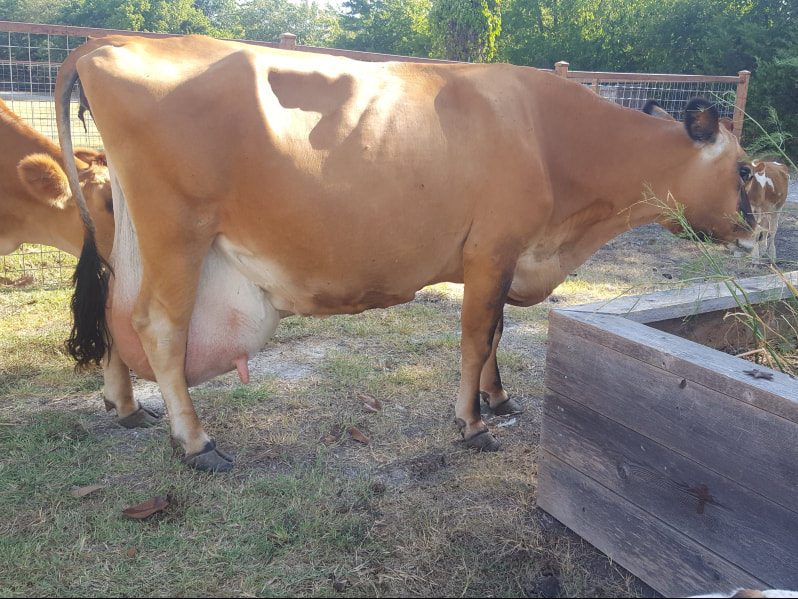
Clementine was huge! She is a big Jersey….. but I’m talking about her udder in this case. Not just large… but massive. We commented on how big her udder was, and our cow salesperson told us that the reason for that was because she was still in milk production.

“Notice the large and long teats (a good thing), and the placement of them (also a good thing)….. and only ‘probably’ 5 years old. ”  ….. all important amenities of a handmilked cow.

We were told she would be an excellent source of bountiful and copious amounts of milk. Just look at her udder size. Clearly. The poor girl looked like a bovine version of Dolly Parton. Thinking we had just hit the white gold jackpot, we wrote our check, loaded her up, and headed home, really having no idea what we had just bought.

Despite our ignorance, Clementine turned out to be an enormous blessing, and our experience with her has allowed us to rank up from novice to advanced proficiency in all things ‘dairy cow’.   An animal raised in a commercial farming industry (as she had been), does not usually receive daily rations of kindness and compassion. They are viewed as a commodity and either an asset or liability. If they fall below the line distinguishing those two, then they are typically sold or destroyed. There is no room for ‘slackers’ in the the factory farming business.

Clementine’s udder was her downfall, AND her saving grace. We found out much later that her enormous udder was a physical defect caused by laxity of the suspensory ligaments. What we thought was a goldmine (her udder) was, in actuality, the reason she was culled from the commercial dairy herd. It was actually a time bomb. The lower an udder hangs, the greater the odds of mastitis due to injury (kicking herself as she walks), and the harder it is for a calf to nurse. Had we not purchased her, she likely would have been sent to the processor.

Like bygone versions of Miss America pagents, dairy cows are given scores on their udders…. only the opposite is true. Bigger is not better, and will, in fact, get you culled. In her case, Clementine had maxed out the scale (a 5 is rated as the worst).
​
When we bought her (and her defective udder), we only saw a sweet faced cow that looked our way when the other cows in the herd wanted nothing to do with us. We saw a cow that was willing to learn to be handmilked if we were willing to give her a chance. True, we also thought we had a pretty darn special udder attached to that cow….. not knowing that it was ‘special’ in a totally different way.

I’m not even sure when I realized we had been duped, but it was probably a couple of years into our life with her. Just like women have different bra sizes, cow udders are…. well, ‘udderly’ different from one another. Bonnie was an average ‘B’ cup when not in milk, but Clementine…… her udder just seemed to stay ‘DDD’ regardless of the season. The internet is a wonderful thing, and sometimes you just don’t know what to look for until you start looking. Curiosity got the best of me on this topic, and that’s when I found out (and narrowly avoiding a few rounds of mastitis in the process) what her problem was. Secondly, she was also at least a few years older than we had been told at the time of sale.

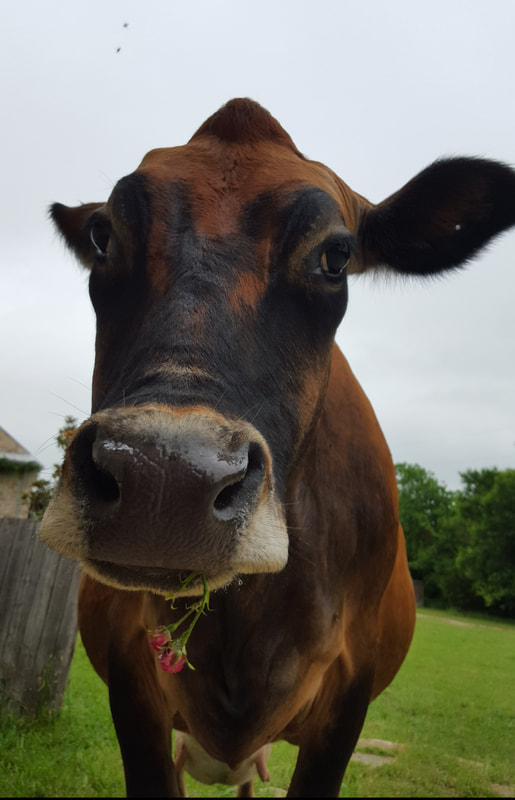
And yet. Thank God we picked Clementine and her defective udder. She has been the advanced training guide we needed …. life isn’t simple or easy when it comes to cows, and Bonnie had been both of those. We had no issues, and didn’t really have any concept of  what warning signs, symptoms, and dysfunction might look like. Experience is a powerful educator.  I’ve honed my holistic animal husbandry skills considerably in the last decade (thank goodness for Young Living oils and Animal Scents Ointment!). But in addition to the considerable education that sharing our lives with Clementine has granted us, she has proven to be a remarkable ‘spokescow’ for the family milk cow world. She is beautiful, photogenic, paintably cute, Miss Congeniality, and…. above all else….. kind. She has been a tremendous mother and auntie to calves, and is quite the greeter on our farm.

Last year, it became obvious that her udder simply could not take another pregnancy. One the scale of 1-5, her udder was a 9. By our calculations, her estimated age is around 18 (the average lifespan of a commercial dairy cow is 5-7yrs.)
​
I’ve posted about the realities of farm life on my blog, but there are times when emotions defy logic and financial prudence.  No worries ya’ll…… Clementine is here to stay. She is one of our mascots……. Still ‘aunt-ing’ calves, still greeting, and ready to photobomb whenever she can. We are making her retirement as comfortable as possible for her. A discussion with a vet at Texas A&M rejected the possibility of an ‘udder reduction’ surgery (way too risky). Her udder is pendulous,perilous, and ultimately, it probably will cost her her life someday.

Awhile back, one of our friends jokingly sent me an article on ‘cow cuddling‘, apparently the newest thing in psychotherapy. Believe me, I think there’s merit to it. Clementine, among others, are probably what keep me sane some days! Heck, at an average going rate of $300/ 90minute session (according to the article), maybe she’d be interested in a late in life career change?!?!?   It’s never too late to teach an old cow new tricks!

Hugs and Love, Liz (and Clementine)

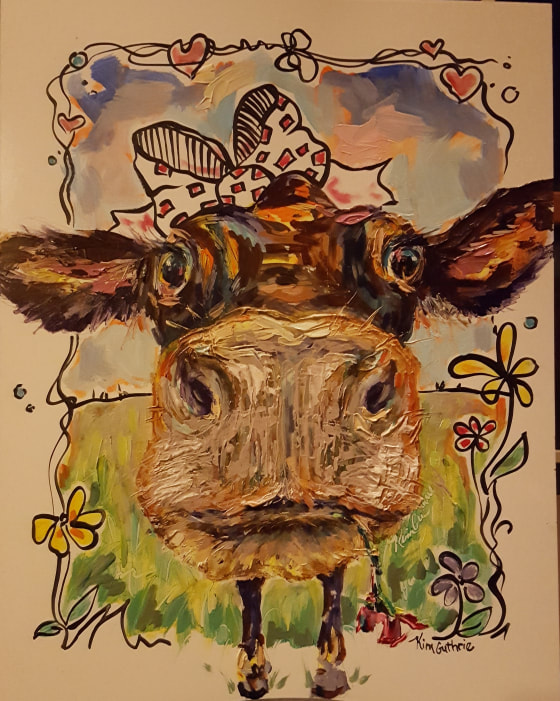
*Kudos to Kim Guthrie Art for our artwork. (Doesn’t she do amazing custom work?)
​​

Whoops…We Did It Again(smh)

Liz James · July 17, 2018 ·

Yesterday, while at work in the pharmacy, we got official word of a voluntary recall on several brands of valsartan containing medications. A voluntary recall means that the drug company requests that products be pulled from the pharmacy shelves, and selling of that product cease immediately until new product is issued. It does not extend to the consumer level. You can read more about the recall itself here.

Recalls like this happen every so often in pharmacy, and are not usually call for alarm unless it happens to be one that extends to the customer level (not the case this time). That said, media caught wind of it and began reporting on the recall, causing fear and worry amongst customers who are on this particular blood pressure medication. I began and ended my pharmacy day yesterday fielding these many calls from customers who were fearful of continuing their medication even one more day, now that this information was known. 

Once you know something, you can’t un-know it.

The cause of the recall? It became known that one of the ingredients used in this particular medication is a ‘probable’ cancer causing agent.  (Ironically, one of the people I spoke to was a smoker. SMH!) Now, before you start calling your pharmacy wondering what you are supposed to do if you are on valsartan,  let’s take a look at the facts:

  1. Right or wrong, the alleged ingredient has been in the medication since at least 2015.
  2. The recall is not at the customer level (meaning that the situation has not given the FDA cause to issue a recall on dispensed medication too).  In fact, this statement was issued by the FDA: “Because valsartan is used in medicines to treat serious medical conditions, patients taking the recalled valsartan-containing medicines should continue taking their medicine until they have a replacement product.”
  3. “Probable” cancer causing agents should be fully excluded from our daily lives, but sadly they are everywhere you turn. The FDA and the EPA turn a blind eye daily as companies pump probable (and known) cancer causing agents into the environment, our homes, our food and drinking water, AND our personal care products. It’s no wonder that the cancer rate in the United States has skyrocketed since the 1950’s.

Visit the American Cancer Society website, you’ll see a list of  these ‘probable  (and known) cancer causing agents’ that people unwittingly use and allow into their lives.

Once you know something, you can’t un-know it.

I would advise stopping reading now if you want to remain blissfully unaware, because I’m about to give you the lowdown on just a few items on the FDA/EPA list.

Seriously. Stop now. 

Here are just a few offenders from the long list:

  • Acetaldehyde- solvent used in the manufacturing of many items including perfumes
  • Asbestos – As recently as last week, Johnson and Johnson (yes, the very same company that produces well known baby products) was found guilty of producing asbestos laden talcum powder and must now pay 4.7 BILLION dollars in settlement to women who have suffered physical damage (cancer) because of regular use of their product.
  • Azathioprine, Chlorambucil, Cyclophosphamide, Cyclosporine, Etoposide, Metronidazole, Tamoxifen….. these are all medications. The list is so long, I can’t name them all. Several on the list are cancer treating agents (that also may cause cancer themselves. SMH!)
  • Formaldehyde – used throughout industry. Commonly found in nail products, soap, hair growing products. Also commonly found in the ingredients of cosmetics. (It is considered an inexpensive preservative….hence, its use. Economy trumps health unfortunately).
  • Arsenic, Cadmium, Chromium, Cobalt, Lead, Mercury, and Nickel (not all of these are cancer causing agents, but do potentially cause significant health concerns and are found in many ‘mainstream’ cosmetic companies).  The FDA has published an interesting survey on cosmetics that can be found here (or on the full length reference at the end of this post).  https://www.cancer.org/cancer/cancer-causes/general-info/known-and-probable-human-carcinogens.html
  • Herbicides such as Roundup and others. These are truly among the most disastrous carcinogenic agents allowed into our food and water supplies. If you’d like to read a treasure trove of information on this topic, please take a bit of time to visit a document depository on the history of the subterfuge within the chemical industry that stretches back nearly 100 years: The Poison Papers(link below). Roundup and other Monsanto/Bayer chemical products have been banned by wiser countries (sadly, not our own).

Giving you examples of known and probable carcinogens could easily consume my day, because this list just goes on and on and on.…… and ultimately I will bore you to tears (or wake you up to what you likely have in your home).  

I’m hoping by now you see my frustration in yesterday’s moment of media hyped hysteria over the valsartan recall. Of course it should have been recalled, but friends…… we have much larger fish to fry if we are going to worry about this.

I would venture to guess that each person I spoke to about the recall yesterday has more than 100+ known carcinogenic products in their home and garage that they willingly (but perhaps unwittingly) choose to expose themselves to on a daily basis.

SMH.

If you didn’t listen to me, and read this post to completion, you’ve got some decisions to make. What you can’t choose tho, is to now ‘un-know what you now know‘. Knowing gives you personal responsibility for the skin in the game (your own) and begs the next question….. what are you going to do about it?

Reality is this:  It’s not possible to avoid every carcinogenic or body damaging product out there, but there IS so much we CAN do to avoid the majority of them within our own home. There are also many ways to encourage detoxification of the body cheaply, effectively, and holistically.

If this post has you thinking that maybe it is time to wake up and clean up, I’d encourage you to start small in big ways. Get the ‘standard’ household cleaners out of your home…. one by one. When you run out of a product, don’t buy that junk again. Consider switching to Thieves Cleaner (a completely healthy way to clean).

Get the candles and formaldehyde laced air fresheners out of your home, and replace them with healthy diffusers. I promise…. you’ll sleep better, be happier, have fewer headaches, and….. if you diffuse the right oils, you’ll even boost your immune system and provide positive emotional support. This trumps possible and probable carcinogenic loaded products any day. Science backs this ya’ll….. as a pharmacist, I wouldn’t be here if it didn’t.

The cosmetic industry is rife with concerning chemicals. Use up what you have, but as you get close to needing more, consider ‘clean’ skin care and makeup. Yes, it does exist. I’d love to send you a few samples of whatever you’d like to see or try that is not only beautiful, but also loaded with health promoting ingredients. Ever heard of Savvy Minerals? If not, you are missing out.

This is one of the (many) things I love about Young Living. They stand in the gap for us where other companies do not. Scouring labels for toxins was time consuming and the print is small and fine (purposefully I think). I know I am taken care of safely with whatever I purchase for my family and our farm, and that we are taking personal responsibility for us….. because clearly, the governmental entities, are not doing enough of it.

If you’d like to learn more about living a more carcinogenic free life, please feel free to private message me. 

I am not perfect in my walk, but I’ve done it now for much of my adult life and would be happy to walk with you as you begin your journey. It’s never too late to start.

Hugs and love  ~ Liz


​
References:

fda article
freeethoughtproject-baby powder
fda harmful ingredintst tables
poison papers
nbc news – chemicals cause cancer
  • « Go to Previous Page
  • Page 1
  • Interim pages omitted …
  • Page 69
  • Page 70
  • Page 71
  • Page 72
  • Page 73
  • Interim pages omitted …
  • Page 84
  • Go to Next Page »

Book Your Health Coaching CallBook Now

Elizabeth James

469.425.9091

ebj0203@gmail.com