• Skip to primary navigation
  • Skip to main content
Book Your Health Coaching Call
Good Medicine

Good Medicine

Holistic Health Coaching

  • Home
  • Liz James
    • About Liz
    • Coaching
    • Book a 20 Minute Complimentary Coaching Call
  • Favorite Resources
    • BlessedByHisBlood
    • Young Living
    • Fast Like A Girl Certified Coach
    • Order supplements through my Fullscript store
    • Green Pasture (Coupon: Health10)
    • RogersHood Apothecary (Coupon: BEABLESSING for 10% off)
    • DolphinMPS
    • Company
    • Abundance
  • My Books
    • Becoming Your Own Health Detective Volume 1
    • Becoming Your Own Health Detective Volume 2
  • Blog
  • Cart

Toxins

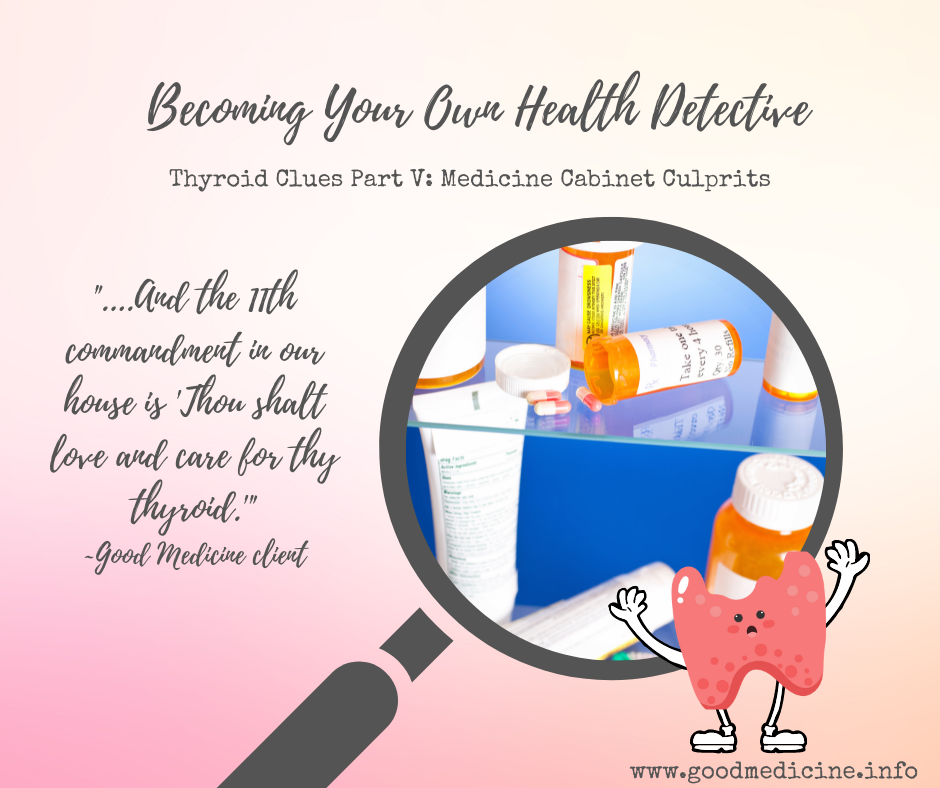
Thyroid Clues Part 5-Medicine Cabinet Culprits

Liz James · April 20, 2022 ·

Remember the fable about the Princess💃 and the pea🟢? You may recall that the true princess felt the effects of a pea beneath twenty mattresses and had a terrible night’s sleep because of it. After all we’ve discussed, you well understand that the thyroid🦋 is the discerning princess in the body……it feels everything!
 
It’s hard to pin down exactly how many people use medication chronically in the USA, but a rough estimate in 2017 was 66%. (I believe that number has risen significantly since 2020, but to date, official data has not yet been released).
 
I will forever and always say that there is a time and a place for medication, but that it should be used as a last resort whenever possible. Pharmaceuticals by very definition are a toxin to the body. While they may be performing their “FDA approved task” within the body, behind the scenes they are likely setting up trip wires, snares, and grenades elsewhere. Many commonly prescribed medications are quietly sabotaging thyroid hormone function as they outwardly “play nice” in their appointed tasks of lowering cholesterol, quelling aches and pains, placating gastric reflux symptoms, smoothing out moody days, etc.
 
Certain medications have the ability to affect thyroid hormones in at least four ways:
1. Some may alter the actual production of thyroid hormones.
2. Some may affect the release of of thyroid hormones from the thyroid gland.
3. Some may affect how well thyroid hormone attaches to (or utilized) at receptor sites.
4. Some may interfere with the conversion of inactive T4 into active T3 in the liver
Who are the thyroid accosting culprits?🕵️ As I hinted above, the gang is quite diverse. Nearly ⅓ of this gang of thieves bears a similar “tattoo”…….. They contain fluoride within their chemical structure. You’ll recall (hopefully!) that fluoride (and chlorine, another “tattoo” found in many medications) blocks iodine from its job helping the thyroid produce thyroid hormones. These small doses add up over time with chronic use medications.
 
Medications known to inhibit healthy thyroid function (in one of these four ways) with chronic use include:
💊Lipitor, Crestor, Vytorin, Zetia (cholesterol meds)
💊 Prevacid (stomach acid / GERD)
💊 Betamethasone, Clobetasol, Dexamethasone, Fluocinolone, Fluticasone (topical, oral or inhaled steroids)
💊Celebrex, Ibuprofen, Naproxen (NSAID pain)
💊 Lexapro, Prozac, Celexa, Paxil, Zoloft (mood stabilizers)
💊 Haldol, Risperdal, Lithium (mood stabilizers)
💊 Levaquin, Cipro (antibiotics)
💊 Synthetic hormone replacement therapies, birth control pills
💊 Amiodarone (treats ventricular heart arrhythmia)
💊Fluconazole (antifungal)
💊 Interferon Alfa, Sutent, Sorafenib (chemotherapy agents)
💊 Pramipexole, Ropinirole (for Parkinson’s)
💊 Metformin (Type II Diabetes)
💊 Furosemide (diuretic)
💊 Phenytoin and Carbamazepine (for seizures)
💊 Excessive Niacin (Vit B3) intake
 
(Note that this is a short representation of a very long list of medications!)
I am in no way inferring that you should stop taking medication that you may be currently on because it may be affecting your thyroid function. That is a conversation between you and your trusted health professional. According to an article by the Natural Health Research Institute, almost 75% of chronic illness can be improved or cured with improved lifestyle choices. Has your health professional talked to you about this as part of your treatment protocol?
 
Statistics like this are meant to empower you. Chronic disorders are generally where chronic medication use comes into play, and changing lifestyle habits can have a huge impact on health outcomes and on pharmaceutical needs.
 
Five significant ways your choices can impact your health include:
1. Reduce exposure to toxins (thank goodness for our YL Thieves Household Cleaner, essential oils that do “all the things” in a natural gentle way, Savvy Minerals cosmetics and the ART, Bloom, and Orange Blossom skin care lines!)
 
2. Making better food choices (and ditching the toxic processed foods)
 
3. Exercise. There is an exercise program / type out there that will work no matter what health situation you may be living with! (NingXia Nitro or Zyng 15-20 minutes prior to workouts elevates my gym workout routine!)
 
4. Sleep….Make sleep a priority. Improve your sleep hygiene habits! Some of my favorite sleep aids are YL’s Tranquil or RutaVala Roll-on…. Give ‘em a try and load your bedtime diffuser with oils like Cedarwood, Lavender, Peace & Calming, Frankincense, Orange )
 
5. Manage stress. Recall that chronic stress is as dangerous as a regular cigarette habit to the body. Even simply working on the four previous suggestions will have a profound impact on better management of stress.
 
In addition to making healthier lifestyle choices that lead to a healthier version of you (and protecting your thyroid🦋 in the process), here’s an added bonus: Annually, direct health care costs average $6032 out of pocket💰 for an individual with one chronic disease (that number goes up with each additional disorder). Indirectly, chronic disorders also have a profound impact on education, occupation opportunities, income, and social interaction. If your health professional has not offered up these five recommendations as part of protocols for any chronic disorder you may have, they are working as a dis-ease maintenance advocate instead of that as a healer. Ultimately though, it’s our personal responsibility to be our own advocates and in doing so, choosing whether to live in a space of dis-ease maintenance or healing. Care for that thyroid “princess” within your personal kingdom friends! It’s often the first organ in the body to recognize that something is amiss.
 
xoxo~ liz
 
 
#caringissharing
#becomingyourownhealthdetective
#BYOHD
#goodmedicine
#applicationofknowledgeispower
#supersleuthhealthclues

The Curious Case of Covid and the Shrinking Brain

Liz James · March 16, 2022 ·

Long Covid. Have you heard of it? Maybe perhaps you’ve even experienced it yourself. Those who have experienced it appear to have a variety of symptoms. Headaches, disrupted concentration, anxiety, brain fog, longstanding smell or taste disturbances are common complaints. Occasionally, even psychosis is mentioned.

These brain changes are now physiologically accounted for according to a recent study in the journal, Nature. Inflammation of both the blood vessels and nervous system tissue are noted as probable culprits. I agree with that, but I also believe there are likely other factors involved. One of those factors is the micro-clotting that has been identified as a byproduct of a covid infection. Micro-clotting is an interesting creature and in my personal estimation, it is not getting nearly the attention that it should be getting.

Exchange of oxygen for carbon dioxide occurs at the capillary level. Likewise, the exchange of toxins for nutrients from the blood to tissue also occurs at the capillary level. Micro-clotting wouldn’t necessarily cause issue at the larger vessel level (arteries and veins), unless there was a snowball effect of the micro-clots.

My boots on the ground theory is this: If micro-clotting inhibits the mission of the capillaries (to exchange trash for treasure) in the body, what happens? That particular tissue will pay a price. Toxins will accumulate and starvation and slow asphyxia will occur….likely not enough to cause death, but certainly discomfort. As the body starts to feel the effects of this, the subconscious will probably notice first and anxiety will be ramped up, feeling like it’s coming from “nowhere”.

The longer tissue is starved and deprived, the more dramatic the long game. What happens when the body is deprived of what it needs? It shrinks. It comes as no surprise to me that the brain is affected. I’ve worked with several people who have had long covid symptoms, and in my personal experience, there are ways to alleviate and perhaps even reverse the problem.

  1. Reduce inflammation (as the article states)
  2. Open the blood vessels up a bit more with a mild herbal vasodilator
  3. Increase the blood’s ability to “slip” a little more easily within vessels
  4. Use natural gentle products to decrease the body’s hospitality to spike proteins.
  5. Do all of this on a daily basis.

If someone is already on certain medications, there are some contraindications, but overall, it’s a pretty safe method. As always too…… if you keep adding in toxins (commercial household cleaners, bodycare products, toxin laden makeup etc) in your daily grind and only try to fix things by adding things in, the response will be slower. The body doesn’t lie about its state of affairs.

xoxo~ liz

Clues to Thyroid Health from Iodine-part 2

Liz James · March 15, 2022 ·

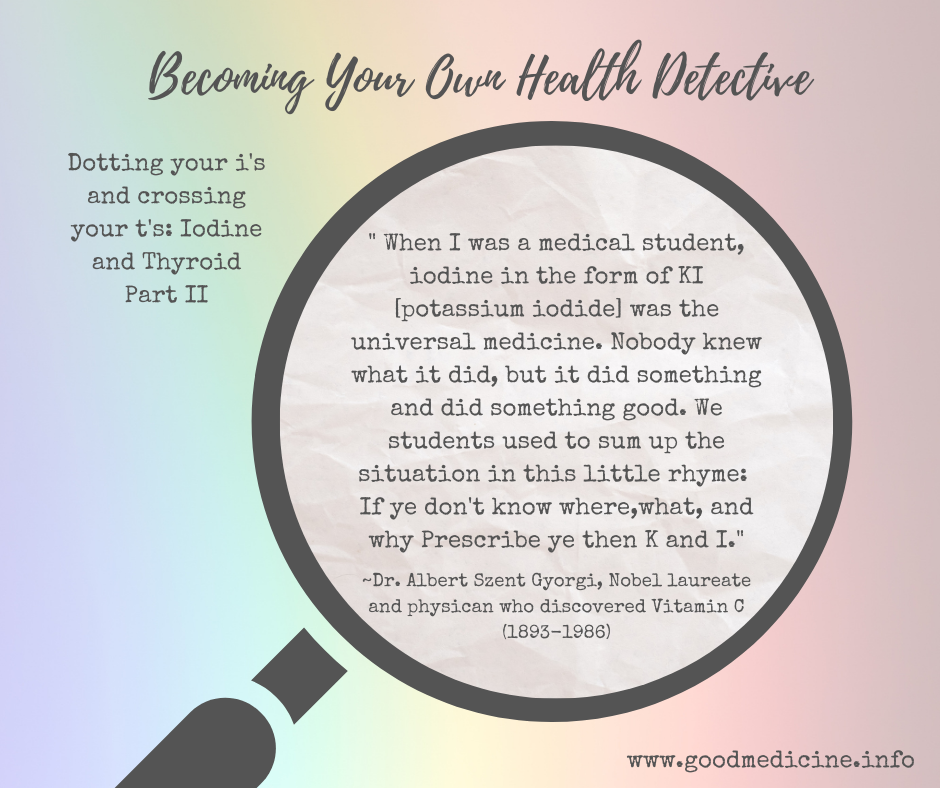
Dotting your i’s and crossing your t’s: Iodine and Thyroid Part II
 
Looking for clues is like using a roadmap🗺. The clues🔎 you find along the way will help you get to your destination. Sometimes you’ll need to stop and ask for directions from a local, someone who knows the territory well. Part II of dotting i’s and crossing t’s may very well require the assistance of an iodine savvy endocrinologist 👩‍⚕️or astute thyroid knowledgeable health professional who can help you find your perfect balance. You’ll need someone who listens to your clues, is willing to dig with you, understands the Great Iodine Debate, and doesn’t put you in a box with everyone else.

The Great Iodine Debate Summary

The “Great Iodine Debate” has been going on for many years and it’s well worth it to dive as deep as you need to. There is no possible way to cover everything on each topic I discuss. That’s not the point of this series anyway. My hope is that something you read sparks an “ah ha” moment and inspires you to dig more, putting pieces together for your individually unique puzzle. These “ah ha” moments are usually Holy Spirit led. If you feel a niggling in your soul, pay attention to it, and do your digging (due diligence) and use your tools to bring your body back into balance.
 
Dr. Guy E Abraham MD’s work surrounding iodine (formerly of the UCLA Department of Endocrinology) would be considered the modern catalyst for reviving the “Great Iodine Debate”. Interestingly, most of his personal information and work appears to have been scrubbed from the internet. As a 🔎 seasoned sleuther, it’s clues like this (the scrubbing) that make me look even closer at what this “outside the box thinking” doctor had to say. (This is another reason I rely on my personal library more than the internet when digging for clues.)
 
Take for instance, this quote from Dr. Abraham:
 
“During the first half of the 20th century, almost every U.S. physician used Lugol solution for iodine supplementation in his/her practice for both hypo- and hyperthyroidism, and for many other medical conditions. In the old pharmacopeias, Lugol solution was called Liquor Iodi Compositus. The minimum dose called minim, was one drop containing 6.25 mg of elemental iodine, with 40% iodine and 60% iodide as the potassium salt. The recommended daily intake for iodine supplementation was 2 to 6 minims (drops) containing 12.5 to 37.5 mg elemental iodine. During the second half of the 20th century, iodophobic misinformation disseminated progressively and deceitfully among the medical profession resulted in a decreased use of Lugol, with iodized salt becoming the standard for iodine supplementation. The bioavailable iodide from iodized salt is only 10% and the daily amount of iodide absorbed from iodized salt is 200 to 500 times less than the amount of iodine/iodide previously recommended by U.S. physicians. After World War II, U.S. physicians were educated early in their medical career to believe that inorganic non-radioactive forms of iodine were toxic. Adverse reactions to radiographic contrast media and other iodine-containing drugs were blamed on iodine. If a patient told his/her physician that he/she could not tolerate seafood, the physician told him/her that he/she was allergic to iodine.”
 
Things that make me go hmmmmmmm. Onward…. Shall we?

Here is How to Test for Iodine:

🔎Let’s start with a simple DIY: The Iodine Patch Test.🔎
🔸You’ll need 2% colorized tincture of Iodine. The clear stuff won’t work!
🔸Paint a 2-3 inch sized area with the iodine on clean dry skin. Apply to the stomach, inner thigh, or inner forearm….. Somewhere that won’t get rubbed constantly by clothing.
🔸Let the solution dry completely before allowing it to touch anything. (it will stain!)
🔸Monitor changes in color to the patch over a 24hour period.
🔸Proponents of this DIY test say that if the patch is still visible after 24hours, then levels are likely ok.
🔸If the patch has lightened considerably or vanished in fewer than 24 hours, it may indicate an iodine deficiency. If the patch lightens significantly or disappears in less than 18 hours, it may indicate a more significant deficiency. Make note of how fast the iodine vanishes.
🔸Evaporation, ambient temperatures, and rubbing clothing may play a part in the outcome, so take that into consideration.
🔸If results have piqued your curiosity, you may want to engage the assistance of one of the health professionals I mentioned earlier.
 
🔎There is a second test called an Iodine Loading Challenge. This is considered a more reliable “official” test, and is based on the amount of iodine found in the urine after loading the body with a large iodine/iodide load. (generally 50mg iodine/iodide, a tablet version of Lugol’s for adults)
🔸1st morning urine is discarded, but all urine after that is collected for 24 hours including the first morning sample at the END of the 24hrs. This urine will be sent off to a lab and evaluated.
🔸Results are based on the following premise: A body deficient in iodine will hold on to iodine. Example: a 90% excretion would indicate an iodine sufficient state, while below 90% would indicate varying degrees of deficiency depending on how low the % is.
🔸This test should run about $50-60 (plus the cost of the iodine/iodide combo tablets which are pretty inexpensive)

Common Questions

If your roadmap is leading to a possible iodine deficiency, you probably have a few questions. I’ll try to address some of them here.
 
🤔Q: Can you get too much Iodine?
A: Yes. Though it is considered one of the safest of our micronutrients when it is in inorganic, nonradioactive form ( iodides, tincture of iodine, Lugol solution). Iodine induced hypothyroidism is incredibly rare. TSH may rise when initially supplementing but T3 and T4 do not fall (those are the “boots on the ground” thyroid hormones you want to watch closely).
 
🤔Q: Does everyone benefit from “more” iodine?
Short answer…. No. Remember, we are all uniquely made. How do you feel? What symptoms are you living with? What is your risk category (see previous post) based on the factors involved?
Also, there is an uncommon situation called iodine induced hyperthyroidism. This occurs when there is an autonomously functioning thyroid nodule. This means that the nodule is not taking directions from the feedback mechanism involving the pituitary and the hypothalamus (go back and re-read the post on the “upstream” players in thyroid function if needed). An independent functioning nodule is like a wayward teenager….. It does its own thing in the presence of iodine regardless of the guidance mechanisms in place to prevent that from happening and hyperthyroidism can result. This is diagnosed with a thyroid scan, and iodine will need to be avoided until the nodule can be removed.
 
You might also recall iodine’s close association with fluorine, bromine, and chlorine. When iodine levels increase in the body, this can cause a mobilization of toxins that bind to the same receptor sites. Mobilized toxins are like a gang of thugs👹 on the move causing various degrees of mayhem until they have been excreted.
 
For this reason….. Easy does it friend! Lower levels of iodine/iodide supplementation are your friend ( Master Formula, Multigreeens and Thyromin), as is making sure you are flushing out toxins by staying well hydrated, and taking adequate amounts of Vitamin C ( YL’s Super C Chewables is a stellar choice), and a regular source of antioxidants ( NingXia Red!). Should you find out you need more iodine/iodide in your life, there are products available as stand alone entities. Talk to your iodine savvy health professional if you think you need more.
 
🤔Q: Is it possible to have an allergy to iodine?
An actual true allergy to inorganic iodine/iodide is very very rare. More commonly “iodine allergies” can be traced back to the body’s response to the other chemicals or allergens found within the same product or food item. Oftentimes the link is seafood🐟 or shellfish 🦐, contrast dyes, iodine antiseptics. Iodine’s molecule is small and too simple (structure wise) to cause an antibody response, but when it’s combined with another substance, it could play a role in the allergic response. Example: some people may have a topical reaction to the antiseptic povidone-iodine but have no reaction to potassium iodide.
 
🤔Q: What happens when you take thyroid hormone replacement therapy AND you have an underlying iodine deficiency?
Frankly, this is a problem and why it’s a good idea to evaluate your iodine load. If you are on thyroid medication and still don’t feel “right”…. It could be that your medication needs tweaking or changing….. Or it could be related to an iodine deficiency that may account for some (or all) of the symptoms you are feeling.
 
Additionally, one of the jobs of thyroid hormone is to stimulate metabolism. Every cell in the body is dependent upon iodine for proper metabolic function. If supplemental thyroid hormone raises the metabolism of cells throughout the body, this also increases the need for iodine (that may or may not be there). Recall last week’s discussion on iodine’s role in cellular function which includes programmed cell death (a good thing!). Frankly, knowing this information, I believe that people on thyroid medication should be tested for iodine deficiency regularly.
 
🤔Q: Is there a link between iodine deficiency when combined with years of thyroid hormone medication and breast, ovarian, uterine, and prostate cancers? There are some pretty compelling studies 🧐🤓out there indicating it is likely so. It has been theorized that the continual unrecognized iodine deficiency combined with an increased metabolic rate (from the thyroid medication) may account for the increased incidence (Remember, iodine is needed for programmed cell death which includes keeping aberrant cellular reproduction in check.)
 
The mainland Japanese ingest over 100x the RDA of iodine in their diet. Coincidentally, they have among the lowest incidence of breast, endometrial, ovarian, and prostate cancers (and a very low incidence of fibrocystic breast disease too).
 
🤔Q: Can kids be iodine deficient and can they be tested?
Interestingly, there is a strong correlation between higher levels (and severity) of ADHD and autism in iodine deficient populations. Kids can be tested for iodine deficiency too….. Their loading challenge will be different based on weight. You’ll want to work with an iodine knowledgeable pediatric health professional who will work with you.
 
If you’d like to dive more into the “Great Iodine Debate”, I’d encourage you to pick up a copy of any of these books:
 
📚Iodine: Why you need it (5th edition) by Dr. David Brownstein MD
 
📚What Doctors fail to tell you about Iodine and your Thyroid by Dr. Robert Thompson MD
 
📚The Iodine Crisis by Lynne Farrow
 
As always…. I’m here simply to be your super sleuth guide. You are your own best health detective!
 
xoxo~ liz
 
#sharingiscaring
#beingyourownhealthdetectiveisgoodmedicine
#BecomingyourownHealthDetective
#goodmedicine
#theGreatIodineDebate📚

Greenwashing is Everywhere!

Liz James · March 14, 2022 ·

Greenwashing is everywhere, and so frustrating. Wolves in sheep’s clothing are much worse than wolves because they are harder to spot.
 
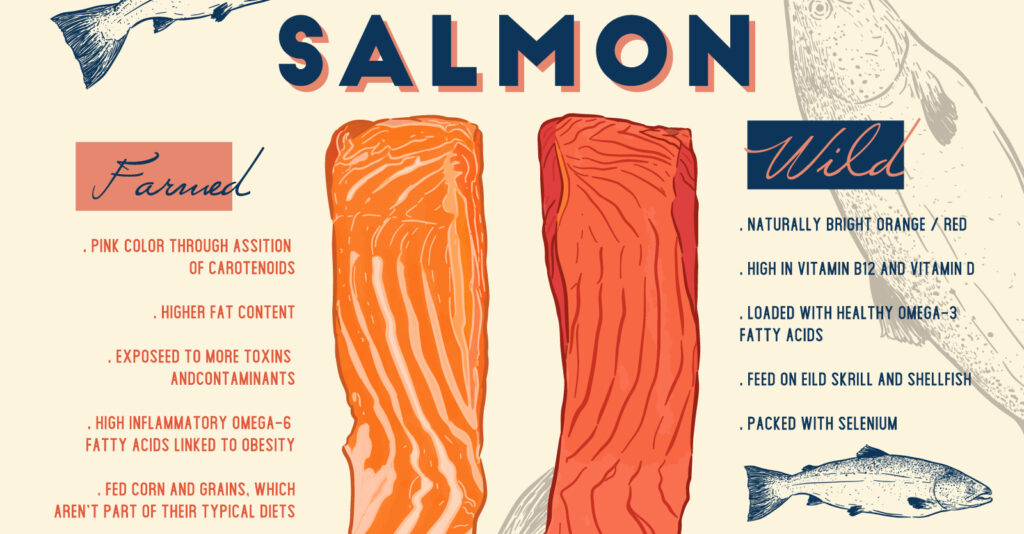
Quoting from this article (mind you, salmon is touted as being an incredibly healthy protein source)
” research shows farmed salmon contains 5 times more toxins than ANY OTHER FOOD TESTED, including higher levels of PCB’s and dioxin.”
 
I know. It’s frustrating for me too. Know your sources friends….. whether it’s salmon, what you use on your body, or your essential oils and supplements….. the list goes on. As consumers, we have our work cut out for us. Don’t give up, and embrace those companies you can trust. Remember, if the comparable price of something seems too good to be true, it probably is.
 
xoxo~ liz
 
#greenwashingsalmon
#sharingiscaring
#knowingthecompaniesyoushopwithisgoodmedicine
#youareworththeeffort
 
https://childrenshealthdefense.org/…/farmed-salmon…/

Clues to Thyroid Health from Iodine – part 1

Liz James · March 9, 2022 ·

Dotting your i’s and crossing your t’s: Iodine and Thyroid Part I
 
We all know that iodine is a necessary micronutrient and plays an important role in the health of the thyroid. I’m pretty confident that getting to know your individual iodine level (as I hope you will be encouraged to pursue by the end of this series🥰) is going to be new clue territory for many people.
 
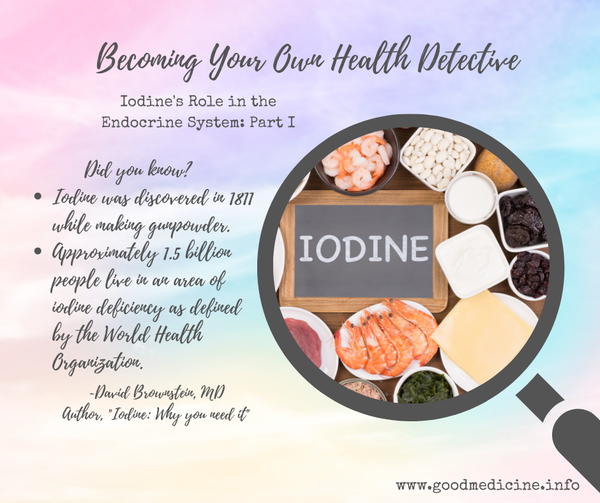
Iodine is not commonly found in soil and therefore not found appreciably in many foods. So how are we to get it into our bodies? It is found in ocean foods such as ocean fish and crustaceans🦀🦐🐟 and sea vegetables (seaweed), but it would require a regular diet of these foods to prevent a deficiency.

History of iodine related problems:

 
In the early 1900’s, goiters were a health concern in many inland areas where seafood 🦀🦐🐟 wasn’t a common food source. In 1923-1924 a study revealed that simply adding small amounts of iodine to the diet drastically decreased the incidence of goiters. Iodized salt was introduced into the US market, and by 1951, fewer than 0.5% of school aged children had evidence of enlarged thyroid glands. (Previously, it had been a remarkable 40% in areas with little access to ocean foods). The United States Food and Nutrition Board eventually set the RDA for iodine between 150-290 micrograms/day (approximately ½ – ¾ tsp iodized salt) to prevent goiters.
 
This is all fine and dandy, except that there are a few missing pieces to the puzzle. The RDA was set up to prevent goiters (which it does quite well), but is the recommendation adequate for optimal thyroid, immune system, and endocrine function?

Consider these facts:

 
🔎The Japanese consume 89 times more iodine than Americans (waaaaaaay more than what the US RDA has established) due to daily consumption of sea vegetables. Coincidentally, the traditional Japanese culture has reduced rates of chronic disease and some of the lowest cancer rates worldwide.
 
🔎Iodine is considered to be among the safest of all essential trace elements (provided we are discussing the inorganic non radioactive☢️ variety!), yet it has been given some pretty strict guidelines by the entities in charge.
 
🔎Iodized salt is loaded with sodium which has its own health concerns. Additionally, a 1969 study 🤓found the bioavailability of iodine in iodized salt to be only about 10%.
 
🔎An estimated 50% of adults in the United States have an undiagnosed iodine deficiency, and some of the researchers and “out of the box thinking” experts I follow suggest that this number may be as high as 90%.
 
🔎When I consider how often “those who make the rules” have given us dubious health information in other areas of health, I usually opt to think for myself. Yes, I acknowledge the guidelines, but I also dig for evidence that there may be some rocks “they” don’t want us to look under.🧐 It’s an established fact that we are monetarily worth more to the medical system if we are dependent upon it.
So, back to the question…..are we getting enough iodine to be optimally healthy?
 
Let’s dive a little deeper into the iodine fact pool:
 
🧐Scientifically, iodine has been proven to have antibacterial, antiparasitic, antiviral, and anticancer properties.  Iodine is responsible for regulating thyroid function and supporting healthy metabolism.
 
🧐Adequate Iodine is necessary for a robust immune system.
 
🧐Every cell in our body has a life cycle. When a cell dies in a healthy body, it is replaced by a new cell. This programmed cell death is called apoptosis, and it’s a good thing. Cancer cells are examples of cellular failure to undergo apoptosis. Iodine plays an important role in this beneficial programmed cell death.
 
🧐Iodine has a protective effect against H. Pylori 🦠 (a bacteria that tends to live in the stomach, and when overpopulated, causes ulcers and stomach cancer)
 
🧐Iodine is a key ingredient for the production of all of the other hormones in the body. (Did you catch that….. “All” ). It’s also found in every cell in our body, but especially concentrated in the salivary glands, the substantia nigra of the brain (one of the involved areas for Parkinson’s disease), the cerebral spinal fluid, the gastric mucosa, breasts, ovaries, and the ciliary body of the eye.
 
🧐Would you find it interesting that iodine deficiency has been linked to many chronic diseases and dysfunctions including Multiple Sclerosis, glaucoma, Sjogren’s, Parkinson’s, thyroid disorders, fibrocystic breast disease, breast, ovarian, endometrial and prostate cancer, uterine fibroids, ovarian cysts, certain headache types, diabetes, heart arrhythmia, and the inability to detox properly especially when exposed to mercury, fluoride, and bromine.
 
Iodine Robbers
 
In this crime scene, we definitely have clues pointing to a robber or two that can further deprive the body of iodine:
 
👥Iodine is an interesting micronutrient. It’s categorized as a “halide” on the periodic table. As a halide, it hangs out with the likes of fluorine, chlorine, and bromine. As you might guess, there are enough similarities between these four that iodine, fluoride, chlorine, and bromine often compete with one another in the body. It’s like a chemical version of the movie “The Parent Trap”👭, and fluoride, chlorine, and bromine compete against iodine preventing absorption and binding and tricking the body in the process. Larger degrees of exposure to these toxins make it harder for the body to use the iodine we do get in our diets and supplements. Hopefully you’ve kicked that fluoride laced toothpaste and mouthwash to the curb and have fallen in love with Young Living’s Thieves toothpaste and mouthwash. Watch your water sources for fluoride and chlorine too. Remember, the skin is like a sponge!
Bromine may not be a toxin you’ve heard much about. Unfortunately, that’s not because it’s rare. Bromine is used commonly in pesticides used on fruits (eat organically!), and is found in various processed foods and vegetable oils, hair dyes, textile dyes, commercial cosmetics (use your Savvy Minerals!), pool and spa chemicals, flame retardants, and paints.
 
👥Medications including maalox, mylanta, amiodarone, anti-gout meds, birth control pills, cortisone and prednisone as well as some SSRI’s inhibit the body’s use of iodine. Note the possible drug-disease causing connection, especially when there is long term use of the pharmaceutical.
 
👥Even certain foods can be iodine robbers if eaten in excess. Cabbage, broccoli, spinach, Brussel sprouts, cauliflower, kale, radishes, mustard greens, strawberries, and peaches may cause issues ( only if eaten in excess), especially if iodine levels are already low.
 
Can you get too much iodine? Does everyone need more iodine? How does taking thyroid medication affect iodine deficiency? Next week, we’ll talk about a couple ways to help determine your iodine status and answer these questions. In the meantime, if you think now’s a good time to add a little extra kelp into your world, Young Living’s Master Formula and Thyromin both contain this VIP sea veggie!
 
xoxo~ liz
 
#sharingiscaring
#healthyiodinelevelsisgoodmedicine
#goodmedicine
#becomingyourownhealthdetective
(PS: Becoming Your Own Health Detective, Volume One is still on sale at presale prices through the end of this week. Link to purchase: https://goodmedicine.info/my-book/ )
  • « Go to Previous Page
  • Page 1
  • Interim pages omitted …
  • Page 4
  • Page 5
  • Page 6
  • Page 7
  • Page 8
  • Interim pages omitted …
  • Page 40
  • Go to Next Page »

Book Your Health Coaching CallBook Now

Elizabeth James

469.425.9091

ebj0203@gmail.com