• Skip to primary navigation
  • Skip to main content
Book Your Health Coaching Call
Good Medicine

Good Medicine

Holistic Health Coaching

  • Home
  • Liz James
    • About Liz
    • Coaching
    • Book a 20 Minute Complimentary Coaching Call
  • Favorite Resources
    • BlessedByHisBlood
    • Young Living
    • Fast Like A Girl Certified Coach
    • Order supplements through my Fullscript store
    • Green Pasture (Coupon: Health10)
    • RogersHood Apothecary (Coupon: BEABLESSING for 10% off)
    • DolphinMPS
    • Company
    • Abundance
  • My Books
    • Becoming Your Own Health Detective Volume 1
    • Becoming Your Own Health Detective Volume 2
  • Blog
  • Cart

Toxins

Finding Clues in “The Pill”

Liz James · July 28, 2022 ·

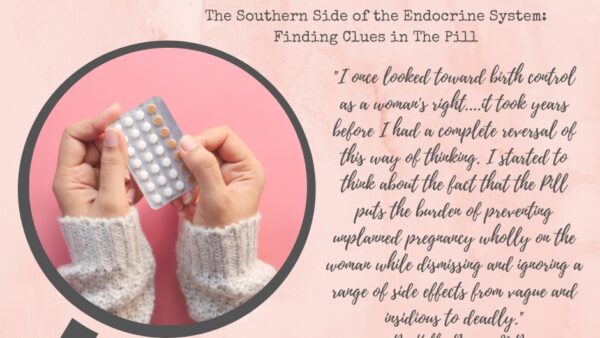
The Southern Side of the Endocrine System: Finding clues in The Pill
 
“Fellow citizens, we cannot escape history.” ~Abraham Lincoln
 
The further I get into my life, the more appreciation and value I’ve placed on ferreting out root causes… not only in health matters, but also in the consequences (both good and bad) of relationships, government, … pretty much anything that has made me ask “Why?”. This curiosity has proven to be both a blessing and a curse because I’ve been down some pretty deep and winding rabbit holes, usually coming up for air with a different outlook on what I thought I knew. For those of you who have also engaged in learning in this manner, this will resonate deeply with you. Once you have learned something that is verifiably true but unpopular in media presentation, you have to make a choice: either swim upstream, or swim in the direction of the majority and try to forget what you have learned. In my own personal observation, the latter does not bode well either emotionally or physiologically . A person cannot live a duality (believing one thing yet acting in opposite) for long without negative consequences ultimately manifesting.
I spent decades (both personally and professionally) in educated ignorance, believing that birth control pills were benign “helpers” for preventing pregnancy and calming dragonesque cycle symptoms. Perhaps you do (or did) too. In my defense, it wasn’t my fault. This is what we are taught in pharmacy school as are all health professionals taught within the singularly allopathic education setting.
Hormone based birth control is one of the most common types of prescriptions filled in a retail pharmacy setting. An estimated 14% of women aged 15-49 utilize synthetic hormone based birth control (pills, IUD’s, implants, vaginal rings, and patches). With numbers that high, how could a class of products not be both safe and effective?🤔
 
“It is difficult to get a man to understand something when his salary depends on his not understanding it.” ~ Upton Sinclair
 
👆 What he said!
At some point, culturally, we lost the history of birth control pills. Had we known the history, and had we kept up with the outcomes, would we (culturally) still be choosing the perceived easier swim downstream? I don’t have the time within this series to write the pages upon pages that should be devoted to this topic, so I’m leaving breadcrumbs for you to go digging on your own, or at the very least perhaps raise a hairy eyebrow and give the facts some serious thought.
🧐Ethinyl estradiol was studied and used by the Nazi’s in chemical sterilization experiments in the Auschwitz concentration camp during World War II. Ethinyl estradiol is one of the most common ingredients found in birth control pills today.
🧐The Pill was first tested experimentally in Puerto Rico in 1956. The women involved in the study were not informed that they were participating in a drug trial or of the potential side effects of the trial they were involved in. 11% of the women withdrew from participation because of adverse effects. According to information in the Congressional Nelson Pill Hearings of 1970, 5 participating women died and were buried without an autopsy. The focus of the Puerto Rico study was on efficacy, not safety.
 
🧐The Pill was introduced in 1960 during a cultural revolution, when all things natural were being shunned in favor of man made…. Tang for orange juice, formica and shag carpet instead of wood or stone, margarine instead of butter. Coincidentally, the incidence of autoimmune disorders began rising rapidly by the early 1970’s, with more than 80% of those cases being found in women. That statistic has not changed. The Pill became a symbol of women’s rights, and in the process, it hormonally defeminized women. In a twist of irony, as birth control pill waste is flushed (literally) into the water supply, it now also plays a role in the demasculinization of men through its contribution to the estrogen dominance phenomenon in males.
 
🧐It was recommended early on that The Pill be used by a woman for two years or less in order to prevent possible sterilization. Some women take The Pill for 30 years or longer. Meanwhile, infertility rates continue to rise. According to the CDC’s most recent data, approximately 19% of women in the USA ages 15-49 now have difficulty getting pregnant or staying pregnant.
 
🧐The Pill was approved for use prior to Congress passing the 1962 Kefauver-Harris Drug Efficacy Amendment which requires drug manufacturers to prove both safety and efficacy.
 
“It would be natural at this point to think, ‘It’s been 50+ years! Surely today’s version of The Pill has been proven safe.’ That’s a reasonable assumption. However, it’s dead wrong. The maker of today’s most popular birth control brands [as of 2019] Yaz and Yasmin, paid out $2.04 BILLION to settle over 10,000 blood clot lawsuits as of 2016, and the number of injuries, deaths, and lawsuits continues to rise.” ~ (📚Book: In the Name of The Pill, page 30)
 
The reality is that sometimes decades go by before a very serious side effect is appreciated, and if there is enough money to be made, “those with the gold ultimately make the rules” (and make digging for truth a little harder).
Birth control pills come with a fine print document thanks to the 1962 Kefhauver-Harris Amendment. In addition to establishing both safety and efficacy, it also introduced the concept of patient informed consent. Allow the patient to make their own decision after weighing the pros and cons. Have you ever read one of these patient package inserts?
 
I’m including a link here for the popular birth control pill, Yaz, as a real world example. It’s 29 pages long and corroborates what I’m about to share:
https://www.accessdata.fda.gov/…/2011/021676s008lbl.pdf
 
According to FDA access data sheets on birth control pills, there is risk (think clues!) of:
👩‍⚕️Thromboembolic disorders and other vascular problems (Note: that BCP’s containing drospirenone have been found to cause 2-3x more blood clots than in previous pill generations)
👩‍⚕️Strokes
👩‍⚕️Increased copper retention. Symptoms of excess copper include anxiety, depression, hyperactivity, chronic fatigue, inflamed joints, insomnia, infertility, hair loss, headaches, diabetes, endometriosis, recurrent fungal infections, both high and low blood pressure, and increased breast cancer risk. It is also a biomarker for thyroid disease. Note that copper and zinc are closely connected, and their ratio is important for optimal health. BCP’s (including copper IUD’s) also concurrently facilitate zinc depletion, causing further disruption of this ratio. Hair analysis is often the most accurate way to check copper and zinc levels.
👩‍⚕️Migraines and other headache types
👩‍⚕️Atherosclerosis (plaque build up and hardening of the arteries). Risk increases with duration of BCP use.
👩‍⚕️Increase in C-Reactive Protein levels, a marker for inflammation. The longer a body is inflamed, the greater the risk for autoimmune disorders, vascular diseases, and brain disorders.
👩‍⚕️Diabetes. Synthetic hormones affect the body’s ability to process carbohydrates. Nearly 1 in 5 women taking The Pill develop abnormal glucose tolerance.
👩‍⚕️Elevated triglyceride levels, affecting nearly ⅓ of BCP users.
👩‍⚕️Breast Cancer. Note that the American Cancer Society recognized synthetic hormones as a possible risk factor for breast cancer in 1961, and that The Pill ingredients have been found to cause breast cancer in all 5 animal species commonly used in pharmaceutical research and development.
👩‍⚕️Immune system suppression. Estrogen plays a key role in the immune system. Synthetic estrogen causes the body to cut back on its own production of body made estrogen.
👩‍⚕️Gallbladder disease (According to the American College of Gastroenterology, women between the ages of 20 and 60 years are three times more likely to develop gallstones than men.)
👩‍⚕️Bleeding irregularities (In relation to menstruation), including heavy bleeding and pelvic pain that may result in a suggested hysterectomy.
👩‍⚕️Depression. The American Journal of Psychiatry published a 2016 study by researchers in Denmark who reported that women taking hormonal contraceptives have up to triple the risk of suicide when compared to women who never took hormonal birth control. Another study found that 1 out of every 3 pill users showed depressive personality changes and 1 out of 20 had suicidal ideations.
👩‍⚕️The possibility of “over suppression syndrome” (Any part of the body which is not used or little used over an extended period of time leads to disuse atrophy: otherwise known as infertility in this case.)
👩‍⚕️Loss of Libido
👩‍⚕️Nutritional deficiencies including B1, B2, B6, Folate, B12, Vitamin C, Zinc, Magnesium, Iodine, and many other micronutrients.
👩‍⚕️Osteopenia and osteoporosis
👩‍⚕️Increased risk for developing lupus. The incidence of lupus has tripled in the last 40 years, and 90% of those affected are women.
👩‍⚕️Crohn’s Disease (beneficial bacteria in the gut is adversely affected by BCP’s)
👩‍⚕️Weight gain (Just prior to the FDA’s endorsement of The Pill, the federal government ordered all poultry producers to stop using synthetic estrogens to fatten chickens because it was known to cause cancer in animals. )
👩‍⚕️Increased risk of developing cervical cancer by 2-3x. Risk increases with BCP use longer than five years.
👩‍⚕️An estimated 6-7 out of every 10 Pill users take medication to counteract BCP side effects on a routine basis. Most commonly: diuretics, pain medication for headaches, anti anxiety medications, antidepressants, self medicating for fatigue and lethargy (caffeine etc).
********************
 
I’ve focused mostly on synthetic estrogen and estrogen dominance up (see previous posts on estrogen dominance and endocrine disruptors) and I would be remiss if I didn’t discuss the distinct differences between natural progesterone and synthetic progestins.
Progesterone is enormously beneficial to a woman’s body. It:
🙂Protects and supports cardiovascular health
🙂Stimulates hair growth
🙂Generally beneficial for mood and a good night’s sleep
🙂Is healing and calming to the body
🙂May reduce the risk of breast cancer
🙂Improves libido
🙂Helps with weight loss
🙂Improves bone formation
Conversely, Progestins (the synthetic version of naturally occurring progesterone) can cause:
☹️Hair loss
☹️High blood pressure
☹️Can cause anxiety and depression
☹️Can increase the risk of breast cancer
☹️Bloating
☹️Loss of libido
☹️Interference with sleep
☹️Itchy eyes
☹️Fatigue
☹️Progestins are believed to cause birth defects and are contraindicated in pregnancy. Conversely, progesterone is an absolute requirement to maintain a healthy pregnancy.
☹️Progestins reduce electrolyte availability within cells ( this may manifest as irregular heartbeat, fast heart rate, fatigue, lethargy, seizures, nausea, vomiting, muscle cramping, irritability, headaches, numbness and tingling)
(Note that many of these are similar in nature to estrogen dominance.)
When you use synthetic progestins, the body quits making its own progesterone (the good stuff!), and the synthetic variety “clogs up” the progesterone receptors in the body. If a woman has been taking progestins for quite some time, it’s likely that her body will have to relearn how to produce progesterone again which may take several months. Herbs that help support the body’s natural progesterone production include chasteberry (also known as vitex), evening primrose oil, rhodiola, ashwagandha (found in Young Living’s EndoGize ), schisandra, and wild yam (found in Young Living’s Progessence Plus serum, Femigen capsules, Regenolone and Prenolone Plus creams). Foods which also support healthy progesterone production include those high in zinc, Omega 3’s, vitamin C, magnesium, and B vitamins. Do your research and eat for your hormones! If obtaining enough in a daily diet is challenging, consider adding Young Living’s Super C chewables, and Super B tablets. Several Young Living supplements (ex: Master Formula & OmegaGize3 respectively) also contain magnesium, zinc and Omega 3’s!
I realize I’ve dropped many bread crumbs for you to follow here. Heck, there are some downright loaves waiting to be picked up and examined should you be so inclined. There is much more to be learned from the story of The Pill.
There are many reasons women use BCP’s outside of preventing unplanned pregnancies, and by using synthetic hormones as a chemical band-aid, the root cause of the issue is being left to fester. Find a holistically minded health care professional who will help you find and address your root cause(s). It literally could be as simple as changing diet, addressing stress, supplementing to prevent a deficiency, using Young Living essential oils strategically, or increasing exercise!
Are there other effective options for preventing unplanned pregnancies? Certainly, there are, and there are emotional, physical, and relational health benefits to be had in utilizing them. There are a variety of cycle “health detective” clues you can come to rely on with remarkable accuracy. Do some digging on the topic “Natural Family Planning Methods”.
 
Fertility is not a disease and there is a rather steady supply of evidence which indicates that by medicating otherwise healthy women, we have unwittingly done great harm in the process. My job as a pharmacist is to provide the patient package insert as instructed by the Congressional Kefhauver-Harris Amendment, thereby giving the patient the opportunity of informed consent.
 
Risk versus benefit.
 
It’s the patient’s right, responsibility, and choice to either consent or deny. Most have never received a thorough explanation allowing for an educated decision.
Lots of clues friends! Embrace the sleuthing process. It will only serve you well. I promise.
xoxo~ liz
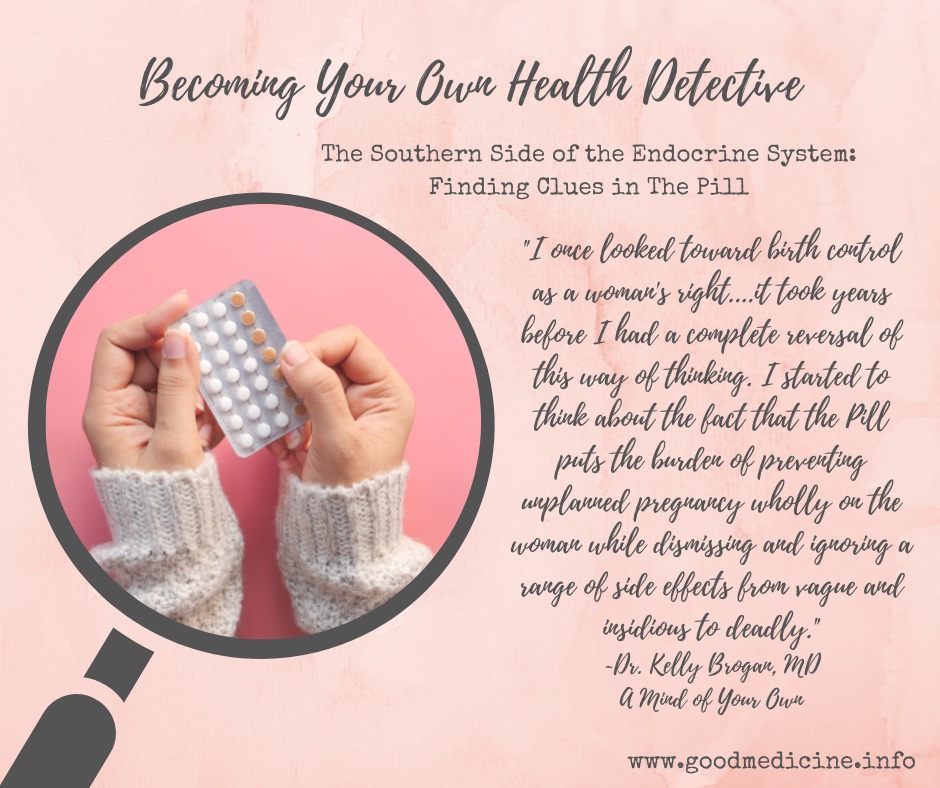


#BYOHD
#becomingyourownhealthdetective
#toxinfreeisthewaytobe
#goodmedicine
#ThanksYL
#toxinfreeslifestyle
#endocrinedisruptionhidinginplainsight
#ThePill
 

Thyroid – part 6: Recap & Strategies

Liz James · April 26, 2022 ·

 
Perhaps by now you are thinking, “Lordy….is this information on the thyroid ever going to end?” The trail of clues (and ah-ha moments for each individual) touches pretty much every aspect of the body, and there are many wonderful books and resources that go much deeper than I am here. Please, go research! You are worthy and capable of more than you may think. My goal here is to ignite the “ah-ha”, and spur you towards digging deeper on your own, and perhaps that may even need to include finding the right health professional who will partner (key word there!) with you in your personal wellness journey.
 
Recall that the thyroid has a symbiotic and synergistic relationship with many organs and glands in the body. (We haven’t even covered the adrenal glands and sex hormones yet!😁🤓). There is a math phrase, “The whole equals the sum of the parts.” This applies in biology as well: Our body cannot work wholly unless each part is well maintained and works!
 
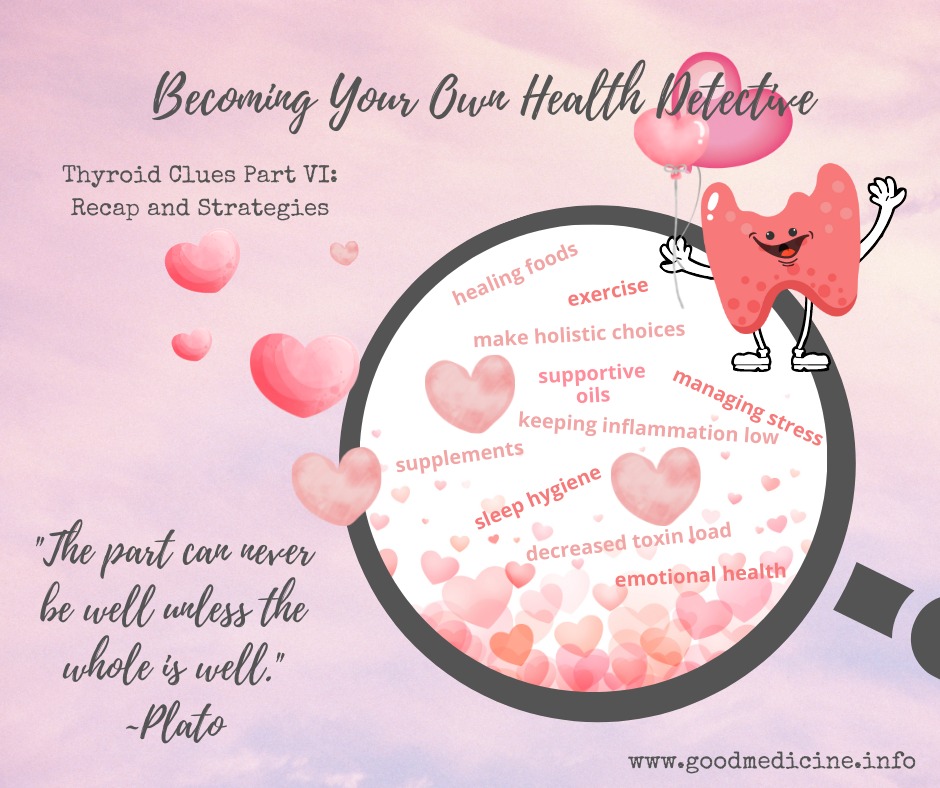
Before we head further southward in the endocrine system, let’s take a look at a cliff notes version of supportive measures designed to keep your thyroid healthy and happy:
 
🔎Food has the power to heal or kill. Choose wisely and know your sources! Nutrients are best received by the body if in natural form, and if supplementation is needed (often the case in our imperfect world! 😕), choose naturally sourced supplements! Synthetically derived supplements are unfortunately the most common ones found in the marketplace and do not do the job well. This is what makes having our naturally sourced Young Living supplements a beautiful, safe and effective one stop shopping experience!
 
🔎The thyroid needs very specific nutrients to produce sufficient levels of thyroid hormones:
🌿Vitamin D: found in YL’s Super Vitamin D and Master Formula, Balance Complete, MightyVites, MindWise, OmegaGize and Super Cal Plus.
 
🌿Vitamins B2 (riboflavin),B3 ( niacin) , and B6 (pyridoxine): found in YL’s Super B, Master Formula, MightyVites and Balance Complete
 
🌿Iodine: found in YL’s Multigreens, Master Formula, Thyromin,
Balance Complete, NingXia Nitro and Slique Shakes). Recall that it may be a good idea to have an iodine loading test done to see if your body needs more than it is currently getting in your diet and current supplementation.
 
🌿Vitamin E: found in Master Formula, MightyVites, Thyromin and IlluminEyes
 
🌿Iron: found in Master Formula, Balance Complete and Femigen
 
🌿Zinc: found in Master Formula, Immupro, PowerGize, Balance Complete, Slique Shakes, Super B, AminoWise, MegaCal, and MightyVites
 
🌿Selenium: Master Formula, MightyVites, Immupro, Super B, Balance Complete
 
🌿Tyrosine: found in Thyromin and Multigreens
 
Additional ways to support and love on that beautiful 🦋butterfly within your throat include:
🔎Keeping the toxin☠️ load to a minimum! Thank goodness we have the entire Thieves Household Cleaner to keep our homes, cars, ourselves, and our pets spiffy, clean, and healthy! Butterflies (and your thyroid!) are so very sensitive to their environment. Recall that toxins include toxic emotions and unresolved drama and trauma. Toxins also may include gluten in susceptible individuals.
 
🔎Be alert for chronic low grade infections that create systemic low grade inflammation, and mediate accordingly. Common sites for these to occur may be within joint replacements, root canals and other dental infections, sinus cavities, breast implants, and parasitic🐉🦠 infections (usually undiagnosed!…. I personally do a parasite cleanse at least twice a year using Parafree along with major liver support)
 
🔎Support your toxin clearing organs so that they may do their job efficiently and effectively…. Pay close attention to how well your liver and kidneys work! If you have an MTHFR gene variance, you’ll want to support your liver function on the regular. The liver has to work that much harder to remove toxins from the body! Studies have shown that carriers of a MTHFR gene variance have a higher risk of developing hypothyroidism if left unmanaged. Conversely, if you have a sluggish thyroid and a normally robust MTHFR pathway, the sluggish thyroid will eventually affect the MTHFR (methylation pathway) that is needed to clear toxins (and fighting inflammation) efficiently from the body.
 
🔎Strive to live as medication free as possible. While it may not always be possible, make it a goal to aim for. You’ll never succeed in something if you don’t create a plan and work towards a goal!
 
🔎Thyroids love exercise! Incorporate an appropriate exercise routine into your daily habits.
 
🔎Remove all possible sources of fluoride and chlorine saboteurs from your world. Check your local water source for fluoride content and filter your water. Remember that Thieves Toothpaste and Mouthwash is your thyroid’s friend!
 
🔎Address Autoimmune Diseases holistically and reduce chronic systemic inflammation in the process.
 
🔎Chronic stress is among the gang of enemies hellbent on destroying the thyroid. Protect your thyroid as you would a small child👩‍👧…… seriously. Use your skills we’ve talked about and work on improving your stress quotient.
 
🔎Protect your Gallbladder! Recall the synergy between those two unlikely organs. If you’ve lost yours, make sure you are supplementing with digestive enzymes such as EssentialZyme or EssentialZymes-4 to help break down the fats needed to assist in the conversion of inactive T4 to active T3.
 
🔎Sleep! 7-9 hours a night to allow the body to reset and heal.
Use supportive essential oils: YL Endoflex, Brain Power, and Clarity blends all have properties which are beneficial thyroid health as does Spearmint, Ledum, Myrtle, Peppermint, and Myrrh.
 
🔎Ashwaghandha: Although not a nutrient, it is an adaptogenic herb that has strong scientific credibility as a supportive measure for thyroid function. This herb is found in EndoGize and PowerGize.
 
Supporting and managing thyroid health isn’t just for those with altered thyroid function. It’s for everyone. We protect what we love, right? We are each a work in progress, and our work is never done because our personal life’s circumstances change daily. We tend to live in one of two ways. God has given us free will to choose throughout our lives, and we can choose to actively live or passively die. I’ve known people who (even despite dying) chose to proactively live. It’s a beautiful thing to see, and their lives have glorified God. Our body is a temple created to serve and worship Him. Treat yourself as though you are a precious gift🎁 worth fighting for.
 
xoxo~ liz
 
(link for purchase of Volume I, BYOHD: https://goodmedicine.info/my-book/ )
 
#sharingiscaring
#becomingyourownhealthdetective
#goodmedicineisthyroidlove
#ThanksYL
#weareourownbestadvocate
🔎


Thyroid Clues Part 5-Medicine Cabinet Culprits

Liz James · April 20, 2022 ·

Remember the fable about the Princess💃 and the pea🟢? You may recall that the true princess felt the effects of a pea beneath twenty mattresses and had a terrible night’s sleep because of it. After all we’ve discussed, you well understand that the thyroid🦋 is the discerning princess in the body……it feels everything!
 
It’s hard to pin down exactly how many people use medication chronically in the USA, but a rough estimate in 2017 was 66%. (I believe that number has risen significantly since 2020, but to date, official data has not yet been released).
 
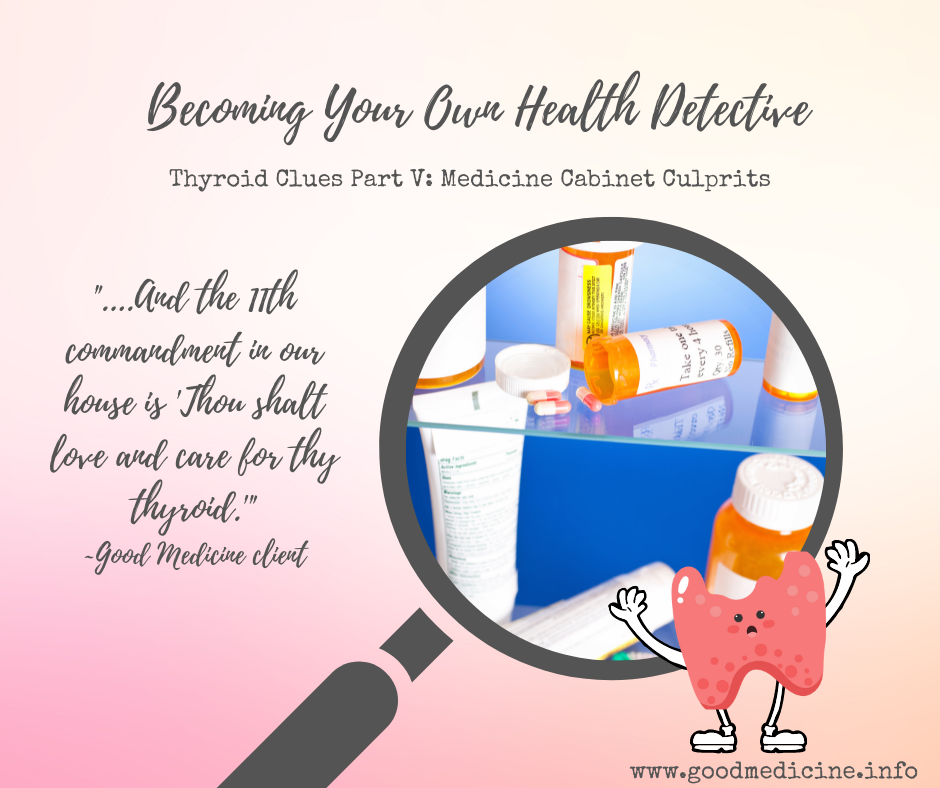
I will forever and always say that there is a time and a place for medication, but that it should be used as a last resort whenever possible. Pharmaceuticals by very definition are a toxin to the body. While they may be performing their “FDA approved task” within the body, behind the scenes they are likely setting up trip wires, snares, and grenades elsewhere. Many commonly prescribed medications are quietly sabotaging thyroid hormone function as they outwardly “play nice” in their appointed tasks of lowering cholesterol, quelling aches and pains, placating gastric reflux symptoms, smoothing out moody days, etc.
 
Certain medications have the ability to affect thyroid hormones in at least four ways:
1. Some may alter the actual production of thyroid hormones.
2. Some may affect the release of of thyroid hormones from the thyroid gland.
3. Some may affect how well thyroid hormone attaches to (or utilized) at receptor sites.
4. Some may interfere with the conversion of inactive T4 into active T3 in the liver
Who are the thyroid accosting culprits?🕵️ As I hinted above, the gang is quite diverse. Nearly ⅓ of this gang of thieves bears a similar “tattoo”…….. They contain fluoride within their chemical structure. You’ll recall (hopefully!) that fluoride (and chlorine, another “tattoo” found in many medications) blocks iodine from its job helping the thyroid produce thyroid hormones. These small doses add up over time with chronic use medications.
 
Medications known to inhibit healthy thyroid function (in one of these four ways) with chronic use include:
💊Lipitor, Crestor, Vytorin, Zetia (cholesterol meds)
💊 Prevacid (stomach acid / GERD)
💊 Betamethasone, Clobetasol, Dexamethasone, Fluocinolone, Fluticasone (topical, oral or inhaled steroids)
💊Celebrex, Ibuprofen, Naproxen (NSAID pain)
💊 Lexapro, Prozac, Celexa, Paxil, Zoloft (mood stabilizers)
💊 Haldol, Risperdal, Lithium (mood stabilizers)
💊 Levaquin, Cipro (antibiotics)
💊 Synthetic hormone replacement therapies, birth control pills
💊 Amiodarone (treats ventricular heart arrhythmia)
💊Fluconazole (antifungal)
💊 Interferon Alfa, Sutent, Sorafenib (chemotherapy agents)
💊 Pramipexole, Ropinirole (for Parkinson’s)
💊 Metformin (Type II Diabetes)
💊 Furosemide (diuretic)
💊 Phenytoin and Carbamazepine (for seizures)
💊 Excessive Niacin (Vit B3) intake
 
(Note that this is a short representation of a very long list of medications!)
I am in no way inferring that you should stop taking medication that you may be currently on because it may be affecting your thyroid function. That is a conversation between you and your trusted health professional. According to an article by the Natural Health Research Institute, almost 75% of chronic illness can be improved or cured with improved lifestyle choices. Has your health professional talked to you about this as part of your treatment protocol?
 
Statistics like this are meant to empower you. Chronic disorders are generally where chronic medication use comes into play, and changing lifestyle habits can have a huge impact on health outcomes and on pharmaceutical needs.
 
Five significant ways your choices can impact your health include:
1. Reduce exposure to toxins (thank goodness for our YL Thieves Household Cleaner, essential oils that do “all the things” in a natural gentle way, Savvy Minerals cosmetics and the ART, Bloom, and Orange Blossom skin care lines!)
 
2. Making better food choices (and ditching the toxic processed foods)
 
3. Exercise. There is an exercise program / type out there that will work no matter what health situation you may be living with! (NingXia Nitro or Zyng 15-20 minutes prior to workouts elevates my gym workout routine!)
 
4. Sleep….Make sleep a priority. Improve your sleep hygiene habits! Some of my favorite sleep aids are YL’s Tranquil or RutaVala Roll-on…. Give ‘em a try and load your bedtime diffuser with oils like Cedarwood, Lavender, Peace & Calming, Frankincense, Orange )
 
5. Manage stress. Recall that chronic stress is as dangerous as a regular cigarette habit to the body. Even simply working on the four previous suggestions will have a profound impact on better management of stress.
 
In addition to making healthier lifestyle choices that lead to a healthier version of you (and protecting your thyroid🦋 in the process), here’s an added bonus: Annually, direct health care costs average $6032 out of pocket💰 for an individual with one chronic disease (that number goes up with each additional disorder). Indirectly, chronic disorders also have a profound impact on education, occupation opportunities, income, and social interaction. If your health professional has not offered up these five recommendations as part of protocols for any chronic disorder you may have, they are working as a dis-ease maintenance advocate instead of that as a healer. Ultimately though, it’s our personal responsibility to be our own advocates and in doing so, choosing whether to live in a space of dis-ease maintenance or healing. Care for that thyroid “princess” within your personal kingdom friends! It’s often the first organ in the body to recognize that something is amiss.
 
xoxo~ liz
 
 
#caringissharing
#becomingyourownhealthdetective
#BYOHD
#goodmedicine
#applicationofknowledgeispower
#supersleuthhealthclues

The Curious Case of Covid and the Shrinking Brain

Liz James · March 16, 2022 ·

Long Covid. Have you heard of it? Maybe perhaps you’ve even experienced it yourself. Those who have experienced it appear to have a variety of symptoms. Headaches, disrupted concentration, anxiety, brain fog, longstanding smell or taste disturbances are common complaints. Occasionally, even psychosis is mentioned.

These brain changes are now physiologically accounted for according to a recent study in the journal, Nature. Inflammation of both the blood vessels and nervous system tissue are noted as probable culprits. I agree with that, but I also believe there are likely other factors involved. One of those factors is the micro-clotting that has been identified as a byproduct of a covid infection. Micro-clotting is an interesting creature and in my personal estimation, it is not getting nearly the attention that it should be getting.

Exchange of oxygen for carbon dioxide occurs at the capillary level. Likewise, the exchange of toxins for nutrients from the blood to tissue also occurs at the capillary level. Micro-clotting wouldn’t necessarily cause issue at the larger vessel level (arteries and veins), unless there was a snowball effect of the micro-clots.

My boots on the ground theory is this: If micro-clotting inhibits the mission of the capillaries (to exchange trash for treasure) in the body, what happens? That particular tissue will pay a price. Toxins will accumulate and starvation and slow asphyxia will occur….likely not enough to cause death, but certainly discomfort. As the body starts to feel the effects of this, the subconscious will probably notice first and anxiety will be ramped up, feeling like it’s coming from “nowhere”.

The longer tissue is starved and deprived, the more dramatic the long game. What happens when the body is deprived of what it needs? It shrinks. It comes as no surprise to me that the brain is affected. I’ve worked with several people who have had long covid symptoms, and in my personal experience, there are ways to alleviate and perhaps even reverse the problem.

  1. Reduce inflammation (as the article states)
  2. Open the blood vessels up a bit more with a mild herbal vasodilator
  3. Increase the blood’s ability to “slip” a little more easily within vessels
  4. Use natural gentle products to decrease the body’s hospitality to spike proteins.
  5. Do all of this on a daily basis.

If someone is already on certain medications, there are some contraindications, but overall, it’s a pretty safe method. As always too…… if you keep adding in toxins (commercial household cleaners, bodycare products, toxin laden makeup etc) in your daily grind and only try to fix things by adding things in, the response will be slower. The body doesn’t lie about its state of affairs.

xoxo~ liz

Clues to Thyroid Health from Iodine-part 2

Liz James · March 15, 2022 ·

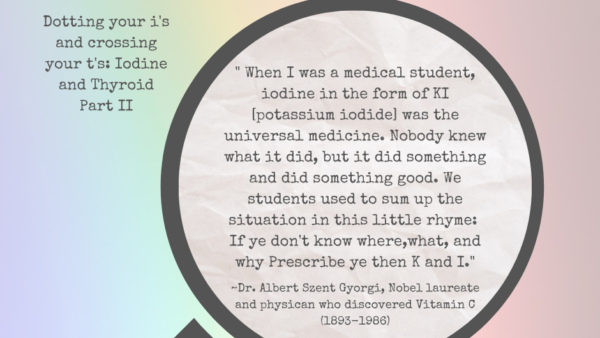
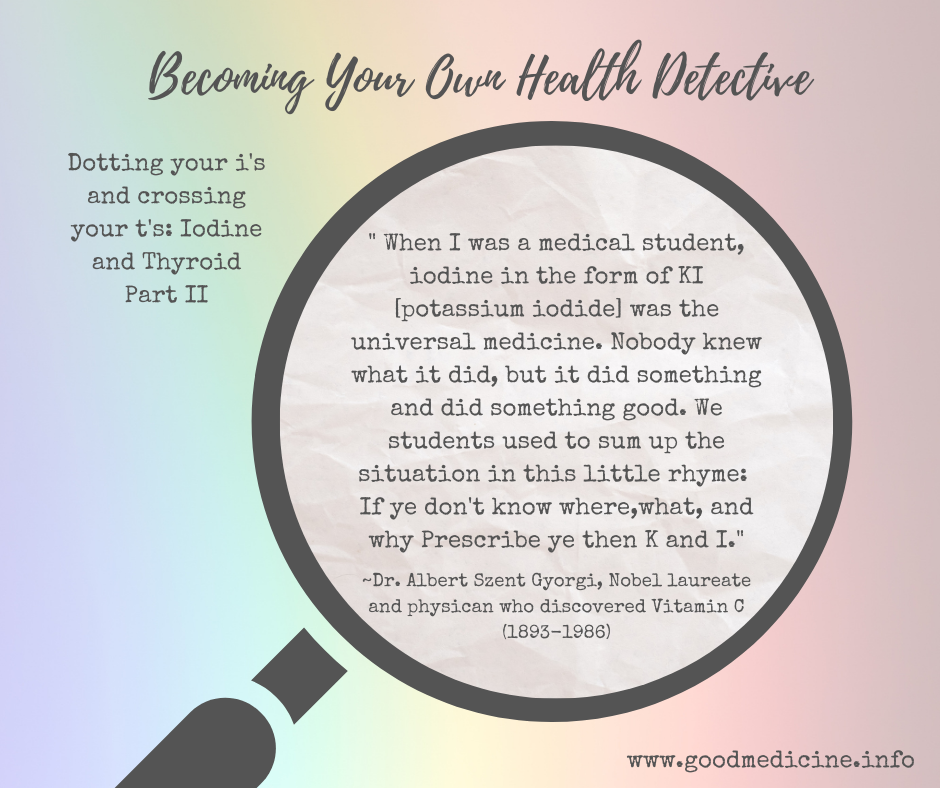
Dotting your i’s and crossing your t’s: Iodine and Thyroid Part II
 
Looking for clues is like using a roadmap🗺. The clues🔎 you find along the way will help you get to your destination. Sometimes you’ll need to stop and ask for directions from a local, someone who knows the territory well. Part II of dotting i’s and crossing t’s may very well require the assistance of an iodine savvy endocrinologist 👩‍⚕️or astute thyroid knowledgeable health professional who can help you find your perfect balance. You’ll need someone who listens to your clues, is willing to dig with you, understands the Great Iodine Debate, and doesn’t put you in a box with everyone else.

The Great Iodine Debate Summary

The “Great Iodine Debate” has been going on for many years and it’s well worth it to dive as deep as you need to. There is no possible way to cover everything on each topic I discuss. That’s not the point of this series anyway. My hope is that something you read sparks an “ah ha” moment and inspires you to dig more, putting pieces together for your individually unique puzzle. These “ah ha” moments are usually Holy Spirit led. If you feel a niggling in your soul, pay attention to it, and do your digging (due diligence) and use your tools to bring your body back into balance.
 
Dr. Guy E Abraham MD’s work surrounding iodine (formerly of the UCLA Department of Endocrinology) would be considered the modern catalyst for reviving the “Great Iodine Debate”. Interestingly, most of his personal information and work appears to have been scrubbed from the internet. As a 🔎 seasoned sleuther, it’s clues like this (the scrubbing) that make me look even closer at what this “outside the box thinking” doctor had to say. (This is another reason I rely on my personal library more than the internet when digging for clues.)
 
Take for instance, this quote from Dr. Abraham:
 
“During the first half of the 20th century, almost every U.S. physician used Lugol solution for iodine supplementation in his/her practice for both hypo- and hyperthyroidism, and for many other medical conditions. In the old pharmacopeias, Lugol solution was called Liquor Iodi Compositus. The minimum dose called minim, was one drop containing 6.25 mg of elemental iodine, with 40% iodine and 60% iodide as the potassium salt. The recommended daily intake for iodine supplementation was 2 to 6 minims (drops) containing 12.5 to 37.5 mg elemental iodine. During the second half of the 20th century, iodophobic misinformation disseminated progressively and deceitfully among the medical profession resulted in a decreased use of Lugol, with iodized salt becoming the standard for iodine supplementation. The bioavailable iodide from iodized salt is only 10% and the daily amount of iodide absorbed from iodized salt is 200 to 500 times less than the amount of iodine/iodide previously recommended by U.S. physicians. After World War II, U.S. physicians were educated early in their medical career to believe that inorganic non-radioactive forms of iodine were toxic. Adverse reactions to radiographic contrast media and other iodine-containing drugs were blamed on iodine. If a patient told his/her physician that he/she could not tolerate seafood, the physician told him/her that he/she was allergic to iodine.”
 
Things that make me go hmmmmmmm. Onward…. Shall we?

Here is How to Test for Iodine:

🔎Let’s start with a simple DIY: The Iodine Patch Test.🔎
🔸You’ll need 2% colorized tincture of Iodine. The clear stuff won’t work!
🔸Paint a 2-3 inch sized area with the iodine on clean dry skin. Apply to the stomach, inner thigh, or inner forearm….. Somewhere that won’t get rubbed constantly by clothing.
🔸Let the solution dry completely before allowing it to touch anything. (it will stain!)
🔸Monitor changes in color to the patch over a 24hour period.
🔸Proponents of this DIY test say that if the patch is still visible after 24hours, then levels are likely ok.
🔸If the patch has lightened considerably or vanished in fewer than 24 hours, it may indicate an iodine deficiency. If the patch lightens significantly or disappears in less than 18 hours, it may indicate a more significant deficiency. Make note of how fast the iodine vanishes.
🔸Evaporation, ambient temperatures, and rubbing clothing may play a part in the outcome, so take that into consideration.
🔸If results have piqued your curiosity, you may want to engage the assistance of one of the health professionals I mentioned earlier.
 
🔎There is a second test called an Iodine Loading Challenge. This is considered a more reliable “official” test, and is based on the amount of iodine found in the urine after loading the body with a large iodine/iodide load. (generally 50mg iodine/iodide, a tablet version of Lugol’s for adults)
🔸1st morning urine is discarded, but all urine after that is collected for 24 hours including the first morning sample at the END of the 24hrs. This urine will be sent off to a lab and evaluated.
🔸Results are based on the following premise: A body deficient in iodine will hold on to iodine. Example: a 90% excretion would indicate an iodine sufficient state, while below 90% would indicate varying degrees of deficiency depending on how low the % is.
🔸This test should run about $50-60 (plus the cost of the iodine/iodide combo tablets which are pretty inexpensive)

Common Questions

If your roadmap is leading to a possible iodine deficiency, you probably have a few questions. I’ll try to address some of them here.
 
🤔Q: Can you get too much Iodine?
A: Yes. Though it is considered one of the safest of our micronutrients when it is in inorganic, nonradioactive form ( iodides, tincture of iodine, Lugol solution). Iodine induced hypothyroidism is incredibly rare. TSH may rise when initially supplementing but T3 and T4 do not fall (those are the “boots on the ground” thyroid hormones you want to watch closely).
 
🤔Q: Does everyone benefit from “more” iodine?
Short answer…. No. Remember, we are all uniquely made. How do you feel? What symptoms are you living with? What is your risk category (see previous post) based on the factors involved?
Also, there is an uncommon situation called iodine induced hyperthyroidism. This occurs when there is an autonomously functioning thyroid nodule. This means that the nodule is not taking directions from the feedback mechanism involving the pituitary and the hypothalamus (go back and re-read the post on the “upstream” players in thyroid function if needed). An independent functioning nodule is like a wayward teenager….. It does its own thing in the presence of iodine regardless of the guidance mechanisms in place to prevent that from happening and hyperthyroidism can result. This is diagnosed with a thyroid scan, and iodine will need to be avoided until the nodule can be removed.
 
You might also recall iodine’s close association with fluorine, bromine, and chlorine. When iodine levels increase in the body, this can cause a mobilization of toxins that bind to the same receptor sites. Mobilized toxins are like a gang of thugs👹 on the move causing various degrees of mayhem until they have been excreted.
 
For this reason….. Easy does it friend! Lower levels of iodine/iodide supplementation are your friend ( Master Formula, Multigreeens and Thyromin), as is making sure you are flushing out toxins by staying well hydrated, and taking adequate amounts of Vitamin C ( YL’s Super C Chewables is a stellar choice), and a regular source of antioxidants ( NingXia Red!). Should you find out you need more iodine/iodide in your life, there are products available as stand alone entities. Talk to your iodine savvy health professional if you think you need more.
 
🤔Q: Is it possible to have an allergy to iodine?
An actual true allergy to inorganic iodine/iodide is very very rare. More commonly “iodine allergies” can be traced back to the body’s response to the other chemicals or allergens found within the same product or food item. Oftentimes the link is seafood🐟 or shellfish 🦐, contrast dyes, iodine antiseptics. Iodine’s molecule is small and too simple (structure wise) to cause an antibody response, but when it’s combined with another substance, it could play a role in the allergic response. Example: some people may have a topical reaction to the antiseptic povidone-iodine but have no reaction to potassium iodide.
 
🤔Q: What happens when you take thyroid hormone replacement therapy AND you have an underlying iodine deficiency?
Frankly, this is a problem and why it’s a good idea to evaluate your iodine load. If you are on thyroid medication and still don’t feel “right”…. It could be that your medication needs tweaking or changing….. Or it could be related to an iodine deficiency that may account for some (or all) of the symptoms you are feeling.
 
Additionally, one of the jobs of thyroid hormone is to stimulate metabolism. Every cell in the body is dependent upon iodine for proper metabolic function. If supplemental thyroid hormone raises the metabolism of cells throughout the body, this also increases the need for iodine (that may or may not be there). Recall last week’s discussion on iodine’s role in cellular function which includes programmed cell death (a good thing!). Frankly, knowing this information, I believe that people on thyroid medication should be tested for iodine deficiency regularly.
 
🤔Q: Is there a link between iodine deficiency when combined with years of thyroid hormone medication and breast, ovarian, uterine, and prostate cancers? There are some pretty compelling studies 🧐🤓out there indicating it is likely so. It has been theorized that the continual unrecognized iodine deficiency combined with an increased metabolic rate (from the thyroid medication) may account for the increased incidence (Remember, iodine is needed for programmed cell death which includes keeping aberrant cellular reproduction in check.)
 
The mainland Japanese ingest over 100x the RDA of iodine in their diet. Coincidentally, they have among the lowest incidence of breast, endometrial, ovarian, and prostate cancers (and a very low incidence of fibrocystic breast disease too).
 
🤔Q: Can kids be iodine deficient and can they be tested?
Interestingly, there is a strong correlation between higher levels (and severity) of ADHD and autism in iodine deficient populations. Kids can be tested for iodine deficiency too….. Their loading challenge will be different based on weight. You’ll want to work with an iodine knowledgeable pediatric health professional who will work with you.
 
If you’d like to dive more into the “Great Iodine Debate”, I’d encourage you to pick up a copy of any of these books:
 
📚Iodine: Why you need it (5th edition) by Dr. David Brownstein MD
 
📚What Doctors fail to tell you about Iodine and your Thyroid by Dr. Robert Thompson MD
 
📚The Iodine Crisis by Lynne Farrow
 
As always…. I’m here simply to be your super sleuth guide. You are your own best health detective!
 
xoxo~ liz
 
#sharingiscaring
#beingyourownhealthdetectiveisgoodmedicine
#BecomingyourownHealthDetective
#goodmedicine
#theGreatIodineDebate📚
  • « Go to Previous Page
  • Page 1
  • Interim pages omitted …
  • Page 3
  • Page 4
  • Page 5
  • Page 6
  • Page 7
  • Interim pages omitted …
  • Page 27
  • Go to Next Page »

Book Your Health Coaching CallBook Now

Elizabeth James

469.425.9091

ebj0203@gmail.com