• Skip to primary navigation
  • Skip to main content
Book Your Health Coaching Call
Good Medicine

Good Medicine

Holistic Health Coaching

  • Home
  • Liz James
    • About Liz
    • Coaching
    • Book a 20 Minute Complimentary Coaching Call
  • Favorite Resources
    • BlessedByHisBlood
    • Young Living
    • Fast Like A Girl Certified Coach
    • Order supplements through my Fullscript store
    • Green Pasture (Coupon: Health10)
    • RogersHood Apothecary (Coupon: BEABLESSING for 10% off)
    • DolphinMPS
    • Company
    • Abundance
  • My Books
    • Becoming Your Own Health Detective Volume 1
    • Becoming Your Own Health Detective Volume 2
  • Blog
  • Cart

Stress

Chronic Irritability and Anger

Liz James · January 26, 2023 ·

The body doesn’t lie.
 
If you struggle with either occasional or chronic bouts of anger/irritability, check yourself…… your mind or body may be telling your something.
 
Common causes of irritability include: sleep deprivation, low blood sugar, underlying toothaches, certain respiratory disorders, medication, depression, anxiety, hormonal imbalance, and thyroid disorders are just a few.
 
Left unchecked, chronic irritability and anger can also lead to disease or aggravate a known condition. The constant rush of stress chemicals in the body are linked to migraines, insomnia, anxiety, depression, high blood pressure, auto immune disorder flares, eczema, heart disease, strokes and digestive disorders (among other things).
 
Come to yoga. You won’t regret leaving your “heavy” at the door.
Local peeps….. 7:30pm. Message me for deets.
xoxo~ liz

 
#MckinneyFBBCYoga
#Yogaisgoodmedicine
#thebodydoesntlie
#Webecomewhatourminddwellsupon

NingXia Red Research Findings & Fun Facts

Liz James · October 10, 2022 ·

Do you NingXia Red? NR is a daily staple on our farm.
My husband and I drink at least two ounces daily, though often it’s more than that if we are grabbing a packet on the go.
Fun Farm Fact: We’ve raised a tiny baby squirrel🐿 (who is now 7years old and lives freely outdoors but “with us” on our porch) and an equally tiny baby ‘possum 🦡using raw milk and NingXia Red.
NingXia Red does a body good! Don’t take my word for it… science says so too ( !🤓😉
 
ningxia red study results

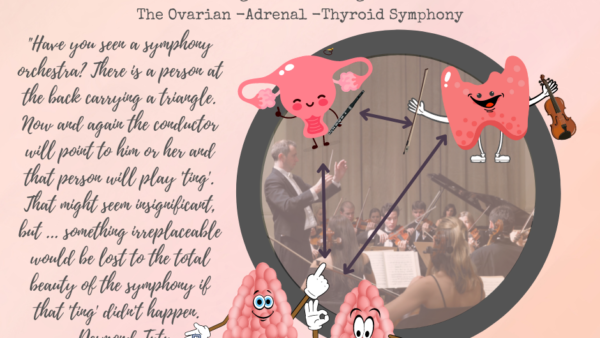
The Ovarian Adrenal Thyroid Symphony

Liz James · June 23, 2022 ·

Putting the Pieces Together: The Ovarian – Adrenal – Thyroid (OAT) Symphony
Before we reach the nether regions of the endocrine system, I wanted to talk to you a little bit about a very important concept called the Ovarian-Adrenal-Thyroid (OAT) axis. The goal is to live in hormonal harmony within our own body, and that can get tricky pretty quickly when you have a bad conductor directing a personal symphony 🎻🎺🎷🥁🎼orchestra.
A typical symphony orchestra🎻🎺🎷🥁🎼 has more than forty musicians and is an ensemble composed of wind, string, brass and percussion instruments. There are very few great conductors in the world simply because such a job requires charisma, deep knowledge of both music and musical instruments, and major people skills. A stellar conductor must also know the style and history of music and excel in anticipating and then cueing each musician at exactly the right moment. Some of the more extraordinary conductors I’ve seen also appear to have a playfulness within them to balance the exacting attention to detail that must be required to execute a flawless concert.
The endocrine system is much like a symphony🎻🎺🎷🥁🎼, often with “the conductor” being the level of stress we unwittingly allow ourselves to live with. Remember, stress on the body isn’t only caused by meeting deadlines or trying to achieve a long “to do” list. Stress on the body will look different for each person, and may be emotional or physiological… It doesn’t matter the type or combination thereof!
  • Chronic busyness to the point of exhaustion
  • Chronic physical pain
  • Chronic infection or illness
  • Toxin load
  • Heavy metal load
  • Emotional stress
  • Chronic sleep deprivation
  • Too much exercise
  • Nutrient deficiencies due to poor eating habits, medications causing depletions, a physiological inability to absorb certain nutrients properly, or even relying on poorly made supplements for nutrition
Stress always affects the adrenal glands first, and then thyroid and ovaries will begin to suffer.
Conductor: “A little less cowbell please!”
By the time a woman reaches her mid 30’s/ early 40’s (unless she has incorporated solid stress mediation tools into daily life ), there is a high probability that the excessive “cowbell” coming from the adrenal glands has begun to successfully drown out the harmonizing ovaries and thyroid. Because we’ve already fairly thoroughly discussed the adrenal glands and thyroid (reread those sections for a refresher!) I want to focus on how ovarian function is impacted by chronic stress.
In a state of chronic stress, the adrenals cannot keep up with the demand for cortisol production, and in doing so, they begin “stealing” from progesterone production to have the building blocks to make more cortisol.
Conductor: “Add in a little more saxophone.”
As progesterone production drops, estrogen dominance makes its debut.
Conductor: “Decrescendo piccolos!”
Estrogen dominance (which can occur even when ovaries have been removed, thanks to estrogen production elsewhere in the body and xenoestrogen exposure) then begins impeding the conversion of (inactive) T4 into (active) T3 which translates to less active thyroid hormone for the body to have access to. This leads to feelings of sluggishness, fatigue, and all the symptoms related to hypothyroidism. Too much estrogen also interferes with the communication between the brain and the adrenal glands. As time goes on in a state of estrogen dominance, fat begins accumulating around the abdomen. Have you heard the term “muffin top”? It’s a clue, my sleuthing friend! Muffin tops, excessive PMS, infertility or miscarriages, low libido, bloating or water retention, fibrocystic breasts, premenstrual headaches, thyroid dysfunction, irritability or depression, hair loss, thyroid dysfunction, foggy thinking, memory loss, and insomnia are all major clues with the conductor’s baton pointing towards estrogen dominance.
Conductor: “Crescendo violins!”
Estrogen dominance has also been linked to worsening allergies, autoimmune disorders, ovarian cysts, breast and uterine cancers, and is associated with an accelerated aging process. I’ll talk more about estrogen dominance later…. The goal here is to show the snowballing impact of stress on the endocrine system and ultimately the entire body.
Unfortunately, Westernized medicine is usually quick to add to the toxic soup already existing within a body by applying chemical bandaids. Ironically, antidepressants, thyroid replacement medications, and hormone replacement therapies often worsen the OAT imbalance IF addressing adrenal gland health is not part of the health and wellness recovery plan. Understanding the importance of and utilizing stress management tools daily will be a game changer, if you have been identifying with these clues!
Let’s not leave the men out of this discussion. There is a male version of the OAT axis. Abnormal cortisol levels in men cause testosterone levels to drop. Treating low testosterone with a synthetic testosterone replacement while ignoring the adrenal connection does come with risks. Side effects of synthetic testosterone replacement therapy (TRT) may include polycythemia, peripheral edema, aggression, diminished testicular size and fertility, exacerbation of sleep apnea, and cardiovascular and liver dysfunction. TRT is another chemical bandaid which fails to address the root cause (another “to be covered later” topic).
Without question, life has the potential to be stress filled, and we must use the tools easily available to us to mediate its harmful effects.
  • Belonging to a supportive like minded community
  • Prayer and meditation
  • Exercise, especially yoga
  • Spending time outdoors or with a pet daily
  • Practicing self care daily
  • Laughter
  • Minimize phone use and screen time
  • Healthy diet
  • Practicing deep purposeful breathing
  • B Vitamins (have you tried YL’s Super B?)
  • Elimination of toxins especially xenoestrogens commonly found in mainstream skincare lines. Utilize Young Living’s safe ART, Bloom, or Balance skin care lines for safe xenoestrogen free products!). Xenoestrogens are also found in plastics (ie water bottles), red dye #3, BHA (a food preservative, many insecticides, and birth control pills that contain ethinylestradiol.
  • Young Living’s Cortistop
  • Utilize scents that you find relaxing. Many studies suggest that aromatherapy is beneficial for relaxing and decreasing stressful moments. Scents known to promote stress reduction include lavender, rose, vetiver, bergamot, Roman chamomile, neroli, frankincense, sandalwood, ylang-ylang, orange, and geranium. Young Living oil blends designed for just such a purpose include StressAway, Peace & Calming, Valor, RutaVala, or Tranquil.
  • Setting healthy boundaries in all areas of life
  • Using adaptogens to help mediate stress response. An adaptogen is any substance that increases the body’s resistance to a negative stress response. These have been around (and studied) since World War II… so it’s not a new concept! Known adaptogens include:
  1. American and Asian ginseng (found in FemiGen)
  2. Ashwagandha (found in EndoGize and PowerGize)
  3. Reishi mushroom (found in NingXia Greens and Immupro)
  4. Turmeric (found in Golden Turmeric)
  • Reduce caffeine intake. Consider daily NingXia Red, NingXia Nitro, NingXia Zyng, and/or our new NingXia Greens or an adaptogenic “coffee” substitute instead. You may also consider diffusing essential oil blends En-R-Gee or Longevity or Peppermint, Rosemary, or Lemon for an aromatic pick-me-up!
Every body’s symphony🎻🎺🎷🥁🎼 will sound and feel slightly different. We each have the responsibility of constantly “tuning the instruments”, harmonizing within ourselves and among ourselves, and ensuring that “the conductor” (ie: your individual stress load) is neither a taskmaster or curmudgeon!
After all, the goal is an endocrine system which feels like a well played Beethoven’s 5th!
xoxo~ liz
#sharingiscaring
#OATaxis
#chronicstressisthecornerstoneofillness
#theapplicationofknowledgeispower
#goodmedicine
#BYOHD
#becomingyourownhealthdetective
#ThanksYL
May be an image of 2 people and text that says 'Becoming your Own Health Petective Putting the Pieces Together: The Ovarian -Adrenal -Thyroid Symphony "Have you seen a symphony orchestra? There is a person at the back carrying a triangle. now and again the conductor will pont to him or her and that person will play ting That might seem insignificant, but... something irreplaceable would be lost to the total beauty of the symphony if that ting didn't happen. -Desmond Jutu www.goodmedicine.info'
3434
10 Comments
Like

Comment
Send

The Facts Surrounding Adrenal Gland Stress – part 1

Liz James · May 11, 2022 ·

Figment, Fatigue, Copycat or Multiple Culprits? The Facts Surrounding Adrenal Gland Stress Part I
 
Several months ago, I wrote a series recognizing stress as its own particular mafia-like crime family bent on creating mayhem within the body. You’ll want to pull that crime scene file as a reference tool as we address adrenal gland health, function and distress. Adrenal fatigue is not an officially recognized entity within western medicine and should not be confused with Addison’s disease, a rare disorder which causes severe and permanent adrenal insufficiency only relieved by medication. The progression of adrenal fatigue is akin to watching an automobile accident happen in slow motion beginning well before the actual collision. A series of events took place leading up to the actual accident. Separately, fiddling with the radio, the wet streets, the tread a little too worn on the tires, the kids wrestling in the back seat, the phone ringing, the car in front slamming on their brakes didn’t cause the accident. The accident occurred because of an accumulation of events. Such is the case with adrenal fatigue.
 
As this crime scene is dis-assembled and reassembled, bear in mind that there will be many overlapping clues🔎 leading to other dis-ease states: anemia, sleep apnea, autoimmune disorders, subclinical infections, POTS, hormonal impairments, major organ disorders and deficiencies (common ones being B12, folate, iron/ferritin, magnesium, and Vitamin D), and perhaps these dis-ease states may be playing a role in your personal crime scenario that is (or is not) adrenal fatigue.
 
The biggest baddest clue in town for adrenal fatigue is all manner of stress, specifically the stress that has led up to this point. Adrenal fatigue is predated by at least two years of chronic stress that nearly always comes from more than one source. Every single crime scene is different, and in order to map out your particular story, you’ll want to spend a little time putting together a timeline of clues.🔎 On your timeline, you’ll want to log the dates and each incident in all of the following categories of stress:
  • Hospital stays
  • Surgeries
  • Significant illnesses (anything that kept you home and required recuperation time)
  • Chronic, auto-immune, or degenerative disorders (include first symptom dates and actual diagnosis dates if possible)
  • Dental work (root canals, implants, tooth removals, filled cavities, infections etc)
  • Significant emotional events (a death of a loved one, loss of job, divorce, traumas, mood disorders, etc)
  • Prescription medications (including both short term therapy such as an antibiotic and long term therapy such as blood pressure medications)
Adrenal fatigue creeps in on little cat feet, and if you are aware of the predisposing factors you have every chance of heading it off before it creates enormous issues within the body. Ideally, you’ll use this book (and other reference materials) to recognize what could happen when “the scene is being set up” and will implement wisdom and discernment to head off disaster at the pass. (said in my best John Wayne voice!🤠)
 
When you’ve put your health history together (as suggested above), hang on to this document and add to it as your life story is written. Additional factors that add to or aggravate the stress load include:
  • Having a “Type A” personality
  • A chronic (mental, emotional, or physical) stress which keeps you in a low grade “fight or flight”
  • A severely stressful event
  • Working to the point of exhaustion
  • Harboring chronic or simmering anger
  • Harboring even low grade (subclinical) infections (bacterial, parasitic, viral, fungal)
  • Excessive chronic caffeine intake
  • Excessive exercise
  • Poor diet, mal-absorption or mal-digestion issues
  • Very little play or relaxation time
  • A toxic (physical or emotional) environment.
  • A chemically toxic environment
  • Chronic inflammation (remember that not all inflammation is painful. Proper labwork may identify inflammation you may not even be aware of)
  • A sedentary lifestyle
  • Poor sleep habits or sleep deprivation
  • Too many years on a high fat/ high protein diet
  • PTSD
  • Concurrent conditions that also set the body up for adrenal fatigue include MTHFR gene variance, mitochondrial disorders, a sludgy liver, EMF toxicity, a previously existing endocrine imbalance (subclinical hypothyroidism, estrogen dominance, insulin resistance, etc)
  • Maternal stress during pregnancy (Epigenetics! The fetus’ body is programmed to address stress as his/her mother did while in utero)
Living in today’s world, it’s fairly safe to say there isn’t a single one of us who has remained unscathed.
 
The stages of Adrenal fatigue go something like this:
 
Stage I: Fatigue, but hormone production hasn’t yet been affected
 
Stage II: Fatigue, anxiety, and possible irritability. It may take longer to fall asleep than it used to, and harder to stay asleep. Infection rate has increased (getting sick more often), and hormone and thyroid symptoms have begun showing up. This would include PMS and menstrual irregularities.
 
Stage III: All of the above plus multiple diagnosed endocrine system imbalances (sex hormones, thyroid, pancreas) and severe fatigue. Common diagnoses at this stage also include:
  • POTS
  • Blood sugar imbalances
  • Cardiovascular irregularities (beat, rhythm, and blood pressure)
  • Anxiety diagnoses
Stage IV: the line between Adrenal fatigue and Addison’s Disease gets blurry.
Clues🔎 surfacing within “active” adrenal fatigue stages will become more pronounced as progression occurs unless you take charge of the situation. Awareness is key, because this is your opportunity to stop the crash before it happens! Reminder: there are usually multiple causes for each clue, and you’ll want to pair these clues with the “stress load” profile you built (above). What you may begin to see is a series of unrelated events, circumstances, and health clues all crescendoing towards the same thing… adrenal glands that are growing weary from “running from the lion” day in and day out. Remember, look at the entire puzzle, not the individual pieces🧩! Some of the more common clues seen within adrenal fatigue staging include:
  • Gaining weight, especially around the abdomen (estrogen dominance will do this too)
  • Fragile skin
  • Inability to turn the brain off
  • Feeling anxious or nervous without good reason
  • Feeling overwhelmed
  • Infections that are lasting longer than they should
  • Need a stimulant such as coffee to get started in the morning
  • Reduced libido
  • Lightheaded when rising from a horizontal position
  • Intolerance to exercise
  • Fatigued but restless
  • Tending to wake up between 2-4am most nights
  • GI function that has become irritable or hyperactive often combined with mal-absorption issues that ultimately lead to deficiencies
  • Loose hanging fat around the belly, combined with thin arms and legs, and a puffy face
  • Pain in the upper back or neck that doesn’t have a reasonable explanation
  • Feeling better physically when away from the source of stress
  • Receding hairline and/or unexplained hair loss
  • Afternoon napping
  • Your day looks something like this:
  • Wake up but need coffee or stimulant to function
  • Energy boost mid morning
  • Energy crash around 2pm
  • Energy revive around 6pm
  • Crash again around 9pm but wide awake at 11pm
  • Intense cravings of sweet and salty food
  • Increased incidence of environmental and food allergies and sensitivities
  • Decreased ability to cope with stress
Mind, body, and spirit stress is everywhere, and we all need daily Jesus, Thieves Household Cleaner, good food, appropriate sleep, and all the emotionally relaxing oils we can use! My favorite emotional oils are Frankincense, Lavender, StressAway, Peace & Calming, and Valor which all have some very interesting “worth the dive” science supporting their role as tools for healthy stress management.
 
See you next week as we dive a little deeper into the muddy waters of adrenal fatigue!
 
xoxo~ liz
 
#sharingiscaring
#adrenalfatigueisreal
#theapplicationofknowledgeispower
#goodmedicine
#BYOHD
#becomingyourownhealthdetective
#ThanksYL

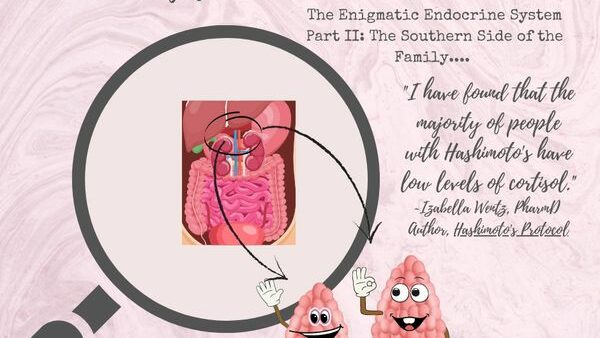
Endocrine System – part 2

Liz James · May 4, 2022 ·

Have you ever:
  • Been given medication without thorough labwork?
  • Been told you are “fine” by a healthcare professional, but you don’t feel fine?
  • Felt like you’ve been doing “all the things” to care for your struggling thyroid, but still felt unwell?
If you’ve answered “yes” to any of these questions, the next series of clues might just be for you.
We’ve covered the northern endocrine family members (hypothalamus, pituitary, pineal, and thyroid).  I’m hopeful that you’ve been piecing clues🔎 together. Remember, cluster clues, including your personal “life experience” history, both physical and emotional, are where your answers most likely reside. Only you, and perhaps your parents if some events predate your memories, know these VIP clues. Keeping a journal 📓is often a key component to uncovering the root cause of a health situation.
 
There are more interesting members within the endocrine system family tree. Just south of the thyroid is a gland called the thymus. The thymus sits right behind the sternum (breastbone) in front of the heart, and is the “bootcamp” for the immune system’s T-cells, where they mature and turn into specialized agents of protection against bacteria, viruses, and cancer. The thymus is strongest and most active in children and teens. There is chronological aging as well as biological aging. Interestingly, if severe or chronic stress is part of a body’s environment, the thymus will rapidly “age” and begin shrinking, ultimately turning into a pocket of fat (literally!). Clues indicating🔎 a “tired” thymus include being easily fatigued, lack of motivation, susceptibility to catching colds or flu, persistent chronic illness despite “doing all the things”, slow wound healing, and outward signs of an accelerated aging process.
 
As you may guess, thymus deterioration affects lifetime immune system function, so keeping this hidden gem healthy is a good idea! Supportive measures include:
  • Keeping toxin load low
  • Learning techniques to mediate physical and emotional stress. Imagine the health benefits if this was learned at a young age!
  • Eating nourishing foods that are high in micronutrient content
  • Restorative sleep
  • Exercise daily for improved blood flow throughout the body (cleansing and nourishing the thymus). Yoga is particularly beneficial for supporting thymus function.
  • Thymus thumping/tapping. Thump or tap gently (with either the tips of your fingers or the palm of hand) on your sternum for 30-60 seconds a couple times a day to stimulate the thymus.
  • Olive Leaf (YL’s Olive Essentials)
  • Melatonin – A 2003 study🤓 found a correlation between melatonin supplementation and a notable increase in thymus weight (size) and function. Additional studies🤓 have found that even when melatonin supplementation begins late in life, age related thymus “decay” is reversible and immune system function often improves. A 2006 study🤓 in the Bulletin of Experimental Biology and Medicine found that supplementing melatonin during times of acutely severe or chronic stress prevented atrophy of the thymus. I am an enormous fan of Young Living’s Immupro for a good night’s sleep, and this is an additional reason to keep several bottles of this melatonin containing supplement on hand! (Great news for those of us who know and love it already…. It is scheduled to be back in stock later this month!). Sleep Essence is another night time product that also contains melatonin.
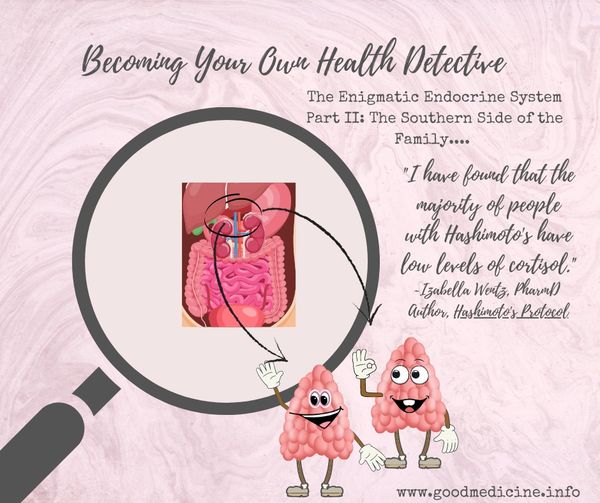
Further south, the twin adrenal glands show up in the endocrine family. These are two smallish quesadilla shaped glands that sit atop each kidney. God designed us masterfully well. These two glands sit remarkably close to the abdominal aorta (our major artery) and vena cava (our major vein). This close proximity allows for a quick dump of influential chemicals that facilitate acting quickly 🏃‍♂️🏃🏃‍♀️ when the need arises. I call this “running from the lion”🏃‍♀️🐅 time. These two glands produce a very precise mixture of adrenaline, cortisol and other steroid hormones (DHEA, pregnenolone, estrogens, testosterones) and aldosterone (a steroid hormone that regulates potassium, sodium and fluid volume in the body). The mixture is uniquely compounded according to the event at hand. When a person feels any amount of stress, whether that be a mile long “to do” list or narrowly escaping being eaten by a lion, the hypothalmus and pituitary work together to signal the adrenal glands. The mind🧠doesn’t differentiate between a too long “to do” list and a lion in terms of stress, and stress becomes the squeaky wheel. Other mechanisms in the body slow down so that the squeaky wheel can be addressed.
  • Thyroid hormone production slows down
  • Reduced conversion of T4 (inactive) to T3 (active) thyroid hormone occurs
  • Thyroid receptors become less receptive to receiving thyroid hormones. This is important because even if you happen to be on thyroid medication, it won’t be utilized properly during a stress response. Recall that thyroid receptors are located throughout the body and must function properly in order that we may function optimally day to day. (Go back and read the section on thyroid and the gallbladder for a refresher!)
 
Chronic stress puts the adrenals on overdrive, flooding the body with cortisol, until the adrenals can no longer keep up, and adrenal fatigue (adrenal dysregulation) develops. Cortistop is another one of my very favorite Young Living supplements. It is designed to address the way women’s bodies react to the cortisol produced when under stress. When too much cortisol is released regularly, it can have some hefty health consequences which include feeling deep fatigue and often the addition of abdominal fat that seems to defy losing. Recall that those are also two very common symptoms of thyroid disorder. Odds are high that clues like these may have more than one culprit, and both will need to be addressed if that’s the case.
 
Cortistop is not designed to be taken continuously (Suggested use is 8 weeks on, 2-4 weeks off). Although the directions state to take two capsules in the morning before breakfast, my body responds favorably to one capsule a day. And although Cortistop is formulated for women, I do know some manly men who have found this particular supplement to be quite helpful during times of stress too. PRO TIP: I also recommend making a plan so that your Cortistop“off “ times do not correspond to anticipated times of high stress (such as tax season or project due dates!).
 
Interestingly, the vast majority of western healthcare practitioners do not recognize adrenal fatigue. While there is currently no black and white way to test for adrenal fatigue in a laboratory, there are many clues that point towards this very real condition that you, the discerning sleuther 🔎, may uncover on your own or with the help of a health professional who does understand adrenal fatigue.
Next up…. A solid list of clues🔎 useful for identifying adrenal fatigue, and ways to support the adrenal glands!
 
xoxo~ liz
 
#sharingiscaring
#adrenalfatigueisreal
#theapplicationofknowledgeispower
#goodmedicine
#BYOHD
#becomingyourownhealthdetective
#ThanksYL
  • « Go to Previous Page
  • Page 1
  • Page 2
  • Page 3
  • Page 4
  • Page 5
  • Page 6
  • Interim pages omitted …
  • Page 25
  • Go to Next Page »

Book Your Health Coaching CallBook Now

Elizabeth James

469.425.9091

ebj0203@gmail.com