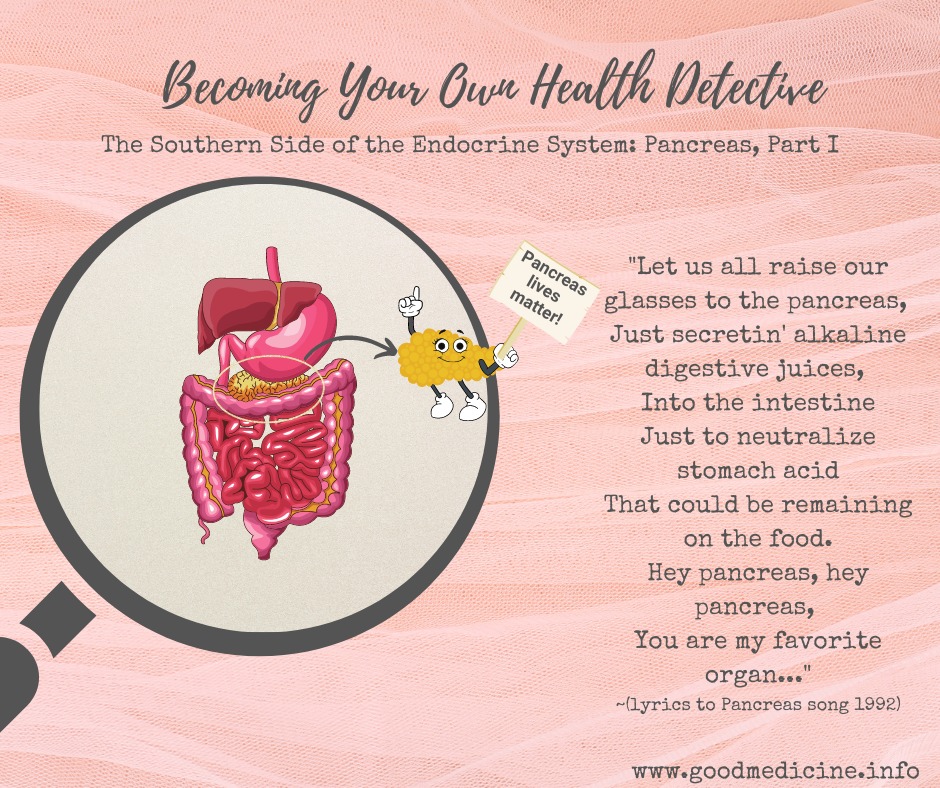
“The pancreas is my favorite organ.” Says no one (almost) ever. Seriously.
Unless someone has an existing pancreatic malady, this is one organ that gets very little attention. That’s a shame too… because with the exception of the rarer cases of genetics, infection, or blunt force trauma, nearly all pancreatic dysfunction is self induced. It’s time to bring this odd little organ out of its sandwiched space between the stomach and small intestine and figure out what makes it tick and tremble.
The pancreas has two main jobs: to produce chemicals which help regulate blood sugar, and to produce enzymes which help further digest food and bicarbonate which will further neutralize any stomach acid that has found its way into the small intestine. For being a rather underappreciated organ, if any of these tasks falls by the wayside, there are big consequences.
Pancreatitis (both chronic and acute) accounts for more than 360,000 hospital stays each year…. A number that continues to rise.

The lifetime risk of pancreatic cancer is currently 1 in 64 ….. A number that continues to rise.
The lifetime risk of acquiring diabetes is now roughly 1 in 3 adults….. And that number too has only continued to rise.
The problem is that the pancreas squeaks out tiny little “help me’s”, and few people take the time to learn and put clues together and then go on to correct the course of personal health history. True, the clues are not necessarily ones that will beat you over the head with a two by four, but they ARE there, nonetheless, and only you, the astute sleuth will likely see them or feel them.
Have you ever been out to eat with someone who won’t sit with their back to the door? Chances are, they have been well trained to observe their environment so they won’t be taken off guard by an offender who has ill intent.
 to observe their environment so they won’t be taken off guard by an offender who has ill intent.
This is how we guard the pancreas… watching for environmental clues that endanger that little organ, and then blocking their entry into our personal space that we do have control over. None of us wants to be the 1 in 3, the 1 in 64, or the 1 in 100.
Environmental contributors to pancreatic distress include:
 Heavy alcohol consumption or diagnosis of cirrhosisA high fat, heavily processed food dietObesityTobacco productsAbdominal surgery where the pancreas may have had interrupted blood supplyNutritional deficiencies including (especially) vitamins A, D, E, and K and seleniumA history of infection such as hepatitis, Epstein-Barr Virus (Mononucleosis), Lyme disease, or Cytomegalovirus.A prior history of autoimmune disorder: especially celiac, irritable bowel disease, psoriasis, rheumatoid arthritis, lupus, or Sjogren’s Syndrome.A history of gallstonesLab work that reveals high triglyceridesAbdominal traumaDamage to specific molars (those that are pertinent to pancreatic health and wellness… go back and re-read Chapter 7 in BYOHD Volume I)Long standing emotions and feelings closely associated with pancreatic distress including: guilt, shame, insecurities, frustration, joylessness, fear of rejection, and lowered self esteem.Many medications: More than 500 drugs have been reported by the World Health Organization database as causative agents for pancreatic distress. Common offenders include synthetic estrogens (birth control pills and hormone replacement therapy), opiates, steroids, many classes of antibiotics, diuretics furosemide and HCTZ, acetaminophen, and the blood pressure medication enalapril. The vaccinations formulated to prevent mumps (MMR and MMRV) have also been implicated in causing complications with the pancreas in some people.
Perhaps there hasn’t been a vigilant awareness until now, and the environmental offenders have already gotten through the door and gotten a little rowdy with the pancreas, and it’s been roughed up a bit. What would that look like?
When you have a handful of the following clues, you can be fairly certain they have been up to mischief that needs help or correcting.
Diarrhea or bloatingUnexplained weight lossSigns of malnutrition (lab work can identify this)Oily, foul smelling stools that are clay or pale in color and tend to floatPoor blood sugar controlBlurred visionOccasional abdominal pain that worsens after a high fat mealOccasional abdominal pain that may be worse if lying flat on the backFatigueChronically dry lips (according to Chinese medicine)Do not hesitate to contact your favorite health professional if you’ve checked the majority of these clues or also have fever or unrelenting abdominal pain!
Thankfully, there are MANY things that may be done to support a healthy pancreas:
 Eat a healthy varied diet rich in fruit and vegetables, white fish and meats, grass fed beef, foods high in iron, foods that are rich in antioxidants….. Cherries, blueberries, spinach, YL wolfberries, tomatoes, bell peppers, NingXia Red.Incorporate digestive enzymes into your daily routine. (Amylase, lipase, and protease are commonly referred to as pancreatic enzymes, and are found in Essentialzymes-4, Detoxzyme and Allerzyme, or pancreatin and pancrealipase found in Essentialzyme.Avoid opiates as a source of chronic pain management. There are MANY more effective ways to manage pain including scientifically proven meditation, relaxation exercises, acupuncture, yoga, and massage. Supportive supplements to consider include Sulfurzyme, BLM or Agilease, and Golden Turmeric, and essential oils PanAway, Deep Relief, Frankincense, Palo Santo, Helichrysum, Dorado Azul, Valerian, Peppermint, Copaiba, and Idaho Grand Fir. Reishi mushrooms ( found in NingXia Greens and Immupro) help support normal inflammatory and immune system response, especially when used with regularity.Support the pancreas nutritionally with OmgaGize3 (for Omega 3’s), and an excellent multivitamin ( Master Formula ) that contains selenium, and vitamins A, D, E, and K and Vitamin B12 (Super B).Incorporate MCT (Coconut oil) oil into the diet. It doesn’t burden the pancreas the way many other oils do, and it has properties which are helpful to inflammatory conditions.Green Tea (found in Young Living’s Vanilla Lemongrass Tea)Achieving and keeping a healthy weight. Remember, this is a marathon, not a sprint. Often simply losing 5-10 lbs is extraordinarily helpful to pancreas function.Keep a close eye on triglyceride levels (optimally, they should be between 50-90mg/dL), and adjust the diet accordingly.Add natural sources of glutamine into the diet: bone broth, grass fed whey protein, grass fed raw dairy, venison, organic poultry, spirulina (found in both Multigreens and NingXia Greens), cabbage, asparagus, and broccoli.Improve levels of melatonin in the body! (Immupro or Sleep Essence if supplemental help is needed). There are some compelling studies on the protection melatonin appears to give to the pancreas.Alkalinize the body with Apple Cider Vinegar and/or Alkalime
Pancreatic Insufficiency, Pancreatitis, and Pancreatic cancer are all three very stealth dysfunctions. The obvious problem with stealth is that they are able to cause a fair bit of dysfunction before the problem is large enough to warrant medical attention. Chronic inflammation of the pancreas is a leading cause of pancreatic cancer, and this form of cancer has a very poor survival rate. All the more reason to keep your pancreas well loved and protected. Taking a quick glance at your stools before they go down the porcelain highway and doing an honest environmental and habit assessment is so important!
 before they go down the porcelain highway and doing an honest environmental and habit assessment is so important!
Roughly 98% of the pancreas is devoted to the job of supplying the body with digestive assistance. The other 2% is devoted to managing blood sugar levels…. And that’s what I’ll bring to the table next: the pancreas and diabetes.






 Dopamine Deficiency Part IV: More Solutions
 ,
,  Mowing the yard! It may be hard work, but the aroma of fresh cut grass contains a chemical called hexanal (the “green” smell of grass) that stimulates dopamine release.
 Organic coffee (No more than one cup a day or it may contribute to adrenal fatigue…. A dopamine high followed by a crash!) or a cuppa organic green tea (Have you tried the YL
  Acupuncture stimulates the vagus nerve, which in turn support healthy dopamine levels. (Go back and reread the section on low vagal tone!)
 Creating and performing music boosts dopamine levels even more than listening to your favorite tunes, but all three are effective. Listening to music has even been shown to improve fine motor skills in Parkinson’s patients.
 Chronic inflammation reduces dopamine synthesis and release in the brain. We’ve got tools on hand to support a healthy inflammatory response (as opposed to the runaway variety!).
  Lack of sleep down regulates dopamine receptors and reduces dopamine receptor availability. You know what to do! Sleep is so very important in ALL aspects of health. Review your sleep hygiene practices and look for “holes in the armor” that may result in interrupted sleep. I LOVE and incorporate
 Iron plays a role in dopaminergic neurotransmission. Iron and ferritin levels are important lab values to watch (both for being too low and too high). Natural sources of iron include spirulina ( an ingredient in
  Vitamin C assists with the formation and conversion of dopamine in the brain. Deficient levels of vitamin C may show up as a low mood.
  Vitamins B6 and B9 are critical for dopamine synthesis. Low folate levels contribute massively to low dopamine levels which may ultimately lead to depression.
  Alternate between standing and sitting. “Chronic sitting” lowers dopamine levels. Our body was designed to move!
 Finish a project. Who knew? This in itself causes the brain to flood with dopamine.