• Skip to primary navigation
  • Skip to main content
Book Your Health Coaching Call
Good Medicine

Good Medicine

Holistic Health Coaching

  • Home
  • Liz James
    • About Liz
    • Coaching
    • Book a 20 Minute Complimentary Coaching Call
  • Favorite Resources
    • BlessedByHisBlood
    • Young Living
    • Fast Like A Girl Certified Coach
    • Order supplements through my Fullscript store
    • Green Pasture (Coupon: Health10)
    • RogersHood Apothecary (Coupon: BEABLESSING for 10% off)
    • DolphinMPS
    • Company
    • Abundance
  • My Books
    • Becoming Your Own Health Detective Volume 1
    • Becoming Your Own Health Detective Volume 2
  • Blog
  • Cart

Hormones

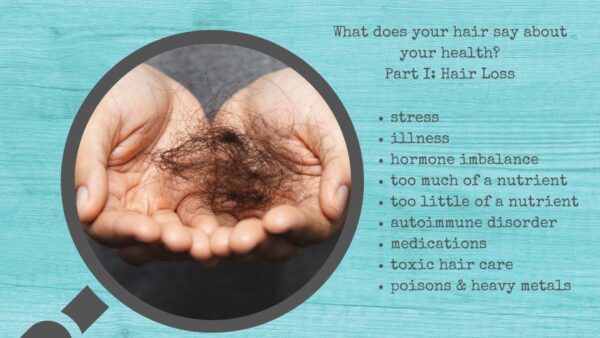
Health Clues from Your Hair – part 1

Liz James · August 17, 2021 ·

Hair is a sensitive and personal subject for many people. Globally, the hair care market is estimated to be about 87.9 BILLION dollars annually. Clearly, people like their hair!. So, if hair goes missing, thinning, or begins to fall out in handfuls, it may be an emotional experience.


Typically, the average adult head loses 80-100 strands of hair a day. If you’ve noticed greater hair loss, the first clue is to determine if thinning hair happened gradually or abruptly and if in patches or across the entire scalp.


One of the most common hair loss triggers is stress and/or😷 illness. Our body perceives mental stress in the same way it responds to excessive physical stress. Persistent high levels of cortisol arrests hair growth and contributes to excessive shedding of hair. If stress remains elevated for an extended period of time, hair will often thin and even turn gray. Bacterial and viral infections can also certainly trigger hair loss, specifically if fear or angst are emotions carried by the individual.
The good news is that stress related hair loss usually stops several months after the stress or sickness has abated.

Stress management is a KEY component to a healthy lifestyle and healthy hair. At no time does it become more important than when the body is already fatigued from fighting an illness. Do not underestimate the power of emotionally supportive oils such as Young Living’s 🙏Stress Away, Peace and Calming, and Valor🙏!

Other additional tress “de-stressing” tips include:
*Incorporating a healthy diet of fruits and vegetables and food high in Omega 3’s, while avoiding processed foods! If you feel that you may not be getting enough Omega 3’s in your diet, add in Young Living’s OmegaGize3 to fill in the gaps! You’d be surprised at how much our bodies (and hair) actually need. Consider also stepping into an anti-inflammatory diet. (Message me privately and I can connect you with a wonderful 28 day program that has helped many people walk through this in a community setting.)
*Detox your body, making sure to drink plenty of water in the process
*Get plenty of sleep
*Let hair air dry
*Avoid using toxic chemicals or synthetic ingredients on hair and scalp, especially those that contain sulfates and parabens.
*Thankfully, we have a full line of healthy and natural body and hair care products available to us with our Young Living membership!


💈Other causes of hair loss include:
👉Hormonal changes due to pregnancy or post pregnancy
👉Too much vitamin A or selenium in a diet or supplement regimen.
👉Not enough protein in a diet
👉Genetics ( male or female pattern baldness)
👉A hormonal imbalance (including PCOS)
👉Low Iron, biotin, Vit D, or Zinc
👉Certain autoimmune diseases
👉A thyroid imbalance
👉Losing weight too quickly (also commonly happens after bariatric or metabolic surgeries)
👉Over processed or chemically exposed hair/scalp
👉Gluten sensitivity
👉A calcium to magnesium ratio imbalance. If the calcium to magnesium ratio is “heavy” on the calcium side in the body, calcification can occur in areas of the body (dangerously in blood vessels) including hair follicles. The calcification stifles hair growth and starves the area of nutrients. While calcium excess is stored in the body, magnesium is not. Additionally, there is a strong cry to “take calcium” to prevent osteoporosis, but rarely do we hear much about taking magnesium to prevent it. Too much calcium and not enough magnesium will eventually contribute to brittle bones. Not all magnesium supplements are created equal in terms of bioavailability. Thankfully, Young Living has done a masterful job of incorporating the right kinds of magnesium in supplements like Super Cal Plus , Master Formula, and the Kidscents Unwind!


Finally, there are many many medications that may cause hair loss:
💊Certain blood thinners such as warfarin and heparin
💊Beta blockers and ACE inhibitors (two classes of blood pressure meds)
💊Biologics (commonly used for certain autoimmune disorders) such as Humira, Amjevita, and Enbrel
💊NSAIDS (the longer the use, the more likely the hair loss)
💊Some antidepressants including Prozac, Zoloft, Paxil, Lexapro, and Wellbutrin
💊Anabolic steroids (leads to a hormone imbalance)
💊Metformin (depletes folate and B12 which are needed for hair growth)
💊Certain acne meds containing isotretinoin (a Vit A derivative… see above)
💊Antibiotics (long term use is especially problematic. The gut lining becomes damaged and nutrients required for hair growth are not absorbed properly)
💊Anticonvulsants
💊Statins
💊Neurontin (commonly used for neuropathy)
💊Hormone therapy (including birth control pills)
💊Some acid reducers (including Tagamet and Pepcid)
💊Heavy metals and poisons including arsenic, thallium, and mercury
Certainly, hair loss may sometimes be out of our control, but there is much that can be done to mediate it, once the reason(s) has been identified! Thorough lab work including a full hormone panel, thyroid panel, and testing for nutritional deficiencies often provides solid evidence as to why a body’s northernmost real estate has become sparsely populated.
“Treat your hair like royalty. It’s the crown you never take off.”
xoxo~ liz


#sharingiscaring
#healthyhairisagoodclue
#goodmedicineisknowningyourhair
#ThanksYL

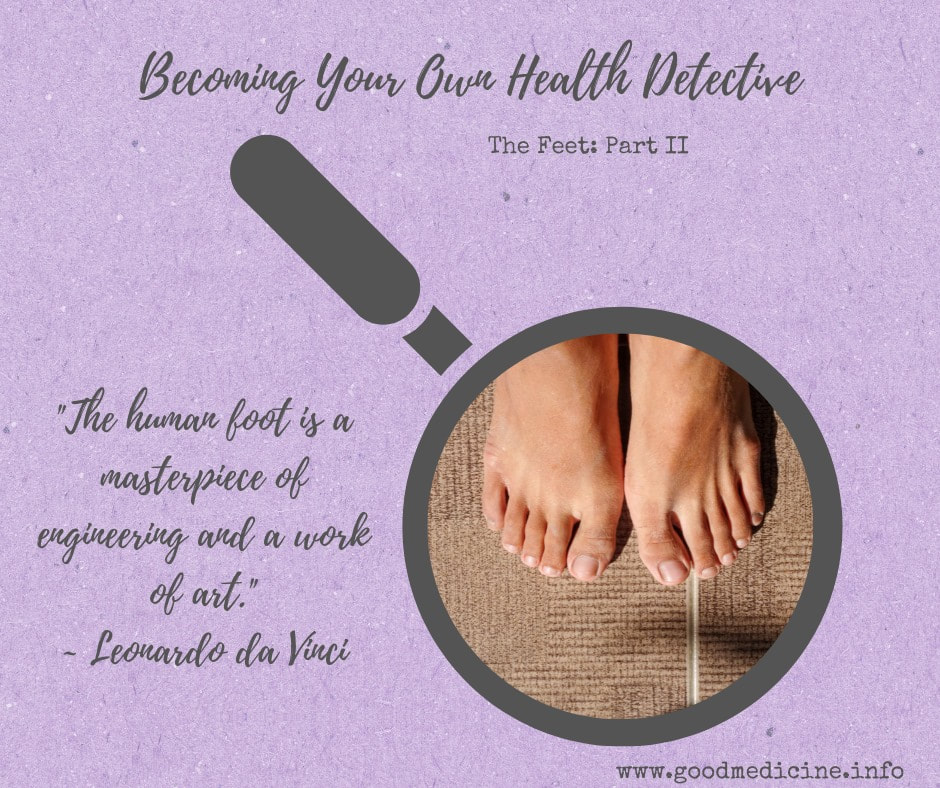
Health Clues from Your Feet -part 2

Liz James · July 27, 2021 ·

Before we move on to foot clues you feel internally, I wanted to touch briefly on the toenails. If you’ve been hanging with me this long, you may remember we spent quite some time on fingernail clues. Fingernails and toenails share many traits, and you may want to go back and revisit those posts for expanded details on your distal digits. Very briefly, these are some of the “biggies” for the toes:
*Clubbed toenails – often a sign of lung, heart, liver, or digestive disorders. Poorly oxygenated blood is usually the causative agent for curved nails. 
*Yellowed toenails – usually related to a fungal infection, but if most or all toenails are involved, look for other clues including swollen feet or ankles. Paired with lower extremity swelling, more toenails become involved and the nails appear to get thicker or seem to detach. These telltale tips may also involve clues related to lymphedema, lung disease, or autoimmune disorders such as psoriasis or rheumatoid arthritis. 
*Spoon shaped toenails – frequently a sign of iron deficiency or frequent exposure to petroleum based solvents. Know that there are  “clean” nail polish and nail polish removers available, and using them instead of toxin laden products is one more way to support healthy liver function! 
Chronically cold feet is a clue indicating impaired circulation. Decreased blood flow is commonly linked to smoking, heart disease, diabetes, anemia, digestive disorders, or hypothyroidism. Exercise and deep breathing techniques are two ways to improve circulation. Our bodies are designed to move, not to be still.😉
*Heel pain or pain that radiates from the heel to the arch of the foot (plantar fasciitis) is often a result of inflammation of the ligament attached to the heel bone which runs along the arch of the foot. Plantar fasciitis is often said to be most painful in the mornings. Heel pain alone may suggest arthritis, excessive exercise, or a possible bone spur. 
*Have you been told that you have (or had) stress fractures in your feet?. This is one of the most common injuries seen by our active duty military men and women in training, and is also fairly common in civilian life.  Though contributing factors include improperly fitted boots, carrying heavy loads regularly, and intense exercise, the biggest factor is improper nutrition leading to weaker bones. Very often, stress fractures in the feet can be a clue for osteopenia / osteoporosis if bones are not given the proper nutrients to thrive.
Young Living’s Super Cal Plus is a wonderful supportive tool for bones that need a little extra TLC! It contains Magnesium, calcium, Vit D3 and a thoroughly helpful blend of micronutrients, herbs, and essential oils. You’ll want to remember this supplement when we chat about foot and leg spasms here in just a little bit too!
*Perhaps you’ve had a random but sudden and severe pain in your big toe? This is a pain that appears “ “magically” (if you’ve experienced it, you know what I’m talking about!), and may leave you wondering how you broke your toe but didn’t know it….. It’s THAT painful! 😳Years ago, gout was considered a rich man’s disease because of the rich diet that often precipitates a flare.  Foods and beverages that may aggravate gout include alcoholic beverages, shellfish, bacon, beef, and broccoli, but the worst culprit of all is sugar in all forms, but especially high fructose corn syrup. Gout flares may also be linked to certain medications. Diuretics and certain blood pressure medications in the ACE inhibitor family,  are two of the more common ones. 
*Regular foot spasms are another wonder filled clue with several possibilities. Poor circulation, dehydration, an imbalance in potassium, magnesium, calcium, or vitamin D are all potential thieves of ease.  Thyroid disorders and a sharp change in hormone levels (as is seen in pregnancy) are other potential causes. There are soooooo many medications that can cause a metabolic imbalance resulting in regular foot and leg spasms.  Any medication that depletes any or all of these nutrients often leads to foot and leg spasms unless the deficiency is remediated.
Medications  known to do this include:
💊Acid blockers/reducers (for the stomach)
💊Many common antibiotics ( the quinolone class especially)
💊Many blood pressure medications
💊Steroids 
💊Birth control pills
💊Certain maintenance meds used for breast cancer
💊A high sugar diet (yes…. Sugar may be defined as a drug!)
*Leg spasms are often diagnosed as restless leg syndrome when in reality, it’s more often than not a simple deficiency in potassium, magnesium, calcium, or Vit D that may be easily remedied with proper supplementation. In my experience as a pharmacist, I’ve found the most common culprit to be a magnesium deficiency, especially if the spasms are in the lower legs. Remember, the body is giving massive clues and not a single clue is ever an indicator that it is “deficient” in a medication.
*Generalized pain, tingling, or a burning sensation of the feet affects over 20 million people in the United states, and the clue field is a vast one. This particular clue is the result of damaged nerve fibers. Damage may happen in a myriad of ways, but the most common cause is diabetes followed by alcohol abuse. Other potential causes include chronic kidney disease, chronic hypothyroidism, lyme disease, or a vitamin B12, folate, and/or B6 deficiency. The B vitamin family is critical for nerve health, and Young Living’s Super B is a stellar opportunity to support unhappy (and perhaps malnourished) nerves. 
Medications that rob the body of a variety of B vitamins include:
💊Acid reducers and antacids
💊Many blood pressure medications
💊Bronchodilators (example: albuterol)
💊Many diabetes meds including metformin (do you see the irony here?)
💊Birth control pills
💊NSAIDS
💊Certain medications for Parkinson’s Disease 
Oftentimes,  clues can certainly be found in a pill bottle, once you start to understand the cause and effect and even put together a timeline of when the clue appeared. This is why it is so important to keep a health journal, especially when multiple clues make themselves known. Think of it as writing your personal detective story!
Our body rarely deceives us! 
xoxo~ liz
#caringissharing
#footcareisgoodmedicine
#knowyourfoundation
#goodmedicine
#ThanksYL

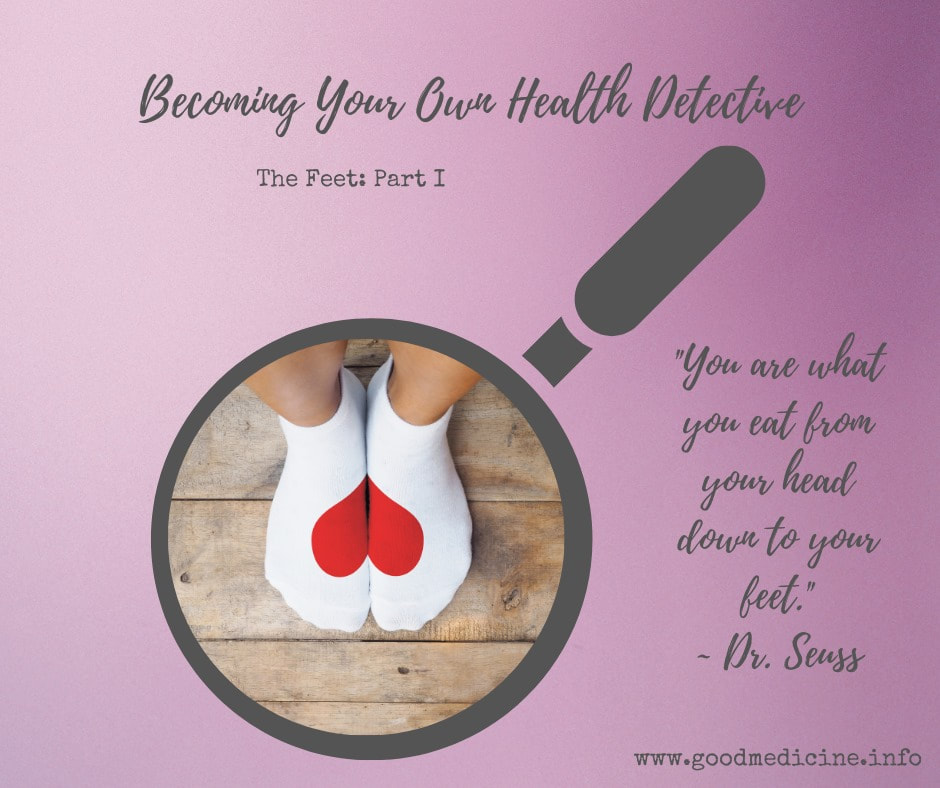
Health Clues from Your Feet -part 1

Liz James · July 20, 2021 ·

There is an old farm saying, “No hoof, no horse.”. The savvy horseman looks at hooves very carefully because he or she knows that a horse with poor feet will not be able to function optimally, and that a horse with chronic hoof issues often has metabolic, digestive, or rarely… a genetic anomaly . The same holds absolutely true with humans.
If you’ve had an excellent massage therapist (or perhaps even an astute pedicurist), perhaps they’ve told you a little bit about yourself simply by examining your feet while they worked. It’s lovely to have a day of pampering, but don’t depend on anyone to look for clues. It’s time to get to know your feet really well if you haven’t done so already! Our feet are an excellent barometer of overall health. Clues often appear below the ankles before any other place on the body, giving ample time to reverse the course of your personal story should it happen to be heading down a rocky road.
26 bones. 33 joints. 100 ligaments. More than 100 moving parts. What could possibly go wrong? 😬Well, take a seat….shuck the shoes 👟and socks,  and take a close look at your hardworking utterly complex feet. I’m going to group feet clues into two categories: What you can SEE and what you can FEEL. 
Visible Foot Clues:
*Do you see dry, cracked, peeling, blistered, red, or scaly skin, usually on the bottom of the foot or between the toes? Sometimes these clues may be accompanied by a burning or itching sensation. Athlete’s foot is a fungus known as tinea pedis that thrives in dark, damp places….an excellent reason to go barefoot whenever possible!  Fungal infections throughout the body are fueled by high sugar diets. A sustained change in diet (along with allowing the feet to breathe!) often eliminates chronic foot funk. Occasionally, all of these clues may point instead to contact dermatitis. When contact dermatitis occurs, it’s most often due to a chemical / toxin exposure. It’s just one more reason to use the Thieves Household Cleaner line of products!  
*Now, check your heels for cracks. Going barefoot or wearing flip flops often do not cause cracked heels, though this is a popular belief. Cracked heels is a classic sign of a struggling thyroid.
*Hairy toes. Do you have them….. Or, did you used to have them but now you don’t? The same can be said for the tops of the feet and the lower legs. Hairy toes, feet, and lower legs are a sign of healthy circulation. Nourishing hair follicles on the lowest extremities is one of the first things to go when the circulatory system starts struggling. A poor nourishment pathway in the legs starves the follicles, and hair ceases to grow. Don’t panic if you’ve never had hairy toes. Not everyone is genetically predisposed to furry distal digits. The important thing to remember is your uniqueness, and to learn to watch for these clues so that you’ll notice when something changes, or goes missing! This is a clue easily caught on men, and less easily caught on women.
*Swollen feet and ankles. So very common in pregnancy, but an important clue for those who are not pregnant. Even if you are standing all day, feet and ankle swelling should be minimal with good circulation. This is a clue that may indicate impaired circulation or lymphatic drainage. Additionally, the kidneys remove excess fluid from the body. If they are not functioning properly, excess fluid tends to accumulate in the body. An under-active thyroid may also contribute to fluid retention. 
*Sores that are slow to heal on the feet are a significant clue also indicating impaired circulation. This particular clue is often seen in diabetes and peripheral artery disease (PAD). PAD is a narrowing of the arteries which reduces blood flow to the legs. If nourishment cannot get to a wound, it will be slow to heal.
*If you have noticed circulatory system clues in your feet, try to avoid crossing your legs when you sit. Sitting like this further constricts blood flow and will only exacerbate the clues you’ve noticed!
*Stinky feet! You may have noticed that some people have stinkier feet than others. Feet are loaded with sweat glands: 250,000 give or take a few. But odor is not caused by sweat alone. It is caused by the byproducts of bacteria, possibly fungus, and ALWAYS the toxin load of the individual. Simply put, the more toxins ☠️ within a person’s body, the greater the odds of some rank stank. All the more reason to help your liver out and choose healthy, toxin free options whenever possible in life! #thanksYL 
If you know someone with stinky feet, consider gifting them this easy peasy helpful spray for their shoes (and feet!), and get them on the path to a less toxic lifestyle. 
***Stink Stank Stunk no more Shoe Spray***
👟3-4 oz glass or metal spray bottle
👟2 oz witch hazel
👟1 ounce filtered water
👟30-40 drops total of essential oil using any of the following (Purification, Eucalyptus Radiata, Peppermint, Lemon, Rosemary)
 Shake well before each use!
Take some time to look at your feet at least once a week. I do a quick assessment every night as I apply Thieves to the bottoms of my feet before bedtime for immune support and Tranquil to the base of my big toe for a good night’s sleep.
See you next week…. We’re just getting started on foot clues! 
xoxo~ liz
#caringissharing
#footcareisgoodmedicine
#knowyourfoundation
#goodmedicine
#ThanksYL

Health Clues from Your Liver part 3

Liz James · July 6, 2021 ·

We think of the liver as the body’s main ☢️☣️detoxifier, and THAT it is for sure. Did you notice that the liver is also a storehouse with many rooms? We all have at least one junk drawer, or junk closet in our homes, right? If you were to take a tour of the liver, you’d find nicely organized “rooms” filled with glucose and glycogen (for energy), vitamins, minerals and other nutrients as well as helpful hormones and phytochemicals to be released and used as needed.


Deep inside the liver lies the body’s “junk closet” where it keeps it’s darkest stash of the truly “bad boy” toxins☢️☣️. The liver is not a hoarder… quite the opposite! It is doing its best job getting rid of trash and debris as fast as possible. Sometimes, either the liver can no longer keep up with what the body is exposed to, or the toxin is so nasty that the liver throws it immediately into the far corner of the junk closet.


What kind of junk might you find in the liver’s junk closet?
☢️Petroleum products (including those found in mainstream household cleaners and personal care products)
☢️Pesticides, herbicides, and fungicides
☢️Aspartame (you may know this as the artificial sweeteners NutraSweet and Equal)
☢️MSG (monosodium glutamate, a flavor enhancer commonly found in Asian food, canned vegetables, soups, and processed meats)
☢️Viruses and virus waste materials
☢️Certain medications (including opioids)
☢️Toxic heavy metals


If the liver didn’t do this, we’d be a walking hot mess, and frankly, we probably wouldn’t live long or productively as the brain, heart and other organs wouldn’t be able to tolerate the exposure.


We are built incredibly uniquely, and our livers all work in varying degrees according to our genetics and epigenetics (the environment we are exposed to). Many people have genetics that inhibit methylation. Methylation is a chemical process that enables the body to receive, absorb, and utilize key nutrients we get through eating, drinking, and living in a “clean” manner…..ie: lots of fresh unprocessed foods and fresh filtered water and spending time in the sunshine!
Methylation occurs in the liver in tandem with the ileum (the last little bit of the small intestine). If either the ileum or the liver is impaired, methylation cannot occur efficiently. Vitamin B12 is critical to efficient methylation. If you have not yet incorporated 👉Young Living’s Super B👈 into your daily supplement routine, I encourage you to give it a try and see if you don’t notice a difference!


When the “junk closet” of the liver has hit its overflow and begun filling the hallway, the methylation process is affected. However, when you also add in a liver specific virus….one that is in the herpetic family (shingles, HHV-6, cytomegalovirus, Epstein Barr)…. The real trouble starts. Viral waste buildup is one of the most problematic to the liver and B12 levels will slowly begin dropping in the body. Additionally, the liver’s “ junk closet door” has now burst open and virus byproducts are now in the bloodstream causing inflammation within the body, dermatoxin related rashes, and brain fog.


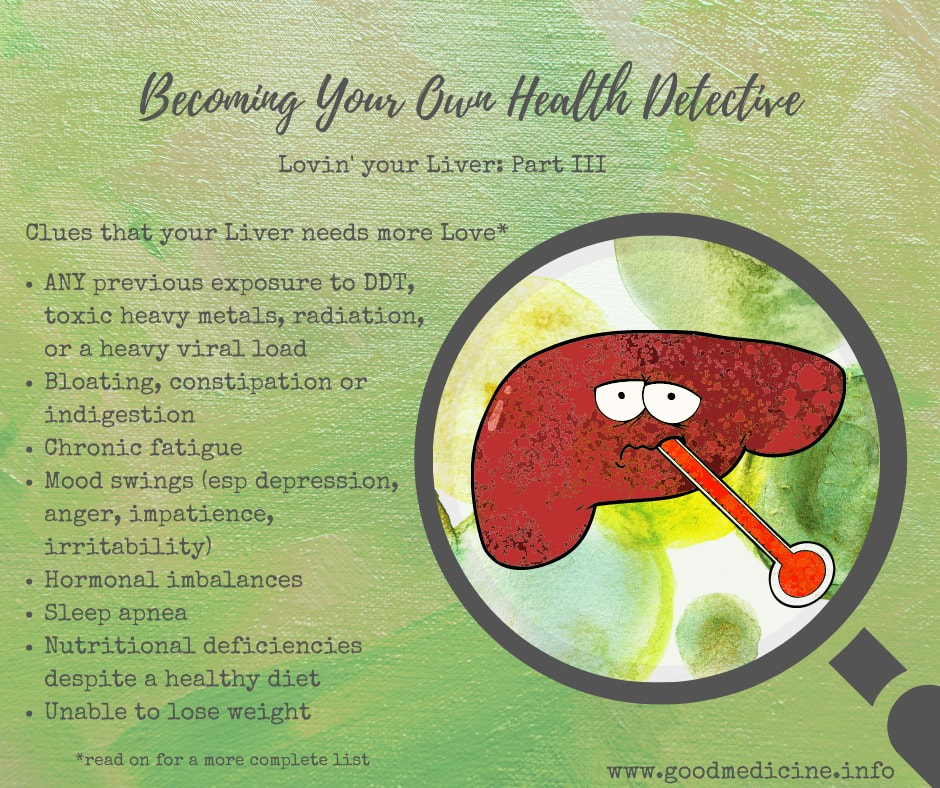
Major clues indicating the liver is waving the white flag are on today’s graphic, and there are many more. Remember, the liver performs hundreds (if not thousands! ) of tasks. If the liver fails to deliver and the task is incomplete, something didn’t happen in the body that should have. Slowly over time, these incomplete tasks will begin adding up until eventually you have a clue so big, you’ve had to make an appointment with your favorite health professional😬.


Other clues indicating significant liver burden include:
🔎Random aches and pains : The liver purifies blood and produces new blood. When not enough “clean” blood is available to reach tendons, muscles, and other tissue, it may result in decreased flexibility, pain in upper back, and even dry eyes!
🔎Non-alcoholic fatty liver disease (NAFLD) : may show up as random pain in the back or on the upper right side of the abdomen, kidney, or shoulder blade (referred pain).
🔎Spider Veins: If the liver cannot properly clean the blood, then clotting issues near the surface of the skin result.
🔎Darker Urine (see a health professional please!)
🔎Darker Emotions: An unhealthy liver exacerbates predisposition to depression or negative mood swings.
🔎Gout
🔎Eczema, psoriasis, skin rashes, breakouts, or itchy skin
🔎Allergies and asthma
🔎Bad breath
🔎Fibromyalgia
🔎Fluid retention
🔎Headaches
🔎High blood pressure
🔎High cholesterol
🔎Erratic blood sugar or diabetes
🔎Compromised immune system (including autoimmune disorders)


Once the liver “junk closet” is full…. It’s full and unless someone starts a cleanup process, the spillage will only continue. Have you ever cleaned the house while someone went right behind you and tracked in more dirt, left dishes in the sink, and oh…. Forgot to flush all the toilets?😱 That’s what the liver feels like if it’s burdened to the point of overflow and someone decides to clean it up on the inside, but does not stop exposure to all of the petrochemicals (standard household, personal care, and skin care toxins), pesticides, processed foods, contaminated water, etc.

If you have not yet ditched your liver saboteurs, I encourage you to begin today. 🌿Thieves Household Cleaner, the entire line of Young Living body and personal care, and Savvy Minerals cosmetics are all liver friendly! 🌿


Thankfully, the liver is incredibly resilient and forgiving with the right care and TLC, and is able to regenerate itself and regain function. It can do this even when it’s been compromised by more than 60%. The caveat to that factoid is this: permanent and thorough damage cannot be undone…..precisely the reason we want to avoid walking to the end of that road.
Happy liver, happy life!
xoxo~ liz

#knowbetterdobetter
#healthcluesyoucanuse
#goodmedicine
#ThanksYL
#loveyourliver

Health Clues from Your Liver – part 2

Liz James · June 29, 2021 ·


I’ve always thought it rather humorous that the liver is called the “liver”. A body can be kept alive for days (or even years) with an artificial heart or a “dead” brain, but if the liver were to shut down, a body would likely die within a day. We keep going because our liver helps us live! 😁


Tho it’s the largest internal organ (our skin is the biggest!) and an integral component of the digestive system, we tend to take its existence for granted…… until something goes very wrong. Just ask anyone who has advanced liver disease.
I’ve got some sad stats to share with you.  An estimated 10-30% of Americans have some form of liver disease, and most are unaware of their problem. Roughly 90% of us (myself included!) have overburdened livers. #thestruggleisreal
It didn’t used to be this way for the poor liver, but decades of polluted foods and beverages, pesticide, herbicide, and fungicide exposure, medication use, the air we breathe, the water we bathe in, and all the toxin laden skincare and standard issue household products have definitely taken their toll. Babies👶 are born with a chemical burden their livers negotiate from Day One. One study found over 280 toxins☠️ in the blood of umbilical cords of an average infant at birth.


To understand clues a burdened liver leaves us, it’s important to first recognize the profound multitasking machine that it is. 


In addition to being the primary detoxifier of the body, the liver also stores the worst☠️ of the worst ☠️toxic substances deep within itself. Animal livers do this too, and heaven knows, they are exposed to a myriad of toxins in commercial farming situations. Liver was a healthy organ meat for our ancestors, but not for us in the 21st century unless you are able to find a certified “clean” source (uncommon, but they are out there).


Other tasks the liver performs include:
*Vitamin and mineral storage system
*Storage and filtration of blood
*Secretion of bile (go back and review the gallbladder for more info on that task!)
*Conversion of sugars into glycogen (energy storage packets)
*Synthesis of serum proteins, albumin (which regulates blood volume), coagulation factors in the blood
*Filters and destroys bacteria 
*Helps maintain a balance of sex hormones in the body
*Helps maintain a balance of many neurotransmitters


Ultimately, there are well over 500 (some researchers have said as many as 2000! ) functions the liver performs. As the inner Sherlock Holmes within you may suspect, the clue possibilities are vast!


We’ll cover some very specific clues next week, but in the meantime, imagine what might happen within the body (and mind) if an impaired or sluggish liver shows up for work. Since 90% of us have overburdened livers, shouldn’t we be showing our liver some serious love and living like we care about it daily instead of remaining indifferent or flat out abusing it?


Use your “clean” alternatives! Thieves Household Cleaner is liver friendly, as are the Savvy Minerals cosmetics, shampoo, deodorant, body wash, toothpaste, hand soap, and  laundry detergent that Young Living has designed for us. #nolabelreadingnecessary 
Love your liver and it will reciprocate!
xoxo~ liz

#knowbetterdobetter
#healthcluesyoucanuse
#goodmedicine
#ThanksYL
#loveyourliver
#goodmedicineislovingyourliver

  • « Go to Previous Page
  • Page 1
  • Interim pages omitted …
  • Page 4
  • Page 5
  • Page 6
  • Page 7
  • Page 8
  • Page 9
  • Go to Next Page »

Book Your Health Coaching CallBook Now

Elizabeth James

469.425.9091

ebj0203@gmail.com