The Enigmatic Endocrine System Part I: Organs of Importance
When I write, I nearly always have classical or instrumental music  playing in the background. Today, I’m listening to a playlist of some of the greatest symphonies of all time. It takes an orchestra of about one hundred musicians and a variety of instruments to create a symphony. If the conductor, a musician, or an instrument doesn’t perform optimally, the symphony will suffer in quality. As more musicians and instruments err, the symphony becomes noticeably wonky, and the “off-ness” most certainly affects the overall listening experience.

 playing in the background. Today, I’m listening to a playlist of some of the greatest symphonies of all time. It takes an orchestra


 of about one hundred musicians and a variety of instruments to create a symphony. If the conductor, a musician, or an instrument doesn’t perform optimally, the symphony will suffer in quality. As more musicians and instruments err, the symphony becomes noticeably wonky, and the “off-ness” most certainly affects the overall listening experience.
The endocrine system is very much like an orchestra. Many hands make light and beautiful work! Each of the twelve major glands/organs within the endocrine system relies on the others to do its work properly and efficiently in the body, and unless you’ve acquired an endocrine disorder, I would wager that you probably rarely think about this small but mighty system in the body.
 system in the body.
Originally, I was only going to cover the thyroid in this series, but as I was writing about the effects of chronically low body temperature, I realized I would be doing you a disservice if I merely mentioned the other endocrine organs in passing. This happens all too often in western medicine, and incomplete information often results in applying a bandaid on the wrong area. We’ve got to look at the entire system if you are going to be a top notch health detective. With that…. Let’s proceed!
 . With that…. Let’s proceed!
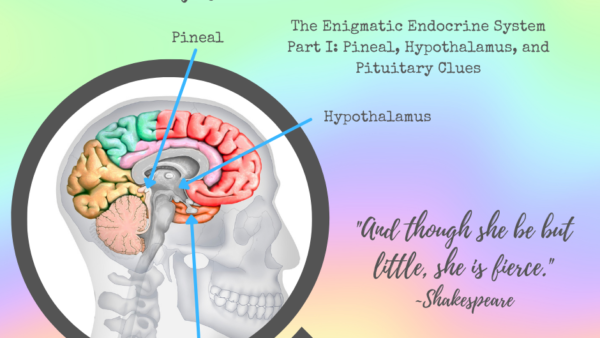
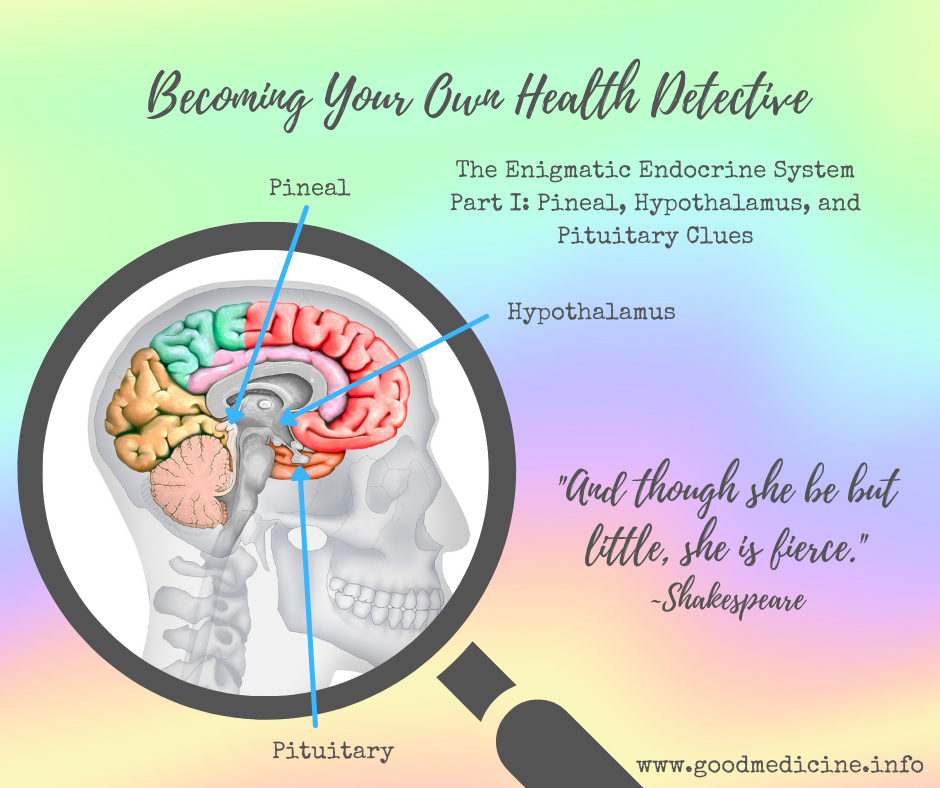
Pineal Gland Facts:
 At the “top” of the endocrine system lies a small pinecone shaped, rice sized organ that is deep within the brain. The pineal gland is one of the least understood and most powerful parts of the human body. Its known primary role is to control body rhythm (day and night, the body’s seasonal activity, and even the aging process!) by way of production of melatonin. Melatonin itself has a profound influence in the body. We tend to think of it as our body’s elixir for sleep
 , but lack thereof also affects immune function, blood pressure, cortisol levels, eye health, seasonal mood disorders, and may even contribute to relief from acid reflux. The pineal gland also exerts its influence on another endocrine gland, the hypothalamus. Not everyone needs to supplement melatonin, but if you feel that you do, consider Young Living’s Immupro. It’s a chewable tablet taken right before bedtime. In addition to melatonin, it contains several other natural ingredients known to support the immune system and help facilitate a good night’s sleep.
Over time, the pineal gland gets dealt some pretty harsh blows as the body manages viral, bacterial, and parasitic infections, a toxin burden, and exposure to heavy metals and fluoride. These all contribute to calcification of the pineal gland over time. As you may imagine, a malfunctioning pineal gland causes a cascade effect throughout the body.
Hypothalamus Facts:
The hypothalamus’ main role is to keep the body in homeostasis (self regulated balance) as much as possible. It also acts as a purveyor of information between the endocrine and nervous systems. Body temperature, thirst, appetite, weight, emotions, sleep cycles, libido, blood pressure, production of digestive juices, balancing of body fluids….. The hypothalamus is a magnificent multitasking micromanager when it is functioning well, but if the pineal gland doesn’t signal the hypothalamus properly, its performance will be inhibited. Head injuries, genetic or congenital conditions, and certain autoimmune disorders may also hinder the endocrine symphony in a variety of ways.
The hypothalamus-pituitary connection can be thought of as a major “command center” of the endocrine system. The thyroid does not stand alone. It relies on information coming from these two “high command” organs.
The Pituitary Gland Facts:
The pituitary gland is a fascinating team player within the endocrine system. Though it is tucked deeply within the brain, it is a delicate little bean. It may be damaged or adversely affected by:
 Lack of blood supplyMedications (including opiates, SSRI’s, haloperidol, risperidone,and certain antibody therapies)Concussions. Even seemingly mild concussions may cause a “dimmer switch” like effect on the endocrine system. This effect may occur instantaneously, or can begin to show up months to years after the original injury.
Endocrine disrupting chemicals
Endocrine disruptors are well known for causing pituitary dysfunction… they disrupt the entire endocrine system by mimicking, blocking, interfering with hormone production, or modifying the body’s sensitivity to hormones. The term “hormone” comes from the greek word “hormon” which means “to stir up”. Endocrine disruptors wreak havoc on the body’s ability “to stir up” and long term disruption often leads to diabetes, thyroid, and/or sex hormone dysfunction. The cascade doesn’t stop there. It will ultimately affect every system in the body. Thankfully, we have control of the environment within our homes and what we bring in to it.
First we have to identify the criminals, right? Once we do that, we change the locks on the door and don’t let them knowingly in again.
Common endocrine disruptors include:
 BPA: a plasticizer found in inner linings of canned foods and in many plastic bottles and containers.Atrazine and organophosphates are herbicides and pesticides commonly used throughout the agricultural industry. Buy organic to limit exposure. Consider starting a garden for full control over what you put into your body!Perchlorate: another contaminate in food, milk, and water. Buy organic and filter your water to avoid this one.Lead, arsenic, Mercury. Yes, sadly, these are all still out there. If you do a little digging, thimerosal is a mercury based preservative found in certain vaccines and medicines.Perfluorinated chemicals: these bad boys are used to make nonstick cookware. Toss’em! Phthalates are another common plasticizer. These can be found in plastics. Sadly, they are also found in standard US cosmetics and skin care. Thank goodness we have Young Living’s Savvy Minerals cosmetics and extensive skin care lines, (Bloom, ART, and Balance) suitable for every skin type.Glycol Ethers are chemicals used as solvents and stabilizers found in personal care products, perfumes, cosmetics, household cleaners, and industrial products. Go ahead and pat yourself on the back if you’ve already kicked all these things to the curb, and have your castle (home) and temple(your body) cared for and supported by Thieves Household Cleaner (all things Thieves!) and all of the other wonderful healthy options Young Living has created for us. Emotional unresolved trauma is another endocrine disruptor. Surprised? Studies are uncovering just how much damage may be done by not working through and releasing emotions. The body doesn’t lie, and we store so much at a cellular level. I encourage you to do the heart work and seek help if needed.
Next week, I’ll cover more extensive opportunities to naturally support the functioning of the pineal, hypothalamus, and pituitary. Recognizing the clues dropped by these three tiny organs is as important as deciphering and understanding thyroid clues!
xoxo~ liz
(PS: It’s here!! If you’d like to order Volume I of Becoming Your Own Health Detective, the link is in the menu!
 If you’d like to order Volume I of Becoming Your Own Health Detective, the link is in the menu!
Thank you for supporting my heart’s work!


 Dopamine Deficiency Part IV: More Solutions
 ,
,  Mowing the yard! It may be hard work, but the aroma of fresh cut grass contains a chemical called hexanal (the “green” smell of grass) that stimulates dopamine release.
 Organic coffee (No more than one cup a day or it may contribute to adrenal fatigue…. A dopamine high followed by a crash!) or a cuppa organic green tea (Have you tried the YL
  Acupuncture stimulates the vagus nerve, which in turn support healthy dopamine levels. (Go back and reread the section on low vagal tone!)
 Creating and performing music boosts dopamine levels even more than listening to your favorite tunes, but all three are effective. Listening to music has even been shown to improve fine motor skills in Parkinson’s patients.
 Chronic inflammation reduces dopamine synthesis and release in the brain. We’ve got tools on hand to support a healthy inflammatory response (as opposed to the runaway variety!).
  Lack of sleep down regulates dopamine receptors and reduces dopamine receptor availability. You know what to do! Sleep is so very important in ALL aspects of health. Review your sleep hygiene practices and look for “holes in the armor” that may result in interrupted sleep. I LOVE and incorporate
 Iron plays a role in dopaminergic neurotransmission. Iron and ferritin levels are important lab values to watch (both for being too low and too high). Natural sources of iron include spirulina ( an ingredient in
  Vitamin C assists with the formation and conversion of dopamine in the brain. Deficient levels of vitamin C may show up as a low mood.
  Vitamins B6 and B9 are critical for dopamine synthesis. Low folate levels contribute massively to low dopamine levels which may ultimately lead to depression.
  Alternate between standing and sitting. “Chronic sitting” lowers dopamine levels. Our body was designed to move!
 Finish a project. Who knew? This in itself causes the brain to flood with dopamine.
 Would I be prone to developing an addictive tendency to something I already particularly enjoy? (Too much of a good thing makes it not necessarily a good thing.)
 Learn something new: Learning a new skill (language, hobby, sport, or activity) or simply learning new information causes dopamine to be released. It’s very likely happening right now as you read this information! You’ve heard of “seminar highs” or research junkies (yep, this is one area I receive a huge dopamine dump from!). When the dopamine release happens, it makes you want to learn more and repeat the experience. Bonus points…. The more you engage in learning new things, the stronger your brain
 Vitamin D: Vitamin D has a role in the production of dopamine and in also protecting dopamine receptors. Evidence suggests that supporting healthy Vitamin D levels also supports healthy dopamine levels, especially if clinically deficient in Vitamin D. Make sure to ask for Vitamin D levels whenever you have the opportunity to get labwork! Young Living’s
 Phenylalanine and tyrosine are two amino acids used in the biosynthesis of dopamine. Foods high in phenylalanine and/or tyrosine include meats, beans, milk, nuts, seeds, whole grains, sweet potatoes, bananas, apples, cherries, eggs, yogurt, and
  Increasing Vagal Tone: There is a direct correlation between low vagal tone and lower levels of dopamine. You’ll want to go back and review ALL the wonderful and fun ways you can improve vagal tone! (We talked about this a few months ago….use the search option in this group to find the posts.)
 Uridine is a supplement. It’s also found in beer, brewer’s yeast and nutritional yeast. Nutritional yeast is not the same yeast that bakers use. If you do a little digging, you’ll find recipes incorporating nutritional yeast into tasty options.
 Cryotherapy: You’ve seen advertisements for it I’m sure. Be brave and consider giving it a try! Remember, simply exploring something new increases dopamine in the brain. Ice water immersion (or cryotherapy tanks) increase dopamine by an estimated 250%! Yowza! I am a fan of cryo….. I find it both terrifying and exhilarating (probably from that ginormous dopamine dump I received!)
 Intermittent Fasting not only leads to higher levels of dopamine release; it also reduces age related dopamine receptor attrition. There are many additional reasons to incorporate intermittent fasting into your lifestyle if you’ve not considered it before now.
 Curcumin is the yellow pigment found in turmeric. Curcumin reduces the metabolism of dopamine in the brain thereby increasing levels. YL