
• Skip to primary navigation
  • Skip to main content
Book Your Health Coaching Call
Good Medicine

Good Medicine

Holistic Health Coaching

  • Home
  • Liz James
    • About Liz
    • Coaching
    • Book a 20 Minute Complimentary Coaching Call
  • Favorite Resources
    • BlessedByHisBlood
    • Young Living
    • Fast Like A Girl Certified Coach
    • Order supplements through my Fullscript store
    • Green Pasture (Coupon: Health10)
    • RogersHood Apothecary (Coupon: BEABLESSING for 10% off)
    • DolphinMPS
    • Company
    • Abundance
  • My Books
    • Becoming Your Own Health Detective Volume 1
    • Becoming Your Own Health Detective Volume 2
  • Blog
  • Cart

Diet

Mushroom Hunting

Liz James · April 7, 2022 ·

Hunting safely for mushrooms is on my bucket list. I have a couple books, but this is something I wouldn’t dare do without a seasoned mushroom hunter guide. Have any of ya’ll ever harvested wild mushrooms? Here in Texas I’m not even sure we have any wild edible ones. 🤔
Someday….. I will! 🙂
 
https://www.motherearthnews.com/…/hunt-for-wild…/…

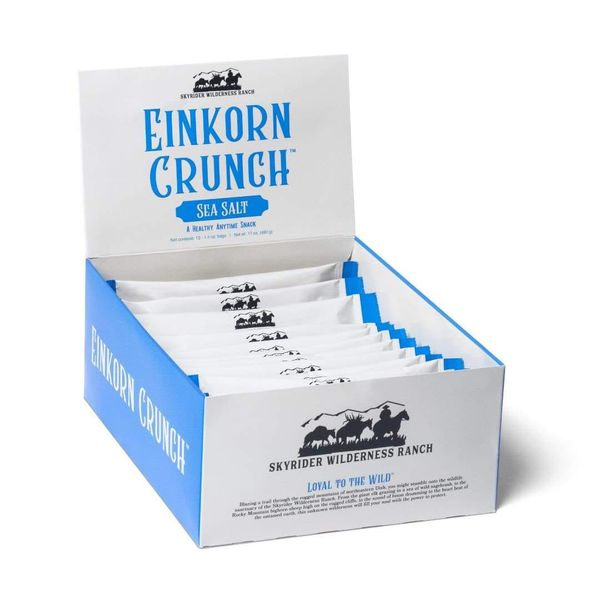
Introducing Einkorn Crunch

Liz James · April 1, 2022 ·

🐎 Young Living’s Skyrider Wilderness Ranch will debut its brand-new Einkorn Crunch starting today!!!, April 1, on YoungLiving.com
I can’t wait to try it! 😋
Einkorn Crunch is the kind of grab-and-go snack that’s ready to eat anywhere and requires no prep for tasty nourishment perfectly suited for any outdoor adventure. Each 12-pack comes with a dozen individually packaged, 1.4-ounce portions—making it easy to take them along on your next outdoor adventure.
Sourced from both our farm in France and from our Skyrider Wilderness Ranch, a rugged paradise nestled at the foot of the Uinta Mountains, Einkorn Crunch represents the mission of Skyrider to bring the West to your door while serving as a sanctuary for wild animals. Your purchase of Eincorn Crunch 12-pack supports our Young Living farms, and a portion of each order will go specifically to Skyrider’s efforts to protect and rehabilitate populations of wild desert bighorn sheep in desperate need of help. Einkorn Crunch 12-packs will be available at YoungLiving.com for a limited time while supplies last.
Skyrider Wilderness Ranch Einkorn Crunch, 12 pk.
Retail: $25.99
Wholesale Pricing: $19.75
PV: 4
Product contents: Einkorn Crunch (12 1.4-ounce packs)
Ordering: Shop orders only
Limit: No limit, while supplies last
 
Who can order: U.S. brand partners and customers
To order: https://yl.pe/beablessing

Thyroid Problem Clues – part 2

Liz James · March 30, 2022 ·

Analysis Paralysis has finally released its hold on me as I dip into the complexities of thyroid dysfunction and their absolute connection with autoimmune disorders. It’s important to understand that over 90% of diagnosed hypothyroid patients actually have an autoimmune disorder.
History always helps me understand science and biology because history leaves valuable clues. A journal article I read yesterday had this interesting tidbit:
“During the first half of the century [1900’s], autoimmune disease was viewed as biologically implausible.”
My, how things have changed!🥴 Resistance to the idea that autoimmunity could not happen began waning in the 1960’s. By then, life had changed drastically in many ways. Processed foods were introduced into mainstream eating habits, medication / vaccination use steadily inched upwards into the norm rather than the exception, plastics became part of our everyday world, fluoride was added to water, personal care products had a growing ingredient list of words that were barely pronounceable, herbicides were used ubiquitously and parents let their kids run behind the trucks that were spraying DDT for mosquitoes🦟! Thankfully the DDT spraying has stopped, but other pesticides quickly took its place. The toxin list has grown by leaps and bounds over the decades. Today, our bodies have to wade through the toxic soup☠️ known as the standard American life. Genetically, we haven’t changed appreciably, yet we are now part of the sickest generation in recorded history.
Did you know that at least 90% of genetic expression is the result of our environment, while the other 10% can be attributed to the role of the proverbial parental genetic dice? Epigenetics (the expression of our genes based on environmental influences) will look differently for each person based upon genes + exposure to infection (often viral), the Standard American Diet (simultaneously nutritionally deficient and toxic), pollutants (both in and outside the home), medications/vaccines, emotions, and stress. Epigenetics is so specifically unique to an individual that even identical twins👭 may express genes differently when exposed to chronic stressors. If you are going to put together a perfect crime scene,🔎 this is the way to do it!
 
Roughly 20% of the adult population in the USA now has an autoimmune disorder
And this percentage continues to rise. Prior to the 1970’s, autoimmune disorders were relatively obscure. Hashimoto’s, the autoimmune version of hypothyroidism, is considered by The Autoimmune Registry to be the second most common of all autoimmune disorders (second only to rheumatoid arthritis).
There is both bad and good news about autoimmune disorders. While they never disappear, they can certainly go into remission with the right lifestyle changes and choices. It’s a good thing we are in control of our personal choices!😉
 
According to leading Hashimoto’s and autoimmune disorder expert, Dr. Datis Kharrazian, there are 3 stages of autoimmune disease:
🔎Stage One is the silent stage. The body has begun losing its tolerance to its own tissue, but to the western health practitioner, there will be very few “hard core” symptoms. You though, as the CEO and chief sleuth🕵️, will feel “off”. What does “off” feel like? Well, that depends! It may be something as subtle as spending more (or less!) time in the bathroom. Perhaps it might be a rash that comes and goes. Maybe it means you are having difficulty finding the zest for life you once had, or you just have a little harder time waking up in the morning or falling asleep at night. Stage One is very important, as catching “things” early can be a game changer in the outcome. Lab work identifying elevated TPOAb and TGAb antibodies (for Hashimoto’s) can be very revealing. Neither test is very expensive when you pay out of pocket. Sadly, insurance companies often refuse to pay for these as “maintenance” labs. If your request is refused, I highly encourage you to pay out of pocket elsewhere and have the tests run annually with other labs.
 
🔎Stage Two is considered the reactivity stage and actual destruction to target tissue has begun. Symptoms are much “louder” and harder to ignore inside your own body. In fact, it may be this stage that finally sends you to a healthcare practitioner, though you’ve felt “off” for perhaps even years.
 
🔎In Stage Three, westernized medicine officially acknowledges the autoimmune disease. Significant destruction of the targeted tissue has occurred and there may even be collateral damage occurring elsewhere throughout the body. At this stage, damage can be seen by an MRI or ultrasound in addition to the elevated antibodies and actual symptoms.
 
Interestingly, the level of antibodies detected doesn’t necessarily indicate the severity of the Hashimoto’s. The antibodies themselves do not cause the thyroid gland destruction. Without getting too technical, the antibodies bind to and mark the spot (ie: the thyroid), and then the T Cells ( think of them as a special forces unit of the immune system) come in and attack what the antibodies have marked as “foreign”. If your own personal set of T cells are especially aggressive, your antibody count can be low but destruction of the thyroid can still be severe. Likewise, if your T cells act more like lazy posers, your TPOAb’s can be high but destruction probably won’t be as severe as you might think. Again…. epigenetics at play.
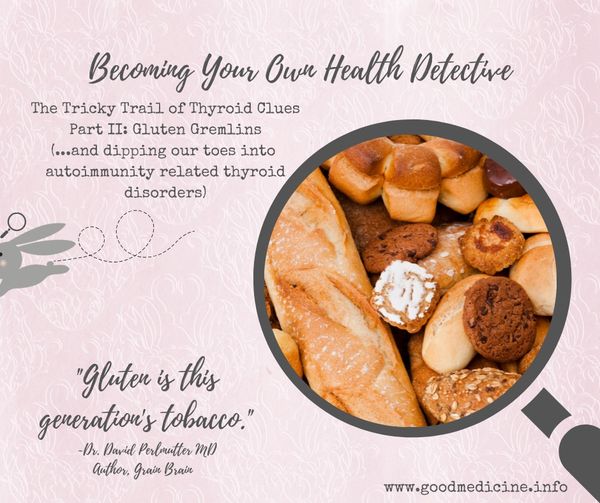
Here’s where we take a bunny trail🐰 detour to talk a bit about gluten. Unless you live in an untouched area of the wilderness with no internet, you’ll likely know that many people have issues with gluten. Generally, you hear about gluten and digestive disturbances such as celiac disease (another autoimmune disorder affecting the small intestine), but did you know that gluten is commonly a trigger for worsening both Hashimoto’s (hypothyroid) and Grave’s (hyperthroid) disease?
 
Gluten is a sneaky little son of a biscuit eater, for multiple reasons:
🍞It takes very little to cause great distress in gluten hypersensitive individuals…… like less than 1/20th of a teaspoonful according to some experts, and even less than that according to others.
🍞The after effects of a single gluten consumption/use can be felt for weeks to months after the occurrence in the gluten hypersensitive individual.
🍞Gluten flies under the radar and hides in the most seemingly innocuous of places: soy sauce, corn flakes, salad dressings, marinades, seasonings, processed deli meats, body and beauty care products, and candy (glucose syrup or dextrose can come from wheat) are just a few on the list.
🍞Some thyroid medications (and other medications and supplements too!) contain gluten as an inert filler ingredient. Currently the FDA does not have strict labeling requirements regarding the labeling of gluten positive medications. At the time of this writing, all brands of levothyroxine (except Mylan which is certified gluten free) contain gluten, as does the thyroid medication Cytomel. (And yes, I agree. Why in the world would the pharmaceutical industry use inflammatory gluten as a common filler, especially in a medication for a population prone to be gluten sensitive? As I’ve said before, we’re worth more as a commodity if we are sick than we are if we are healthy friends.🙄)
🍞Other aliases of gluten include starch, pregelatinized starch, sodium starch glycolate, dextrin, dextrate, dextro-maltose, maltodextrin, sodium starch glycolate and more. Sneaky Pete, indeed!
 
Is all gluten bad? 🤔Resoundingly no. Although if someone is found to be gluten hypersensitive, it’s a good idea to avoid it as much as possible. Modern wheat and the ancient grain Einkorn are two very different grains containing different types and ratios of gluten. Not only is Einkorn considered to be vastly more nutritious than modern wheat, the troublesome type of gluten (the “D” genome) doesn’t appear to be present in Einkorn according to Dr. Davis, author of “Wheat Belly”. If you aren’t sure if Einkorn is a safe form of grain for you, try incorporating it into a food challenge. Einkorn is also much more highly digestible and because of its starchstructure, is less apt to cause blood sugar spikes.
 
For the non gluten hypersensitive individual there are a few more reasons to nosh on some tasty Young Living Einkorn spaghetti, pancakes, granola, or cereal…..Regular intake of gluten has been found to help mediate exposure to heavy metals. Conversely, those on a gluten free diet tend to have higher blood and urine levels of arsenic, lead, mercury, and cadmium ,commonly found in many well known lipstick brands,. If you already use YL Savvy Minerals lipstick💋, here’s a high five…. It’s toxin free!
 
For being a simple little butterfly🦋 looking structure in our neck we often don’t think about, the thyroid is certainly complex and so easily affected by outside influence!
 
xoxo~ liz
 
#sharingiscaring
#becomingyourownhealthdetective
#goodmedicine
#getlabwork
#Hashimotos
#hypothyroidism
#autoimmunedisease

Let Food Be Thy Medicine

Liz James · March 27, 2022 ·

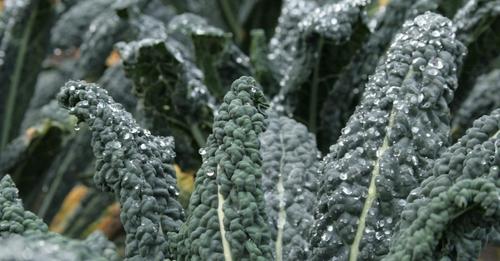
Kale 🥬 (and red cabbage 😉) yeah! Let food be thy medicine friends!
Happy Sunday!
xoxo~ liz
 
https://nutritionfacts.org/…/the-benefits-of-kale-and…/

Clues to Thyroid Health from Iodine-part 2

Liz James · March 15, 2022 ·

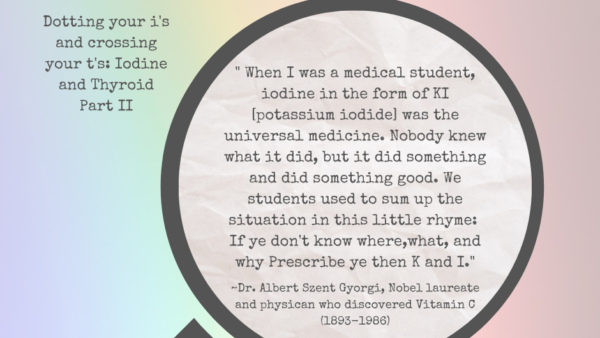
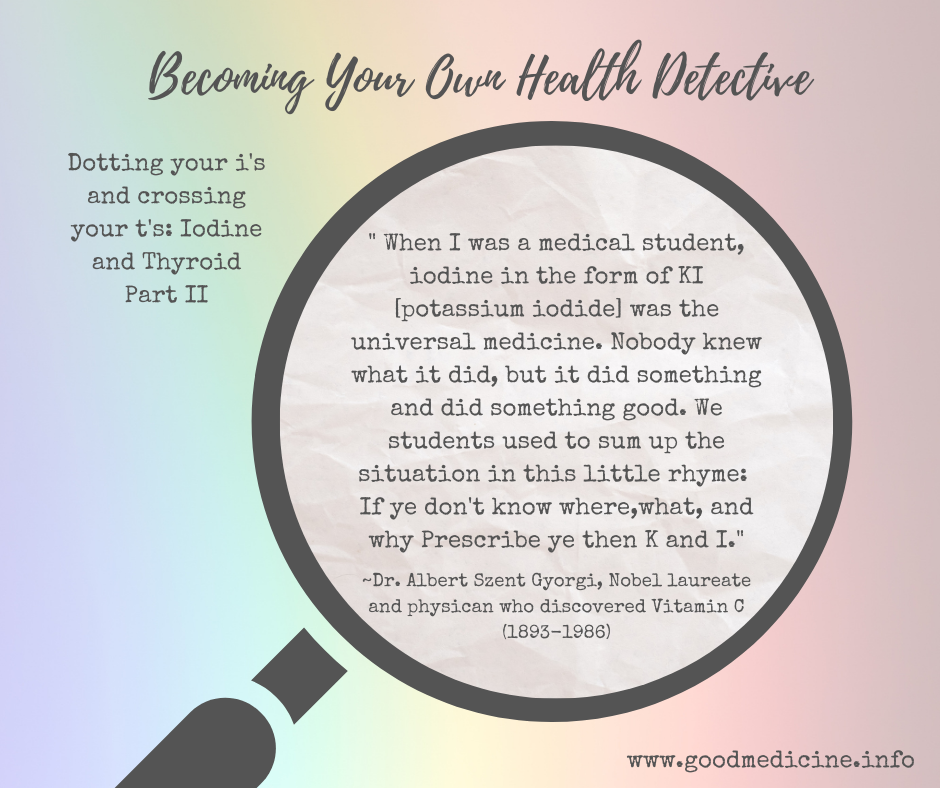
Dotting your i’s and crossing your t’s: Iodine and Thyroid Part II
 
Looking for clues is like using a roadmap🗺. The clues🔎 you find along the way will help you get to your destination. Sometimes you’ll need to stop and ask for directions from a local, someone who knows the territory well. Part II of dotting i’s and crossing t’s may very well require the assistance of an iodine savvy endocrinologist 👩‍⚕️or astute thyroid knowledgeable health professional who can help you find your perfect balance. You’ll need someone who listens to your clues, is willing to dig with you, understands the Great Iodine Debate, and doesn’t put you in a box with everyone else.

The Great Iodine Debate Summary

The “Great Iodine Debate” has been going on for many years and it’s well worth it to dive as deep as you need to. There is no possible way to cover everything on each topic I discuss. That’s not the point of this series anyway. My hope is that something you read sparks an “ah ha” moment and inspires you to dig more, putting pieces together for your individually unique puzzle. These “ah ha” moments are usually Holy Spirit led. If you feel a niggling in your soul, pay attention to it, and do your digging (due diligence) and use your tools to bring your body back into balance.
 
Dr. Guy E Abraham MD’s work surrounding iodine (formerly of the UCLA Department of Endocrinology) would be considered the modern catalyst for reviving the “Great Iodine Debate”. Interestingly, most of his personal information and work appears to have been scrubbed from the internet. As a 🔎 seasoned sleuther, it’s clues like this (the scrubbing) that make me look even closer at what this “outside the box thinking” doctor had to say. (This is another reason I rely on my personal library more than the internet when digging for clues.)
 
Take for instance, this quote from Dr. Abraham:
 
“During the first half of the 20th century, almost every U.S. physician used Lugol solution for iodine supplementation in his/her practice for both hypo- and hyperthyroidism, and for many other medical conditions. In the old pharmacopeias, Lugol solution was called Liquor Iodi Compositus. The minimum dose called minim, was one drop containing 6.25 mg of elemental iodine, with 40% iodine and 60% iodide as the potassium salt. The recommended daily intake for iodine supplementation was 2 to 6 minims (drops) containing 12.5 to 37.5 mg elemental iodine. During the second half of the 20th century, iodophobic misinformation disseminated progressively and deceitfully among the medical profession resulted in a decreased use of Lugol, with iodized salt becoming the standard for iodine supplementation. The bioavailable iodide from iodized salt is only 10% and the daily amount of iodide absorbed from iodized salt is 200 to 500 times less than the amount of iodine/iodide previously recommended by U.S. physicians. After World War II, U.S. physicians were educated early in their medical career to believe that inorganic non-radioactive forms of iodine were toxic. Adverse reactions to radiographic contrast media and other iodine-containing drugs were blamed on iodine. If a patient told his/her physician that he/she could not tolerate seafood, the physician told him/her that he/she was allergic to iodine.”
 
Things that make me go hmmmmmmm. Onward…. Shall we?

Here is How to Test for Iodine:

🔎Let’s start with a simple DIY: The Iodine Patch Test.🔎
🔸You’ll need 2% colorized tincture of Iodine. The clear stuff won’t work!
🔸Paint a 2-3 inch sized area with the iodine on clean dry skin. Apply to the stomach, inner thigh, or inner forearm….. Somewhere that won’t get rubbed constantly by clothing.
🔸Let the solution dry completely before allowing it to touch anything. (it will stain!)
🔸Monitor changes in color to the patch over a 24hour period.
🔸Proponents of this DIY test say that if the patch is still visible after 24hours, then levels are likely ok.
🔸If the patch has lightened considerably or vanished in fewer than 24 hours, it may indicate an iodine deficiency. If the patch lightens significantly or disappears in less than 18 hours, it may indicate a more significant deficiency. Make note of how fast the iodine vanishes.
🔸Evaporation, ambient temperatures, and rubbing clothing may play a part in the outcome, so take that into consideration.
🔸If results have piqued your curiosity, you may want to engage the assistance of one of the health professionals I mentioned earlier.
 
🔎There is a second test called an Iodine Loading Challenge. This is considered a more reliable “official” test, and is based on the amount of iodine found in the urine after loading the body with a large iodine/iodide load. (generally 50mg iodine/iodide, a tablet version of Lugol’s for adults)
🔸1st morning urine is discarded, but all urine after that is collected for 24 hours including the first morning sample at the END of the 24hrs. This urine will be sent off to a lab and evaluated.
🔸Results are based on the following premise: A body deficient in iodine will hold on to iodine. Example: a 90% excretion would indicate an iodine sufficient state, while below 90% would indicate varying degrees of deficiency depending on how low the % is.
🔸This test should run about $50-60 (plus the cost of the iodine/iodide combo tablets which are pretty inexpensive)

Common Questions

If your roadmap is leading to a possible iodine deficiency, you probably have a few questions. I’ll try to address some of them here.
 
🤔Q: Can you get too much Iodine?
A: Yes. Though it is considered one of the safest of our micronutrients when it is in inorganic, nonradioactive form ( iodides, tincture of iodine, Lugol solution). Iodine induced hypothyroidism is incredibly rare. TSH may rise when initially supplementing but T3 and T4 do not fall (those are the “boots on the ground” thyroid hormones you want to watch closely).
 
🤔Q: Does everyone benefit from “more” iodine?
Short answer…. No. Remember, we are all uniquely made. How do you feel? What symptoms are you living with? What is your risk category (see previous post) based on the factors involved?
Also, there is an uncommon situation called iodine induced hyperthyroidism. This occurs when there is an autonomously functioning thyroid nodule. This means that the nodule is not taking directions from the feedback mechanism involving the pituitary and the hypothalamus (go back and re-read the post on the “upstream” players in thyroid function if needed). An independent functioning nodule is like a wayward teenager….. It does its own thing in the presence of iodine regardless of the guidance mechanisms in place to prevent that from happening and hyperthyroidism can result. This is diagnosed with a thyroid scan, and iodine will need to be avoided until the nodule can be removed.
 
You might also recall iodine’s close association with fluorine, bromine, and chlorine. When iodine levels increase in the body, this can cause a mobilization of toxins that bind to the same receptor sites. Mobilized toxins are like a gang of thugs👹 on the move causing various degrees of mayhem until they have been excreted.
 
For this reason….. Easy does it friend! Lower levels of iodine/iodide supplementation are your friend ( Master Formula, Multigreeens and Thyromin), as is making sure you are flushing out toxins by staying well hydrated, and taking adequate amounts of Vitamin C ( YL’s Super C Chewables is a stellar choice), and a regular source of antioxidants ( NingXia Red!). Should you find out you need more iodine/iodide in your life, there are products available as stand alone entities. Talk to your iodine savvy health professional if you think you need more.
 
🤔Q: Is it possible to have an allergy to iodine?
An actual true allergy to inorganic iodine/iodide is very very rare. More commonly “iodine allergies” can be traced back to the body’s response to the other chemicals or allergens found within the same product or food item. Oftentimes the link is seafood🐟 or shellfish 🦐, contrast dyes, iodine antiseptics. Iodine’s molecule is small and too simple (structure wise) to cause an antibody response, but when it’s combined with another substance, it could play a role in the allergic response. Example: some people may have a topical reaction to the antiseptic povidone-iodine but have no reaction to potassium iodide.
 
🤔Q: What happens when you take thyroid hormone replacement therapy AND you have an underlying iodine deficiency?
Frankly, this is a problem and why it’s a good idea to evaluate your iodine load. If you are on thyroid medication and still don’t feel “right”…. It could be that your medication needs tweaking or changing….. Or it could be related to an iodine deficiency that may account for some (or all) of the symptoms you are feeling.
 
Additionally, one of the jobs of thyroid hormone is to stimulate metabolism. Every cell in the body is dependent upon iodine for proper metabolic function. If supplemental thyroid hormone raises the metabolism of cells throughout the body, this also increases the need for iodine (that may or may not be there). Recall last week’s discussion on iodine’s role in cellular function which includes programmed cell death (a good thing!). Frankly, knowing this information, I believe that people on thyroid medication should be tested for iodine deficiency regularly.
 
🤔Q: Is there a link between iodine deficiency when combined with years of thyroid hormone medication and breast, ovarian, uterine, and prostate cancers? There are some pretty compelling studies 🧐🤓out there indicating it is likely so. It has been theorized that the continual unrecognized iodine deficiency combined with an increased metabolic rate (from the thyroid medication) may account for the increased incidence (Remember, iodine is needed for programmed cell death which includes keeping aberrant cellular reproduction in check.)
 
The mainland Japanese ingest over 100x the RDA of iodine in their diet. Coincidentally, they have among the lowest incidence of breast, endometrial, ovarian, and prostate cancers (and a very low incidence of fibrocystic breast disease too).
 
🤔Q: Can kids be iodine deficient and can they be tested?
Interestingly, there is a strong correlation between higher levels (and severity) of ADHD and autism in iodine deficient populations. Kids can be tested for iodine deficiency too….. Their loading challenge will be different based on weight. You’ll want to work with an iodine knowledgeable pediatric health professional who will work with you.
 
If you’d like to dive more into the “Great Iodine Debate”, I’d encourage you to pick up a copy of any of these books:
 
📚Iodine: Why you need it (5th edition) by Dr. David Brownstein MD
 
📚What Doctors fail to tell you about Iodine and your Thyroid by Dr. Robert Thompson MD
 
📚The Iodine Crisis by Lynne Farrow
 
As always…. I’m here simply to be your super sleuth guide. You are your own best health detective!
 
xoxo~ liz
 
#sharingiscaring
#beingyourownhealthdetectiveisgoodmedicine
#BecomingyourownHealthDetective
#goodmedicine
#theGreatIodineDebate📚
  • « Go to Previous Page
  • Page 1
  • Interim pages omitted …
  • Page 5
  • Page 6
  • Page 7
  • Page 8
  • Page 9
  • Interim pages omitted …
  • Page 32
  • Go to Next Page »

Book Your Health Coaching CallBook Now

Elizabeth James

469.425.9091

ebj0203@gmail.com