• Skip to primary navigation
  • Skip to main content
Book Your Health Coaching Call
Good Medicine

Good Medicine

Holistic Health Coaching

  • Home
  • Liz James
    • About Liz
    • Coaching
    • Book a 20 Minute Complimentary Coaching Call
  • Favorite Resources
    • BlessedByHisBlood
    • Young Living
    • Fast Like A Girl Certified Coach
    • Order supplements through my Fullscript store
    • Green Pasture (Coupon: Health10)
    • RogersHood Apothecary (Coupon: BEABLESSING for 10% off)
    • DolphinMPS
    • Company
    • Abundance
  • My Books
    • Becoming Your Own Health Detective Volume 1
    • Becoming Your Own Health Detective Volume 2
  • Blog
  • Cart

Diet

Vagal Nerve – part 2

Liz James · December 14, 2021 ·

Raise your hand if you want a resilient nervous system.🙋‍♀️ Uh huh… that’s what I thought. I do too! 😊I want to be healthier overall, quicker to recover from stressful situations, happier, stronger, more empathetic, better able to concentrate, and have thriving relationships…. ALL things associated with healthy vagal tone.

Vagal tone should be nurtured daily if it is to function optimally. You might be surprised at how easy some of these tips are!

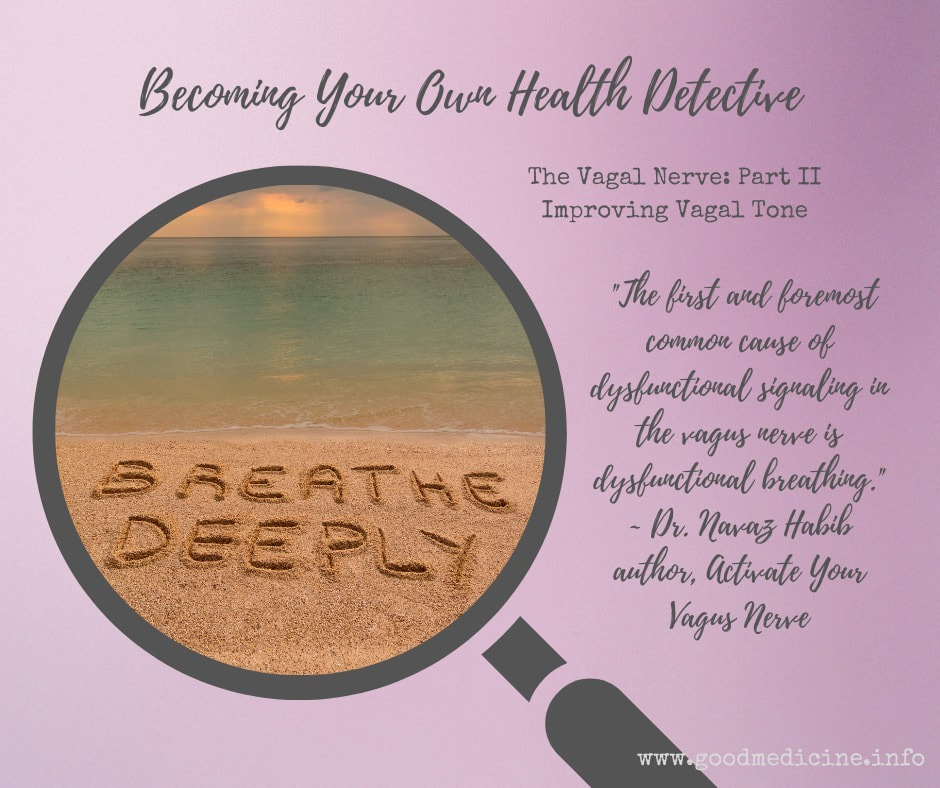
⭐Poor breathing habits. The sedentary nature of our current society has been no friend to the vagus nerve. Poor posture, including the downward tilt of the head as we look at our computer and phone screens restricts the airways from throat to lungs. If you walk into nearly any nursing home you will see posture associated with long term low vagal tone. Dr. Navaz Habib👨‍⚕️, author of Activate Your Vagus Nerve, makes a compelling argument that dysfunctional breathing is the most common cause of poor vagus nerve function. Friends, this is such an easy (and free) fix. Address posture (revisit that post!), and incorporate breathing slowly and “belly button” deeply at least a few times every hour. This is nourishing to the vagus nerve, and feels good too!

⭐Alternate nostril breathing👃. Inhaling through one nostril and exhaling through the opposite nostril has a profound effect on the nervous system and an increase in oxygen consumption. One study found that inhaling through the right nostril and exhaling through the left nostril for approximately 3 minutes four times a day for a month increased oxygen consumption by 37% compared to normal breathing practices. (Doing the reverse activity.. Inhaling through the left and exhaling on the right showed an oxygen increase of 24%) It was suggested in the study that this type of breathing may reduce the release of stress hormones (a benefit in vagus nerve health). As an added bonus, you will likely find yourself more focused and awake by “right nostril breathing” and more relaxed and less anxious by “left nostril breathing”. Knowing this, consider supporting these techniques with Brain Power or En-R-Gee essential oil blends when “right nostril breathing”, or Tranquil, Peace and Calming, or Sacred Mountain essential oils blends when “left nostril breathing”. 

⭐Prayer and meditation🙏 are both scientifically proven to increase parasympathetic (“rest and digest”) activity which improves vagal tone. Incorporating essential oils during prayer and meditation is a beautiful way to enhance both practices. Some of my favorites include Frankincense, Peace & Calming, RC, and Raven. 

⭐Practice tensing stomach muscles or coughing on purpose.

⭐Massage…..even an ear massage. Massaging the areas of the ear👂 called the tragus and cymba concha can trigger a mild vagal response. Additionally, acupuncture or acupuncture point based therapy (check out Dolphin MPS for one such type) are hugely helpful.

⭐Keeping a positive attitude and emotion set. This is truly a “use it or lose it” situation. Affirmations and constructive emotions can spark a self fulfilling future for all aspects of the body, including vagal tone. Destructive emotions can also do this but in the opposite direction. (ex: If you believe you will fail, you probably will! ) Direct good thoughts and actions towards other people and watch your vagal tone improve. Act on kindness, compassion, and empathy. Doesn’t the world need more of this anyway? It’s fascinating that attitude alone can deeply impact the function of the vagus nerve. God has knit us together in wondrous ways!

⭐Belong to a socially active community 🧍‍♀️🧍‍♂️🧍‍♀️. Social isolation does no favors to vagal tone. Find your tribe and spend time with them in person. Oxytocin is a hormone which acts as a neurotransmitter. Its presence has a powerful effect on the health of the vagus nerve. Hugging, laughing, breastfeeding, speaking to someone in person or on the phone, being trusted by someone, and listening to soothing music are all ways to release oxytocin. Surprisingly, shooting guns can be included in this list! 
⭐Eating correctly. Saying words of gratitude🙏 over your food actually stimulate the vagus nerve. Chewing slowly and eating mindfully (fully present) allows the body to recognize the type of nutrients being released into the body, and to release the appropriate enzymes and digestive juices needed to make them bioavailable (or boot them out as a toxin). It would come as no surprise that an unhealthy vagal tone has a negative effect on digestive juices, especially those released by the gallbladder.
⭐Intermittent fasting. There are a myriad of benefits of intermittent fasting, including decreasing inflammation in the body. Inflammation negatively affects vagal tone. Of course intermittent fasting is only one way to help the body in this manner. Any time you remove a toxin source from your body’s daily load, you will be showing your vagus nerve TLC. Thank goodness for the clean household and personal care products we have access to! #ThanksYL  
⭐Foods that have been found to support healthy vagal tone include fermented foods (ex: kombucha, cheeses, plain yogurt), high fiber foods (ex: nuts, fruits, vegetables) and foods high in Omega3’s. If you feel you might not get enough of any of these food groups, supplement with YL Life -9 (or MightyPro) probiotic, Balance Complete Meal Replacement, and OmegaGize3 (or Mindwise) respectively. Additionally, adequate zinc levels contribute to a healthy vagal tone. (You’ll want to go back and re-read the section on zinc. It may tie together some clues for you)
⭐How we sleep matters😴. Laying on the right side has the highest vagal stimulation.
⭐Gargling. This contracts the muscles in the back of the throat which causes direct stimulation of the vagus nerve. Humming (especially while covering the ears) and singing loudly are also helpful.
⭐Improving vagal tone thru exercise💪 and yoga is reason #100 to do both. Seriously. Mental and physical health will only improve in amazing ways when exercise and yoga are incorporated into healthy habits.
For the more adventurous spirit, other ways to spark quick vagal tone improvement include ❄️cold❄️ showers, ❄️ice baths❄️,  ❄️cryotherapy ❄️ or coffee☕️ enemas (Yes indeedy! 😉). 
Our brains are constantly checking on us to see if we feel safe or not. It is only when the brain perceives safety that we are able to engage socially, have curiosity, feel happy, and be playful. If it has been awhile since you’ve felt this way, this would be another set of clues indicating that your vagus nerve needs some additional love and attention.
It may seem hard to “want” to incorporate these suggestions into your healthy habits if all of this is new to you, but if you raised your hand a few minutes ago in a bid for resiliency, it’s time to do “the things.” Just like a teenager who is hard to wake up in the morning, waking up the vagus nerve may take perseverance. Find your tribe and work together to make those vagal nerves toned and happy!
xoxo~ liz

PS: Friends, there is an enormous amount of information on the vagus nerve and polyvagal theory. If this has sparked your interest, please DO do some more digging on your own. There is simply no way to do this particular topic justice in a couple of posts.

  
#sharingiscaring
#caringforyourvagusnerveisgoodmedicine
#healthdetective
#goodmedicine
#thanksYL
❄️
STRESS – part 3

Liz James · November 30, 2021 ·

Chronic Stress Part III : Solutions
Today’s post is full of butterflies, kittens🐱, and unicorns (Literally!). That’s a welcome change, I’m sure, considering the sobering long term ramifications of unmitigated chronic stress we’ve talked about these past few weeks. Chronic stress usually creeps in on very soft feet, so consider taking a few minutes to answer this simple yes/no “day to day stress assessment”:

stress assessment


Coping with stress involves two steps:
1️⃣Recognizing the signs and symptoms of EARLY burnout and stress (you’ve got the tools now!)
2️⃣Activating any or all of the self care tools below. 
Now, here’s the fun part….. Giving yourself some self care time by mixing and matching ways to “de-stress” on the regular. This is not a “once and done” experience. These are lifestyle changes for life!
🙌Stressbuster Options🙌
👉Get regular exercise! 
👉Engage in self care activities (ex: a long soaking bath or a massage)
👉Prayer, meditation, and/or quiet time with no electronic or television distractions
👉Cognitive Behavioral Therapy (aka CBT) . This can be a very valuable tool, especially if you find yourself trending in negative thinking patterns. I would really recommend picking up Dr. Caroline Leaf’s book and workbook, “Who Switched Off My Brain? Controlling toxic thoughts and emotions” to begin diving deeper into this subject.
👉Journal. Write out your thoughts instead of letting them fester in your mind. Create a gratitude journal, write a letter you’ll never send to someone, or begin success journaling)
👉Turn off social media and electronics as often as your day allows.
👉Limit scrolling time  
👉Get outside as much as possible and connect with nature. Go barefoot or get your hands on plants and in soil. (Grounding! ….. We’ve talked about this in previous posts)
👉Read something relaxing and nontriggering (ex: a work of fiction). Allow your brain to wander within the pages of the book.
👉Engage in Yoga, pilates, Tai Chi (soooo many health benefits!)
👉Practice breathing exercises ( left nostril breathing or box breathing are both excellent breathing patterns to quiet the mind)
Improve your sleep in both quality and quantity (we talked about that last week)
👉Try salt water floatation therapy for deep relaxation
👉Listen to 432 Hz frequency healing music ( check out the company WholeTones for more info!)
👉Laugh! It releases endorphins.
👉Spend time with a pet. Did you know that a cat’s purring frequency corresponds with established healing frequencies in therapeutic medicine for humans? 
👉Practice saying no to the things that bring stress, and saying yes to the things that will bring joy.
👉Avoid procrastination and just do the thing. Learn time management techniques and goal setting.
👉Eat healthy nourishing foods
👉Engage in a hobby
👉Connect with actual people in a community….. In person. We are not created to be an island.
👉Examine your values and beliefs and then live by them. An enormous amount of internal stress comes from living differently from your beliefs and values. 
👉Oils and Supplements. We have so many amazing tools to help us navigate stress:
🌿Lavender, Vetiver (Yes, it doesn’t smell great, so apply to bottoms of feet!), Bergamot, Roman Chamomile, Frankincense,  Sandalwood, Ylang Ylang, Orange, and Geranium are just a few oils known for their calming qualities.
🌿Young Living has created an amazing array of perfectly blended oils to help add to the peace and tranquility in our lives: StressAway, Tranquil, RutaVala, Peace and Calming, and Valor are just a few that come to mind. 
🌿An herb called Ashwagandha is known for its beautiful ability to lower symptoms of stress in the body. It is one of the important ingredients in Young Living’s EndoGize (typically for women) and PowerGize (formulated for men).
🌿Young Living’s Calm CBD Roll-on is another fantastic tool to help relax and quiet the mind. Have you tried it yet? Be sure to find and follow Dr. Oliver Wenker MD, DEAA, ABAARM, FAARFM, MBA on his website and social media to learn in depth information on all things CBD.  


Unfortunately, many doctors don’t recommend steps to help mitigate stress in a patient’s life. Nearly 20% of adults age 18 or older are on medication💊 for symptoms related to stress.  A patient may present with anxiety, depression, or any of the other stress related clues we’ve talked about, and a prescription is written without any further discussion (and often, without comprehensive lab work being ordered to ensure there’s not also an imbalance somewhere in the body causing the symptoms). There will always be a time and a place for medication as a final option, but patients need to be fully aware of the problems that lie with using medication long term as a coping mechanism. 
💊Many of the medications used to treat symptoms of stress are highly addictive. Additionally, these medications have the capacity to impact brain function when taken over extended periods of time.
💊According to a study published in 2010 in the Journal of the American Medical Association, one of the most common classes of drugs (SSRI’s)  used to treat mild to moderate anxiety and depression was “unable to outperform placebos for moderate symptoms of depression”. So…. there’s that.
💊All of the medications used to mediate stress symptoms have side effect profiles that may well require a 2nd or 3rd medication to help manage the side effects of the initial medication.
💊Very few studies on the effects of a polypharmacy (using multiple medications concurrently)  lifestyle exist, yet we know that prescription drugs are the 3rd leading cause of death in the USA (after heart disease and cancer)…… (Don’t let anyone tell you that essential oils and herbs are dangerous!😉).
💊There is no way of measuring serotonin (the primary “happy”  neurotransmitter) in the brain of a living person, nor is there a “normal level” of serotonin we should all have to be emotionally healthy. People with high serotonin levels can still be depressed, and people with low serotonin levels can still be happy and joy filled. Indeed, we are largely the masters of our own emotional state.
💊Many medications used to treat symptoms of stress should be used in caution with people who have preexisting extreme mood disorders, diabetes, kidney, liver, or heart disease, or pregnancy (due to risk of miscarriage, congenital heart disease, or persistent pulmonary hypertension of the baby).


We have so many low cost (to free!) tools available to us when it comes to how we choose to deal with stress, and as you’ve hopefully seen, most are very pleasant options with no icky side effects.
Use the two stress surveys📊 you now have on hand to check yourself periodically, and then evaluate your self care / fun quotient. Your future self will thank you! 
xoxo~ liz

#sharingiscaring 
#beingwellinformedisgoodmedicine
#ThanksYL 
#fearfullywonderfullyjoyfullymade 
(PS: if anyone needs a stress relieving kitten, I’ve got 4 fosters looking for a home! )

Health Clues from Your Eyes -part 5

Liz James · November 9, 2021 ·


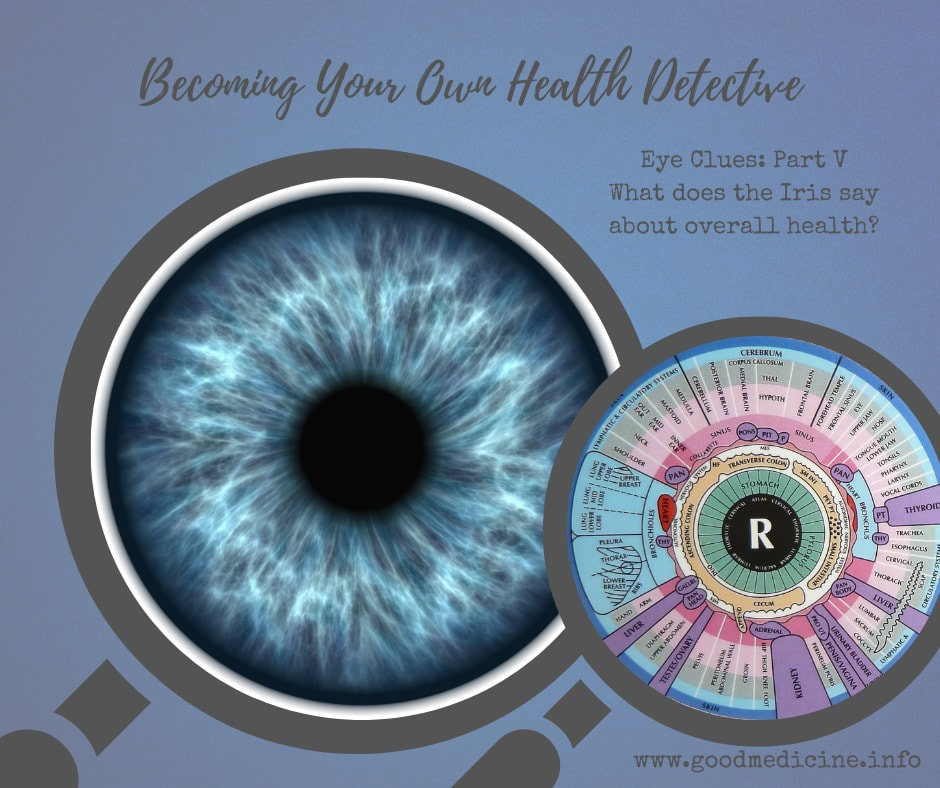
*Iris clues. Are you ready to dive a little deeper down this fascinating rabbit warren of information? If you are just now joining in this portion of detective work, I’d highly suggest a quick look at last week’s post before proceeding-Health Clues from Your Eyes – part 4.


🔎Noting the changes within your eyes may be likened to the notification lights on the dashboard of your car. If you know something is wrong early enough, you often have time to correct that which is setting the signal off.  The iris manifests clues marking changes within the body that warrant correction.


Depending upon how the clues manifest themselves, they may indicate acute, recovery, chronic, or degenerative situations within the body.


Acute – active inflammation. During this time, the body is using its resources rapidly in an attempt to gain control of the inflammation. The iris “warning signs” will look like white ribbons in the areas corresponding to the inflamed tissue. Other corroborative clues may include noticeable mucus production somewhere in the body, or visibly inflamed or swollen tissue. Detoxification is occurring, but often it’s not fast enough. Consider giving your body all the nutrition support you can. Add in Young Living’s Master Formula and NingXia Red for added support. 


Sub-Acute- Once the initial rapid inflammation has tapered off, the white ribbon like areas start to become darker. This is suggestive that nutrients have been depleted and need to be restored. If a sub-acute state is left unattended and the body continues to be exposed to either nutritional or physical stress, a chronic state of inflammation may result. Don’t stop supporting your body! 


Chronic- In this state, toxins and waste are not eliminated properly, cellular activity has slowed down considerably, nerve impulses are impaired, and conditions become ripe for chronic illness or dis-ease to set in. The iris will manifest the chronic condition state with the appearance of various sized “black holes” in the netting of the iris fibers. This will ultimately lead to further degeneration if positive changes are not made to a person’s lifestyle in an effort to reverse the course of dis-ease or illness. The black holes may get larger and multiply as more body systems are affected. 


*About ⅓ of the way away from the iris lies the autonomic nerve wreath. The autonomic nervous system is broken down into two subsystems. The parasympathetic nervous system is for basic housekeeping within the body and it controls the body while we rest. The sympathetic system is also commonly referred to as our “fight or flight” response. The nerve wreath is not always uniform in shape.. The more this wreath shape deviates from a standard roundish type shape, the more suggestive it is of a system off balance. Additionally, the color of the autonomic nerve wreath should match the color of the rest of the iris. Any increase, decrease, or change in color in this area suggests disharmony within the body. To recap, color and shape of the wreath are important clues🔎!


What about colored spots within the iris? These are called psora, and are typically considered to be an indicator of toxin loads within the body. If you watch your eyes closely, you may notice that these colored spots often change locations over time. This suggests the toxin load (including drug deposits) has moved to another portion of the body. Sometimes these spots show up in different colors: red yellow, and orange are not uncommon. They are most often seen in Zones 1 thru 3 in the irises.
“Scurf rim”🔎 is another clue on the outermost zone (7) of the iris. Is the area darkened? This is suggestive that the skin (remember, it’s an organ!) is not able to function effectively in the detoxification process, and toxins and metabolic waste are having a hard time being released from the body. An accompanying clue🔎 might include not sweating easily.


At the very top of Zone 7 (roughly 10pm -2am on a clock) look for an arc that often has fuzzy edges with a whitish tint. Though this used to be a mark of old age👵, it is becoming more and more common in younger people👩👨. Presence of this arc is suggestive of poor oxygenation and blood perfusion in the brain.


Now look for a solid white ring🔎 on the periphery of Zone 7. This suggests a chemical imbalance of some sort in the body. Western medicine also recognizes this ring as an indicator of probable excessive cholesterol and triglycerides in the body. Not surprisingly, further digging (with lab work and testing) often reveal poor calcium metabolism which contributes to plaque in the arteries (arteriosclerosis) and joints (arthritis), and subsequent higher blood pressure.


Zone 6 sometimes houses cloudlike spots 🔎resembling a string of pearls. If the spots are very white, these spots suggest acute inflammation. Yellowed or brownish pearls suggest that the inflammation has moved to a chronic state.

Check yourself for other clues. Do you also produce a great deal of mucus elsewhere in your body or have swollen lymph glands? Dry brushing, lymphatic massage, and regular exercise are all excellent ways to mediate impaired lymphatic function. 


Nerve rings🔎 may appear anywhere in the pupil.. They look much like growth rings found in a cross section of a tree. These rings suggest long term stress in one or more parts of the body, and are most often seen in chronically stressed individuals. Shouldn’t we all be huffing our Stress Away whenever the moment requires it? We have so many blessed tools at our fingertips to help support our bodies during times of stress. These nerve rings are similar to an SOS smoke signal. Pay attention to them! 


Check your eyes for dark lines 🔎radiating out from the pupil. These lines (called radii solaris) suggest a slower moving digestive tract and a subsequent toxin load. If you are not offloading the poo my friends, the toxin load will be there. ! This clue might also be suggestive of a parasite load.


We’ve just barely skimmed the surface of the clues🔎 the eyes can give us, but if you’re ultra curious, keep digging on your own. Dr Bernard Jensen is considered to be the modern “Father of Iridology”, and his work is an excellent place to start!
I’ll leave you with this cool factoid…. Did you know that you may be able to change the color of your eyes? Brown discolorations in blue/green eyes are suggestive of digestive system dysfunction, a gallbladder weakness, or liver dysfunction. Cleaning up these problems with clean eating habits and restoring health to the digestive system just might make your brownish eyes blue! The next time you think someone might be full of it💩, check their eyes…. You just might be right!😉


 xoxo~ liz

#sharingiscaring
#supportyourlocalpeepers
#goodmedicine
#ToxinFreeIsTheWayToBe
#goodmedicineisproactiveinsteadofreactive
#ThanksYL

Pumpkin Spice Creamer

Liz James · October 31, 2021 ·

​’Tis the season! I’m not a fan of Starbucks for a variety of reasons….. not the least of which is their potent inflammation causing ingredients. Save some big bucks and make your own Pumpkin Spice Latte for a fraction of the price! And heck, you even get real pumpkin with other real ingredients that are helpful instead of harmful 😉.


Super interesting article that pulls the curtain back on what exactly is (and isn’t) in a ‘bucks Pumpkin Spice Latte:  https://www.popsci.com/whats-actually-in-pumpkin-spice…/ 


The application of knowledge is power. 
xoxo~ liz

Health Clues from Your Urine – part 2

Liz James · October 28, 2021 ·

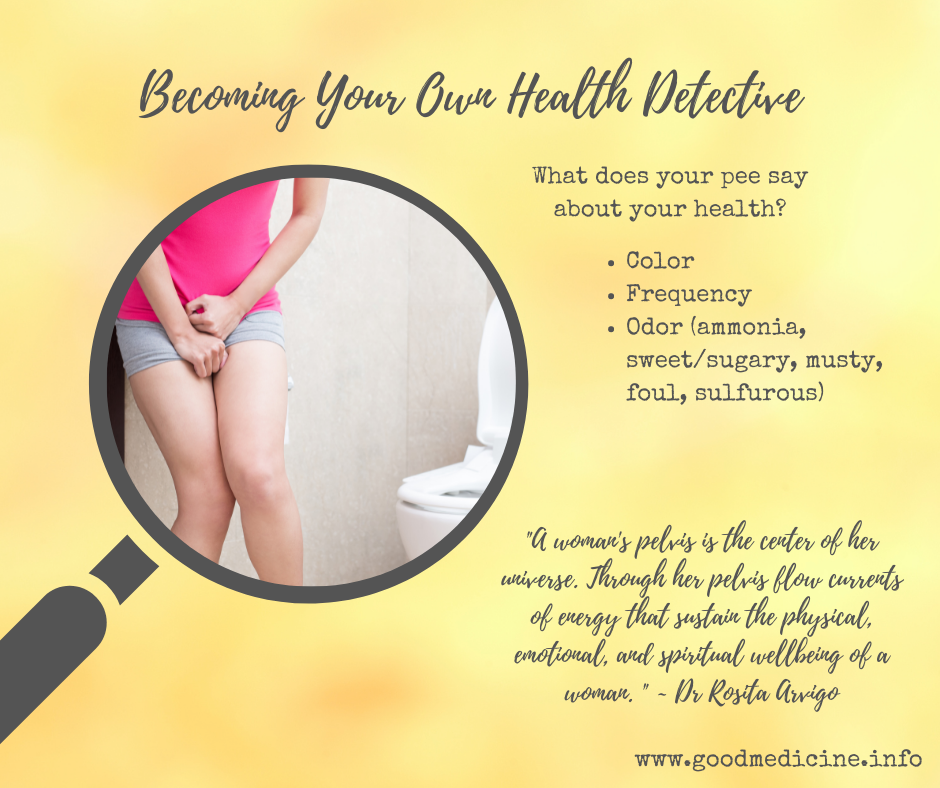
What does your pee say about your health?  PART II
*Urine, in most healthy situations, should be seen but not smelled. There are exceptions of course (Have you ever experienced “asparagus pee”?), but the offending odor should be transient and not trending towards permanence. Urine with a strong ammonia smell may indicate dehydration or bacterial infections. A sharp change in hormones (ie: pregnancy or menopause) may also contribute to pungent pee. “Sweet or fruity smelling” urine may indicate a high ketone content in urine as is often seen in unregulated diabetes.  Some medications can certainly create an environment for malodorous micturation. Sulfa based medications (note: sulfa and sulfur are NOT the same chemical entity), antibiotics, diuretics, birth control pills, lyrica, tramadol, and oxycodone are also potentially causative agents of stinky pee.


Frequent urination is a topic near and dear to my heart (and bladder). An estimated 33 million people in the USA struggle with this health clue. Having a spastic bladder can be a nuisance or it can be downright life limiting. The causes (clues) are varied:
🔎Urinary tract infection (pair with urine color and odor)
🔎Low estrogen levels (resulting from a hormone imbalance, menopause,or even excessive exercise)
🔎Pregnancy or post childbirth, chronic constipation, chronic coughing, frequent heavy lifting, obesity, pelvic floor weakness (see unbalanced pelvic floor muscles below) 
🔎Enlarged prostate (men)
🔎Diabetes
🔎Spinal cord injuries or dysfunctions
🔎Pelvic floor muscles (there are 16 of them) are unbalanced. Think of a webbed hammock where some of the webbing is strong and others are weak. Each muscle needs to be equal in strength. If this is a known issue, kegel exercises are not the answer. You’ll want to find an excellent pelvic floor therapist to guide you in your strengthening and healing process.  
🔎Medication (ex: diuretics, lithium, steroids)
🔎Emotions. The bladder and kidneys are the home to emotions related to fear and anxiety. According to Traditional Chinese Medicine, chronic bladder and kidney issues may correlate with “difficulty finding their place in life”. Many women (and men) who have a weak pelvic floor  often report lacking support somewhere in their lives. Please do not underestimate the importance of healing emotionally when looking for ways to heal physically. Our issues do indeed reside in our tissues.  There is an excellent book entitled The Body Keeps Score, by Dr. Bessel van der Kolk (MD)  which explains the importance of resolving the emotional ties to specific health conditions. #worththeread
🔎Interstitial cystitis
Interstitial cystitis is where my🙋‍♀️ personal “overactive bladder” story began in 2002. IC is an enigmatic chronic bladder condition  that causes varying degrees of pelvic pain and discomfort. It also causes a chronic and constant need to urinate. Imagine having stomach ulcers in your bladder. That’s the best way I can describe what it felt like. In my case, it took nearly 3 years and 4 different doctors before finding one who suggested a cystoscopy to confirm her suspicions. As with all inflammatory disease states, what we expose ourselves to matters. I was blessed with a doctor who actually took the time to educate me on the truth of this. Instead of pushing me towards medication, she urged me to begin a strict elimination diet, stay well hydrated, and to learn to manage stress better. Wow! Imagine what our health care would look like if all western medicine based doctors would prescribe this type of sage advice! 🙌


Learning which foods and lifestyle choices triggered a worsening of my urge to pee was eye👀 opening indeed. Sometimes it was hit or miss, and I would often pay the price by having to get up 7-8 times a night to go to the bathroom.  A serendipitous travel situation in 2008 completely changed everything when I discovered that nearly all processed foods were inflammation causing agents. I couldn’t believe how much better I felt in the presence of 100% fresh clean food! Staying well hydrated with filtered water quickly became key to keeping my bladder happy too. I know it may sound counterintuitive to strive for a full bladder to pee less….. Diluting toxins in the bladder makes what’s in the bladder less of an irritant!  
Fast forward to 2013 when I was introduced to Young Living products. I had learned to manage my interstitial cystitis as holistically as possible, and in doing so, I had dodged the very real bullet of daily self catheterization that often occurs with people who have severe IC. I still had some nasty flare ups, and was still getting up 4-6 times a night (on average) to pee. One of the “thank you”  products I had received from my Young Living monthly subscription order was Sulfurzyme. It was free, looked interesting, and tho I hadn’t really identified a personal need, I decided to take it. According to the YL website, Sulfurzyme may be of value to anyone who wishes to support their joints, range of motion, bone health, metabolic function, immune system, hair and skin. Within two weeks of taking Sulfurzyme faithfully I began noticing enormous changes within my bladder along with a decreased urge to urinate. Around that time, I also began using a DIY face serum recipe which contains Frankincense and Lavender every morning. Should I have been shocked that what I put on my face also happened to make my bladder very happy? In 2014, I was still learning essential oil basics, and this was a lesson to the truth that oils work best in “all the ways” when they are used. Get them out of the bottle and into the air or on your skin. You just never know what might happen with regular consistent use. 😉


I’ve continued to clean up my “issues within my tissues” over the years, and I am so much healthier in mind, body, and spirit than I was when I was in my 30’s.  This is a lifestyle, not a “once ‘n done” kind of thing. Freedom is never free, especially in the case of a health condition. I had to be willing to do the hard work, to live like no one else sometimes, and to listen to what my body needed. Everyone has their own story, their own diagnosis, their own emotional journey to recognize. Overcoming ( ____________ ) requires change and the courage and willingness to do so. As they say, “Insanity is doing the same things over and over again, and expecting different results.”  I pray you are discovering yourself as you become your own health detective. Learning to read your own health clues and then acting on those clues is true self love. Never forget that each of our bodies is a temple and as such, requires tender loving care and maintenance every single day. You are worth it!
xoxo~ liz


#sharingiscaring
#goodmedicineisnotfasteasyorcookiecutter
#goodmedicine
#thanksYL

  • « Go to Previous Page
  • Page 1
  • Interim pages omitted …
  • Page 8
  • Page 9
  • Page 10
  • Page 11
  • Page 12
  • Interim pages omitted …
  • Page 32
  • Go to Next Page »

Book Your Health Coaching CallBook Now

Elizabeth James

469.425.9091

ebj0203@gmail.com