• Skip to primary navigation
  • Skip to main content
Book Your Health Coaching Call
Good Medicine

Good Medicine

Holistic Health Coaching

  • Home
  • Liz James
    • About Liz
    • Coaching
    • Book a 20 Minute Complimentary Coaching Call
  • Favorite Resources
    • BlessedByHisBlood
    • Young Living
    • Fast Like A Girl Certified Coach
    • Order supplements through my Fullscript store
    • Green Pasture (Coupon: Health10)
    • RogersHood Apothecary (Coupon: BEABLESSING for 10% off)
    • DolphinMPS
    • Company
    • Abundance
  • My Books
    • Becoming Your Own Health Detective Volume 1
    • Becoming Your Own Health Detective Volume 2
  • Blog
  • Cart

Blood Pressure

Health Clues in Our Teeth – part 2

Liz James · April 27, 2021 ·

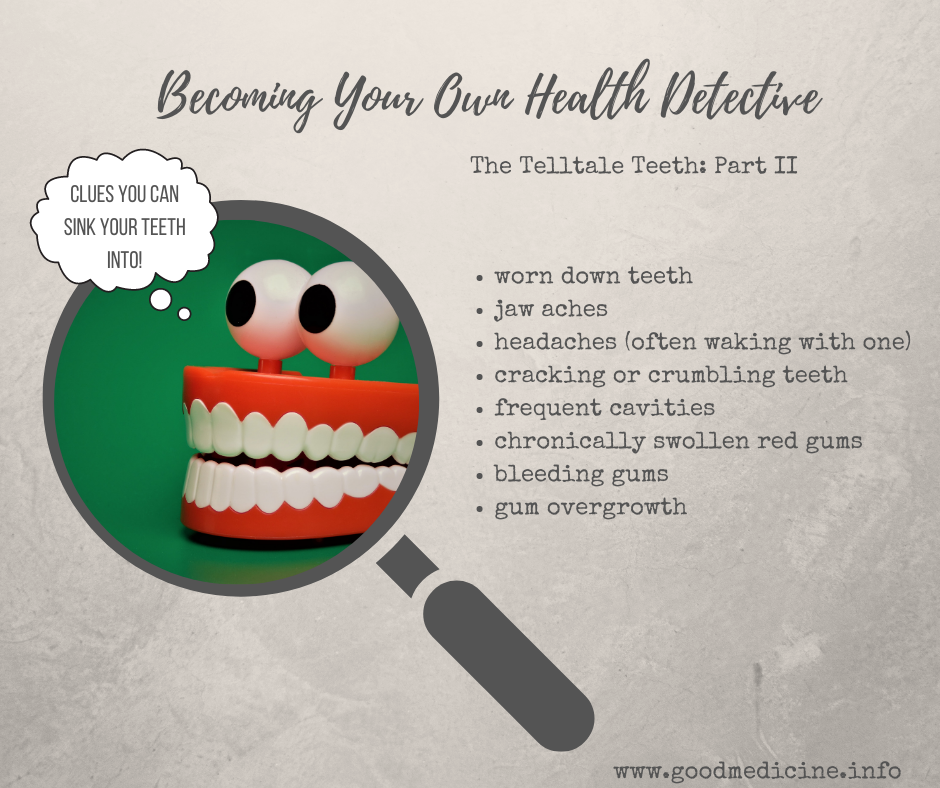
Our body is highly skilled at sounding alarms🚨 that we often “hit the snooze button” on, ignore out of ignorance, or simply disregard. I was “that person” many years ago when I went through about 18 months of tooth emergencies.😭 I didn’t have a single cavity until I was in college, and always had pretty stellar dental visits. However, when I was in my mid 30’s, something strange started happening. On 3 different occasions, a piece of tooth would literally fall off of a molar while I was driving to work in the morning. 😳 Though I had no evidence of wear on my teeth, my dentist finally determined that I must be gritting my teeth so hard while I slept that I was literally breaking my teeth. Once we figured out the root cause and I found better ways to manage my stress , I quit breaking teeth, stopped having headaches every morning upon waking up, had fewer neck, elbow, and wrist problems, and generally felt better and happier as a human! My body was giving me so many clues, and I was ignoring all of them (or “patching them”) until my body literally started falling apart. It was an expensive but valuable lesson! 


* Worn down or regular breaking of teeth are often signs of stress. Internalized chronic stress has the same effect on the body as smoking 5 cigarettes a day, and who wants to abuse their body like that?? Not sure if you are grinding or clenching your teeth?  Sometimes the flatness on the teeth can be felt with the tongue or seen in the mirror, or your dentist may have made a comment to you. A chronically stressed body may also see a higher incidence of canker sores or fever blisters…. all are clues that shouldn’t be ignored.


* Chronic stress will cause consistently higher levels of cortisol in the body, eventually wreaking some major havoc. Manage stress properly by incorporating mindset management skills, prayer/meditation, exercise, diet and  proper amounts of sleep.  Consider supporting  healthy cortisol levels with Young Living’s Cortistop. If clenching, gritting or grinding is your nighttime gig, you may also want to consider a mouth nightguard to help mediate damage, and apply Peace & Calming, RutaVala, or Tranquil essential oil blends on the base of the big toes at night. 

 
* Thin enamel or cracking/crumbling teeth are often clues of acid reflux. (We will go over  acid reflux clues in greater detail soon.)  Several medications may also affect the integrity of teeth. Asthma medications (inhaled), chewable aspirin, birth control pills, immunosuppressive agents, chemotherapy agents,  and any of the 400+ meds that cause dry mouth ( revisit that section for more details) are among the bigger culprits. If you find yourself in a situation where any of these medications are deemed necessary, make sure you are rinsing your mouth out often with Thieves Mouthwash to create an inhospitable environment for bad bacteria that may want to set up camp and create further damage.


* Chronically sensitive or swollen gums may be a sign of an underlying Vitamin C deficiency (approximately 13% of the US population), an early sign of heart disease, diabetes, or (less commonly) a blood disorder.  It can also simply be a sign of poor oral hygiene! Medications that may cause bleeding gums include blood thinners, aspirin, and regular use of ibuprofen or other NSAIDS.


* Gum overgrowth (hyperplasia)  is more pronounced than simply swollen gums. While often a symptom of poor oral hygiene, it most frequently results from the use of certain medications:  anti seizure meds, immunosuppressants, or calcium channel blockers (a class of blood pressure medications). There are physiological disorders that may cause hyperplasia too. Diabetes or Crohn’s disease are two of the more common ones.


* Pretty much everyone brushes their teeth in front of a mirror, which is an opportune time to make a quick daily evaluation of teeth, gums, mouth & tongue. Once you get into the habit of doing this, you will notice small changes pretty quickly, and you can often correct a situation without professional intervention! 
 Next week, I’ll discuss specific tooth health as a predictor for potential health concerns! It’s fascinating and such a helpful tool in knowing how to care for yourself preemptively.
xoxo~ liz

#sharingiscaring
#healthcluesyoucansinkyourteethinto
#healthcluesyoucanuse
#goodmedicine
#ThanksYL
Finding Answers to your own Health Problems

Liz James · December 28, 2020 ·

Last week, I wrote about all the fascinating information you may learn from looking at the clues embedded (literally) in the nether regions of fingernails. You can find that post here if you need to catch up: https://goodmedicine.info/blog/health-clues-you-can-use-1

​A clue means next to nothing if it is singular….. You’ll  need at least a few clues if you are to be sure you are headed down the right path. 


Since we are only in the embryonic stages of becoming your own health detective, here are a few quick self assessment tools every good health detective needs:
*Honesty: If you are to be your own health detective, it’s important to acknowledge lifestyle choices and known consequences. The “it won’t happen to me” mindset will never work….nor will the hypochondriac’s lament. If you are going to do the detective work, be honest with yourself……using your clues to improve your wellness quotient thru diet, lifestyle changes and using supplements (and/or YL essential oils) when you suspect support is needed will go a long way to turning back the physiological clock.


*Labwork: Every adult should have bloodwork  done annually (more often if there is a visible problem). Even the uninsured or “undoctored” can get bloodwork done without seeing a doctor (message me if you’d like help doing this). I’ll cover what I consider “essential” labwork in a future post, so at the very least you’ll know what labs to request your doctor run for you.


*One clue does not make a dis-ease or a diagnosis. #clustercluesforthewin


*How do you feel? Think this over. Do you feel great most days? If your answer hovers more around the “meh” answer, here’s where you’ll want to start. There are many many posts within this group that addresses supportive measures for most of these topics:
👉Do you get enough sleep?
👉Do you exercise vigorously and regularly?
👉Do you know your recent blood pressure and blood sugar numbers?
👉Do you have a “healthy” bowel movement daily?
👉Do you eat in a healthy manner? 
👉Do you have a close set of friends, participate in life fully, attend church?
👉Do you laugh often and enjoy life?
👉Do you avoid vices? (smoking and regular alcohol consumption especially)


*Consider keeping a health journal. Write down your clues as you find them. This will be very helpful to you as you learn how to be a better CEO of Y.O.U Incorporated in 2021, and will also help you decide which supplements or oils might need to be on your monthly “must haves” for 2021.


 *Know your limits. If you have found several clues pointing to a significant health issue, please contact your preferred health professional. Naturopaths, Integrative medicine doctors, and functional medicine doctors are my personal first choice as they tend to look beyond the symptoms and address the root cause.


Last week I read several comments when discussing less than prominent lunula….. Fewer than 8 prominent lunula may be an indication of low cellular oxygen, poor circulation, a chronically weakened immune system, a possible thyroid disorder, or a Vitamin B12 Deficiency. Lots of possibilities, right? If you didn’t know where to start (since this is a first clue), what daily Young Living supplement may be supportive of most of these conditions? (Hint: It’s red ).
xoxo~liz

#sharingiscaring
#applicationofknowledgeispower
#goodmedicine
#ThanksYL
#NingXiaRedChallenge2021
#becomingyourownhealthdetective

Health Clues in Your Fingernails #1

Liz James · December 22, 2020 ·

Learning to “read” your own body is a skill that everyone learned to some degree in days gone by….. much like tracking an animal🐾, interpreting weather signs , or “reading” 🌱 plants in a forest. Failure to do any of these things well could have cost you your life. Now we tend to rely on professionals (or electronics) to work exclusively on our behalf. There are many problems to simply handing over life skills to someone else to manage, not the least of which is personal vulnerability….. I mean, who has a paper map in their car?… and what would happen if your GPS suddenly shut down?


When we wait for someone else to “find” the problem, a slippery slope may result. Just like having low air in a tire, it’s so much easier to air the tire back up and identify and fix the cause of the low tire pressure,  than it is to drive on it until it’s flat and damaged and has to be completely replaced (expensive!!) by a professional. 


Throughout 2021, I’ll be unpacking “health clues you can use” to help you decide which supplements and essential oils may warrant further investigation or perhaps which lifestyle changes your body may benefit from. #wearealluniquelymade

Today, let’s unpack the lunula… finger by finger! 
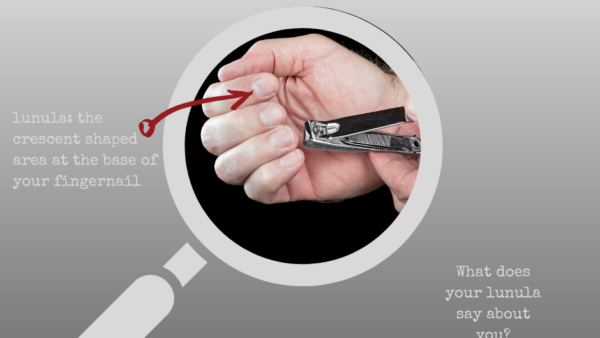
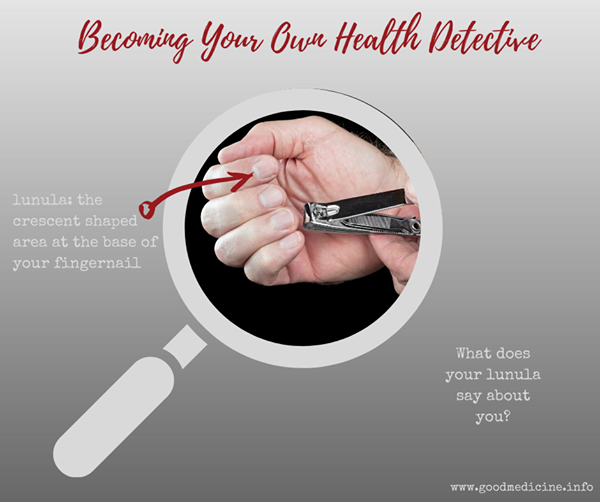
The entire body is a storehouse of clues….. Especially hands and nails! Fingernails are a snapshot of the last 6 months of a person’s health….. The lunula is the crescent shaped area at the base of your fingernails… and that’s the only part of the fingernail I’m talking about today. Ideally, you want  8 of your 10 fingernails to have prominent lunula. Fewer than 8 prominent lunulas on the fingernails may be an indication of low cellular oxygen or poor circulation overall.


Lunula size also differs among different ethnic groups, and they are commonly absent on children. Keeping an eye on “normal” within your individual body is what’s important. Changes in size of the lunula are ultimately what should raise a hairy eyebrow. Overall, if the lunulas grow in size to cover more than ⅓ of the nail bed, if may indicate an ongoing endocrine disorder or cardiovascular issue. If the lunulas have almost disappeared , it may indicate low blood pressure, a weakened immune system, thyroid gland disorder or a vitamin (B12) deficiency.


The overall color of the lunulas are important too (taking into consideration…. Did you squish it with a hammer recently?!?😣)


Gray: severe fatigue, digestion disorders, and possible nutrient deficiencies
White: healthy and natural. Should be several shades lighter than skin tone.
Purple: poor circulation and lack of oxygen.
Pink: may indicate lower levels of physical activity and lung function
Black: a common symptom of heavy metal poisoning
Half pink/ Half white accompanied by a thinner darker band of color: possible kidney dis-ease. 


Moving on to each finger……
Pinky Finger: the lunula should be nearly invisible. Its appearance may be an indication of the function of small intestines, kidneys, and heart.
Ring Finger: the lunula should be prominent, and may be related to the health of the reproductive and lymphatic systems, and to a lesser extent, the digestive system.
Middle Finger: should also be prominent, and may be related to the health of your brain and vascular system. If your lunula is absent on this finger, it may indicate a potential issue with blood vessels or higher blood pressure.
Index Finger: should also be prominent. If it is tiny or nearly gone, it may indicate issues with your intestine or pancreas (get your glucose checked! Home meters are very inexpensive and do not require a prescription). A tiny or absent lunula on this finger may also indicate a chronic (not acute) upper respiratory dis-ease.
Thumb: should also be prominent, but not more than 25% of your nail bed. It may be an indication of the workings of the lung and spleen.


Matthew 24:28 contains an interesting proverb. “For wherever the carcass is, there will be vultures gathered.” There is a wise lesson here. Seeing one clue does not mean much….. until you put them together with many clues (the difference between one vulture flying over head vs several circling). Clue gathering is a talent, but it’s one we can ALL cultivate…. After all, our ancestors did it with little to no formal education!
Let’s have some fun………knowing what your lunulas just “told” you, how did what they say align with what you already know about your body? AND, which  YL essential oils or supplements is your body asking for based upon these clues?
xoxo~ liz

If you’d like more information in an individualized coaching format, 2021 is the year to do it!


#caringissharing
#applicationofknowledgeispower
#goodmedicine
#goodmedicineisknowingthyselfwell
#ThanksYL
PS: Do not interpret this post as medical advice…. My intention is not to diagnose, treat, or cure anyone…. only to raise awareness that you are the lone CEO of your body, and you can easily gather the tools to build a healthier life! Consider making 2021 your year to learn to read the roadmap that is your body!

Immunity Help?

Liz James · May 24, 2020 ·

Just out of curiosity, how many of you would have raised your hand to be a literal guinea pig for a “groundbreaking” COVID vaccine trial? 

Ummmmm no. Me neither.

And yet…… apparently, 15 human guinea pigs between the ages of 18 and 55 did just that.

Moderna’s ‘rona vaccine, the class favorite of Dr. Fauci (interestingly, financed by Bill Gates), had a press release this week regarding its first clinical trial on 15 healthy adults.

Three of the 15 volunteers developed Grade 3 systemic events (20% of the study subjects) when injected with the 250mcg dose.

What is a Grade 3 Systemic event? 
* Per the FDA this would be defined as a health event “preventing daily activity and requiring medical intervention”.

I dug a little deeper #becauseImacuriouscat……

Grade 3 is considered a “severe reaction” that includes one or more of the following:

💉 Requires a narcotic pain reliever or prevents daily activity
Significant discomfort at rest
💉 Redness and swelling greater than 10cm ( that’s a 4inch wheal/welt)
💉 Fever between 102.1 – 104
💉 Tachycardia (fast heart beat) greater than 130beats per min (bpm)
💉 Hypertension (systolic- top number when reading blood pressure) greater than155
💉 Hypertension (diastolic – bottom number) greater than 100
💉 Hypotension (systolic- blood pressure too low this time) less than 80
💉 Respiratory Rate – greater than 25 breaths per min
💉 Nausea/ vomiting which prevents daily activity or requires outpatient IV hydration
💉 Diarrhea – 6 or more watery stools a day or requiring outpatient IV hydration
💉 Headache – significant enough to require a narcotic or prevent daily activity
💉 Fatigue – significant enough to prevent daily activity
Myalgia – significant enough to prevent daily activity.
💉 Illness- prevents daily activity and requires medical intervention 
There is also a panel of labwork that falls within this category. I’ll include it here: 

fda required labwork for trial participation

Because it is a trial, there are no long term studies as to the long term effects of the vaccine either on a human or their offspring.  #ashotinthedark

20% of the subjects had a Grade 3 reaction. And those were healthy adults age 18-55….. wonder what that would look like in say…… 300 million people?

I personally have some questions….. 🙋‍♀️

* Will they be testing on children, the elderly, and the unhealthy before moving to release the vaccine to the public? After all…. (they bypassed the studies on primates and ferrets with Dr. Fauci’s blessings, so it is plausible that they will not be doing studies on children, the elderly, and the unhealthy prior to releasing the vaccine)

* How do they explain that, to date, there is no vaccine for the common cold, SARS, MERS, or Bird Flu although there has been plenty of time to find one #andtheyvebeenlooking, and yet they have been able to formulate one for CV-19 in less than 6 months?

* Prior attempts at developing COVID vaccines have been troublesome as an animal who has been vaccinated with a COVID vaccine then sickens and dies when exposed to the wild virus. 🤔 What would make this one different?

👉👉👉On February 4th, 2020 Dr. Fauci granted liability immunity to vaccine companies hoping to sell their COVID vaccine to “we the people” of the USA.

Liability immunity….. What does that mean?  It means that if things go wrong with the COVID vaccine…. real wrong… real, REAL wrong 💀 …..the vaccine company would not be sued or held responsible. #hmmmmmmmm

Please, I ask you…. Is there any other industry out there that holds no culpability for a product that they provide?

Would you get on an airplane made by a company who was not legally bound to get you safely from point A ✈️ to point B ✈️ ?

Food for thought certainly.

xoxo~ liz

#sharingiscaring
#dottingIsandcrossingTsisimportant
#safetyfirst
#whynotfocusonbeinghealthyinstead
#thebestdefenseisastrongImmunesystem 
#thanksYL

Guilty or Innocent? Weighing in on Cholesterol

Liz James · March 4, 2019 ·

Cholesterol has been heavy on my heart for the last month… haha! No pun intended there… my cholesterol is actually fine….. but I tend to root for the the misunderstood and the underdog when given a choice. (That’s probably why our farm tends to be a haven for rescue dogs and cats…. but I digress!) 

Did you know that approximately 80% of people with acute cornary syndrome….(ie: reduced blood flow to the heart… often leading to heart attack) have NORMAL cholesterol values? What’s up with that? 

Cholesterol is one of those underdogs. Bless its sticky little heart….. it’s given a bad rap more so than nearly any other body produced compound. What would we do without cholesterol?  That’s a good question…. I’m not entirely sure any of us would be around to discuss it if we lacked it in our bodies! It is a major component of cell membranes and is a necessary building block for hormones, fat soluble vitamin D, and bile salts (aiding in the digestion of fats and fat soluble nutrients). Cholesterol is also extremely important to the function of our nervous system. Without it, we’d be bumbling malfunctioning idiots….especially considering that our brains are roughly comprised of 50% cholesterol. So why all the hate?

Our bodies are efficient producers of cholesterol…. producing about 80% of what is in our bodies (the other 20% comes from dietary sources). Cholesterol should not be confused with Triglycerides (perhaps the real bad boys), or the obscure thug that likes to hang on to its buddy LDL….. lipoprotein(a).

Unpacking Cholesterol: The cholesterol in our vascular system is a mixed bag of good and bad. HDL (the good guys) has the job of bouncer…. and it escorts out the shadier gang members, LDL, from our bloodstream. LDL comes in a variety of sizes…. and the smaller sizes (subunits 3 & 4) are really bad news. The bigger ones (subunits 1 &2) are fluffier and are actually pretty helpful. Because they (subunits 3&4) are small, they can easily work their way into the lining of our arteries where the bouncer (HDL) can’t reach them. In a whopping 20% of the population (1 in 5) there is something called Lipoprotein(a) that makes LDL ‘extra sticky’….. if you carry this genetic characteristic, it is best to know about it early on in life, as it dramatically increases your risk for clogged arteries and  blood clots leading to strokes and heart attacks. It is a serious health risk, and frankly…. should be tested for at least once in everyone’s life.
While managing total cholesterol with careful eating habits (avoid processed and ‘fast’ foods) is important, …. the real culprits we should be monitoring are inflammation, triglycerides, and lipoprotein(a).


Triglycerides are produced predominately by the liver. When we eat, the body stores any excess calories as triglycerides in our fat cells. It is particularly fond of doing this with carbs. Later…. between meals…. hormones will signal a need for more energy, and those triglycerides will be released. Herein lies the rub tho….. if you eat more than you exert energy, triglycerides begin building up and you end up with hypertriglyceridemia (HTG), and THAT my friends, is cause for alarm. Even if someone has verified genetic HTG, management can be achieved with responsible ownership of the vessel you reside in:

  • Daily physical activity
  • Conscious consuming of healthy fats… avoiding processed foods and other sources of “bad fats”
  • no smoking
  • Optimizing body weight
  • Limit processed sugar intake to no more than the equivalent of 6 teaspoons of sugar per day. (The average North American consumes about 200gms or 48 teaspoons of processed sugar in their diet daily)
  • Work towards optimal triglyceride lab values of <100 and a triglyceride to HDL ratio of 1:1 to 2:1. 

Lipoprotein(a) is no joke. 73 million people in the USA are estimated to be living with this ‘sticky’ situation. It is extremely dangerous because the molecule itself is so small, sticky, and it difficult to manage. What makes it even more dangerous is this: most insurance companies refuse to pay for the test that determines if you have it….. and many doctors don’t even mention the test to patients because insurance doesn’t pay. I have not been able to wrap my brain around the logic of NOT paying for a potentially life saving test…. but there you have it. It’s just one more reason to take charge of your own health and ask for the test and pay for it out of pocket, ESPECIALLY if you have family history of heart disease. Nothing….. no vacation, no daily coffee, no new phone…. should be more valuable to you than knowing this information about yourself. Once you know, you have the power to act…. and that can change the trajectory of your life. If you do carry this genetic trait, you will want to have your children tested. They need to learn healthy habits early in life. It’s never too young to become a CEO of oneself!

IF you have inherited lipoprotein(a), you’ll want to pay very close attention to what you CAN do, because it’s time to take your health seriously. Some people do not get a warning, and find themselves diagnosed at the same time their mortality is realized. Lp(a) requires close attention and monitoring. Tools to help in management include: 

  • Daily baby aspirin
  • High quality Omega3 fish oil…. lots of it… has been found to lower Lp(a)LDL by approximately 10%. (Poor quality Omega 3’s become oxidized and can actually do more damage than taking nothing at all. Know your supplement company…not just their name, but how they do business. This is especially important with Omega 3’s.) Omegagize3 from Young Living!
  • High doses of Niacin (1-3 gms/day) … the flushing kind (ex: Slo-Niacin)… have been found to lower Lp(a)LDL by up to 30%
  • Maintain a fasting blood glucose of <100
  • Vitamin C @ 3000mg/day
  • L-lysine, L-proline & L-carnitine in high doses (L-carnitine helps make lp(a) less sticky)
  • Test for and maintain hs-CRP (high sensitivity c reactive protein) at <1. This measures inflammation in the body and high levels are a risk factor for heart attack.
  • Control blood pressure ideally at 120/70.
  • Consistent exercise
  • Abstain from smoking
  • Get (regularly) an Advanced Lipid Panel every 6 months w/ the following goals:
  1. LDL< 60
  2. Triglycerides < 60
  3. LDL particle # < 700

I realize this has been kind of a heavy post. I’m sorry about that. It’s a heavy topic tho. Most people (even healthcare professionals) don’t have a clear understanding of exactly what causes the real problems in our vascular system. Hopefully, you can see that cholesterol itself is not the real monster….. it’s actually pretty awesome stuff. Too much of a good thing is bad tho…. no matter what it is. Although I only barely touched on inflammation in this post, it’s HUGELY important to this topic too. Sticky Lp(a)LDL is especially fond of a chronically inflamed vascular system.

It is my hope and blessing that this helps someone better manage their own health, and to prompt personal responsibility one’s own health. I am not a doctor. Information here is for recommendation purposes only, and not intended to substitute for specific medical advice. Please do use this information as a starting point for your own research, and use as discussion points with your personal healthcare provider.

Love and hugs,  Liz

​

​

  • « Go to Previous Page
  • Page 1
  • Page 2

Book Your Health Coaching CallBook Now

Elizabeth James

469.425.9091

ebj0203@gmail.com