• Skip to primary navigation
  • Skip to main content
Book Your Health Coaching Call
Good Medicine

Good Medicine

Holistic Health Coaching

  • Home
  • Liz James
    • About Liz
    • Coaching
    • Book a 20 Minute Complimentary Coaching Call
  • Favorite Resources
    • BlessedByHisBlood
    • Young Living
    • Fast Like A Girl Certified Coach
    • Order supplements through my Fullscript store
    • Green Pasture (Coupon: Health10)
    • RogersHood Apothecary (Coupon: BEABLESSING for 10% off)
    • DolphinMPS
    • Company
    • Abundance
  • My Books
    • Becoming Your Own Health Detective Volume 1
    • Becoming Your Own Health Detective Volume 2
  • Blog
  • Cart

Abundance

Overstock

Liz James · November 6, 2017 ·

When we began seriously weeding out chemicals from our lives and our farm, one of the largest looming threats was grasshoppers. Grasshoppers are a serious issue for farms and gardens in this part of Texas. They will literally eat you out of house and home some years…..and their abundant presence makes it virtually impossible to grow anything.

​We first attempted gardening about 15 years ago…. one of the same years that grasshoppers were exceptionally abundant. The garden failed. More pointedly, it never even got started. The following year, we used a ‘safe’ control ( Nosema locustae ) that supposedly kills grasshoppers in the nymph stage. While there might have been a slight decline in population, it wasn’t enough to make gardening a successful endeavor. An elderly lady who had grown up on a farm suggested guineas to me as a viable solution…. and that first set of guineas started my appreciation of this odd looking poultry species.

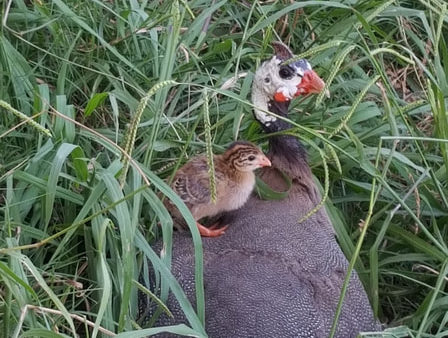
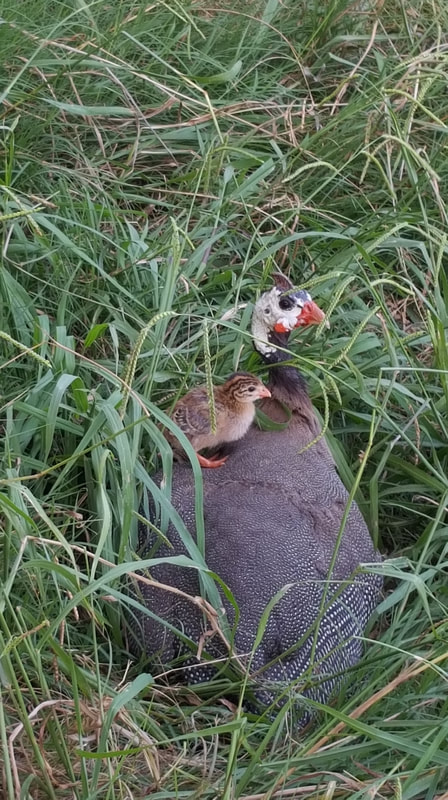
Guineas are indigenous to Africa, and they are odd  fowl. Most people have never heard of them and they are hard to describe…. they look like a cross between a turkey, a teradactyl, and a football (yes, their body is shaped like one). There are two types of people when it comes to guineas… those that love them and those that don’t.

Let’s just get the dirt out on ’em now:

  • They can be loud
  • They can be bullies
  • They can be roamers
  • They are stupid as a box of rocks
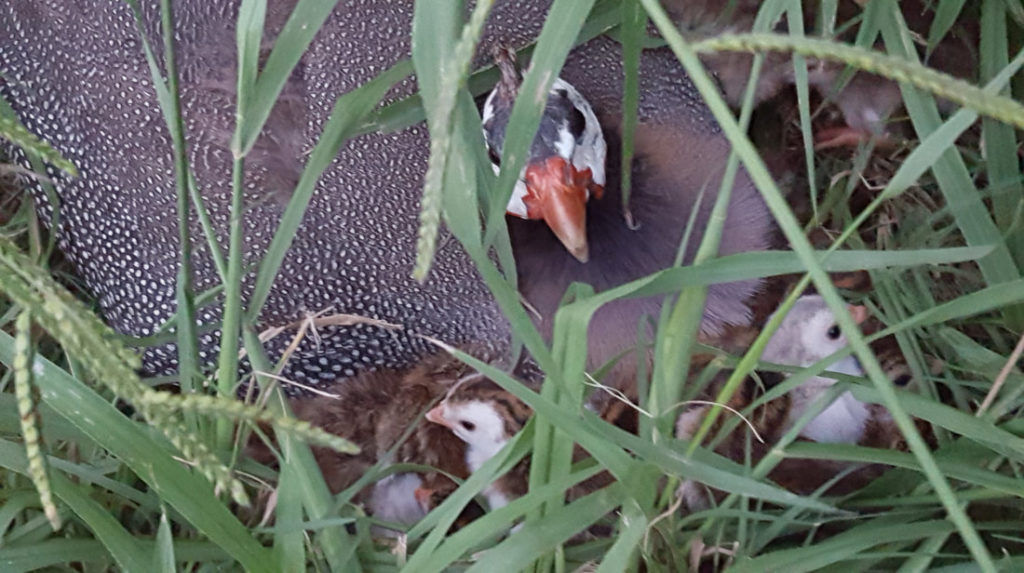
  • The adults have a face only a mama could love (but the babies are adorable!)
  • Sadly, they do not eat squash bugs or cucumber beetles
  • While they are very good at procreating, they are NOT good at keeping track of their babies after they’ve hatched.
All that to say, I am in the league of lovers when it comes to these birds. In my book, their assets outweigh their issues. Guineas are by far the best pest control for larger farmsteads. Yes, they may roam if they need food (they are great foragers), so they may not be ideal for a 1-2 acre farmstead…. but for larger acreage, they generally don’t travel more than 5 acres or so. Since we’ve had ours, we’ve had nearly zero issues with grasshoppers. We also came to realize that they do a magnificent job of eliminating and controlling ticks, fleas, and snakes. Copperheads, a poisonous snake found in this part of Texas, are especially common here. Since the addition of Guineas to our farm, we have had no issues with snakes (barring the occasional large rat or chicken snake). Ultimately, we estimate that they save us roughly 1200$ per year on pest control, without the use of harmful chemicals…. not to mention preventing the garden vegetation devastation from the hoppers.

​Secondly, they are pretty remarkable watch dogs. Although they are a dull bunch of crayons in the knowledge box, I’d have to give them an A+ for being observant. They warn the free roaming chickens when a bird of prey is nearby, and the chatter can get pretty raucous if there is a new person or a new dog on the property. They are blind as bats at night, so most attrition occurs thru night time predation. During they day, they are actually quite good about banding together and making their cumulative appearance look (and sound) large and menacing. I once saw a group of them chase a coyote off with his tail between his legs! I can’t imagine a flock of chickens doing the same thing.

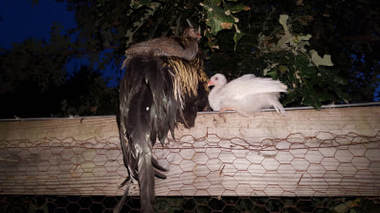
I can’t really say much about the bullying. In my book, they really aren’t much worse than some chickens and roosters are. Our guineas have been raised in the presence of chickens, so there really appears to be a symbiotic relationship between the two species. Last year, I actually had a rooster RAISE a handful of guinea keets (the babies). It was truly remarkable… especially watching how kind he was to them (note in the picture: the teen guinea keet sleeping on his back at night).

Guineas are prolific egg layers. They lay eggs until the nest is overflowing with 40-60 eggs… at which point they commence to sitting on them. Unless they get scared off, a guinea will sit for about 25-28 days on her pile of progeny. She is quite protective unless she fears for her life. Usually, about 30-40 babies hatch, and here is where some of the trouble starts. God clearly knew what he was doing…. giving them that many babies… because it takes that many to get just a handful of survivors. Apparently, guineas cannot count, and for the first few weeks post nesting time….. little feathered popcorn sized keets get left everywhere to die. It’s tragic… especially to my tender heart. So, whenever I find a nest (they are ground nesters, and do a pretty darn good job of camouflaging), I watch it closely and mark the days til the estimated hatching occurs. Once that happens, I herd them all (or catch them up) into a safe pen for a few weeks until they are both big enough and strong enough to survive. Despite my best efforts, only a small percentage ever reach adulthood. The parents are an odd mix of aggressively protective and negligently passive. This year and last year, I think the inbreeding of our guinea clan has actually led to either an increase in IQ or better parenting skills. Regardless, we are heavy in the guinea inventory…… real heavy. In past years, we have averaged 8-14 adult guineas at any one time. Today…. well, I’m just not sure exactly how many we have, but it’s over 30 for sure. Guineas are tree roosters at night, and as winter approaches, so usually do the bobcats and owls. Our livestock guard dogs do an excellent job of keeping ground predators away, but nighttime arboreal predators are a harder thing to manage. I still doubt we will lose that many to natural attrition. Next spring, I feel certain that I’m going to be looking for homes for the new batches of keets that will start hatching in June. As much as I love having them around, too much of a good thing is, well….. too much.
FARFA

Liz James · October 9, 2017 ·

I hardly know where to begin. I am so far behind on all the wildly magical things going on in our life that this Summer has somehow morphed into Fall. I can hardly recall a year that has gone so quickly in my adult life.

I’ve always said I could be a professional student if only I was independently wealthy. Well, We’re still not independently wealthy, but we have somehow begun building a life that is allowing me to explore my passions and get paid. I pinch myself occasionally. Is this really me, getting to do this?

Pharmacy has been good to me ya’ll, but it’s no walk in the park. There is a reason it’s listed among the Top 10 Professions most likely to commit suicide. It’s a high stress job with long hours and demands 100% perfection. No surprise that the burnout rate is also remarkable. I am tremendously blessed with a husband who enjoys his job and has encouraged me to pursue what pulls at my heart.  It is a gift he has given me this year… and a timely one at that!

At the end of September, I was fortunate enough to attend The 2017 Farm & Food Leadership Conference. Blessedly, this national event was held in nearby McKinney, Texas.

FARFA…. Farm & Ranch Freedom Alliance is a national organization supporting independent family farmers. It works to protect a healthy and productive food supply for American consumers.  FARFA is an advocate for independent farmers, ranchers, livestock owners, and homesteaders, as well as the consumers who support them.

Ya’ll, you’d hardly think this organization would be necessary. We all need food and farmers. Shouldn’t it be easy to farm enough nutritious food to feed our huddled masses? Let these statistics sink in:
*The average age of a farmer in the United States is 65 (in Texas it’s 58)
*Soil depletion (of minerals) and hybridization of seeds has decreased the nutritional value of commercial fruits and vegetables by 50-70%.
*The GDP spent on healthcare used to be 2.5%. It is now a whopping 18%, due largely to quality of food.
*Farmers too rank in the Top 10 Professions most likely to commit suicide.
*Non-sustainable farming practices expose farmers and farm families to a tremendous amount of chemicals including (but not limited to) pesticides, herbicides and fungicides. Farmers have an elevated risk of developing non-Hodgkin lymphoma, leukemia, multiple myeloma and soft tissue sarcoma. They also have higher rates of brain cancer, stomach cancer, prostate cancer, skin cancer, Parkinson’s Disease, and various Auto Immune Disorders.

This AMAZING Conference covered so many facets of Farm to Table Education. There were so many education opportunities, but not nearly enough time to attend each session. I settled on those that pertained directly to our farm and the direction we are headed.
*Q&A Session on Cooperatives
*Growing sustainable grains (not surprisingly, Einkorn Wheat was a large part of this discussion… one of the reasons Young Living remains committed to producing healthy grain options for its members)
*Activating your Microbiota for Health (So excited to see this topic offered at a farm conference!!) This is truly one of the most important things we can do to be healthy, and it is the reason I offer monthly Gut Health Classes .
*Opportunities for Military Veterans and Young Farmers. Did you know that there are really some amazing opportunities offered to those who want to farm but have no idea how or where to start? There are even opportunities (in the form of grants, education, low interest loans, and equipment for disabled farmers) available thru various programs. Healing (both emotional and physical) occurs when you connect with the earth. This is not some new age mumbo jumbo…. this is real scientific fact.
*Fermentation techniques taught by the incredible Nancy Falster of Falster Farms. Gut health again!!! I LOVE IT! Fermented foods were incorporated into the food supply for thousands of years in every single culture. Modern culture had nearly eliminated it, to the detriment of our gut health… I hope it’s making a comeback!
*Alternative revenue streams for small farmers. This falls right into our vision for our farm. It’s too early to reveal what is in my heart, but this topic was so interesting and helpful. City folk are simply craving connection with their food and with nature. I can’t tell you the number of times we’ve had people come thru our gates and tell us they experience a type of peace (on our farm) they don’t normally feel in their day to day lives.
*Sustainable home gardening. I felt like we are ahead of the curveball on this topic. We are the king and queen of composting, and are figuring out what works for organic pest control around here.
*20 other topics ranging from Legislative policy to Home Brewing and Distilling.


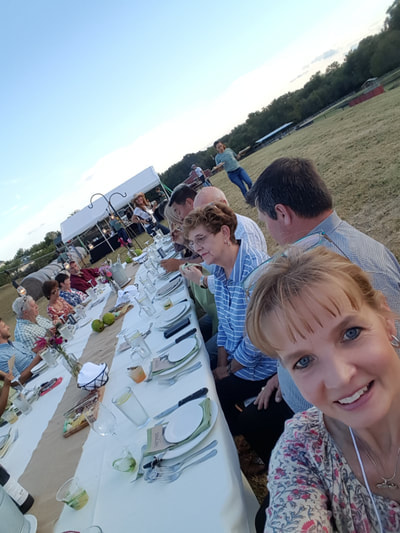
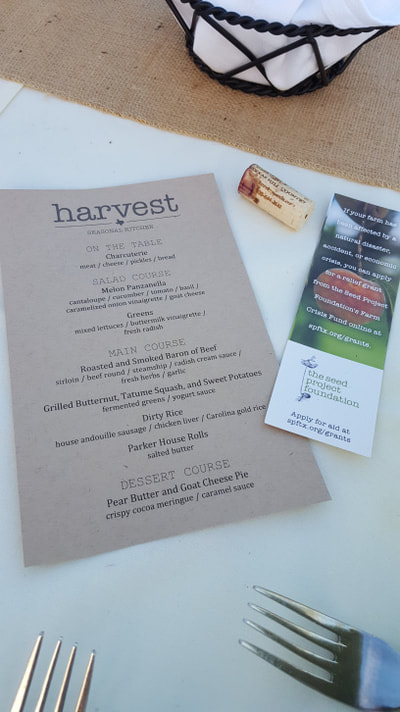
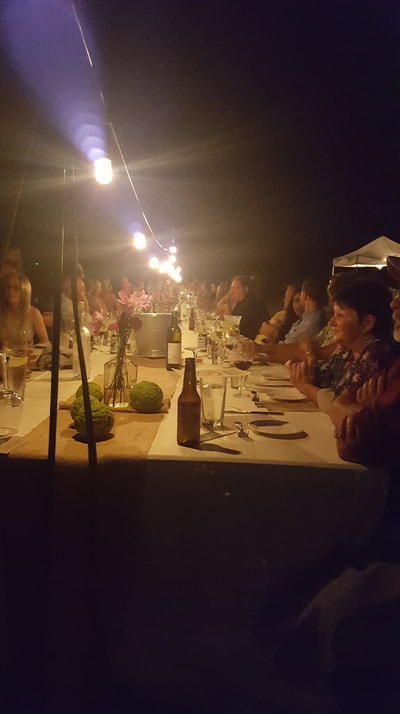
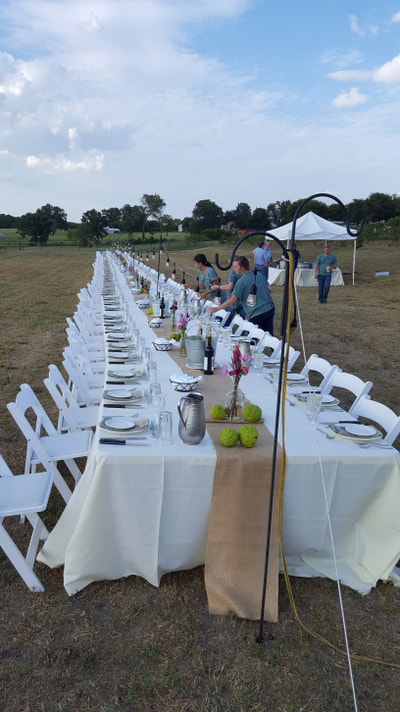
I almost forgot… the most amazing Farm to Table dinner too. This was our first, but it won’t be our last. Dinner for about 150 people at Pure Land Organic Farm , catered by the incredible sustainably (and locally) sourced ingredient restaurant in McKinney: Harvest.

Connecting people with a common bond. Farmers, Ranchers, Nutritionists, Chefs, Sociologists and Anthropologists, Beekeepers, Backyard gardeners with a vision, Inner City gardeners with a plan for their community.  This event paid no heed to political affiliation, ethnicity, age, or religious beliefs. Our goal is the same. To learn. To provide sustainable nutritious food for the body, mind, and soul to all walks of life.  Breaking bread together never tasted so good.


Listen To Mama

Liz James · August 15, 2017 ·

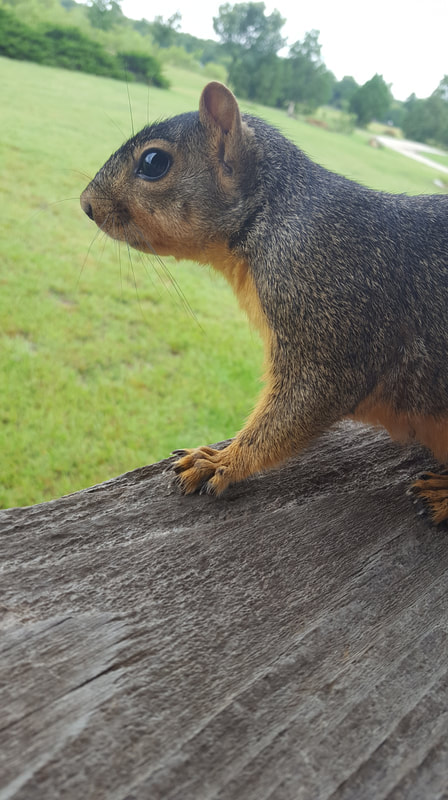
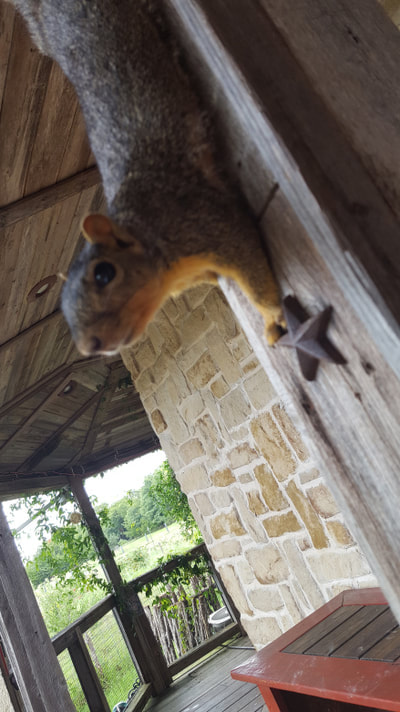
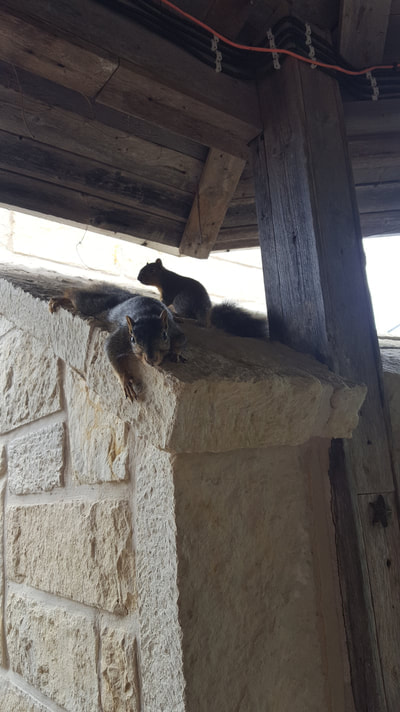
Yesterday was such an awesome day! So fun…. Henri brought the kid(s) down for a meet and greet. Honestly, I’m not sure if there were one or two babies. Briefly, it seemed like there were squirrel sightings all over our porch. In retrospect, I believe there might have been two. Teenage squirrels are not the best climbers. It’s definitely a skill that is honed with age and experience. Neither is jumping and leaping….. I would have to give them a solid ‘B’…. and that only for attempting everything their mama asked of them.

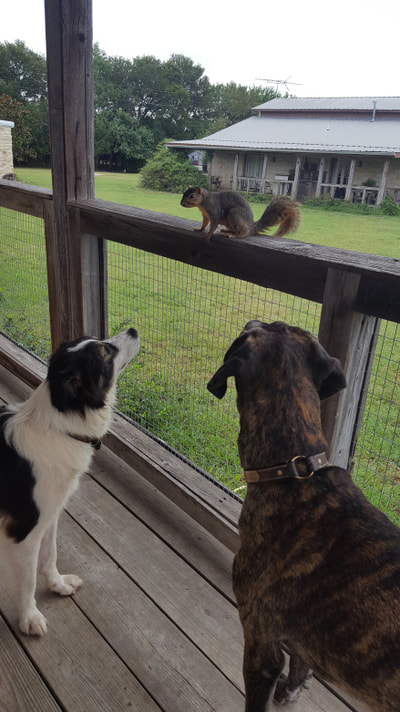
Henri chattered pretty much incessantly all morning. She scolded, coached, and cajoled them, and then would talk to me. Her body language was so very interesting. She wanted to make it very clear to ‘the kids’ that I was a friend. Henri jumps on me occasionally…. maybe once or twice a month. Yesterday, she bounded back and forth between my shoulder and the porch railing as if to say, “See, she’s harmless!”. She also spent time with the dogs, talking to them ….. venturing close to them…. and even once left the porch railing to run between their legs.

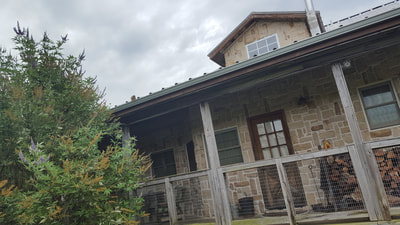
In addition to introducing the teens to me (and the dogs), Henri also made a clear effort to show them the food stations, where the water was, and how to get from the roof to the porch (there are a few ways she does this). The coaching lasted well into the afternoon…. a surprise……she usually takes a siesta during the heat of the day. I’m fairly certain she was giving them all the info so that she could shut off the free ride/milk supply. They are about the age Henri was when we began acclimating her to living outdoors. I guess we handled that right as adoptive squirrel parents!

​I’m praying that these little guys/gals will decide to relocate to the trees behind our house and not choose to live on the porch with Henri. Everything I read states that squirrels generally prefer solitude vs running around as a pack (technically, a scurry)….. and I hope it’s true.  I don’t want to get a reputation as the crazy squirrel lady!

Who Gives A Fig?

Liz James · August 9, 2017 ·

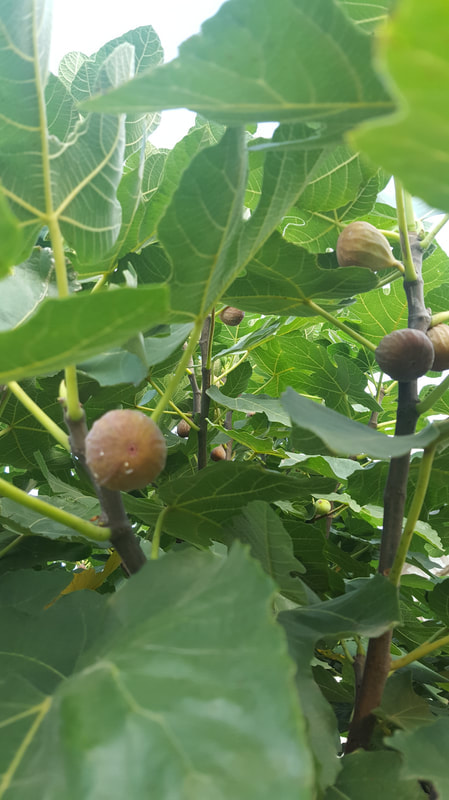
Yowsers! We have figs. In fact, we have a disproportionate amount of figs. We have figs coming out our ears all from one very happy (but unknown species) tree.

We planted the little gal (there are male and female plants…. the girls being the producers) about 7 or 8 years ago, and it got off to a very rocky start…. multiple times. Every winter it appeared to die back to the brink of true death until two years ago. Last year we got spoiled by simply eating all we wanted off of the tree. There were enough to pick and eat daily, but not enough to make anything with. This year, the stars must have been lined up right because we have whopper crop this year. I’ve had to get on the ball and start collecting fig recipes. There are some amazing ones out there! 

I’ve found this collection at BonAppetit (the figs with bacon and chile is on my ‘to do’ list… Wow… I’ll bet those flavors pop!)

I found a ‘cheeky chilli pepper fig chutney‘ ….. you know anything chef Jamie Oliver puts together is going to be good. My dear friends Aryanne and Martin gave us one of Jamie’s cookbooks several years back. The man knows how to use his ingredients, no question about it. I love that he focuses on using fresh ingredients and prefers seasonal cooking (cooking with what is available at the appropriate season of harvest). I do think that was God’s intention anyway. We were never supposed to eat the same thing 365 days a year like we are prone to do now. It’s probably one of the reasons  the standard American diet is typically out of control and obesity and other body system dysfunctions continue to plague our country. If it’s not fresh, it’s likely filled with preservatives and other chemicals to make it taste more appealing.

And finally…. a ‘pear-fig-ginger-jam (with ahem… a dash of whiskey)‘ that we’re gonna have to try. That sounds like it would be incredible over a block of yogurt cream cheese (labnah) or cream cheese with some crackers.

Figs are a food of the Bible, and are loaded chock full of health benefits. God is good that way… giving us just what we need.  Dried figs… the most common way people eat chem…. are even more densely loaded with nutrients than fresh. Although I like to eat them both ways, fresh from the tree is my preferred route of nourishment.

The Fig low down:

  • high in fiber
  • great source of magnesium, manganese, copper, potassium, and calcium (1 dried fig = the calcium in an egg!)
  • rich in vitamin K and B6
  • contain powerful antioxidants that neutralize disease and dysfunction causing free radicals ( just like some oils I know, love, and use!)
  • According to Dr. Mercola’s website figs have some other more unusual uses too… ” Traditional medicine around the world has made use of figs as poultices on tumors, warts, and wounds. The fruit and leaves have been pulverized and gargled to relieve sore throats. Fig extracts and dried figs have been found to contain ingredients that protect the heart, regulate kidney and liver functions, lower blood pressure, lower incidences of macular degeneration, and inhibit some cancers, specifically post menopausal breast cancer.”  Holy smokes Figman…. my cornucopia of wellness tools just got a little fuller!

Any of my local friends want some figs?  Give me a shout and this farmgirl can hook you up!

Take care, and have a blessed day,
​liz

Brushstrokes

Liz James · May 12, 2017 ·

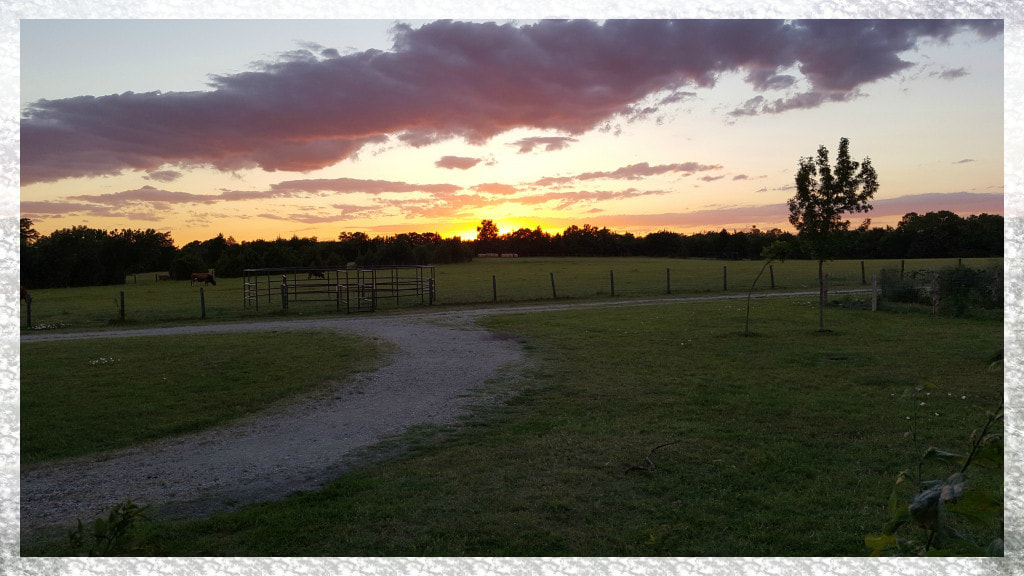
I’m never ceased to be amazed by God’s hand in creating natural beauty. Coming home from work last night I snapped these two pictures. The interesting thing is that the first pic is a sunset, BUT it is a reflection of the sun… and it is on the east horizon. I drove further up the driveway, and then took a pic of the west…. the actual sunset itself. I don’t think you see this kind of thing very often…. at least I don’t.

East Side Sunset
West Side Sunset

Yesterday, it was everywhere! ….. just beautiful. These pictures don’t even do the brushstrokes justice.

Y’all have a grand and glorious weekend,
Liz

  • « Go to Previous Page
  • Page 1
  • Interim pages omitted …
  • Page 20
  • Page 21
  • Page 22
  • Page 23
  • Page 24
  • Go to Next Page »

Book Your Health Coaching CallBook Now

Elizabeth James

469.425.9091

ebj0203@gmail.com