• Skip to primary navigation
  • Skip to main content
Book Your Health Coaching Call
Good Medicine

Good Medicine

Holistic Health Coaching

  • Home
  • Liz James
    • About Liz
    • Coaching
    • Book a 20 Minute Complimentary Coaching Call
  • Favorite Resources
    • BlessedByHisBlood
    • Young Living
    • Fast Like A Girl Certified Coach
    • Order supplements through my Fullscript store
    • Green Pasture (Coupon: Health10)
    • RogersHood Apothecary (Coupon: BEABLESSING for 10% off)
    • DolphinMPS
    • Company
    • Abundance
  • My Books
    • Becoming Your Own Health Detective Volume 1
    • Becoming Your Own Health Detective Volume 2
  • Blog
  • Cart

Young Living

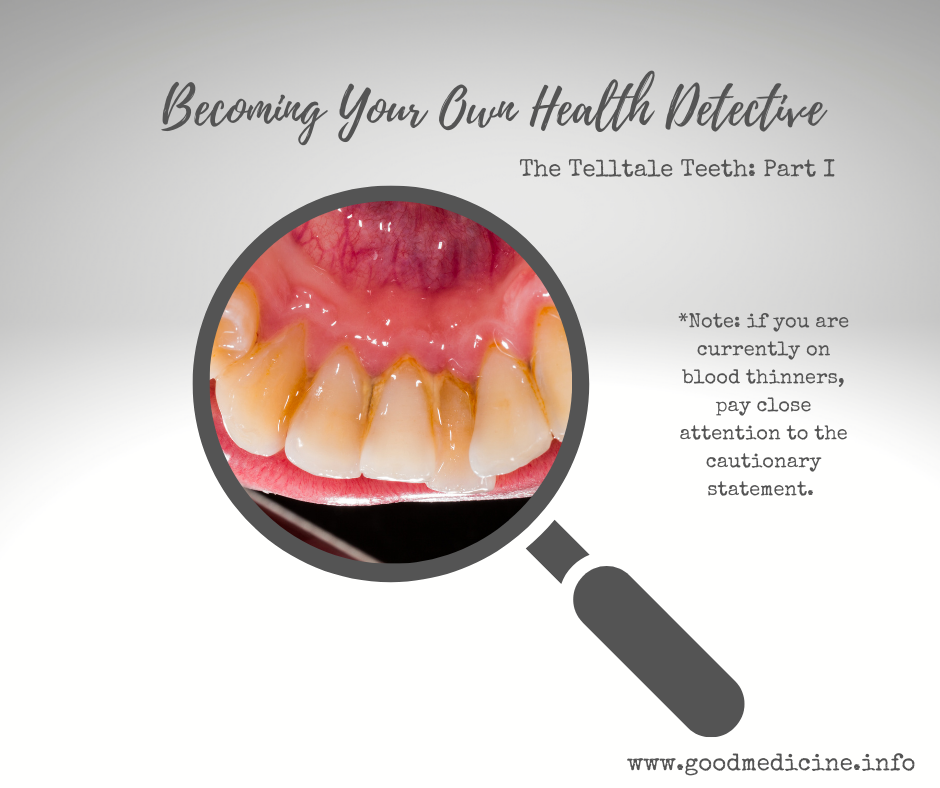
Health Clues in Your Teeth – Part 1

Liz James · April 21, 2021 ·


I find teeth mysteriously fascinating, but it used to not be that way. Teeth (and toes) used to activate my gag reflex before I began learning about their wealth of clues. Now I find them to be wonderful guides and tools! 😍


This particular clue is so very important that it’s the only one we are going to discuss today. Any time you have something that changes in or on your body, it should become an instant signal that something has shifted metabolically or physiologically, and the best course of action is to “root out”  the cause before bigger symptoms take place.


Perhaps you’ve been to the dentist and the hygienist has remarked that you have more plaque than normal on your teeth, or you’ve looked in the mirror and noticed this yourself. Hopefully this is not the case because you have loved on your oral cavity with Thieves toothpaste, mouthwash, and floss! Sometimes tho, even the best of oral care products doesn’t stop plaque build up. If that has happened, it’s time to start digging for the root cause! 


*But first, A little history about teeth and nutrition!  Before there was refrigeration or even toothpaste, there were remote people groups worldwide who had solidly amazing teeth and mouths. This is well documented in the works of a dentist from the early 1900’s named Dr. Weston A Price. Dr. Price worked tirelessly to prove that oral decay and degeneration was due more to nutritional deficiencies than to lack of oral hygiene. His work revealed that fat soluble vitamins A and D and a probiotic rich diet were key contributors to healthy mouths, more so than daily brushing. An interesting unifying factor amongst all the people groups he studied was that all had some form of probiotic rich daily food source…. Something that the standard American diet falls woefully short in today.


*What does diet have to do with plaque on the teeth and why is it a clue? Here is where the clue becomes quite important! A diet rich in properly fermented foods (think traditional kefir, sauerkraut, miso, yogurt, cod liver oil, kimchi, kombucha etc) is a valuable tool for supporting a healthy gut. If the gut is loaded with healthy bacteria, the body is able to create other vitamins which are necessary for healthy living. For the course of THIS discussion, that would be Vitamin K2. #life9probioticforthewin


Vitamin K2 (aka menaquinone-7 , or activator X) is an underappreciated nutrient, in that it is vital for building strong bones and teeth. It does this by carrying calcium out of soft tissue (think brain and vascular system) and carrying it IN TO bones and teeth.
Stick with me ya’ll😍….. We are getting to the super important part! 


K2 activates something called osteocalcin and matrix-Gla protein. Matrix-Gla is present in saliva and its activity arrests the dental plaque calcification process….. It is also present in the blood, and when activated by vitamin K2, helps to remove plaque in arteries! Isn’t it interesting how matrix-Gla prevents both plaque on teeth AND plaque in arteries??


*If plaque continues to build up on teeth despite your best efforts in oral care, it may indicate a deficiency of vitamin K2, which may be putting your vascular system at risk. 


*A 2016 study found that matrix-Gla protein inactivation ( as the result of inadequate K2) led to a higher risk of death due to cardiovascular disease. 
*Now to be clear, plaque on teeth may happen as a result of poor oral care or a few other reasons too, but if you’ve never had plaque issues before, and now you do….. It may be time to dig a little deeper to protect your overall well being! 


Other signs or symptoms of a Vitamin K2 deficiency may include:
*Bruising easily
*Bleeding excessively (including a heavy menstrual flow)
*Osteopenia, osteoporosis or frequent fractures
*A mouth full of cavities
*Heart disease
*Diabetes or pre-diabetes
*Autoimmune disease flare ups (there is evidence that a Vitamin K2 deficiency aggravates autoimmune diseases….. especially Rheumatoid Arthritis)
*Forgetfulness ( a Vitamin K2 deficiency is linked to Alzheimer’s Disease due to the calcium plaque build up within the brain)
*O blood type – lacks some clotting factors in blood, so K2 supplementation is helpful


If you have noticed regular buildup of calcified dental plaque…..
👉Talk to your favorite healthcare professional and consider asking for a cardiac calcium score
👉Get your vitamin D levels checked
👉There currently isn’t a K2 specific lab test to check for deficiency. 
👉Consider supplementation of Vitamin K2 (recommended dietary allowance is 60-120mcg/day)
NOTE: If someone is on blood thinners, talk to a health care professional before starting Vitamin K2 as a supplement. It does affect blood coagulation, and therefore may interact with blood thinners.
And YAY you!!!….If you are currently taking Young Living’s  CardioGize, Master Formula or Super Cal Plus, you’ll find that these three already contain K2 within each formulation (100mcg, 50mcg, and 30mcg respectively). 


As always, I am not a doctor and cannot diagnose, treat, or offer to cure you. I can only help you be a top notch detective for your personal health and wellness. 
xoxo~ liz

#sharingiscaring
#healthcluesyoucansinkyourteethinto
#healthcluesyoucanuse
#goodmedicine
#ThanksYL
Health Clues in Your Mouth

Liz James · April 14, 2021 ·

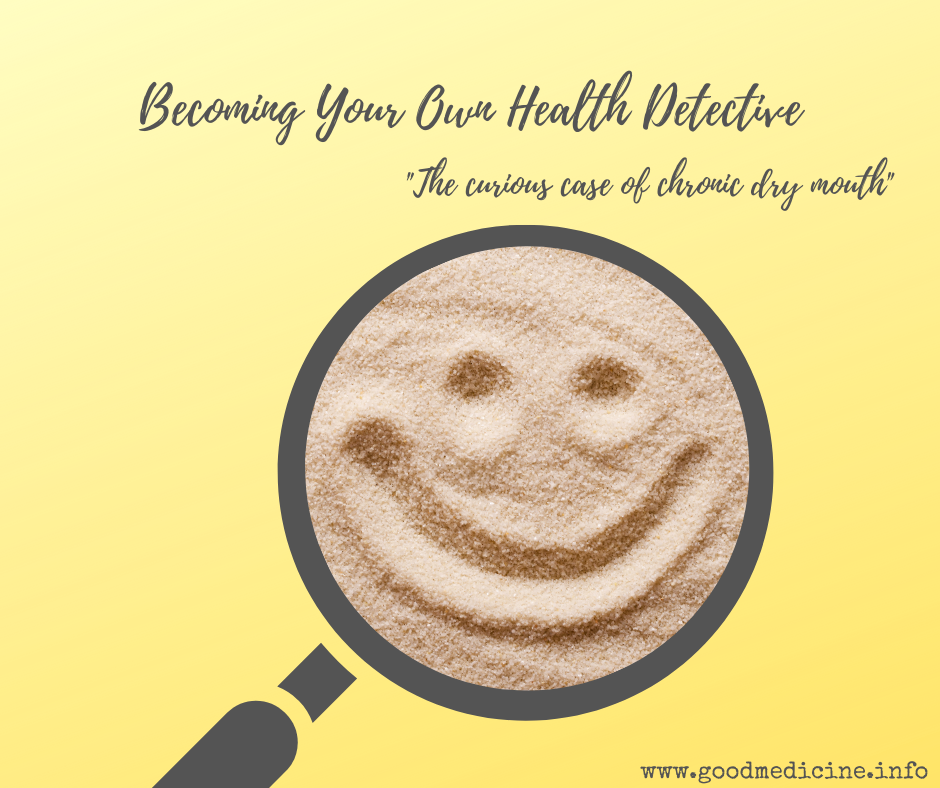
DRY MOUTH
Hippocrates said “All disease begins in the gut.” Considering the digestive system begins in the mouth, it should be no surprise that the mouth holds bountiful clues! 90% of systemic dis-ease has an oral manifestation. 
While everyone has a dry mouth occasionally, chronic dry mouth (known as xerostomia) which persists for weeks may be a symptom of an unhealthy habit, underlying health condition, or side effect from certain medications. If an insufficient supply of saliva is produced, you may notice these signs or symptoms all or most of the time:
👅Dryness or feeling a “stickiness” in the mouth
👅Saliva that seems thick and stringy
👅Bad breath
👅A dry or grooved tongue
👅A chronic dry or sore throat
👅A change in sense of taste
👅Difficulty chewing, speaking, and swallowing


Common habits and health conditions that may cause dry mouth:
👉Dehydration 
👉A thyroid condition ….both hyper or hypo thyroid.  Roughly 50% of people who have persistent dry mouth have a thyroid disorder.
👉Sinus problems which make people breathe thru their mouth
👉Radiation side effects
👉Tobacco and alcohol use
👉Diabetes
👉Stroke
👉Yeast Infection (remember your tongue clues!)
👉Alzheimer’s and other forms of dementia
👉Autoimmune diseases. An autoimmune disease called Sjogren’s syndrome causes dry eyes and dry mouth, and often accompanies other autoimmune disorders like lupus and rheumatoid arthritis. 


Unfortunately, over 400 relatively common prescription and over the counter medications cause dry mouth as a side effect. Some of the more common classes of medications that may contribute to the problem include:
💊Chemotherapy agents
💊Decongestants
💊Antihistamines
💊Pain killers
💊Muscle relaxers
💊Anti hypertensive medications (beta blockers, calcium channel blockers, and diuretics)
💊Antidepressants
💊Oral inhalers (for the lungs)
💊Medications treating Parkinson’s and Alzheimer’s
💊Certain seizure medications
💊Medication for motion sickness
💊Bladder control medications
Interestingly, older age is also listed as a reason for dry mouth, but I disagree. Considering that the average elderly patient is on 9-13 prescriptions, the odds of dry mouth as a side effect to one or more of the above medications is quite high. When combined with the health conditions and/or habits listed above, dry mouth could occur at any age, the odds simply rise with the number of health conditions and medications involved. A healthy 70+ish individual (no meds / no underlying conditions) rarely has issues with dry mouth!  


Dry mouth is an interesting clue because it has a cause and effect cycle. The longer dry mouth persists, the more problems chronic dry mouth can cause. Saliva is a necessary component of the digestion process. It washes away food and helps neutralize acid produced by bacteria in the mouth. It also has the capability to both repair tooth enamel thru remineralization (if the minerals are available thru good nutrition!), and wash out plaque. Continual dry mouth will eventually lead to dental erosion, plaque formation, decay, and gum disease, all of which can ultimately lead to more chronic dis-ease throughout the body. It’s a vicious cycle best remedied if possible.
Dry mouth is rarely discussed as a possible side effect from medications. In my opinion, it is one of the most important side effects to be aware of as gum and dental disease plays such an enormous role in overall health. Side effects of medications are some of the biggest reasons it is a good idea to look first for holistic ways to heal as opposed to quickly jumping on to the prescription drug carousel.  
I am personally a huge fan of the Thieves oral care line (toothpaste, mouthwash, and floss) as a way to maintain my pearly whites (and gums!). One of the oft recommended remedies for dry mouth is sucking on lozenges or hard candy. Many common lozenge options are loaded with sugar which really feeds the beast of decay.

If dry mouth is a concern, here are some tips and tricks:
🏆Stay well hydrated! Perk up your water’s flavor with Young Living Vitality drops that are so easily squirted into water. Lavender lemonade, Grapefruit Bergamot (my fave!), or for an added boost of energy, try the clean caffeine boosted Jade Lemon Berry or Spearmint Tangerine!  
🏆Utilize a humidifier in the bedroom and rooms you frequent. Thankfully, many of our Young Living diffusers (including the Desert Mist) also serve as a humidifier! 
🏆Keeping immune and oral health supportive sugar free Thieves Lozenges on hand to suck on.
🏆Avoid salty and dry foods that exacerbate dry mouth.
🏆Avoid tobacco and alcohol use.
🏆Regular dental cleanings from a dentist who doesn’t promote fluoride use! 
Dry mouth is both a clue for the past AND a clue for what may come in the future if dry mouth is allowed to persist, so it’s quite important to get it under control whenever possible!  
xoxo~ liz

#sharingiscaring
#healthcluesyoucanuse
#goodmedicine
#ThanksYL
Breath Clues part 2

Liz James · March 23, 2021 ·


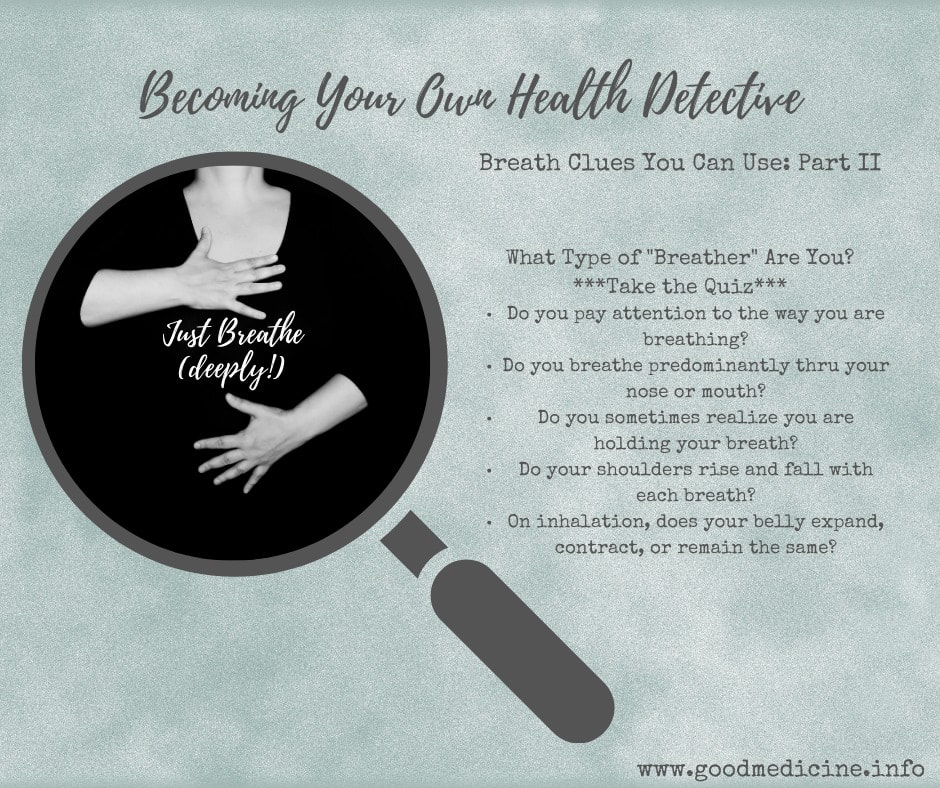
Becoming aware of HOW you breathe is important both as a health clue and an (inexpensive and valuable!) wellness tool. 


Did you take the quick quiz on the graphic?  If not, take a moment to do so!
Statistically, chronic shallow (mouth, neck, and upper chest) breathing is the most common type of breathing in Westernized cultures. This type of breathing  perpetuates stress and anxiety, activates the “fight or flight” (sympathetic response),  and suppresses the immune system. 


Conversely, diaphragmatic (deep belly) breathing balances the nervous system, supports heart health, improves circulation, promotes lymphatic drainage, reduces stress, calms the mind, and brings the body back into a more homeostatic state. 
Do you notice how some people remain calm, cool, and collected while others become a tightly wound spring with every stressor? The ability to pivot from “fight or flight” to “rest and digest” is incredibly important to health outcomes! ( Pharmacist tip: Learning to do this is helpful in keeping you away from the pharmacy!)  


The longest nerve in the body is called the  👉vagus nerve 👈. It runs from the brain thru the lungs and on to the gut, and affects every organ and body system it comes in contact with along the way ….. stomach, intestines, liver, gallbladder, heart, lungs, and the immune, endocrine, respiratory, and cardiovascular systems. In other words, the vagal nerve pathway is kind of a big deal! 😍


High vagal tone is incredibly important to overall health and wellbeing….. really, it’s a use it or lose it situation. Low vagal tone is associated with increased risk for cardiovascular disease, stroke, diabetes, GI disorders, and depression. Diaphragmatic breathing increases vagal tone! 


If deep belly breathing is not something you do on the regular (ie: it’s become second nature to you), Here are a few tips and tricks:
👉 Start with just 2 minutes several times a day. 
1. Place one hand on your upper chest and the other just below your rib cage, so you can feel your diaphragm move as you breathe.
2. Inhale deeply thru your nose for the count of 6-8 seconds (or 4-5 seconds if that’s too much)…. allowing your belly to expand. Try to fill your lungs with air. NOTE! The hand on your chest should remain as still as possible.
3. Slowly exhale through your nose for the count of 6-8 (or 4-5) drawing your belly button in and down as your abdomen moves inward.
4. As you breathe inward deeply, envision oxygen flowing inward and recharging your body. As you exhale, envision all the stress and tension leaving your body. 
5. Practice this for 2-3 minutes at a time (20-30 breath cycles). Graduate to 5 minutes as you are able! 


Scientifically noted benefits of diaphragmatic breathing can be further enhanced when you pair your breathing practice with Young Living essential oils known for their supportive roles in  health and wellness goals:
🌿Want to improve mood? Pair your practice with Citrus Fresh eo blend! 
🌿 Looking for better concentration? Try Brain Power or Frankincense!
🌿 Looking to better manage pain? (Yes, deep breathing helps with this too!) Add in PanAway or Deep Relief
🌿 Wanting to lower your blood pressure (Yep, deep breathing exercises does this too!)….. support happy vascular system breathing practices with Joy, Aroma Life, Ylang Ylang, or Lavender.
🌿Lowering blood sugar (amazing what regular deep breathing may do! Consider deep inhalations of Coriander, Melissa, or Christmas Spirit! 
🌿 Improve your sleep. Pair pre bedtime deep breathing with a diffuser loaded with Cedarwood, Orange, and Lavender! 
🌿  Use as a tool in your weight loss journey. Have you tried Grapefruit essential oil or Thieves on the bottom of the feet?
🌿 Strengthen the pelvic floor muscle (which will also improve bladder and bowel elimination function!). Consider pairing with Clary Sage, Cypress, or (Digize 👈 for colon support). 
🌿Better lymphatic flow?…. You’ll love Lemon essential oil (both regular and vitality!)! 


Noticing how you are breathing, and then making corrections as needed is a simple, but VIP wellness tool and health clue! Just as diaphragmatic breathing is helpful, chronic shallow breathing will exacerbate many health problems, and over time, may also contribute to lung infections and lung diseases.
Just breathe…… deeply! 
xoxo~ liz


👈 if you’d like to know more about additional breathing practices or the oils mentioned above, let’s chat!


#sharingiscaring 
#Godgaveusthetools 
#goodmedicineisgreatbreathinghabits
#goodmedicine Breath Clues: Part II
Becoming aware of HOW you breathe is important both as a health clue and an (inexpensive and valuable!) wellness tool. 
Did you take the quick quiz on the graphic?  If not, take a moment to do so!
Statistically, chronic shallow (mouth, neck, and upper chest) breathing is the most common type of breathing in Westernized cultures. This type of breathing  perpetuates stress and anxiety, activates the “fight or flight” (sympathetic response),  and suppresses the immune system. 
Conversely, diaphragmatic (deep belly) breathing balances the nervous system, supports heart health, improves circulation, promotes lymphatic drainage, reduces stress, calms the mind, and brings the body back into a more homeostatic state. 
Do you notice how some people remain calm, cool, and collected while others become a tightly wound spring with every stressor? The ability to pivot from “fight or flight” to “rest and digest” is incredibly important to health outcomes! ( Pharmacist tip: Learning to do this is helpful in keeping you away from the pharmacy!)  
The longest nerve in the body is called the  👉vagus nerve 👈. It runs from the brain thru the lungs and on to the gut, and affects every organ and body system it comes in contact with along the way ….. stomach, intestines, liver, gallbladder, heart, lungs, and the immune, endocrine, respiratory, and cardiovascular systems. In other words, the vagal nerve pathway is kind of a big deal! 😍
High vagal tone is incredibly important to overall health and wellbeing….. really, it’s a use it or lose it situation. Low vagal tone is associated with increased risk for cardiovascular disease, stroke, diabetes, GI disorders, and depression. Diaphragmatic breathing increases vagal tone! 
If deep belly breathing is not something you do on the regular (ie: it’s become second nature to you), Here are a few tips and tricks:
👉 Start with just 2 minutes several times a day. 
1. Place one hand on your upper chest and the other just below your rib cage, so you can feel your diaphragm move as you breathe.
2. Inhale deeply thru your nose for the count of 6-8 seconds (or 4-5 seconds if that’s too much)…. allowing your belly to expand. Try to fill your lungs with air. NOTE! The hand on your chest should remain as still as possible.
3. Slowly exhale through your nose for the count of 6-8 (or 4-5) drawing your belly button in and down as your abdomen moves inward.
4. As you breathe inward deeply, envision oxygen flowing inward and recharging your body. As you exhale, envision all the stress and tension leaving your body. 
5. Practice this for 2-3 minutes at a time (20-30 breath cycles). Graduate to 5 minutes as you are able! 
Scientifically noted benefits of diaphragmatic breathing can be further enhanced when you pair your breathing practice with Young Living essential oils known for their supportive roles in  health and wellness goals:
🌿Want to improve mood? Pair your practice with Citrus Fresh eo blend! 
🌿 Looking for better concentration? Try Brain Power or Frankincense!
🌿 Looking to better manage pain? (Yes, deep breathing helps with this too!) Add in PanAway or Deep Relief
🌿 Wanting to lower your blood pressure (Yep, deep breathing exercises does this too!)….. support happy vascular system breathing practices with Joy, Aroma Life, Ylang Ylang, or Lavender.
🌿Lowering blood sugar (amazing what regular deep breathing may do! Consider deep inhalations of Coriander, Melissa, or Christmas Spirit! 
🌿 Improve your sleep. Pair pre bedtime deep breathing with a diffuser loaded with Cedarwood, Orange, and Lavender! 
🌿  Use as a tool in your weight loss journey. Have you tried Grapefruit essential oil or Thieves on the bottom of the feet?
🌿 Strengthen the pelvic floor muscle (which will also improve bladder and bowel elimination function!). Consider pairing with Clary Sage, Cypress, or (Digize 👈 for colon support). 
🌿Better lymphatic flow?…. You’ll love Lemon essential oil (both regular and vitality!)! 
Noticing how you are breathing, and then making corrections as needed is a simple, but VIP wellness tool and health clue! Just as diaphragmatic breathing is helpful, chronic shallow breathing will exacerbate many health problems, and over time, may also contribute to lung infections and lung diseases.
Just breathe…… deeply! 
xoxo~ liz

#sharingiscaring 
#Godgaveusthetools 
#goodmedicineisgreatbreathinghabits
#goodmedicine 

6 Self-Care Rituals to Help You Relax, Recenter & Reignite Your Energy (With Essential Oils!)

Liz James · February 27, 2021 ·

by Stephanie Gregory

Have you ever felt like you’re running on empty? Like the world is spinning faster than you can keep up? Friend, I’ve been there—and I want you to know something important: you’re not alone.

In my work with women overcoming anxiety and burnout, I’ve learned that prioritizing self-care isn’t just a luxury—it’s a spiritual act of stewardship. God didn’t design us to survive, but to thrive.

The Quiet Power of Intentional Rituals

Over the last decade, I’ve helped hundreds of women reclaim their peace through faith-based holistic support. Today, I’m sharing six transformative practices that have been game-changers for my clients and myself.

1. Daily Soul Check-Ins: Listening to Your Inner Voice

Before the noise of the day takes over, create a sacred space for reflection. This isn’t just self-care—it’s hearing God’s whispers.

Ask yourself:

  • What do I need to surrender today?
  • Where is God inviting me to rest?
  • What boundaries need gentle reinforcement?

Essential Oils for Grounding:

  • Sacred Frankincense (for spiritual connection)
  • Cedarwood (for clarity and presence)
  • White Angelica (for emotional protection)

2. Meditation: Rewiring Your Brain through Faith and Presence

Meditation isn’t just a wellness trend—it’s a biblical practice of stillness. When we quiet our minds, we create space to hear God’s guidance.

Oils for Spiritual Alignment:

  • Valor
  • Northern Lights Black Spruce
  • Peace & Calming

3. The Healing Power of Gratitude

Gratitude is a powerful spiritual discipline. It shifts our focus from what’s wrong to God’s abundant grace.

Try this: Each morning, write three things you’re grateful for. Let this be your prayer, your worship.

4. Emotional Energy Clearing

Your emotional space matters. Just as we cleanse our physical environment, we must tend to our spiritual and emotional landscapes.

Emotional Release Ritual:

  • Use Release or Palo Santo for energetic cleansing
  • Apply White Angelica for spiritual protection
  • Reflect on what you’re surrendering to God

5. Mindful Movement: Honoring Your Body as a Temple

Movement is a form of worship. It’s about connecting your body, mind, and spirit—not punishment or perfection.

Supportive Recovery Oils:

  • PanAway
  • Peppermint
  • Cypress
  • Lemon

6. Smile and Let Joy Interrupt Stress

Did you know that smiling—even when you don’t feel like it—can release mood-boosting chemicals? It’s science meeting grace.

Oils for Joy:

  • Joy blend
  • Lemon
  • Orange
  • Citrus Fresh

Final Reflection: You Were Made to Shine

Remember, self-care isn’t selfish—it’s how we show up fully for our purpose. As I often tell my clients, “From fear to freedom” isn’t just a tagline. It’s a promise.

Your light is meant to be bright, not dimmed by burnout or overwhelm. These practices are your pathway to peace, one intentional moment at a time.

Breathe. Trust. Align.

💛 With love and faith, Stephanie

Tools:
      Grounding (bottom of your feet, back of your neck, or diffuse)….Sacred Frankincense
      Reflecting on your goals…  Envision
      Alignment or clarity…  Cedarwood
      Joy and togetherness…  Joy
     Creativity…  Lime
     Focus…  Peppermint
     Strength & security…  White Angelica
     Calm…  Lavender
     Motivation…  Motivation, Awaken, or Envision
     Passion…   Ylang Ylang
     Grounding…  Frankincense
     Positive mindset…  Lemon, Citrus Fresh
     Positive energy shift…   Abundance

Health Clues in Your Fingernails #4

Liz James · January 19, 2021 ·

Let’s wrap up nails today, shall we? 


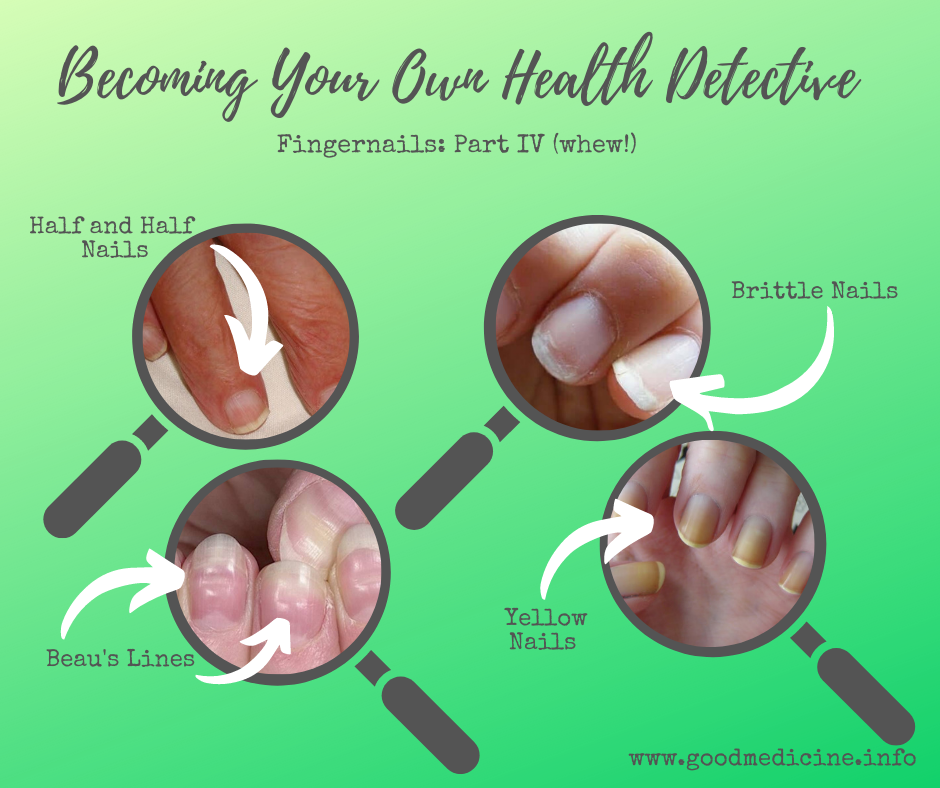
I am grouping “half and half” nails and “Terry’s” Nails into the same group, although they mean different things. Nails that exhibit lunulas that extends halfway up the nail (whiteness) while the upper half remains a darker tone are very specific for significant kidney malfunction. Terry’s nails look similar to “half and half nails” except that there will be a reddish brown band separating the extended lunula from the upper portion of the finger nail. Terry’s nails are associated with diabetes, liver dysfunction, hyperthyroidism, or congestive heart failure. In both cases, it’s time to have a medical professional involved and extensive lab work if both have not happened already!


Brittle nails are more easily managed on your own! Healthy nails require a regular diet  of quality proteins, healthy fats, minerals and water. The protein and minerals (including trace minerals) add strength to your nails. Fatty acids  and water lubricate nails and allow for a degree of flexibility. Dry skin and hair are additional signs that fatty acids are undersupplied in your diet. (This is where I personally would be reaching for OmegaGize or MindWise on a daily basis and making sure I stay well hydrated!).


Side note: if you are doing “all the things” to take care of your nails properly and you eat in a healthy manner, my next health clue would be to assess digestion. It will only be helpful to add in EssentialZyme4, EssentialZyme, AllerZyme, or DetoxZyme to maximize the absorption of the nutrients you ingest. Enzymes are our friends and they facilitate countless processes within our body.


Yellow nails….. But first!……rule out other reasons nails may be yellow tinged. Cigarette smoking or staining from fingernail polish/remover needs to be taken into consideration. True yellow nails may reflect impaired lymphatic drainage, low albumin levels, chronic sinusitis, an  immunodeficiency or Reynaud’s disease. We should all want to support our lymphatic system regardless of nail color (Do you add a few drops of YL’s Lemon Vitality EO to your water on a daily basis?) Lymphatic massage, regular exercise and deep diaphragm breathing #ontheregular are additional ways to keep the lymphatic system moving!
Immune supportive measures (again, something we should all be doing as second nature! ) might include ImmuPro, ImmuPower (EO), Thieves on the feet, ditching as much daily exposure to toxins as possible, plenty of sleep, controlling stress, and eating in a healthy manner. Thankfully, Young Living has given us so many tools to help in all of these categories!


Raynaud’s is a condition  which causes reduced blood flow to fingers and sometimes toes. Support of the circulatory system may be something to consider, in addition to increasing oxygenation opportunities within the circulatory system. Our favorite beverage, NingXia Red comes to mind as a supportive measure, as does CardioGize. Single oils that support a healthy blood flow include (but are not limited to)  ginger, cypress, eucalyptus, coriander, wintergreen, juniper, black pepper, lavender, neroli, and cumin.


Beau’s lines are a visible indented line that goes from side to side on the nail. It actually looks like crosswise bumps and dips on the nails. Beau’s lines are usually associated with physical trauma (if just on one nail), parasitic infections, malnutrition (you may surprised that malnutrition is not an uncommon disorder here in the USA), zinc or iron deficiencies, Raynaud’s, or illnesses associated with high fevers. I would caution you also not to discount parasitic infections….. They are a very very common problem even in first world countries, and they are underdiagnosed in traditional medicine. Do a little digging on your own and know that Young Living has given us very functional tools for supporting an inhospitable environment for these little critters (Parafree and DiGize come to mind). I personally do a parasite cleanse 3-4 times a year!   


Over the last 4 weeks you’ve gotten some great “hands on” clues to help get yourself situated as to which oils and supplements may best serve you and your body. Stay tuned…. Because we’re travelling to a new region next week as we continue to search for more revealing clues!
As always, give me a shout if you’d like to learn more about this topic or the mentioned products! 
xoxo~ liz

#caringissharing
#applicationofknowledgeispower
#keepaneyeonyourfingernails
#goodmedicine
#goodmedicineisknowingthyselfwell
#ThanksYL

  • « Go to Previous Page
  • Page 1
  • Interim pages omitted …
  • Page 33
  • Page 34
  • Page 35
  • Page 36
  • Page 37
  • Interim pages omitted …
  • Page 48
  • Go to Next Page »

Book Your Health Coaching CallBook Now

Elizabeth James

469.425.9091

ebj0203@gmail.com