• Skip to primary navigation
  • Skip to main content
Book Your Health Coaching Call
Good Medicine

Good Medicine

Holistic Health Coaching

  • Home
  • Liz James
    • About Liz
    • Coaching
    • Book a 20 Minute Complimentary Coaching Call
  • Favorite Resources
    • BlessedByHisBlood
    • Young Living
    • Fast Like A Girl Certified Coach
    • Order supplements through my Fullscript store
    • Green Pasture (Coupon: Health10)
    • RogersHood Apothecary (Coupon: BEABLESSING for 10% off)
    • DolphinMPS
    • Company
    • Abundance
  • My Books
    • Becoming Your Own Health Detective Volume 1
    • Becoming Your Own Health Detective Volume 2
  • Blog
  • Cart

Vitamins

Health Clues from Your Small Intestine

Liz James · May 18, 2021 ·

How much attention or thought do you put into your small intestine? Rarely do we hear much about this “small” organ. “Little things” can often be overlooked and in doing so, clues can easily be missed. Truly, the small intestine isn’t so very small….. It’s a 15-20 foot long digestion and absorption machine….. Usually overshadowed by its fore and aft kinsmen, the stomach and large intestine.. 


I relate to the small intestine as a middle child myself!😜  The stomach and large intestine have their individual strengths and frailties. While the small intestine has its own set of “responsibilities”, its wellbeing is greatly affected by sister stomach and brother colon.


If you’ll recall from last week’s chat about the stomach, having low stomach acid is not a good thing and may lead to some significant issues that literally drain into the small intestine. Have you ever heard of the term SIBO? It’s an acronym for Small Intestinal Bacterial Overgrowth, occurring when bacteria in the colon (large intestine) travels upwards into the small intestine where a relatively small amount of bacteria should be present on any given day thanks to stomach’s healthy acid content and cousin pancreas’s contribution of digestive enzymes! If either the stomach or colon (or both) don’t perform as they should, the small intestine will suffer.


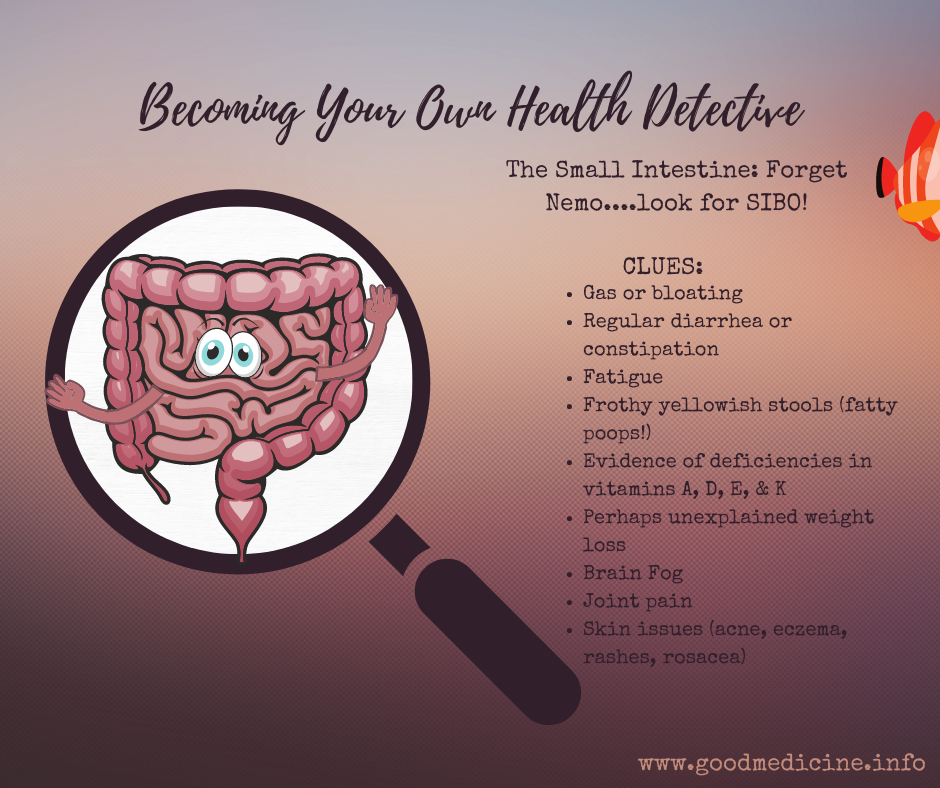
I’ve listed common clues of SIBO on the graphic.  None of them are drop dead urgent clues, right? Annoying, irritating, and perhaps even aggravating ….. but nothing that would cause an urgent SOS trip to your favorite health professional.
In a perfect digestive family environment, a healthy small intestine is a strong contributor to overall health. It facilitates absorption of some minerals (including sulfur, calcium, copper, iron, & zinc), fat soluble vitamins A,D,E &K, B vitamins, and Vitamin C. Small intestine also facilitates absorption of sugars, proteins, cholesterol, and bile salts.  It allows these nutrients to be absorbed all the while blocking foreign substances (ie: toxic “bullies”) from also being absorbed. If the small intestine walls become inflamed and damaged, it is unable to effectively discern between friend and foe, and bad influencers make it into the family body.


SIBO, if left unattended, contributes to:
🔥IBS, Diverticulosis, Crohn’s, Celiac, poor gut motility (greater than 75% have confirmed SIBO)
🔥Fibromyalgia  (78% have confirmed SIBO)
🔥Restless Leg Syndrome
🔥Interstitial Cystitis
🔥Diabetes
🔥RA, Scleroderma, and other autoimmune disorders
🔥Skin conditions
🔥Nutritional deficiencies
🔥Neuropathies due to deficiencies


In addition to poor stomach acid production, common contributors (aka lifestyle clues!!) to SIBO include: 
🔎Stress
🔎Poor diet (review what is typically known as the “Standard American Diet” / aka “SAD” indeed!)
🔎Mechanical issues (low stomach acid included here!)
🔎Antibiotic use (especially recurrent use)
🔎Regular use of acid reducers or proton pump inhibitors (ex: Nexium, Protonix, Prilosec)
🔎Opioid use (results in gut motility issues)
🔎NSAID use (ex: Ibuprofen, Naprosyn… damage the lining of the intestine)
🔎Gastric bypass surgery
🔎Moderate (or greater) alcohol use (est 90% have confirmed SIBO)
🔎Aging (due to decreased stomach acid and enzyme production)
🔎Long term colon dysfunction ( 78% of those with IBS have confirmed SIBO)


👉👉Note that while SIBO can be age related, it’s not uncommon to find it in children👦👧👶 who have chronic constipation/ diarrhea, have received antibiotics, are formula fed, or have received medication for reflux, or whose eating habits mirror the standard American diet.


It is estimated that 20-22% of the US population has some form of SIBO, and while there are ways to identify it through functional medicine testing, perhaps it may be more economical to simply identify existing physical and lifestyle clues, and then proceed towards alleviating the problematic areas.

 
❤️Showing the small intestine some love thru a healthy diet, adequate exercise, proper amounts of sleep are an excellent start! ❤️
Additional ways to support and love on the small intestine include:
❤️Consume 30-45 grams of soluble fiber daily (Hello Young Living ❤️Balance Complete Meal Replacement Shakes!)
❤️Digestive Enzyme supplements that contain Betaine HCl (Hello YL Essentialzyme caplets!)
❤️Probiotics (Hello YL Life 9 and for kiddos….. MightyPro!)
❤️Organic bone broth
❤️Olive leaf extract (Hello YL Olive Essentials capsules!)
❤️Young Living’s Peppermint, Caraway, Oregano, and Cinnamon Vitality essential oils. If you are a science hound, do some digging in pubmed.gov for a gold mine of information. If you are not a science hound, just know that these oils are your small intestine’s friends! 


Remember that our bodies are constantly giving us clues which buys time before “big things” generally happen. I’m so thankful that the body has the resilience and capability to restore itself to good health when clues are recognized and supportive measures are implemented. SIBO is a clue itself, indicating a potential downward spiral of the entire body at some point in the future if not addressed. 
Indeed…. Seemingly small things can often be important big ones! 
xoxo~ liz

#sharingiscaring
#digestivehealthclues
#healthcluesyoucanuse
#goodmedicine 
#findingSIBO

#ThanksYL
Health Clues from Heartburn

Liz James · May 10, 2021 ·

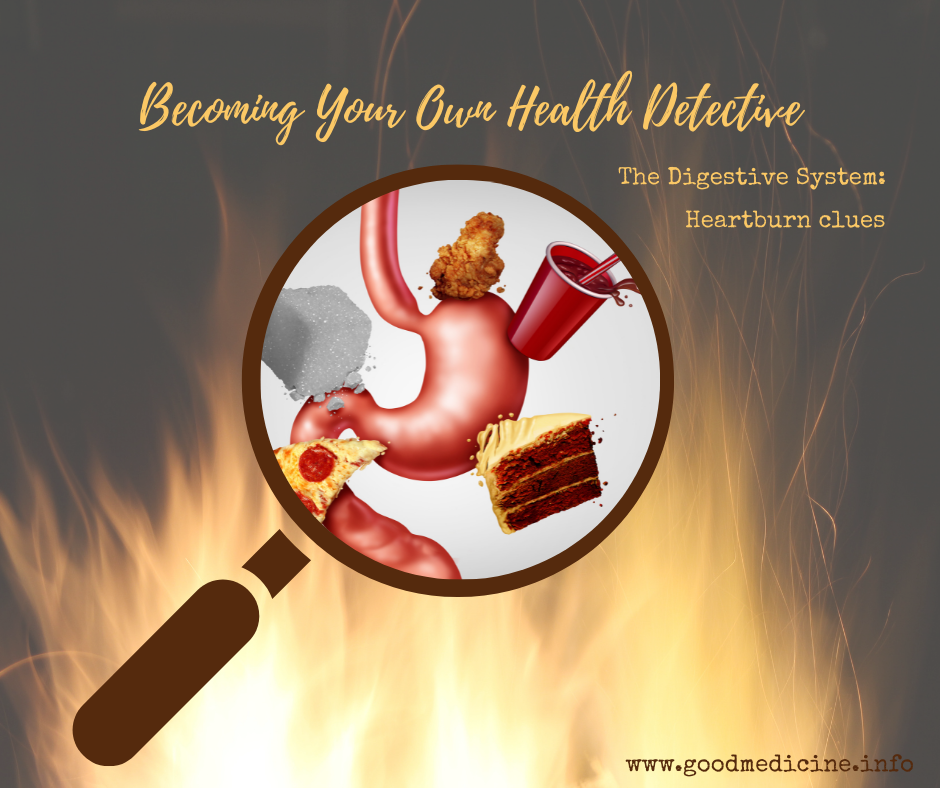
Down the alimentary canal we go….. Clues you can use from your head to your tush!
I’ve gone round and round in my head about how best to approach this next topic. It’s a “which came first…. the chicken 🐣or the egg situation”, so I will leave it up to you as to how you choose to run with these clues! 


As we travel down the alimentary canal, some of the roughest waters are located right beyond the oral cavity. An estimated 60-70 million people have chronic digestive disorders in the USA, with 25% of the adult population experiencing weekly symptoms of reflux. 


Here’s “the chicken”: 
 – Reflux commonly results from either a mechanical dysfunction or environmental trigger. Mechanically, it may be caused by a diagnosed hiatal hernia, pregnancy, excessive weight, eating a large meal too close to bedtime……there are others, but these are the biggies.
Biochemically, certain foods and beverages may also trigger reflux in some people. Spicy, oily, or fried foods, alcohol, and caffeine are well known irritants.
👉👉There are two other under diagnosed but VERY COMMON dysfunctions….. Hypochlorhydria: a deficiency of hydrochloric acid in the stomach and insufficient digestive enzyme production within the body. 👈👈
Causes of low stomach acid include: 
 – Stress
 – A deficiency of Zinc or B vitamins
 – Medications taken for reflux 
 – Gastric bypass surgery
 – Age – people over the age of 60-65 are most likely to have inadequate stomach acid production
Before refrigeration and the advent of the processed food industry, normal diets were rich in food that contained prebiotics, probiotics, and enzymes that supplemented what was already made within the body. Sadly, the Standard American Diet (aptly acronymed ‘SAD’) contains none of these, and the “fakeness” of many foods has made the digestive process even harder to accomplish.


Digestive enzyme insufficiency has several possible causes:
 – Gallbladder removal
 – Crohn’s or Celiac 
 – Leaky gut
 – Chronic Stress
 – Inflammation (often due to toxin load)
 – Genetics
 – Aging


Certain diseases affecting the pancreas     
Low stomach acid and/or insufficient digestive enzymes can cause a cluster of clues over time….
🔎Bloating and burping
🔎Upset stomach that sometimes feels worse when you take supplements
🔎Heartburn or indigestion
🔎Diarrhea and gas
🔎Hair loss
🔎Fatigue
🔎Protein, B12, Calcium and magnesium deficiencies
🔎Neurological issues such as numbness, tingling, and vision changes
🔎An appearance of or worsening of an autoimmune disorder (lupus, allergies, asthma, skin conditions, etc)
🔎Osteoporosis


Prescription trends reflect this stat: Approximately 65 million prescriptions are written for reflux medications on an annual basis…. The most common being💊 acid reducers. 
WAIT. WHAT??!?!?  If the reflux problem is commonly related to too little acid in the stomach, why in the world are drugs like 💊Pepcid, Prilosec, Nexium, Protonix 💊prescribed so regularly? After all, they are designed to reduce acid in the stomach.  That, my friends, is the multi- billion dollar question you’ll need to ask Big Pharma about.  
I make no recommendations to quit any medication without talking to your favorite health care professional first. I’m not a doctor…. only an observant pharmacist who knows when things don’t add up. #followthemoney
And now we come to “the egg”….. the medications regularly recommended for heartburn. You see, the drugs within the acid reducing class are approved by the FDA for short term use only (generally 8 weeks or less) and yet we all probably know multiple people who have been on them for years.


What happens when the pH within the stomach continues to slowly become more alkaline? 
* A worsening of B12 deficiency which affects many parts of the body, but especially the nervous system. Prolonged deficiency increases the risk of dementia and neuropathy. 
* An increased risk of hip, wrist, and spine fractures due to accelerated osteoporosis
* A 50% greater risk of pneumonia
* An increased risk of a cardiovascular event 
* A worsening of overall digestive problems
* Increased risk of kidney disease


How can this particular  “chicken/egg” question be avoided? The biggest answer to nearly everything we talk about is always going to revolve around diet, exercise, stress management, sufficient sleep, and removal of toxins whenever possible.  It’s not always easy to incorporate enzyme and stomach acid supportive foods into today’s daily eating habits, and yet they are a valuable and needed piece of the wellness and vitality puzzle.


Thankfully,  we have some very supportive digestive enzyme supplements available to us! 🙌🙌 
Young Living’s Essentialzyme caplets also contains Betaine HCl which help support healthy stomach acid pH. 
Young Living’s Essentialzymes-4, Allerzyme, and Detoxzyme are also digestive enzyme supportive capsules, and Mightyzyme chewables are for kiddos (or adults who like them!) who might need a little extra digestive support! 


As always….. This information is not intended to treat, diagnose, or cure….. Rather to give you the tools you need to make the best and most informed decisions you can make in regards to your own health. You are the responsible party for Y.O.U. …… no one else. 
xoxo~ liz

#sharingiscaring
#digestivehealthclues
#healthcluesyoucanuse
#goodmedicine
#ThanksYL

Health Clues in Your Teeth – Part 1

Liz James · April 21, 2021 ·


I find teeth mysteriously fascinating, but it used to not be that way. Teeth (and toes) used to activate my gag reflex before I began learning about their wealth of clues. Now I find them to be wonderful guides and tools! 😍


This particular clue is so very important that it’s the only one we are going to discuss today. Any time you have something that changes in or on your body, it should become an instant signal that something has shifted metabolically or physiologically, and the best course of action is to “root out”  the cause before bigger symptoms take place.


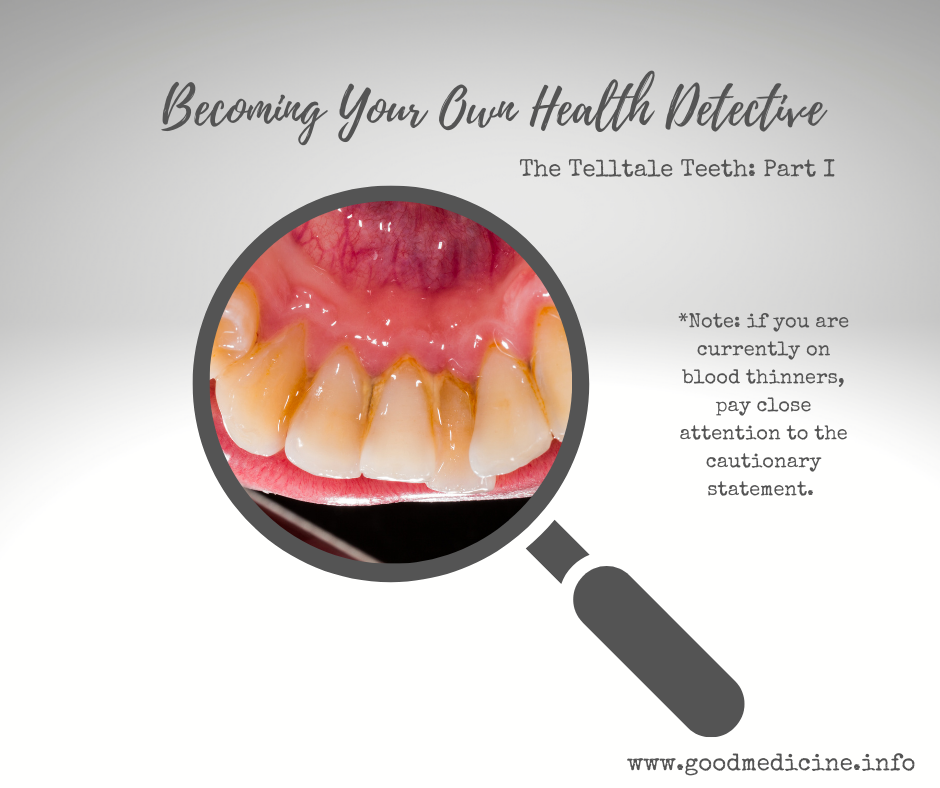
Perhaps you’ve been to the dentist and the hygienist has remarked that you have more plaque than normal on your teeth, or you’ve looked in the mirror and noticed this yourself. Hopefully this is not the case because you have loved on your oral cavity with Thieves toothpaste, mouthwash, and floss! Sometimes tho, even the best of oral care products doesn’t stop plaque build up. If that has happened, it’s time to start digging for the root cause! 


*But first, A little history about teeth and nutrition!  Before there was refrigeration or even toothpaste, there were remote people groups worldwide who had solidly amazing teeth and mouths. This is well documented in the works of a dentist from the early 1900’s named Dr. Weston A Price. Dr. Price worked tirelessly to prove that oral decay and degeneration was due more to nutritional deficiencies than to lack of oral hygiene. His work revealed that fat soluble vitamins A and D and a probiotic rich diet were key contributors to healthy mouths, more so than daily brushing. An interesting unifying factor amongst all the people groups he studied was that all had some form of probiotic rich daily food source…. Something that the standard American diet falls woefully short in today.


*What does diet have to do with plaque on the teeth and why is it a clue? Here is where the clue becomes quite important! A diet rich in properly fermented foods (think traditional kefir, sauerkraut, miso, yogurt, cod liver oil, kimchi, kombucha etc) is a valuable tool for supporting a healthy gut. If the gut is loaded with healthy bacteria, the body is able to create other vitamins which are necessary for healthy living. For the course of THIS discussion, that would be Vitamin K2. #life9probioticforthewin


Vitamin K2 (aka menaquinone-7 , or activator X) is an underappreciated nutrient, in that it is vital for building strong bones and teeth. It does this by carrying calcium out of soft tissue (think brain and vascular system) and carrying it IN TO bones and teeth.
Stick with me ya’ll😍….. We are getting to the super important part! 


K2 activates something called osteocalcin and matrix-Gla protein. Matrix-Gla is present in saliva and its activity arrests the dental plaque calcification process….. It is also present in the blood, and when activated by vitamin K2, helps to remove plaque in arteries! Isn’t it interesting how matrix-Gla prevents both plaque on teeth AND plaque in arteries??


*If plaque continues to build up on teeth despite your best efforts in oral care, it may indicate a deficiency of vitamin K2, which may be putting your vascular system at risk. 


*A 2016 study found that matrix-Gla protein inactivation ( as the result of inadequate K2) led to a higher risk of death due to cardiovascular disease. 
*Now to be clear, plaque on teeth may happen as a result of poor oral care or a few other reasons too, but if you’ve never had plaque issues before, and now you do….. It may be time to dig a little deeper to protect your overall well being! 


Other signs or symptoms of a Vitamin K2 deficiency may include:
*Bruising easily
*Bleeding excessively (including a heavy menstrual flow)
*Osteopenia, osteoporosis or frequent fractures
*A mouth full of cavities
*Heart disease
*Diabetes or pre-diabetes
*Autoimmune disease flare ups (there is evidence that a Vitamin K2 deficiency aggravates autoimmune diseases….. especially Rheumatoid Arthritis)
*Forgetfulness ( a Vitamin K2 deficiency is linked to Alzheimer’s Disease due to the calcium plaque build up within the brain)
*O blood type – lacks some clotting factors in blood, so K2 supplementation is helpful


If you have noticed regular buildup of calcified dental plaque…..
👉Talk to your favorite healthcare professional and consider asking for a cardiac calcium score
👉Get your vitamin D levels checked
👉There currently isn’t a K2 specific lab test to check for deficiency. 
👉Consider supplementation of Vitamin K2 (recommended dietary allowance is 60-120mcg/day)
NOTE: If someone is on blood thinners, talk to a health care professional before starting Vitamin K2 as a supplement. It does affect blood coagulation, and therefore may interact with blood thinners.
And YAY you!!!….If you are currently taking Young Living’s  CardioGize, Master Formula or Super Cal Plus, you’ll find that these three already contain K2 within each formulation (100mcg, 50mcg, and 30mcg respectively). 


As always, I am not a doctor and cannot diagnose, treat, or offer to cure you. I can only help you be a top notch detective for your personal health and wellness. 
xoxo~ liz

#sharingiscaring
#healthcluesyoucansinkyourteethinto
#healthcluesyoucanuse
#goodmedicine
#ThanksYL

Health Clues in Your Tongue Part 2

Liz James · April 6, 2021 ·

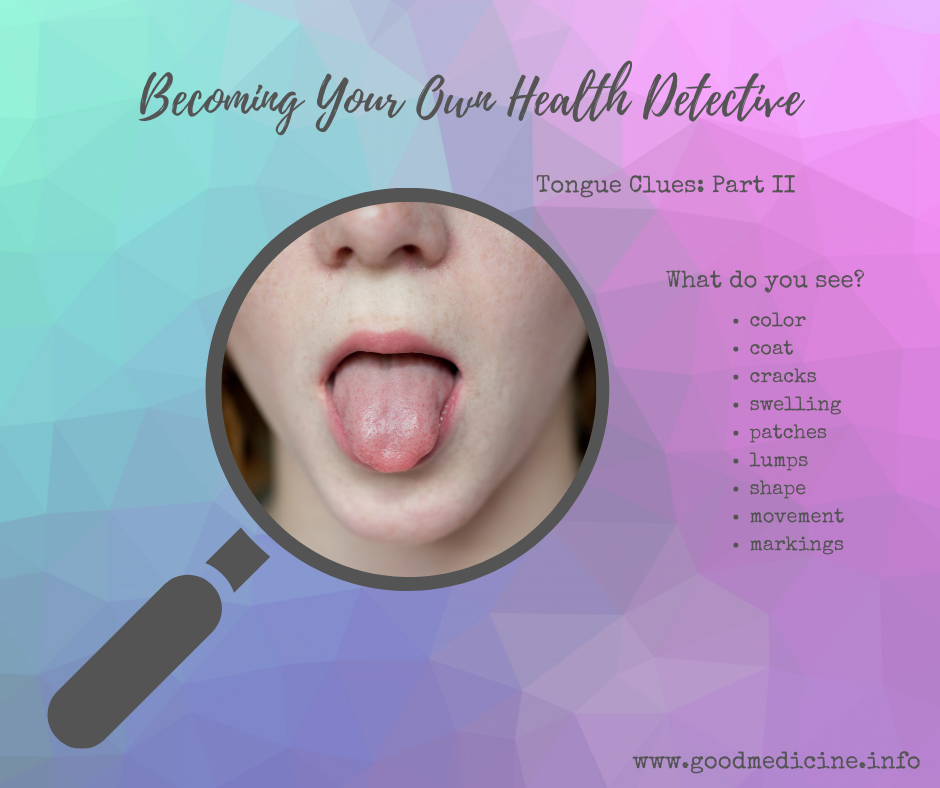
👅Geographic tongue (erythema migrans) is a benign condition easily confused with lichen planus (an autoimmune disorder). A geographic tongue will be pink to reddish in color with slightly depressed lesions with irregular white or yellow borders. Geographic tongue usually has hereditary and environmental components (epigenetics!)….. meaning that environmental factors may intensify genetic expression.


Some of the more common environmental factors contributing to magnifying geographic tongue characteristics are endocrine disruptors (including birth control pills). Common endocrine disruptors include BPA (found in plastics), Phthalates (found in most mainstream beauty and skin care products), perchlorate (commonly found in tap water), PFC’s (used in nonstick cookware and fast food containers), and organophosphate pesticides.


Reading labels is a royal pain in the tushie, and all of these environmental toxins are not so nicely found everywhere despite having been banned in many other countries. Even if you are not predisposed to a geographic tongue, endocrine disruptors wreak havoc within all of us, and vigilance is needed. Scientists have pointed to all of these toxins as being key players in the more than 50% decline in fertility (for both men and women)  in the USA in the last 30 years.  
I am so thankful that Young Living has a full line of  skin and body care products for both men and women, as well as gorgeous makeup (#SavvyMinerals)  that is safe and free of hidden dangerous chemicals. I could stand on this toxic soapbox for hours, but let’s return to the tongue! 


Geographic tongue is often a clue indicating a disposition towards psoriasis, reactive arthritis, allergies, and type I diabetes. That is not to say someone with a geographic tongue will definitely acquire one or more of these dis-ease states. Rather, it’s important to be aware of the possibility and do “all the things” to minimize the chance of acquiring a chronic autoimmune condition. Chronic stress can also magnify the characteristics of a geographic tongue.


👅A fissured tongue is notable for its deep furrows and cracks. Genetics and environmental factors also play a role. Tobacco use, and iron or B12 deficiency are common influencers of a fissured tongue. This particular tongue characteristic is also often seen in patients with psoriasis, Sjogren’s Syndrome, and other autoimmune disorders. 


👅A swollen, inflamed tongue is sometimes seen in celiac disease (an autoimmune intolerance to gluten).
Did you notice a trend? Many of today’s tongue clues are tied to autoimmune disorders which ultimately are connected to gut health and environmental toxin exposure and it’s so very important to recognize clues and be proactive instead of reactive!  


👅A “scalloped” tongue (ridges or teeth marks on the sides of the tongue) is indicative of fluid retention.


👅Tingling of the tongue may be a symptom of hypoglycemia.


👅 Tongue strength also reveals important clues! Is a person able to stick out his/her tongue, and if so, does it tremble? Remember, the tongue is a strong and very vascular bundle of muscles, much like the heart. Scientists have found that a quivering or trembling tongue is often indicative of a neurological disorder. A tongue quiver may also appear both before a stroke and as an aftermath of a vascular event.


👅As you look at your tongue for any tips or clues, make note of any unusual lumps, discoloration, or localized swelling or sores that do not go away, and contact your favorite health provider should you find something suspicious!
Caring for your tongue is similar to caring for your teeth. A fluoride free toothpaste (have you tried Young Living’s Thieves toothpaste?), oil pulling, and using a copper tongue scraper are all healthy ways to keep your tongue happy!
xoxo~ liz 


#sharingiscaring
#healthcluesyoucanuse
#thetonguespeaks
#goodmedicine
#ThanksYL

Health Clues in Your Skin Part 5

Liz James · March 2, 2021 ·

* Although we could explore skin clues for the rest of the year, today we’ll wrap up dermal geographical points of interest. You’re getting the idea, right? The body, especially its “packaging” gives loads and loads of early clues as to the direction a body’s health may be headed. As with GPS, you can pay attention to the map and gain control over where you are heading, or you can ignore the map/clues……… and who knows where you may end up! 

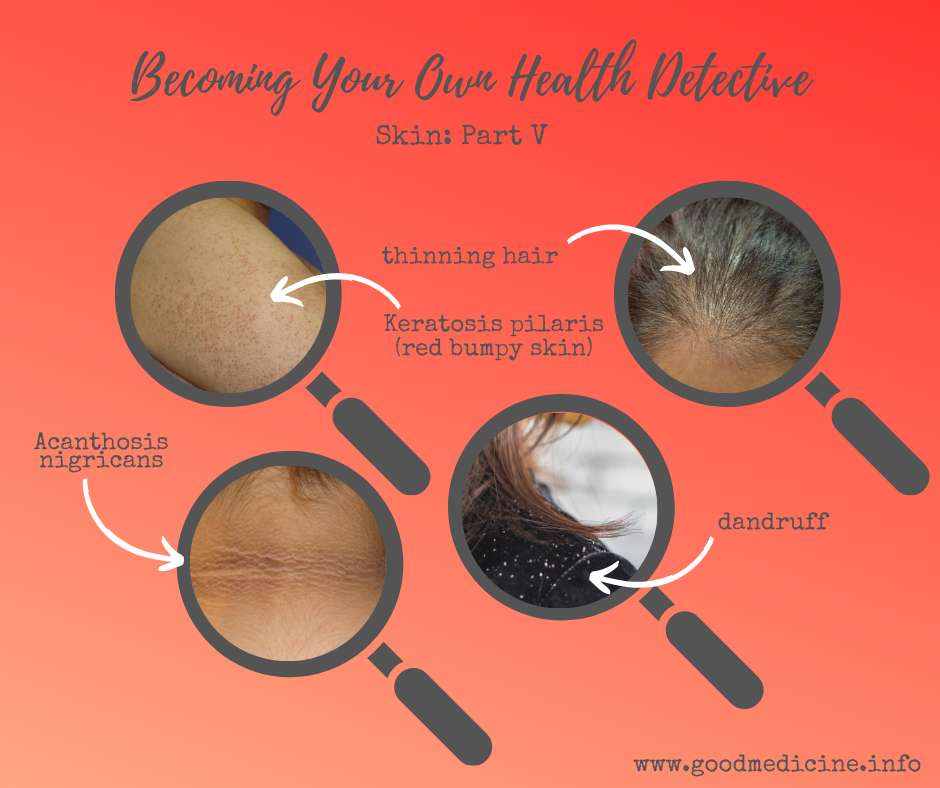
* Acanthosis nigricans (AN) is a skin abnormality that results in velvety darker discolorations found most often in body folds and creases. The discoloration develops gradually over time and is most often seen across the back of the neck, armpits, and groin area. Although acanthosis nigricans is sometimes an inherited skin characteristic, the most common cause is diabetes and obesity. Endocrine abnormalities (thyroid) and certain cancers (adenocarcinomas) can also cause this type of skin change. 


Chronic use of certain medications can also cause AN. Birth Control Pills and some hormone replacement therapies, steroids, high dose niacin, and a class of drugs used to treat HIV (protease inhibitors) are the most common offenders. 

* Keratosis pilaris (KP) is an annoying but harmless skin condition which causes dry rough patches and tiny bumps often seen on the upper arms, thighs, cheeks, or buttocks. You may have heard it sometimes called “chicken skin”. An estimated 40% of the population has experienced it, and though often related to a Vitamin A deficiency (which is seen in roughly 51% of adults in the USA), KP is most often seen in people who regularly eat a very specific set of food triggers. 
Who’d have thought that 51% of adults in the USA would have a Vitamin A deficiency?…. And yet we do. Vitamin A deficiency will ultimately affect the eyes in addition to the skin. Young Living has a super eye health supplement called Illumineyes  which happens to be loaded with Vitamin A. #killtwobirdswithonestone


Those with KP would do best to avoid common skin irritants found in mainstream bath and body care products. Thankfully, Young Living has us covered here too! They make caring for ourselves so very easy! Have you tried any of the YL bath and shower gels and bar soaps? I’m especially fond of the Morning Start Shower Gel!  
Food triggers are a serious influencer of keratosis pilaris. Thankfully, the foods that tend to trigger the outbreaks are 100% unnecessary and are generally void of  quality nutritional value.

These would include:
🔥Refined white sugar
🔥High fructose corn syrup
🔥Trans fats (found predominantly in junk and fast foods)
🔥Refined carbs (white bread, pastries, soda, sugary breakfast cereals, etc)
🔥Artificial flavorings and colorings
🔥Gluten
🔥Commercial (homogenized/pasteurized) dairy


My feeling about KP is that, while annoying and harmless, it is an early red flag clue that bumpy waters may lay ahead if reparations are not in order. If food is a trigger, then the gut is compromised and showing early signs of stress. Don’t let this stress escalate…. It’s a slippery slope. The gut is at the root of all chronic disease throughout the body, not the least of which is digestive disorders themselves! YL’s Life 9 probiotic and a digestive enzyme (Essentialzyme, Essentialzymes-4, Allerzyme, or Detoxzyme) would be excellent supportive measures to get and keep your gut on track.


KP is a common skin condition among children too….. It’s far better to nip things in the bud than it is to let a situation escalate, even if it means going thru a season of junk food withdrawal. Good eating habits are perhaps one of the best gifts you can give a kiddo! Don’t forget that Young Living has Kidscents Mightypro probiotic packets and Mightyzyme chewable digestive enzymes for little tummies too!   
Because KP is actually a buildup of dead tissue, a gentle but effective way to minimize the bumps is by using a “clean” DIY sugar scrub on the areas 3-4 times a week. 
2 cups organic brown sugar
½ cup organic fractionated coconut oil
½ cup honey
5 drops of lavender essential oil

* Dandruff affects roughly 50% of the population and comes in a few common types. It too is more annoying than harmful, but clues are flying with each brushing of the hair! 


Possible causes of dandruff include:
🔥Chronic inflammatory skin condition(s)…. Remember skin is a mirror of the gut!
🔥Allergy or sensitivity to something either applied or ingested (again, gut flag!)
🔥Yeast overgrowth (gut flag!)
🔥Omega 3 deficiency


Managing stress is key with any inflammatory condition. Stress reduction techniques  include yoga, prayer, meditation, deep breathing, and utilizing your favorite calming essential oils. 


A whopping 98% of the US population fails when it comes to optimal Omega 3’s in their diet. OmegaGize3 is loaded with what we need so as not to be a part of that epic fail statistic. Other clues of Omega 3 deficiencies may include dry hair, dry skin, depression, dry eyes, joint pain and stiffness.
​
* Thinning hair is something that happens gradually over time. While it is normal to lose around 100 hairs a day, hairs should also be growing back in as they are falling out. Very few people have the hair in their 50’s+ that they had in their 20’s. #aginghappens  


Factors that affect thinning hair may include:
Genetics (family pattern hair loss)
Emotional & physical stress
Medical conditions (thyroid or hormone imbalance, and heart disorders)
Poor nutrition or poor absorption of nutrients
Hair products that make thinning worse
Decrease in collagen production as we age


—Ways to minimize thinning hair include eating nutrient dense foods (and utilizing the YL digestive enzymes mentioned above!), OmegaGize3 !!!, and supplemental collagen (internally). 


Medications will always and forever have side effects. By their very definition they are a toxin, and many of them cause hair loss. Some of the top offenders include:
Certain acne meds
Certain antibiotics
Anti-coagulants (after about 3-4 months)
Statins (cholesterol)
Immunosuppressants (methotrexate, Enbrel, Humira etc)
Some anti seizure meds
Blood pressure meds (those whose generic name ends in -olol or -pril)
Mood stabilizer meds (including paxil, zoloft, amitriptyline, and prozac)
Weight loss meds (eg: phentermine)
Gout meds (allopurinol)
Many chemotherapy agents
Steroids (which are also immunosuppressants)
NSAIDS (ex: ibuprofen, naproxen )


I am not a doctor, and cannot diagnose, treat or cure you. I will however, continue to provide you with clues you can use to help you find your way back to the vibrant healthy person God designed you to be (or to support the vibrant health person you already are!). Which body part should we cover next as we continue to unearth clues?
xoxo~ liz

#caringissharing
#pharmacistandfarmacist
#applicationofknowledgeispower
#skininthegame 
#goodmedicine
#goodmedicineisknowingthyselfwell
#yourskinisamirrortoyourhealth
#ThanksYL

  • « Go to Previous Page
  • Page 1
  • Interim pages omitted …
  • Page 4
  • Page 5
  • Page 6
  • Page 7
  • Page 8
  • Interim pages omitted …
  • Page 15
  • Go to Next Page »

Book Your Health Coaching CallBook Now

Elizabeth James

469.425.9091

ebj0203@gmail.com