• Skip to primary navigation
  • Skip to main content
Book Your Health Coaching Call
Good Medicine

Good Medicine

Holistic Health Coaching

  • Home
  • Liz James
    • About Liz
    • Coaching
    • Book a 20 Minute Complimentary Coaching Call
  • Favorite Resources
    • BlessedByHisBlood
    • Young Living
    • Fast Like A Girl Certified Coach
    • Order supplements through my Fullscript store
    • Green Pasture (Coupon: Health10)
    • RogersHood Apothecary (Coupon: BEABLESSING for 10% off)
    • DolphinMPS
    • Company
    • Abundance
  • My Books
    • Becoming Your Own Health Detective Volume 1
    • Becoming Your Own Health Detective Volume 2
  • Blog
  • Cart

Thyroid

How Do My Feelings Affect My Thyroid? – part 4

Liz James · April 12, 2022 ·

Thyroid Clues Part IV: Emotions, Feelings, and the Thyroid
 
Mind🧠, body💪 and spirit🙏 are so deeply interconnected that it is impossible to be robustly healthy if this triad is out of balance in any way. The “spirit” of what makes us ….”us” is a composite of beliefs, life experiences, relationships, and memories. Outwardly, this clue set may be exhibited to some small degree by our personality. Frankly though, an individual’s personality is the tip of the iceberg. What lies beneath the surface (feelings) always play a leading role in both sickness and health. No one holds the knowledge of your “submerged iceberg self” better than you, which is yet another reason why being your own CEO and chief health detective🕵️ is so utterly important.
 
Surely you’ve heard of people who have died of a broken 💔heart. This phenomenon has been closely studied and acknowledged by science. Interestingly, we (as a society) tend to lean more into accepting the role of emotions and feelings in a death than we do the role personal belief and hope plays in an abundant life, and we certainly tend to overlook them (emotions and feelings) as responsible parties in health and wellness in day to day living.
 
How does this fit into the puzzle🧩 of thyroid health? Quite well actually! Every organ and part of the body is affected at a cellular level by emotions, feelings, and memories, and learning to let go of that which doesn’t serve us is profoundly important in wellness and healing. The thyroid is, as you may recall, highly sensitive to changes in its environment. The “frequency” in which we “bathe” ourselves daily affects the health and performance of the thyroid. Frequency is not voodoo. It’s biology and physics. Everything (including our cells) is in a constant state of vibration, and any disease process will be evident as a disturbance in the structure and function of these frequencies. Positive emotions and feelings drive frequencies upwards (healthy), while negative emotions and feelings drive frequencies downwards (unhealthy).
 
Emotions and feelings tend to get blended together, yet they are not interchangeable.
 
Emotions:
🤨They may manifest either consciously or subconsciously, and are a physical state or reaction to an event.
🤨They keep us alive! They are a primal response, and are deeply coded into our genetic being!
🤨They happen before feelings evolve about the event that occurred.
🤨They can be measured by facial expressions , body language, blood flow, racing heart, tightening of muscles, skin response, pupil dilation (etc)
🤨They generally last anywhere from a few seconds to an hour. Once the emotion has passed, the body returns to balance ( homeostasis).
 
Feelings are quite different.
 
🤨They are experienced consciously.
🤨They are a reaction (caused by emotions), and often influenced by personal experience, beliefs, and memories
🤨Feelings originate in the neocortical region of the brain (the home of conscious thought and separate from the limbic system which houses emotions ).
🤨Feelings form when your brain assigns a meaning to the emotional experience, and are mental interpretations of a situation.
🤨Feelings don’t drift off after an hour (like emotions do). They hang around because of a vast network of personal experiences, belief systems, and memories we hold individually.
🤨Ultimately, feelings are psychological responses while emotions are biological actions.
 
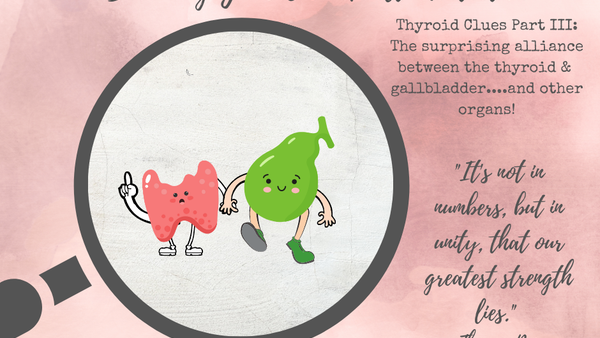
The thyroid is the on location storage facility for some pretty hefty feelings. Some of these include:
 
🦋Conflict between the conscious and subconscious
🦋Feeling limited or stuck
🦋Struggling with love of self or feeling unable to speak up for oneself
🦋Feeling a need to be in total control or feeling out of control
🦋Feelings of humiliation
🦋Feeling fearful of self expression
🦋Feeling a deep sense of frustration
🦋Feeling chronically fearful of anxious
 
Pairing the storage site (thyroid) with the lower vibrational frequency of harboring any of these negative feelings long term, and you may unearth a clue that has tremendous value in your thyroid health journey.
 
Now, what to do with this clue? There are a couple of valuable resources I’d like to point you towards:
Who Switched off my Brain? Controlling toxic thoughts and emotions by Dr. Caroline Leaf
And…..
The Pathway to Emotional Healing by Jen McCraw
 
These two books are extraordinarily valuable resources for healing the damage that stored negative feelings can inflict on the body. Doing “all the other things” (avoiding gluten, managing your iodine and other micronutrients, exercise, sleep hygiene etc etc etc) will never be enough if your spirit is not at peace.
 
Some of the essential oils you may consider when working towards healthy feelings (and subsequently, a healthy thyroid) as you nurture your spirit might include:
💧Endoflex: supportive of mind, body (endocrine system) and spirit
💧Transformation: supports feelings of positivity and self awareness
💧Valor: supports feelings of courage and confidence
💧Envision: supports feelings of creativity and resourcefulness
💧Surrender: supports the desire to let go of either too much control or uncontrollable behaviors
💧Highest Potential or Awaken: supports an awareness of limitless potential!
💧Peace & Calming: supports a positive peaceful atmosphere and mindset
💧Sacred Mountain: supports feelings of strength and empowerment
💧Believe: supports and encourages feelings of faith and inner strength
💧Release: helps facilitate the ability to let go of anything that no longer serves you
💧Cardamom, Pine, Myrtle, Frankincense, and Lavender are additional oils that are helpful in supporting healthy (thyroid affective) feelings and letting go of those which do not serve.
 
Oils are not🚫 🧙magic friends. They are tools🛠 just as are the two books I’ve mentioned above. Neither the oils or the books will be helpful if they are bought and put on a shelf unused. The tools🛠 are there for the healer to use. YOU have the capability to be your own healer. It’s within you to do this. It’s hard work and it’s heart work, and you are worth the effort!
 
“Each patient carries his own doctor inside of him [or her!]. They come to us not knowing the truth. We are at our best when we give the doctor who resides within each patient a chance to go to work.” ~ Dr. Albert Einstein
 
xoxo~ liz
 
#sharingiscaring
#becomingyourownhealthdetective
#goodmedicine
#mindbodyspiritconnection
#healthythyroidhealthylife
#dothehardthings

Thyroid -part 3 The Gall Bladder Connection

Liz James · April 5, 2022 ·

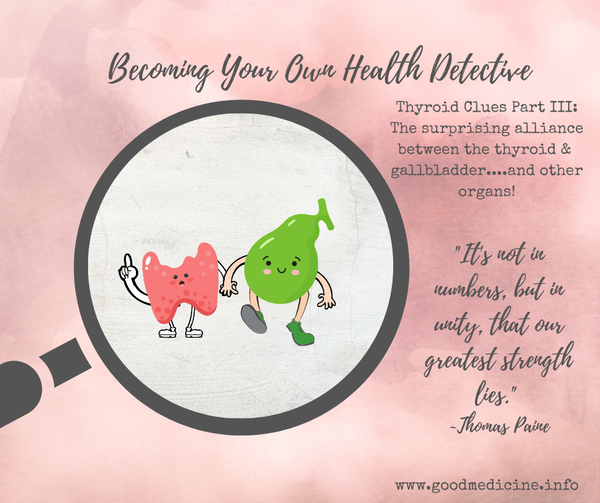
Thyroid Clues Part III: The surprising alliance between the thyroid and the gallbladder
In the Westernized, insurance directed medical culture, medical complaints tend to be compartmentalized. A thyroid disorder is navigated by an endocrinologist and gallbladder disease is managed by a gastroenterologist……. and rarely the two shall meet! And yet, that’s not how the body works.🥴 Every organ plays an important role elsewhere in the body, and having the knowledge of a diagnosis can easily be used as a clue to shore up defenses in hopes of avoiding a secondary diagnosis. I’ve wondered if more people knew this truth, would they put in the personal work to prevent the collateral damage and in doing so, perhaps even bring the primary disorder to heel?🤔
 
The thyroid and gallbladder have an “Odd Couple” relationship
…at first thought, you wouldn’t imagine that one could have a powerful impact on the other (and vice versa), and yet they do.
One of the jobs of thyroid hormones is to bind to the smooth muscles of the gallbladder which then facilitates contraction and causes a release of bile into the small intestine. If someone is (even mildly) hypothyroid over a period of time, gallbladder emptying will become inefficient and sludge begins forming within the organ. Gallbladder (aka biliary) sludge is a real culprit and can cause significant problems in that semi solid form. Sludge is also fodder for gallstones🌚.
 
Interestingly, gallbladder sludge can also accumulate as a result of HYPERthyroidism, though the mechanism of action is different.🤓
If bile is sludgy, very little of it will be in usable form, so the body becomes less able to digest fatty foods. Burping or belching may occur often, and stools💩 may start to lighten up in color (to a lighter brown or clay colored). Bloating may also occur, especially after a fatty meal. Lipid panel (lab work) results will also begin changing. It’s not uncommon for patients to develop higher LDL (cholesterol) than previously exhibited.
Bile is also important in the absorption and metabolism of fat soluble nutrients such as vitamins A, D, E, and K as well as essential fatty acids. Without bile, deficiencies may quietly slide into play.
Additionally, bile acts as an immune signaling agent in the gut microbiome.🦠 It binds to special receptor sites within the gut to help control intestinal inflammation and help facilitate the metabolism of toxins in the gut.
 
Meanwhile, thyroid hormones and gut bacteria also have their own intricate relationship. According to recent studies (2019 and 2020), the microbiome 🦠plays a significant role in the activity of thyroid hormones, and a gut with a healthy microbiome 🦠 supports healthy thyroid function. Of special interest is regular incorporation of probiotic strains Bifidobacterium and Lactobacillus into the diet, as both have been shown in studies “to lead to fewer thyroid medication dose adjustments, allow for possible dose reduction, and having less serum hormonal fluctuations.” Young Living’s Life 9 probiotic contains 4 strains of Bifidobacterium and 4 strains of Lactobacillus (9 strains total with 17 billion colony forming units!). Supporting the gut makes the thyroid happy too!
 
An estimated 600,000+ gallbladders are removed each year, so odds are high that someone reading this would ask…. “What if I don’t have a gallbladder?”
Let’s chat about that! T4 is converted into T3 (the more active form of thyroid hormone) in the liver, and properly metabolized fats (usually accomplished with bile) are needed to make that magic happen. As a result, not enough usable T3 is made, and metabolism ultimately slows down. If the gallbladder has been removed, then fats will not be broken down properly without some help from outside sources. Essentialzymes-4, Detoxzyme, Allerzyme, and Essentialzyme all contain the digestive enzyme lipase (among other digestive enzymes) which supports proper fat digestion and metabolism…… AND thyroid health!
Do you see the sludgy slope? ….The thyroid is off which in turn throws the gallbladder off, which in turn throws the gut microbiome off! That’s some hard slogging through sludge right there.
Women👩‍ are far more likely than men🧔 to have a combination of thyroid / gallbladder issues. Excess estrogen (aka estrogen dominance ) can compete with thyroid hormones at the thyroid receptor sites. Not only can estrogen dominance potentiate hypothyroidism, it can also be a factor in gallbladder distress by blocking the thyroid receptor sites on the gallbladder. Estrogen dominance is an enormous problem in our world for both men and women because of all the synthetic estrogen like compounds found in everything from plastics to body care products (Thank goodness Young Living has a full line of all things personal care for us that are safe to use!) Estrogen dominance is also driven by use of birth control and hormone replacement therapy. Even strong hormonal changes in pregnancy can trigger a gallbladder issue, which as we’ve just seen, can then stress the thyroid. Full circle friends!
The complexities of the body is fascinating! God gets all the credit for our uniquely and wonderfully made us!
 
xoxo~ liz
 
#sharingiscaring
#becomingyourownhealthdetective
#goodmedicine
#beautifullyandwonderfullymade
#thethyroidgallbladderconnection
#thethighboneisconnectedtothehipbone

Thyroid Problem Clues – part 2

Liz James · March 30, 2022 ·

Analysis Paralysis has finally released its hold on me as I dip into the complexities of thyroid dysfunction and their absolute connection with autoimmune disorders. It’s important to understand that over 90% of diagnosed hypothyroid patients actually have an autoimmune disorder.
History always helps me understand science and biology because history leaves valuable clues. A journal article I read yesterday had this interesting tidbit:
“During the first half of the century [1900’s], autoimmune disease was viewed as biologically implausible.”
My, how things have changed!🥴 Resistance to the idea that autoimmunity could not happen began waning in the 1960’s. By then, life had changed drastically in many ways. Processed foods were introduced into mainstream eating habits, medication / vaccination use steadily inched upwards into the norm rather than the exception, plastics became part of our everyday world, fluoride was added to water, personal care products had a growing ingredient list of words that were barely pronounceable, herbicides were used ubiquitously and parents let their kids run behind the trucks that were spraying DDT for mosquitoes🦟! Thankfully the DDT spraying has stopped, but other pesticides quickly took its place. The toxin list has grown by leaps and bounds over the decades. Today, our bodies have to wade through the toxic soup☠️ known as the standard American life. Genetically, we haven’t changed appreciably, yet we are now part of the sickest generation in recorded history.
Did you know that at least 90% of genetic expression is the result of our environment, while the other 10% can be attributed to the role of the proverbial parental genetic dice? Epigenetics (the expression of our genes based on environmental influences) will look differently for each person based upon genes + exposure to infection (often viral), the Standard American Diet (simultaneously nutritionally deficient and toxic), pollutants (both in and outside the home), medications/vaccines, emotions, and stress. Epigenetics is so specifically unique to an individual that even identical twins👭 may express genes differently when exposed to chronic stressors. If you are going to put together a perfect crime scene,🔎 this is the way to do it!
 
Roughly 20% of the adult population in the USA now has an autoimmune disorder
And this percentage continues to rise. Prior to the 1970’s, autoimmune disorders were relatively obscure. Hashimoto’s, the autoimmune version of hypothyroidism, is considered by The Autoimmune Registry to be the second most common of all autoimmune disorders (second only to rheumatoid arthritis).
There is both bad and good news about autoimmune disorders. While they never disappear, they can certainly go into remission with the right lifestyle changes and choices. It’s a good thing we are in control of our personal choices!😉
 
According to leading Hashimoto’s and autoimmune disorder expert, Dr. Datis Kharrazian, there are 3 stages of autoimmune disease:
🔎Stage One is the silent stage. The body has begun losing its tolerance to its own tissue, but to the western health practitioner, there will be very few “hard core” symptoms. You though, as the CEO and chief sleuth🕵️, will feel “off”. What does “off” feel like? Well, that depends! It may be something as subtle as spending more (or less!) time in the bathroom. Perhaps it might be a rash that comes and goes. Maybe it means you are having difficulty finding the zest for life you once had, or you just have a little harder time waking up in the morning or falling asleep at night. Stage One is very important, as catching “things” early can be a game changer in the outcome. Lab work identifying elevated TPOAb and TGAb antibodies (for Hashimoto’s) can be very revealing. Neither test is very expensive when you pay out of pocket. Sadly, insurance companies often refuse to pay for these as “maintenance” labs. If your request is refused, I highly encourage you to pay out of pocket elsewhere and have the tests run annually with other labs.
 
🔎Stage Two is considered the reactivity stage and actual destruction to target tissue has begun. Symptoms are much “louder” and harder to ignore inside your own body. In fact, it may be this stage that finally sends you to a healthcare practitioner, though you’ve felt “off” for perhaps even years.
 
🔎In Stage Three, westernized medicine officially acknowledges the autoimmune disease. Significant destruction of the targeted tissue has occurred and there may even be collateral damage occurring elsewhere throughout the body. At this stage, damage can be seen by an MRI or ultrasound in addition to the elevated antibodies and actual symptoms.
 
Interestingly, the level of antibodies detected doesn’t necessarily indicate the severity of the Hashimoto’s. The antibodies themselves do not cause the thyroid gland destruction. Without getting too technical, the antibodies bind to and mark the spot (ie: the thyroid), and then the T Cells ( think of them as a special forces unit of the immune system) come in and attack what the antibodies have marked as “foreign”. If your own personal set of T cells are especially aggressive, your antibody count can be low but destruction of the thyroid can still be severe. Likewise, if your T cells act more like lazy posers, your TPOAb’s can be high but destruction probably won’t be as severe as you might think. Again…. epigenetics at play.
Here’s where we take a bunny trail🐰 detour to talk a bit about gluten. Unless you live in an untouched area of the wilderness with no internet, you’ll likely know that many people have issues with gluten. Generally, you hear about gluten and digestive disturbances such as celiac disease (another autoimmune disorder affecting the small intestine), but did you know that gluten is commonly a trigger for worsening both Hashimoto’s (hypothyroid) and Grave’s (hyperthroid) disease?
 
Gluten is a sneaky little son of a biscuit eater, for multiple reasons:
🍞It takes very little to cause great distress in gluten hypersensitive individuals…… like less than 1/20th of a teaspoonful according to some experts, and even less than that according to others.
🍞The after effects of a single gluten consumption/use can be felt for weeks to months after the occurrence in the gluten hypersensitive individual.
🍞Gluten flies under the radar and hides in the most seemingly innocuous of places: soy sauce, corn flakes, salad dressings, marinades, seasonings, processed deli meats, body and beauty care products, and candy (glucose syrup or dextrose can come from wheat) are just a few on the list.
🍞Some thyroid medications (and other medications and supplements too!) contain gluten as an inert filler ingredient. Currently the FDA does not have strict labeling requirements regarding the labeling of gluten positive medications. At the time of this writing, all brands of levothyroxine (except Mylan which is certified gluten free) contain gluten, as does the thyroid medication Cytomel. (And yes, I agree. Why in the world would the pharmaceutical industry use inflammatory gluten as a common filler, especially in a medication for a population prone to be gluten sensitive? As I’ve said before, we’re worth more as a commodity if we are sick than we are if we are healthy friends.🙄)
🍞Other aliases of gluten include starch, pregelatinized starch, sodium starch glycolate, dextrin, dextrate, dextro-maltose, maltodextrin, sodium starch glycolate and more. Sneaky Pete, indeed!
 
Is all gluten bad? 🤔Resoundingly no. Although if someone is found to be gluten hypersensitive, it’s a good idea to avoid it as much as possible. Modern wheat and the ancient grain Einkorn are two very different grains containing different types and ratios of gluten. Not only is Einkorn considered to be vastly more nutritious than modern wheat, the troublesome type of gluten (the “D” genome) doesn’t appear to be present in Einkorn according to Dr. Davis, author of “Wheat Belly”. If you aren’t sure if Einkorn is a safe form of grain for you, try incorporating it into a food challenge. Einkorn is also much more highly digestible and because of its starchstructure, is less apt to cause blood sugar spikes.
 
For the non gluten hypersensitive individual there are a few more reasons to nosh on some tasty Young Living Einkorn spaghetti, pancakes, granola, or cereal…..Regular intake of gluten has been found to help mediate exposure to heavy metals. Conversely, those on a gluten free diet tend to have higher blood and urine levels of arsenic, lead, mercury, and cadmium ,commonly found in many well known lipstick brands,. If you already use YL Savvy Minerals lipstick💋, here’s a high five…. It’s toxin free!
 
For being a simple little butterfly🦋 looking structure in our neck we often don’t think about, the thyroid is certainly complex and so easily affected by outside influence!
 
xoxo~ liz
 
#sharingiscaring
#becomingyourownhealthdetective
#goodmedicine
#getlabwork
#Hashimotos
#hypothyroidism
#autoimmunedisease

Clues From Our Thyroid – part 1

Liz James · March 22, 2022 ·

Thyroid disorders are like🦎 chameleonic villians. They look different in every person, and their characteristics may change according to their environment. Thyroid disease is a master of disguise! This is important to understand
 

 Two key reasons:

  1. Innocent until proven guilty. It’s estimated that perhaps 18-25% of women have an underlying thyroid disorder (It’s somewhat less common in men). This still means that 75-82% of us (women, for statistical ease) do not. Become well acquainted with your body so that you may better decipher the clues you are being given, and remember that there are many possible causes for almost every clue the body gives. Cluster clues for the win!
  2. Thyroid disease is overwhelmingly mistaken and/or overlooked in favor of other disorders (often mental health related) by the corporate owned medical community. Thyroid diagnosis often requires intuition (Holy Spirit discernment), patience, persistence, and attention to details. If you feel “off”, and yet your doctor tell you “everything looks good”…. Who do you believe? I hope you pointed a finger back at yourself just now. You believe what you know about your body and your refined detective skills!

Function of the Thyroid

While every little organ and gland of the endocrine system is important for stellar body function, very often the trail of tears leads back to the thyroid, the butterfly 🦋shaped gland located just below the Adam’s apple along the front of the windpipe. The thyroid’s function is to regulate all the processes of energy release on microscopic (cellular) and macroscopic (full body) levels. Because hypothyroidism (especially Hashimoto’s) is the predominant thyroid disorder, most of what I write about will be centered upon thyroid deficiency. Grab a mirror (you’ll need it for a few of them!) and your journal and take stock of your own possible crime scene.
 

Symptoms of thyroid deficiency might include:

  • Chronic fatigue or tiredness.
  • Muscular fatigue
  • Puffiness or evidence of fluid retention
  • Difficulty regulating body temperature (chronic feelings of being hot or cold. Recall the posts on body temperature)
  • Development of Reynaud’s Syndrome
  • Reduced pulse pressure and blood pressure
  • Heart rate fluctuations
  • Angina and/or feelings of breathlessness
  • Higher cholesterol. People with subclinical hypothyroidism often have higher levels of LDL cholesterol. Thyroid disease is a major contributor to cholesterol problems.
  • Arteriosclerosis (decreased elasticity of arteries)
  • Changes in bruising or clotting (generally, bruising will become more common)
  • Depression and/or anxiousness
  • Difficulty gathering thoughts, memory, focus and concentration
  • Headaches with unknown origin
  • Moodiness or lack of enthusiasm in life
  • Peripheral neuropathy
  • Carpal tunnel (there is a strong link!)
  • Random shooting pains in the hands and feet
  • Osteoporosis (chronic hypothyroidism can be a contributor)
  • Visual problems: dry eyes, age related macular degeneration, primary open angle glaucoma
  • Loss of the outer eyebrows
  • Chronic constipation
  • Increased incidence of gallstones (thyroid hormones affects the composition of bile and how well it flows)
  • Poor digestion of fats and proteins
  • Decreased stomach acid resulting in poorly digested foods (If this clue is on your radar, grab your YL Essentialzyme and give your body digestive support!)
  • Bloating, gassy
  • Small Intestinal Bacterial Overgrowth (SIBO)
  • Insulin resistance (and therefore) increased risk of developing Type II Diabetes
  • Thicker tongue, perhaps even with scalloped teeth marks on the sides of the tongue.
  • Changes in how food tastes.
  • Periodontal disease
  • Development of a husky or hoarse voice
  • Infertility or difficulty maintaining a pregnancy
  • Heavy periods (There is often a link between hypothyroidism and PCOS)
  • Sex hormone imbalances (progesterone, estrogen and testosterone in women)
  • Loss of libido
  • Postpartum depression (very common)
  • Premature menopause
  • Dry skin
  • Deep cracks and scales on the bottoms of the feet
  • Deep lines on the palms of hands or soles of feet
  • Yellowish orange or reddish color on palms of hands or soles of feet
  • Reddish spots, bumps, or rashes that come and go
  • Acne (often seen in conjunction with testosterone level disturbances)
  • Brittle, flaking nails or nails that fail to grow well
  • Hair loss (on the head) or gaining hair in all the wrong places elsewhere
  • Getting sick more often, especially upper respiratory tract infections and in women, persistent urinary tract infections.
  • Bedwetting in kiddos
  • Delayed wound healing
  • Gaining or losing weight without trying
  • Poor sleep
  • Iron deficiency anemia (roughly 50% of people with thyroid disease struggle with this)
That’s the bulk of this particular crime scene checklist. Thyroid disease is very interesting in that the severity of symptoms often are not reflected in thyroid specific lab work. Lab Work is based on a standardized bell curve and not everyone fits exactly into that bell curve mold. Additionally, many western medicine health professionals only test TSH when first evaluating the competency of the thyroid gland. That alone is insufficient information to determine thyroid function. This list of possible symptoms, while not completely comprehensive, is more valuable in determining the probable health of your thyroid than a single TSH test.
More to come friends.
 
xoxo~ liz
#sharingiscaring
#lovingyourthyroidisgoodmedicine
#itsthelittlethings
#becomingyourownhealthdetective
#goodmedicine
  • « Go to Previous Page
  • Page 1
  • Page 2

Book Your Health Coaching CallBook Now

Elizabeth James

469.425.9091

ebj0203@gmail.com