• Skip to primary navigation
  • Skip to main content
Book Your Health Coaching Call
Good Medicine

Good Medicine

Holistic Health Coaching

  • Home
  • Liz James
    • About Liz
    • Coaching
    • Book a 20 Minute Complimentary Coaching Call
  • Favorite Resources
    • BlessedByHisBlood
    • Young Living
    • Fast Like A Girl Certified Coach
    • Order supplements through my Fullscript store
    • Green Pasture (Coupon: Health10)
    • RogersHood Apothecary (Coupon: BEABLESSING for 10% off)
    • DolphinMPS
    • Company
    • Abundance
  • My Books
    • Becoming Your Own Health Detective Volume 1
    • Becoming Your Own Health Detective Volume 2
  • Blog
  • Cart

Parasites

Health Clues from Your Colon part 3

Liz James · June 8, 2021 ·

What’s soupy poo telling you? Colon Clues Part III


I could spend almost forever talking about the colon because it’s one of my favorite clue laden organs. But if I did, I’d step out of the lane we’re driving in….. And so I’ll do my best to keep focused!


Hang on…. You may learn a little more than you wanted to about chronic diarrhea!😳 It’s not as common as constipation (est 20-30% of the adult population), but if you are one of the estimated 5% who do suffer from chronic diarrhea, you know how important this clue trail is. Interestingly, though chronic constipation is an equally important colon clue, chronic diarrhea will usually send people to their favorite health care professional much faster!


Diarrhea is a symptom (a clue!), not a dis-ease. Approximately 2 gallons of water should be absorbed from the colon every day, and if that doesn’t happen…… well, diarrhea results. We’ve all had short term diarrhea, and even that gets old fast. Chronic and/or chronic intermittent diarrhea can really throw a kink in daily life.
Rarely, is this clue ignored (because, well….. diarrhea won’t generally allow itself to be forgotten!). Paradoxically, chronic diarrhea is not generally a “quick fix” problem. It takes work to get the gut back to a healthy place!


What possible clues lie behind a case of chronic diarrhea?
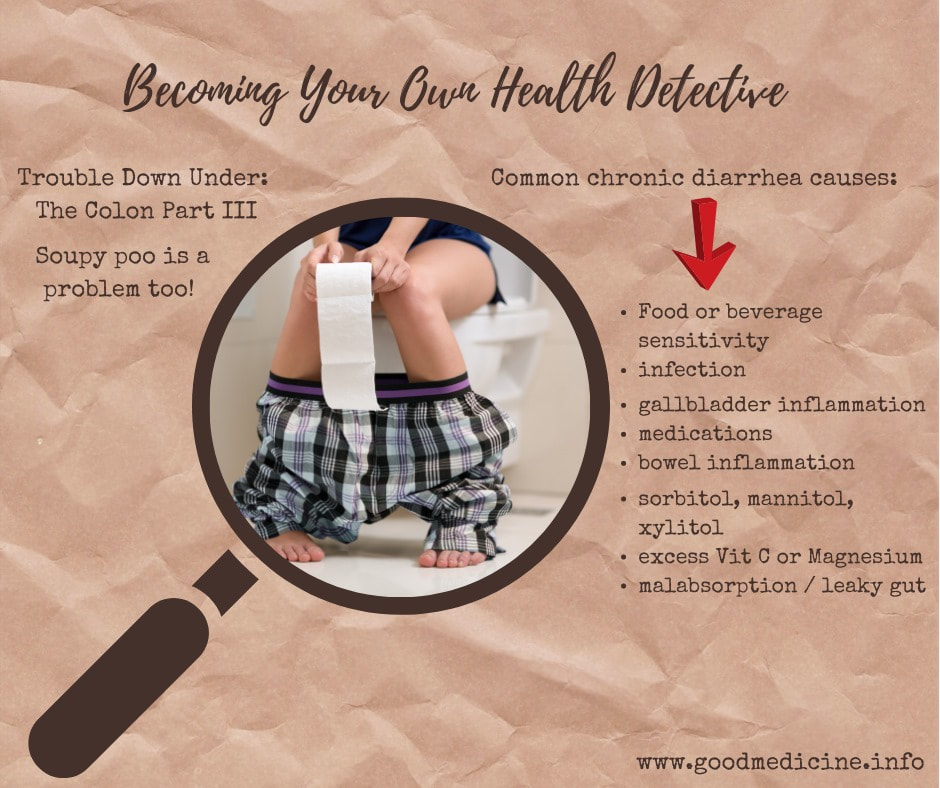
🔎Food or beverage sensitivity: Lactose, gluten, and processed sugar intolerance are the big three, and are more common than you might think. It could be just one ingredient that triggers a run to the bathroom, or it could be a combination of them (think processed foods!).
🔎Tainted water: Yes, even municipal water and bottled water has been implicated on occasion.
🔎Medications : Antibiotics, antacids, Alzheimer’s medications, metformin (for type II diabetes), colchicine (for gout), NSAIDs (for inflammation, sertraline (for mood), lithium (for mood), digoxin (for heart), chemotherapy medications, synthroid/levothyroxine (for thyroid: NOTE there is a gluten based filler in these….. Disturbingly…. So if gluten is your nemesis, this may be a big clue).
Infections (bacterial, fungal, viral, and/or parasitic). Infections often go hand in hand with inflammation.
🔎Chronic Inflammation in the bowels: Inflammation in the colon morphs into an actual dis-ease state if left unaddressed. Inflammatory Bowel Disease includes ulcerative colitis and Crohn’s disease. Irritable Bowel Syndrome is another colon dis-ease that affects 10-15% of the population and may cause a mixture of constipation and diarrhea. Diverticulosis / Diverticulitis affects roughly half of all people over the age of 60, and approximately 10% will have it before the age of 40. Yet, in ¾ of these people, it will never cause problems.
🔎Gallbladder inflammation, malfunction, or missing! (up to 20% of people who have their gallbladder removed have chronic diarrhea) It’s so important to take digestive enzymes if you are missing your gallbladder!
🔎Uncommonly (but needs to be mentioned), some cancers can cause chronic diarrhea.
🔎Excess vitamin C or Magnesium in the diet.
🔎For some people, sorbitol, mannitol, or xylitol (even in the smallest amounts) can cause gassy diarrhea.
🔎A surgical procedure which may have affected the mechanics of the large intestine.


Overcoming chronic diarrhea is usually not a quick fix, and it may require many supportive measures in your “at home” tool box. Just as Rome wasn’t built in a day, neither will a solid bowel movement be formed after a day’s worth of good self care, so be patient and be consistent with your plan!
*Get stress under control. The gut brain axis is a real thing, and if emotions are creeping into your gut, it may show up in the toilet too. Use your emotional oils….. They do work! Find a mentor like Jen Weir who is an ace at teaching people how to do just this! (https://www.weirtx.com/ )
*Get serious with an elimination or FODMAP diet and find out what your body doesn’t like! Note: food sensitivities are found in ½ to ⅔ of people with chronic diarrhea. #itstimetojustdoit
*Probiotics. YL’s Life 9 helps support a healthy microbiome in the colon. When there are enough healthy bacteria to compete with the bad microbes, the bad guys get the boot.
*Digestive enzymes. I cannot emphasize enough how important probiotics and digestive enzymes are to overall health! (YL…. Essentialzyme, Essentialzymes-4, Detoxzyme, Allerzyme, and Mightyzyme for the littles)
*Omega 3’s ( YL Omegagize3) promotes healing and repair and supports a healthy inflammatory response.
*Increase Fiber intake. Start with cooked soft fiber and graduate to “hard fiber” (fruits, veggies, and whole healthy grains (gluten free for some or low gluten for others). Note that meat and dairy have zero fiber! YL’s ICP is a fantastic source of non-irritating soluble and insoluble fiber. Friends, do your research on ICP. It is a vital supplement for colon support!
*Avoid alcohol sugars (sorbitol, mannitol, maltitol, isomalt, xylitol)
*Avoid caffeine. It acts as a laxative.


Diarrhea is the clue. Now it’s up to you to put some of the pieces together! Use this clue and others to kickstart your own research.
As Mary Young says, “It is our God given right to search, read, study and decide how you will feed and care for your own body.”
xoxo~ liz

#knowbetterdobetter
#healthcluesyoucanuse
#fixyourplumbing
#goodmedicine
#ThanksYL
#colonclues
Health Clues in Your Fingernails #4

Liz James · January 19, 2021 ·

Let’s wrap up nails today, shall we? 


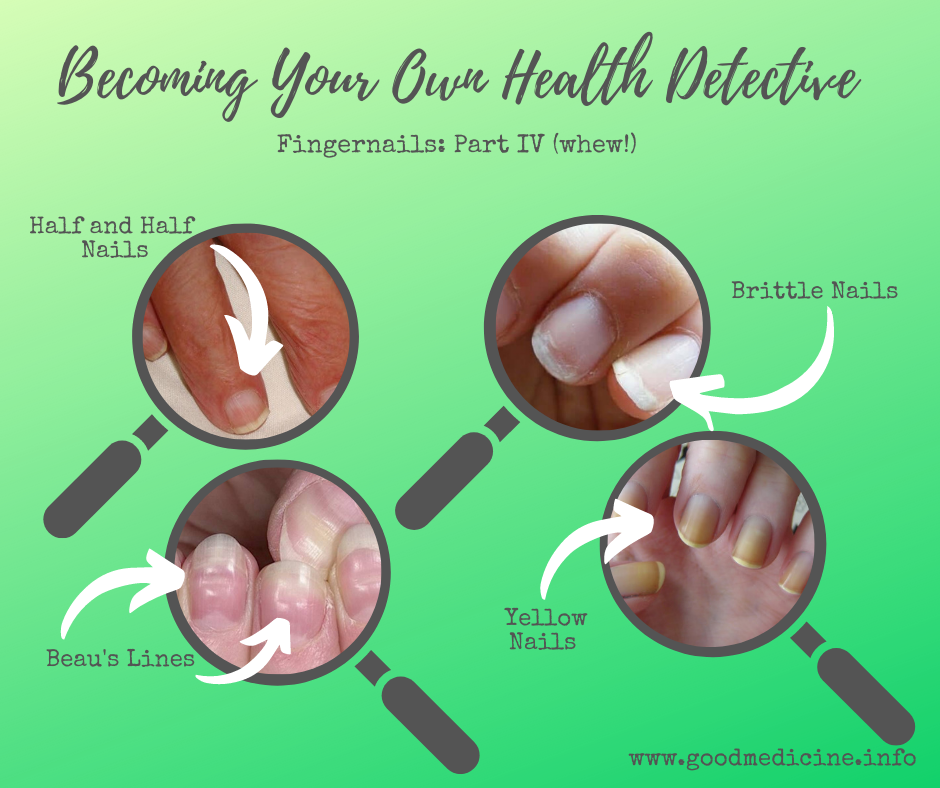
I am grouping “half and half” nails and “Terry’s” Nails into the same group, although they mean different things. Nails that exhibit lunulas that extends halfway up the nail (whiteness) while the upper half remains a darker tone are very specific for significant kidney malfunction. Terry’s nails look similar to “half and half nails” except that there will be a reddish brown band separating the extended lunula from the upper portion of the finger nail. Terry’s nails are associated with diabetes, liver dysfunction, hyperthyroidism, or congestive heart failure. In both cases, it’s time to have a medical professional involved and extensive lab work if both have not happened already!


Brittle nails are more easily managed on your own! Healthy nails require a regular diet  of quality proteins, healthy fats, minerals and water. The protein and minerals (including trace minerals) add strength to your nails. Fatty acids  and water lubricate nails and allow for a degree of flexibility. Dry skin and hair are additional signs that fatty acids are undersupplied in your diet. (This is where I personally would be reaching for OmegaGize or MindWise on a daily basis and making sure I stay well hydrated!).


Side note: if you are doing “all the things” to take care of your nails properly and you eat in a healthy manner, my next health clue would be to assess digestion. It will only be helpful to add in EssentialZyme4, EssentialZyme, AllerZyme, or DetoxZyme to maximize the absorption of the nutrients you ingest. Enzymes are our friends and they facilitate countless processes within our body.


Yellow nails….. But first!……rule out other reasons nails may be yellow tinged. Cigarette smoking or staining from fingernail polish/remover needs to be taken into consideration. True yellow nails may reflect impaired lymphatic drainage, low albumin levels, chronic sinusitis, an  immunodeficiency or Reynaud’s disease. We should all want to support our lymphatic system regardless of nail color (Do you add a few drops of YL’s Lemon Vitality EO to your water on a daily basis?) Lymphatic massage, regular exercise and deep diaphragm breathing #ontheregular are additional ways to keep the lymphatic system moving!
Immune supportive measures (again, something we should all be doing as second nature! ) might include ImmuPro, ImmuPower (EO), Thieves on the feet, ditching as much daily exposure to toxins as possible, plenty of sleep, controlling stress, and eating in a healthy manner. Thankfully, Young Living has given us so many tools to help in all of these categories!


Raynaud’s is a condition  which causes reduced blood flow to fingers and sometimes toes. Support of the circulatory system may be something to consider, in addition to increasing oxygenation opportunities within the circulatory system. Our favorite beverage, NingXia Red comes to mind as a supportive measure, as does CardioGize. Single oils that support a healthy blood flow include (but are not limited to)  ginger, cypress, eucalyptus, coriander, wintergreen, juniper, black pepper, lavender, neroli, and cumin.


Beau’s lines are a visible indented line that goes from side to side on the nail. It actually looks like crosswise bumps and dips on the nails. Beau’s lines are usually associated with physical trauma (if just on one nail), parasitic infections, malnutrition (you may surprised that malnutrition is not an uncommon disorder here in the USA), zinc or iron deficiencies, Raynaud’s, or illnesses associated with high fevers. I would caution you also not to discount parasitic infections….. They are a very very common problem even in first world countries, and they are underdiagnosed in traditional medicine. Do a little digging on your own and know that Young Living has given us very functional tools for supporting an inhospitable environment for these little critters (Parafree and DiGize come to mind). I personally do a parasite cleanse 3-4 times a year!   


Over the last 4 weeks you’ve gotten some great “hands on” clues to help get yourself situated as to which oils and supplements may best serve you and your body. Stay tuned…. Because we’re travelling to a new region next week as we continue to search for more revealing clues!
As always, give me a shout if you’d like to learn more about this topic or the mentioned products! 
xoxo~ liz

#caringissharing
#applicationofknowledgeispower
#keepaneyeonyourfingernails
#goodmedicine
#goodmedicineisknowingthyselfwell
#ThanksYL

Ticked Off

Liz James · April 30, 2018 ·

Years ago, we discovered guineas as a pest control option. Initially, we got them because grasshoppers can be such an issue around here that gardening can be a challenge.  We later discovered that they are also an incredible resource for controlling fleas and ticks. Both of these parasites can be the nemesis to anyone with furry pets, and if you live in the country, they can be especially problematic.

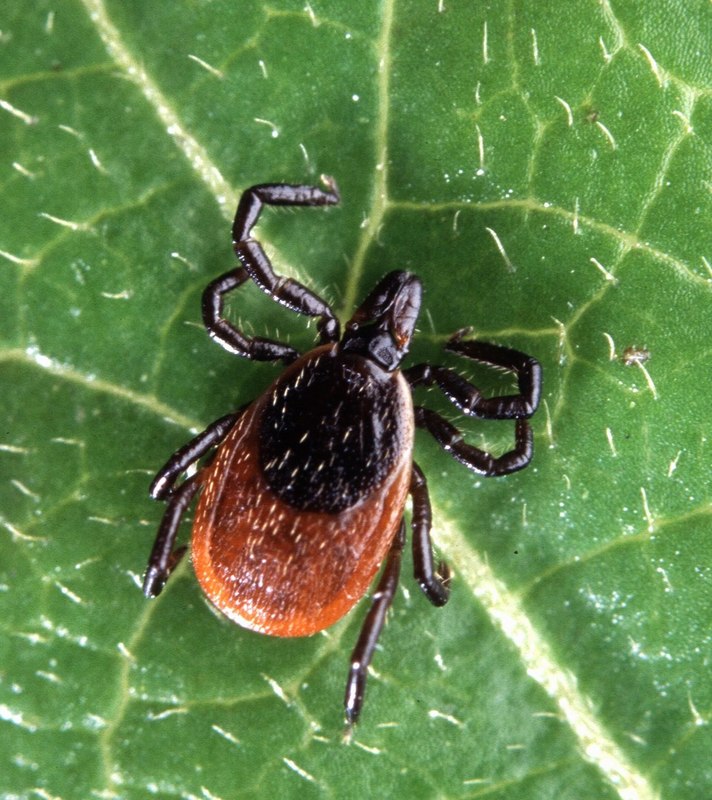
It has been years since I’ve even considered ticks as an issue because we’ve managed our property so well with these birds. Enter Daisy….. our dog we acquired thru adoption last year. No fence will hold Daisy in; she flies over a 5 foot fence with relative ease. Because of her genetic predisposition (she is a border collie / great Pyr cross) she has a strong drive to guard. The perimeter she has chosen includes high grass areas not patrolled by our tick eating fowl. Consequently, ticks have become an issue as we work to protect her (and us) from this disease-laden parasite.

I’ve heard from other sources that this is a particularly bad year in our area for ticks…….the vector to blame for transmitting several diseases, including Lyme disease, and (the new kid on the block)… a tick bite that can make you allergic to red meat. Treatment with antibiotics (for Lyme) is generally effective if caught quickly, but frequently, people get diagnosed much later after the initial tick bite…. and this can lead to lifelong health problems. You can read more about Lyme Disease here, or the tick bite induced meat allergy here.

Everyone’s situation is different, but I thought I’d give some practical tips on protecting yourself and your pets from these little vampires.

*If you live in the country, consider getting some guineas (If you are nearby, I’ve got plenty of adult birds right now, and will donate to your cause).

*Keep your property mowed. If you are like us, it’s not always possible to have your entire property mowed because of the size or terrain involved.

*Keep your pets clean, and consider adding some Cedarwood essential oil to their shampoo as a natural deterrent.

​*In tick prone areas, make sure you are wearing long sleeves, long pants, and tucked in clothing. Wear a ball cap/hat to prevent ticks from dropping onto your head (they do fall from trees too).

​*If you are an avid outdoor guy/gal, grab some safe bug repellent (one without toxins).  Young Living makes a fantastic insect repellent that is incredibly effective.  I have found that a quarter sized amount placed strategically on the neck, wrists, and ankles does a stellar job of warding off biting pests. Benefits include:

  • Repels mosquitoes, ticks, and fleas naturally with 99 percent active ingredients, plus 1 percent vitamin E
  • Formulated with essential oils traditionally recommended for their bug-repellent properties
  • Made with 100 percent naturally derived, plant-based ingredients
  • Formulated without DEET, parabens, fillers, phthalates, petrochemicals, animal-derived ingredients, synthetic preservatives, synthetic fragrances, or synthetic colorants
  • Rubs easily into skin without a greasy or sticky finish
  • Hypoallergenic
  • Pure, gentle formula free from synthetic chemicals
  • Appropriate for use on children
  • Vegan friendly

​*Watch for ticks throughout the day, but especially before bathing… being sure to check all nooks and crannies! If you’ve been in a tick infested area, put clothing directly into the washing machine. After washing, dry on high heat for at least 60 minutes to ensure death of any wee little hitchhiking varmints.
​
If you find that you have been bitten by a tick…. do not panic! Simply remove the tick. Use a pair of tweezers and pull gently, making sure you also remove the biting part of the tick. I’ve read many discussions on using a drop of essential oil directly on the tick to force tick to back out. It is a firestorm discussion with opinions on both sides. I would feel comfortable using this removal technique, but please do your own research!

Once you’ve removed the tick, you’ve got a few options….. but DO NOT DESTROY THE EVIDENCE! Tick testing is ‘a thing’ now…. so you can always send it off, but testing sites do not claim 100% accuracy and it’s about 50$ per tick. If you choose to hang on to the little offender instead of sending its carcass off, put it in a baggie or small jar and throw it in the freezer for safekeeping….. just in case you have some weird symptoms that show up weeks/months later. That tick might come in handy for a proper diagnosis…. after all, these critters can give you a loading dose of bacteria, viruses, fungi, and protozoa… the likes of which we do NOT want. This brings me to the last point….. immune support.

​Whenever I know that I am entering an environment loaded with ick, I always back up my immune system. Examples: flu season at work, every time I hop on a plane (1 out of every 5 people get off a plane with a new ‘souvenir’ they’ve acquired from recycled airplane air), or times when I am under abnormal stress/lack of sleep. I would list a tick bite as a time when immune support should occur….. after all, there is a lot of potential ‘ick’ in tick.

My two ‘go to’ products for immune support are Inner Defense, and Immupro. I use Immupro for daily immune support (taken at night before bed), and then reserve the big guns…. Inner Defense….when I feel I need to kick it up a notch.  (Helpful hint: be sure to have some fatty food in your stomach when you take an Inner Defense… it does not do well on an empty stomach).

Truly tho, the best defense is a good offense….. which brings me back to my guineas, and the fact that I need to rehome some of my prolific pest patrollers…. Any of my local peeps want some? I’m your (farm)girl!

Hugs and love, Liz

How Safe?

Liz James · October 25, 2017 ·

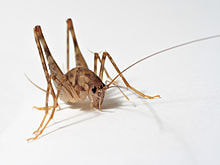
About 6 months ago, we got infested with ugly crickets. I am a farm girl and used to all kinds of crickets and grasshoppers, but these guys are just plain ugly and creepy looking…. and for whatever reason, they began migrating to the inside of our home. Cave crickets have super cricket power… and so in addition to being so ugly only their mother could love them, they can jump like nobody’s business. The night one jumped on me IN THE BED…. well, that was it for me. 

Herein lay the the problem tho. Our farm is organic. I’ve figured out a way to manage cucumber beetles and other garden pests organically, but none of those ways work well inside our home. I mean, who wants white DE powder scattered everywhere and poultry running freely in the house?? I tried peppermint on cotton balls with limited success. It seems that I just couldn’t get the staying power I needed to consistently keep the bugs out.

So, back in July, I heard an ad on an Organic Gardening program about a company in the Dallas/Ft Worth area called Eco-Safe Pest Control. I was dubious about their being truly safe, but the crickets in the bedroom had put me at my limit. We had our first appointment soon after…. at which time I asked a gazillion questions about product labeling and ingredients. This is no small thing…. allowing someone to come into your home and spray God knows what everywhere….. something that purportedly has staying power of at least three months. I didn’t want to make a colossal mistake. We’ve worked hard to eliminate chemicals from our home so that our turf (both inside and outside) is safe for us, and our pets… including Henri!  Lo and behold, they use a great deal of essential oils as ingredients for pest control. Praise God! I knew they worked (after having had the battle of the century with those dang beetles this summer), but couldn’t figure out how to make them work long term. Eco-Safe uses a safe base oil (I believe it is a nut base) that extends the activity to about 90 days. 

Fast forward to today. I can honestly say that I’m sold on Eco-Safe. Jeremy came out today to do our quarterly treatment. I haven’t seen a single cave cricket in at least a month or more (we were seeing them daily). It does seem like it took about 2-3 weeks to get the full effect of the first treatment, but after that, we could definitely tell a difference.

Did you know that the life expectancy of a traditional (non-organic) pest control technician is statistically lower than the national average? In speaking with Jeremy and with the owner of Eco-Safe, I found out that the lifespan of a technician is typically about 60-65 years. What in the world does that tell you about the chemicals a standard pest control company is putting in and around your house?

Ya’ll, daily micro exposures add up. It fills that life bucket up, and once it’s full…. well that’s when the overflow makes the appearance in the form of autoimmune diseases, cancers, and other body system dysfunctions. (Attend one of my gut health classes if you’d like to learn more)

Another thing I found out today is that Organic Pest Control companies like Eco-Safe struggle with the same problem that Young Living faces with its oils (I’m seeing them at Wally World, grocery stores, and the truck stop of all places!). You see, as people wake up to the dangers of hazardous chemical exposure and want something safer, other ‘sham companies’ jump on the band wagon and begin calling themselves ‘GREEN’ in order to gain business. In Dallas, a company is legally allowed to call themselves ‘green’ if only 30% of their chemicals are nontoxic and/or organic. Folks, there is a word for this…. it’s called Greenwashing. It’s not fair to consumers, and it’s almost worse than lying in my book. Eco-Safe does NOT greenwash…. they are certified by the Texas Organic Research Center.

They are the real McCoy… legit. In speaking to Greg, I heard the passion about his product in his voice. He walks the talk. He and his company are committed to safely controlling pests in our homes and yards without simply trading the pest for a toxin. Priceless if you ask me.

I’m not receiving any sort of discount or free services for this blog post by the way…. I just think it’s a good idea that when we find the real thing, we should share. Many of you are like me… and are seeking alternatives so that we can make intelligent choices when punting harmful chemicals out of our homes, and this is one more way you can do it!

Blogging reaches all ends of the earth, and of course, Eco-Safe isn’t a world wide company (I wish they were!). That said, I am sure there ARE safe pest control companies in your area provided you do your research well. Ask your pest control people hard questions about the chemicals they use. Listen to them talk. Are they passionate about keeping you healthy? Do they have some sort of organic certification? Will they let you see the labels on their products? Do their employees look healthy to you (That matters!)? If they can’t answer all of these questions with passion, move on. Chances are high that they are greenwashing if they cannot back their claims with proof. This little test applies to every company …. transparency and passion. I love it! …. who knew I could fall in love with a bug company!

If you are local, give them a try :). You won’t regret it, but I think your bugs will.

Email: info@ecosafepest.com

Eco-Safe: (214) 358-5201

Blessed, healthy, and bug free….  ~liz

Garden Warfare

Liz James · May 7, 2017 ·

I’m not gonna lie. Gardening can be an exercise in exasperation. I think that’s probably why God put certain strains of bacteria in the soil that actually boost our serotonin levels and decrease our anxiety (ie: mycobacterium vaccae)….. otherwise, we’d probably have thrown in the trowel and starved to death long ago! 

In years past, my gardening nemesis (aside from too little or too much rain) has nearly always been squash bugs .  They are pervasive and will ultimately kill or severely cripple anything that resembles a squash plant. They also stink to high heaven when you squish them (the only way I know to kill them organically). My proboscis so sensitive that I can smell them (dead or alive) before I see them.

I’ve been gardening for about 10 years…. honing my skills every year. Successful gardening is definitely an acquired skill….and you can’t quit learning or something will eat your lunch. Literally! Prior to this year, I didn’t think I could hate a garden pest more than squash bugs, but clearly I’d never met the cucumber beetle. I’m glad I know Jesus, because if I didn’t, I’m fairly certain that my personal h*ll would include these garden pests.

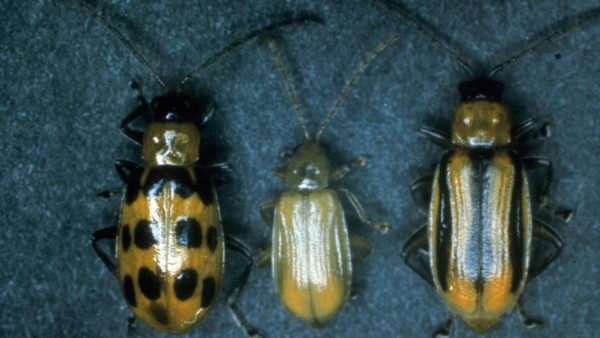
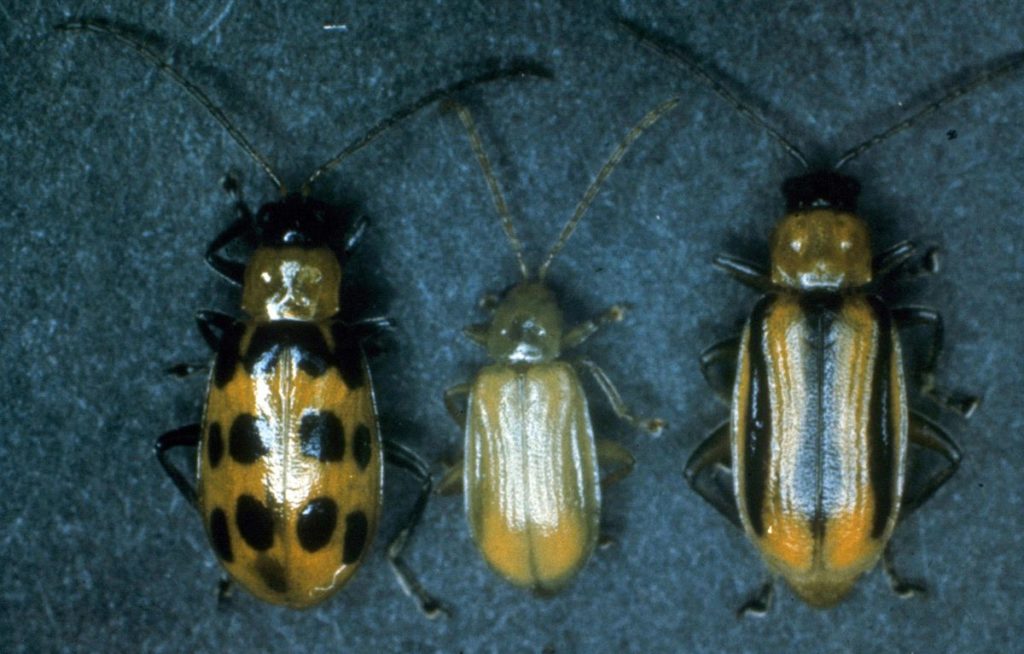
I planted in early April. This last North Texas winter was a mild one, and all the signs indicated that the last frost was behind us. I watched my rows carefully, waiting for the little seedlings to pop up out of the soil. I always get a little extra heart pitter patter when I see them emerge.  This year, each morning when I went out to do a quick check and spot weed, my seedlings started completely disappearing nearly as fast as they came out of the ground. What the what??? It took me several days to identify the culprit. While we do have a few of the spotted variety (see above left), the majority of these evil suckers look like the ones on the right. Striped destruction. Right there. They have eaten every single plant in the cucumber, melon & watermelon family, and THEN they started on my squash. Are you kidding me?? Even the squash bugs have their gustatory boundaries.

If you’ve stuck around here for any length of time, you know that we go as organic as possible on the farm. In the garden, we are 100% organic all the way down to our heirloom seeds and homegrown cow manure compost. Unfortunately, all of the resources I found on organically managing cucumber beetles required some serious forethought and planning….. the kind of planning that you do in the fall and winter.  Helpful information, but too late in the game.

Organic gardening isn’t so much about destroying the enemy as it is repelling and reducing the numbers of ‘feet on the ground’. In my search, I found a few different general gardening ‘bug be gone’ recipes, but I didn’t have all of the ingredients on hand for any single recipe. Time was short. The cucumber beetles had systematically moved on to my young squash plants, and there were beetles everywhere. Complete and utter destruction of all things cucurbit was eminent.

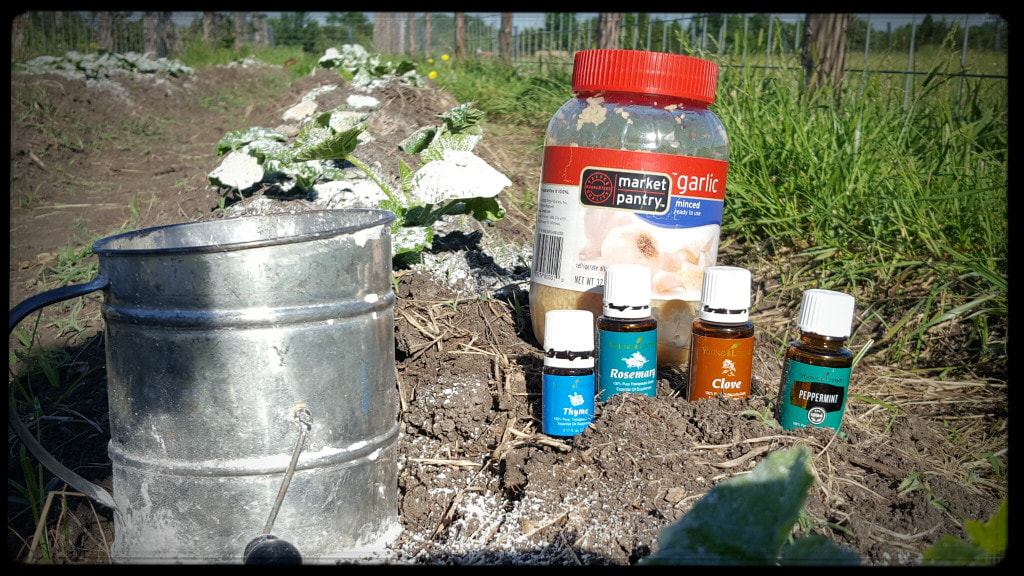
I decided to take the ingredients listed in a few recipes, and combine them for my recipe:

“Bug Be Gone” Brew

1 big deep bucket or ‘under the sink’ style trash can
1 old fashioned flour sifter
about 3 gallons of food grade Diatomaceous Earth (DE)
about 1 cup of premade  minced garlic (I will make my own in the future, but urgency required the premade stuff)
about 2-3 mls each of the following oils. I use Young Living Oils because I know they are potent, pure, and full of health benefits! …. and once again, we are striving to be 100% toxin free, especially in the garden.

  • Thyme
  • Rosemary
  • Clove
  • Peppermint

I added the oils to the garlic and then added that mixture to the bucketful of DE. Make sure you have enough room in the bucket to mix thoroughly without spillage. It is some pretty potent smelling stuff!

I then began sifting the mixture over the plants, making sure to get the ground around the plant well covered too.  Honestly, that part went way faster than I anticipated. I did notice that the beetles seemed to scurry when I started applying the dust, but I decided to withhold my assessment for a few days.

I also went back and replanted seeds on the same day that I spread the initial application. I put some of the DE mixture in each little hole I made for the seeds, and then put some on the top of the rows for good measure.

It’s now 6 days later, and I’m happy to report that the cuke beetle population has definitely made a dramatic turn. While I still find an occasional straggler, for the most part, it appears there has been a retreat by the enemy. My new seeds are coming up, and I am being vigilant about dusting them once they pop thru the upper crust of the soil, and re-dusting them after watering. So far so good….. but for now, I’d call this battle a victory.

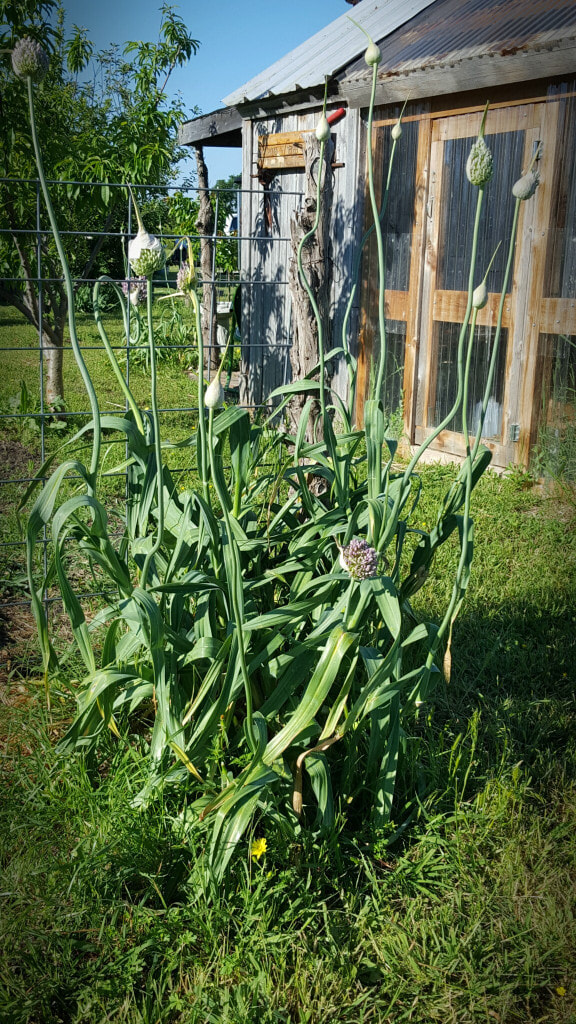
My garlic is nearly ready to harvest and I will be making more of my Bug Be Gone with my own cloves in the future. The sifter is a key piece of equipment for this endeavor. Mine came from my kitchen, but you can find ones like it in junk stores, or just buy a new one on line for about 10$.

​Enjoy your day!…. and I hope you win whatever battle you’re currently fighting.

  • « Go to Previous Page
  • Page 1
  • Page 2

Book Your Health Coaching CallBook Now

Elizabeth James

469.425.9091

ebj0203@gmail.com