

• Skip to primary navigation
  • Skip to main content
Book Your Health Coaching Call
Good Medicine

Good Medicine

Holistic Health Coaching

  • Home
  • Liz James
    • About Liz
    • Coaching
    • Book a 20 Minute Complimentary Coaching Call
  • Favorite Resources
    • BlessedByHisBlood
    • Young Living
    • Fast Like A Girl Certified Coach
    • Order supplements through my Fullscript store
    • Green Pasture (Coupon: Health10)
    • RogersHood Apothecary (Coupon: BEABLESSING for 10% off)
    • DolphinMPS
    • Company
    • Abundance
  • My Books
    • Becoming Your Own Health Detective Volume 1
    • Becoming Your Own Health Detective Volume 2
  • Blog
  • Cart

NingxiaRed

You Are Worth It! Move It!

Liz James · October 17, 2022 ·

Sitting for more than 6 hours a day raises your mortality risk no matter how hard (or how much) you exercise before or afterwards.
 
Chronic sitting has also found to be more deadly than obesity alone (so imagine what that might look like if those two are paired together 😥).
 
God gave us our bodies so that we would use them in all the gifts we have been given.
 
If you have a desk job, please …… for the health of it, consider these alternatives:
👍if affordable, use a stand up desk.
👍get up frequently and take a quick walk (grab the mail, take the dog for a walk, take the stairs instead of the elevator)
👍use part of your lunch break to take a power walk
👍park farther away from your destination purposefully
👍learn some basic chair yoga poses you can incorporate into your day.
👍walk whenever you have a choice of walking instead of driving.
 
The short term benefits of incorporating movement into your day improve mood, energy levels, and sleeping at night (not to mention the grounding benefits of getting outdoors if that is feasible in the situation you’re in).
 
Consider adding purposeful movement to your “to do” list for the day. NingXia Red, Zyng, and NingXia Nitro are all great Young Living pairings. (So is the essential oil blend ‘Motivation‘, if purposeful movement is low on your list of priorities😉) You won’t regret it!
xoxo~ liz

NingXia Red Research Findings & Fun Facts

Liz James · October 10, 2022 ·

Do you NingXia Red? NR is a daily staple on our farm.
My husband and I drink at least two ounces daily, though often it’s more than that if we are grabbing a packet on the go.
Fun Farm Fact: We’ve raised a tiny baby squirrel🐿 (who is now 7years old and lives freely outdoors but “with us” on our porch) and an equally tiny baby ‘possum 🦡using raw milk and NingXia Red.
NingXia Red does a body good! Don’t take my word for it… science says so too ( !🤓😉
 
ningxia red study results

America’s Diabetes Crisis: How to Detect and Prevent Type II Diabetes

Liz James · September 28, 2022 ·

There are times it’s not good to be Number One. This is one of those times. The United States is recognized as being among the nations with the best medical technology and the newest and best drugs. We spend more per person on healthcare than any nation in the entire world, so we should be among the healthiest, right? Yet, for all that we have, the USA has the worst health outcomes. We are #1 in diabetes, #2 in neurodegenerative diseases, #5 in cancer, and #6 in cardiovascular disease (source: Organisation for Economic Co-operation and Development).

Understanding Type II Diabetes Risk Factors

An estimated 1 in 3 American adults have prediabetes or metabolic syndrome (both are precursors to Type II diabetes). It’s a common but flawed thought that Type II diabetes only affects “fluffy” people. It doesn’t. There is a relatively new medical acronym called TOFI, which means “Thin on the Outside, Fat on the Inside,” and TOFI individuals can be just as much at risk as their fluffy counterparts. Lifestyle choices will always be the first line of defense to avoid acquiring a Type II diabetes diagnosis (or succeeding in backwalking out of one).

An astute detective will need some internal monitoring tools to more closely assess clues. Health thieves can be very stealth, and this is a reliable way to monitor gang movement before they leave visible gang “tags” (clues). Forewarned is forearmed! Think of this as another tangible aspect of your body’s security monitoring system.

Essential Tools for Monitoring Diabetes Risk

Here’s what you’ll need:

  • An at-home blood pressure cuff (every home should have one anyway!)
  • Know your waist circumference (measure at just above the hip bone, level with the belly button)
  • Know your family history. Remember that though genetics are important, they play less than a 10% role in outcome. Environment, lifestyle choices, and emotional tendencies control the other 90%. It’s important to know family history so that we can each be vigilant for what we suspect may be lurking in the shadows…. Knowing the health thief tendency (genetics) may be awaiting the right opportunity to steal, kill and destroy. I find a great deal of peace knowing that 90% of gene expression is fully under my own control!

Key Blood Tests for Diabetes Prevention

Get labwork annually which (at the very least) includes the following pieces of information:

  • Complete metabolic panel (CMP)
  • A basic lipid panel
  • Uric Acid and Homocysteine
  • Fasting insulin, fasting glucose, and HbA1c

The combined total of these tests will run about $250 well spent dollars out of pocket. If you have insurance, these are the tests to ask your doctor for when looking for a metabolic syndrome or prediabetes health thief.

NOTE: There is more labwork I’d suggest for a comprehensive look at the body from the inside out…. The above recommendation is specific for monitoring both prediabetes and metabolic syndrome.

Warning Signs of Metabolic Syndrome and Prediabetes

Signs of metabolic syndrome and prediabetes nearly always predate diabetic symptoms. Once you have your lab work, and have gathered your other tools, you’re ready to take a hard look at the state of the union of your body. Signs of metabolic dysfunction show up in the following ways:

  • Evidence of fatty liver
  • High blood pressure
  • High uric acid and homocysteine levels
  • High lipids in blood
  • High fasting insulin, HbA1c, and blood glucose

Understanding Your Blood Pressure Readings

Monitor your blood pressure. For a week, take it before you go to bed, and again before you get out of bed in the morning. If nighttime and morning blood pressure is higher than it should be, cut out all forms of sugar for a week, and retest. Sugar is highly inflammatory and often drives blood pressure upwards. Normal blood pressure runs 90-120 systolic (top number) and 60-80 diastolic (bottom number). High blood pressure is a symptom, not a root cause!

Waist Circumference and Diabetes Risk

An increased waist circumference (males should be under 40 inches and females should be under 35) is suggestive of inflammation, probable leaky gut, mitochondrial dysfunction, and insulin resistance.

Inflammation Markers to Watch

Uric acid and homocysteine are inflammatory markers. Levels are elevated if uric acid is over 5.5 mg/ml and homocysteine is over 10 umol/L. High uric acid levels lead to a fatty liver. Sugar is a big contributor to this. High homocysteine levels indicate an increased risk for developing heart disease and vascular inflammation. Methylated B12 and methylated folate, omega 3’s (OmegaGize3 is a great option), and optimized use of Vit D3 are all helpful tools in supporting healthy homocysteine levels.

Liver Health and Diabetes

Within your CMP, you’ll look for two numbers corresponding to AST and ALT. ALT is a liver enzyme which is fairly accurate for assessing fatty liver. If that number is over 25, more investigation is needed. AST is another liver enzyme. If it’s elevated (over 34) it may also indicate fatty liver (it also elevates when exposed to too much acetaminophen, alcohol, certain meds such as statins, and infection….. So do take that into consideration). If both are elevated, it’s definitely time to take a hard look at sugar and alcohol consumption.

Understanding Blood Sugar Metrics

Fasting glucose by itself is not enough, and sadly it’s often the only thing that is tested routinely. HbA1c is a window into the last 3 months of glucose control within the body. Fasting insulin indicates how well the pancreas is actually able to keep up. Optimally, fasting glucose should be 70-85 mg/dL, HbA1c should be less than 5.4%, and fasting insulin should be less than 6 uIU/mL.

Once you have those numbers, you’ll plug them into this equation: fasting glucose x fasting insulin divided by 405. Your answer to this equation is your assessed risk for developing diabetes. Less than 2.8 is excellent, 4.3 is average, and anything higher is a flag that mayhem is likely already occurring.

Cholesterol Indicators of Metabolic Health

When you are looking at your lipid panel, zero in on 3 different clues:

  1. The ratio of triglycerides to HDL. Studies have found that if this number is over 2.5 in the Caucasian population or 1.5 in the African American population, it tends to correlate with metabolic syndrome.
  2. HDL, the type of cholesterol that is considered “healthy” cholesterol. If it’s between 60-85, it’s generally a sign of good cardiovascular health. If the number is under 40 in men or under 50 for women, there is a greater chance of developing heart disease (a component of both metabolic syndrome and cohort of Type II diabetes). If the number is over 85, there’s a distinct possibility that HDL has a dysfunctional component.
  3. LDL cholesterol. If it’s between 100 and 300, look at your triglycerides. “If triglycerides are over 150, metabolic syndrome may be assumed until proven otherwise.” (Those wise words are from Dr. Robert Lustig MD and his brilliant book Metabolical)

15 Natural Ways to Prevent Type II Diabetes

Isn’t it prudent to avoid dark alleys and always lock your car? The same can be said for paying attention to these health clues. If the numbers above look like a dark avenue you’re not wanting to go down, here are some tips and tricks for avoiding shady areas!

  1. Cut back on carbs and sugar. Eat a low sugar high fiber diet. If you are not getting enough fiber in your diet, add YL’s ICP Daily, Balance Complete, or Power Meal to your nutrition world. Fiber helps regulate blood sugar levels by slowing down the release of glucose into the bloodstream.
  2. Avoid high fructose corn syrup like it’s the plague….. Because it is! It is a strong inducer of insulin resistance. When you start reading labels, you’ll be surprised at how many places it hides in plain sight.
  3. Avoid energy drinks that combine caffeine with fructose. That combination can aggravate insulin resistance and glucose intolerance. Use NingXia Nitro for a cleaner energy boost option. Try pairing Nitro with diffusing or wearing the essential oil blend En-R-Gee.
  4. Exercise regularly! Many studies have shown that weight loss and exercise can increase the body’s sensitivity to insulin.
  5. Improve your diet. A person will never be able to out run, out supplement, or out medicate a bad diet!
  6. Consider intermittent fasting. (If you are already on medication for diabetes treatment, you’ll want to talk to your holistically minded health professional before incorporating intermittent fasting into your routine). At the very least, stop eating 3-4 hours before your head hits the pillow at night.
  7. Know your labs, and don’t be afraid to ask for them by name!
  8. Watch your commercial dairy intake. There is a big difference between commercial pasteurized and homogenized dairy and raw dairy. The former is well known for the amount of inflammation it can cause within the body.
  9. Work towards decreasing inflammation within the body. Sulfurzyme not only helps support normal metabolic function within the body, it also helps regulate a more normal inflammatory response. It is one of my top five Young Living Supplements that I cannot imagine life without.
  10. Take an excellent highly bioavailable multivitamin such as Master Formula. Not all vitamins sold are bioavailable to the body.
  11. Incorporate insulin-modulating foods into your diet. Cinnamon, oat bran, fiber, ginger, barley grass (found in Multigreens), spirulina (found in Multigreens and NingXia Greens), chaga mushrooms, rosemary, green tea, cranberries, blueberries, lemon balm (Melissa), holy basil (tulsi), carrots, broccoli, asparagus, cauliflower, cucumbers, cabbage and salad greens. Healthy whole grain foods such as YL Einkorn products, quinoa, whole oats or oatmeal, and brown rice are also helpful, as are avocados, olive oil, and nuts and seeds. Cacao (natural chocolate) may also help regulate blood sugar levels according to a 2017 study.
  12. Try regular cold exposure which appears to help improve insulin sensitivity. Interestingly, Type II diabetes is positively associated with living in ambient temperature climates. Get your health care professional’s blessing if you have a medical condition (ex: high blood pressure or heart disease) that is being actively treated before partaking in cold showers, cold plunging, or cryotherapy.
  13. Monitor your iron and ferritin lab values: According to a few studies, it would appear that iron levels that are too high have been positively associated with insulin resistance.
  14. Consider adding turmeric to your routine. It has been found to be a helpful supplement to those who are taking the medication Metformin, and has supportive effects on blood glucose, oxidative stress and inflammation. (YL’s Golden Turmeric is my go to for a turmeric supplement!)
  15. Take key supplements including:
  • Vitamin B12 in the form of methylcobalamin to support healthy homocysteine levels
  • Antioxidants (NingXia Red and Super C) – A 2007 study in the Journal of Hypertension found that people who took adequate levels of Vitamin C had a 13% lower risk of developing diabetes
  • Magnesium – Approximately 75-80% of US residents are deficient in magnesium. A deficiency in magnesium sets the body up for both insulin resistance and gout (the official diagnosis for the painful symptoms of high uric acid levels in the body)

Additional Lifestyle Tips for Diabetes Prevention

  • Avoid toxins in daily living, especially atrazine (an herbicide commonly used on corn) and pesticides in general. Eat organically to avoid these.
  • Improve your sleep habits. Give up the night owl tendencies. Research has found that those who stay up late have a reduced ability to use fat for energy. When fat isn’t used appropriately in the body, it becomes fodder for health thieves. Work towards being in bed by 10pm.

There is so much more to prediabetes, Type II diabetes, and metabolic syndrome…..more than I could possibly write here. Hopefully though, I’ve given you food for thought and a desire to learn more. If so, do some digging and think outside the box! The more you know, the more health empowered you’ll be. We have full control of this part of our health story. How will you choose to write yours?

xoxo~ liz

blog about history of diabetes

#DiabetesPrevention #MetabolicHealth #PreventType2Diabetes #NaturalHealthTips #becomingyourownhealthdetective #BYOHD #thebestdefenseisagoodoffense #theapplicationofknowledgeisgoodmedicine #goodmedicine

“The Untold History of Type 1 Diabetes: How Modern Foods and Toxins Impact Pancreatic Health”

Liz James · August 31, 2022 ·

diabetes caused by food changes
The Untold History of Type 1 Diabetes: How Modern Foods and Toxins Impact Pancreatic Health
“History is not history unless it is the truth.” ~ Abraham Lincoln
 
The metamorphosis of diabetes in the United States over the last 100 years is an interesting tale with several thieves of health participating in what seemingly feels like a collaborative effort to bring large populations of unsuspecting citizens to the feet of Big Pharma. Diabetes may happen in one of two main ways: the destruction of the beta cells within the pancreas (Type I), or a rising resistance within the body to insulin (Type II). For the sake of today’s history lesson, the focus will be on Type I diabetes, also called Juvenile diabetes or diabetes mellitus.
 
In 1920, diabetes in kiddos was quite uncommon, with an incidence of 3-4 per 100,000. In an eighty year span, by the year 2000, the incidence had risen to 3-4 per 1,000. Today, that number (1 in 250) is still continuing to rise. Interestingly, these stats do not include previously healthy adults who acquire Type I diabetes after the age of 20 (approximately 1.6 million adults ….. 5.7% of all US adults diagnosed with diabetes according to the CDC). I think you’ll agree that those numbers point to quite a🕵️ crime spree where the theft of health is a decades long embezzlement scheme.
 
Let’s take a look at ringleaders and suspects.🔎
Type I diabetes is quite different from Type II. Causes and contributors include:
🔎Autoimmune dis-ease (nearly always toxin triggered)
🔎A family history of Type I diabetes which predisposes offspring genetically to a greater likelihood of acquiring Type I when exposed to epigenetic (environmental) challenges that are known as possible triggers to the gene.
🔎Toxins (found in food, drink, household chemicals, personal care items, and environmental chemicals)
Infection
🔎Vitamin D deficiency during pregnancy and childhood
🔎Early childhood exposure to pasteurized homogenized cow’s milk and dairy products (a completely different food than raw cow’s milk)
🔎Early childhood exposure to modern grain gluten sources, especially bleached white flour
🔎Early childhood exposure to environmental chemicals found in foods (ex: glyphosate, nitrates and nitrites often found in processed meats)
🔎Leaky gut syndrome (which leak what the body identifies as toxins into the rest of the body)
🔎Vaccinations known to have the capability to trigger Type I diabetes. Multiple documented cases and studies implicate Pneumococcal, Hep B, Haemophilus Influenzae Type B (HIB), MMR, and Covid vaccines as causative agents. (A good resource to learn more about this is the book, Miller’s Review of Critical Vaccine Studies)
 
Did you catch the common theme?🧐 ….Toxin load.
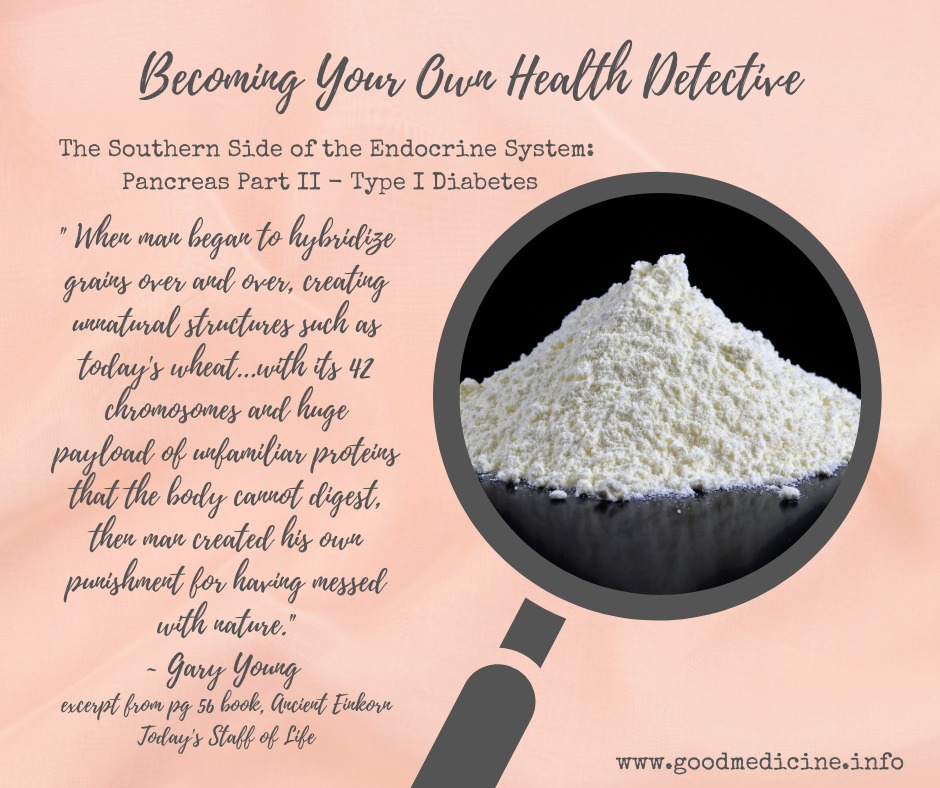
White “all purpose” flour has a fascinating role in this crime vignette. “All purpose” white flour* is wheat that has been stripped of the bran and germ layers (the nutrient dense portion of wheat berries which happens to shorten the shelf life of flour when included as part of flour). The flour then is exposed to chlorine gas to make the slightly brown remaining starchy flour white. When chlorine gas is exposed to the pigments ( the color which makes it brownish in appearance) in wheat flour, a chemical reaction occurs producing a byproduct chemical called alloxan. You won’t find alloxan on any ingredient list on breads or packaged foods because technically, it’s not an added ingredient. Alloxan is a toxin and known carcinogen. It also has a strong affinity for the beta cells in the pancreas that produce insulin. That’s rather unfortunate as it causes cellular death of the beta cells. When enough beta cells have died due to constant exposure to the white flour containing foods, insulin production decreases and ultimately risks stopping completely. The Textbook of Natural Medicine calls alloxan a “potent beta-cell toxin”. ( No kidding. It’s commonly used in clinical trials to induce diabetes in lab animals.) The textbook, Comprehensive Medicinal Chemistry II states:
“Alloxan, a pyrimidine structurally similar to glucose and uric acid, directly disrupts β-cell membrane permeability and produces irreversible β-cell damage within 12 h in most animals. “
 
Now, here’s the interesting history lesson: Flour was not bleached commercially until sometime after 1912. A good man by the name of Dr. Harvey Wiley MD was head of the Bureau of Chemistry (a precursor to the FDA) from 1908-1912. Dr. Wiley was a proponent of whole unprocessed foods, and he fought against bleached flour ( as well as benzoic acid, sulfites, saccharin, and other food additives) all the way to Capitol Hill by way of Congressional hearings. He ultimately left his position in 1912 in frustration and disgust, and later wrote a book in 1929 entitled “The History of A Crime Against The Food Law”. The government, in its wisdom 🙄, replaced Dr. Wiley with a Dr. Elmer Nelson, who was the antithesis of Wiley. Nelson was quoted as saying,
“It is wholly unscientific to state that a well-fed body is more able to resist disease than a poorly fed body. My overall opinion is that there hasn’t been enough experimentation to prove that dietary deficiencies make one susceptible to disease.”
 
In my opinion, Nelson was either unbelievably ignorant or a shill. It is interesting to note that prior to working for the FDA, Dr. Nelson worked for the Soft Wheat Millers Association. Ground wheat will actually whiten on its own without the dangerous alloxan byproduct if given the proper time (a month or two) and environment to do so, but time is money to the Soft Wheat Millers of America, and it helps to have friends in high places.
 
Long story short, modern wheat, with its crazy high gluten content, additionally weaponized with probable alloxan content, and sprayed with glyphosates and other agricultural toxins would be high on the list of suspects🔎 for creating mischief within the pancreas.
 
I know. It’s not fun to think about doing without🥖 breads, 🧁pastries, 🥣cereal, 🍜spaghetti, 🧇waffles, and 🥞pancakes to avoid high gluten content and pancreas damaging alloxan. Thankfully, Gary Young had the foresight to make available food products which contain the much healthier unbleached ancient grain einkorn. Young Living’s Einkorn Flour, Einkorn Granola, Einkorn Spaghetti, Einkorn Rotini Pasta, Einkorn Pancake and Waffle Mix, Einkorn Flakes Cereal, and (when in season) Einkorn (unground) Berries if, like me, you like to grind your own wheat. Whew! I was starting to feel a little like Bubba Gump going through that lineup available to us! Einkorn bakes a little differently than the bleached white stuff you may be used to, so they’ve even conveniently created an Einkorn cookbook (created by Heidi Ellis)! In it, are 80+ recipes for pizza dough, breads, cakes, crackers, tortillas and more. If you haven’t tried einkorn products, you are in for a treat….. They are far more flavorful than those made with bland unhealthy white flour. For those who must completely abstain from any form of gluten, Young Living also has a Gluten Free Pancake and Waffle Mix (sadly, it is currently out of stock), but there are many other healthy flour options to choose from in the marketplace: coconut, almond, oat, brown rice, amaranth, and chickpea are all good options.
One of the most valuable things we can give ourselves is empowered knowledge so that we can make informed decisions on what we choose to allow into our personal homes and bodies. Many of the causative agents listed above can be avoided, decreasing the odds of developing Type I diabetes and other dis-eases.
The second most valuable thing we can give ourselves is grace (without guilt) to do better once we know what we didn’t know before. We can’t know everything, and digging for factual information that is purposefully hidden (and frequently out of print) can be hard, confusing, and frustrating. Don’t think for a minute that making it hard to find truth isn’t done to us on purpose. Understanding the true history of “us” is important to our health, so we can learn, do better, and avoid the lure of purposefully addictive foods created by industries (both food and Big Pharma) that have profit over purpose😠 as its primary goal.
 
Other ways to create a body environment for decreased risk of developing diabetes include:
✅Knowing levels of Vitamin D, and supplementing accordingly. Shoot for lab values 70-90 ng/mL. This is an important number to know during pregnancy, and frankly a valuable thing to know throughout life, even for infants and children. Depending on how much supplementing is needed, Young Living’s Super D may be enough for some adults and older children, while others may need a much higher dose (D3/K2) to maintain healthy levels.
✅ Avoid nitrates, nitrites, and nitrosamines (often found in packaged meats)
✅Include cod liver oil in your supplement regimen. It’s available in liquid and capsule form.
✅Breastfeeding has been found to decrease the risk of Type I diabetes in children. Exposing babies in a delayed fashion to common suspect food triggers is also helpful.
✅Providing a solid source of Omega-3 Fatty Acids is also helpful. Young Living’s MindWise is a good liquid option for kids and is also helpful support for brain health and development. OmegaGize3 is another excellent option (for adults) in capsule form.
✅Strive for a diverse gut microbiome. People with Type I diabetes tend to have a less diverse gut microbiota. Use antibiotics only when absolutely necessary. According to the CDC, at least 30% of antibiotics prescribed are unnecessary. I personally believe that number is even higher. Not only does excessive antibiotic use breed antibiotic resistance, it has a profound negative effect on the gut microbiome.
✅Make a regular healthy source of antioxidants part of your daily routine to help offset the oxidative damage done to the beta cells in the pancreas. NingXia Red is an ideal option for all ages. The Young Living website gives an easily understandable explanation:
“Antioxidants, why are they important? They are the antidote to oxidative stress! …..Oxidation has been implicated in the origin of more than 100 human diseases and in the aging process.”
Einkorn and NingXia Red….. healthy and healing food options. Over 2400 years ago, Hippocrates said, “Let food be thy medicine, and medicine be thy food.” Good food is good medicine, with the ability to both protect and heal.
xoxo~ liz
 
#BYOHD
#goodfoodisgoodmedicine
#Historyisimportant
#TypeIdiabetes
#goodmedicine
#knowbetterdobetterbebetter
#YoungLivingispurposeoverprofit

Fetal Programming

Liz James · August 16, 2022 ·

The Southern Side of the Endocrine System: What in the heck is fetal programming?
 
You’ve heard it, and perhaps you’ve even believed it…. the puffed up 10% truth most of us have been trained to wholly believe… that genetics largely determines our health fate. However, if you’ve stuck with me this long you’re a seasoned super sleuth and will already know that we have the upper hand. In becoming the conscientious gatekeepers of our personal “temples” (see I Corinthians 6:19), we are prohibiting the careless destruction caused by all things toxic to the mind, body, and spirit, and are largely (upwards of 90+%) able to prevent and circumvent the expression of wayward genes. THIS is what personal health and wellness management should look like.
 
There is another aspect to this though that I’ve not yet mentioned: womb life, and what that means to us as adults. “Fetal programming” is the propensity for developing a disease or dysfunction later in life based solely on environmental womb conditions… not genetics. Fetal programming starts the moment Harry (sperm) met Sally (egg) on the fallopian tube highway , and the effects of it will be felt throughout life and the life of your kids. Yes, what happened in your womb experience can affect future generations. Talk about scripture being walked out in life! (Exodus 20:5)
 
Because I believe in learning from history, let me give you a well documented example of this phenomenon. During the winter of 1944 World War II, the Dutch suffered a 6 month starvation event at the hands of the Nazi’s. More than 4 million people were affected, surviving on about 30% of normal caloric intake. As you might suspect, pregnant women who lived through the Dutch Hunger Winter gave birth to babies who weighed a fraction of what a term baby should weigh. As adults, these children were found to be more susceptible to diabetes, obesity, cardiovascular disease and other health problems, while their siblings did not. As a result of being starved “in utero”, their bodies developed a “thrifty” mechanism which altered insulin production and the normal metabolism of sugar. As a consequence, when these children grew into adulthood and lived in a “normal food availability” world, their body still responded as though it was living in a state of starvation.
 
While an adaptation like this is meant to be a survival mechanism, it doesn’t always work out that way in health.
 
More examples of this include:
🧐A 2009 study which showed an association between maternal anxiety during pregnancy and the development of asthma in offspring.
🧐A 2011 study which looked at the effects of a violent environment on a fetus during pregnancy. Offspring tended to have poorer health, more difficult temperament, and increased likelihood of depression.
🧐A May 2022 study found that maternal prenatal depressive symptoms had a negative effect on toddler behavior which began expressing by the time they were 18 months old.
🧐Research has also shown that even chronic (key word) mildly stressful living situations can lead to negative changes in the fetus neurologically. The formation of neurons in a fetus begins at the 42nd day of pregnancy, and by the 28th week of pregnancy, a baby’s brain contains billions of neurons….. 40% MORE than the adult brain contains. After the 28th week of pregnancy, complex structural and functional changes in the brain take place, and a chronically stressful environment has an effect on this development. The environmental impact of womb life on a baby’s brain and body development is huge!
Perhaps you are curious how this happens…. ie: the root causes?
👶During stress, there is a rise of maternal cortisol activity in the mom. A chronic higher than normal cortisol activity is thought to lead to the triggering of atherosclerosis, insulin resistance, and cholesterol levels as the babies advance through their own adulthood. Low birth weight babies (a clue!) are more likely to grow up having an exaggerated stress response and secrete higher levels of cortisol themselves, have a decreased vascular elasticity and delayed vasodilation (leading to issues related to high blood pressure), have fewer pancreatic beta cells (the cells that make insulin), and tend towards osteoporosis in adulthood.
👶Stress also activates the inflammation process in the baby’s body, which leads to activation of the immune system, releasing chemicals called cytokines. Cytokines are not a bad thing until there is overproduction or inappropriate production, at which point disease or dysfunction occurs.
👶A baby’s brain does not begin to produce serotonin until late in pregnancy. The placenta does provide serotonin to the baby at a level which helps develop both structure and function of the baby’s brain. Animal studies have shown that increased serotonin exposure to fetal brain tissue in utero alters many neuronal circuits which can lead to behavioral problems later in life.
👶Neonatal nutritional deficiencies can affect fetal programming. Malnutrition comes in two forms: under nutrition (scarcity of food) and unhealthy eating habits with high calorie, low nutrition diets. Both result in a lack of essential micronutrients such as iron, folate, choline, vitamin B12, zinc, tryptophan, omega 3 fatty acids and iodine which are crucial to fetal brain development.
 
All of this has profound implications on us as adults, but also on babies 👶forming in the womb. For us grownup humans, if it is suspected (or known) that we were carried by our mothers under stressful conditions, some of us may have to work a little harder🙏💪😴 at mediating stress response because of our own fetal programming scenario. Half the battle is understanding the why. 😉The other half is knowing how to use the tools we have on hand to help support a healthy mind and body. Thank goodness for these tools of ours! I’ve talked at length about them, so I leave it up to you to revisit those posts. Ideally, please share in the comments below what modalities you have found that work best for you. Our personal stories help light the path so that others may also find their way.
 
Now, what about these sweet babies👶in the womb? Thankfully, the placenta plays a vital role in protecting the baby from harmful chemicals that may be in the mother’s blood by acting as both a barrier and a filtration system. A healthy functioning placenta will go a long way to prevent a biochemical or synthetic chemical cause for negative fetal programming. I always smile when I hear a new mama talking about how her midwife or doctor marveled over the beauty of her placenta that was supported daily with NingXia Red. There are soooo many of these stories out there! Some of the ways a healthy placenta may be supported include: NingXia Red, Master Formula, Super C Chewables, Mineral Essence, Sulfurzyme, Multigreens, Super B.* (*all with approval from your trusted doctor or midwife of course! ).
 
The good news is that fetal programming works both ways. Incorporating a healthy mind, body, and spirit/ soul experience throughout pregnancy with improved quality of food eaten, reduced exposure to hormone disruptive and toxic environmental chemicals and mediating maternal anxiety in natural ways improves the chances of a positively “programmed” tiny person who is more apt to be able to roll with life’s punches physically and emotionally. Remember too, that thoughts and words mean something to the body whether that body is an adult or a fetus, and the effects may either be a honeyed balm or a toxin. Words matter, and the body reflects what we think and feel about ourselves.
 
Use your Thieves Household Cleaner. Toss the toxins.
Diffuse your favorite Young Living essential oils. Ditch the endocrine disrupting fake fragrance air fresheners and plug-ins.
Honor your body and the bodies of future generations with your choices.
Think about all those little babies who are worth it! So are we. Each one of us.
xoxo~ liz
 
(link to Becoming Your Own Health Detective Vol I: https://goodmedicine.info/…/becoming-your-own-health…/ )
 
#BYOHD
#becomingyourownhealthdetective
#toxinfreeisthewaytobe
#goodmedicine
#ThanksYL
#toxinfreeslifestyle
  • « Go to Previous Page
  • Page 1
  • Page 2
  • Page 3
  • Page 4
  • Page 5
  • Interim pages omitted …
  • Page 9
  • Go to Next Page »

Book Your Health Coaching CallBook Now

Elizabeth James

469.425.9091

ebj0203@gmail.com