• Skip to primary navigation
  • Skip to main content
Book Your Health Coaching Call
Good Medicine

Good Medicine

Holistic Health Coaching

  • Home
  • Liz James
    • About Liz
    • Coaching
    • Book a 20 Minute Complimentary Coaching Call
  • Favorite Resources
    • BlessedByHisBlood
    • Young Living
    • Fast Like A Girl Certified Coach
    • Order supplements through my Fullscript store
    • Green Pasture (Coupon: Health10)
    • RogersHood Apothecary (Coupon: BEABLESSING for 10% off)
    • DolphinMPS
    • Company
    • Abundance
  • My Books
    • Becoming Your Own Health Detective Volume 1
    • Becoming Your Own Health Detective Volume 2
  • Blog
  • Cart

Hormones

February Young Living Gifts

Liz James · February 1, 2022 ·

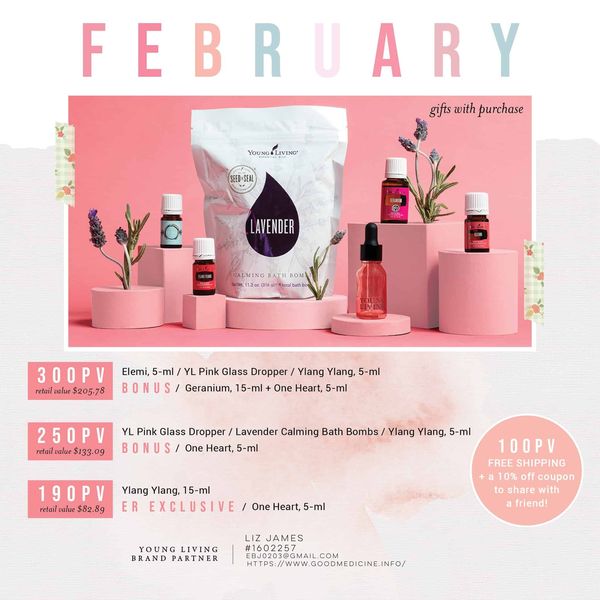
Love is in the air! ❤🌿❤🌿 And just like that, here we are in February! You are going to want to tune in today because Young Living is dropping some serious goodness on us (not just in this post!).

It’s been a hot minute since we’ve have coupons to share with a friend, and they’re back! 🥳 Do you recall what set your tilted health world🌎 upright and spinning in the right direction again? Was it DiGize, 🤔 Thieves for the win! 🤔…. or perhaps a supplement like Sulfurzyme, or Thyromin🤩. While you were sighing with relief, didn’t you also want to shout from the roof tops? I frankly couldn’t keep my mouth shut. Everyone needed to know about the miraculous ways of Young Living plant juice. #Godgaveuswhatweneedinthegarden If someone hadn’t shared with me, I may have found these tools eventually…… but maybe I wouldn’t have? Then what? ….. I don’t even want to think about it. 🙁

Pay it forward friends. #betheoneforsomeone ….. and now we can not only share information, we can give them a financial foot in the door with a 10% coupon. (You can earn up to 2 coupons this month!….. the code will come to you by email within a week of placing your order…. so watch for it in your email box!)That’s a gift 🎁that keeps on giving! Because it’s February….. (and you don’t want to miss Lucy Li Bido’s class that starts today!….. you’re going to want the tools to make her potions 😍) 🥰 One Heart (essential oil blend for Subscribe to Save … subscription orders). Diffuse or wear this perfume worthy blend created especially for the Young Living Foundation.

🥰 Ylang Ylang…. oh my! Put the Ecuador YL farm on your bucket list because fields of Ylang Ylang trees are magical. The aroma makes it so! Ylang Ylang can be found in both Joy and Sensation… according to science (and Lucy💕) it supports libido and a healthy blood pressure in women and men. Here’s one of her diffuser recipes for the bedroom:3 drops Sandalwood3 drops Lavender2 drops Ylang Ylang

🥰 That cute little pink glass dropper will be perfect for making face serum or a host of other recipes!

🥰 Lavender Calming Bath Bombs…. if you are a bath gal (or guy!), you’ve probably already fallen in love with these!

🥰 Geranium is another floral oil whose actions and abilities are very much in the category of “pretty is as pretty does”. It has been used for eons in skin care (ahem…. winter skin!), skin healing, and also in balancing emotions. Do a little digging on geranium and the liver 🤓. My favorite thing about geranium is that it is FANTASTIC for bleeding wounds. We’ve had some gusher wounds out here on the farm, and have found that one of our first aid kit must haves is a ready made blend of Geranium, Frankincense, Lavender, and Helichrysum. #tools! Each can be used individually for the job, but that combo is the bomb!

🥰 Elemi comes from the same plant family as Frankincense and Myrrh…. sometimes you might hear it be referred to as “the poor man’s Frank”. (That’s a hint 😉) It has been used for centuries in ointments and salves for skin, including dressing battle wounds of soldiers. If you see a recipe for Frank but don’t have it on hand, Elemi does a stellar job as your backup plan! Have a great Feb 1st friends! It’s going to be an amazing month! (Holler if you’d like a 10% coupon to get started….. I’ll have a few to give away this month!)

xoxo~ liz

#sharingiscaring#betheoneforsomeone#sharethelove#ThanksYL

3You and 2 othersLikeCommentShare
Dopamine Deficiency Part III: Solutions

Liz James · January 25, 2022 ·

Discussing solutions is one of my favorite topics to write about, but if we didn’t first identify root causes, how would what we are doing be any different than the tendency to bandage a festering abscess? Solutions can be clues all on their own too, right? I ask that you be mindful of three things while navigating and identifying ways to improve and support healthy dopamine levels:

🤔Would I be prone to developing an addictive tendency to something I already particularly enjoy? (Too much of a good thing makes it not necessarily a good thing.)

🤔Am I willing to step outside of my comfort zone in the pursuit of happiness and improved dopamine balance in the body?

🤔There is no magic “one hit wonder”. Lifestyle is where the sweet spot lies….. Just as it took every single person doing their part in rebuilding the wall around Jerusalem (read Nehemiah 3 sometime!), it takes symphonic effort to succeed in body balance! Now, on to the fun stuff!

💪Exercise: Exercise slows the breakdown of dopamine in the body, and helps prevent loss of dopaminergic🧠 brain cells. You may have heard of the “runner’s high”. There are several neurotransmitters involved in this sensation of feeling great, and dopamine is one of them. The brain is literally washed with dopamine in these moments. If strenuous exercise is new to you, start with walking, yoga, pilates, or aquatic exercise. Mild exercise causes dopamine release too. Bonus points for exercise outdoors and with a group of friends!

🤓Learn something new: Learning a new skill (language, hobby, sport, or activity) or simply learning new information causes dopamine to be released. It’s very likely happening right now as you read this information! You’ve heard of “seminar highs” or research junkies (yep, this is one area I receive a huge dopamine dump from!). When the dopamine release happens, it makes you want to learn more and repeat the experience. Bonus points…. The more you engage in learning new things, the stronger your brain🧠 gets too!

☀️Vitamin D: Vitamin D has a role in the production of dopamine and in also protecting dopamine receptors. Evidence suggests that supporting healthy Vitamin D levels also supports healthy dopamine levels, especially if clinically deficient in Vitamin D. Make sure to ask for Vitamin D levels whenever you have the opportunity to get labwork! Young Living’s Super D is most bioavailable when it is dissolved in the cheek or under the tongue.

😉🥤Phenylalanine and tyrosine are two amino acids used in the biosynthesis of dopamine. Foods high in phenylalanine and/or tyrosine include meats, beans, milk, nuts, seeds, whole grains, sweet potatoes, bananas, apples, cherries, eggs, yogurt, and NingXia Wolfberries! Supporting healthy dopamine production is just one more reason to get your ounce or two (or four!) of NingXia Red every day!

🥰Increasing Vagal Tone: There is a direct correlation between low vagal tone and lower levels of dopamine. You’ll want to go back and review ALL the wonderful and fun ways you can improve vagal tone! (We talked about this a few months ago….use the search option in this group to find the posts.)

👨‍🍳Uridine is a supplement. It’s also found in beer, brewer’s yeast and nutritional yeast. Nutritional yeast is not the same yeast that bakers use. If you do a little digging, you’ll find recipes incorporating nutritional yeast into tasty options.

Here’s a quick recipe for Caesar Salad Dressing:1 & ½ cups extra virgin olive oil¾ cup coconut milk½ avocadoJuice of one lemon1 tsp balsamic vinegar3 cloves of garlic2 Tablespoons nutritional yeast¾ tsp sea salt or pink saltA toothpick swirl or two of Young Living oregano vitality essential oil (1 drop might be WAY strong!)½ tsp onion powder(Use organic ingredients whenever possible). Put all ingredients (except olive oil) into a blender and blend til smooth. Slowly add in olive oil while blender is running at low speed. Stores up to one week in the fridge. Note: may also be used for a dipping sauce!

🥶Cryotherapy: You’ve seen advertisements for it I’m sure. Be brave and consider giving it a try! Remember, simply exploring something new increases dopamine in the brain. Ice water immersion (or cryotherapy tanks) increase dopamine by an estimated 250%! Yowza! I am a fan of cryo….. I find it both terrifying and exhilarating (probably from that ginormous dopamine dump I received!)

👐Intermittent Fasting not only leads to higher levels of dopamine release; it also reduces age related dopamine receptor attrition. There are many additional reasons to incorporate intermittent fasting into your lifestyle if you’ve not considered it before now.

🌿Curcumin is the yellow pigment found in turmeric. Curcumin reduces the metabolism of dopamine in the brain thereby increasing levels. YL Golden Turmeric or Spiced Turmeric Vitality Tea for the win! You might also consider adding Golden Turmeric to yogurt or smoothies!We’re about halfway through this pretty amazing dopamine support list! Next week we’ll wrap up with more simple and inexpensive ways to support this happy hormone.
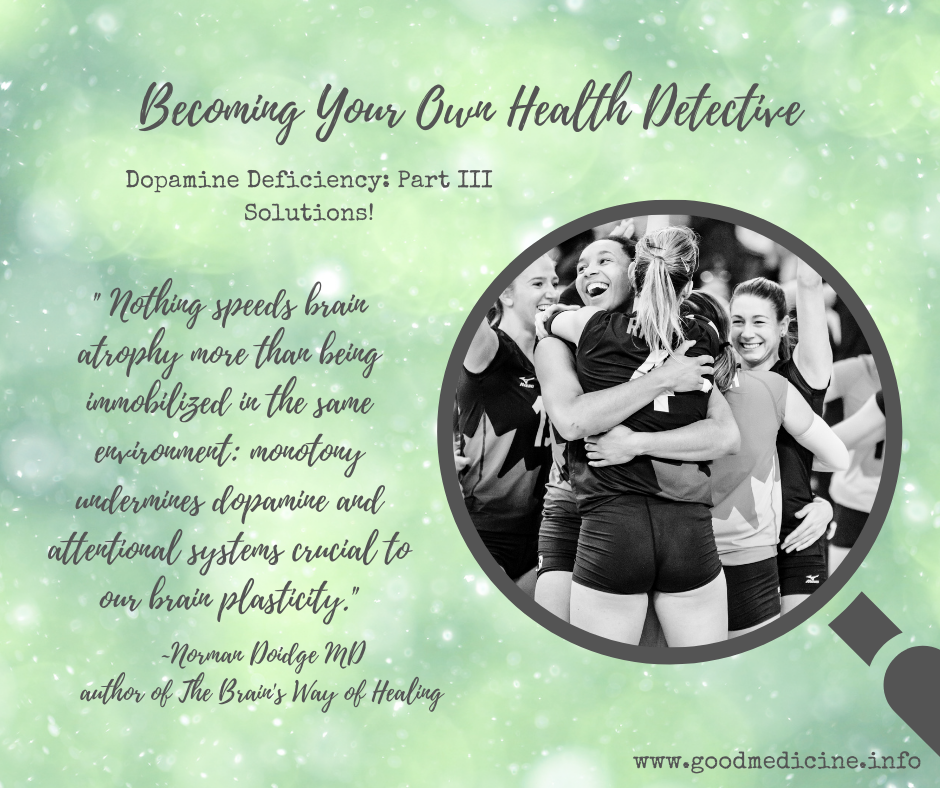
xoxo, liz #caringissharing#knowbetterdobetter#dopamineisdope#balanceddopamineisgoodmedicine#goodmedicine#BecomingYourOwnHealthDetective#ThanksYL

Clues from Restless Leg Syndrome – part 1

Liz James · December 21, 2021 ·

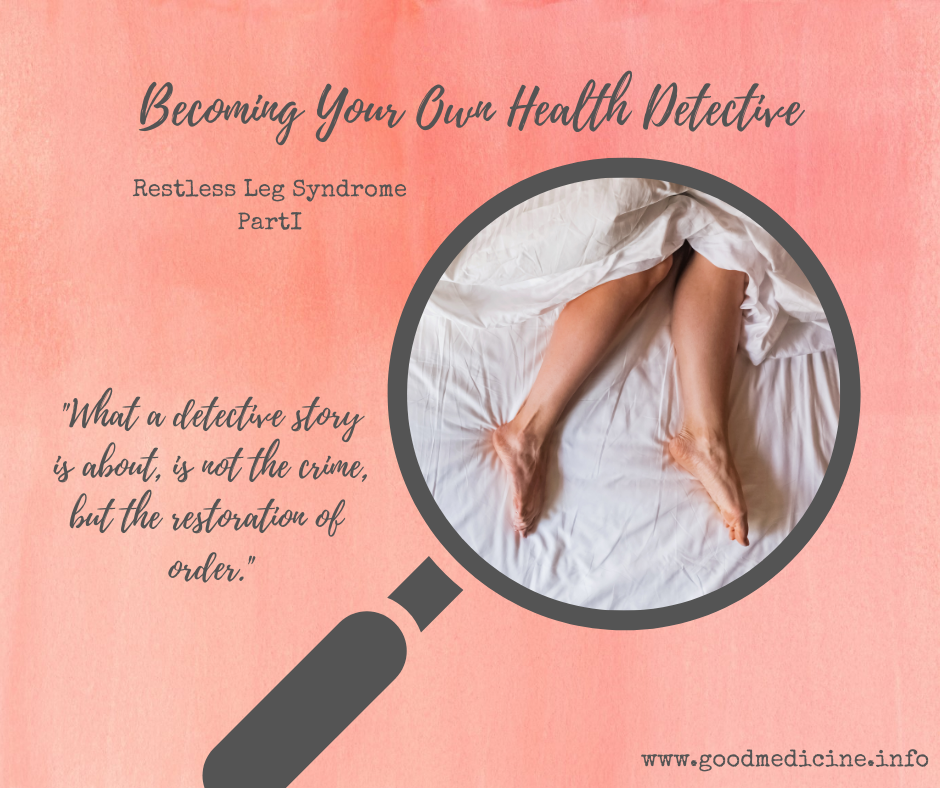
The Trail of Clues in Restless Leg Syndrome: Part I
OK friends, let’s take a quick quiz straight from the pages of the National Institute of Health. These 4 questions are a simple “yes” or “no” answer, and will help identify if this next set of clues resonates with your current situation. 
✅Do you have a strong and often overwhelming need or urge to move your legs? (Often the urge may be accompanied by abnormal, unpleasant or uncomfortable sensations.)
✅Does the urge to move your legs start (or get worse) during rest and inactivity?
✅Does the urge to move your legs worsen in the evenings/at night?
✅Is the urge to move your legs partially or totally relieved by movement (at least temporarily)?
If you have answered yes to these questions, this post series may shed light on both why your legs may be restless and (next week) natural ways to help relieve the situation.  Bear in mind that beyond the questions above, there are several mimickers of restless leg syndrome, so the process of elimination may come in handy!   Poor circulation in the legs, fibromyalgia, neuropathy, and ADD/ADHD are a few disorders known for restless leg mimicry.
Restless leg syndrome (RLS)  is a very common condition affecting about 10% of adults in the USA and even some children. There are several medications commonly used to treat RLS. According to many pharmacy clients I’ve worked with over the years, the medications are often minimally effective, not without unpleasant side effects (GI distress, constipation and/or diarrhea), and do not address root causes.
RLS is not generally a precursor of things to come thankfully….but it is highly annoying and life disruptive nonetheless, especially as it often leads to chronic insomnia.
As any good detective would do, you’ll want to discover the motive (root cause) of your  RLS. Motives vary in each case, right?
*Occasionally, restless legs may be blamed on genetics, but that is the exception rather than the rule. Overwhelmingly, restless leg syndrome is given the dubious distinction of having an idiopathic origin. My personal feeling is that “idiopathic” is an overused medical term used when not enough time has been spent looking at clues to find the root cause! Understandably so….. insurance companies do not usually allow doctors the time or tools (comprehensive lab work) to actually find the source of the problem.
There are MANY factors leading to or exacerbating restless leg syndrome:
*Approximately 15% of RLS cases have an underlying iron deficiency. Iron deficiency may be easily checked with lab work. Checking iron alone is insufficient. Ferritin levels also need to be evaluated.
*Other nutritional deficiencies contributing to RLS include magnesium, calcium, potassium and/or zinc. Again, blood work is key. (If you get magnesium tested, make sure it is magnesium bound to red blood cells “mRBC” for a more accurate reading)
*Hormone imbalance is another common cause. Approximately 20% of pregnant women develop RLS, usually in the third trimester. This symptom tends to dissipate about 4 weeks after delivery of the baby. Women are more likely to have hormonal imbalances than men overall, and women are also more likely to develop RLS than men in life. Hyperthyroidism, another type of hormone imbalance, is an additional contributor.
*Dopamine is a neurotransmitter that plays many roles in the body, most notably in motivation and positive reinforcement of behavior. It also plays a critical role in the control of movement. So, as you might imagine, a dopamine imbalance may also play a key role in RLS. (We’ll cover dopamine deficiency in the near future.)
There also appears to be a relationship between ADD/ ADHD and restless leg syndrome. Additionally, pediatric restless leg disorder is sometimes misdiagnosed as growing pains or ADD.
*Symptoms of restless leg syndrome are common in people who have chronic kidney disease.  When the kidneys are not functioning as they should, anemia, iron deficiency, and high calcium levels in the blood commonly occur. As you’ve just learned, all of those conditions exacerbate RLS.
*Hypertension, diabetes, and increased BMI (body mass index) also contribute to the incidence of restless leg syndrome. (The medications used to manage these conditions are also worthy suspects!) Uncontrolled high blood sugar often leads to peripheral nerve damage; another contributor to restless legs.
*Medication induced restless legs may be among the most common (idiopathic?) causes for developing this disorder. Every medication acts in multiple ways throughout the body. Immediate side effects of medication are fairly easy to spot, but often side effects such as restless legs creep in slowly, making it hard to pinpoint the culprit. Medications known to cause restless legs over time include:
💊Certain antihistamines
💊Psychotropics (ex: haloperidol, aripiprazole, risperidone, quetiapine, mood stabilizers)
💊Antidepressants (SSRI’s,SNRI’s, and tricyclics, ex: fluoxetine, sertraline, venlafaxine, paroxetine, imipramine, amitriptyline)
💊Some nausea medications (metoclopramide and prochlorperazine)
💊Acid reducers
💊Beta Blockers
💊Calcium channel blockers
💊Some sleep medications
I’ve talked to many pharmacy clients over the years who struggle with restless legs, and while it is a relatively benign condition, it is definitely life altering…anything that negatively affects quality sleep is! Westernized health culture is often very quick to prescribe or suggest over the counter medication to quickly solve a problem, overlooking the unintended possible consequences. Often, there is a gentler solution, but it does require ownership and a willingness to take personal responsibility for one’s own health management.  There will always be a time and a place for western medicine, but it behooves us all to leave that as a last resort whenever possible.
I hope this helped someone identify their restless leg trigger(s). Next week I’ll talk about healthy options for living with RLS.
xoxo~ liz
#sharingiscaring
#goodmedicine

STRESS – part 3

Liz James · November 30, 2021 ·

Chronic Stress Part III : Solutions
Today’s post is full of butterflies, kittens🐱, and unicorns (Literally!). That’s a welcome change, I’m sure, considering the sobering long term ramifications of unmitigated chronic stress we’ve talked about these past few weeks. Chronic stress usually creeps in on very soft feet, so consider taking a few minutes to answer this simple yes/no “day to day stress assessment”:

stress assessment


Coping with stress involves two steps:
1️⃣Recognizing the signs and symptoms of EARLY burnout and stress (you’ve got the tools now!)
2️⃣Activating any or all of the self care tools below. 
Now, here’s the fun part….. Giving yourself some self care time by mixing and matching ways to “de-stress” on the regular. This is not a “once and done” experience. These are lifestyle changes for life!
🙌Stressbuster Options🙌
👉Get regular exercise! 
👉Engage in self care activities (ex: a long soaking bath or a massage)
👉Prayer, meditation, and/or quiet time with no electronic or television distractions
👉Cognitive Behavioral Therapy (aka CBT) . This can be a very valuable tool, especially if you find yourself trending in negative thinking patterns. I would really recommend picking up Dr. Caroline Leaf’s book and workbook, “Who Switched Off My Brain? Controlling toxic thoughts and emotions” to begin diving deeper into this subject.
👉Journal. Write out your thoughts instead of letting them fester in your mind. Create a gratitude journal, write a letter you’ll never send to someone, or begin success journaling)
👉Turn off social media and electronics as often as your day allows.
👉Limit scrolling time  
👉Get outside as much as possible and connect with nature. Go barefoot or get your hands on plants and in soil. (Grounding! ….. We’ve talked about this in previous posts)
👉Read something relaxing and nontriggering (ex: a work of fiction). Allow your brain to wander within the pages of the book.
👉Engage in Yoga, pilates, Tai Chi (soooo many health benefits!)
👉Practice breathing exercises ( left nostril breathing or box breathing are both excellent breathing patterns to quiet the mind)
Improve your sleep in both quality and quantity (we talked about that last week)
👉Try salt water floatation therapy for deep relaxation
👉Listen to 432 Hz frequency healing music ( check out the company WholeTones for more info!)
👉Laugh! It releases endorphins.
👉Spend time with a pet. Did you know that a cat’s purring frequency corresponds with established healing frequencies in therapeutic medicine for humans? 
👉Practice saying no to the things that bring stress, and saying yes to the things that will bring joy.
👉Avoid procrastination and just do the thing. Learn time management techniques and goal setting.
👉Eat healthy nourishing foods
👉Engage in a hobby
👉Connect with actual people in a community….. In person. We are not created to be an island.
👉Examine your values and beliefs and then live by them. An enormous amount of internal stress comes from living differently from your beliefs and values. 
👉Oils and Supplements. We have so many amazing tools to help us navigate stress:
🌿Lavender, Vetiver (Yes, it doesn’t smell great, so apply to bottoms of feet!), Bergamot, Roman Chamomile, Frankincense,  Sandalwood, Ylang Ylang, Orange, and Geranium are just a few oils known for their calming qualities.
🌿Young Living has created an amazing array of perfectly blended oils to help add to the peace and tranquility in our lives: StressAway, Tranquil, RutaVala, Peace and Calming, and Valor are just a few that come to mind. 
🌿An herb called Ashwagandha is known for its beautiful ability to lower symptoms of stress in the body. It is one of the important ingredients in Young Living’s EndoGize (typically for women) and PowerGize (formulated for men).
🌿Young Living’s Calm CBD Roll-on is another fantastic tool to help relax and quiet the mind. Have you tried it yet? Be sure to find and follow Dr. Oliver Wenker MD, DEAA, ABAARM, FAARFM, MBA on his website and social media to learn in depth information on all things CBD.  


Unfortunately, many doctors don’t recommend steps to help mitigate stress in a patient’s life. Nearly 20% of adults age 18 or older are on medication💊 for symptoms related to stress.  A patient may present with anxiety, depression, or any of the other stress related clues we’ve talked about, and a prescription is written without any further discussion (and often, without comprehensive lab work being ordered to ensure there’s not also an imbalance somewhere in the body causing the symptoms). There will always be a time and a place for medication as a final option, but patients need to be fully aware of the problems that lie with using medication long term as a coping mechanism. 
💊Many of the medications used to treat symptoms of stress are highly addictive. Additionally, these medications have the capacity to impact brain function when taken over extended periods of time.
💊According to a study published in 2010 in the Journal of the American Medical Association, one of the most common classes of drugs (SSRI’s)  used to treat mild to moderate anxiety and depression was “unable to outperform placebos for moderate symptoms of depression”. So…. there’s that.
💊All of the medications used to mediate stress symptoms have side effect profiles that may well require a 2nd or 3rd medication to help manage the side effects of the initial medication.
💊Very few studies on the effects of a polypharmacy (using multiple medications concurrently)  lifestyle exist, yet we know that prescription drugs are the 3rd leading cause of death in the USA (after heart disease and cancer)…… (Don’t let anyone tell you that essential oils and herbs are dangerous!😉).
💊There is no way of measuring serotonin (the primary “happy”  neurotransmitter) in the brain of a living person, nor is there a “normal level” of serotonin we should all have to be emotionally healthy. People with high serotonin levels can still be depressed, and people with low serotonin levels can still be happy and joy filled. Indeed, we are largely the masters of our own emotional state.
💊Many medications used to treat symptoms of stress should be used in caution with people who have preexisting extreme mood disorders, diabetes, kidney, liver, or heart disease, or pregnancy (due to risk of miscarriage, congenital heart disease, or persistent pulmonary hypertension of the baby).


We have so many low cost (to free!) tools available to us when it comes to how we choose to deal with stress, and as you’ve hopefully seen, most are very pleasant options with no icky side effects.
Use the two stress surveys📊 you now have on hand to check yourself periodically, and then evaluate your self care / fun quotient. Your future self will thank you! 
xoxo~ liz

#sharingiscaring 
#beingwellinformedisgoodmedicine
#ThanksYL 
#fearfullywonderfullyjoyfullymade 
(PS: if anyone needs a stress relieving kitten, I’ve got 4 fosters looking for a home! )

Health Clues from Your Urine – part 2

Liz James · October 28, 2021 ·

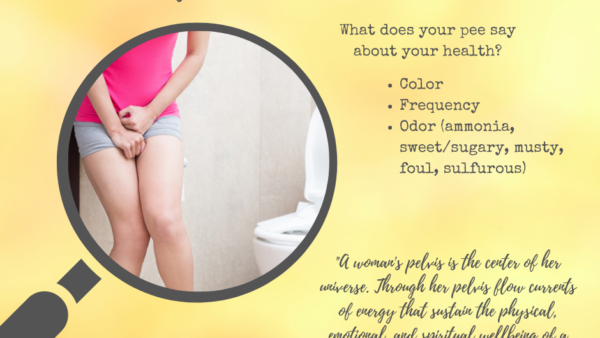
What does your pee say about your health?  PART II
*Urine, in most healthy situations, should be seen but not smelled. There are exceptions of course (Have you ever experienced “asparagus pee”?), but the offending odor should be transient and not trending towards permanence. Urine with a strong ammonia smell may indicate dehydration or bacterial infections. A sharp change in hormones (ie: pregnancy or menopause) may also contribute to pungent pee. “Sweet or fruity smelling” urine may indicate a high ketone content in urine as is often seen in unregulated diabetes.  Some medications can certainly create an environment for malodorous micturation. Sulfa based medications (note: sulfa and sulfur are NOT the same chemical entity), antibiotics, diuretics, birth control pills, lyrica, tramadol, and oxycodone are also potentially causative agents of stinky pee.


Frequent urination is a topic near and dear to my heart (and bladder). An estimated 33 million people in the USA struggle with this health clue. Having a spastic bladder can be a nuisance or it can be downright life limiting. The causes (clues) are varied:
🔎Urinary tract infection (pair with urine color and odor)
🔎Low estrogen levels (resulting from a hormone imbalance, menopause,or even excessive exercise)
🔎Pregnancy or post childbirth, chronic constipation, chronic coughing, frequent heavy lifting, obesity, pelvic floor weakness (see unbalanced pelvic floor muscles below) 
🔎Enlarged prostate (men)
🔎Diabetes
🔎Spinal cord injuries or dysfunctions
🔎Pelvic floor muscles (there are 16 of them) are unbalanced. Think of a webbed hammock where some of the webbing is strong and others are weak. Each muscle needs to be equal in strength. If this is a known issue, kegel exercises are not the answer. You’ll want to find an excellent pelvic floor therapist to guide you in your strengthening and healing process.  
🔎Medication (ex: diuretics, lithium, steroids)
🔎Emotions. The bladder and kidneys are the home to emotions related to fear and anxiety. According to Traditional Chinese Medicine, chronic bladder and kidney issues may correlate with “difficulty finding their place in life”. Many women (and men) who have a weak pelvic floor  often report lacking support somewhere in their lives. Please do not underestimate the importance of healing emotionally when looking for ways to heal physically. Our issues do indeed reside in our tissues.  There is an excellent book entitled The Body Keeps Score, by Dr. Bessel van der Kolk (MD)  which explains the importance of resolving the emotional ties to specific health conditions. #worththeread
🔎Interstitial cystitis
Interstitial cystitis is where my🙋‍♀️ personal “overactive bladder” story began in 2002. IC is an enigmatic chronic bladder condition  that causes varying degrees of pelvic pain and discomfort. It also causes a chronic and constant need to urinate. Imagine having stomach ulcers in your bladder. That’s the best way I can describe what it felt like. In my case, it took nearly 3 years and 4 different doctors before finding one who suggested a cystoscopy to confirm her suspicions. As with all inflammatory disease states, what we expose ourselves to matters. I was blessed with a doctor who actually took the time to educate me on the truth of this. Instead of pushing me towards medication, she urged me to begin a strict elimination diet, stay well hydrated, and to learn to manage stress better. Wow! Imagine what our health care would look like if all western medicine based doctors would prescribe this type of sage advice! 🙌


Learning which foods and lifestyle choices triggered a worsening of my urge to pee was eye👀 opening indeed. Sometimes it was hit or miss, and I would often pay the price by having to get up 7-8 times a night to go to the bathroom.  A serendipitous travel situation in 2008 completely changed everything when I discovered that nearly all processed foods were inflammation causing agents. I couldn’t believe how much better I felt in the presence of 100% fresh clean food! Staying well hydrated with filtered water quickly became key to keeping my bladder happy too. I know it may sound counterintuitive to strive for a full bladder to pee less….. Diluting toxins in the bladder makes what’s in the bladder less of an irritant!  
Fast forward to 2013 when I was introduced to Young Living products. I had learned to manage my interstitial cystitis as holistically as possible, and in doing so, I had dodged the very real bullet of daily self catheterization that often occurs with people who have severe IC. I still had some nasty flare ups, and was still getting up 4-6 times a night (on average) to pee. One of the “thank you”  products I had received from my Young Living monthly subscription order was Sulfurzyme. It was free, looked interesting, and tho I hadn’t really identified a personal need, I decided to take it. According to the YL website, Sulfurzyme may be of value to anyone who wishes to support their joints, range of motion, bone health, metabolic function, immune system, hair and skin. Within two weeks of taking Sulfurzyme faithfully I began noticing enormous changes within my bladder along with a decreased urge to urinate. Around that time, I also began using a DIY face serum recipe which contains Frankincense and Lavender every morning. Should I have been shocked that what I put on my face also happened to make my bladder very happy? In 2014, I was still learning essential oil basics, and this was a lesson to the truth that oils work best in “all the ways” when they are used. Get them out of the bottle and into the air or on your skin. You just never know what might happen with regular consistent use. 😉


I’ve continued to clean up my “issues within my tissues” over the years, and I am so much healthier in mind, body, and spirit than I was when I was in my 30’s.  This is a lifestyle, not a “once ‘n done” kind of thing. Freedom is never free, especially in the case of a health condition. I had to be willing to do the hard work, to live like no one else sometimes, and to listen to what my body needed. Everyone has their own story, their own diagnosis, their own emotional journey to recognize. Overcoming ( ____________ ) requires change and the courage and willingness to do so. As they say, “Insanity is doing the same things over and over again, and expecting different results.”  I pray you are discovering yourself as you become your own health detective. Learning to read your own health clues and then acting on those clues is true self love. Never forget that each of our bodies is a temple and as such, requires tender loving care and maintenance every single day. You are worth it!
xoxo~ liz


#sharingiscaring
#goodmedicineisnotfasteasyorcookiecutter
#goodmedicine
#thanksYL

  • « Go to Previous Page
  • Page 1
  • Interim pages omitted …
  • Page 5
  • Page 6
  • Page 7
  • Page 8
  • Page 9
  • Interim pages omitted …
  • Page 15
  • Go to Next Page »

Book Your Health Coaching CallBook Now

Elizabeth James

469.425.9091

ebj0203@gmail.com