• Skip to primary navigation
  • Skip to main content
Book Your Health Coaching Call
Good Medicine

Good Medicine

Holistic Health Coaching

  • Home
  • Liz James
    • About Liz
    • Coaching
    • Book a 20 Minute Complimentary Coaching Call
  • Favorite Resources
    • BlessedByHisBlood
    • Young Living
    • Fast Like A Girl Certified Coach
    • Order supplements through my Fullscript store
    • Green Pasture (Coupon: Health10)
    • RogersHood Apothecary (Coupon: BEABLESSING for 10% off)
    • DolphinMPS
    • Company
    • Abundance
  • My Books
    • Becoming Your Own Health Detective Volume 1
    • Becoming Your Own Health Detective Volume 2
  • Blog
  • Cart

Health Clues

Health Clues in Your Colon part 2

Liz James · June 1, 2021 ·

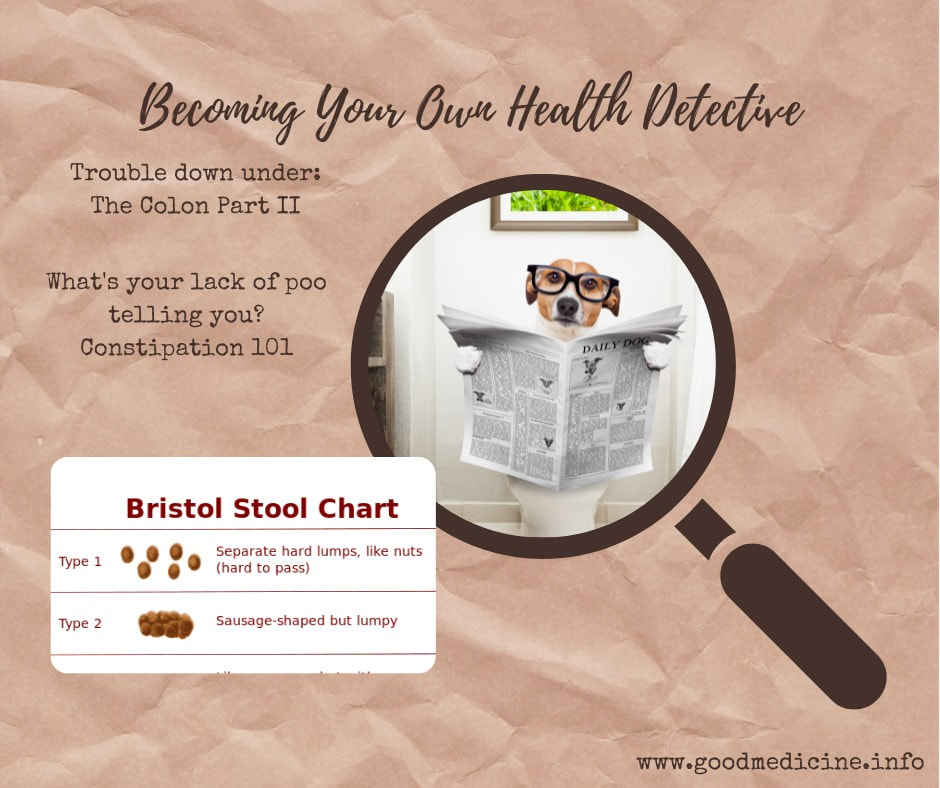
What’s your lack of poo 💩 telling you? Colon Part II
There’s no time like the present to start talking about poo, or in this chat…. lack thereof! Chronic constipation affects roughly 28% of the North American population if we abide by the western medicine general rule that it’s “okay” to have only 3 bowel movements a week. (No wonder we have so many chronic illnesses based on this information alone!😱)
Let’s flush that “3 times a week okay-ness”, and look at how an optimally healthy colon should be functioning.
Healthy gastrointestinal transit time should run somewhere between 12 and 24 hours…… optimally, 1💩 to 3💩💩💩 bowel movements a day help keep the toxin load of a body in check. What happens when the body’s toxin load grows due to lack of appropriate time on the throne? Sickness and dysfunction begin rearing their ugly heads in a variety of ways:
1. Weight gain – toxins stored in fat and it becomes increasingly difficult to lose weight.
2. Fatigue – metabolism is disrupted (yet another avenue of weight gain too!)
3. Skin irritation and rashes occur – we expel toxins thru poop, pee, breathing, and thru our skin. When pooping isn’t happening as it should, other organs often can’t keep up with the detox process either!
4. Headaches and migraines
5. Mood Swings
6. Joint and muscle pains and spasms
7. Insomnia
8. Increased or excessive sweating (the body is trying hard to shed the excess toxins!)
9. Constipation breeds an increased toxin load which leads to even more constipation!
Per statistics found on the National Institute of Health’s website, chronic constipation (THEIR version…. 3x/week pooping) accounts for over 5 million healthcare visits or hospitalizations per year, and over 5.3 million prescriptions written singularly for constipation.
These are large numbers☝️☝️, but imagine how much larger those numbers would be if they were to include not pooping daily and the subsequent results….(numbers 1 thru 8 above).
Constipation is a clue, and it’s also largely fixable with lifestyle changes. Oftentimes, if you fix constipation, other health concerns will also begin to quietly fix themselves! 😉
Low fiber eating habits (ie: processed foods), lack of gut microorganism balance (YL’s Life 9 is KEY here), lack of exercise, dehydration, certain medications (Opiates, some antidepressants, calcium channel blockers used to treat blood pressure and heart disease, medications used to treat Parkinson’s, Iron supplements, NSAIDS, diuretics, antihistamines are all known to cause constipation), a magnesium deficiency, hormonal fluctuations, hypothyroidism, SIBO (refer to earlier discussion) and even colon cancer are common contributors to constipation.
For most people, eating more whole fresh foods, exercising regularly, drinking plenty of quality water, and including a top notch probiotic food or supplement source (Did I mention Life 9 or MightyPro for the kiddos?) along with digestive enzymes (Essentialzyme, Essentialzymes-4, Detoxzyme, Allerzyme, or Mightyzyme for kiddos) will often solve the constipation conundrum.
For those who still need a little extra boost to get you on that throne consistently, consider adding in Young Living’s ICP (that acronym has been affectionately known to stand for “I see poop” amongst those who use it). #useittoloseit ICP is a powder (loaded with soluble fiber and other goodness) that is added to juice or smoothies, making it an easy addition to daily routine.
If constipation is something that plagues you, and you’ve tried #allthethings, it may be time to investigate possible food sensitivities, leaky gut syndrome, or severe gut dysbiosis (unbalanced gut bacteria) with the help of a health professional who is experienced working with patients in this demographic.
Happy flushing!
xoxo~ liz
#knowbetterdobetter
#healthcluesyoucanuse
#fixyourplumbing
#goodmedicine
#ThanksYL
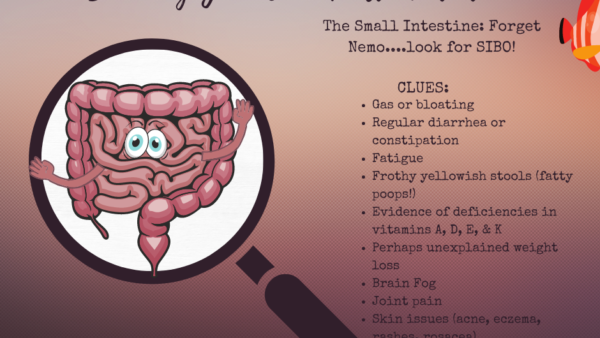
Health Clues from Your Small Intestine

Liz James · May 18, 2021 ·

How much attention or thought do you put into your small intestine? Rarely do we hear much about this “small” organ. “Little things” can often be overlooked and in doing so, clues can easily be missed. Truly, the small intestine isn’t so very small….. It’s a 15-20 foot long digestion and absorption machine….. Usually overshadowed by its fore and aft kinsmen, the stomach and large intestine.. 


I relate to the small intestine as a middle child myself!😜  The stomach and large intestine have their individual strengths and frailties. While the small intestine has its own set of “responsibilities”, its wellbeing is greatly affected by sister stomach and brother colon.


If you’ll recall from last week’s chat about the stomach, having low stomach acid is not a good thing and may lead to some significant issues that literally drain into the small intestine. Have you ever heard of the term SIBO? It’s an acronym for Small Intestinal Bacterial Overgrowth, occurring when bacteria in the colon (large intestine) travels upwards into the small intestine where a relatively small amount of bacteria should be present on any given day thanks to stomach’s healthy acid content and cousin pancreas’s contribution of digestive enzymes! If either the stomach or colon (or both) don’t perform as they should, the small intestine will suffer.


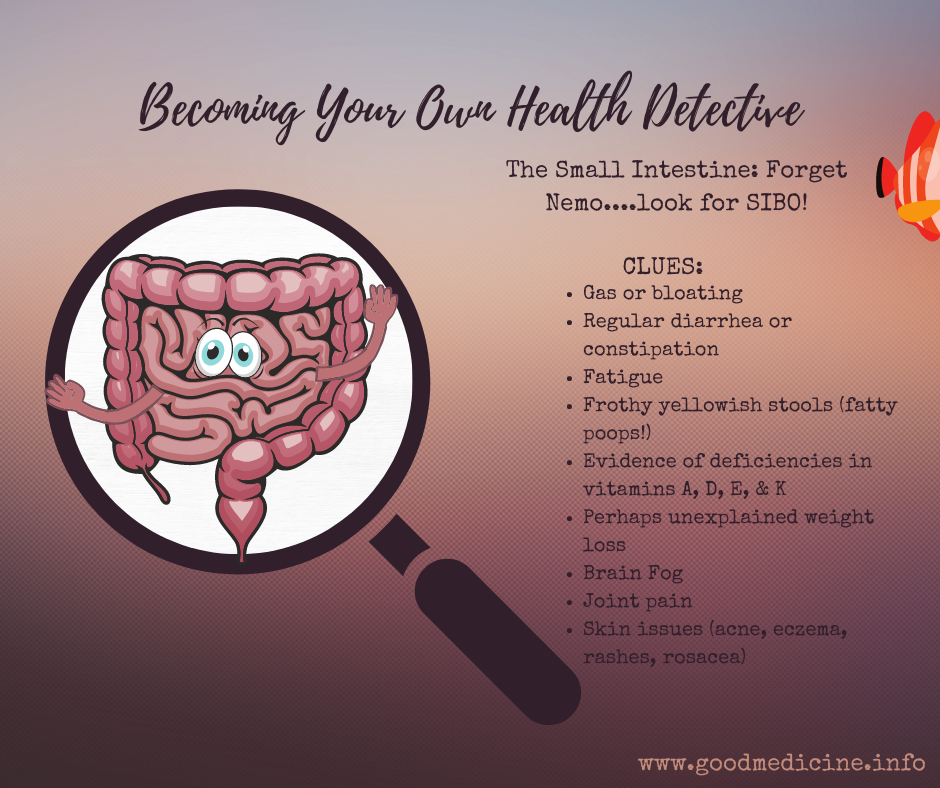
I’ve listed common clues of SIBO on the graphic.  None of them are drop dead urgent clues, right? Annoying, irritating, and perhaps even aggravating ….. but nothing that would cause an urgent SOS trip to your favorite health professional.
In a perfect digestive family environment, a healthy small intestine is a strong contributor to overall health. It facilitates absorption of some minerals (including sulfur, calcium, copper, iron, & zinc), fat soluble vitamins A,D,E &K, B vitamins, and Vitamin C. Small intestine also facilitates absorption of sugars, proteins, cholesterol, and bile salts.  It allows these nutrients to be absorbed all the while blocking foreign substances (ie: toxic “bullies”) from also being absorbed. If the small intestine walls become inflamed and damaged, it is unable to effectively discern between friend and foe, and bad influencers make it into the family body.


SIBO, if left unattended, contributes to:
🔥IBS, Diverticulosis, Crohn’s, Celiac, poor gut motility (greater than 75% have confirmed SIBO)
🔥Fibromyalgia  (78% have confirmed SIBO)
🔥Restless Leg Syndrome
🔥Interstitial Cystitis
🔥Diabetes
🔥RA, Scleroderma, and other autoimmune disorders
🔥Skin conditions
🔥Nutritional deficiencies
🔥Neuropathies due to deficiencies


In addition to poor stomach acid production, common contributors (aka lifestyle clues!!) to SIBO include: 
🔎Stress
🔎Poor diet (review what is typically known as the “Standard American Diet” / aka “SAD” indeed!)
🔎Mechanical issues (low stomach acid included here!)
🔎Antibiotic use (especially recurrent use)
🔎Regular use of acid reducers or proton pump inhibitors (ex: Nexium, Protonix, Prilosec)
🔎Opioid use (results in gut motility issues)
🔎NSAID use (ex: Ibuprofen, Naprosyn… damage the lining of the intestine)
🔎Gastric bypass surgery
🔎Moderate (or greater) alcohol use (est 90% have confirmed SIBO)
🔎Aging (due to decreased stomach acid and enzyme production)
🔎Long term colon dysfunction ( 78% of those with IBS have confirmed SIBO)


👉👉Note that while SIBO can be age related, it’s not uncommon to find it in children👦👧👶 who have chronic constipation/ diarrhea, have received antibiotics, are formula fed, or have received medication for reflux, or whose eating habits mirror the standard American diet.


It is estimated that 20-22% of the US population has some form of SIBO, and while there are ways to identify it through functional medicine testing, perhaps it may be more economical to simply identify existing physical and lifestyle clues, and then proceed towards alleviating the problematic areas.

 
❤️Showing the small intestine some love thru a healthy diet, adequate exercise, proper amounts of sleep are an excellent start! ❤️
Additional ways to support and love on the small intestine include:
❤️Consume 30-45 grams of soluble fiber daily (Hello Young Living ❤️Balance Complete Meal Replacement Shakes!)
❤️Digestive Enzyme supplements that contain Betaine HCl (Hello YL Essentialzyme caplets!)
❤️Probiotics (Hello YL Life 9 and for kiddos….. MightyPro!)
❤️Organic bone broth
❤️Olive leaf extract (Hello YL Olive Essentials capsules!)
❤️Young Living’s Peppermint, Caraway, Oregano, and Cinnamon Vitality essential oils. If you are a science hound, do some digging in pubmed.gov for a gold mine of information. If you are not a science hound, just know that these oils are your small intestine’s friends! 


Remember that our bodies are constantly giving us clues which buys time before “big things” generally happen. I’m so thankful that the body has the resilience and capability to restore itself to good health when clues are recognized and supportive measures are implemented. SIBO is a clue itself, indicating a potential downward spiral of the entire body at some point in the future if not addressed. 
Indeed…. Seemingly small things can often be important big ones! 
xoxo~ liz

#sharingiscaring
#digestivehealthclues
#healthcluesyoucanuse
#goodmedicine 
#findingSIBO

#ThanksYL

Health Clues in Your Teeth – part 3

Liz James · May 3, 2021 ·

Do you utilize vitaflex/reflexology points on your hands, feet, and even ears👂 when you apply essential oils? Do you have an excellent massage therapist who is able to make you feel better both physically and emotionally after a nice long appointment? Have you ever employed the powerful tool of acupuncture or acupuncture point based therapy as a means of retaining or regaining health or function? 


Or, are you just not sure “those things” are real? As a 100% science minded health professional, I needed some strong evidence….. After all, these applications are not taught in the Western medicine education system. So, as any good doubting Thomas would do, I set out not to disprove what I didn’t understand….. but to dig for validation and information of what was confounding me! Never discount something because it doesn’t make sense to you or doesn’t fit the mold you’ve been taught!  Dig until you find the truth. My own digging has led me through many books, conferences, professional journal articles, and pubmed…. and through these…. Hard facts and data. 


We are energetic beings. Energy⚡️ is measured by the rate of oscillation of an electrical current (measured in  hertz/ Hz). The rate of this oscillation of current is called frequency. EEG’s and EKG’s are measuring the frequency of the brain and heart respectively. Those are only two organs….. The entire body is one big energy frequency machine! ⚡️⚡️⚡️⚡️


Acupuncture is based on 14 energetic meridians in the body. (For ease of discussion, I will refer to them as rivers)  If one of those energy “rivers” (meridians) becomes stagnant, damaged or “clogged”, the entire “river” will be affected. Over time, that damaged “river” flow will cause pain, dis-ease or dysfunction within the parts of the body it runs through. As that meridian becomes more damaged, it will begin to affect other meridian functions too. 


The role teeth play within a body’s energy circuits is one of the most important clues I will write about. This is where physics meets biology! Our teeth are crystalline structures, and they act as a circuit breaker for the meridians in our body. A decayed tooth or a root canal (which actually leaves residual decay behind even when patched up) acts as a resistor on the specific electrical circuit, and eventually, this will show up as pain, dysfunction, or illness somewhere else in the body along the same meridian (river). Interestingly, over 90% of malignancies are associated with a root canal or decayed tooth on the same meridian. 


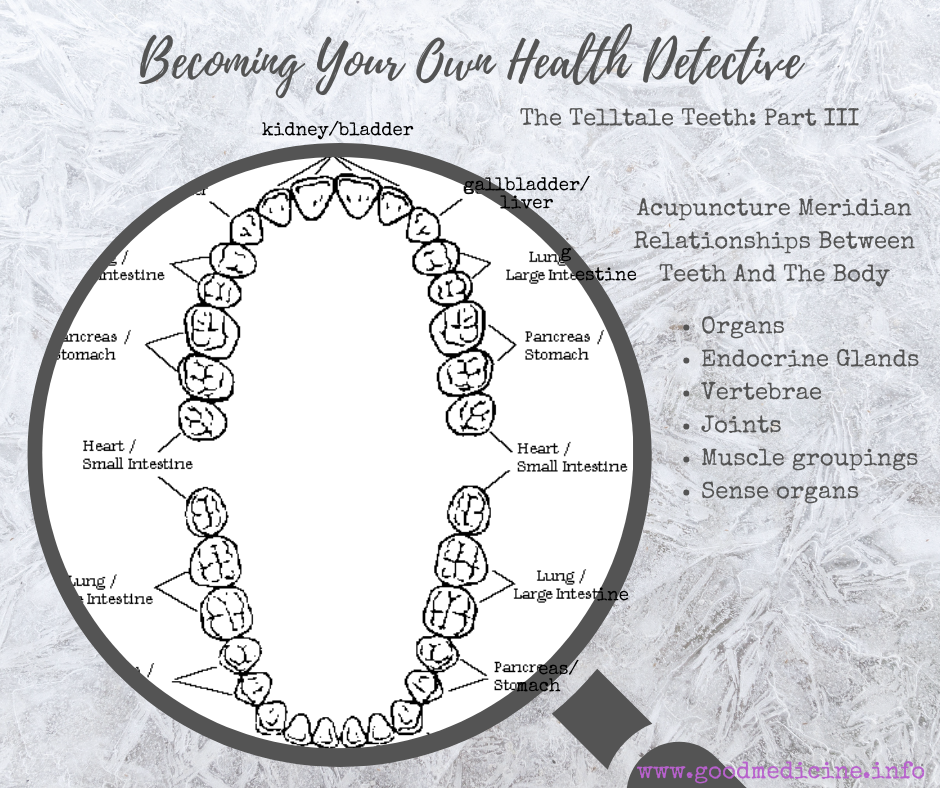
The easiest way to utilize teeth as clues for both present and future health concerns is to reference a chart. ( I will include an example of one below this article).I often use teeth as a clue to “root cause” and “root prevention”.  Pun intended!


Let’s take my 1st upper molar as an example. If I had a root canal or untended cavity in that particular tooth,  over time, the frequency would drop within the stomach meridian of my body. Because I know my frequency is now prone to dropping in the stomach meridian, I would pay special attention to, and support all of the corresponding organs and tissues in an effort to prevent future dis-ease and dysfunction. (Refer to the chart )


* I would watch my thyroid numbers closely thru comprehensive annual (if not more frequent) thyroid labwork, and support my thyroid function as needed with Young Living’s Thyromin capsules and/or Endoflex essential oil blend.


* I would also make sure my liver, pancreas  and stomach had the tools they needed to function efficiently. Digestive enzymes (Detoxzyme or EssentialZymes-4 are my two favorites), and Juvatone capsules for liver support on the regular!


* I’d work to keep my body well hydrated, exercise, and avoid medication that is particularly hard on the kidneys (ex: Ibuprofen  and other NSAIDS).


* I’d know that my weakest point on my spine was potentially going to be where the thoracic vertebrae meets the lumbar portion of the spine, and I would work to keep it strong, healthy, and flexible thru exercise focusing on core strength and flexibility. 


* I’d know that my jaw and knee joints would be things to keep an eye on and support accordingly to prevent injury. 


* I’d know that my trunk muscles needed extra focus at the gym in terms of muscle groupings. #legday #BLMandSulfurzymeforthewin 


* I’d want to support my maxillary sinus in a healthy way so that I don’t become prone to sinus infections. I would do this by diffusing all our healthy “breathing oils” and by using my home made (amazing!!!) nasal spray regularly.


All of these body parts I just mentioned are tied to the stomach meridian in the body, and they are going to need a little extra TLC to keep them healthy since the tooth itself is now working against the body.
​
Forewarned is forearmed, right?!?  Using the health of specific teeth to determine how best to support your body is an easy and excellent way to hopefully sidestep potential issues elsewhere in your body in the future! 


If you’d like to know more about teeth and their relationship to our health, here are some excellent book 📚 resources (note that all of the authors are either doctors or dentists who have also done their additional research to learn the truth!!):
Healing is Voltage – Jerry Tennant MD
Toxic Teeth – JM Swartz MD and YL Wright MA
The Toxic Tooth – Robert Kulacz DDS and Thomas Levy MD/JD
The Root Canal Coverup – George Meinig DDS 
xoxo~ liz

#sharingiscaring
#healthcluesyoucansinkyourteethinto
#healthcluesyoucanuse
#goodmedicine
#ThanksYL

3

Health Clues in Our Teeth – part 2

Liz James · April 27, 2021 ·

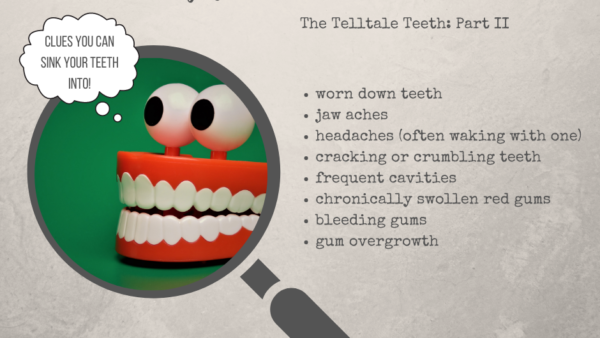
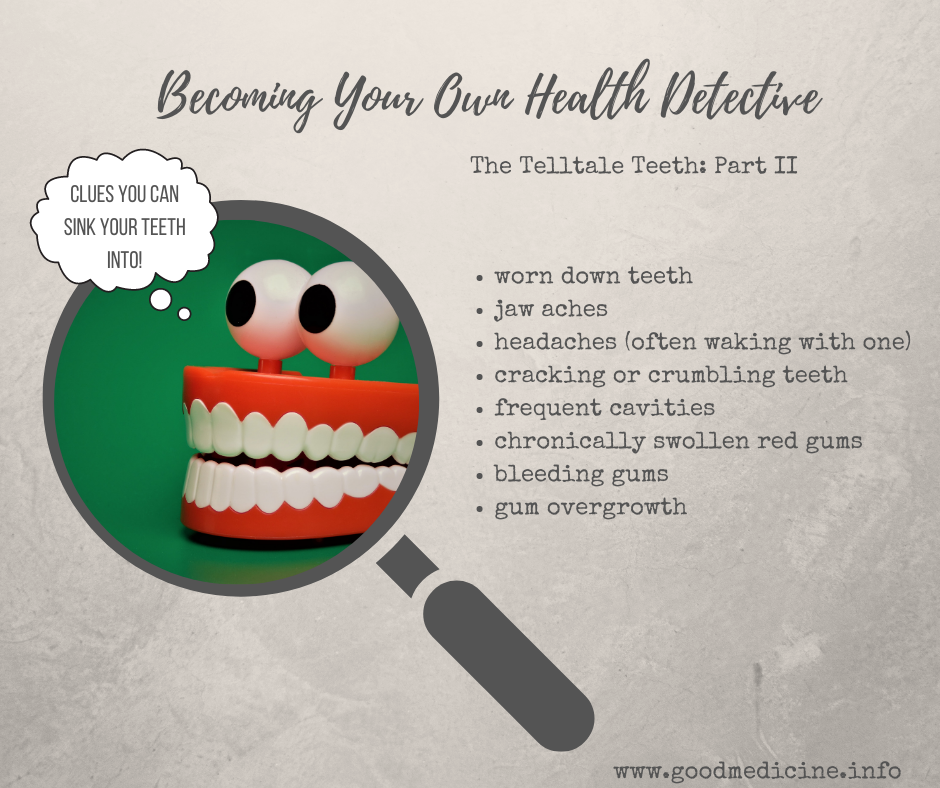
Our body is highly skilled at sounding alarms🚨 that we often “hit the snooze button” on, ignore out of ignorance, or simply disregard. I was “that person” many years ago when I went through about 18 months of tooth emergencies.😭 I didn’t have a single cavity until I was in college, and always had pretty stellar dental visits. However, when I was in my mid 30’s, something strange started happening. On 3 different occasions, a piece of tooth would literally fall off of a molar while I was driving to work in the morning. 😳 Though I had no evidence of wear on my teeth, my dentist finally determined that I must be gritting my teeth so hard while I slept that I was literally breaking my teeth. Once we figured out the root cause and I found better ways to manage my stress , I quit breaking teeth, stopped having headaches every morning upon waking up, had fewer neck, elbow, and wrist problems, and generally felt better and happier as a human! My body was giving me so many clues, and I was ignoring all of them (or “patching them”) until my body literally started falling apart. It was an expensive but valuable lesson! 


* Worn down or regular breaking of teeth are often signs of stress. Internalized chronic stress has the same effect on the body as smoking 5 cigarettes a day, and who wants to abuse their body like that?? Not sure if you are grinding or clenching your teeth?  Sometimes the flatness on the teeth can be felt with the tongue or seen in the mirror, or your dentist may have made a comment to you. A chronically stressed body may also see a higher incidence of canker sores or fever blisters…. all are clues that shouldn’t be ignored.


* Chronic stress will cause consistently higher levels of cortisol in the body, eventually wreaking some major havoc. Manage stress properly by incorporating mindset management skills, prayer/meditation, exercise, diet and  proper amounts of sleep.  Consider supporting  healthy cortisol levels with Young Living’s Cortistop. If clenching, gritting or grinding is your nighttime gig, you may also want to consider a mouth nightguard to help mediate damage, and apply Peace & Calming, RutaVala, or Tranquil essential oil blends on the base of the big toes at night. 

 
* Thin enamel or cracking/crumbling teeth are often clues of acid reflux. (We will go over  acid reflux clues in greater detail soon.)  Several medications may also affect the integrity of teeth. Asthma medications (inhaled), chewable aspirin, birth control pills, immunosuppressive agents, chemotherapy agents,  and any of the 400+ meds that cause dry mouth ( revisit that section for more details) are among the bigger culprits. If you find yourself in a situation where any of these medications are deemed necessary, make sure you are rinsing your mouth out often with Thieves Mouthwash to create an inhospitable environment for bad bacteria that may want to set up camp and create further damage.


* Chronically sensitive or swollen gums may be a sign of an underlying Vitamin C deficiency (approximately 13% of the US population), an early sign of heart disease, diabetes, or (less commonly) a blood disorder.  It can also simply be a sign of poor oral hygiene! Medications that may cause bleeding gums include blood thinners, aspirin, and regular use of ibuprofen or other NSAIDS.


* Gum overgrowth (hyperplasia)  is more pronounced than simply swollen gums. While often a symptom of poor oral hygiene, it most frequently results from the use of certain medications:  anti seizure meds, immunosuppressants, or calcium channel blockers (a class of blood pressure medications). There are physiological disorders that may cause hyperplasia too. Diabetes or Crohn’s disease are two of the more common ones.


* Pretty much everyone brushes their teeth in front of a mirror, which is an opportune time to make a quick daily evaluation of teeth, gums, mouth & tongue. Once you get into the habit of doing this, you will notice small changes pretty quickly, and you can often correct a situation without professional intervention! 
 Next week, I’ll discuss specific tooth health as a predictor for potential health concerns! It’s fascinating and such a helpful tool in knowing how to care for yourself preemptively.
xoxo~ liz

#sharingiscaring
#healthcluesyoucansinkyourteethinto
#healthcluesyoucanuse
#goodmedicine
#ThanksYL

Health Clues in Your Teeth – Part 1

Liz James · April 21, 2021 ·


I find teeth mysteriously fascinating, but it used to not be that way. Teeth (and toes) used to activate my gag reflex before I began learning about their wealth of clues. Now I find them to be wonderful guides and tools! 😍


This particular clue is so very important that it’s the only one we are going to discuss today. Any time you have something that changes in or on your body, it should become an instant signal that something has shifted metabolically or physiologically, and the best course of action is to “root out”  the cause before bigger symptoms take place.


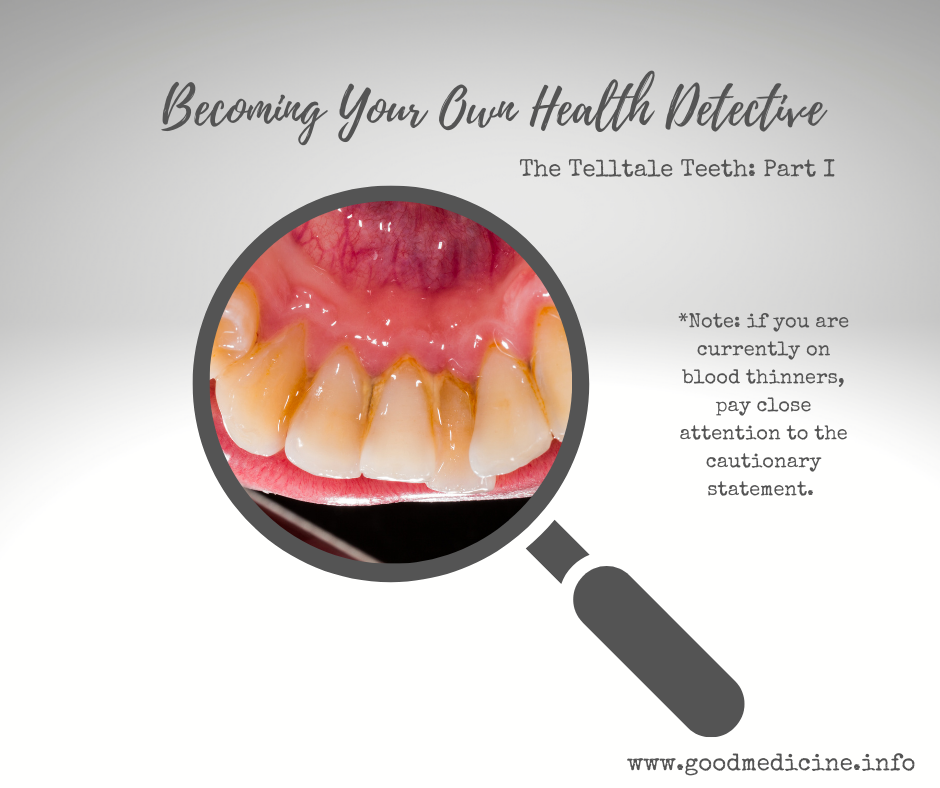
Perhaps you’ve been to the dentist and the hygienist has remarked that you have more plaque than normal on your teeth, or you’ve looked in the mirror and noticed this yourself. Hopefully this is not the case because you have loved on your oral cavity with Thieves toothpaste, mouthwash, and floss! Sometimes tho, even the best of oral care products doesn’t stop plaque build up. If that has happened, it’s time to start digging for the root cause! 


*But first, A little history about teeth and nutrition!  Before there was refrigeration or even toothpaste, there were remote people groups worldwide who had solidly amazing teeth and mouths. This is well documented in the works of a dentist from the early 1900’s named Dr. Weston A Price. Dr. Price worked tirelessly to prove that oral decay and degeneration was due more to nutritional deficiencies than to lack of oral hygiene. His work revealed that fat soluble vitamins A and D and a probiotic rich diet were key contributors to healthy mouths, more so than daily brushing. An interesting unifying factor amongst all the people groups he studied was that all had some form of probiotic rich daily food source…. Something that the standard American diet falls woefully short in today.


*What does diet have to do with plaque on the teeth and why is it a clue? Here is where the clue becomes quite important! A diet rich in properly fermented foods (think traditional kefir, sauerkraut, miso, yogurt, cod liver oil, kimchi, kombucha etc) is a valuable tool for supporting a healthy gut. If the gut is loaded with healthy bacteria, the body is able to create other vitamins which are necessary for healthy living. For the course of THIS discussion, that would be Vitamin K2. #life9probioticforthewin


Vitamin K2 (aka menaquinone-7 , or activator X) is an underappreciated nutrient, in that it is vital for building strong bones and teeth. It does this by carrying calcium out of soft tissue (think brain and vascular system) and carrying it IN TO bones and teeth.
Stick with me ya’ll😍….. We are getting to the super important part! 


K2 activates something called osteocalcin and matrix-Gla protein. Matrix-Gla is present in saliva and its activity arrests the dental plaque calcification process….. It is also present in the blood, and when activated by vitamin K2, helps to remove plaque in arteries! Isn’t it interesting how matrix-Gla prevents both plaque on teeth AND plaque in arteries??


*If plaque continues to build up on teeth despite your best efforts in oral care, it may indicate a deficiency of vitamin K2, which may be putting your vascular system at risk. 


*A 2016 study found that matrix-Gla protein inactivation ( as the result of inadequate K2) led to a higher risk of death due to cardiovascular disease. 
*Now to be clear, plaque on teeth may happen as a result of poor oral care or a few other reasons too, but if you’ve never had plaque issues before, and now you do….. It may be time to dig a little deeper to protect your overall well being! 


Other signs or symptoms of a Vitamin K2 deficiency may include:
*Bruising easily
*Bleeding excessively (including a heavy menstrual flow)
*Osteopenia, osteoporosis or frequent fractures
*A mouth full of cavities
*Heart disease
*Diabetes or pre-diabetes
*Autoimmune disease flare ups (there is evidence that a Vitamin K2 deficiency aggravates autoimmune diseases….. especially Rheumatoid Arthritis)
*Forgetfulness ( a Vitamin K2 deficiency is linked to Alzheimer’s Disease due to the calcium plaque build up within the brain)
*O blood type – lacks some clotting factors in blood, so K2 supplementation is helpful


If you have noticed regular buildup of calcified dental plaque…..
👉Talk to your favorite healthcare professional and consider asking for a cardiac calcium score
👉Get your vitamin D levels checked
👉There currently isn’t a K2 specific lab test to check for deficiency. 
👉Consider supplementation of Vitamin K2 (recommended dietary allowance is 60-120mcg/day)
NOTE: If someone is on blood thinners, talk to a health care professional before starting Vitamin K2 as a supplement. It does affect blood coagulation, and therefore may interact with blood thinners.
And YAY you!!!….If you are currently taking Young Living’s  CardioGize, Master Formula or Super Cal Plus, you’ll find that these three already contain K2 within each formulation (100mcg, 50mcg, and 30mcg respectively). 


As always, I am not a doctor and cannot diagnose, treat, or offer to cure you. I can only help you be a top notch detective for your personal health and wellness. 
xoxo~ liz

#sharingiscaring
#healthcluesyoucansinkyourteethinto
#healthcluesyoucanuse
#goodmedicine
#ThanksYL

  • « Go to Previous Page
  • Page 1
  • Interim pages omitted …
  • Page 7
  • Page 8
  • Page 9
  • Page 10
  • Page 11
  • Go to Next Page »

Book Your Health Coaching CallBook Now

Elizabeth James

469.425.9091

ebj0203@gmail.com