• Skip to primary navigation
  • Skip to main content
Book Your Health Coaching Call
Good Medicine

Good Medicine

Holistic Health Coaching

  • Home
  • Liz James
    • About Liz
    • Coaching
    • Book a 20 Minute Complimentary Coaching Call
  • Favorite Resources
    • BlessedByHisBlood
    • Young Living
    • Fast Like A Girl Certified Coach
    • Order supplements through my Fullscript store
    • Green Pasture (Coupon: Health10)
    • RogersHood Apothecary (Coupon: BEABLESSING for 10% off)
    • DolphinMPS
    • Company
    • Abundance
  • My Books
    • Becoming Your Own Health Detective Volume 1
    • Becoming Your Own Health Detective Volume 2
  • Blog
  • Cart

Health Clues

Health Clues from Your Urine – part 2

Liz James · October 28, 2021 ·

What does your pee say about your health?  PART II
*Urine, in most healthy situations, should be seen but not smelled. There are exceptions of course (Have you ever experienced “asparagus pee”?), but the offending odor should be transient and not trending towards permanence. Urine with a strong ammonia smell may indicate dehydration or bacterial infections. A sharp change in hormones (ie: pregnancy or menopause) may also contribute to pungent pee. “Sweet or fruity smelling” urine may indicate a high ketone content in urine as is often seen in unregulated diabetes.  Some medications can certainly create an environment for malodorous micturation. Sulfa based medications (note: sulfa and sulfur are NOT the same chemical entity), antibiotics, diuretics, birth control pills, lyrica, tramadol, and oxycodone are also potentially causative agents of stinky pee.


Frequent urination is a topic near and dear to my heart (and bladder). An estimated 33 million people in the USA struggle with this health clue. Having a spastic bladder can be a nuisance or it can be downright life limiting. The causes (clues) are varied:
🔎Urinary tract infection (pair with urine color and odor)
🔎Low estrogen levels (resulting from a hormone imbalance, menopause,or even excessive exercise)
🔎Pregnancy or post childbirth, chronic constipation, chronic coughing, frequent heavy lifting, obesity, pelvic floor weakness (see unbalanced pelvic floor muscles below) 
🔎Enlarged prostate (men)
🔎Diabetes
🔎Spinal cord injuries or dysfunctions
🔎Pelvic floor muscles (there are 16 of them) are unbalanced. Think of a webbed hammock where some of the webbing is strong and others are weak. Each muscle needs to be equal in strength. If this is a known issue, kegel exercises are not the answer. You’ll want to find an excellent pelvic floor therapist to guide you in your strengthening and healing process.  
🔎Medication (ex: diuretics, lithium, steroids)
🔎Emotions. The bladder and kidneys are the home to emotions related to fear and anxiety. According to Traditional Chinese Medicine, chronic bladder and kidney issues may correlate with “difficulty finding their place in life”. Many women (and men) who have a weak pelvic floor  often report lacking support somewhere in their lives. Please do not underestimate the importance of healing emotionally when looking for ways to heal physically. Our issues do indeed reside in our tissues.  There is an excellent book entitled The Body Keeps Score, by Dr. Bessel van der Kolk (MD)  which explains the importance of resolving the emotional ties to specific health conditions. #worththeread
🔎Interstitial cystitis
Interstitial cystitis is where my🙋‍♀️ personal “overactive bladder” story began in 2002. IC is an enigmatic chronic bladder condition  that causes varying degrees of pelvic pain and discomfort. It also causes a chronic and constant need to urinate. Imagine having stomach ulcers in your bladder. That’s the best way I can describe what it felt like. In my case, it took nearly 3 years and 4 different doctors before finding one who suggested a cystoscopy to confirm her suspicions. As with all inflammatory disease states, what we expose ourselves to matters. I was blessed with a doctor who actually took the time to educate me on the truth of this. Instead of pushing me towards medication, she urged me to begin a strict elimination diet, stay well hydrated, and to learn to manage stress better. Wow! Imagine what our health care would look like if all western medicine based doctors would prescribe this type of sage advice! 🙌


Learning which foods and lifestyle choices triggered a worsening of my urge to pee was eye👀 opening indeed. Sometimes it was hit or miss, and I would often pay the price by having to get up 7-8 times a night to go to the bathroom.  A serendipitous travel situation in 2008 completely changed everything when I discovered that nearly all processed foods were inflammation causing agents. I couldn’t believe how much better I felt in the presence of 100% fresh clean food! Staying well hydrated with filtered water quickly became key to keeping my bladder happy too. I know it may sound counterintuitive to strive for a full bladder to pee less….. Diluting toxins in the bladder makes what’s in the bladder less of an irritant!  
Fast forward to 2013 when I was introduced to Young Living products. I had learned to manage my interstitial cystitis as holistically as possible, and in doing so, I had dodged the very real bullet of daily self catheterization that often occurs with people who have severe IC. I still had some nasty flare ups, and was still getting up 4-6 times a night (on average) to pee. One of the “thank you”  products I had received from my Young Living monthly subscription order was Sulfurzyme. It was free, looked interesting, and tho I hadn’t really identified a personal need, I decided to take it. According to the YL website, Sulfurzyme may be of value to anyone who wishes to support their joints, range of motion, bone health, metabolic function, immune system, hair and skin. Within two weeks of taking Sulfurzyme faithfully I began noticing enormous changes within my bladder along with a decreased urge to urinate. Around that time, I also began using a DIY face serum recipe which contains Frankincense and Lavender every morning. Should I have been shocked that what I put on my face also happened to make my bladder very happy? In 2014, I was still learning essential oil basics, and this was a lesson to the truth that oils work best in “all the ways” when they are used. Get them out of the bottle and into the air or on your skin. You just never know what might happen with regular consistent use. 😉


I’ve continued to clean up my “issues within my tissues” over the years, and I am so much healthier in mind, body, and spirit than I was when I was in my 30’s.  This is a lifestyle, not a “once ‘n done” kind of thing. Freedom is never free, especially in the case of a health condition. I had to be willing to do the hard work, to live like no one else sometimes, and to listen to what my body needed. Everyone has their own story, their own diagnosis, their own emotional journey to recognize. Overcoming ( ____________ ) requires change and the courage and willingness to do so. As they say, “Insanity is doing the same things over and over again, and expecting different results.”  I pray you are discovering yourself as you become your own health detective. Learning to read your own health clues and then acting on those clues is true self love. Never forget that each of our bodies is a temple and as such, requires tender loving care and maintenance every single day. You are worth it!
xoxo~ liz


#sharingiscaring
#goodmedicineisnotfasteasyorcookiecutter
#goodmedicine
#thanksYL
Health Clues in Your Eyes – part 3

Liz James · October 26, 2021 ·

👀EYE CLUES PART III: KEEPING YOUR PEEPERS HEALTHY👀


“I can’t wait to lose my eyesight.”…… said no one ever. 


We tend to take our eyesight for granted, yet neglecting eye care /health is arguably an epidemic. Statistically, one in six American adults over the age of 45 will suffer from one or more eye conditions that increase the risk of vision loss or impairment with aging. 


Genetically, I know that I am predisposed to Age related Macular Degeneration (AMD). I watched my grandmother (an avid 📚 reader) slowly go blind from AMD. Two of her children have also been diagnosed with the same. Yet, I also know that epigenetics (the role our environment plays on the expression of genes) is about 90% of the equation. While I cannot control my genes, I have a tremendous amount of control on my environment and am doing “all the things” as well as working to avoid “all the other things ☠️” that may wake those darn AMD genes up. 


*Eye health is often a direct reflection of what we have eaten over the years. Foods rich in vitamins C, A, and E, Zinc, lutein, zeaxanthin, and omega-3’s are crucial to protecting eyes against future age related vision loss. What would an eye supportive diet like this look like?


Well, it would include lots of leafy green veggies, carrots, red peppers, yellow squash, tomatoes🍅, fatty fish🐟 such as salmon, tuna and sardines, eggs,  lemons, grapefruits, oranges, apricots,  kiwi’s, mangoes, eggs, nuts, and beans. I eat nearly all of these foods regularly, but certainly not on a strict schedule daily. Knowing that, I choose to supplement DAILY to ensure proper nutritional support of my eyes.


NingXia Red  and NingXia Wolfberries provide excellent natural support throughout the body, and are especially beneficial for eye health. Zeaxanthin, carotenoids, Vitamin C, zinc, magnesium and taurine are all beneficial nutrients within NingXia Red.
NingXia Wolfberries are rich in zeaxanthin and lutein which are eye protecting carotenoids, defending the eyes from free radical damage. 100grams (roughly a handful of wolfberries) contains 27,800 mcg of zeaxanthin. By comparison, egg yolks are a common food with one of the highest levels of zeaxanthin and have only 1,253 mcg per 100grams. Additionally, the type of zeaxanthin in the NingXia Wolfberry is unusual. For the science guys and gals, it’s an esterified version (zeaxanthin dipalmitate) making it 2-5x more bioavailable than what is normally found in most supplements.


Diets that are deplete of zeaxanthin and lutein trigger the same damage leading to AMD and/or cataracts.
We’ve already spoken a bit about Young Living’s eye supplement, IlluminEyes, and it warrants saying again….. Go check out the ingredient list on the bottle!  YL did their research and have given us an excellent tool for supporting eye health.


*Other supplements to consider include OmegaGize or MindWise for a clean source of Omega3’s, and Super C Chewables. 


Do you drink Young Living’s yummy (and beneficial) Slique Tea? Don’t throw those bags away after first use. I can usually get two cups of tea out of each bag, and then I throw them in the fridge. When I have two bags (usually in 2 days), I use them over my eyes during a 20 minute prayer/ downtime during the day to help mitigate computer eye fatigue. The caffeine remaining in the bags  causes blood vessels to constrict, and tea itself has antioxidant properties, and also contains astringent-like compounds  which may help tighten skin around the eyes. I’m sure it doesn’t hurt to have that added exposure to the frankincense in the tea bag too!😉


Other ways to support optimal eye health include:
👀Wear sunglasses that block UV rays
👀Avoid excessive exposure to computer (and phone) screens and/or use blue light blocking glasses during extended screen time exposure.
👀Don’t smoke. Just don’t.
👀Get regular eye exams and be vigilant about recognizing any changes in eye performance or visible changes in the eye.
👀Make sure you are getting plenty of fresh air and oxygen.  
👀Use quality skin care products and makeup. #ThanksYL ! Our toxin load matters, even in eye health! 
👀Stay well hydrated (the eye is about 95% water, so you may imagine how chronic  dehydration could affect eyesight and eye health).


I Often  hear the argument that eating well and supplementing is just too expensive. My response will always be this: We can pay for our health proactively or reactively by paying the farmer👩‍🔧 up front, or the pharmacist👩‍⚕️ later… but either way, we will pay. If the choice is to “wait and see”, it will likely become more than only financial burden. I plan to enjoy my golden years doing all the things I love to do instead of spending time in doctor and therapy appointments, taking medications that may inhibit living a fully vibrant life, and consenting to someone else managing my personal health. The choice is ultimately ours to make.
xoxo~ liz

#sharingiscaring
#supportyourlocalpeepers
#YouAreTheCEOofYou
#goodmedicine
#goodmedicineisproactiveinsteadofreactive
#thanksYL
#Godgaveusallweneedinthegarden

Health Clues from Your Urine

Liz James · October 21, 2021 ·

What does your pee say about your health? Part I


Have you noticed that body fluids often take center stage in a crime scene? The same is true in a health detective scenario.  A urinalysis may reveal such things as hyperglycemia, diabetes, kidney stones, blood in the urine, or a bacterial infection.  Even without an official set of eyeballs and a urinalysis machine, the average Joe (or Jill) can still glean much from examining their “pee life”. 


 *Urine is a pretty interesting body fluid. As the body breaks down amino acids, ammonia (a potent toxin) is left over as waste. Ammonia is then broken down into urea (predominately by the liver), combined with water, and then flushed out of the body through the kidneys and bladder.


 *Urine is 95% water & 5% urea combined with other solids. Those “other solids” typically contain over 3000 chemical compounds which result from daily exposure ……ie: what we eat or drink, drug byproducts, bacterial waste, household chemicals, skin care products, pollution, work related toxins, etc. As you might imagine, chronic exposure to some of these more nefarious compounds can cause some unpleasant effects on the kidneys and bladder over time. Thankfully, we have Young Living clean skincare, the Savvy makeup line, and the Thieves Household Cleaner which can eliminate many routes of daily toxin exposure. 


 *Urine color is an easy clue to observe. Ideally, urine should be a “pale lemonade” color. If the yellow color is any darker than this, it is usually a sign of dehydration. The more dehydrated a person is, the darker yellow the urine will be. Dehydration can be acute or chronic (often seen in the elderly), and can easily lead to brain fog, headaches, dizziness and  constipation. Considering an estimated 75% of the USA population is chronically dehydrated, this may be a VERY IMPORTANT CLUE to monitor regularly.


 *Red or pink urine may be a clue that there is blood in urine (Time to involve a health professional). Bear in mind, foods such as beets, blackberries, and rhubarb may turn urine pink in some people!


 *Urine which has a brownish to orangish tinge may also reflect dehydration or an underlying liver condition. (Hint: if urine is dark and stools are light in color, the liver is likely struggling). There is a serious medical condition called rhabdomyolysis that can also cause this color change. Rhabo is caused by muscle breakdown in the body, and can happen as a result of a traumatic event, over exertion, or as a possible side effect from statins (a class of cholesterol lowering medications) and some of the newer vaccines. A medication called phenazopyridine will usually turn urine reddish orange as a non harmful side effect.


 *Cloudy urine is often a sign of an impending urinary tract infection or kidney stones.


 *Foaming or “fizzy” urine may indicate excess protein in the diet. If this type of urine is a regular occurrence, it may be time to bring it to the attention of your favorite healthcare professional.


If you’d like to show your 💛kidneys and bladder💛 a little extra love, let me introduce you to Young Living’s K&B liquid supplement. Those who know and use K&B love her well and do not want to imagine life without her!


*NingXia Red is another way to shower some serious love on your 💛kidneys and bladder💛 (as well as the rest of your body). 


See you next week…. We’ll chat about the clues behind urine odor and frequent trips to the bathroom.
xoxo~ liz


#sharingiscaring
#goodmedicine
#whatismypeetellingme
#ThanksYL

Health Clues from Your Eyes – part 2

Liz James · October 19, 2021 ·


Before diving into a deeper discussion of all the clues our eyes give us, I wanted to issue a call to action. ⏰Do you have an ophthalmologist (MD) or doctor of Optometry (OD) that you see annually? Remember that the application of knowledge is not only power… it is also where wisdom is born. As is the case with regular lab work (which we will discuss at some point!), having professional insight into the health of your sight organs 👀provides invaluable clues to help you manage the rest of your body, thereby perhaps avoiding consequences later in life. When you go to your appointments, do not be shy about asking questions and taking notes! Additionally, any abrupt changes in the eyes should warrant an ASAP trip to your eye professional.  If you have a relationship with yours, they will be more likely to see you quickly in cases of urgent need. 


Secondly, be aware that any💊 medication 💊that affects neurological function may also affect vision and cause changes throughout the eye, including the cornea, optic nerve, lens, macula and retina. Some of these changes may be gradual or nearly instant and some may be temporary while others can lead to permanent vision impairment. I won’t be able to list all the medications because there are so many! If you suspect a medication may be partially responsible for an eye disturbance, do some digging and then talk to your doctor.


With that…. Let’s start unpacking more clues! 
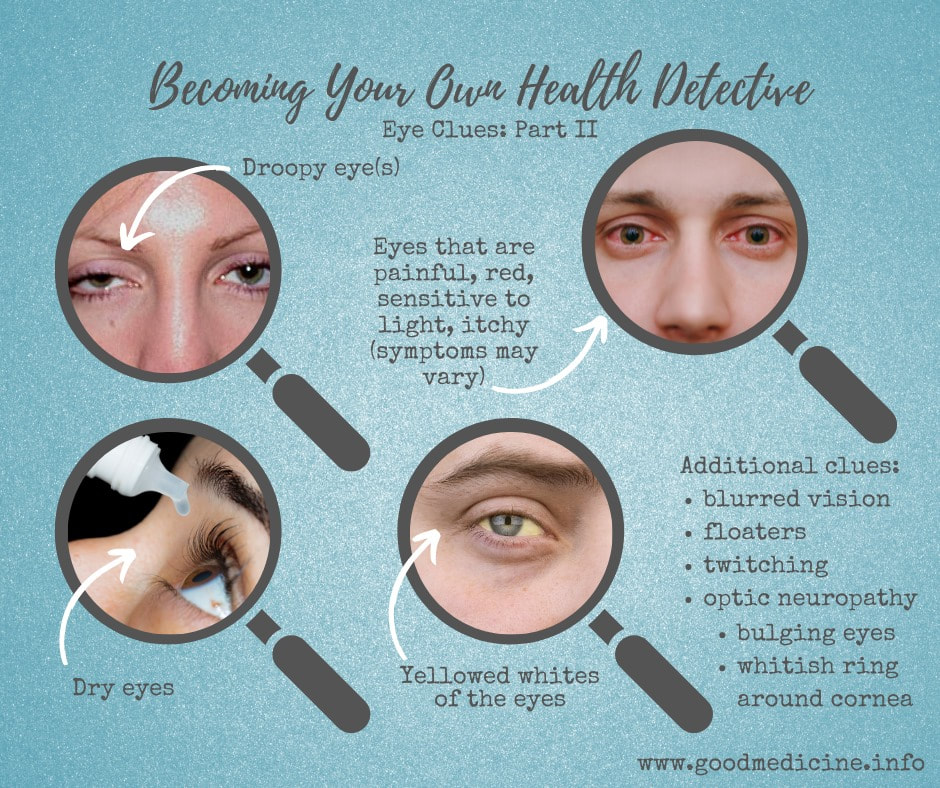
👀The appearance of slightly bulging eyes is a significant clue for a possible overactive thyroid  that is also called Graves disease. Frequently, this disorder is ignited by exposure to environmental toxins in the home, workplace or in the water. Latent viruses such as Epstein Barr have also been implicated in playing a role in developing a chronically inflamed thyroid (leading to either hyper or hypo thyroid manifestation).
👀Another easy to spot clue from the peepers is a gray or whitish ring that is clearly visible around the cornea. The cornea is the lens that covers the “colored” part of the eyeball. Evidence of this ring usually indicates unhealthy cholesterol and triglyceride levels and is a marker for increased risk of heart attack or stroke.
👀Droopy eyelids (ptosis) may be a be a genetic issue, especially if present at birth.

Eyelids that become droopy are the clue for this discussion. Medical conditions that can lead to droopy eyelids include:
👉Injury/trauma to head or eye
👉Decreased blood flow to either the eye or the area of the brain controlling the eye (a droopy eye may be an early stroke sign)
👉Diabetes. Remember that diabetes quietly becomes a vascular disease if not controlled.
👉Headache syndromes. (a visible manifestation of the headache)
👉Neuromuscular conditions 
👉Myasthenia gravis. A droopy eyelid is often the first symptom of this autoimmune disease that is most commonly seen in people over the age of 50. It may be accompanied by occasional double vision, a hoarse voice, or weakness in the arms and legs.
👀Optic neuropathy simply means damage, disease, or dysfunction of the optic nerve. It may be caused by toxin exposure, infection,  an autoimmune disorder, chronic inflammation, trauma, glaucoma, insufficient blood flow to the optic nerve, or use of certain medications including those used for erectile dysfunction and amiodarone, a medication used to control heart rhythm. Symptoms of optic neuropathy include pain in the face or eye socket, pain inside the eye, loss of peripheral vision,  or sudden or gradual vision loss. Ophthalmologists and OD’s can detect  inflammation of the optic nerve on routine eye exams. #makeanannualeyeappointment 
👀Eyes that are painful, red and sensitive to light gives a vast set of possibilities. Given how “screen focused” our culture is, know that computer eye syndrome is a real thing! Give yourself regular breaks from screen time, and use blue light filter glasses when you are spending hours at a time in front of a computer or phone screen. Unmanaged, this can lead to eye strain or dry eyes. Wearing contact lenses for too long may have a similar effect.
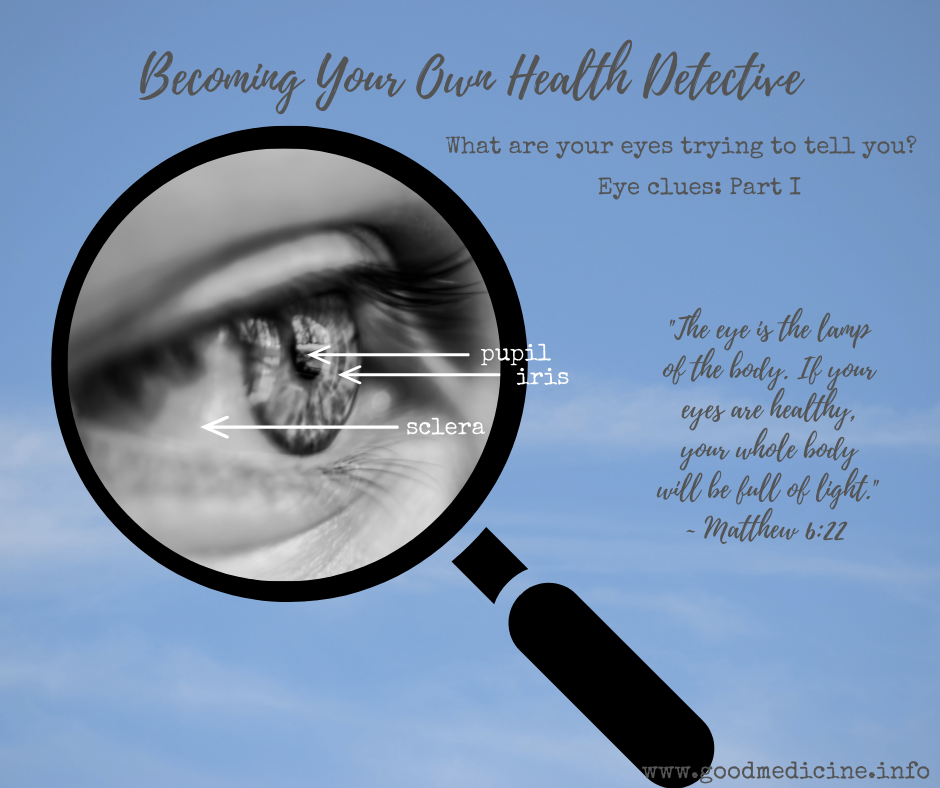
👀If screens are not your eyes source of issue, other causes may need to be investigated. Chronic redness in the sclera (the white part of the eye) is linked to systemic inflammation throughout the entire body, and indicate a possible autoimmune disorder (ex: RA, psoriasis,  or ankylosing spondylitis). If light sensitivity is accompanied by “halos” around light sources, get checked for glaucoma!
👀If your eyes sting, burn, or feel “gritty”, chances are, you are experiencing dry eyes. In fact, we have all probably had brief episodes of dry eyes after riding a bike, spent too much time in front of a computer,  lived in an area with dry winter heat, or been on a plane for many hours in low humidity recirculated air. Chronic dry eyes have been linked to an autoimmune disorder called Sjogren’s syndrome, thyroid disorders, Vitamin A deficiency, or taking certain medications known to cause dry eyes as a side effect. 💊Antidepressants, antihistamines, decongestants, beta blockers (heart/blood pressure), certain antibiotics, ibuprofen, birth control pills, and meds for bladder control💊 are some of the more common culprits.
👀Rapid onset eye inflammation / sensitivity is often a clue indicating infection or inflammation.
👀Blurred vision is another clue to take seriously. While the clue may be manifesting as an inconvenient or annoying visual impairment, dangerously high blood pressure or high blood sugar are causing problems quietly elsewhere in the body. An estimated 73% of diabetic patients have bouts of blurred vision. High blood sugar causes the lens within the eye to swell, causing the blurring. Certain medications may also contribute to blurred vision:
💊Alendronate (for osteoporosis/ osteopenia)
💊COX-2 inhibitors such as Celebrex and Mobic (for pain and inflammation)
💊Acetaminophen, ranitidine (stomach acid), and lovastatin (cholesterol) are just three very common medications that also carry warnings about their potential to blur vision.
👀Red itchy “allergy” eyes may indeed be allergy related. However, the same symptoms also occur in Rheumatoid Arthritis. Approximately 1.3 million Americans have this autoimmune disorder. The immune system begins attacking body tissue, and its focus is generally tissue heavily laden in collagen. The sclera (the white part of the eye) and the cornea are made up almost entirely of collagen, and the inflammation there mimics allergen exposure.
👀An eye twitch can be ever so bothersome, yet it’s an important clue too. Check yourself…. They are generally related to fatigue or stress. It may be time to rest and recover! Chronic eye twitching should signal a visit to a health professional as it can be an early sign of a neurological disorder.
👀Yellowed eyes are a sign that the liver is struggling… a classic sign of jaundice. This is another ASAP health professional moment. 
👀“Floaters” are gray or black specks, strings or cobwebs that appear in vision. If you suddenly notice floaters, contact your eye specialist immediately. Certain medications are known to cause floaters. 💊, diphenhydramine (antihistamine), diltiazem (blood pressure), amitriptyline (mood), and alprazolam(anxiety)💊 are among those known to cause this. 


As I write, I’m reminded again of the impact that chronic toxin exposure has on our bodies… all the way up to our eyeballs! The liver and other detoxifying organs do their level best to keep us healthy, but they are not miracle workers. We have to claim ownership and do our part by avoiding toxins wherever possible by making a conscious effort to exercise, drink plenty of clean water, get plenty of sleep, manage our stress, and eat healthy clean food. So much medication 💊(a class of toxins all its own) may be avoided by caring for ourselves this way.


What conscious decisions did you make today  that decreased your toxin load?🙌 I chose to use YL body care products in the shower this morning and YL Cinnafresh deodorant before I put my clothes👖👕 on. I brushed my teeth with fluoride free YL Thieves Aromabright toothpaste, and bypassed an impending headache by using peppermint 🌿on the roof of my mouth. I finished out my time in the bathroom by avoiding some of the worst toxins☠️ in our homes….. standard American cosmetics. The Savvy Minerals makeup line is not only gorgeous and long lasting, it is liver friendly too! 


You are worth taking care of!
Thanks for making it easy Young Living! 
xoxo~ liz


#sharingiscaring
#supportyourlocalpeepers
#goodmedicine
#goodmedicineisproactiveinsteadofreactive
#thanksYL

Health Clues from Your Eyes – part 1

Liz James · October 12, 2021 ·


“People’s eyes tell me more than their mouths.” 


Eye diseases affect millions of people in the USA. Just like the age old, “Which came first?” question about the chicken🐔 and the egg🐣, we might also want to ask the question about diseases of the eyes. You see (pun intended😁!), diseases of the body may first present themselves as clues within the peepers or eye diseases may result because of dysfunctions within the body… Some of these clues discussed over the next few weeks will be easy to spot by looking in the mirror, while others may require help from a friend, and others may only be seen by your favorite eye care professional.


👀According to the National Eye Institute, the eye blood vessels (those we can see with our naked eye and those that a professional can see) often reflect the condition of brain blood vessels. Blood vessels in the eyes are similar in size, structure, and function to those found in the brain. Thus, inflamed or damaged vessels within the eye are often a predictor of future dementia, cardiovascular disease or stroke. It is very important to listen and make a point of understanding any abnormality your ophthalmologist may point out. Early intervention may make a difference between vision and blindness. Other clues within the eyes are often tied to disorders and dysfunctions occurring in the body. Additionally, many medications can lead to secondary eye diseases…. another reason  to avoid a polypharmacy lifestyle whenever possible! 
Cataracts, glaucoma, Age Related Macular Degeneration (AMD) and diabetic retinopathy are  clues we’ll start with, as they are extremely common eye diseases in the United States, affecting millions  and millions of people predominantly over the age of 40. You’ll notice in our discussion that the damage likely began occurring many years earlier! #cluesyoucanuse


👀Cataracts affect more than 22 million Americans 40 years and older. Those who will be predisposed to cataracts will have a history of:
🔎Diabetes
🔎Long term steroid use
🔎Smoking
🔎Excessive alcohol intake
🔎Radiation treatment or exposure to the upper body
🔎Blood pressure medications (beta blockers and ACE inhibitors)
🔎Photosensitivity causing medications that increase sensitivity of sunlight to the eyes (BCP’s, antihistamines, antidepressants, diabetes meds, NSAIDS are a few known to do this). Wear sunglasses😎 if you are on these meds! 
🔎Living in an area with high air pollution. Let’s park here for just a second. We tend to think of air pollution as being something outdoors, generated by someone else. Yet in standard American households, poor air quality is inadvertently self induced with synthetic fragrance plug in’s, toxic cleaners, candles, aerosolized deodorants and hair sprays, and sprayed toxic air fresheners. Please do not do this to yourself or your family. If you haven’t yet started, begin switching over to 100% natural alternatives beginning with Thieves Household Cleaner and a diffuser with a wide variety of Young Living clean fresh scents. Ya’ll, take a moment and share your favorite fall/winter diffuser recipes in the comments!


👀Glaucoma will be most prevalent in those who have a history of:
🔎Long term steroid use
🔎Medications used in the treatment of Parkinsons, epilepsy, depression, allergies,  and prostate disorders. Additionally, NSAIDS, and antipsychotics have also been implicated. Birth Control Pills have been under close scrutiny in the last decade as possible  purveyors of glaucoma predisposition. Eyes have estrogen receptors within them, and many scientists believe that healthy natural estrogen levels have a protective effect on the retina.  Eye disease is often insidious and damage to the optic nerve is slow. A large study released in 2011 found that women who had used birth control pills for more than 5 years had a 25% increase in their glaucoma risk. 
🔎Genetics, trauma, or injury


👀Macular Degeneration is another sneaky eye disorder. Early diagnosis is usually the result of an attentive eye care professional who will recognize the telltale signs under the retina. There are some outward early clues for the potential ocularly challenged. Difficulty in judging distance when walking (making it harder to keep your balance) and slightly blurred central vision are two clues that indicate a visit to an ophthalmologist would be appropriate. 🔎Prescription medications that may predispose someone to Macular Degeneration include beta blockers and certain other blood pressure medications. Genetics also tends to play a part. That said, remember that 90% of gene expression is environmental (epigenetics) and we have much control over our environment! 


👀Diabetic retinopathy is a complication usually resulting from poorly managed blood sugar. The longer blood sugar is poorly controlled, the greater the likelihood that this condition will develop. Symptoms are gradual (as with most chronic eye diseases), and include spots or “floaters” in vision, blurred vision, fluctuating vision impairment, dark or empty areas of vision, and ultimately vision loss.  Diabetic retinopathy is the leading cause of blindness between the ages of 20-74 years old. It is no small problem, and affects an estimated 4 million people every year.
If you’ve identified yourself in any of these possible scenarios, now’s the time to add  IlluminEyes to your Young Living shopping cart on the regular. We have much to talk about in the way of eye health clues and supportive measures to counter balance the stumbling blocks we’ve all encountered in our walk through life. Eyes require certain nutrients…. Vitamins A, C, E, Lutein, and Zeaxanthin are key to optimal eye health, and IlluminEyes contains all of these. It also contains dried Wolfberry fruit powder which has a unique type of zeaxanthin that naturally boosts blood levels 2-5x higher than sources acquired elsewhere. Good stuff!


Support your eyes proactively. Once the damage is done, it’s often difficult (or impossible) to reverse. See you next week with more eye clues!
xoxo~ liz 

#sharingiscaring
#supportyourlocalpeepers
#goodmedicine
#goodmedicineisproactiveinsteadofreactive
#thanksYL
🔎👀

  • « Go to Previous Page
  • Page 1
  • Interim pages omitted …
  • Page 8
  • Page 9
  • Page 10
  • Page 11
  • Page 12
  • Interim pages omitted …
  • Page 19
  • Go to Next Page »

Book Your Health Coaching CallBook Now

Elizabeth James

469.425.9091

ebj0203@gmail.com