

You Are Worth It! Move It!

Liz James · ·

Liz James · ·

There are times it’s not good to be Number One. This is one of those times. The United States is recognized as being among the nations with the best medical technology and the newest and best drugs. We spend more per person on healthcare than any nation in the entire world, so we should be among the healthiest, right? Yet, for all that we have, the USA has the worst health outcomes. We are #1 in diabetes, #2 in neurodegenerative diseases, #5 in cancer, and #6 in cardiovascular disease (source: Organisation for Economic Co-operation and Development).
An estimated 1 in 3 American adults have prediabetes or metabolic syndrome (both are precursors to Type II diabetes). It’s a common but flawed thought that Type II diabetes only affects “fluffy” people. It doesn’t. There is a relatively new medical acronym called TOFI, which means “Thin on the Outside, Fat on the Inside,” and TOFI individuals can be just as much at risk as their fluffy counterparts. Lifestyle choices will always be the first line of defense to avoid acquiring a Type II diabetes diagnosis (or succeeding in backwalking out of one).
An astute detective will need some internal monitoring tools to more closely assess clues. Health thieves can be very stealth, and this is a reliable way to monitor gang movement before they leave visible gang “tags” (clues). Forewarned is forearmed! Think of this as another tangible aspect of your body’s security monitoring system.
Here’s what you’ll need:
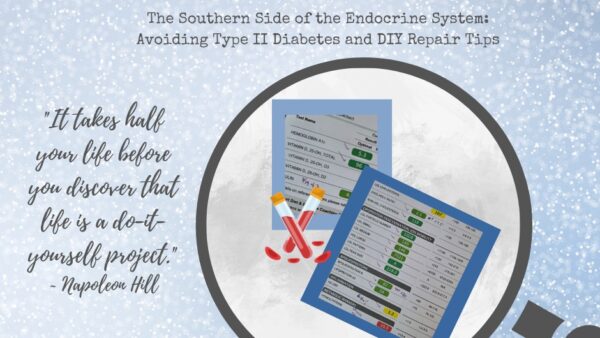
Get labwork annually which (at the very least) includes the following pieces of information:
The combined total of these tests will run about $250 well spent dollars out of pocket. If you have insurance, these are the tests to ask your doctor for when looking for a metabolic syndrome or prediabetes health thief.
NOTE: There is more labwork I’d suggest for a comprehensive look at the body from the inside outโฆ. The above recommendation is specific for monitoring both prediabetes and metabolic syndrome.
Signs of metabolic syndrome and prediabetes nearly always predate diabetic symptoms. Once you have your lab work, and have gathered your other tools, you’re ready to take a hard look at the state of the union of your body. Signs of metabolic dysfunction show up in the following ways:
Monitor your blood pressure. For a week, take it before you go to bed, and again before you get out of bed in the morning. If nighttime and morning blood pressure is higher than it should be, cut out all forms of sugar for a week, and retest. Sugar is highly inflammatory and often drives blood pressure upwards. Normal blood pressure runs 90-120 systolic (top number) and 60-80 diastolic (bottom number). High blood pressure is a symptom, not a root cause!
An increased waist circumference (males should be under 40 inches and females should be under 35) is suggestive of inflammation, probable leaky gut, mitochondrial dysfunction, and insulin resistance.
Uric acid and homocysteine are inflammatory markers. Levels are elevated if uric acid is over 5.5 mg/ml and homocysteine is over 10 umol/L. High uric acid levels lead to a fatty liver. Sugar is a big contributor to this. High homocysteine levels indicate an increased risk for developing heart disease and vascular inflammation. Methylated B12 and methylated folate, omega 3’s (OmegaGize3 is a great option), and optimized use of Vit D3 are all helpful tools in supporting healthy homocysteine levels.
Within your CMP, you’ll look for two numbers corresponding to AST and ALT. ALT is a liver enzyme which is fairly accurate for assessing fatty liver. If that number is over 25, more investigation is needed. AST is another liver enzyme. If it’s elevated (over 34) it may also indicate fatty liver (it also elevates when exposed to too much acetaminophen, alcohol, certain meds such as statins, and infectionโฆ.. So do take that into consideration). If both are elevated, it’s definitely time to take a hard look at sugar and alcohol consumption.
Fasting glucose by itself is not enough, and sadly it’s often the only thing that is tested routinely. HbA1c is a window into the last 3 months of glucose control within the body. Fasting insulin indicates how well the pancreas is actually able to keep up. Optimally, fasting glucose should be 70-85 mg/dL, HbA1c should be less than 5.4%, and fasting insulin should be less than 6 uIU/mL.
Once you have those numbers, you’ll plug them into this equation: fasting glucose x fasting insulin divided by 405. Your answer to this equation is your assessed risk for developing diabetes. Less than 2.8 is excellent, 4.3 is average, and anything higher is a flag that mayhem is likely already occurring.
When you are looking at your lipid panel, zero in on 3 different clues:
Isn’t it prudent to avoid dark alleys and always lock your car? The same can be said for paying attention to these health clues. If the numbers above look like a dark avenue you’re not wanting to go down, here are some tips and tricks for avoiding shady areas!
There is so much more to prediabetes, Type II diabetes, and metabolic syndromeโฆ..more than I could possibly write here. Hopefully though, I’ve given you food for thought and a desire to learn more. If so, do some digging and think outside the box! The more you know, the more health empowered you’ll be. We have full control of this part of our health story. How will you choose to write yours?
xoxo~ liz
blog about history of diabetes
#DiabetesPrevention #MetabolicHealth #PreventType2Diabetes #NaturalHealthTips #becomingyourownhealthdetective #BYOHD #thebestdefenseisagoodoffense #theapplicationofknowledgeisgoodmedicine #goodmedicine
Liz James · ·
Liz James · ·


Liz James · ·


Book Your Health Coaching CallBook Now