• Skip to primary navigation
  • Skip to main content
Book Your Health Coaching Call
Good Medicine

Good Medicine

Holistic Health Coaching

  • Home
  • Liz James
    • About Liz
    • Coaching
    • Book a 20 Minute Complimentary Coaching Call
  • Favorite Resources
    • BlessedByHisBlood
    • Young Living
    • Fast Like A Girl Certified Coach
    • Order supplements through my Fullscript store
    • Green Pasture (Coupon: Health10)
    • RogersHood Apothecary (Coupon: BEABLESSING for 10% off)
    • DolphinMPS
    • Company
    • Abundance
  • My Books
    • Becoming Your Own Health Detective Volume 1
    • Becoming Your Own Health Detective Volume 2
  • Blog
  • Cart

Young Living

Health Clues in Our Teeth – part 2

Liz James · April 27, 2021 ·

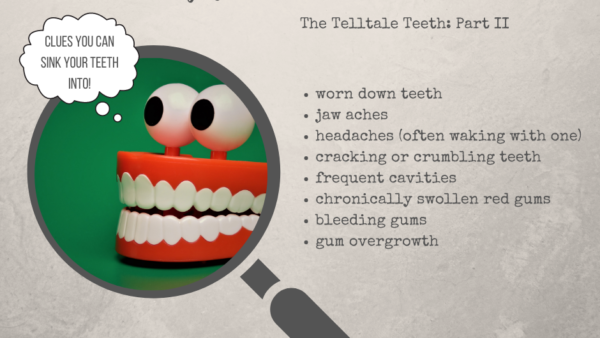
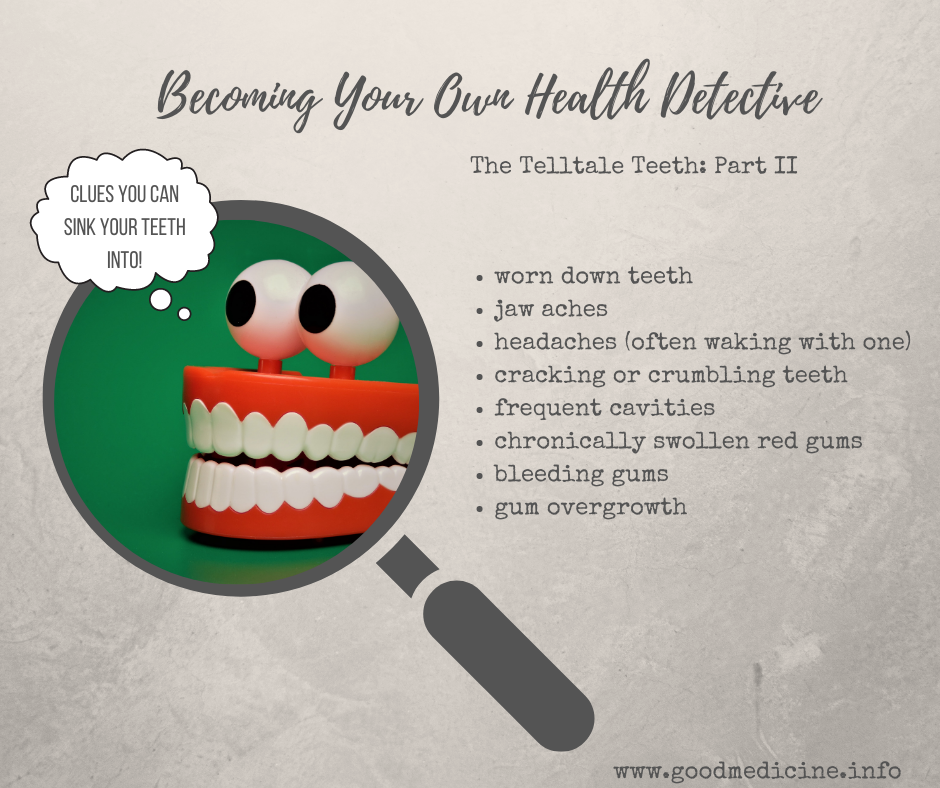
Our body is highly skilled at sounding alarms🚨 that we often “hit the snooze button” on, ignore out of ignorance, or simply disregard. I was “that person” many years ago when I went through about 18 months of tooth emergencies.😭 I didn’t have a single cavity until I was in college, and always had pretty stellar dental visits. However, when I was in my mid 30’s, something strange started happening. On 3 different occasions, a piece of tooth would literally fall off of a molar while I was driving to work in the morning. 😳 Though I had no evidence of wear on my teeth, my dentist finally determined that I must be gritting my teeth so hard while I slept that I was literally breaking my teeth. Once we figured out the root cause and I found better ways to manage my stress , I quit breaking teeth, stopped having headaches every morning upon waking up, had fewer neck, elbow, and wrist problems, and generally felt better and happier as a human! My body was giving me so many clues, and I was ignoring all of them (or “patching them”) until my body literally started falling apart. It was an expensive but valuable lesson! 


* Worn down or regular breaking of teeth are often signs of stress. Internalized chronic stress has the same effect on the body as smoking 5 cigarettes a day, and who wants to abuse their body like that?? Not sure if you are grinding or clenching your teeth?  Sometimes the flatness on the teeth can be felt with the tongue or seen in the mirror, or your dentist may have made a comment to you. A chronically stressed body may also see a higher incidence of canker sores or fever blisters…. all are clues that shouldn’t be ignored.


* Chronic stress will cause consistently higher levels of cortisol in the body, eventually wreaking some major havoc. Manage stress properly by incorporating mindset management skills, prayer/meditation, exercise, diet and  proper amounts of sleep.  Consider supporting  healthy cortisol levels with Young Living’s Cortistop. If clenching, gritting or grinding is your nighttime gig, you may also want to consider a mouth nightguard to help mediate damage, and apply Peace & Calming, RutaVala, or Tranquil essential oil blends on the base of the big toes at night. 

 
* Thin enamel or cracking/crumbling teeth are often clues of acid reflux. (We will go over  acid reflux clues in greater detail soon.)  Several medications may also affect the integrity of teeth. Asthma medications (inhaled), chewable aspirin, birth control pills, immunosuppressive agents, chemotherapy agents,  and any of the 400+ meds that cause dry mouth ( revisit that section for more details) are among the bigger culprits. If you find yourself in a situation where any of these medications are deemed necessary, make sure you are rinsing your mouth out often with Thieves Mouthwash to create an inhospitable environment for bad bacteria that may want to set up camp and create further damage.


* Chronically sensitive or swollen gums may be a sign of an underlying Vitamin C deficiency (approximately 13% of the US population), an early sign of heart disease, diabetes, or (less commonly) a blood disorder.  It can also simply be a sign of poor oral hygiene! Medications that may cause bleeding gums include blood thinners, aspirin, and regular use of ibuprofen or other NSAIDS.


* Gum overgrowth (hyperplasia)  is more pronounced than simply swollen gums. While often a symptom of poor oral hygiene, it most frequently results from the use of certain medications:  anti seizure meds, immunosuppressants, or calcium channel blockers (a class of blood pressure medications). There are physiological disorders that may cause hyperplasia too. Diabetes or Crohn’s disease are two of the more common ones.


* Pretty much everyone brushes their teeth in front of a mirror, which is an opportune time to make a quick daily evaluation of teeth, gums, mouth & tongue. Once you get into the habit of doing this, you will notice small changes pretty quickly, and you can often correct a situation without professional intervention! 
 Next week, I’ll discuss specific tooth health as a predictor for potential health concerns! It’s fascinating and such a helpful tool in knowing how to care for yourself preemptively.
xoxo~ liz

#sharingiscaring
#healthcluesyoucansinkyourteethinto
#healthcluesyoucanuse
#goodmedicine
#ThanksYL
Heart Health with Essential Oils

Liz James · April 26, 2021 ·

My dear friend Jen…… she is a wise one. Good word (and info) this fine Monday morning! 👇👇👇 
xoxo~ liz😘
​
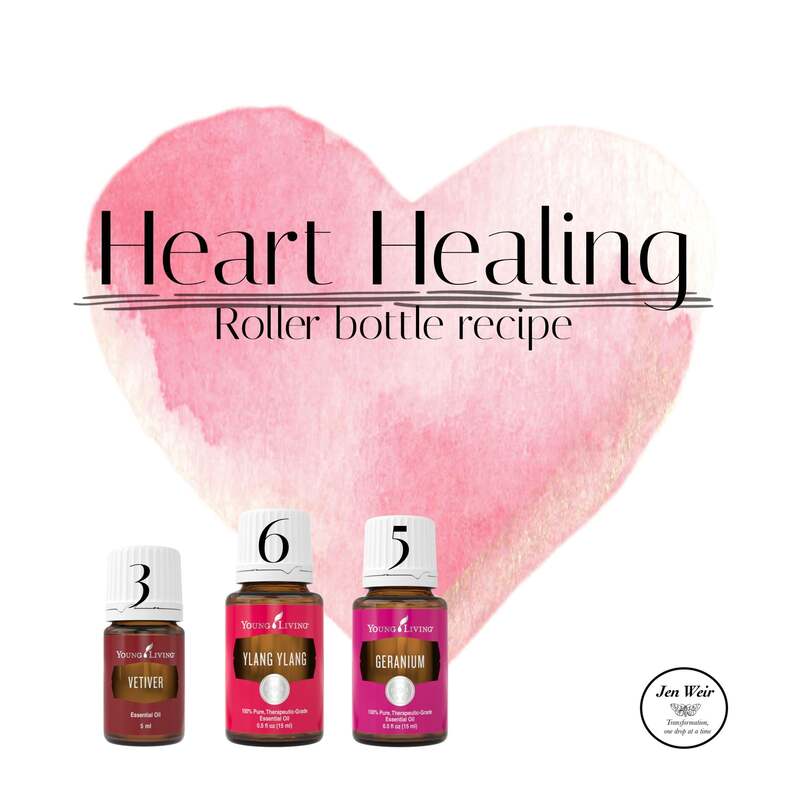
Recently I walked some folks through a bit of time diving into 21 days of heart health. Heart health is so much more about emotional health than even physical health. And if you want to get down to the nitty gritty, spiritual health trumps all that and more.

I have found adding these three to a roller bottle, topping off with a carrier oil such as V-6 has done wonders for soothing and healing the heart- on a number of levels. Using your essential oils to begin the healing process is a must, yet I would caution you to not simply throw on the oil without a thought or intention of telling the oils where to go. 
Yes, you heard me. Give the oils their marching orders. If you know, then you know. If you don’t- find me over text and we’ll chat it out. 

Vetiver traditionally has been used in aromatherapy for relaxation and alleviating emotional stress, panic attacks, trauma, anxiety, insomnia, hysteria and depression. A 2015 study investigated the effects of vetiver oil as a tool that assists with reducing anxiety and the neurological actions in the central amygdaloid nucleus. 
In case you’re wondering as I was when I read it, the central amygdaloid nucleus connects with brainstem areas that control the expression of behaviors; it’s responsible for the perception and results of emotions, such as changes in heart rate, blood pressure and respiration.

Ylang Ylang is another one that is powerfully beneficial for the heart. For starters it boosts even the most non oily human’s mood and has the capacity to reduce depression. Beyond that Ylang Ylang has been shown to lower blood pressure and decrease heart rates. So if you’ve got some situations happening in your ticker, this is one to add in.

Geranium– the oil of love and trust. Geranium encourages the opening of the heart space so love may flow freely. If the emotional body feels congested with old grief and disappointments, Geranium opens channels to let it all go, and make space for newness to circulate. 

Health Clues in Your Teeth – Part 1

Liz James · April 21, 2021 ·


I find teeth mysteriously fascinating, but it used to not be that way. Teeth (and toes) used to activate my gag reflex before I began learning about their wealth of clues. Now I find them to be wonderful guides and tools! 😍


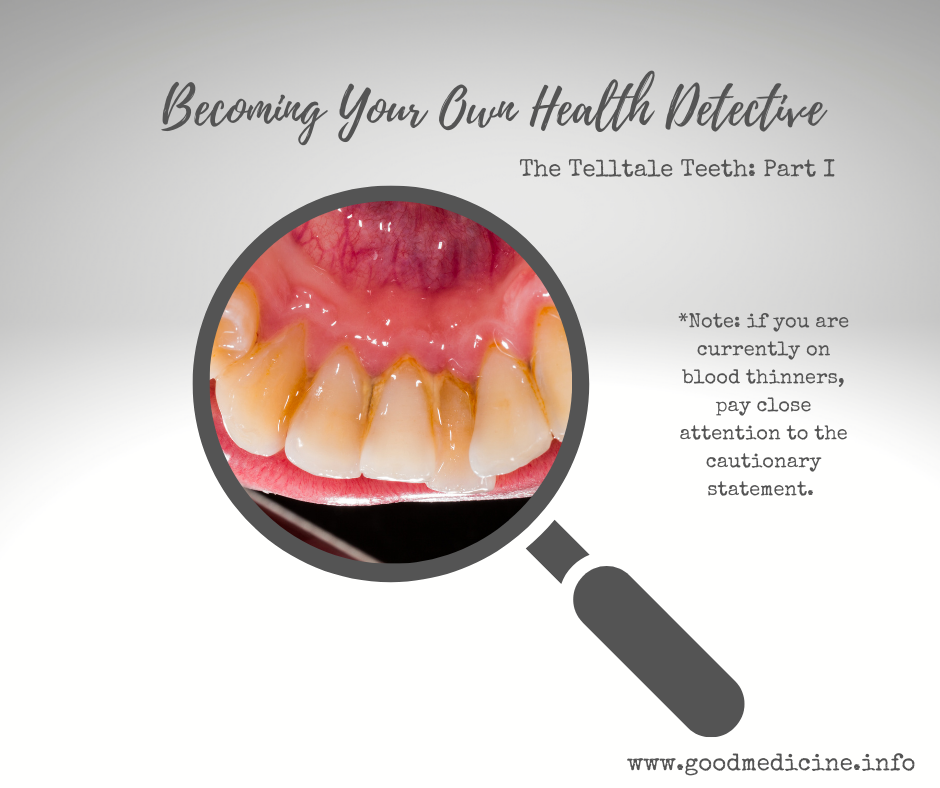
This particular clue is so very important that it’s the only one we are going to discuss today. Any time you have something that changes in or on your body, it should become an instant signal that something has shifted metabolically or physiologically, and the best course of action is to “root out”  the cause before bigger symptoms take place.


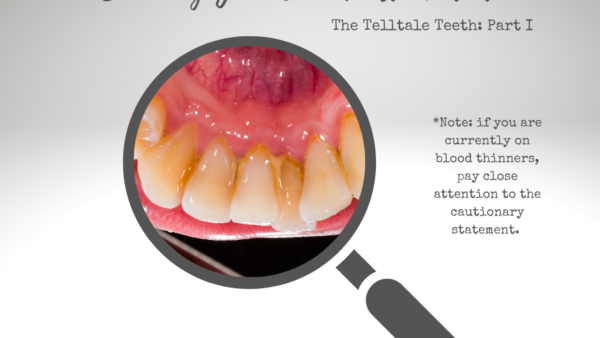
Perhaps you’ve been to the dentist and the hygienist has remarked that you have more plaque than normal on your teeth, or you’ve looked in the mirror and noticed this yourself. Hopefully this is not the case because you have loved on your oral cavity with Thieves toothpaste, mouthwash, and floss! Sometimes tho, even the best of oral care products doesn’t stop plaque build up. If that has happened, it’s time to start digging for the root cause! 


*But first, A little history about teeth and nutrition!  Before there was refrigeration or even toothpaste, there were remote people groups worldwide who had solidly amazing teeth and mouths. This is well documented in the works of a dentist from the early 1900’s named Dr. Weston A Price. Dr. Price worked tirelessly to prove that oral decay and degeneration was due more to nutritional deficiencies than to lack of oral hygiene. His work revealed that fat soluble vitamins A and D and a probiotic rich diet were key contributors to healthy mouths, more so than daily brushing. An interesting unifying factor amongst all the people groups he studied was that all had some form of probiotic rich daily food source…. Something that the standard American diet falls woefully short in today.


*What does diet have to do with plaque on the teeth and why is it a clue? Here is where the clue becomes quite important! A diet rich in properly fermented foods (think traditional kefir, sauerkraut, miso, yogurt, cod liver oil, kimchi, kombucha etc) is a valuable tool for supporting a healthy gut. If the gut is loaded with healthy bacteria, the body is able to create other vitamins which are necessary for healthy living. For the course of THIS discussion, that would be Vitamin K2. #life9probioticforthewin


Vitamin K2 (aka menaquinone-7 , or activator X) is an underappreciated nutrient, in that it is vital for building strong bones and teeth. It does this by carrying calcium out of soft tissue (think brain and vascular system) and carrying it IN TO bones and teeth.
Stick with me ya’ll😍….. We are getting to the super important part! 


K2 activates something called osteocalcin and matrix-Gla protein. Matrix-Gla is present in saliva and its activity arrests the dental plaque calcification process….. It is also present in the blood, and when activated by vitamin K2, helps to remove plaque in arteries! Isn’t it interesting how matrix-Gla prevents both plaque on teeth AND plaque in arteries??


*If plaque continues to build up on teeth despite your best efforts in oral care, it may indicate a deficiency of vitamin K2, which may be putting your vascular system at risk. 


*A 2016 study found that matrix-Gla protein inactivation ( as the result of inadequate K2) led to a higher risk of death due to cardiovascular disease. 
*Now to be clear, plaque on teeth may happen as a result of poor oral care or a few other reasons too, but if you’ve never had plaque issues before, and now you do….. It may be time to dig a little deeper to protect your overall well being! 


Other signs or symptoms of a Vitamin K2 deficiency may include:
*Bruising easily
*Bleeding excessively (including a heavy menstrual flow)
*Osteopenia, osteoporosis or frequent fractures
*A mouth full of cavities
*Heart disease
*Diabetes or pre-diabetes
*Autoimmune disease flare ups (there is evidence that a Vitamin K2 deficiency aggravates autoimmune diseases….. especially Rheumatoid Arthritis)
*Forgetfulness ( a Vitamin K2 deficiency is linked to Alzheimer’s Disease due to the calcium plaque build up within the brain)
*O blood type – lacks some clotting factors in blood, so K2 supplementation is helpful


If you have noticed regular buildup of calcified dental plaque…..
👉Talk to your favorite healthcare professional and consider asking for a cardiac calcium score
👉Get your vitamin D levels checked
👉There currently isn’t a K2 specific lab test to check for deficiency. 
👉Consider supplementation of Vitamin K2 (recommended dietary allowance is 60-120mcg/day)
NOTE: If someone is on blood thinners, talk to a health care professional before starting Vitamin K2 as a supplement. It does affect blood coagulation, and therefore may interact with blood thinners.
And YAY you!!!….If you are currently taking Young Living’s  CardioGize, Master Formula or Super Cal Plus, you’ll find that these three already contain K2 within each formulation (100mcg, 50mcg, and 30mcg respectively). 


As always, I am not a doctor and cannot diagnose, treat, or offer to cure you. I can only help you be a top notch detective for your personal health and wellness. 
xoxo~ liz

#sharingiscaring
#healthcluesyoucansinkyourteethinto
#healthcluesyoucanuse
#goodmedicine
#ThanksYL
Health Clues in Your Mouth

Liz James · April 14, 2021 ·

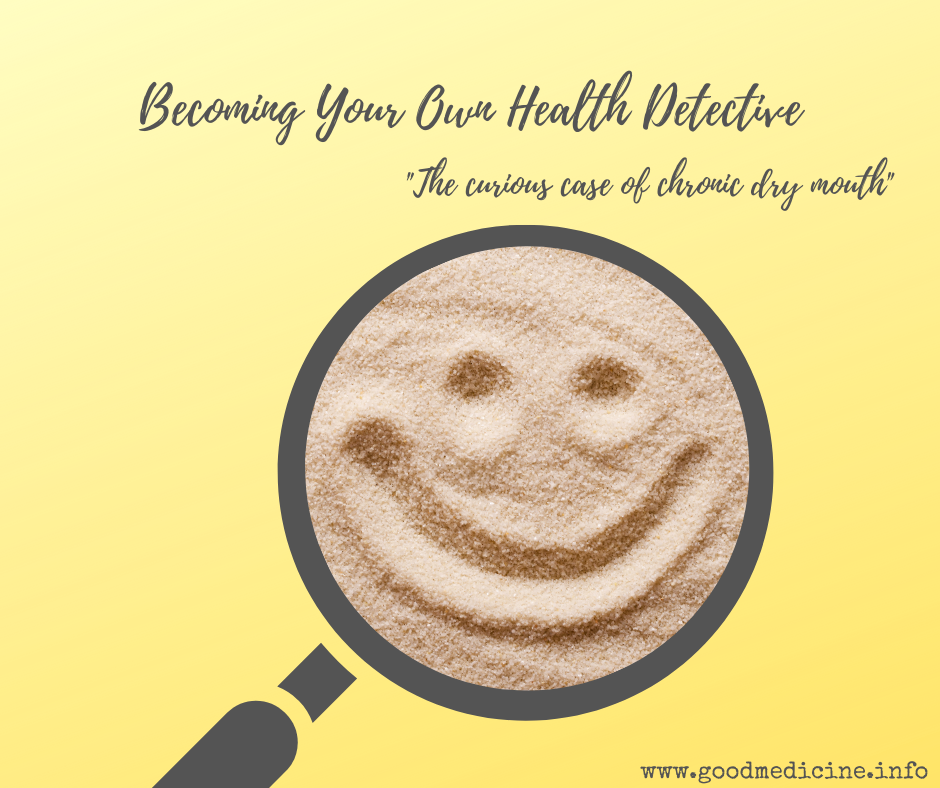
DRY MOUTH
Hippocrates said “All disease begins in the gut.” Considering the digestive system begins in the mouth, it should be no surprise that the mouth holds bountiful clues! 90% of systemic dis-ease has an oral manifestation. 
While everyone has a dry mouth occasionally, chronic dry mouth (known as xerostomia) which persists for weeks may be a symptom of an unhealthy habit, underlying health condition, or side effect from certain medications. If an insufficient supply of saliva is produced, you may notice these signs or symptoms all or most of the time:
👅Dryness or feeling a “stickiness” in the mouth
👅Saliva that seems thick and stringy
👅Bad breath
👅A dry or grooved tongue
👅A chronic dry or sore throat
👅A change in sense of taste
👅Difficulty chewing, speaking, and swallowing


Common habits and health conditions that may cause dry mouth:
👉Dehydration 
👉A thyroid condition ….both hyper or hypo thyroid.  Roughly 50% of people who have persistent dry mouth have a thyroid disorder.
👉Sinus problems which make people breathe thru their mouth
👉Radiation side effects
👉Tobacco and alcohol use
👉Diabetes
👉Stroke
👉Yeast Infection (remember your tongue clues!)
👉Alzheimer’s and other forms of dementia
👉Autoimmune diseases. An autoimmune disease called Sjogren’s syndrome causes dry eyes and dry mouth, and often accompanies other autoimmune disorders like lupus and rheumatoid arthritis. 


Unfortunately, over 400 relatively common prescription and over the counter medications cause dry mouth as a side effect. Some of the more common classes of medications that may contribute to the problem include:
💊Chemotherapy agents
💊Decongestants
💊Antihistamines
💊Pain killers
💊Muscle relaxers
💊Anti hypertensive medications (beta blockers, calcium channel blockers, and diuretics)
💊Antidepressants
💊Oral inhalers (for the lungs)
💊Medications treating Parkinson’s and Alzheimer’s
💊Certain seizure medications
💊Medication for motion sickness
💊Bladder control medications
Interestingly, older age is also listed as a reason for dry mouth, but I disagree. Considering that the average elderly patient is on 9-13 prescriptions, the odds of dry mouth as a side effect to one or more of the above medications is quite high. When combined with the health conditions and/or habits listed above, dry mouth could occur at any age, the odds simply rise with the number of health conditions and medications involved. A healthy 70+ish individual (no meds / no underlying conditions) rarely has issues with dry mouth!  


Dry mouth is an interesting clue because it has a cause and effect cycle. The longer dry mouth persists, the more problems chronic dry mouth can cause. Saliva is a necessary component of the digestion process. It washes away food and helps neutralize acid produced by bacteria in the mouth. It also has the capability to both repair tooth enamel thru remineralization (if the minerals are available thru good nutrition!), and wash out plaque. Continual dry mouth will eventually lead to dental erosion, plaque formation, decay, and gum disease, all of which can ultimately lead to more chronic dis-ease throughout the body. It’s a vicious cycle best remedied if possible.
Dry mouth is rarely discussed as a possible side effect from medications. In my opinion, it is one of the most important side effects to be aware of as gum and dental disease plays such an enormous role in overall health. Side effects of medications are some of the biggest reasons it is a good idea to look first for holistic ways to heal as opposed to quickly jumping on to the prescription drug carousel.  
I am personally a huge fan of the Thieves oral care line (toothpaste, mouthwash, and floss) as a way to maintain my pearly whites (and gums!). One of the oft recommended remedies for dry mouth is sucking on lozenges or hard candy. Many common lozenge options are loaded with sugar which really feeds the beast of decay.

If dry mouth is a concern, here are some tips and tricks:
🏆Stay well hydrated! Perk up your water’s flavor with Young Living Vitality drops that are so easily squirted into water. Lavender lemonade, Grapefruit Bergamot (my fave!), or for an added boost of energy, try the clean caffeine boosted Jade Lemon Berry or Spearmint Tangerine!  
🏆Utilize a humidifier in the bedroom and rooms you frequent. Thankfully, many of our Young Living diffusers (including the Desert Mist) also serve as a humidifier! 
🏆Keeping immune and oral health supportive sugar free Thieves Lozenges on hand to suck on.
🏆Avoid salty and dry foods that exacerbate dry mouth.
🏆Avoid tobacco and alcohol use.
🏆Regular dental cleanings from a dentist who doesn’t promote fluoride use! 
Dry mouth is both a clue for the past AND a clue for what may come in the future if dry mouth is allowed to persist, so it’s quite important to get it under control whenever possible!  
xoxo~ liz

#sharingiscaring
#healthcluesyoucanuse
#goodmedicine
#ThanksYL
Health Clues in Your Tongue Part 2

Liz James · April 6, 2021 ·

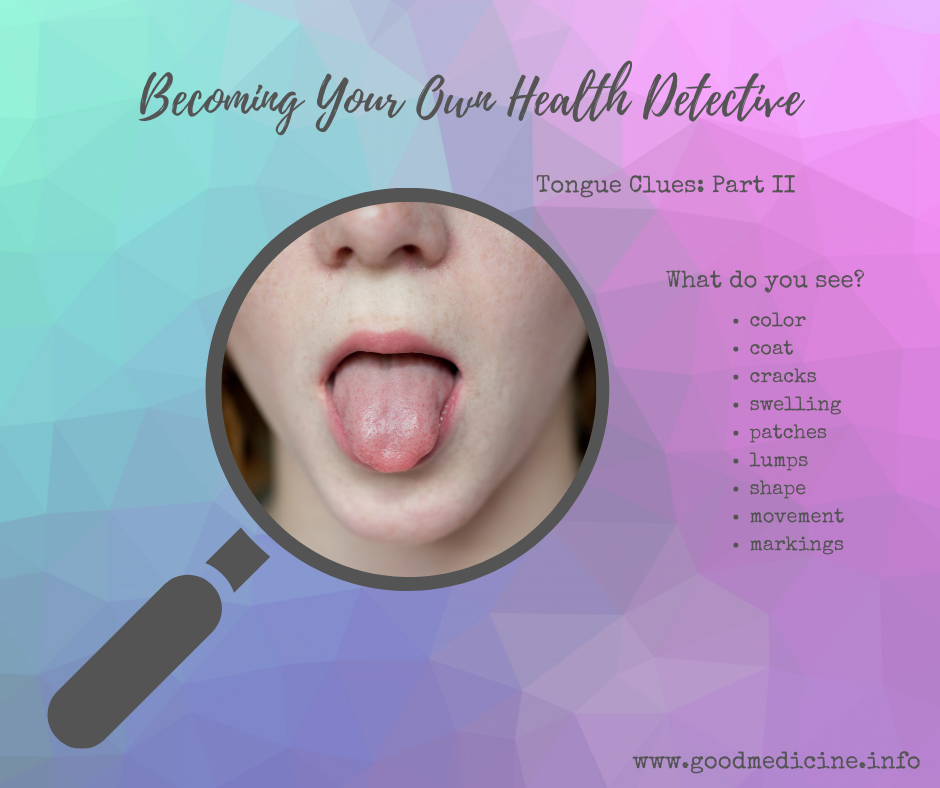
👅Geographic tongue (erythema migrans) is a benign condition easily confused with lichen planus (an autoimmune disorder). A geographic tongue will be pink to reddish in color with slightly depressed lesions with irregular white or yellow borders. Geographic tongue usually has hereditary and environmental components (epigenetics!)….. meaning that environmental factors may intensify genetic expression.


Some of the more common environmental factors contributing to magnifying geographic tongue characteristics are endocrine disruptors (including birth control pills). Common endocrine disruptors include BPA (found in plastics), Phthalates (found in most mainstream beauty and skin care products), perchlorate (commonly found in tap water), PFC’s (used in nonstick cookware and fast food containers), and organophosphate pesticides.


Reading labels is a royal pain in the tushie, and all of these environmental toxins are not so nicely found everywhere despite having been banned in many other countries. Even if you are not predisposed to a geographic tongue, endocrine disruptors wreak havoc within all of us, and vigilance is needed. Scientists have pointed to all of these toxins as being key players in the more than 50% decline in fertility (for both men and women)  in the USA in the last 30 years.  
I am so thankful that Young Living has a full line of  skin and body care products for both men and women, as well as gorgeous makeup (#SavvyMinerals)  that is safe and free of hidden dangerous chemicals. I could stand on this toxic soapbox for hours, but let’s return to the tongue! 


Geographic tongue is often a clue indicating a disposition towards psoriasis, reactive arthritis, allergies, and type I diabetes. That is not to say someone with a geographic tongue will definitely acquire one or more of these dis-ease states. Rather, it’s important to be aware of the possibility and do “all the things” to minimize the chance of acquiring a chronic autoimmune condition. Chronic stress can also magnify the characteristics of a geographic tongue.


👅A fissured tongue is notable for its deep furrows and cracks. Genetics and environmental factors also play a role. Tobacco use, and iron or B12 deficiency are common influencers of a fissured tongue. This particular tongue characteristic is also often seen in patients with psoriasis, Sjogren’s Syndrome, and other autoimmune disorders. 


👅A swollen, inflamed tongue is sometimes seen in celiac disease (an autoimmune intolerance to gluten).
Did you notice a trend? Many of today’s tongue clues are tied to autoimmune disorders which ultimately are connected to gut health and environmental toxin exposure and it’s so very important to recognize clues and be proactive instead of reactive!  


👅A “scalloped” tongue (ridges or teeth marks on the sides of the tongue) is indicative of fluid retention.


👅Tingling of the tongue may be a symptom of hypoglycemia.


👅 Tongue strength also reveals important clues! Is a person able to stick out his/her tongue, and if so, does it tremble? Remember, the tongue is a strong and very vascular bundle of muscles, much like the heart. Scientists have found that a quivering or trembling tongue is often indicative of a neurological disorder. A tongue quiver may also appear both before a stroke and as an aftermath of a vascular event.


👅As you look at your tongue for any tips or clues, make note of any unusual lumps, discoloration, or localized swelling or sores that do not go away, and contact your favorite health provider should you find something suspicious!
Caring for your tongue is similar to caring for your teeth. A fluoride free toothpaste (have you tried Young Living’s Thieves toothpaste?), oil pulling, and using a copper tongue scraper are all healthy ways to keep your tongue happy!
xoxo~ liz 


#sharingiscaring
#healthcluesyoucanuse
#thetonguespeaks
#goodmedicine
#ThanksYL

  • « Go to Previous Page
  • Page 1
  • Interim pages omitted …
  • Page 42
  • Page 43
  • Page 44
  • Page 45
  • Page 46
  • Interim pages omitted …
  • Page 70
  • Go to Next Page »

Book Your Health Coaching CallBook Now

Elizabeth James

469.425.9091

ebj0203@gmail.com