• Skip to primary navigation
  • Skip to main content
Book Your Health Coaching Call
Good Medicine

Good Medicine

Holistic Health Coaching

  • Home
  • Liz James
    • About Liz
    • Coaching
    • Book a 20 Minute Complimentary Coaching Call
  • Favorite Resources
    • BlessedByHisBlood
    • Young Living
    • Fast Like A Girl Certified Coach
    • Order supplements through my Fullscript store
    • Green Pasture (Coupon: Health10)
    • RogersHood Apothecary (Coupon: BEABLESSING for 10% off)
    • DolphinMPS
    • Company
    • Abundance
  • My Books
    • Becoming Your Own Health Detective Volume 1
    • Becoming Your Own Health Detective Volume 2
  • Blog
  • Cart

Stress

Health Clues in Your Teeth – Part 1

Liz James · April 21, 2021 ·


I find teeth mysteriously fascinating, but it used to not be that way. Teeth (and toes) used to activate my gag reflex before I began learning about their wealth of clues. Now I find them to be wonderful guides and tools! 😍


This particular clue is so very important that it’s the only one we are going to discuss today. Any time you have something that changes in or on your body, it should become an instant signal that something has shifted metabolically or physiologically, and the best course of action is to “root out”  the cause before bigger symptoms take place.


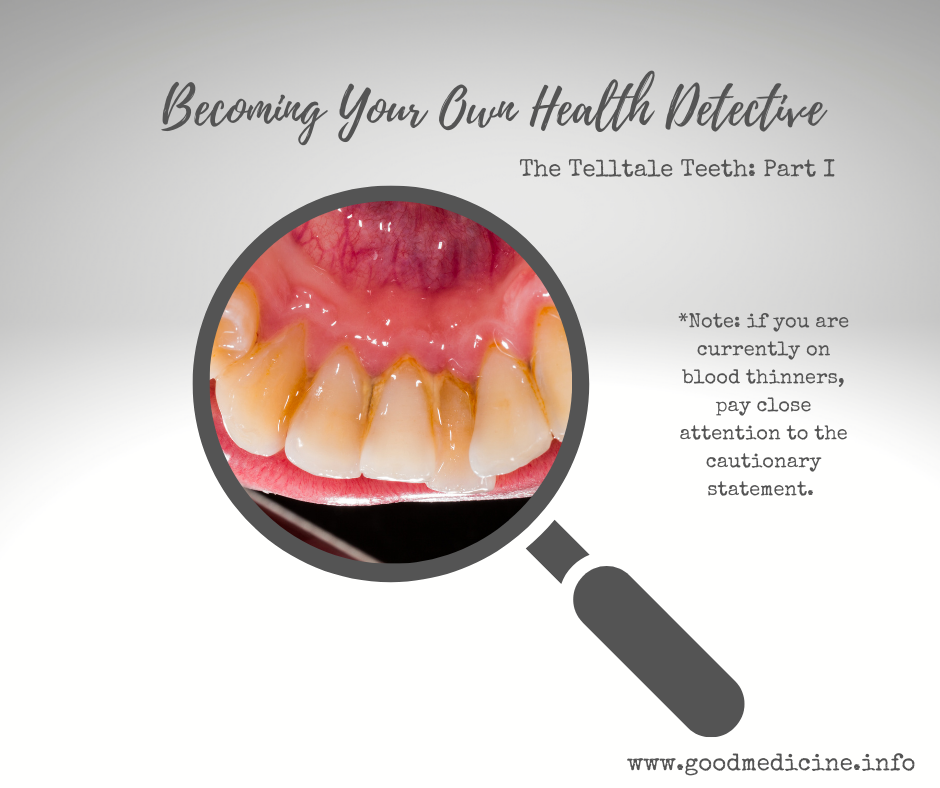
Perhaps you’ve been to the dentist and the hygienist has remarked that you have more plaque than normal on your teeth, or you’ve looked in the mirror and noticed this yourself. Hopefully this is not the case because you have loved on your oral cavity with Thieves toothpaste, mouthwash, and floss! Sometimes tho, even the best of oral care products doesn’t stop plaque build up. If that has happened, it’s time to start digging for the root cause! 


*But first, A little history about teeth and nutrition!  Before there was refrigeration or even toothpaste, there were remote people groups worldwide who had solidly amazing teeth and mouths. This is well documented in the works of a dentist from the early 1900’s named Dr. Weston A Price. Dr. Price worked tirelessly to prove that oral decay and degeneration was due more to nutritional deficiencies than to lack of oral hygiene. His work revealed that fat soluble vitamins A and D and a probiotic rich diet were key contributors to healthy mouths, more so than daily brushing. An interesting unifying factor amongst all the people groups he studied was that all had some form of probiotic rich daily food source…. Something that the standard American diet falls woefully short in today.


*What does diet have to do with plaque on the teeth and why is it a clue? Here is where the clue becomes quite important! A diet rich in properly fermented foods (think traditional kefir, sauerkraut, miso, yogurt, cod liver oil, kimchi, kombucha etc) is a valuable tool for supporting a healthy gut. If the gut is loaded with healthy bacteria, the body is able to create other vitamins which are necessary for healthy living. For the course of THIS discussion, that would be Vitamin K2. #life9probioticforthewin


Vitamin K2 (aka menaquinone-7 , or activator X) is an underappreciated nutrient, in that it is vital for building strong bones and teeth. It does this by carrying calcium out of soft tissue (think brain and vascular system) and carrying it IN TO bones and teeth.
Stick with me ya’ll😍….. We are getting to the super important part! 


K2 activates something called osteocalcin and matrix-Gla protein. Matrix-Gla is present in saliva and its activity arrests the dental plaque calcification process….. It is also present in the blood, and when activated by vitamin K2, helps to remove plaque in arteries! Isn’t it interesting how matrix-Gla prevents both plaque on teeth AND plaque in arteries??


*If plaque continues to build up on teeth despite your best efforts in oral care, it may indicate a deficiency of vitamin K2, which may be putting your vascular system at risk. 


*A 2016 study found that matrix-Gla protein inactivation ( as the result of inadequate K2) led to a higher risk of death due to cardiovascular disease. 
*Now to be clear, plaque on teeth may happen as a result of poor oral care or a few other reasons too, but if you’ve never had plaque issues before, and now you do….. It may be time to dig a little deeper to protect your overall well being! 


Other signs or symptoms of a Vitamin K2 deficiency may include:
*Bruising easily
*Bleeding excessively (including a heavy menstrual flow)
*Osteopenia, osteoporosis or frequent fractures
*A mouth full of cavities
*Heart disease
*Diabetes or pre-diabetes
*Autoimmune disease flare ups (there is evidence that a Vitamin K2 deficiency aggravates autoimmune diseases….. especially Rheumatoid Arthritis)
*Forgetfulness ( a Vitamin K2 deficiency is linked to Alzheimer’s Disease due to the calcium plaque build up within the brain)
*O blood type – lacks some clotting factors in blood, so K2 supplementation is helpful


If you have noticed regular buildup of calcified dental plaque…..
👉Talk to your favorite healthcare professional and consider asking for a cardiac calcium score
👉Get your vitamin D levels checked
👉There currently isn’t a K2 specific lab test to check for deficiency. 
👉Consider supplementation of Vitamin K2 (recommended dietary allowance is 60-120mcg/day)
NOTE: If someone is on blood thinners, talk to a health care professional before starting Vitamin K2 as a supplement. It does affect blood coagulation, and therefore may interact with blood thinners.
And YAY you!!!….If you are currently taking Young Living’s  CardioGize, Master Formula or Super Cal Plus, you’ll find that these three already contain K2 within each formulation (100mcg, 50mcg, and 30mcg respectively). 


As always, I am not a doctor and cannot diagnose, treat, or offer to cure you. I can only help you be a top notch detective for your personal health and wellness. 
xoxo~ liz

#sharingiscaring
#healthcluesyoucansinkyourteethinto
#healthcluesyoucanuse
#goodmedicine
#ThanksYL
Breath Clues part 2

Liz James · March 23, 2021 ·


Becoming aware of HOW you breathe is important both as a health clue and an (inexpensive and valuable!) wellness tool. 


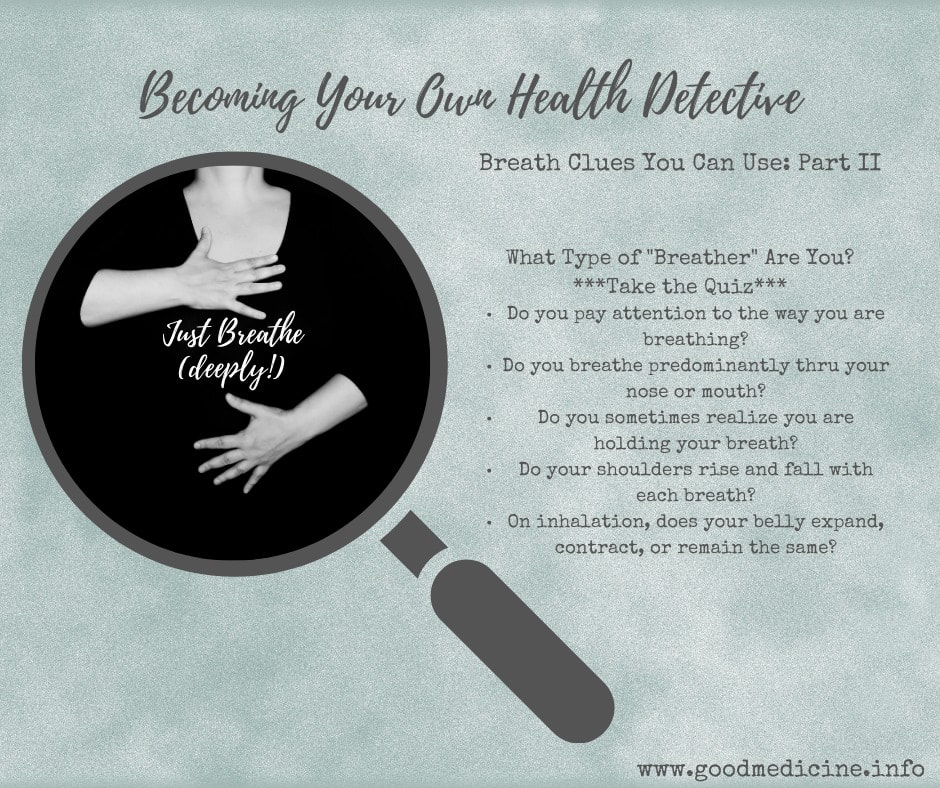
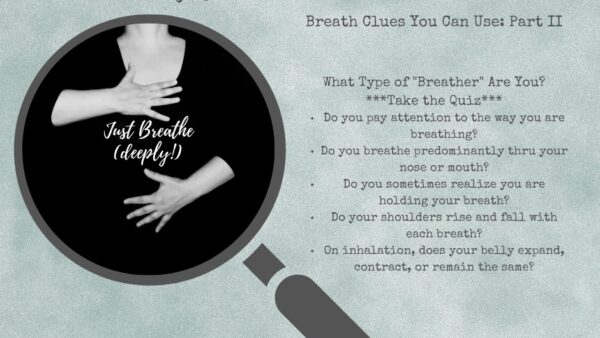
Did you take the quick quiz on the graphic?  If not, take a moment to do so!
Statistically, chronic shallow (mouth, neck, and upper chest) breathing is the most common type of breathing in Westernized cultures. This type of breathing  perpetuates stress and anxiety, activates the “fight or flight” (sympathetic response),  and suppresses the immune system. 


Conversely, diaphragmatic (deep belly) breathing balances the nervous system, supports heart health, improves circulation, promotes lymphatic drainage, reduces stress, calms the mind, and brings the body back into a more homeostatic state. 
Do you notice how some people remain calm, cool, and collected while others become a tightly wound spring with every stressor? The ability to pivot from “fight or flight” to “rest and digest” is incredibly important to health outcomes! ( Pharmacist tip: Learning to do this is helpful in keeping you away from the pharmacy!)  


The longest nerve in the body is called the  👉vagus nerve 👈. It runs from the brain thru the lungs and on to the gut, and affects every organ and body system it comes in contact with along the way ….. stomach, intestines, liver, gallbladder, heart, lungs, and the immune, endocrine, respiratory, and cardiovascular systems. In other words, the vagal nerve pathway is kind of a big deal! 😍


High vagal tone is incredibly important to overall health and wellbeing….. really, it’s a use it or lose it situation. Low vagal tone is associated with increased risk for cardiovascular disease, stroke, diabetes, GI disorders, and depression. Diaphragmatic breathing increases vagal tone! 


If deep belly breathing is not something you do on the regular (ie: it’s become second nature to you), Here are a few tips and tricks:
👉 Start with just 2 minutes several times a day. 
1. Place one hand on your upper chest and the other just below your rib cage, so you can feel your diaphragm move as you breathe.
2. Inhale deeply thru your nose for the count of 6-8 seconds (or 4-5 seconds if that’s too much)…. allowing your belly to expand. Try to fill your lungs with air. NOTE! The hand on your chest should remain as still as possible.
3. Slowly exhale through your nose for the count of 6-8 (or 4-5) drawing your belly button in and down as your abdomen moves inward.
4. As you breathe inward deeply, envision oxygen flowing inward and recharging your body. As you exhale, envision all the stress and tension leaving your body. 
5. Practice this for 2-3 minutes at a time (20-30 breath cycles). Graduate to 5 minutes as you are able! 


Scientifically noted benefits of diaphragmatic breathing can be further enhanced when you pair your breathing practice with Young Living essential oils known for their supportive roles in  health and wellness goals:
🌿Want to improve mood? Pair your practice with Citrus Fresh eo blend! 
🌿 Looking for better concentration? Try Brain Power or Frankincense!
🌿 Looking to better manage pain? (Yes, deep breathing helps with this too!) Add in PanAway or Deep Relief
🌿 Wanting to lower your blood pressure (Yep, deep breathing exercises does this too!)….. support happy vascular system breathing practices with Joy, Aroma Life, Ylang Ylang, or Lavender.
🌿Lowering blood sugar (amazing what regular deep breathing may do! Consider deep inhalations of Coriander, Melissa, or Christmas Spirit! 
🌿 Improve your sleep. Pair pre bedtime deep breathing with a diffuser loaded with Cedarwood, Orange, and Lavender! 
🌿  Use as a tool in your weight loss journey. Have you tried Grapefruit essential oil or Thieves on the bottom of the feet?
🌿 Strengthen the pelvic floor muscle (which will also improve bladder and bowel elimination function!). Consider pairing with Clary Sage, Cypress, or (Digize 👈 for colon support). 
🌿Better lymphatic flow?…. You’ll love Lemon essential oil (both regular and vitality!)! 


Noticing how you are breathing, and then making corrections as needed is a simple, but VIP wellness tool and health clue! Just as diaphragmatic breathing is helpful, chronic shallow breathing will exacerbate many health problems, and over time, may also contribute to lung infections and lung diseases.
Just breathe…… deeply! 
xoxo~ liz


👈 if you’d like to know more about additional breathing practices or the oils mentioned above, let’s chat!


#sharingiscaring 
#Godgaveusthetools 
#goodmedicineisgreatbreathinghabits
#goodmedicine Breath Clues: Part II
Becoming aware of HOW you breathe is important both as a health clue and an (inexpensive and valuable!) wellness tool. 
Did you take the quick quiz on the graphic?  If not, take a moment to do so!
Statistically, chronic shallow (mouth, neck, and upper chest) breathing is the most common type of breathing in Westernized cultures. This type of breathing  perpetuates stress and anxiety, activates the “fight or flight” (sympathetic response),  and suppresses the immune system. 
Conversely, diaphragmatic (deep belly) breathing balances the nervous system, supports heart health, improves circulation, promotes lymphatic drainage, reduces stress, calms the mind, and brings the body back into a more homeostatic state. 
Do you notice how some people remain calm, cool, and collected while others become a tightly wound spring with every stressor? The ability to pivot from “fight or flight” to “rest and digest” is incredibly important to health outcomes! ( Pharmacist tip: Learning to do this is helpful in keeping you away from the pharmacy!)  
The longest nerve in the body is called the  👉vagus nerve 👈. It runs from the brain thru the lungs and on to the gut, and affects every organ and body system it comes in contact with along the way ….. stomach, intestines, liver, gallbladder, heart, lungs, and the immune, endocrine, respiratory, and cardiovascular systems. In other words, the vagal nerve pathway is kind of a big deal! 😍
High vagal tone is incredibly important to overall health and wellbeing….. really, it’s a use it or lose it situation. Low vagal tone is associated with increased risk for cardiovascular disease, stroke, diabetes, GI disorders, and depression. Diaphragmatic breathing increases vagal tone! 
If deep belly breathing is not something you do on the regular (ie: it’s become second nature to you), Here are a few tips and tricks:
👉 Start with just 2 minutes several times a day. 
1. Place one hand on your upper chest and the other just below your rib cage, so you can feel your diaphragm move as you breathe.
2. Inhale deeply thru your nose for the count of 6-8 seconds (or 4-5 seconds if that’s too much)…. allowing your belly to expand. Try to fill your lungs with air. NOTE! The hand on your chest should remain as still as possible.
3. Slowly exhale through your nose for the count of 6-8 (or 4-5) drawing your belly button in and down as your abdomen moves inward.
4. As you breathe inward deeply, envision oxygen flowing inward and recharging your body. As you exhale, envision all the stress and tension leaving your body. 
5. Practice this for 2-3 minutes at a time (20-30 breath cycles). Graduate to 5 minutes as you are able! 
Scientifically noted benefits of diaphragmatic breathing can be further enhanced when you pair your breathing practice with Young Living essential oils known for their supportive roles in  health and wellness goals:
🌿Want to improve mood? Pair your practice with Citrus Fresh eo blend! 
🌿 Looking for better concentration? Try Brain Power or Frankincense!
🌿 Looking to better manage pain? (Yes, deep breathing helps with this too!) Add in PanAway or Deep Relief
🌿 Wanting to lower your blood pressure (Yep, deep breathing exercises does this too!)….. support happy vascular system breathing practices with Joy, Aroma Life, Ylang Ylang, or Lavender.
🌿Lowering blood sugar (amazing what regular deep breathing may do! Consider deep inhalations of Coriander, Melissa, or Christmas Spirit! 
🌿 Improve your sleep. Pair pre bedtime deep breathing with a diffuser loaded with Cedarwood, Orange, and Lavender! 
🌿  Use as a tool in your weight loss journey. Have you tried Grapefruit essential oil or Thieves on the bottom of the feet?
🌿 Strengthen the pelvic floor muscle (which will also improve bladder and bowel elimination function!). Consider pairing with Clary Sage, Cypress, or (Digize 👈 for colon support). 
🌿Better lymphatic flow?…. You’ll love Lemon essential oil (both regular and vitality!)! 
Noticing how you are breathing, and then making corrections as needed is a simple, but VIP wellness tool and health clue! Just as diaphragmatic breathing is helpful, chronic shallow breathing will exacerbate many health problems, and over time, may also contribute to lung infections and lung diseases.
Just breathe…… deeply! 
xoxo~ liz

#sharingiscaring 
#Godgaveusthetools 
#goodmedicineisgreatbreathinghabits
#goodmedicine 

Health Clues in Your Saliva

Liz James · March 9, 2021 ·

Health Clues You Can Use: The Candida Spit Test


We’ve moved on to the mouth ya’ll! Today we’re only going to cover one topic because it is large and important: Candida. Candida traditionally gets a bad rap as a fungus amongst us, but it actually has a valuable job in digestion and nutrient absorption. The problem is that a little goes a long way, and when its environment is favorable, Candida will take over in a hot minute……and in our modern world, it doesn’t take long for that to happen!

A few of the most common triggers for candida run amok include:
🔥A high carb, high sugar diet
🔥Excessive alcohol consumption
🔥Chronic Stress
🔥Certain medications (eg: Statins, antacids,  birth control pills and synthetic hormone replacement therapies for both men and women,  antibiotics, steroids -including inhaled, immunosuppressants typically given to treat autoimmune disorders)
🔥Heavy metals (think fillings and some tattoo inks)
🔥Even a diet excessively rich in fermented foods can aggravate the healthy gut flora balance. #everythinginmoderationfriends!


A healthy gut generally keeps Candida levels under control. This is but one reason to embrace the daily ritual of taking 👉Young Living’s Life 9 probiotic.  Candida is often a contributor to leaky gut. In a perfect world, everything stays inside the gut, but the little tentacle-like fingers that candida grows may push thru the gut lining causing the digestive tract to leak into the body. This is problematic for many reasons, but for the point here…….Candida can now invade other parts of the body, transitioning into a full-body attack. 


Symptoms of candida overgrowth can be experienced in many different forms:
👉Skin infections and disorders (athlete’s foot, jock itch, vaginal yeast infections, ringworm, and fungal infections in folds of skin, eczema, hives and rashes of unknown origin )
👉Nail infections including toenail fungus (go back and check your nail clues notes!)
👉Digestive issues including diarrhea, constipation, and/or bloating
Flareups of autoimmune diseases (including Hashimoto’s thyroiditis, rheumatoid arthritis, lupus, psoriasis)
👉Severe seasonal allergies
👉Itchy ears
👉Strong sugar and refined carb cravings 
👉Difficulty concentrating, brain fog,  poor memory and/or lack of focus


Are your spidey senses humming with some of these clues? If so, it’s time to try the “Candida Spit Test”.


CANDIDA SPIT TEST:
This simple test is best done first thing in the morning before ANYTHING is put into the mouth (even water!). 
Spit into a clear glass filled with water.
Observe your spit every 15 minutes for one hour.
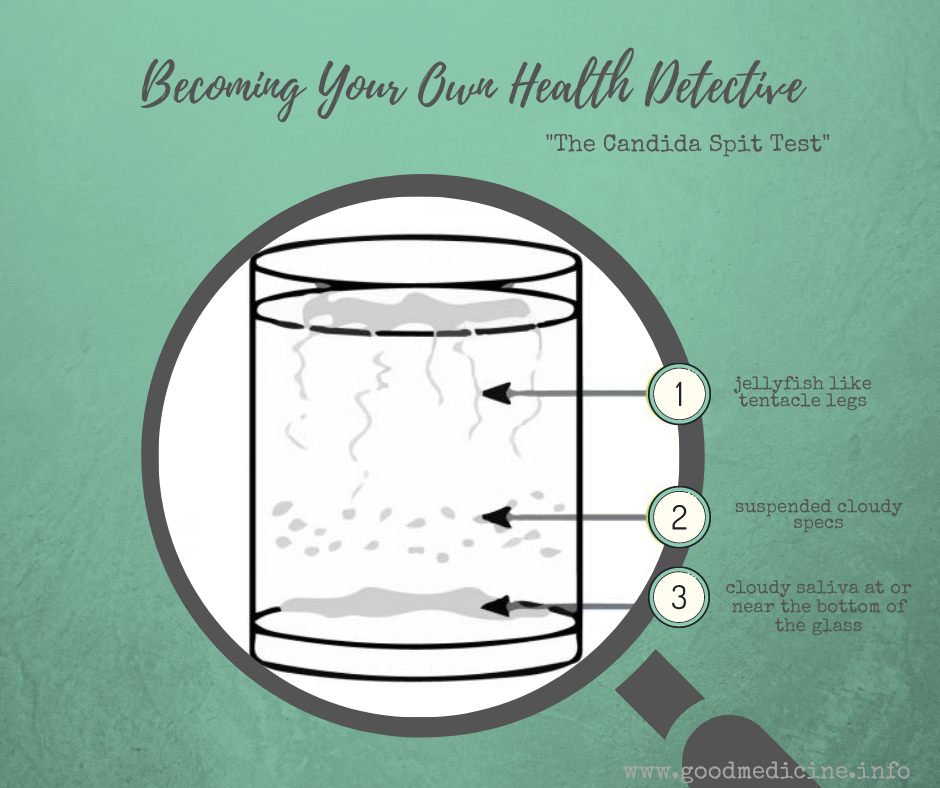
A “positive” test would include the following features:
* Strings of saliva resembling jellyfish tentacles traveling down into the water 
* Cloudy specs suspended in the water
* Cloudy saliva that sinks to the bottom of the glass


If there are none of these features in the glass after one hour,  the odds are in your favor that your Candida population is under control. Remember that our bodies change daily, especially if there has been an extended season of stress or exposure to Candida triggers. This is a good test to consider employing whenever you have a few of the symptoms (ahem, clues!) mentioned above. 


If you discover that you likely do have a candida population explosion, remember to work on eliminating the triggers mentioned above, make sure you are taking Life 9 and one of Young Living’s digestive enzymes (Essentialzymes-4, Essentialzyme, Allerzyme, Detoxzyme, or for the kiddos – MightyZyme) daily for healthy gut support, and consider incorporating  “candida diet” eating habits into your life! 
A healthy immune system will help keep Candida growth in check too! You know what to do, right? Support your body with all the tools available to us through Young Living and nature! 
xoxo~ liz

#caringissharing
#pharmacistandfarmacist
#applicationofknowledgeispower
#guthealthrules 
#goodmedicine
#goodmedicineisknowingthyselfwell
#alldiseasebeginsinthegut
#ThanksYL

Frequency is Singing Plants

Liz James · March 8, 2021 ·

Frequency (the measured electrical vibration of something) is often a hard concept to grasp. I have studied it pretty extensively over the last few years because understanding how frequency affects us as people, is key to vibrant health. Literally, it can make or break you.
Recently, I stumbled across a new genre of music termed 🌿”florganoleptic music”. 🌿 
It’s fascinating! Literally, science meets plant meets musician……. 
You can read more about it here: https://www.cosmicknotmusic.com/
……..or listen to a better explanation along with a little music composed by humans and plants😍:
All I know is that I just learned something new and amazing today about plants! 
Frequency…. it’s real. Singing plants, yep. They’re real too😊 . This little evergreen is belting out the blues! (ha ha! must be a Northern Lights “Blues” spruce 😎)
Happy Monday friends!
Which plant juice (essential oil) makes you feel like singing?  🌿🎶🎶🎶🌿🎶🎶🎶🌿
xoxo~ liz

#sharingiscaring 
#hugatreeandthensingwithit
#Godisthecreatorofthemiraculous
#plantjuice 
#vibrationalhealing 
#ThanksYL

Health Clues in Your Skin Part 5

Liz James · March 2, 2021 ·

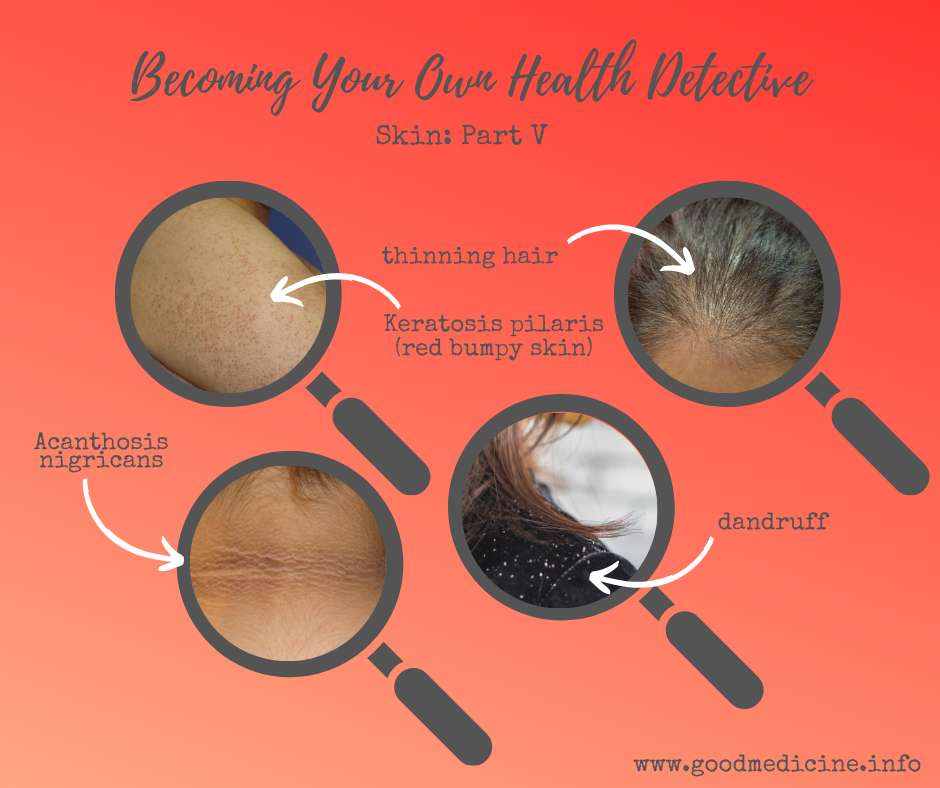
* Although we could explore skin clues for the rest of the year, today we’ll wrap up dermal geographical points of interest. You’re getting the idea, right? The body, especially its “packaging” gives loads and loads of early clues as to the direction a body’s health may be headed. As with GPS, you can pay attention to the map and gain control over where you are heading, or you can ignore the map/clues……… and who knows where you may end up! 

* Acanthosis nigricans (AN) is a skin abnormality that results in velvety darker discolorations found most often in body folds and creases. The discoloration develops gradually over time and is most often seen across the back of the neck, armpits, and groin area. Although acanthosis nigricans is sometimes an inherited skin characteristic, the most common cause is diabetes and obesity. Endocrine abnormalities (thyroid) and certain cancers (adenocarcinomas) can also cause this type of skin change. 


Chronic use of certain medications can also cause AN. Birth Control Pills and some hormone replacement therapies, steroids, high dose niacin, and a class of drugs used to treat HIV (protease inhibitors) are the most common offenders. 

* Keratosis pilaris (KP) is an annoying but harmless skin condition which causes dry rough patches and tiny bumps often seen on the upper arms, thighs, cheeks, or buttocks. You may have heard it sometimes called “chicken skin”. An estimated 40% of the population has experienced it, and though often related to a Vitamin A deficiency (which is seen in roughly 51% of adults in the USA), KP is most often seen in people who regularly eat a very specific set of food triggers. 
Who’d have thought that 51% of adults in the USA would have a Vitamin A deficiency?…. And yet we do. Vitamin A deficiency will ultimately affect the eyes in addition to the skin. Young Living has a super eye health supplement called Illumineyes  which happens to be loaded with Vitamin A. #killtwobirdswithonestone


Those with KP would do best to avoid common skin irritants found in mainstream bath and body care products. Thankfully, Young Living has us covered here too! They make caring for ourselves so very easy! Have you tried any of the YL bath and shower gels and bar soaps? I’m especially fond of the Morning Start Shower Gel!  
Food triggers are a serious influencer of keratosis pilaris. Thankfully, the foods that tend to trigger the outbreaks are 100% unnecessary and are generally void of  quality nutritional value.

These would include:
🔥Refined white sugar
🔥High fructose corn syrup
🔥Trans fats (found predominantly in junk and fast foods)
🔥Refined carbs (white bread, pastries, soda, sugary breakfast cereals, etc)
🔥Artificial flavorings and colorings
🔥Gluten
🔥Commercial (homogenized/pasteurized) dairy


My feeling about KP is that, while annoying and harmless, it is an early red flag clue that bumpy waters may lay ahead if reparations are not in order. If food is a trigger, then the gut is compromised and showing early signs of stress. Don’t let this stress escalate…. It’s a slippery slope. The gut is at the root of all chronic disease throughout the body, not the least of which is digestive disorders themselves! YL’s Life 9 probiotic and a digestive enzyme (Essentialzyme, Essentialzymes-4, Allerzyme, or Detoxzyme) would be excellent supportive measures to get and keep your gut on track.


KP is a common skin condition among children too….. It’s far better to nip things in the bud than it is to let a situation escalate, even if it means going thru a season of junk food withdrawal. Good eating habits are perhaps one of the best gifts you can give a kiddo! Don’t forget that Young Living has Kidscents Mightypro probiotic packets and Mightyzyme chewable digestive enzymes for little tummies too!   
Because KP is actually a buildup of dead tissue, a gentle but effective way to minimize the bumps is by using a “clean” DIY sugar scrub on the areas 3-4 times a week. 
2 cups organic brown sugar
½ cup organic fractionated coconut oil
½ cup honey
5 drops of lavender essential oil

* Dandruff affects roughly 50% of the population and comes in a few common types. It too is more annoying than harmful, but clues are flying with each brushing of the hair! 


Possible causes of dandruff include:
🔥Chronic inflammatory skin condition(s)…. Remember skin is a mirror of the gut!
🔥Allergy or sensitivity to something either applied or ingested (again, gut flag!)
🔥Yeast overgrowth (gut flag!)
🔥Omega 3 deficiency


Managing stress is key with any inflammatory condition. Stress reduction techniques  include yoga, prayer, meditation, deep breathing, and utilizing your favorite calming essential oils. 


A whopping 98% of the US population fails when it comes to optimal Omega 3’s in their diet. OmegaGize3 is loaded with what we need so as not to be a part of that epic fail statistic. Other clues of Omega 3 deficiencies may include dry hair, dry skin, depression, dry eyes, joint pain and stiffness.
​
* Thinning hair is something that happens gradually over time. While it is normal to lose around 100 hairs a day, hairs should also be growing back in as they are falling out. Very few people have the hair in their 50’s+ that they had in their 20’s. #aginghappens  


Factors that affect thinning hair may include:
Genetics (family pattern hair loss)
Emotional & physical stress
Medical conditions (thyroid or hormone imbalance, and heart disorders)
Poor nutrition or poor absorption of nutrients
Hair products that make thinning worse
Decrease in collagen production as we age


—Ways to minimize thinning hair include eating nutrient dense foods (and utilizing the YL digestive enzymes mentioned above!), OmegaGize3 !!!, and supplemental collagen (internally). 


Medications will always and forever have side effects. By their very definition they are a toxin, and many of them cause hair loss. Some of the top offenders include:
Certain acne meds
Certain antibiotics
Anti-coagulants (after about 3-4 months)
Statins (cholesterol)
Immunosuppressants (methotrexate, Enbrel, Humira etc)
Some anti seizure meds
Blood pressure meds (those whose generic name ends in -olol or -pril)
Mood stabilizer meds (including paxil, zoloft, amitriptyline, and prozac)
Weight loss meds (eg: phentermine)
Gout meds (allopurinol)
Many chemotherapy agents
Steroids (which are also immunosuppressants)
NSAIDS (ex: ibuprofen, naproxen )


I am not a doctor, and cannot diagnose, treat or cure you. I will however, continue to provide you with clues you can use to help you find your way back to the vibrant healthy person God designed you to be (or to support the vibrant health person you already are!). Which body part should we cover next as we continue to unearth clues?
xoxo~ liz

#caringissharing
#pharmacistandfarmacist
#applicationofknowledgeispower
#skininthegame 
#goodmedicine
#goodmedicineisknowingthyselfwell
#yourskinisamirrortoyourhealth
#ThanksYL

  • « Go to Previous Page
  • Page 1
  • Interim pages omitted …
  • Page 11
  • Page 12
  • Page 13
  • Page 14
  • Page 15
  • Interim pages omitted …
  • Page 25
  • Go to Next Page »

Book Your Health Coaching CallBook Now

Elizabeth James

469.425.9091

ebj0203@gmail.com