
• Skip to primary navigation
  • Skip to main content
Book Your Health Coaching Call
Good Medicine

Good Medicine

Holistic Health Coaching

  • Home
  • Liz James
    • About Liz
    • Coaching
    • Book a 20 Minute Complimentary Coaching Call
  • Favorite Resources
    • BlessedByHisBlood
    • Young Living
    • Fast Like A Girl Certified Coach
    • Order supplements through my Fullscript store
    • Green Pasture (Coupon: Health10)
    • RogersHood Apothecary (Coupon: BEABLESSING for 10% off)
    • DolphinMPS
    • Company
    • Abundance
  • My Books
    • Becoming Your Own Health Detective Volume 1
    • Becoming Your Own Health Detective Volume 2
  • Blog
  • Cart

Medications

Dangerous Diagnosis

Liz James · April 11, 2022 ·

Approximately 15-20% of adults in the United States currently takes a medication for a diagnosed mental health concern. Over 6 million children nationwide ages 0-17 are also on medication.
 
This is a very important podcast that I’d encourage everyone listen to.
In brief:
 
🧐A diagnosis means payment to the health professional by the insurance companies.
 
🧐A diagnosis is subjective (ie: there are no laboratory tests identifying a mental health disorder), and the DSM is an outdated methodology (chemical imbalances are not something trackable) used primarily for payment purposes.
 
🧐Memorable quote from the podcast:
Whitaker: But, of course, people were being encouraged to say your problems are due to this chemical imbalance as opposed to what’s going on in your life. That’s such a profound shift in self-understanding.
Horwitz: You’re not going to sell many drugs by saying your problem is your life experiences. It’s far more effective to say your problem is in the brain. It’s an imbalance, we can correct that imbalance, just take our product.
 
Worth the listen
 
xoxo~ liz
 
(PS: one thing I wish they had covered but did not….. many physiological imbalances will certainly cause mental illness type symptoms. These (incomplete list) CAN be found often through an adequate and thorough lab workup… ex: magnesium, ferritin, B12, D deficiencies, hormone imbalances, thyroid disorders etc. Become your own best advocate! )

 
#sharingiscaring
#becomingyourownhealthdetective
#labworkisyourfriend
 
https://www.madinamerica.com/…/dsm-interview…/…
 

Risks to Birth Control Pills

Liz James · March 18, 2022 ·

I’m often learning alongside you. This is how we grow, right? I’ve not been a fan of birth control pills for many years. Unfortunately, I did not know the truth about them in the 80’s and early 90’s when I took them as a way to manage my own severe endometriosis. When I woke up to the hand that fed me (my pharmacy license / Big Pharma ) in the late ’90’s, BCP’s was one of the rabbit holes I ventured down… and am still venturing down because there is soooooooo much to understand about this class of medications. Physically, socially, historically, and politically (and it’s all tied together 🙄🥴. #ofcourseitis )
 
The story of “green plasma” 😬was new to me tho. As I said….. always learning 🤓. And now I’ve got another book to buy so I can learn more details. 😀
 
With Big Pharma, things are rarely as they seem on the surface.
 
Before taking any medication, take the time to dig deeper than what the label (or your pharmacist) says. Most pharmacists have not done their due diligence on learning the truth. They are given talking points by their employer, the insurance companies, and the drug manufacturers.
 
We research when we buy a car, a computer, or any other impactful purchase….. why would you not do this for something life altering like a long term medication and weigh risk versus benefit. You are worth it.😘
 
xoxo~ liz
 
#sharingiscaring
#greenplasma 😳
#knowingthetruthaboutBCPsisgoodmedicine
#riskvsbenefitalways
#becomingyourownhealthdetective
 
PS: Note the payout (1.02$Billion for clots and $21 million for gallbladder…. no small potatoes!) in lawsuits related to just two birth control brands [there are more] made by one company (Bayer….. who also happens to own Monsanto….. who also happened to play a large role within the Nazi atrocities committed during WWII https://encyclopedia.ushmm.org/content/en/article/bayer.)
 
https://www.theepochtimes.com/why-do-few-women-know-the…

Clues to Thyroid Health from Iodine – part 1

Liz James · March 9, 2022 ·

Dotting your i’s and crossing your t’s: Iodine and Thyroid Part I
 
We all know that iodine is a necessary micronutrient and plays an important role in the health of the thyroid. I’m pretty confident that getting to know your individual iodine level (as I hope you will be encouraged to pursue by the end of this series🥰) is going to be new clue territory for many people.
 
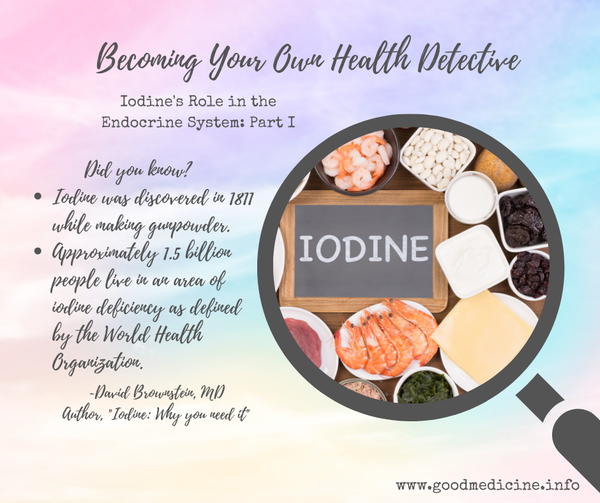
Iodine is not commonly found in soil and therefore not found appreciably in many foods. So how are we to get it into our bodies? It is found in ocean foods such as ocean fish and crustaceans🦀🦐🐟 and sea vegetables (seaweed), but it would require a regular diet of these foods to prevent a deficiency.

History of iodine related problems:

 
In the early 1900’s, goiters were a health concern in many inland areas where seafood 🦀🦐🐟 wasn’t a common food source. In 1923-1924 a study revealed that simply adding small amounts of iodine to the diet drastically decreased the incidence of goiters. Iodized salt was introduced into the US market, and by 1951, fewer than 0.5% of school aged children had evidence of enlarged thyroid glands. (Previously, it had been a remarkable 40% in areas with little access to ocean foods). The United States Food and Nutrition Board eventually set the RDA for iodine between 150-290 micrograms/day (approximately ½ – ¾ tsp iodized salt) to prevent goiters.
 
This is all fine and dandy, except that there are a few missing pieces to the puzzle. The RDA was set up to prevent goiters (which it does quite well), but is the recommendation adequate for optimal thyroid, immune system, and endocrine function?

Consider these facts:

 
🔎The Japanese consume 89 times more iodine than Americans (waaaaaaay more than what the US RDA has established) due to daily consumption of sea vegetables. Coincidentally, the traditional Japanese culture has reduced rates of chronic disease and some of the lowest cancer rates worldwide.
 
🔎Iodine is considered to be among the safest of all essential trace elements (provided we are discussing the inorganic non radioactive☢️ variety!), yet it has been given some pretty strict guidelines by the entities in charge.
 
🔎Iodized salt is loaded with sodium which has its own health concerns. Additionally, a 1969 study 🤓found the bioavailability of iodine in iodized salt to be only about 10%.
 
🔎An estimated 50% of adults in the United States have an undiagnosed iodine deficiency, and some of the researchers and “out of the box thinking” experts I follow suggest that this number may be as high as 90%.
 
🔎When I consider how often “those who make the rules” have given us dubious health information in other areas of health, I usually opt to think for myself. Yes, I acknowledge the guidelines, but I also dig for evidence that there may be some rocks “they” don’t want us to look under.🧐 It’s an established fact that we are monetarily worth more to the medical system if we are dependent upon it.
So, back to the question…..are we getting enough iodine to be optimally healthy?
 
Let’s dive a little deeper into the iodine fact pool:
 
🧐Scientifically, iodine has been proven to have antibacterial, antiparasitic, antiviral, and anticancer properties.  Iodine is responsible for regulating thyroid function and supporting healthy metabolism.
 
🧐Adequate Iodine is necessary for a robust immune system.
 
🧐Every cell in our body has a life cycle. When a cell dies in a healthy body, it is replaced by a new cell. This programmed cell death is called apoptosis, and it’s a good thing. Cancer cells are examples of cellular failure to undergo apoptosis. Iodine plays an important role in this beneficial programmed cell death.
 
🧐Iodine has a protective effect against H. Pylori 🦠 (a bacteria that tends to live in the stomach, and when overpopulated, causes ulcers and stomach cancer)
 
🧐Iodine is a key ingredient for the production of all of the other hormones in the body. (Did you catch that….. “All” ). It’s also found in every cell in our body, but especially concentrated in the salivary glands, the substantia nigra of the brain (one of the involved areas for Parkinson’s disease), the cerebral spinal fluid, the gastric mucosa, breasts, ovaries, and the ciliary body of the eye.
 
🧐Would you find it interesting that iodine deficiency has been linked to many chronic diseases and dysfunctions including Multiple Sclerosis, glaucoma, Sjogren’s, Parkinson’s, thyroid disorders, fibrocystic breast disease, breast, ovarian, endometrial and prostate cancer, uterine fibroids, ovarian cysts, certain headache types, diabetes, heart arrhythmia, and the inability to detox properly especially when exposed to mercury, fluoride, and bromine.
 
Iodine Robbers
 
In this crime scene, we definitely have clues pointing to a robber or two that can further deprive the body of iodine:
 
👥Iodine is an interesting micronutrient. It’s categorized as a “halide” on the periodic table. As a halide, it hangs out with the likes of fluorine, chlorine, and bromine. As you might guess, there are enough similarities between these four that iodine, fluoride, chlorine, and bromine often compete with one another in the body. It’s like a chemical version of the movie “The Parent Trap”👭, and fluoride, chlorine, and bromine compete against iodine preventing absorption and binding and tricking the body in the process. Larger degrees of exposure to these toxins make it harder for the body to use the iodine we do get in our diets and supplements. Hopefully you’ve kicked that fluoride laced toothpaste and mouthwash to the curb and have fallen in love with Young Living’s Thieves toothpaste and mouthwash. Watch your water sources for fluoride and chlorine too. Remember, the skin is like a sponge!
Bromine may not be a toxin you’ve heard much about. Unfortunately, that’s not because it’s rare. Bromine is used commonly in pesticides used on fruits (eat organically!), and is found in various processed foods and vegetable oils, hair dyes, textile dyes, commercial cosmetics (use your Savvy Minerals!), pool and spa chemicals, flame retardants, and paints.
 
👥Medications including maalox, mylanta, amiodarone, anti-gout meds, birth control pills, cortisone and prednisone as well as some SSRI’s inhibit the body’s use of iodine. Note the possible drug-disease causing connection, especially when there is long term use of the pharmaceutical.
 
👥Even certain foods can be iodine robbers if eaten in excess. Cabbage, broccoli, spinach, Brussel sprouts, cauliflower, kale, radishes, mustard greens, strawberries, and peaches may cause issues ( only if eaten in excess), especially if iodine levels are already low.
 
Can you get too much iodine? Does everyone need more iodine? How does taking thyroid medication affect iodine deficiency? Next week, we’ll talk about a couple ways to help determine your iodine status and answer these questions. In the meantime, if you think now’s a good time to add a little extra kelp into your world, Young Living’s Master Formula and Thyromin both contain this VIP sea veggie!
 
xoxo~ liz
 
#sharingiscaring
#healthyiodinelevelsisgoodmedicine
#goodmedicine
#becomingyourownhealthdetective
(PS: Becoming Your Own Health Detective, Volume One is still on sale at presale prices through the end of this week. Link to purchase: https://goodmedicine.info/my-book/ )

The Enigmatic Endocrine System Part I

Liz James · February 22, 2022 ·

The Enigmatic Endocrine System Part I: Organs of Importance
 
When I write, I nearly always have classical or instrumental music 🎼🎧 playing in the background. Today, I’m listening to a playlist of some of the greatest symphonies of all time. It takes an orchestra🎻🎺🥁🎹 of about one hundred musicians and a variety of instruments to create a symphony. If the conductor, a musician, or an instrument doesn’t perform optimally, the symphony will suffer in quality. As more musicians and instruments err, the symphony becomes noticeably wonky, and the “off-ness” most certainly affects the overall listening experience.
 
The endocrine system is very much like an orchestra. Many hands make light and beautiful work! Each of the twelve major glands/organs within the endocrine system relies on the others to do its work properly and efficiently in the body, and unless you’ve acquired an endocrine disorder, I would wager that you probably rarely think about this small but mighty💪 system in the body.
 
Originally, I was only going to cover the thyroid in this series, but as I was writing about the effects of chronically low body temperature, I realized I would be doing you a disservice if I merely mentioned the other endocrine organs in passing. This happens all too often in western medicine, and incomplete information often results in applying a bandaid on the wrong area. We’ve got to look at the entire system if you are going to be a top notch health detective🕵️. With that…. Let’s proceed!

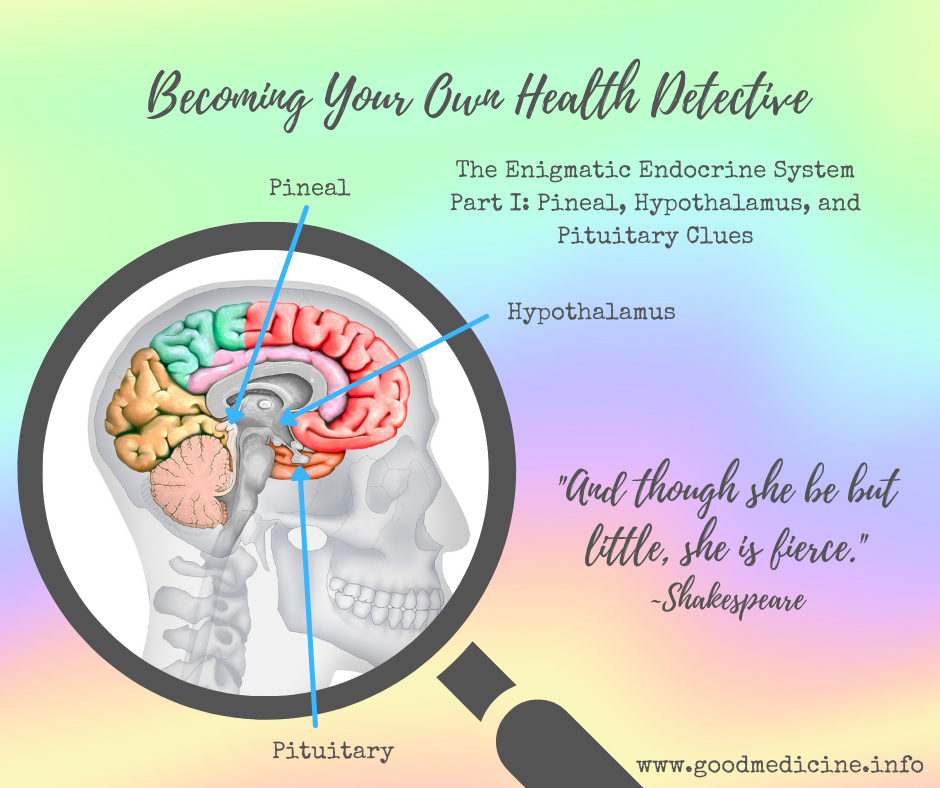
Pineal Gland Facts:

🧠At the “top” of the endocrine system lies a small pinecone shaped, rice sized organ that is deep within the brain. The pineal gland is one of the least understood and most powerful parts of the human body. Its known primary role is to control body rhythm (day and night, the body’s seasonal activity, and even the aging process!) by way of production of melatonin. Melatonin itself has a profound influence in the body. We tend to think of it as our body’s elixir for sleep😴, but lack thereof also affects immune function, blood pressure, cortisol levels, eye health, seasonal mood disorders, and may even contribute to relief from acid reflux. The pineal gland also exerts its influence on another endocrine gland, the hypothalamus. Not everyone needs to supplement melatonin, but if you feel that you do, consider Young Living’s Immupro. It’s a chewable tablet taken right before bedtime. In addition to melatonin, it contains several other natural ingredients known to support the immune system and help facilitate a good night’s sleep.
 
Over time, the pineal gland gets dealt some pretty harsh blows as the body manages viral, bacterial, and parasitic infections, a toxin burden, and exposure to heavy metals and fluoride. These all contribute to calcification of the pineal gland over time. As you may imagine, a malfunctioning pineal gland causes a cascade effect throughout the body.

Hypothalamus Facts:

The hypothalamus’ main role is to keep the body in homeostasis (self regulated balance) as much as possible. It also acts as a purveyor of information between the endocrine and nervous systems. Body temperature, thirst, appetite, weight, emotions, sleep cycles, libido, blood pressure, production of digestive juices, balancing of body fluids….. The hypothalamus is a magnificent multitasking micromanager when it is functioning well, but if the pineal gland doesn’t signal the hypothalamus properly, its performance will be inhibited. Head injuries, genetic or congenital conditions, and certain autoimmune disorders may also hinder the endocrine symphony in a variety of ways.
 
The hypothalamus-pituitary connection can be thought of as a major “command center” of the endocrine system. The thyroid does not stand alone. It relies on information coming from these two “high command” organs.

The Pituitary Gland Facts:

The pituitary gland is a fascinating team player within the endocrine system. Though it is tucked deeply within the brain, it is a delicate little bean. It may be damaged or adversely affected by:
🔎Lack of blood supply
🔎Medications (including opiates, SSRI’s, haloperidol, risperidone,and certain antibody therapies)
🔎Concussions. Even seemingly mild concussions may cause a “dimmer switch” like effect on the endocrine system. This effect may occur instantaneously, or can begin to show up months to years after the original injury.

🔎Endocrine disrupting chemicals☠️

 
Endocrine disruptors are well known for causing pituitary dysfunction… they disrupt the entire endocrine system by mimicking, blocking, interfering with hormone production, or modifying the body’s sensitivity to hormones. The term “hormone” comes from the greek word “hormon” which means “to stir up”. Endocrine disruptors wreak havoc on the body’s ability “to stir up” and long term disruption often leads to diabetes, thyroid, and/or sex hormone dysfunction. The cascade doesn’t stop there. It will ultimately affect every system in the body. Thankfully, we have control of the environment within our homes and what we bring in to it.
 
First we have to identify the criminals, right? Once we do that, we change the locks on the door and don’t let them knowingly in again.
Common endocrine disruptors include:
 
☠️BPA: a plasticizer found in inner linings of canned foods and in many plastic bottles and containers.
 
☠️Atrazine and organophosphates are herbicides and pesticides commonly used throughout the agricultural industry. Buy organic to limit exposure. Consider starting a garden for full control over what you put into your body!
 
☠️Perchlorate: another contaminate in food, milk, and water. Buy organic and filter your water to avoid this one.
 
☠️Lead, arsenic, Mercury. Yes, sadly, these are all still out there. If you do a little digging, thimerosal is a mercury based preservative found in certain vaccines and medicines.
 
☠️Perfluorinated chemicals: these bad boys are used to make nonstick cookware. Toss’em!
 
☠️ Phthalates are another common plasticizer. These can be found in plastics. Sadly, they are also found in standard US cosmetics and skin care. Thank goodness we have Young Living’s Savvy Minerals cosmetics and extensive skin care lines, (Bloom, ART, and Balance) suitable for every skin type.
 
☠️Glycol Ethers are chemicals used as solvents and stabilizers found in personal care products, perfumes, cosmetics, household cleaners, and industrial products. Go ahead and pat yourself on the back if you’ve already kicked all these things to the curb, and have your castle (home) and temple(your body) cared for and supported by Thieves Household Cleaner (all things Thieves!) and all of the other wonderful healthy options Young Living has created for us.
 
☠️ Emotional unresolved trauma is another endocrine disruptor. Surprised? Studies are uncovering just how much damage may be done by not working through and releasing emotions. The body doesn’t lie, and we store so much at a cellular level. I encourage you to do the heart work and seek help if needed.
 
Next week, I’ll cover more extensive opportunities to naturally support the functioning of the pineal, hypothalamus, and pituitary. Recognizing the clues dropped by these three tiny organs is as important as deciphering and understanding thyroid clues!
 
xoxo~ liz
 
(PS: It’s here!! 🥳 If you’d like to order Volume I of Becoming Your Own Health Detective, the link is in the menu!
 
Thank you for supporting my heart’s work!
 
 
#sharingiscaring
#ahealthyendocrinesystemisgoodmedicine
#becomingyourownhealthdetective
#goodmedicine
#endocrinedisruptorsarelifedisruptors

Health Clues from Low Body Temperature – part 2

Liz James · February 15, 2022 ·

In the mid-1800’s, a German physician by the name of Carl Wunderlich measured the temperature🌡 of about twenty five thousand people and found that the average body temperature was 98.6 degrees F (37 degrees C).
 
Each one of us is a product of our internal, external, and emotional environment. Our personal histories (including generationally) have a way of defining us. Roughly twenty years after Dr. Wunderlich established 98.6F🌡 as the human baseline body temperature, the Second Industrial Revolution began. Railroads, new technologies including electricity, telegraph, telephones, “Big Oil”, and later, Big Pharma each had a tremendous impact on our ancestors. As decades passed, the environmental toxin load continued to increase. The Third Industrial Revolution began in the 1960’s and brought us electronics, processed foods, telecommunications, digital technology, biotechnology, nuclear energy, automobiles, more stress and more Big Pharma. The current effects of all of these revolutionary products may have made life (arguably) easier but made us sicker in the process. We are currently the sickest generation in modern history. In 2017, a study of thirty five thousand people found that the average body temperature🌡 is now 97.9 F.
 
Perhaps we shouldn’t be as worried about global warming as we should be worried about human cooling.🙄🧐🤨🤔
 
Chronic low core body temperature🌡 can create a false sense of wellness, also making it hard to mount a defense in the form of a fever if needed. A fever is an active corrective process in the body. To quote Dr. Jernigan, “ Blood that is overcooled from a cool core temperature is too thick to efficiently carry oxygen and the vital lung capacity is reduced leading to shallow breathing. This means that the oxygen to carbon dioxide exchange rate in the lungs is minimal. Now, combine the [slow] degenerative effects of the oxygen deprivation and the cold temperature and the fact that all of this and the overgrowth of microbes [review last week’s post] promote an acidic environment and you have greatly accelerated cellular degeneration and the [eventual] onset of disease.”
 

🌡Tracking Body Temperature🌡

 
Tracking body temperature is super easy with a basic thermometer.
Measure temperature upon morning wake up before getting out of bed (ideally between 6-8am). This will be your core body temperature that is not influenced by food, drink, or activity. Take your temperature again at night sometime between 8-10pm after you’ve been sitting or resting for about 30 minutes.
 
Track the difference between the morning and evening temperatures. There should be a difference of at least 0.9degrees F.
 
Ultimately, you are looking at two things (clues):
 
1️⃣Is body temperature daily average close to 98.6?
2️⃣Does the body allow its temperature to fluctuate from cool in the morning to warmer in the evening?

Temperature Too Cool?

If your body temperature trends towards “coolness”, try incorporating some of these suggestions into your daily life:
 
🔎Have you had lab work to rule out a physiological issue? Labs you may want to request include a full thyroid panel (TSH, T3, T4, Reverse T3, TPOab), saliva cortisol, DHEA, and hormones, CBC/CMP
 
🔎Identify any medications that might be affecting body temperature. Common culprits include beta blockers (blood pressure meds), antidepressants, sedatives, and other mood altering medications. Often, lifestyle changes, holistic (mind,body, spirit) care, and natural alternatives may reduce or eliminate the need for all of these. It requires ownership of one’s own body to do the work to identify and mediate the reason for the need. Hard stuff? Yes. Never doubt for a second that you are not worthy of doing the work to make it happen.
 

🔎What might mind, body, and spirit care look like? To each person it will look a little different because of our individual uniqueness.

 
👉Jump start metabolism. A sluggish metabolism may simply need movement and exercise. Hot/cold therapy is another way to stimulate metabolism. I wrote about cryotherapy in the topic devoted to dopamine deficiency. Do you see the connection?
👉Prayer and meditation relieve stress. Both activities also activate certain parts to the brain that control attention and autonomic functions such as blood pressure and metabolism. This is not an “Amen, Dig in.” type of prayer, rather developing a deep rooted connection with God in quiet and solitude. The studies on this are fascinating.
👉Music influences physiological variables such as blood pressure, heart rate, immune and endocrine function….. and body temperature. Body temperature tends to rise when listening to music, particularly when listening to classical or specific frequency based music. Look for a company called Wholetones (founded by Michael Tyrrell) for more information on healing music.
👉Infrared saunas and biomats. While they have multiple health benefits, for the sake of this particular discussion, they work to help the body “heat up”. Think of them as “training wheels” for 98.6.
👉Outdoor time on the regular. Bonus points for pairing this with exercise!
👉Dry brushing for improved lymphatic flow. A healthy lymphatic system is crucial in the toxin elimination process. If you are not already adding a drop or two of Young Living’s Lemon Vitality essential oil into your water (use a glass, ceramic, or stainless steel cup) start now for daily gentle lymphatic system support.
👉Removing toxins from daily life. I cannot stress this enough. Our bodies are dropping in temperature because of daily cumulative exposure to toxins. We can detox all day every day…. But if we continue to add in toxins as fast as we detox, there is no end in sight. Medications (tho occasionally needed) are a toxin by definition. Knowing this is one of the biggest reasons I’m such a strong advocate for finding a healthier way whenever possible. Additionally, a healthy body temperature starts with a toxin free home. Have you ditched the chemicals yet? Young Living’s Thieves Household cleaner and Thieves Kitchen and Bath Scrub fulfill all cleaning needs, and support healthy immune function in the process. Crank up your diffuser and ditch the fragrance plug in’s. There are a million crazy good smelling possibilities as you make your own signature diffuser blends. My favorite right now is Young Living’s Believe essential oil blend and Lushious Lemon (oh my!). Soaps, skincare, cosmetics, perfumes….. All of these generally are loaded with toxins and Young living has safe, toxin free alternatives. We simply cannot afford NOT to use them.
👉Chiropractic care. Chiropractic manipulation supports nervous system function and regular chiro care may ultimately help a thyroid, adrenal or other underlying physiological dysfunction.
👉Learning to release emotions and attitudes that don’t serve your body. Unhappy, uninspired, dissatisfied, dull, and passive living (ie: life happens to you, you don’t make life happen) are all associated with lower body temperatures. Live life fully and engaged. Nobody can steal that from you. It is a personal choice regardless of circumstance.
👉Raindrop. Have you received one yet? If not, find someone who can give you one. Better yet, get the Raindrop Technique Collection and begin learning with a buddy. There are comprehensive instructions included in the kit.
👉Detoxification of the body is not a “once and done” process. It’s a lifestyle. Make sure your gut is moving proficiently. Probiotic Life 9 (MightyPro for the kiddos), ICP Daily, and digestive enzymes (such as Essentialzymes-4, Detoxzyme, Essentialzyme, Allerzyme, or Mightyzyme kids chewables) may be integral tools for optimal gut health support for the motility or toxin challenged individual.
👉Support the adrenal glands as needed. Endogize capsules or Endoflex essential oil blend are two highly supportive tools.
👉“Hot oils” have their place too in supporting a healthy body’s temperature. Consider applying these oils to the bottoms of your feet daily as a supportive measure: Thieves, Mountain Savory, Nutmeg, Oregano, Rosemary, Thyme (notice how many of those are in the Raindrop protocol!)
 
Consider this. Raising core body temperature by 2 degrees positively influences immune system activity by up to 40%. This is why having a low grade fever when you are fighting off something isn’t a bad thing and it isn’t a good idea to suppress a low fever.🤓
I’ll leave you with this. Make 98.6 F great again, and improve your overall health! 🙌 🌡
If you have lived with a low body temperature for years, be aware that your body will need retraining, and that doesn’t happen overnight. This kind of clue scene takes awhile to clean up. It may take a year or longer of daily care before the body is able to begin correcting the impact of chronic low temperature. Patience and baby steps, but I promise it will be worth it!
 
xoxo~ liz
 
www.goodmedicine.info
#checkyourtemp
#sharingiscaring
#98point6ishisgoodmedicine
#ditchthetoxinsifyouhaventalready
#thanksYL
#youarethecoauthorofyourstory
#becomingyourownhealthdetective
  • « Go to Previous Page
  • Page 1
  • Page 2
  • Page 3
  • Page 4
  • Page 5
  • Page 6
  • Interim pages omitted …
  • Page 23
  • Go to Next Page »

Book Your Health Coaching CallBook Now

Elizabeth James

469.425.9091

ebj0203@gmail.com