• Skip to primary navigation
  • Skip to main content
Book Your Health Coaching Call
Good Medicine

Good Medicine

Holistic Health Coaching

  • Home
  • Liz James
    • About Liz
    • Coaching
    • Book a 20 Minute Complimentary Coaching Call
  • Favorite Resources
    • BlessedByHisBlood
    • Young Living
    • Fast Like A Girl Certified Coach
    • Order supplements through my Fullscript store
    • Green Pasture (Coupon: Health10)
    • RogersHood Apothecary (Coupon: BEABLESSING for 10% off)
    • DolphinMPS
    • Company
    • Abundance
  • My Books
    • Becoming Your Own Health Detective Volume 1
    • Becoming Your Own Health Detective Volume 2
  • Blog
  • Cart

Gardening

Keep Your Garden Safe

Liz James · September 16, 2022 ·

Good word this morning. Remember, the government is supposed to be working for us, not the other way around.
Jenna Rafi writes:
 
⚠️ ALERT – the USDA is trying to entice you to REGISTER YOUR GARDEN!
Their “people’s garden” program is NOT your grandma’s victory garden brochure. It is—in their own words—creating a registry and map of small-scale food production.
🚫 DO NOT UNDER ANY CIRCUMSTANCES REGISTER YOUR GARDEN. No matter what benefits or enticements are offered.
—
“The USDA expanding its People’s Garden Initiative to include eligible gardens nationwide!
“School gardens, community gardens, urban farms, and small-scale agriculture projects in rural, suburban and urban areas can be recognized as a “People’s Garden” if they register on the USDA website and meet criteria including benefiting the community, working collaboratively, incorporating conservation practices and educating the public. Affiliate People’s Garden locations will be indicated on a map on the USDA website, featured in USDA communications, and provided with a People’s Garden sign.
Thank you #IceAgeFarmer for bringing awareness to this.
First they want you to register your garden!! Next they will start a farmer census for your harvests all in promise to track some #tomatoflu or some other BS outbreak by assuring you they’re the ones keeping you “safe” and then they will enforce a taxation for the volume food you grew for yourself.
🕵️‍♀️ Check it out for yourself: https://www.usda.gov/peoples-garden/registration-form
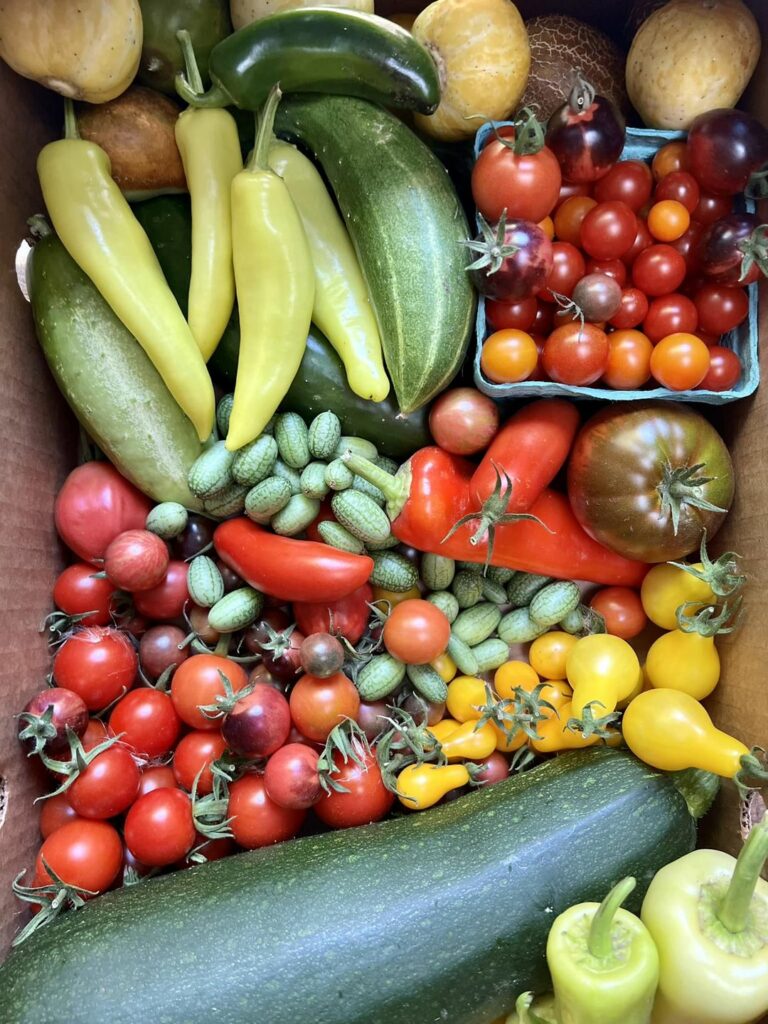
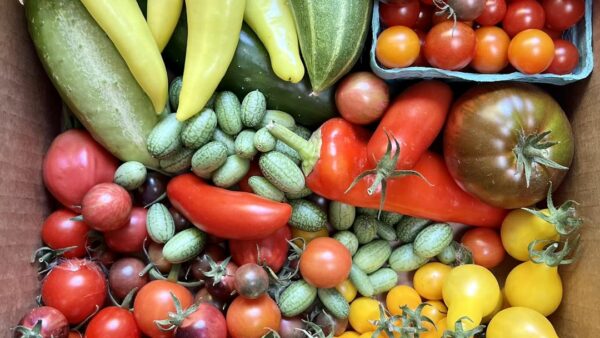
Pic of yesterdays harvest from my beautiful garden! 🍅 🫑🌶
 

Farm Life

Liz James · July 16, 2022 ·

Pulled waaaaaay too many weeds this morning 🥵. After a brief lunchtime cool down, I’ve got about 5lbs of onions to chop and prep for longterm storing.
 
#farmgirlfare
#provision
#dogdaysofsummer
 

Farm-Fresh Prepping!

Liz James · June 28, 2022 ·

Farm fresh prepping season going on now🥰🙏!
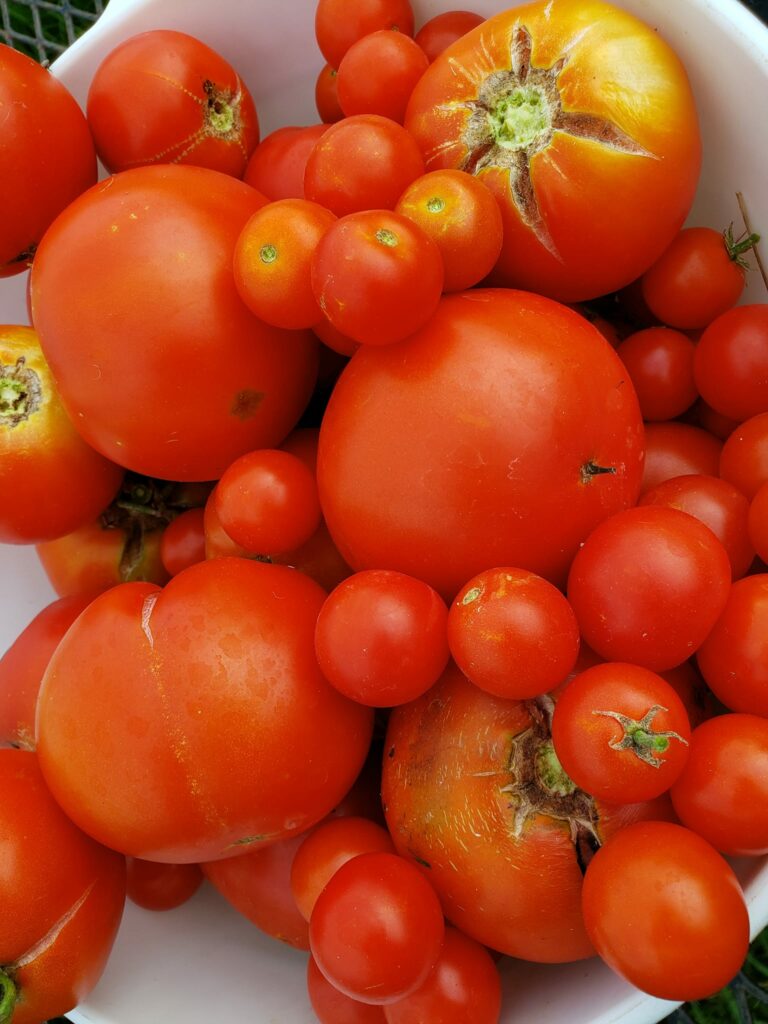
Tomato sauce and Tomato soup getting put up for the fall and winter😋.
Homegrown ingredients:
✅ tomatoes
✅ garlic
✅ onions
✅ peppers
✅ basil
, and a couple drops of YL Oregano to finish it off❤.
Next up…. Peach butter!

Overstock

Liz James · November 6, 2017 ·

When we began seriously weeding out chemicals from our lives and our farm, one of the largest looming threats was grasshoppers. Grasshoppers are a serious issue for farms and gardens in this part of Texas. They will literally eat you out of house and home some years…..and their abundant presence makes it virtually impossible to grow anything.

​We first attempted gardening about 15 years ago…. one of the same years that grasshoppers were exceptionally abundant. The garden failed. More pointedly, it never even got started. The following year, we used a ‘safe’ control ( Nosema locustae ) that supposedly kills grasshoppers in the nymph stage. While there might have been a slight decline in population, it wasn’t enough to make gardening a successful endeavor. An elderly lady who had grown up on a farm suggested guineas to me as a viable solution…. and that first set of guineas started my appreciation of this odd looking poultry species.

Guineas are indigenous to Africa, and they are odd  fowl. Most people have never heard of them and they are hard to describe…. they look like a cross between a turkey, a teradactyl, and a football (yes, their body is shaped like one). There are two types of people when it comes to guineas… those that love them and those that don’t.

Let’s just get the dirt out on ’em now:

  • They can be loud
  • They can be bullies
  • They can be roamers
  • They are stupid as a box of rocks
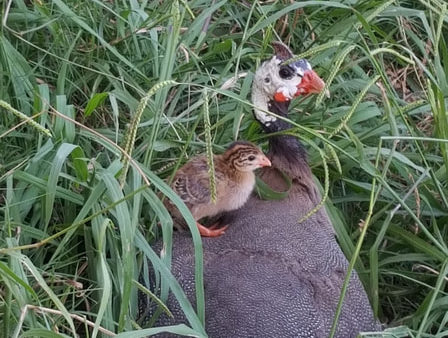
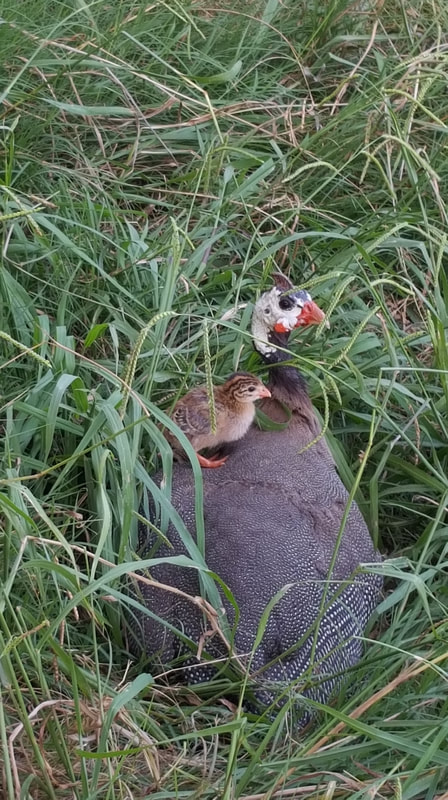
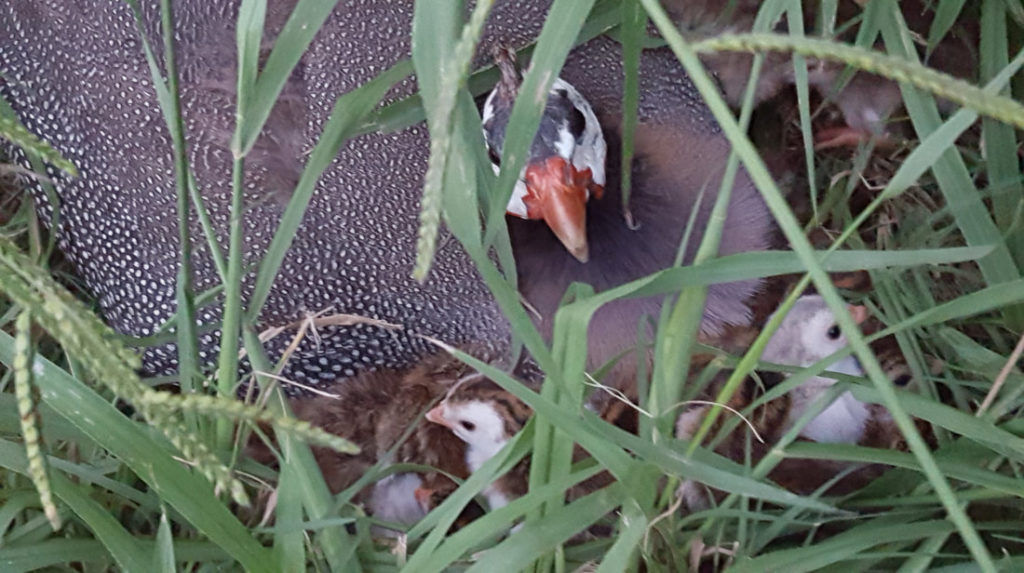
  • The adults have a face only a mama could love (but the babies are adorable!)
  • Sadly, they do not eat squash bugs or cucumber beetles
  • While they are very good at procreating, they are NOT good at keeping track of their babies after they’ve hatched.

All that to say, I am in the league of lovers when it comes to these birds. In my book, their assets outweigh their issues. Guineas are by far the best pest control for larger farmsteads. Yes, they may roam if they need food (they are great foragers), so they may not be ideal for a 1-2 acre farmstead…. but for larger acreage, they generally don’t travel more than 5 acres or so. Since we’ve had ours, we’ve had nearly zero issues with grasshoppers. We also came to realize that they do a magnificent job of eliminating and controlling ticks, fleas, and snakes. Copperheads, a poisonous snake found in this part of Texas, are especially common here. Since the addition of Guineas to our farm, we have had no issues with snakes (barring the occasional large rat or chicken snake). Ultimately, we estimate that they save us roughly 1200$ per year on pest control, without the use of harmful chemicals…. not to mention preventing the garden vegetation devastation from the hoppers.

​Secondly, they are pretty remarkable watch dogs. Although they are a dull bunch of crayons in the knowledge box, I’d have to give them an A+ for being observant. They warn the free roaming chickens when a bird of prey is nearby, and the chatter can get pretty raucous if there is a new person or a new dog on the property. They are blind as bats at night, so most attrition occurs thru night time predation. During they day, they are actually quite good about banding together and making their cumulative appearance look (and sound) large and menacing. I once saw a group of them chase a coyote off with his tail between his legs! I can’t imagine a flock of chickens doing the same thing.

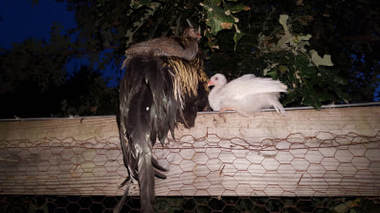
I can’t really say much about the bullying. In my book, they really aren’t much worse than some chickens and roosters are. Our guineas have been raised in the presence of chickens, so there really appears to be a symbiotic relationship between the two species. Last year, I actually had a rooster RAISE a handful of guinea keets (the babies). It was truly remarkable… especially watching how kind he was to them (note in the picture: the teen guinea keet sleeping on his back at night).

Guineas are prolific egg layers. They lay eggs until the nest is overflowing with 40-60 eggs… at which point they commence to sitting on them. Unless they get scared off, a guinea will sit for about 25-28 days on her pile of progeny. She is quite protective unless she fears for her life. Usually, about 30-40 babies hatch, and here is where some of the trouble starts. God clearly knew what he was doing…. giving them that many babies… because it takes that many to get just a handful of survivors. Apparently, guineas cannot count, and for the first few weeks post nesting time….. little feathered popcorn sized keets get left everywhere to die. It’s tragic… especially to my tender heart. So, whenever I find a nest (they are ground nesters, and do a pretty darn good job of camouflaging), I watch it closely and mark the days til the estimated hatching occurs. Once that happens, I herd them all (or catch them up) into a safe pen for a few weeks until they are both big enough and strong enough to survive. Despite my best efforts, only a small percentage ever reach adulthood. The parents are an odd mix of aggressively protective and negligently passive. This year and last year, I think the inbreeding of our guinea clan has actually led to either an increase in IQ or better parenting skills. Regardless, we are heavy in the guinea inventory…… real heavy. In past years, we have averaged 8-14 adult guineas at any one time. Today…. well, I’m just not sure exactly how many we have, but it’s over 30 for sure. Guineas are tree roosters at night, and as winter approaches, so usually do the bobcats and owls. Our livestock guard dogs do an excellent job of keeping ground predators away, but nighttime arboreal predators are a harder thing to manage. I still doubt we will lose that many to natural attrition. Next spring, I feel certain that I’m going to be looking for homes for the new batches of keets that will start hatching in June. As much as I love having them around, too much of a good thing is, well….. too much.

How Safe?

Liz James · October 25, 2017 ·

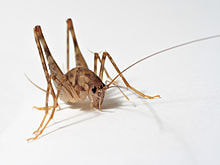
About 6 months ago, we got infested with ugly crickets. I am a farm girl and used to all kinds of crickets and grasshoppers, but these guys are just plain ugly and creepy looking…. and for whatever reason, they began migrating to the inside of our home. Cave crickets have super cricket power… and so in addition to being so ugly only their mother could love them, they can jump like nobody’s business. The night one jumped on me IN THE BED…. well, that was it for me. 

Herein lay the the problem tho. Our farm is organic. I’ve figured out a way to manage cucumber beetles and other garden pests organically, but none of those ways work well inside our home. I mean, who wants white DE powder scattered everywhere and poultry running freely in the house?? I tried peppermint on cotton balls with limited success. It seems that I just couldn’t get the staying power I needed to consistently keep the bugs out.

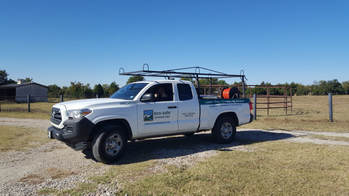
So, back in July, I heard an ad on an Organic Gardening program about a company in the Dallas/Ft Worth area called Eco-Safe Pest Control. I was dubious about their being truly safe, but the crickets in the bedroom had put me at my limit. We had our first appointment soon after…. at which time I asked a gazillion questions about product labeling and ingredients. This is no small thing…. allowing someone to come into your home and spray God knows what everywhere….. something that purportedly has staying power of at least three months. I didn’t want to make a colossal mistake. We’ve worked hard to eliminate chemicals from our home so that our turf (both inside and outside) is safe for us, and our pets… including Henri!  Lo and behold, they use a great deal of essential oils as ingredients for pest control. Praise God! I knew they worked (after having had the battle of the century with those dang beetles this summer), but couldn’t figure out how to make them work long term. Eco-Safe uses a safe base oil (I believe it is a nut base) that extends the activity to about 90 days. 

Fast forward to today. I can honestly say that I’m sold on Eco-Safe. Jeremy came out today to do our quarterly treatment. I haven’t seen a single cave cricket in at least a month or more (we were seeing them daily). It does seem like it took about 2-3 weeks to get the full effect of the first treatment, but after that, we could definitely tell a difference.

Did you know that the life expectancy of a traditional (non-organic) pest control technician is statistically lower than the national average? In speaking with Jeremy and with the owner of Eco-Safe, I found out that the lifespan of a technician is typically about 60-65 years. What in the world does that tell you about the chemicals a standard pest control company is putting in and around your house?

Ya’ll, daily micro exposures add up. It fills that life bucket up, and once it’s full…. well that’s when the overflow makes the appearance in the form of autoimmune diseases, cancers, and other body system dysfunctions. (Attend one of my gut health classes if you’d like to learn more)

Another thing I found out today is that Organic Pest Control companies like Eco-Safe struggle with the same problem that Young Living faces with its oils (I’m seeing them at Wally World, grocery stores, and the truck stop of all places!). You see, as people wake up to the dangers of hazardous chemical exposure and want something safer, other ‘sham companies’ jump on the band wagon and begin calling themselves ‘GREEN’ in order to gain business. In Dallas, a company is legally allowed to call themselves ‘green’ if only 30% of their chemicals are nontoxic and/or organic. Folks, there is a word for this…. it’s called Greenwashing. It’s not fair to consumers, and it’s almost worse than lying in my book. Eco-Safe does NOT greenwash…. they are certified by the Texas Organic Research Center.

They are the real McCoy… legit. In speaking to Greg, I heard the passion about his product in his voice. He walks the talk. He and his company are committed to safely controlling pests in our homes and yards without simply trading the pest for a toxin. Priceless if you ask me.

I’m not receiving any sort of discount or free services for this blog post by the way…. I just think it’s a good idea that when we find the real thing, we should share. Many of you are like me… and are seeking alternatives so that we can make intelligent choices when punting harmful chemicals out of our homes, and this is one more way you can do it!

Blogging reaches all ends of the earth, and of course, Eco-Safe isn’t a world wide company (I wish they were!). That said, I am sure there ARE safe pest control companies in your area provided you do your research well. Ask your pest control people hard questions about the chemicals they use. Listen to them talk. Are they passionate about keeping you healthy? Do they have some sort of organic certification? Will they let you see the labels on their products? Do their employees look healthy to you (That matters!)? If they can’t answer all of these questions with passion, move on. Chances are high that they are greenwashing if they cannot back their claims with proof. This little test applies to every company …. transparency and passion. I love it! …. who knew I could fall in love with a bug company!

If you are local, give them a try :). You won’t regret it, but I think your bugs will.

Email: info@ecosafepest.com

Eco-Safe: (214) 358-5201

Blessed, healthy, and bug free….  ~liz

  • « Go to Previous Page
  • Page 1
  • Page 2
  • Page 3
  • Page 4
  • Go to Next Page »

Book Your Health Coaching CallBook Now

Elizabeth James

469.425.9091

ebj0203@gmail.com