• Skip to primary navigation
  • Skip to main content
Book Your Health Coaching Call
Good Medicine

Good Medicine

Holistic Health Coaching

  • Home
  • Liz James
    • About Liz
    • Coaching
    • Book a 20 Minute Complimentary Coaching Call
  • Favorite Resources
    • BlessedByHisBlood
    • Young Living
    • Fast Like A Girl Certified Coach
    • Order supplements through my Fullscript store
    • Green Pasture (Coupon: Health10)
    • RogersHood Apothecary (Coupon: BEABLESSING for 10% off)
    • DolphinMPS
    • Company
    • Abundance
  • My Books
    • Becoming Your Own Health Detective Volume 1
    • Becoming Your Own Health Detective Volume 2
  • Blog
  • Cart

Eyes

Clues to Thyroid Health from Iodine – part 1

Liz James · March 9, 2022 ·

Dotting your i’s and crossing your t’s: Iodine and Thyroid Part I
 
We all know that iodine is a necessary micronutrient and plays an important role in the health of the thyroid. I’m pretty confident that getting to know your individual iodine level (as I hope you will be encouraged to pursue by the end of this series🥰) is going to be new clue territory for many people.
 
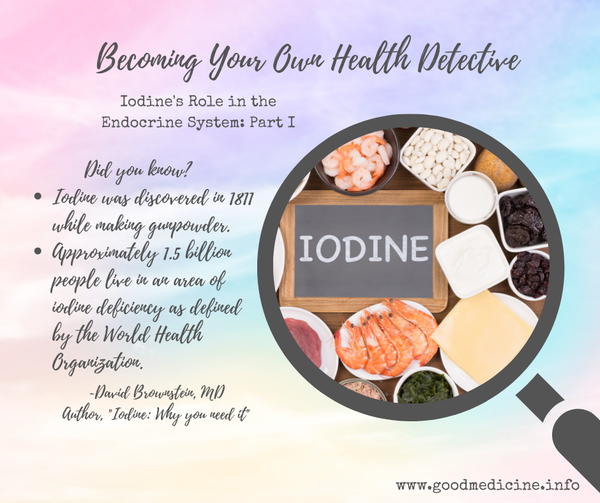
Iodine is not commonly found in soil and therefore not found appreciably in many foods. So how are we to get it into our bodies? It is found in ocean foods such as ocean fish and crustaceans🦀🦐🐟 and sea vegetables (seaweed), but it would require a regular diet of these foods to prevent a deficiency.

History of iodine related problems:

 
In the early 1900’s, goiters were a health concern in many inland areas where seafood 🦀🦐🐟 wasn’t a common food source. In 1923-1924 a study revealed that simply adding small amounts of iodine to the diet drastically decreased the incidence of goiters. Iodized salt was introduced into the US market, and by 1951, fewer than 0.5% of school aged children had evidence of enlarged thyroid glands. (Previously, it had been a remarkable 40% in areas with little access to ocean foods). The United States Food and Nutrition Board eventually set the RDA for iodine between 150-290 micrograms/day (approximately ½ – ¾ tsp iodized salt) to prevent goiters.
 
This is all fine and dandy, except that there are a few missing pieces to the puzzle. The RDA was set up to prevent goiters (which it does quite well), but is the recommendation adequate for optimal thyroid, immune system, and endocrine function?

Consider these facts:

 
🔎The Japanese consume 89 times more iodine than Americans (waaaaaaay more than what the US RDA has established) due to daily consumption of sea vegetables. Coincidentally, the traditional Japanese culture has reduced rates of chronic disease and some of the lowest cancer rates worldwide.
 
🔎Iodine is considered to be among the safest of all essential trace elements (provided we are discussing the inorganic non radioactive☢️ variety!), yet it has been given some pretty strict guidelines by the entities in charge.
 
🔎Iodized salt is loaded with sodium which has its own health concerns. Additionally, a 1969 study 🤓found the bioavailability of iodine in iodized salt to be only about 10%.
 
🔎An estimated 50% of adults in the United States have an undiagnosed iodine deficiency, and some of the researchers and “out of the box thinking” experts I follow suggest that this number may be as high as 90%.
 
🔎When I consider how often “those who make the rules” have given us dubious health information in other areas of health, I usually opt to think for myself. Yes, I acknowledge the guidelines, but I also dig for evidence that there may be some rocks “they” don’t want us to look under.🧐 It’s an established fact that we are monetarily worth more to the medical system if we are dependent upon it.
So, back to the question…..are we getting enough iodine to be optimally healthy?
 
Let’s dive a little deeper into the iodine fact pool:
 
🧐Scientifically, iodine has been proven to have antibacterial, antiparasitic, antiviral, and anticancer properties.  Iodine is responsible for regulating thyroid function and supporting healthy metabolism.
 
🧐Adequate Iodine is necessary for a robust immune system.
 
🧐Every cell in our body has a life cycle. When a cell dies in a healthy body, it is replaced by a new cell. This programmed cell death is called apoptosis, and it’s a good thing. Cancer cells are examples of cellular failure to undergo apoptosis. Iodine plays an important role in this beneficial programmed cell death.
 
🧐Iodine has a protective effect against H. Pylori 🦠 (a bacteria that tends to live in the stomach, and when overpopulated, causes ulcers and stomach cancer)
 
🧐Iodine is a key ingredient for the production of all of the other hormones in the body. (Did you catch that….. “All” ). It’s also found in every cell in our body, but especially concentrated in the salivary glands, the substantia nigra of the brain (one of the involved areas for Parkinson’s disease), the cerebral spinal fluid, the gastric mucosa, breasts, ovaries, and the ciliary body of the eye.
 
🧐Would you find it interesting that iodine deficiency has been linked to many chronic diseases and dysfunctions including Multiple Sclerosis, glaucoma, Sjogren’s, Parkinson’s, thyroid disorders, fibrocystic breast disease, breast, ovarian, endometrial and prostate cancer, uterine fibroids, ovarian cysts, certain headache types, diabetes, heart arrhythmia, and the inability to detox properly especially when exposed to mercury, fluoride, and bromine.
 
Iodine Robbers
 
In this crime scene, we definitely have clues pointing to a robber or two that can further deprive the body of iodine:
 
👥Iodine is an interesting micronutrient. It’s categorized as a “halide” on the periodic table. As a halide, it hangs out with the likes of fluorine, chlorine, and bromine. As you might guess, there are enough similarities between these four that iodine, fluoride, chlorine, and bromine often compete with one another in the body. It’s like a chemical version of the movie “The Parent Trap”👭, and fluoride, chlorine, and bromine compete against iodine preventing absorption and binding and tricking the body in the process. Larger degrees of exposure to these toxins make it harder for the body to use the iodine we do get in our diets and supplements. Hopefully you’ve kicked that fluoride laced toothpaste and mouthwash to the curb and have fallen in love with Young Living’s Thieves toothpaste and mouthwash. Watch your water sources for fluoride and chlorine too. Remember, the skin is like a sponge!
Bromine may not be a toxin you’ve heard much about. Unfortunately, that’s not because it’s rare. Bromine is used commonly in pesticides used on fruits (eat organically!), and is found in various processed foods and vegetable oils, hair dyes, textile dyes, commercial cosmetics (use your Savvy Minerals!), pool and spa chemicals, flame retardants, and paints.
 
👥Medications including maalox, mylanta, amiodarone, anti-gout meds, birth control pills, cortisone and prednisone as well as some SSRI’s inhibit the body’s use of iodine. Note the possible drug-disease causing connection, especially when there is long term use of the pharmaceutical.
 
👥Even certain foods can be iodine robbers if eaten in excess. Cabbage, broccoli, spinach, Brussel sprouts, cauliflower, kale, radishes, mustard greens, strawberries, and peaches may cause issues ( only if eaten in excess), especially if iodine levels are already low.
 
Can you get too much iodine? Does everyone need more iodine? How does taking thyroid medication affect iodine deficiency? Next week, we’ll talk about a couple ways to help determine your iodine status and answer these questions. In the meantime, if you think now’s a good time to add a little extra kelp into your world, Young Living’s Master Formula and Thyromin both contain this VIP sea veggie!
 
xoxo~ liz
 
#sharingiscaring
#healthyiodinelevelsisgoodmedicine
#goodmedicine
#becomingyourownhealthdetective
(PS: Becoming Your Own Health Detective, Volume One is still on sale at presale prices through the end of this week. Link to purchase: https://goodmedicine.info/my-book/ )
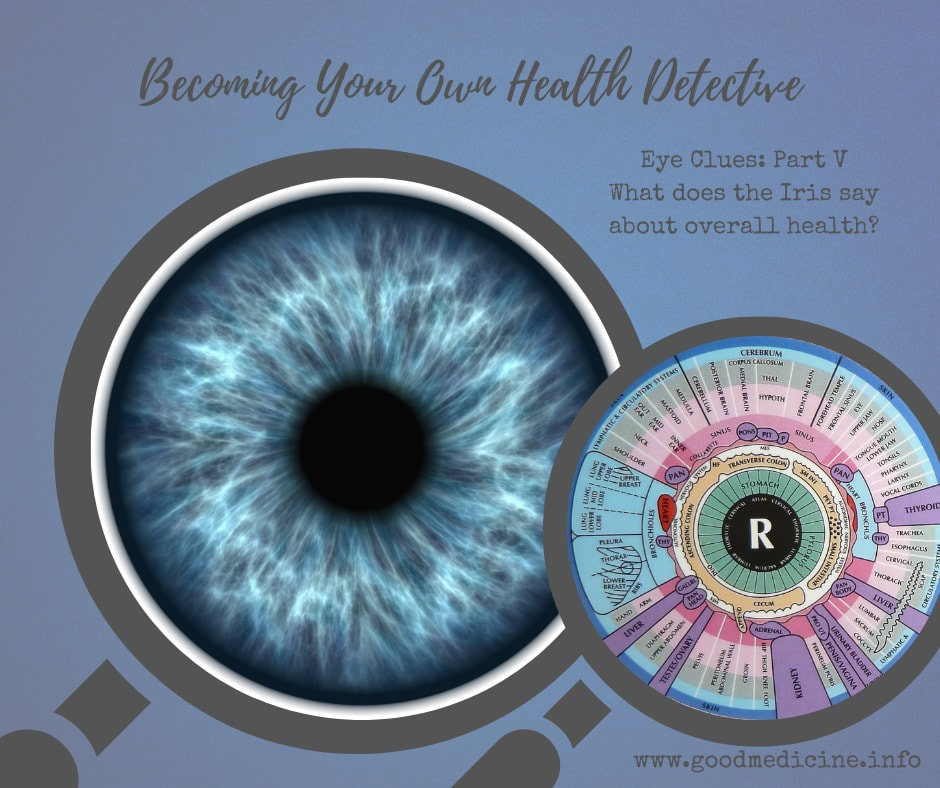
Health Clues from Your Eyes -part 5

Liz James · November 9, 2021 ·


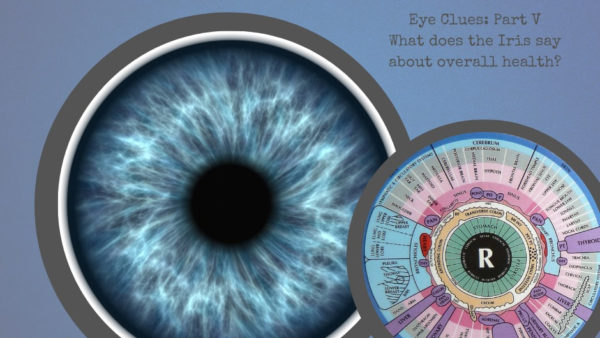
*Iris clues. Are you ready to dive a little deeper down this fascinating rabbit warren of information? If you are just now joining in this portion of detective work, I’d highly suggest a quick look at last week’s post before proceeding-Health Clues from Your Eyes – part 4.


🔎Noting the changes within your eyes may be likened to the notification lights on the dashboard of your car. If you know something is wrong early enough, you often have time to correct that which is setting the signal off.  The iris manifests clues marking changes within the body that warrant correction.


Depending upon how the clues manifest themselves, they may indicate acute, recovery, chronic, or degenerative situations within the body.


Acute – active inflammation. During this time, the body is using its resources rapidly in an attempt to gain control of the inflammation. The iris “warning signs” will look like white ribbons in the areas corresponding to the inflamed tissue. Other corroborative clues may include noticeable mucus production somewhere in the body, or visibly inflamed or swollen tissue. Detoxification is occurring, but often it’s not fast enough. Consider giving your body all the nutrition support you can. Add in Young Living’s Master Formula and NingXia Red for added support. 


Sub-Acute- Once the initial rapid inflammation has tapered off, the white ribbon like areas start to become darker. This is suggestive that nutrients have been depleted and need to be restored. If a sub-acute state is left unattended and the body continues to be exposed to either nutritional or physical stress, a chronic state of inflammation may result. Don’t stop supporting your body! 


Chronic- In this state, toxins and waste are not eliminated properly, cellular activity has slowed down considerably, nerve impulses are impaired, and conditions become ripe for chronic illness or dis-ease to set in. The iris will manifest the chronic condition state with the appearance of various sized “black holes” in the netting of the iris fibers. This will ultimately lead to further degeneration if positive changes are not made to a person’s lifestyle in an effort to reverse the course of dis-ease or illness. The black holes may get larger and multiply as more body systems are affected. 


*About ⅓ of the way away from the iris lies the autonomic nerve wreath. The autonomic nervous system is broken down into two subsystems. The parasympathetic nervous system is for basic housekeeping within the body and it controls the body while we rest. The sympathetic system is also commonly referred to as our “fight or flight” response. The nerve wreath is not always uniform in shape.. The more this wreath shape deviates from a standard roundish type shape, the more suggestive it is of a system off balance. Additionally, the color of the autonomic nerve wreath should match the color of the rest of the iris. Any increase, decrease, or change in color in this area suggests disharmony within the body. To recap, color and shape of the wreath are important clues🔎!


What about colored spots within the iris? These are called psora, and are typically considered to be an indicator of toxin loads within the body. If you watch your eyes closely, you may notice that these colored spots often change locations over time. This suggests the toxin load (including drug deposits) has moved to another portion of the body. Sometimes these spots show up in different colors: red yellow, and orange are not uncommon. They are most often seen in Zones 1 thru 3 in the irises.
“Scurf rim”🔎 is another clue on the outermost zone (7) of the iris. Is the area darkened? This is suggestive that the skin (remember, it’s an organ!) is not able to function effectively in the detoxification process, and toxins and metabolic waste are having a hard time being released from the body. An accompanying clue🔎 might include not sweating easily.


At the very top of Zone 7 (roughly 10pm -2am on a clock) look for an arc that often has fuzzy edges with a whitish tint. Though this used to be a mark of old age👵, it is becoming more and more common in younger people👩👨. Presence of this arc is suggestive of poor oxygenation and blood perfusion in the brain.


Now look for a solid white ring🔎 on the periphery of Zone 7. This suggests a chemical imbalance of some sort in the body. Western medicine also recognizes this ring as an indicator of probable excessive cholesterol and triglycerides in the body. Not surprisingly, further digging (with lab work and testing) often reveal poor calcium metabolism which contributes to plaque in the arteries (arteriosclerosis) and joints (arthritis), and subsequent higher blood pressure.


Zone 6 sometimes houses cloudlike spots 🔎resembling a string of pearls. If the spots are very white, these spots suggest acute inflammation. Yellowed or brownish pearls suggest that the inflammation has moved to a chronic state.

Check yourself for other clues. Do you also produce a great deal of mucus elsewhere in your body or have swollen lymph glands? Dry brushing, lymphatic massage, and regular exercise are all excellent ways to mediate impaired lymphatic function. 


Nerve rings🔎 may appear anywhere in the pupil.. They look much like growth rings found in a cross section of a tree. These rings suggest long term stress in one or more parts of the body, and are most often seen in chronically stressed individuals. Shouldn’t we all be huffing our Stress Away whenever the moment requires it? We have so many blessed tools at our fingertips to help support our bodies during times of stress. These nerve rings are similar to an SOS smoke signal. Pay attention to them! 


Check your eyes for dark lines 🔎radiating out from the pupil. These lines (called radii solaris) suggest a slower moving digestive tract and a subsequent toxin load. If you are not offloading the poo my friends, the toxin load will be there. ! This clue might also be suggestive of a parasite load.


We’ve just barely skimmed the surface of the clues🔎 the eyes can give us, but if you’re ultra curious, keep digging on your own. Dr Bernard Jensen is considered to be the modern “Father of Iridology”, and his work is an excellent place to start!
I’ll leave you with this cool factoid…. Did you know that you may be able to change the color of your eyes? Brown discolorations in blue/green eyes are suggestive of digestive system dysfunction, a gallbladder weakness, or liver dysfunction. Cleaning up these problems with clean eating habits and restoring health to the digestive system just might make your brownish eyes blue! The next time you think someone might be full of it💩, check their eyes…. You just might be right!😉


 xoxo~ liz

#sharingiscaring
#supportyourlocalpeepers
#goodmedicine
#ToxinFreeIsTheWayToBe
#goodmedicineisproactiveinsteadofreactive
#ThanksYL

Health Clues from Our Eyes – part 4

Liz James · November 2, 2021 ·

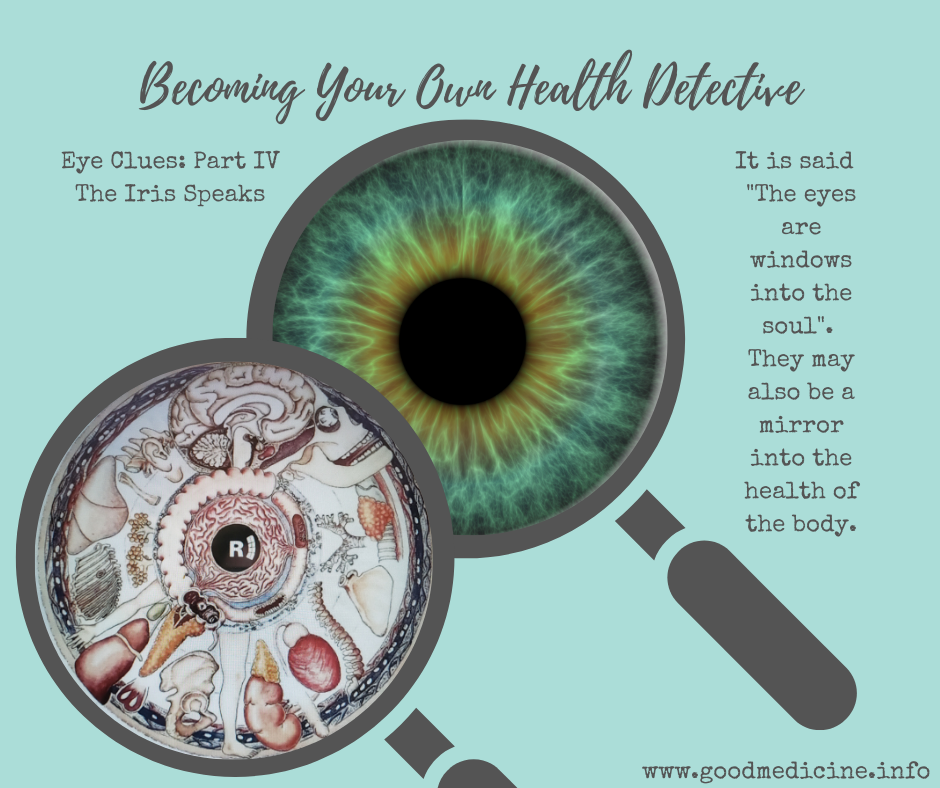
Eye Clues Part IV: What do your irises say about your overall health?
Perhaps you’ve heard the phrase, “The more you learn, the more you realize you don’t know.” It’s one of the reasons I identify as a lifetime student. I pray that I am able to learn something new every day. This next foray into clue finding required diving a little deeper into a topic I’m fascinated by, but certainly no expert!
The iris is the part of the eye that carries color. Iridology is a form of “clue finding” in which patterns, colors, and other characteristics of the fibers of the iris are examined. Just as with feet,✋ hands, 👂ears, 😛tongue, 👩face, and skin… the iris is loaded with body health clues🔎! The eye itself is a visible extension of the brain with hundreds of thousands of nerve endings, a vast microvascular network, muscles, and other tissue types. Interestingly, the iris is connected to every organ and tissue of the body by way of its role in the central nervous system. The iris is also controlled by sympathetic (“fight or flight” response) and parasympathetic (basic body “housekeeping” and autopilot “at rest” activities), so if you imagine that trauma, drama, or a toxin load might affect affect the iris, you’d be right! Nerve fibers in the iris respond to changes in body tissue. As the changes in the body tissue occur, those changes also physically manifest in the portion of the iris which “identifies” with that portion of the body tissue. The result is this: the color part of our peepers drop clues relating to past, present, and possibly future health. Even having a basic understanding of clues🔎 within the iris may help you identify how best to support and care for your body by suggesting where inflammation may be, and at what stage it may be manifesting.
*There are 90 known body specific areas that are mapped on each iris. Each eye is different. These areas are mapped out much like spokes on a wagon wheel, with the pupil being at the center axis. There are also 7 concentric zones of the iris beginning at the pupil. The stomach and intestines are closest to the pupil, followed by:
Zone 3: representing heart, bronchi, pancreas, adrenal, pituitary, pineal, gallbladder
Zone 4: representing prostate or uterus , skeleton
Zone 5: representing brain, lung, liver, spleen, kidneys, thyroid
Zone 6: representing muscles, motor nerves, lymphatic, circulatory
Zone 7: representing skin, sensory nerves
Today, we’re only going to talk about the overall appearance of the iris. Compare the “texture” of the iris to a piece of cloth. Does it appear tightly woven like silk or more loosely woven together like burlap or cheesecloth? There is a correlation between the “tightness” of the fibers of the iris with the body’s ability to hold and utilize nutrients, dispose of metabolic waste and toxins, and have general robust cellular activity. More “loosely woven” iris fibers trend towards a correlation with difficulty maintaining nutrient levels and efficiently disposing of metabolic waste and toxins.
This may be a valuable clue to note in your health🔎 detective journal. Remember, clues are not diagnoses….. they are a gift from our Creator so that we may notice changes and work towards achieving better health…. a constant & evolving process. Sometimes it may feel like two steps forward and three steps back. #metoo. We all have our own health journey with seasons of success and seasons of lack, with lots of moving parts that we can choose to control or leave to chance. Scientists👩‍🔬 and doctors👨‍🔬 who have studied the iris closely have found that irises which suggest a weaker constitution can belong to healthy people who take care of themselves well. Likewise, irises suggesting a strong constitution of the body can also be made weak over time through toxin exposure and lack of care. Epigenetics (the environmental component of gene expression that we CAN control) plays a tremendous role in our health!
If you are so inclined, grab a magnifying glass, light and mirror (partnering up may be easier) and happy clue hunting! . Make note of what you see compared to how you feel overall, and how you might be feeling if you weren’t taking care of yourself in “all the ways”.
I know I would feel much different if I weren’t faithful with my eating and exercise habits, self care routine, and of course….my daily supplement routine: Sulfurzyme, BLM, Thyromin, Femigen/Progessence Plus, OmegaGize, NingXia Red, Multigreens, and others on board!
We’ll dive just a little deeper next week!
xoxo~ liz

#sharingiscaring

#supportyourlocalpeepers
#goodmedicine
#goodmedicineisproactiveinsteadofreactive
#ThanksYL
#youareworthit

Health Clues in Your Eyes – part 3

Liz James · October 26, 2021 ·

👀EYE CLUES PART III: KEEPING YOUR PEEPERS HEALTHY👀


“I can’t wait to lose my eyesight.”…… said no one ever. 


We tend to take our eyesight for granted, yet neglecting eye care /health is arguably an epidemic. Statistically, one in six American adults over the age of 45 will suffer from one or more eye conditions that increase the risk of vision loss or impairment with aging. 


Genetically, I know that I am predisposed to Age related Macular Degeneration (AMD). I watched my grandmother (an avid 📚 reader) slowly go blind from AMD. Two of her children have also been diagnosed with the same. Yet, I also know that epigenetics (the role our environment plays on the expression of genes) is about 90% of the equation. While I cannot control my genes, I have a tremendous amount of control on my environment and am doing “all the things” as well as working to avoid “all the other things ☠️” that may wake those darn AMD genes up. 


*Eye health is often a direct reflection of what we have eaten over the years. Foods rich in vitamins C, A, and E, Zinc, lutein, zeaxanthin, and omega-3’s are crucial to protecting eyes against future age related vision loss. What would an eye supportive diet like this look like?


Well, it would include lots of leafy green veggies, carrots, red peppers, yellow squash, tomatoes🍅, fatty fish🐟 such as salmon, tuna and sardines, eggs,  lemons, grapefruits, oranges, apricots,  kiwi’s, mangoes, eggs, nuts, and beans. I eat nearly all of these foods regularly, but certainly not on a strict schedule daily. Knowing that, I choose to supplement DAILY to ensure proper nutritional support of my eyes.


NingXia Red  and NingXia Wolfberries provide excellent natural support throughout the body, and are especially beneficial for eye health. Zeaxanthin, carotenoids, Vitamin C, zinc, magnesium and taurine are all beneficial nutrients within NingXia Red.
NingXia Wolfberries are rich in zeaxanthin and lutein which are eye protecting carotenoids, defending the eyes from free radical damage. 100grams (roughly a handful of wolfberries) contains 27,800 mcg of zeaxanthin. By comparison, egg yolks are a common food with one of the highest levels of zeaxanthin and have only 1,253 mcg per 100grams. Additionally, the type of zeaxanthin in the NingXia Wolfberry is unusual. For the science guys and gals, it’s an esterified version (zeaxanthin dipalmitate) making it 2-5x more bioavailable than what is normally found in most supplements.


Diets that are deplete of zeaxanthin and lutein trigger the same damage leading to AMD and/or cataracts.
We’ve already spoken a bit about Young Living’s eye supplement, IlluminEyes, and it warrants saying again….. Go check out the ingredient list on the bottle!  YL did their research and have given us an excellent tool for supporting eye health.


*Other supplements to consider include OmegaGize or MindWise for a clean source of Omega3’s, and Super C Chewables. 


Do you drink Young Living’s yummy (and beneficial) Slique Tea? Don’t throw those bags away after first use. I can usually get two cups of tea out of each bag, and then I throw them in the fridge. When I have two bags (usually in 2 days), I use them over my eyes during a 20 minute prayer/ downtime during the day to help mitigate computer eye fatigue. The caffeine remaining in the bags  causes blood vessels to constrict, and tea itself has antioxidant properties, and also contains astringent-like compounds  which may help tighten skin around the eyes. I’m sure it doesn’t hurt to have that added exposure to the frankincense in the tea bag too!😉


Other ways to support optimal eye health include:
👀Wear sunglasses that block UV rays
👀Avoid excessive exposure to computer (and phone) screens and/or use blue light blocking glasses during extended screen time exposure.
👀Don’t smoke. Just don’t.
👀Get regular eye exams and be vigilant about recognizing any changes in eye performance or visible changes in the eye.
👀Make sure you are getting plenty of fresh air and oxygen.  
👀Use quality skin care products and makeup. #ThanksYL ! Our toxin load matters, even in eye health! 
👀Stay well hydrated (the eye is about 95% water, so you may imagine how chronic  dehydration could affect eyesight and eye health).


I Often  hear the argument that eating well and supplementing is just too expensive. My response will always be this: We can pay for our health proactively or reactively by paying the farmer👩‍🔧 up front, or the pharmacist👩‍⚕️ later… but either way, we will pay. If the choice is to “wait and see”, it will likely become more than only financial burden. I plan to enjoy my golden years doing all the things I love to do instead of spending time in doctor and therapy appointments, taking medications that may inhibit living a fully vibrant life, and consenting to someone else managing my personal health. The choice is ultimately ours to make.
xoxo~ liz

#sharingiscaring
#supportyourlocalpeepers
#YouAreTheCEOofYou
#goodmedicine
#goodmedicineisproactiveinsteadofreactive
#thanksYL
#Godgaveusallweneedinthegarden

Health Clues from Your Eyes – part 2

Liz James · October 19, 2021 ·


Before diving into a deeper discussion of all the clues our eyes give us, I wanted to issue a call to action. ⏰Do you have an ophthalmologist (MD) or doctor of Optometry (OD) that you see annually? Remember that the application of knowledge is not only power… it is also where wisdom is born. As is the case with regular lab work (which we will discuss at some point!), having professional insight into the health of your sight organs 👀provides invaluable clues to help you manage the rest of your body, thereby perhaps avoiding consequences later in life. When you go to your appointments, do not be shy about asking questions and taking notes! Additionally, any abrupt changes in the eyes should warrant an ASAP trip to your eye professional.  If you have a relationship with yours, they will be more likely to see you quickly in cases of urgent need. 


Secondly, be aware that any💊 medication 💊that affects neurological function may also affect vision and cause changes throughout the eye, including the cornea, optic nerve, lens, macula and retina. Some of these changes may be gradual or nearly instant and some may be temporary while others can lead to permanent vision impairment. I won’t be able to list all the medications because there are so many! If you suspect a medication may be partially responsible for an eye disturbance, do some digging and then talk to your doctor.


With that…. Let’s start unpacking more clues! 
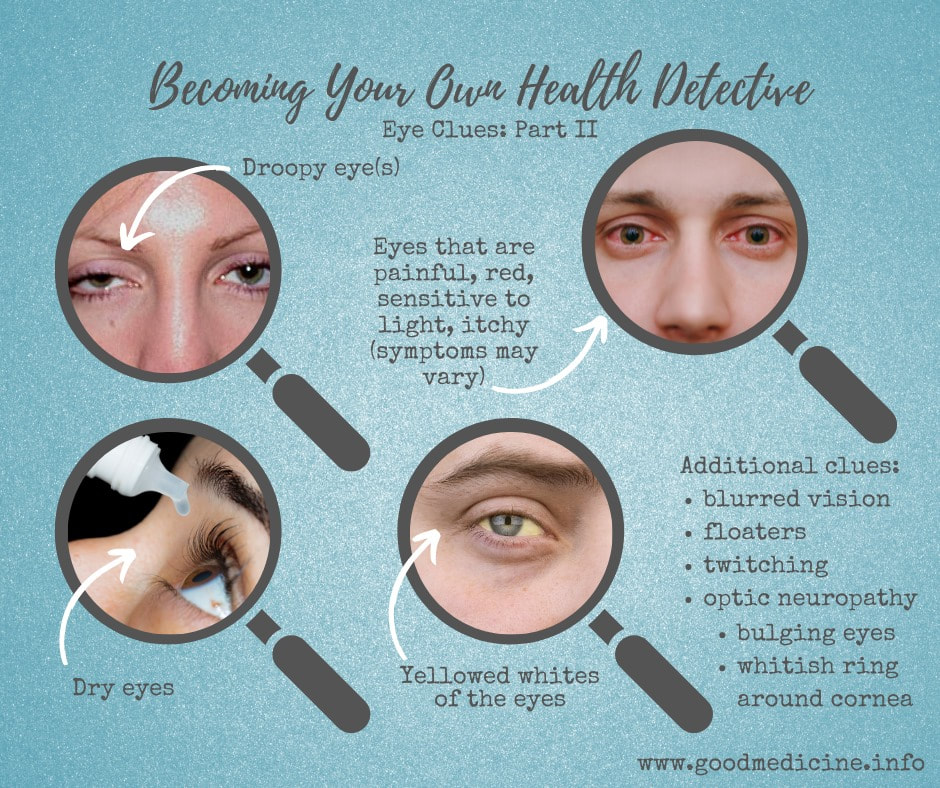
👀The appearance of slightly bulging eyes is a significant clue for a possible overactive thyroid  that is also called Graves disease. Frequently, this disorder is ignited by exposure to environmental toxins in the home, workplace or in the water. Latent viruses such as Epstein Barr have also been implicated in playing a role in developing a chronically inflamed thyroid (leading to either hyper or hypo thyroid manifestation).
👀Another easy to spot clue from the peepers is a gray or whitish ring that is clearly visible around the cornea. The cornea is the lens that covers the “colored” part of the eyeball. Evidence of this ring usually indicates unhealthy cholesterol and triglyceride levels and is a marker for increased risk of heart attack or stroke.
👀Droopy eyelids (ptosis) may be a be a genetic issue, especially if present at birth.

Eyelids that become droopy are the clue for this discussion. Medical conditions that can lead to droopy eyelids include:
👉Injury/trauma to head or eye
👉Decreased blood flow to either the eye or the area of the brain controlling the eye (a droopy eye may be an early stroke sign)
👉Diabetes. Remember that diabetes quietly becomes a vascular disease if not controlled.
👉Headache syndromes. (a visible manifestation of the headache)
👉Neuromuscular conditions 
👉Myasthenia gravis. A droopy eyelid is often the first symptom of this autoimmune disease that is most commonly seen in people over the age of 50. It may be accompanied by occasional double vision, a hoarse voice, or weakness in the arms and legs.
👀Optic neuropathy simply means damage, disease, or dysfunction of the optic nerve. It may be caused by toxin exposure, infection,  an autoimmune disorder, chronic inflammation, trauma, glaucoma, insufficient blood flow to the optic nerve, or use of certain medications including those used for erectile dysfunction and amiodarone, a medication used to control heart rhythm. Symptoms of optic neuropathy include pain in the face or eye socket, pain inside the eye, loss of peripheral vision,  or sudden or gradual vision loss. Ophthalmologists and OD’s can detect  inflammation of the optic nerve on routine eye exams. #makeanannualeyeappointment 
👀Eyes that are painful, red and sensitive to light gives a vast set of possibilities. Given how “screen focused” our culture is, know that computer eye syndrome is a real thing! Give yourself regular breaks from screen time, and use blue light filter glasses when you are spending hours at a time in front of a computer or phone screen. Unmanaged, this can lead to eye strain or dry eyes. Wearing contact lenses for too long may have a similar effect.
👀If screens are not your eyes source of issue, other causes may need to be investigated. Chronic redness in the sclera (the white part of the eye) is linked to systemic inflammation throughout the entire body, and indicate a possible autoimmune disorder (ex: RA, psoriasis,  or ankylosing spondylitis). If light sensitivity is accompanied by “halos” around light sources, get checked for glaucoma!
👀If your eyes sting, burn, or feel “gritty”, chances are, you are experiencing dry eyes. In fact, we have all probably had brief episodes of dry eyes after riding a bike, spent too much time in front of a computer,  lived in an area with dry winter heat, or been on a plane for many hours in low humidity recirculated air. Chronic dry eyes have been linked to an autoimmune disorder called Sjogren’s syndrome, thyroid disorders, Vitamin A deficiency, or taking certain medications known to cause dry eyes as a side effect. 💊Antidepressants, antihistamines, decongestants, beta blockers (heart/blood pressure), certain antibiotics, ibuprofen, birth control pills, and meds for bladder control💊 are some of the more common culprits.
👀Rapid onset eye inflammation / sensitivity is often a clue indicating infection or inflammation.
👀Blurred vision is another clue to take seriously. While the clue may be manifesting as an inconvenient or annoying visual impairment, dangerously high blood pressure or high blood sugar are causing problems quietly elsewhere in the body. An estimated 73% of diabetic patients have bouts of blurred vision. High blood sugar causes the lens within the eye to swell, causing the blurring. Certain medications may also contribute to blurred vision:
💊Alendronate (for osteoporosis/ osteopenia)
💊COX-2 inhibitors such as Celebrex and Mobic (for pain and inflammation)
💊Acetaminophen, ranitidine (stomach acid), and lovastatin (cholesterol) are just three very common medications that also carry warnings about their potential to blur vision.
👀Red itchy “allergy” eyes may indeed be allergy related. However, the same symptoms also occur in Rheumatoid Arthritis. Approximately 1.3 million Americans have this autoimmune disorder. The immune system begins attacking body tissue, and its focus is generally tissue heavily laden in collagen. The sclera (the white part of the eye) and the cornea are made up almost entirely of collagen, and the inflammation there mimics allergen exposure.
👀An eye twitch can be ever so bothersome, yet it’s an important clue too. Check yourself…. They are generally related to fatigue or stress. It may be time to rest and recover! Chronic eye twitching should signal a visit to a health professional as it can be an early sign of a neurological disorder.
👀Yellowed eyes are a sign that the liver is struggling… a classic sign of jaundice. This is another ASAP health professional moment. 
👀“Floaters” are gray or black specks, strings or cobwebs that appear in vision. If you suddenly notice floaters, contact your eye specialist immediately. Certain medications are known to cause floaters. 💊, diphenhydramine (antihistamine), diltiazem (blood pressure), amitriptyline (mood), and alprazolam(anxiety)💊 are among those known to cause this. 


As I write, I’m reminded again of the impact that chronic toxin exposure has on our bodies… all the way up to our eyeballs! The liver and other detoxifying organs do their level best to keep us healthy, but they are not miracle workers. We have to claim ownership and do our part by avoiding toxins wherever possible by making a conscious effort to exercise, drink plenty of clean water, get plenty of sleep, manage our stress, and eat healthy clean food. So much medication 💊(a class of toxins all its own) may be avoided by caring for ourselves this way.


What conscious decisions did you make today  that decreased your toxin load?🙌 I chose to use YL body care products in the shower this morning and YL Cinnafresh deodorant before I put my clothes👖👕 on. I brushed my teeth with fluoride free YL Thieves Aromabright toothpaste, and bypassed an impending headache by using peppermint 🌿on the roof of my mouth. I finished out my time in the bathroom by avoiding some of the worst toxins☠️ in our homes….. standard American cosmetics. The Savvy Minerals makeup line is not only gorgeous and long lasting, it is liver friendly too! 


You are worth taking care of!
Thanks for making it easy Young Living! 
xoxo~ liz


#sharingiscaring
#supportyourlocalpeepers
#goodmedicine
#goodmedicineisproactiveinsteadofreactive
#thanksYL

  • « Go to Previous Page
  • Page 1
  • Page 2
  • Page 3
  • Go to Next Page »

Book Your Health Coaching CallBook Now

Elizabeth James

469.425.9091

ebj0203@gmail.com