Remember the fable about the Princess and the pea? You may recall that the true princess felt the effects of a pea beneath twenty mattresses and had a terrible night’s sleep because of it. After all we’ve discussed, you well understand that the thyroid is the discerning princess in the body……it feels everything!
 and the pea
 ? You may recall that the true princess felt the effects of a pea beneath twenty mattresses and had a terrible night’s sleep because of it. After all we’ve discussed, you well understand that the thyroid
 is the discerning princess in the body……it feels everything!
It’s hard to pin down exactly how many people use medication chronically in the USA, but a rough estimate in 2017 was 66%. (I believe that number has risen significantly since 2020, but to date, official data has not yet been released).
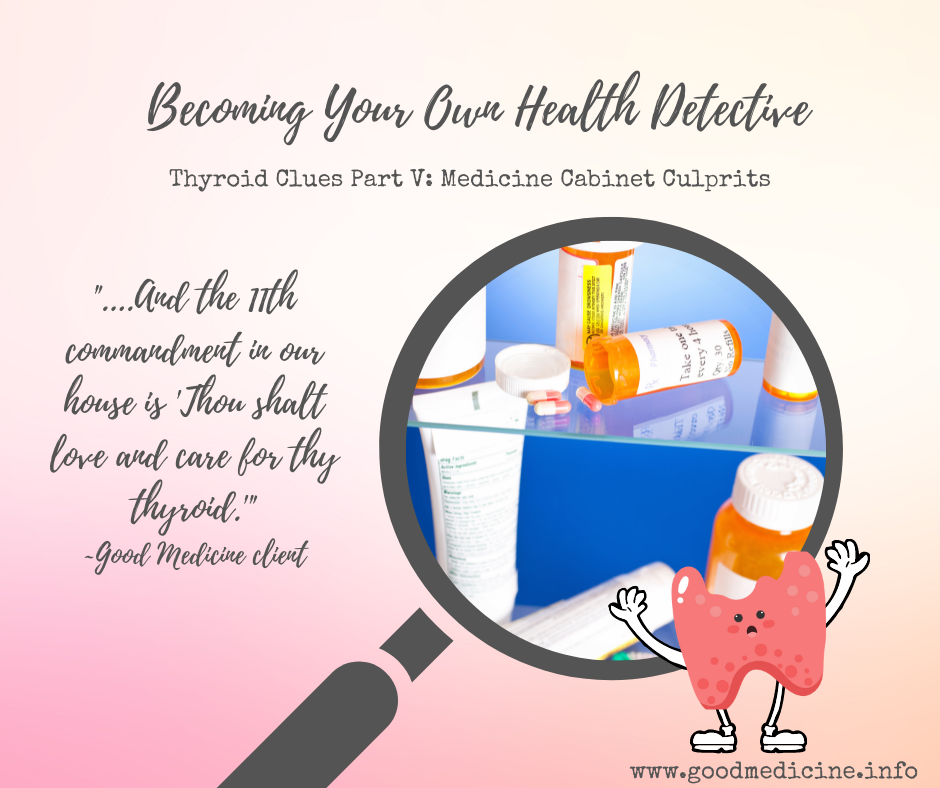
I will forever and always say that there is a time and a place for medication, but that it should be used as a last resort whenever possible. Pharmaceuticals by very definition are a toxin to the body. While they may be performing their “FDA approved task” within the body, behind the scenes they are likely setting up trip wires, snares, and grenades elsewhere. Many commonly prescribed medications are quietly sabotaging thyroid hormone function as they outwardly “play nice” in their appointed tasks of lowering cholesterol, quelling aches and pains, placating gastric reflux symptoms, smoothing out moody days, etc.
Certain medications have the ability to affect thyroid hormones in at least four ways:
1. Some may alter the actual production of thyroid hormones.
2. Some may affect the release of of thyroid hormones from the thyroid gland.
3. Some may affect how well thyroid hormone attaches to (or utilized) at receptor sites.
4. Some may interfere with the conversion of inactive T4 into active T3 in the liver
Who are the thyroid accosting culprits? As I hinted above, the gang is quite diverse. Nearly ⅓ of this gang of thieves bears a similar “tattoo”…….. They contain fluoride within their chemical structure. You’ll recall (hopefully!) that fluoride (and chlorine, another “tattoo” found in many medications) blocks iodine from its job helping the thyroid produce thyroid hormones. These small doses add up over time with chronic use medications.
 As I hinted above, the gang is quite diverse. Nearly ⅓ of this gang of thieves bears a similar “tattoo”…….. They contain fluoride within their chemical structure. You’ll recall (hopefully!) that fluoride (and chlorine, another “tattoo” found in many medications) blocks iodine from its job helping the thyroid produce thyroid hormones. These small doses add up over time with chronic use medications.
Medications known to inhibit healthy thyroid function (in one of these four ways) with chronic use include:
 Lipitor, Crestor, Vytorin, Zetia (cholesterol meds) Prevacid (stomach acid / GERD) Betamethasone, Clobetasol, Dexamethasone, Fluocinolone, Fluticasone (topical, oral or inhaled steroids)Celebrex, Ibuprofen, Naproxen (NSAID pain) Lexapro, Prozac, Celexa, Paxil, Zoloft (mood stabilizers) Haldol, Risperdal, Lithium (mood stabilizers) Levaquin, Cipro (antibiotics) Synthetic hormone replacement therapies, birth control pills Amiodarone (treats ventricular heart arrhythmia)Fluconazole (antifungal) Interferon Alfa, Sutent, Sorafenib (chemotherapy agents) Pramipexole, Ropinirole (for Parkinson’s) Metformin (Type II Diabetes) Furosemide (diuretic) Phenytoin and Carbamazepine (for seizures) Excessive Niacin (Vit B3) intake
(Note that this is a short representation of a very long list of medications!)
I am in no way inferring that you should stop taking medication that you may be currently on because it may be affecting your thyroid function. That is a conversation between you and your trusted health professional. According to an article by the Natural Health Research Institute, almost 75% of chronic illness can be improved or cured with improved lifestyle choices. Has your health professional talked to you about this as part of your treatment protocol?
Statistics like this are meant to empower you. Chronic disorders are generally where chronic medication use comes into play, and changing lifestyle habits can have a huge impact on health outcomes and on pharmaceutical needs.
Five significant ways your choices can impact your health include:
1. Reduce exposure to toxins (thank goodness for our YL Thieves Household Cleaner, essential oils that do “all the things” in a natural gentle way, Savvy Minerals cosmetics and the ART, Bloom, and Orange Blossom skin care lines!)
2. Making better food choices (and ditching the toxic processed foods)
3. Exercise. There is an exercise program / type out there that will work no matter what health situation you may be living with! (NingXia Nitro or Zyng 15-20 minutes prior to workouts elevates my gym workout routine!)
4. Sleep….Make sleep a priority. Improve your sleep hygiene habits! Some of my favorite sleep aids are YL’s Tranquil or RutaVala Roll-on…. Give ‘em a try and load your bedtime diffuser with oils like Cedarwood, Lavender, Peace & Calming, Frankincense, Orange )
5. Manage stress. Recall that chronic stress is as dangerous as a regular cigarette habit to the body. Even simply working on the four previous suggestions will have a profound impact on better management of stress.
In addition to making healthier lifestyle choices that lead to a healthier version of you (and protecting your thyroid in the process), here’s an added bonus: Annually, direct health care costs average $6032 out of pocket for an individual with one chronic disease (that number goes up with each additional disorder). Indirectly, chronic disorders also have a profound impact on education, occupation opportunities, income, and social interaction. If your health professional has not offered up these five recommendations as part of protocols for any chronic disorder you may have, they are working as a dis-ease maintenance advocate instead of that as a healer. Ultimately though, it’s our personal responsibility to be our own advocates and in doing so, choosing whether to live in a space of dis-ease maintenance or healing. Care for that thyroid “princess” within your personal kingdom friends! It’s often the first organ in the body to recognize that something is amiss.
in the process), here’s an added bonus: Annually, direct health care costs average $6032 out of pocket for an individual with one chronic disease (that number goes up with each additional disorder). Indirectly, chronic disorders also have a profound impact on education, occupation opportunities, income, and social interaction. If your health professional has not offered up these five recommendations as part of protocols for any chronic disorder you may have, they are working as a dis-ease maintenance advocate instead of that as a healer. Ultimately though, it’s our personal responsibility to be our own advocates and in doing so, choosing whether to live in a space of dis-ease maintenance or healing. Care for that thyroid “princess” within your personal kingdom friends! It’s often the first organ in the body to recognize that something is amiss.
xoxo~ liz


 Dopamine Deficiency Part IV: More Solutions
 ,
,  Mowing the yard! It may be hard work, but the aroma of fresh cut grass contains a chemical called hexanal (the “green” smell of grass) that stimulates dopamine release.
 Organic coffee (No more than one cup a day or it may contribute to adrenal fatigue…. A dopamine high followed by a crash!) or a cuppa organic green tea (Have you tried the YL
  Acupuncture stimulates the vagus nerve, which in turn support healthy dopamine levels. (Go back and reread the section on low vagal tone!)
 Creating and performing music boosts dopamine levels even more than listening to your favorite tunes, but all three are effective. Listening to music has even been shown to improve fine motor skills in Parkinson’s patients.
 Chronic inflammation reduces dopamine synthesis and release in the brain. We’ve got tools on hand to support a healthy inflammatory response (as opposed to the runaway variety!).
  Lack of sleep down regulates dopamine receptors and reduces dopamine receptor availability. You know what to do! Sleep is so very important in ALL aspects of health. Review your sleep hygiene practices and look for “holes in the armor” that may result in interrupted sleep. I LOVE and incorporate
 Iron plays a role in dopaminergic neurotransmission. Iron and ferritin levels are important lab values to watch (both for being too low and too high). Natural sources of iron include spirulina ( an ingredient in
  Vitamin C assists with the formation and conversion of dopamine in the brain. Deficient levels of vitamin C may show up as a low mood.
  Vitamins B6 and B9 are critical for dopamine synthesis. Low folate levels contribute massively to low dopamine levels which may ultimately lead to depression.
  Alternate between standing and sitting. “Chronic sitting” lowers dopamine levels. Our body was designed to move!
 Finish a project. Who knew? This in itself causes the brain to flood with dopamine.
 Would I be prone to developing an addictive tendency to something I already particularly enjoy? (Too much of a good thing makes it not necessarily a good thing.)
 Exercise: Exercise slows the breakdown of dopamine in the body, and helps prevent loss of dopaminergic
 Learn something new: Learning a new skill (language, hobby, sport, or activity) or simply learning new information causes dopamine to be released. It’s very likely happening right now as you read this information! You’ve heard of “seminar highs” or research junkies (yep, this is one area I receive a huge dopamine dump from!). When the dopamine release happens, it makes you want to learn more and repeat the experience. Bonus points…. The more you engage in learning new things, the stronger your brain
 Vitamin D: Vitamin D has a role in the production of dopamine and in also protecting dopamine receptors. Evidence suggests that supporting healthy Vitamin D levels also supports healthy dopamine levels, especially if clinically deficient in Vitamin D. Make sure to ask for Vitamin D levels whenever you have the opportunity to get labwork! Young Living’s
 Phenylalanine and tyrosine are two amino acids used in the biosynthesis of dopamine. Foods high in phenylalanine and/or tyrosine include meats, beans, milk, nuts, seeds, whole grains, sweet potatoes, bananas, apples, cherries, eggs, yogurt, and
  Increasing Vagal Tone: There is a direct correlation between low vagal tone and lower levels of dopamine. You’ll want to go back and review ALL the wonderful and fun ways you can improve vagal tone! (We talked about this a few months ago….use the search option in this group to find the posts.)
 Uridine is a supplement. It’s also found in beer, brewer’s yeast and nutritional yeast. Nutritional yeast is not the same yeast that bakers use. If you do a little digging, you’ll find recipes incorporating nutritional yeast into tasty options.
 Cryotherapy: You’ve seen advertisements for it I’m sure. Be brave and consider giving it a try! Remember, simply exploring something new increases dopamine in the brain. Ice water immersion (or cryotherapy tanks) increase dopamine by an estimated 250%! Yowza! I am a fan of cryo….. I find it both terrifying and exhilarating (probably from that ginormous dopamine dump I received!)
 Intermittent Fasting not only leads to higher levels of dopamine release; it also reduces age related dopamine receptor attrition. There are many additional reasons to incorporate intermittent fasting into your lifestyle if you’ve not considered it before now.
 Curcumin is the yellow pigment found in turmeric. Curcumin reduces the metabolism of dopamine in the brain thereby increasing levels. YL