• Skip to primary navigation
  • Skip to main content
Book Your Health Coaching Call
Good Medicine

Good Medicine

Holistic Health Coaching

  • Home
  • Liz James
    • About Liz
    • Coaching
    • Book a 20 Minute Complimentary Coaching Call
  • Favorite Resources
    • BlessedByHisBlood
    • Young Living
    • Fast Like A Girl Certified Coach
    • Order supplements through my Fullscript store
    • Green Pasture (Coupon: Health10)
    • RogersHood Apothecary (Coupon: BEABLESSING for 10% off)
    • DolphinMPS
    • Company
    • Abundance
  • My Books
    • Becoming Your Own Health Detective Volume 1
    • Becoming Your Own Health Detective Volume 2
  • Blog
  • Cart

Diabetes

Health Clues in Your Mouth

Liz James · April 14, 2021 ·

DRY MOUTH
Hippocrates said “All disease begins in the gut.” Considering the digestive system begins in the mouth, it should be no surprise that the mouth holds bountiful clues! 90% of systemic dis-ease has an oral manifestation. 
While everyone has a dry mouth occasionally, chronic dry mouth (known as xerostomia) which persists for weeks may be a symptom of an unhealthy habit, underlying health condition, or side effect from certain medications. If an insufficient supply of saliva is produced, you may notice these signs or symptoms all or most of the time:
👅Dryness or feeling a “stickiness” in the mouth
👅Saliva that seems thick and stringy
👅Bad breath
👅A dry or grooved tongue
👅A chronic dry or sore throat
👅A change in sense of taste
👅Difficulty chewing, speaking, and swallowing


Common habits and health conditions that may cause dry mouth:
👉Dehydration 
👉A thyroid condition ….both hyper or hypo thyroid.  Roughly 50% of people who have persistent dry mouth have a thyroid disorder.
👉Sinus problems which make people breathe thru their mouth
👉Radiation side effects
👉Tobacco and alcohol use
👉Diabetes
👉Stroke
👉Yeast Infection (remember your tongue clues!)
👉Alzheimer’s and other forms of dementia
👉Autoimmune diseases. An autoimmune disease called Sjogren’s syndrome causes dry eyes and dry mouth, and often accompanies other autoimmune disorders like lupus and rheumatoid arthritis. 


Unfortunately, over 400 relatively common prescription and over the counter medications cause dry mouth as a side effect. Some of the more common classes of medications that may contribute to the problem include:
💊Chemotherapy agents
💊Decongestants
💊Antihistamines
💊Pain killers
💊Muscle relaxers
💊Anti hypertensive medications (beta blockers, calcium channel blockers, and diuretics)
💊Antidepressants
💊Oral inhalers (for the lungs)
💊Medications treating Parkinson’s and Alzheimer’s
💊Certain seizure medications
💊Medication for motion sickness
💊Bladder control medications
Interestingly, older age is also listed as a reason for dry mouth, but I disagree. Considering that the average elderly patient is on 9-13 prescriptions, the odds of dry mouth as a side effect to one or more of the above medications is quite high. When combined with the health conditions and/or habits listed above, dry mouth could occur at any age, the odds simply rise with the number of health conditions and medications involved. A healthy 70+ish individual (no meds / no underlying conditions) rarely has issues with dry mouth!  


Dry mouth is an interesting clue because it has a cause and effect cycle. The longer dry mouth persists, the more problems chronic dry mouth can cause. Saliva is a necessary component of the digestion process. It washes away food and helps neutralize acid produced by bacteria in the mouth. It also has the capability to both repair tooth enamel thru remineralization (if the minerals are available thru good nutrition!), and wash out plaque. Continual dry mouth will eventually lead to dental erosion, plaque formation, decay, and gum disease, all of which can ultimately lead to more chronic dis-ease throughout the body. It’s a vicious cycle best remedied if possible.
Dry mouth is rarely discussed as a possible side effect from medications. In my opinion, it is one of the most important side effects to be aware of as gum and dental disease plays such an enormous role in overall health. Side effects of medications are some of the biggest reasons it is a good idea to look first for holistic ways to heal as opposed to quickly jumping on to the prescription drug carousel.  
I am personally a huge fan of the Thieves oral care line (toothpaste, mouthwash, and floss) as a way to maintain my pearly whites (and gums!). One of the oft recommended remedies for dry mouth is sucking on lozenges or hard candy. Many common lozenge options are loaded with sugar which really feeds the beast of decay.

If dry mouth is a concern, here are some tips and tricks:
🏆Stay well hydrated! Perk up your water’s flavor with Young Living Vitality drops that are so easily squirted into water. Lavender lemonade, Grapefruit Bergamot (my fave!), or for an added boost of energy, try the clean caffeine boosted Jade Lemon Berry or Spearmint Tangerine!  
🏆Utilize a humidifier in the bedroom and rooms you frequent. Thankfully, many of our Young Living diffusers (including the Desert Mist) also serve as a humidifier! 
🏆Keeping immune and oral health supportive sugar free Thieves Lozenges on hand to suck on.
🏆Avoid salty and dry foods that exacerbate dry mouth.
🏆Avoid tobacco and alcohol use.
🏆Regular dental cleanings from a dentist who doesn’t promote fluoride use! 
Dry mouth is both a clue for the past AND a clue for what may come in the future if dry mouth is allowed to persist, so it’s quite important to get it under control whenever possible!  
xoxo~ liz

#sharingiscaring
#healthcluesyoucanuse
#goodmedicine
#ThanksYL
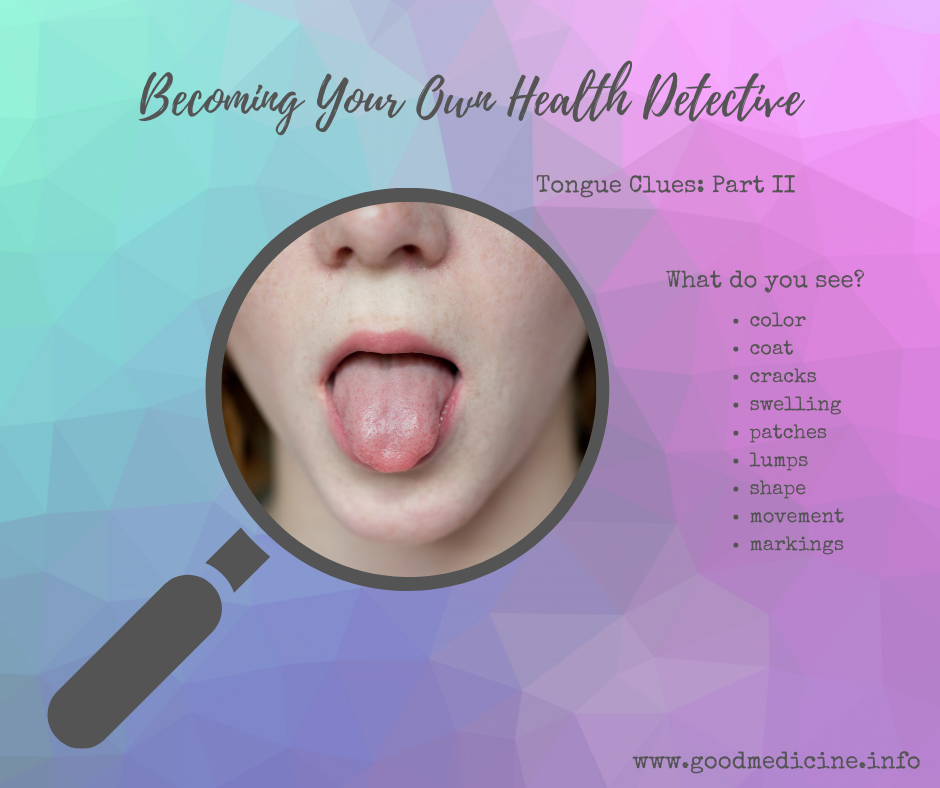
Health Clues in Your Tongue Part 2

Liz James · April 6, 2021 ·

👅Geographic tongue (erythema migrans) is a benign condition easily confused with lichen planus (an autoimmune disorder). A geographic tongue will be pink to reddish in color with slightly depressed lesions with irregular white or yellow borders. Geographic tongue usually has hereditary and environmental components (epigenetics!)….. meaning that environmental factors may intensify genetic expression.


Some of the more common environmental factors contributing to magnifying geographic tongue characteristics are endocrine disruptors (including birth control pills). Common endocrine disruptors include BPA (found in plastics), Phthalates (found in most mainstream beauty and skin care products), perchlorate (commonly found in tap water), PFC’s (used in nonstick cookware and fast food containers), and organophosphate pesticides.


Reading labels is a royal pain in the tushie, and all of these environmental toxins are not so nicely found everywhere despite having been banned in many other countries. Even if you are not predisposed to a geographic tongue, endocrine disruptors wreak havoc within all of us, and vigilance is needed. Scientists have pointed to all of these toxins as being key players in the more than 50% decline in fertility (for both men and women)  in the USA in the last 30 years.  
I am so thankful that Young Living has a full line of  skin and body care products for both men and women, as well as gorgeous makeup (#SavvyMinerals)  that is safe and free of hidden dangerous chemicals. I could stand on this toxic soapbox for hours, but let’s return to the tongue! 


Geographic tongue is often a clue indicating a disposition towards psoriasis, reactive arthritis, allergies, and type I diabetes. That is not to say someone with a geographic tongue will definitely acquire one or more of these dis-ease states. Rather, it’s important to be aware of the possibility and do “all the things” to minimize the chance of acquiring a chronic autoimmune condition. Chronic stress can also magnify the characteristics of a geographic tongue.


👅A fissured tongue is notable for its deep furrows and cracks. Genetics and environmental factors also play a role. Tobacco use, and iron or B12 deficiency are common influencers of a fissured tongue. This particular tongue characteristic is also often seen in patients with psoriasis, Sjogren’s Syndrome, and other autoimmune disorders. 


👅A swollen, inflamed tongue is sometimes seen in celiac disease (an autoimmune intolerance to gluten).
Did you notice a trend? Many of today’s tongue clues are tied to autoimmune disorders which ultimately are connected to gut health and environmental toxin exposure and it’s so very important to recognize clues and be proactive instead of reactive!  


👅A “scalloped” tongue (ridges or teeth marks on the sides of the tongue) is indicative of fluid retention.


👅Tingling of the tongue may be a symptom of hypoglycemia.


👅 Tongue strength also reveals important clues! Is a person able to stick out his/her tongue, and if so, does it tremble? Remember, the tongue is a strong and very vascular bundle of muscles, much like the heart. Scientists have found that a quivering or trembling tongue is often indicative of a neurological disorder. A tongue quiver may also appear both before a stroke and as an aftermath of a vascular event.


👅As you look at your tongue for any tips or clues, make note of any unusual lumps, discoloration, or localized swelling or sores that do not go away, and contact your favorite health provider should you find something suspicious!
Caring for your tongue is similar to caring for your teeth. A fluoride free toothpaste (have you tried Young Living’s Thieves toothpaste?), oil pulling, and using a copper tongue scraper are all healthy ways to keep your tongue happy!
xoxo~ liz 


#sharingiscaring
#healthcluesyoucanuse
#thetonguespeaks
#goodmedicine
#ThanksYL

Health Clues from Your Tongue Part 1

Liz James · March 30, 2021 ·

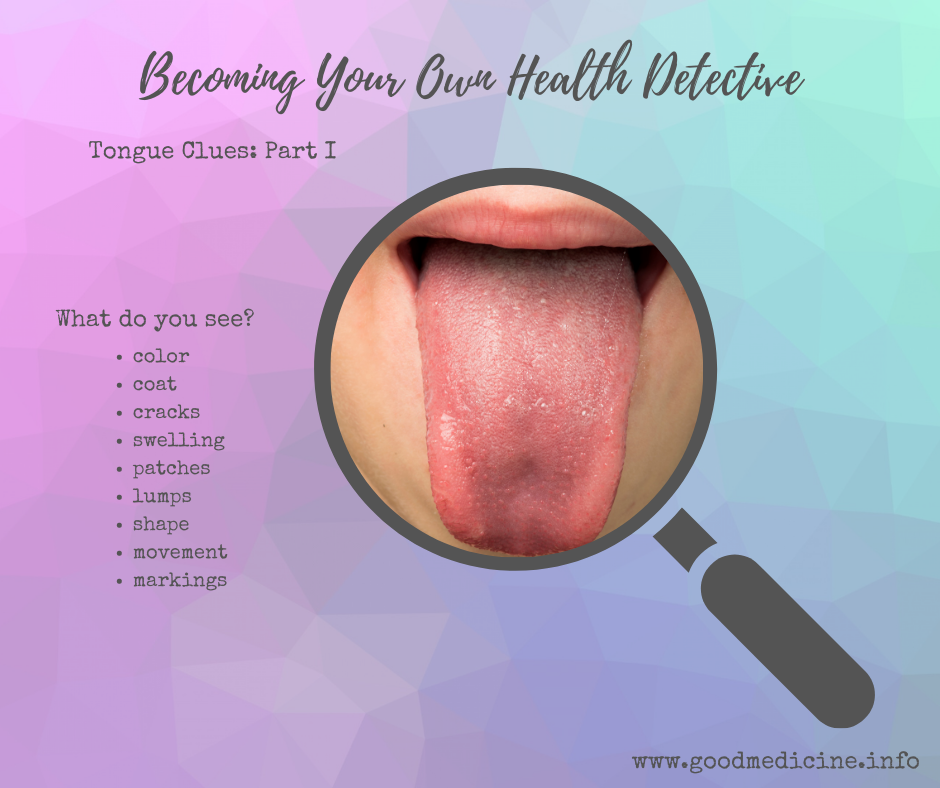
Tongue Clues: Part I
Nobody ever said clue hunting would be glamorous….. Just ask any dental hygienist about health clues found in the mouth! My hat’s off to these health professionals because they see many warning signs and health clues and (hopefully) help save lives in the process! The tongue alone will keep us busy! So grab a mirror and excellent lighting, and let’s proceed!
👅The human tongue is arguably one of the stronger muscle sets of the body. It operates independently of the skeleton and, much like the heart, the tongue is always working. It helps in the mixing process when eating, is crucial to forming letters when we speak and assists in filtering out germs. Even when we sleep, the tongue is constantly working to push saliva down the throat. 
 👅The tongue is also highly vascular. Even the slightest changes in the constituents of an individual’s blood will be reflected in the appearance of the tongue thru color, shape, coating, and markings.
Tongue mapping is an Eastern medicine tool, and Western medicine also uses the tongue’s appearance to provide valuable health information. According to Eastern tongue mapping practices (and I’d encourage you to do a little research on this), the tongue can be roughly divided into 3 sections:
Tip = heart & lungs
Middle = liver, gallbladder, stomach, and spleen
Back = intestines, bladder, kidneys 
As you look at your tongue, take note of where the clues lie on the tongue according to mapping.
In order to identify clues, we first need to establish what a healthy tongue should look like! The best time to look for clues is first thing in the morning (just like the Candida spit test!), before brushing your teeth and tongue.
👅Color should be consistent across the entire tongue, and should be a light pinkish red, with a very thin white coating over it.
👅It should be moist but not too wet or too dry.
👅Small cylindrical taste buds on the entire top surface of the tongue.
👅No cracks, ulcers, teeth marks, lumps, or discolored patches should be present. 
As you look at your tongue, first note the color of the tongue itself (not the film on the tongue just yet).
🔎A very pale or light colored tongue may be indicative of iron deficiency, and is sometimes paired with taste bud atrophy, tongue pain,  and occasionally cracks on the side of the mouth. A pale tongue may also indicate poor circulation in the body. 
🔎A red inflamed tongue (sometimes known as beefy tongue) may indicate a folate or Vitamin B12 deficiency.  Roughly 40% of the adult US population have a B12 deficiency. Frankly, that is not surprising considering the Standard American Diet and extreme overuse of antacids and acid blocking medications which inhibit Vitamin B12 absorption and assimilation.
Now take a look at the “coat” color your tongue is wearing (Remember, a thin white coat is healthy!):
🔎A thicker white or yellowish coating on the tongue may indicate sluggish digestion and even possibly chronic constipation.  Digestive enzymes (Essentialzyme, Essentialzymes-4, Allerzyme, or Detoxzyme) and Life 9 probiotic would be an optimal choice to add to your next Young Living order!
🔎A “sticky looking” coating is suggestive of excess phlegm or mucus production in the body. 
🔎A black or brownish tinted tongue is most often diet and habit related. This is often related to trapped bacteria and yeast. A permanent brown coating may be an indication of lung dysfunction and is often seen in smokers. There are a few medications that can cause a darker coating on the tongue, but this is normally a transient effect that stops once the medication is discontinued. 
🔎Painful white or red patches on the tongue is usually a sign of thrush….evidence of candida overgrowth. It is commonly seen in poorly managed diabetes, after a round of antibiotic therapy, or steroid use (inhaled steroids are notorious for causing this!). All dis-ease begins in the gut, and candida overgrowth anywhere on the body is a sure sign that diet and digestion support desperately need addressing. #lovethegutyourwith
Everything looking good so far? Next week we’ll cover more tongue clues! 
xoxo~ liz 😘
www.goodmedicine.info (just holler if you are in need of a little personalized help!)
#sharingiscaring
#healthcluesyoucanuse
#thetonguespeaks
#goodmedicine
#ThanksYL

Breath Clues Part 1

Liz James · March 16, 2021 ·

I’m not going to lie, sometimes looking for clues can get a wee bit uncomfortable.

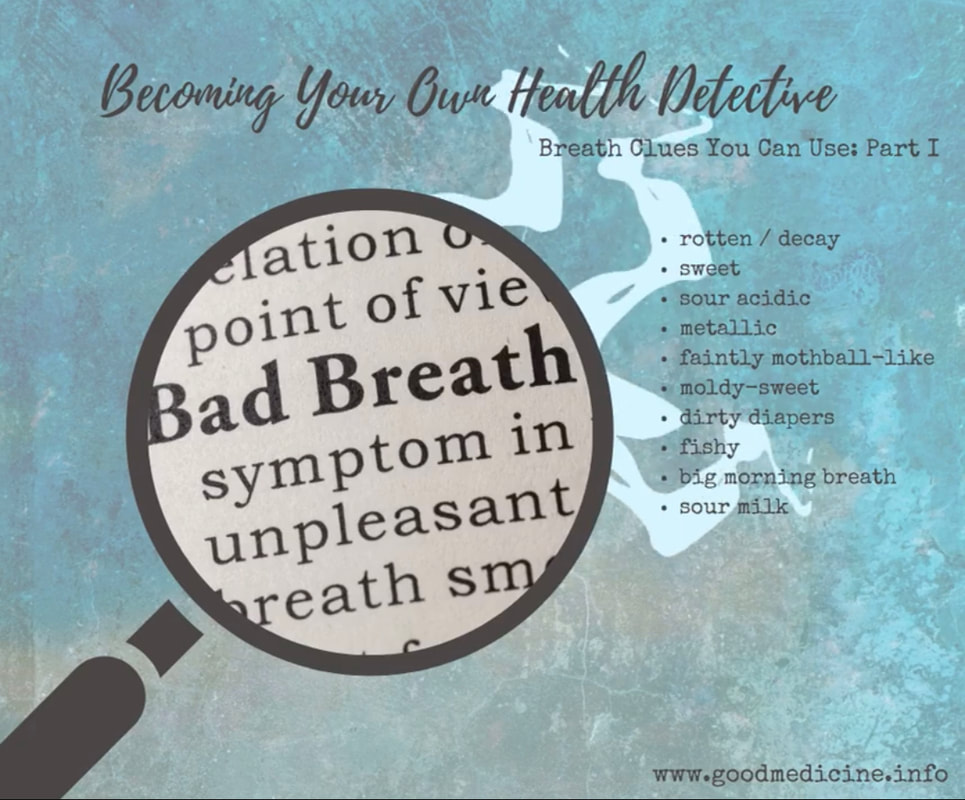
Nobody likes to be told they have bad breath, and this is a clue that will likely require some help from someone who loves you. Kinda like scratching your own back… not easy!….. neither is smelling your own breath!  So grab a partner should you be inclined, and let’s talk about odiferous exhalations. 


There are roughly 10 major causes of halitosis. Gums, mints, and mouthwashes will only do so much good if you don’t address the root of the clue! Of course, some foods can leave malingering odors in the pie-hole and are not of concern. It’s the chronic bad breath that will be leaving you notable clues.

*Rotten or Decaying odors:  This is most commonly caused by gingivitis, a rotten tooth, or medications that cause dry mouth. Dry mouth sets the stage for bacterial invasion, which of course, ultimately leads to tooth decay and plaque-induced gingivitis. There are over 400 medications that are known to cause dry mouth. This is but one reason to work really hard not to need medication in my opinion. Oral health and hygiene goes a LONG way to preventing other dis-ease states in the body (we will chat more about that topic another day). If you are not already using Thieves toothpaste and Thieves mouthwash, I encourage you to add it to your next order! Both are highly effective means for neutralizing odor caused by bad breath bacteria and help fight plaque induced gingivitis.

*A sweet / fruity odor: Officially, this is called ketoacidosis, and some people say it this type of breath also smells like acetone (nail polish remover). An odor like this often indicates an imminent health crisis if related to a diabetic ketoacidosis (DKA) event. The body is burning fat  instead of glucose at a high rate.  It’s not harmful for the body to burn fat, as long as blood ketone levels do not rise too high in the process. Occasionally, people who engage in a “keto diet” may develop keto breath on the short term. In this instance, it’s not dangerous, but keep your Thieves mints or lozenges handy!

*Sour Acidic: This odor is most often related to reflux. Contrary to common thought, reflux is not often the result of too much acid in the stomach (oftentimes, the opposite is true!). If the very important process of enzymatic & acidic digestion is not occurring in an efficient manner, reflux may result. Essentialzyme caplets might well become your new BFF, should you choose to give them a try! 

*Metallic: This is often a taste as much as a smell. An H. Pylori infection (which can be paired with reflux sometimes too) or certain medications are the most common contributors. Medications that have been found to leave the breath smelling/tasting metallic include some antibiotics, chemo meds, lithium, some arthritis meds, metformin, and some blood pressure meds.

*Faintly mothball like: Chronic allergies, sinus infections, and post nasal drip are the common contributors to this one. Yuck, right? Ya’ll have access to all the healthy tools to make this one go away! Not sure where to start? Ask a seasoned oily pro about their favorite diffuser recipes or DIY nasal spray recipe! Nobody’s got time to run around smelling like mothballs!

*Moldy-Musty: Also called “fetor hepaticus”…this is a symptom of liver disease. 

*Significant morning breath: Everyone has some sort of dragon breath in the morning, but this is the difference between dragon and gecko breath. People who sleep with their mouth open ultimately wake up with a dry mouth which is prime real estate for bacteria colonization. Pair this with certain sleep medications (or any of the other 399 meds) that cause dry mouth, and tooth decay will often soon follow (refer to point #1!)

*Fishy-ammonia: This particular odor is typically related to kidney disease.

*Sour milk: Typically, this odor will be transient following the consumption of dairy products. It is indicative of lactose intolerance.

*Dirty Diapers: Gross, right? An estimated 10% of the adult population is prone to an odd little thing called tonsil stones. A tonsil stone is a semi solid “stone-like”  build up of debris that gets lodged in the folds of the tonsils…… kind of like acne of the tonsils! Tonsil stones don’t generally lead to health complications, but they DO cause gross breath. Other tonsil stone clues may include: (no fever), sore throat, tonsil swelling, and ear pain of unknown origin. Tonsil stones are caused by chronic sinus issues or inadequate dental hygiene. Thankfully there are natural ways to dislodge them and prevent them! Gargling daily (hello Thieves mouthwash!), Oil pulling, staying well hydrated, and consuming probiotics daily are all helpful tools to avoid the dreaded dirty diaper breath! 

If you’re like me, you just went and brushed your teeth and gargled with #alltheThieves oral care products after reading this! Truly tho, these are important health clues and identifying a trending of clues may give you the time to nip a problem before it has a strong foothold.
xoxo~ liz 

#caringissharing
#pharmacistandfarmacist
#applicationofknowledgeispower
#everybreathyoutake 
#goodmedicine
#goodmedicineisknowingthyselfwell
#breathcluesyoucanuse
#ThanksYL

Health Clues in Your Skin Part 5

Liz James · March 2, 2021 ·

* Although we could explore skin clues for the rest of the year, today we’ll wrap up dermal geographical points of interest. You’re getting the idea, right? The body, especially its “packaging” gives loads and loads of early clues as to the direction a body’s health may be headed. As with GPS, you can pay attention to the map and gain control over where you are heading, or you can ignore the map/clues……… and who knows where you may end up! 

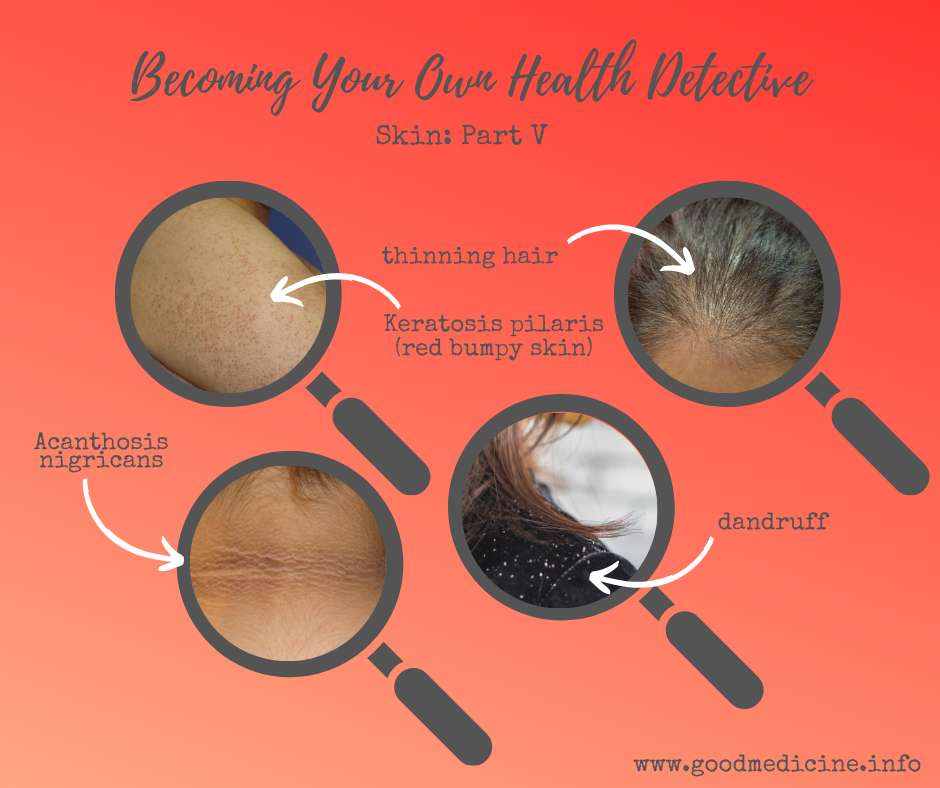
* Acanthosis nigricans (AN) is a skin abnormality that results in velvety darker discolorations found most often in body folds and creases. The discoloration develops gradually over time and is most often seen across the back of the neck, armpits, and groin area. Although acanthosis nigricans is sometimes an inherited skin characteristic, the most common cause is diabetes and obesity. Endocrine abnormalities (thyroid) and certain cancers (adenocarcinomas) can also cause this type of skin change. 


Chronic use of certain medications can also cause AN. Birth Control Pills and some hormone replacement therapies, steroids, high dose niacin, and a class of drugs used to treat HIV (protease inhibitors) are the most common offenders. 

* Keratosis pilaris (KP) is an annoying but harmless skin condition which causes dry rough patches and tiny bumps often seen on the upper arms, thighs, cheeks, or buttocks. You may have heard it sometimes called “chicken skin”. An estimated 40% of the population has experienced it, and though often related to a Vitamin A deficiency (which is seen in roughly 51% of adults in the USA), KP is most often seen in people who regularly eat a very specific set of food triggers. 
Who’d have thought that 51% of adults in the USA would have a Vitamin A deficiency?…. And yet we do. Vitamin A deficiency will ultimately affect the eyes in addition to the skin. Young Living has a super eye health supplement called Illumineyes  which happens to be loaded with Vitamin A. #killtwobirdswithonestone


Those with KP would do best to avoid common skin irritants found in mainstream bath and body care products. Thankfully, Young Living has us covered here too! They make caring for ourselves so very easy! Have you tried any of the YL bath and shower gels and bar soaps? I’m especially fond of the Morning Start Shower Gel!  
Food triggers are a serious influencer of keratosis pilaris. Thankfully, the foods that tend to trigger the outbreaks are 100% unnecessary and are generally void of  quality nutritional value.

These would include:
🔥Refined white sugar
🔥High fructose corn syrup
🔥Trans fats (found predominantly in junk and fast foods)
🔥Refined carbs (white bread, pastries, soda, sugary breakfast cereals, etc)
🔥Artificial flavorings and colorings
🔥Gluten
🔥Commercial (homogenized/pasteurized) dairy


My feeling about KP is that, while annoying and harmless, it is an early red flag clue that bumpy waters may lay ahead if reparations are not in order. If food is a trigger, then the gut is compromised and showing early signs of stress. Don’t let this stress escalate…. It’s a slippery slope. The gut is at the root of all chronic disease throughout the body, not the least of which is digestive disorders themselves! YL’s Life 9 probiotic and a digestive enzyme (Essentialzyme, Essentialzymes-4, Allerzyme, or Detoxzyme) would be excellent supportive measures to get and keep your gut on track.


KP is a common skin condition among children too….. It’s far better to nip things in the bud than it is to let a situation escalate, even if it means going thru a season of junk food withdrawal. Good eating habits are perhaps one of the best gifts you can give a kiddo! Don’t forget that Young Living has Kidscents Mightypro probiotic packets and Mightyzyme chewable digestive enzymes for little tummies too!   
Because KP is actually a buildup of dead tissue, a gentle but effective way to minimize the bumps is by using a “clean” DIY sugar scrub on the areas 3-4 times a week. 
2 cups organic brown sugar
½ cup organic fractionated coconut oil
½ cup honey
5 drops of lavender essential oil

* Dandruff affects roughly 50% of the population and comes in a few common types. It too is more annoying than harmful, but clues are flying with each brushing of the hair! 


Possible causes of dandruff include:
🔥Chronic inflammatory skin condition(s)…. Remember skin is a mirror of the gut!
🔥Allergy or sensitivity to something either applied or ingested (again, gut flag!)
🔥Yeast overgrowth (gut flag!)
🔥Omega 3 deficiency


Managing stress is key with any inflammatory condition. Stress reduction techniques  include yoga, prayer, meditation, deep breathing, and utilizing your favorite calming essential oils. 


A whopping 98% of the US population fails when it comes to optimal Omega 3’s in their diet. OmegaGize3 is loaded with what we need so as not to be a part of that epic fail statistic. Other clues of Omega 3 deficiencies may include dry hair, dry skin, depression, dry eyes, joint pain and stiffness.
​
* Thinning hair is something that happens gradually over time. While it is normal to lose around 100 hairs a day, hairs should also be growing back in as they are falling out. Very few people have the hair in their 50’s+ that they had in their 20’s. #aginghappens  


Factors that affect thinning hair may include:
Genetics (family pattern hair loss)
Emotional & physical stress
Medical conditions (thyroid or hormone imbalance, and heart disorders)
Poor nutrition or poor absorption of nutrients
Hair products that make thinning worse
Decrease in collagen production as we age


—Ways to minimize thinning hair include eating nutrient dense foods (and utilizing the YL digestive enzymes mentioned above!), OmegaGize3 !!!, and supplemental collagen (internally). 


Medications will always and forever have side effects. By their very definition they are a toxin, and many of them cause hair loss. Some of the top offenders include:
Certain acne meds
Certain antibiotics
Anti-coagulants (after about 3-4 months)
Statins (cholesterol)
Immunosuppressants (methotrexate, Enbrel, Humira etc)
Some anti seizure meds
Blood pressure meds (those whose generic name ends in -olol or -pril)
Mood stabilizer meds (including paxil, zoloft, amitriptyline, and prozac)
Weight loss meds (eg: phentermine)
Gout meds (allopurinol)
Many chemotherapy agents
Steroids (which are also immunosuppressants)
NSAIDS (ex: ibuprofen, naproxen )


I am not a doctor, and cannot diagnose, treat or cure you. I will however, continue to provide you with clues you can use to help you find your way back to the vibrant healthy person God designed you to be (or to support the vibrant health person you already are!). Which body part should we cover next as we continue to unearth clues?
xoxo~ liz

#caringissharing
#pharmacistandfarmacist
#applicationofknowledgeispower
#skininthegame 
#goodmedicine
#goodmedicineisknowingthyselfwell
#yourskinisamirrortoyourhealth
#ThanksYL

  • « Go to Previous Page
  • Page 1
  • Interim pages omitted …
  • Page 3
  • Page 4
  • Page 5
  • Page 6
  • Page 7
  • Page 8
  • Go to Next Page »

Book Your Health Coaching CallBook Now

Elizabeth James

469.425.9091

ebj0203@gmail.com