• Skip to primary navigation
  • Skip to main content
Book Your Health Coaching Call
Good Medicine

Good Medicine

Holistic Health Coaching

  • Home
  • Liz James
    • About Liz
    • Coaching
    • Book a 20 Minute Complimentary Coaching Call
  • Favorite Resources
    • BlessedByHisBlood
    • Young Living
    • Fast Like A Girl Certified Coach
    • Order supplements through my Fullscript store
    • Green Pasture (Coupon: Health10)
    • RogersHood Apothecary (Coupon: BEABLESSING for 10% off)
    • DolphinMPS
    • Company
    • Abundance
  • My Books
    • Becoming Your Own Health Detective Volume 1
    • Becoming Your Own Health Detective Volume 2
  • Blog
  • Cart

Aging

Health Clues in Your Fingernails #2

Liz James · January 5, 2021 ·

Our hands hold so many clues! If you missed part I (deciphering the lunula), you can find it here: https://goodmedicine.info/blog/health-clues-you-can-use-1://


​ ….. Now let’s move on to the whole fingernail. Today I’ll be covering a few more clues you can use to help “nail” down healthy habits and reverse possible deficiencies that ultimately will contribute to dis-ease.


What do healthy nails look like?
*When you are examining your nails, they need to be free from all fingernail polish. Because the nail bed is loaded with capillaries (tiny blood vessels) and fingernails grow relatively quickly, the ends of our fingers often can tip off on an early warning health concern. Nails are a snapshot of a person’s health over the previous 6 months…. So too, slow and steady wins the race when you are looking to repair or support what’s amiss.  


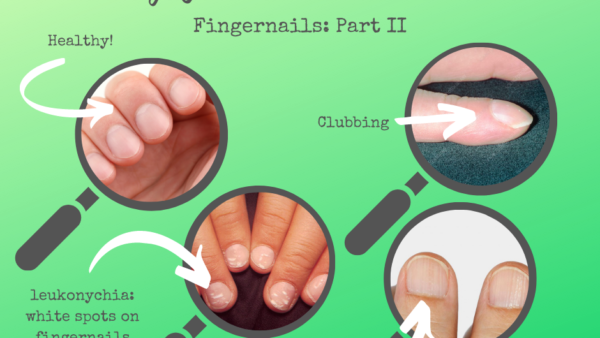
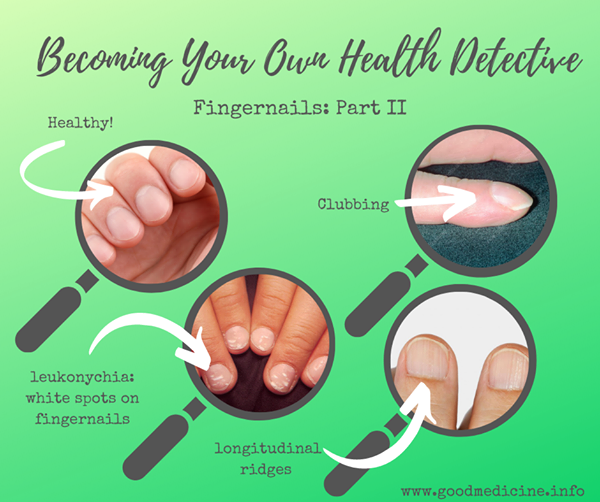
👍A healthy nail will have a transparent pink color and should be slightly shiny, smooth, and with a slightly (side to side) arched shape. Hardness of your nails comes from the presence of adequate sulfur needed for healthy keratin production (This is why we can thank YL’s Sulfurzyme… if you have been taking this supplement….. and have noticed stronger nails and hair).


*White Spots on nails: poor zinc load or excess refined sugar load
This is technically known as leukonychia and indicative of two things: a zinc “inadequacy” and/or an excess consumption of refined sugars. 
Zinc inadequacy is often common in people over the age of 60, but anyone can be susceptible! 


Other signs of a possible deficiency include thinning hair, acne, slow healing wounds,  worsening vision, worsening hearing or ringing in the ears, and an impaired immune system. Interestingly,  food doesn’t taste or smell much when you are zinc compromised (Does that sound familiar given the 2020 virus?… one of the key natural preventatives to the ‘rona is making sure you are getting adequate zinc in your diet!)


How do you know if your problem is excess sugar or a zinc deficiency? Do an honest assessment of your eating habits. Common foods high in zinc include: pumpkin seeds, grass fed beef, chickpeas, lentils, cocoa powder, cashews, yogurt or kefir, mushrooms, spinach, avocados, and chicken. If these are regular staples to your diet and refined sugar is kept to a minimum then I’ll bet your nails are free from white spots!  


What are some YL supplements that contain zinc? Hint: one of them is red! 
*Longitudinal Ridges: essential fatty acid deficiency
EFA’s are necessary for healthy skin, hair, heart, thyroid, prostate, brain, joints and nails! In addition essential fatty acid deficiency has been found to play a key role in inflammation, depression, and cognitive decline (including Alzheimer’s Disease).


Other signs of a possible EFA deficiency are dry scaly skin, a dry mouth, cracked fingertips or cracked heels (also a sign of a possible thyroid deficiency). 


Common foods high in EFA’s include flaxseed, chia seeds, walnuts, pumpkin seeds, “fatty fish” and fish oil, and brussel sprouts.


Which Young Living supplements might longitudinal ridges be telling you your body is craving if you don’t tend to each the above foods regularly? I can think of two: OmegaGize3 and MindWise.


*Clubbing: low oxygen in the blood
Clubbed fingernails curve downward at the tip of the finger. It is associated with conditions including lung, liver, or heart disease and both celiac and inflammatory bowel disease all of which, in their own way, affect oxygenation of blood. Clubbed fingers can be “tested” at home by using a simple visual test called “Schamroth’s Sign” (details easily found with a quick internet search).   Clubbing is also a possible clue for anemia. These all have the potential to be fairly serious in nature, and I would suggest reaching out to your favorite health professional if your fingernails (AND) other clues are tipping you off to something amiss that has not yet been “officially” diagnosed.  I have seen many many clubbed fingernails in my pharmacist days and it’s a clue worth taking note of.


A healthy YL drinkable supplement that supports oxygenation of the blood immediately comes to mind.  I’ve yet to meet anyone who wouldn’t benefit from daily NingXia Red! 
The rest of the fingernail clues will have to wait until Part III! 
xoxo~ liz
(message me if you have no idea what Sulfurzyme, NingXia Red, OmegaGize3 or MindWise is, and would like to learn more!)  


#caringissharing
#applicationofknowledgeispower
#keepaneyeonyourfingernails
#goodmedicine
#goodmedicineisknowingthyselfwell
#ThanksYL
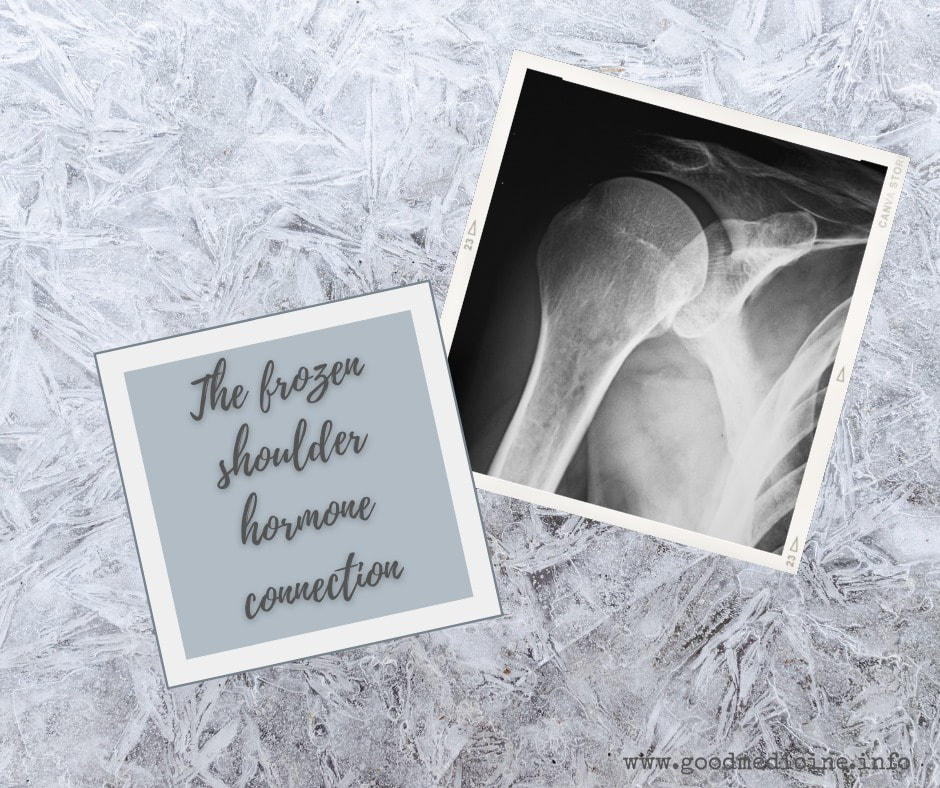
Frozen Shoulder & Hormones

Liz James · December 8, 2020 ·

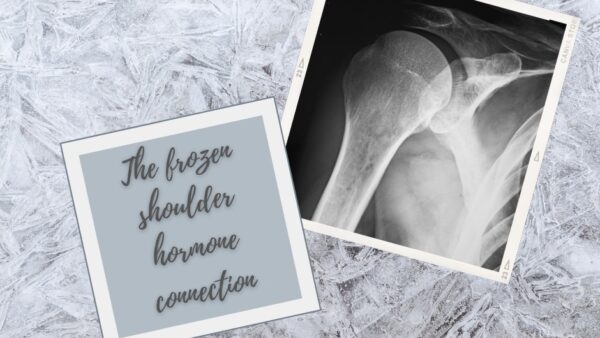
​If you are in the 40 to 60 something age category (as I am), have you noticed that a number of friends or acquaintances of similar age have complained of shoulder joint pain and stiffness? I used to assume that this was the result of normal wear and tear as we age, and sometimes that is the case. Often tho, I run into people who have shoulder pain and stiffness who cannot recall having had a memorable recent injury. Idiopathic (ie: unknown cause) frozen shoulder usually starts out with a dull or achy pain in only one shoulder, with pain that may extend to the shoulder muscles that wrap around the front of the arm that ultimately leads to long term limited mobility of that joint.  It’s a painful and frustrating disorder because there isn’t really a known cure, and it nearly always “unfreezes” on its own within 6 months to 2 years, although injections to surgery are often recommended by western medicine. 


Idiopathic frozen shoulder (called “50 year old shoulder” in Eastern Medicine)  happens much more often in women than in men, usually between the age of 40 and 60yrs old…… coincidentally around the time hormone production really wanes… specifically estrogen.


When estrogen production decreases significantly, the flexibility of our connective tissue is affected. We may see it visibly as crepey looking skin, but make no mistake…. Your joints are being affected too….. In this case, specifically the shoulder capsule.


Learning what I’ve learned over the last many years, I’ve chosen not to go down this path by doing the following things:
💪Regular full motion exercise (lots of shoulder work)
💪Yoga (faith based for me)
💪Supporting my hormones fully thru perimenopause (early stage) and menopause. I use Progessence Plus (on my forearms and on the carotid artery points on my neck nightly, and I also alternate between PD 80/20 and Femigen (one capsule a day works for me). According to my labwork, tho I am in menopause, my estrogen and progesterone levels have been maintained at healthy levels to keep my body functioning well. (I highly recommend hormone/thyroid labwork on at least a yearly basis if you are wanting physical confirmation of what’s working and what’s not working for you!… if you do not have a way to get this done, please message me and I can help you.)


We are all built very differently, and are at different stages in our lives. If you support your hormones with a Young Living product(s)….. Tell me, what have you found that works for you, and how do you use it?
xoxo~ liz

#sharingiscaring
#goodmedicine
#goodmedicineisknowledge
#caringforyourselfsoyoucancareforothers
#ThanksYL

Telomere Health

Liz James · September 13, 2020 ·

Believe me friends, the word “may” shouldn’t even be in the title of the attached article.  
The cliff notes version of the article is this:
👉 Telomeres…. you want them long, not short. Short telomeres are directly linked to cellular aging. Cellular aging is NOT something you want….. it leads to depression, hypertension, diabetes, cardiovascular disease, and overall mortality.
👉 Ultra Processed Foods (UPF’s) – For those on the Standard American Diet (not coincidentally, also known as the SAD diet), UPF’s make up almost 50% of consumed calories.  Examples of UPF’s would be most (non-organic) soft drinks, flavored chips, white bread, sweetened breakfast cereals, prepackaged soups and “fast” meals, chicken nuggets, hot dogs…. basically, if the ingredient list is long and unpronounceable, it’s likely a UPF.
Three or more servings of UPF’s per day were found to have a significant impact on length of telomeres.
Find your farmer. Shop organic. Shop farmer’s markets. Eat whole foods! (Have you tried Young Living’s Einkorn products? 🌾 #YUM ) Keep your telomeres happy ya’ll! 😘
xoxo ~ liz
www.goodmedicine.info
#sharingiscaring
#telomeresneedlovetoo
#ThanksYL
#askmewhyIdowhatIdosometime

full article

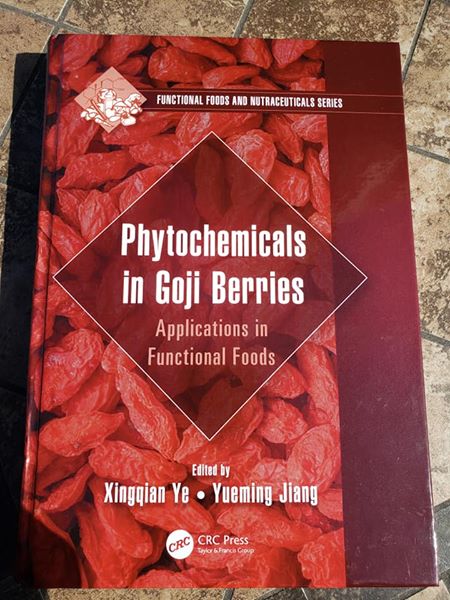
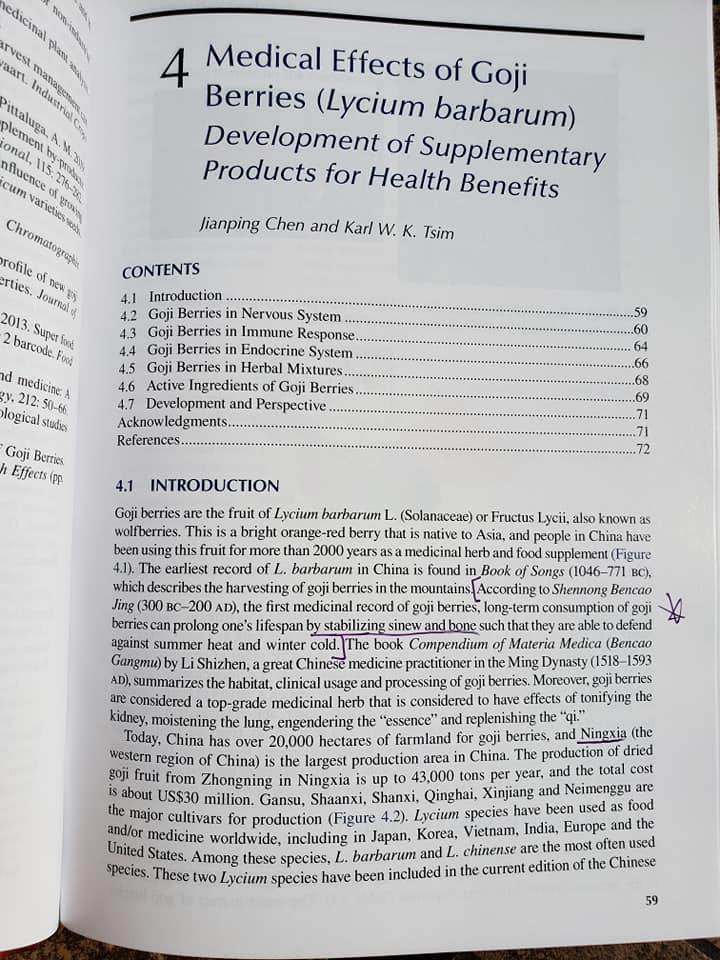
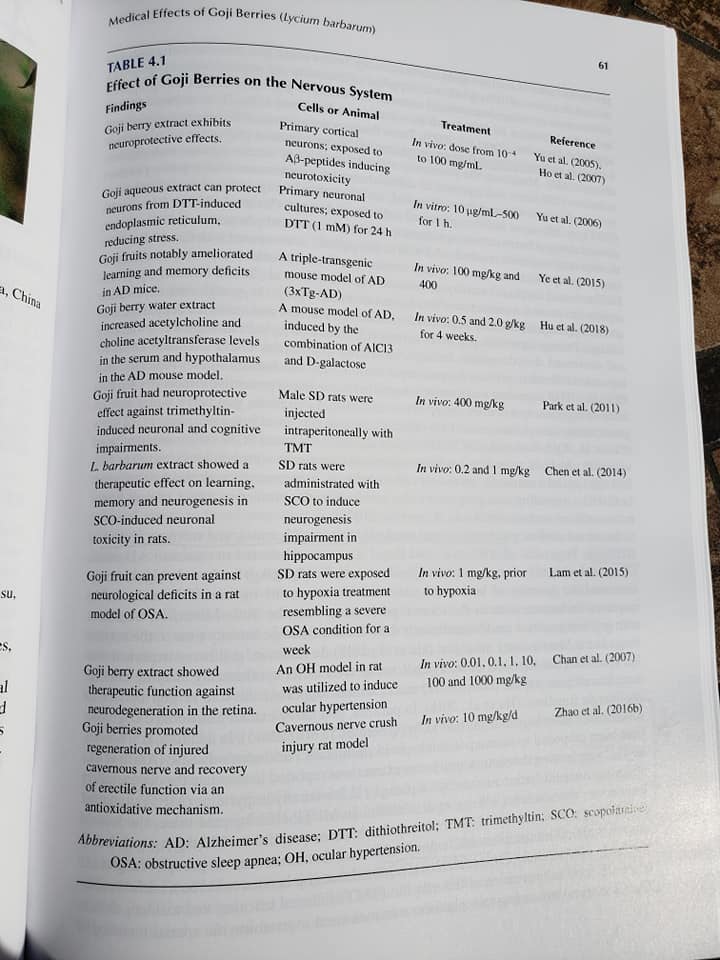
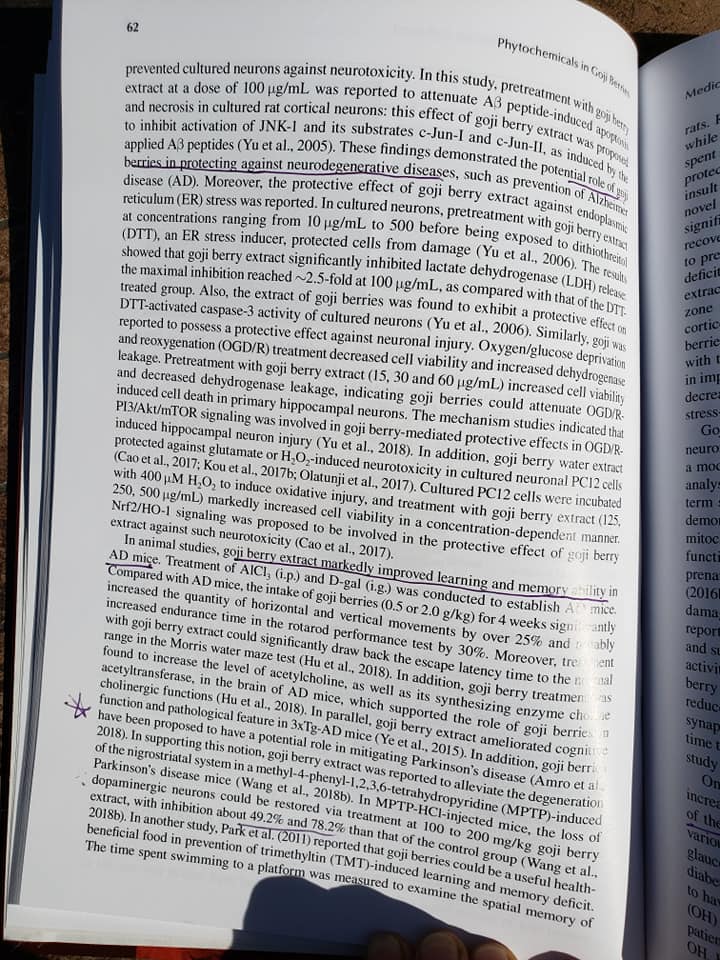
Goji – Hard Facts

Liz James · August 12, 2020 ·

Just a little light reading this morning after chores. I am a born skeptic and curiosity is my middle name, which is probably a couple reasons why I love science so much. And because the internet provides fishy info (and/or makes truth hard to find), I lean towards good old fashioned research and book learnin’!📚


This one is terribly interesting,  and it corroborates data and information I’ve learned elsewhere. Sadly, textbooks like these are pricey (you can see where I hoard and spend any extra money….. books!!) but they bear the truth that cannot be erased or distorted by the whims of the internet gods. 


Got a question about the beautiful goji (aka wolfberry) berry? Let’er fly! Drop it in the comments, and if I can find the answer in one of my books, I’ll snap a pic for ya😘.
xoxo~liz

#NingXiaRedISallitscrackeduptobe
#haveyouhadyourNRtoday
#healthyhearthealthybrain
#sharingiscaring
#payyourfarmernoworpayyourpharmacistlater
#Godgaveusallweneedinthegarden

Body odor

Liz James · August 5, 2020 ·

OK, this may sound really weird……. But have you ever thought much about body odor?…. And how some people have some seriously bad B.O. while other people don’t even give off offensive B.O. when they sweat, even if it’s during a hard workout? Why is this?


It’s not because of hygiene on the outside…. it’s because of hygiene on the INSIDE. Buildup of oxidized fats, malformed proteins, and other chemical “trash” in the body generates an aroma that no soap (or toothpaste or mouthwash) can overcome. (Some diseases can do this too, but for the sake of this convo, I’m only focusing on cellular hygiene today.)


What causes poor cell hygiene within us?…. All these rancid fats and denatured proteins that the body simply can’t get rid of fast enough?  I’m sure you’ve heard of free radicals and how bad they are for a body. Actually, they’ve been given a bit of a bad rap. They are absolutely essential to a healthy happy body, but when too many free radicals start gathering in the body, something called oxidative stress begins occurring.


Q: How do I slow down the production of free radicals and avoid oxidative stress?
A:  Clean up your “personal space”.
👉Limit your consumption of fats and oils that have been exposed to light, air and heat (which turns them rancid). Fried fast foods are notorious culprits.
👉Avoid preservative laced foods and processed meats
Stop contributing to “indoor smog” in your own home. #useyourdiffuser  Avoid damaging and toxic chemical household cleaners & artificial air freshening agents.
👉Avoid Smoking and being around second hand smoke
Make sure the water you drink is free from chemicals (most tap water is not)
👉Understand that many medications contribute to the formation of free radicals. Do your due diligence and look for healthy alternatives (or ways to improve your health so that you won’t need medication) whenever possible.
👉DO seek out strong antioxidants and incorporate them into your diet. Some of the strongest ones are wolfberries (also known as goji berry), blueberries, plums, cherries, aronia (also known as chokeberries), and pomegranates.
Not surprisingly, all of these are ingredients in our YL NingXia Red. 


Q: What does Oxidative Stress do in our body?
A: It accelerates the aging process, contributes to cancer, atherosclerosis, Alzheimer’s, Parkinsons, and other diseases.
Although there are no officially recognized “symptoms” of oxidative stress, fatigue, headaches, noise sensitivity, memory loss, brain fog, muscle and joint pain, wrinkles, gray hair, vision trouble, decreased immunity AND strong BODY ODOR are all signs pointing towards damaging oxidative stress in our bodies.
So, if you are participating in our team NingXia Red Challenge this month (August), you might notice a change in your body odor for the better my friends……. And THAT is a very very good thing!
xoxo~ liz

#alltheNingXiaRed
#NingXiaRedChallenge
#totalbodyhealth

  • « Go to Previous Page
  • Page 1
  • Page 2
  • Page 3
  • Page 4
  • Page 5
  • Interim pages omitted …
  • Page 7
  • Go to Next Page »

Book Your Health Coaching CallBook Now

Elizabeth James

469.425.9091

ebj0203@gmail.com